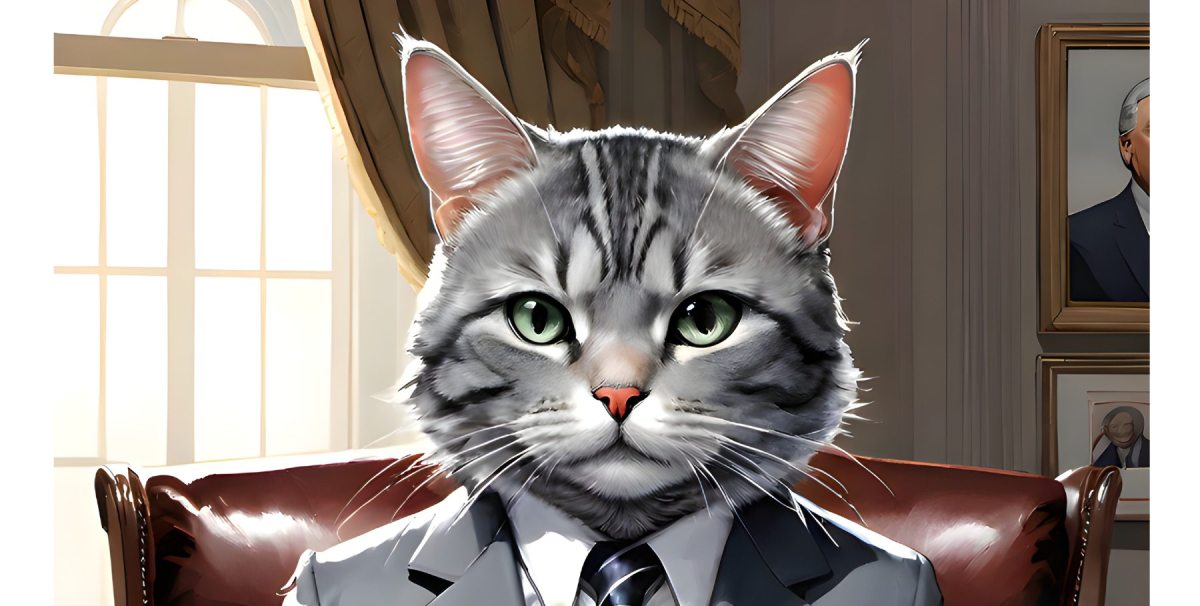
An optimistic Buddy began election day hoping momentum would carry him to the White House, where he plans to implement dozens of food-related measures.
WASHINGTON, D.C. — With a crowd of more than 60,000 chanting his name, Buddy the Cat made his final appeal to the nation’s felines on Tuesday as they headed to the polls.
“These past four years have been a tragedy,” the candidate told the crowd. “The consistency of wet food has been subpar, dry food has been less crunchy, and Americats are suffering because of inflation, with some snacks costing three times as much as they did in 2020!”
The crowd yowled viciously, expressing its displeasure.
“My opponent, the tyrannical Smudge the Cat, thinks he can hoard all the best snacks for himself while regular Americats make do with grocery brand crunchies,” Buddy continued. “Well I’m here to say ‘Enough!’ I’m here to say that every cat deserves to gorge him or herself on whichever snack they like! I’m here to say no more restrictions on napping spots! I’m here to say that there should be mandatory quiet hours during the dozen scheduled nap times per day!”
The crowd erupted in cheerful meows, waving Americat flags and giant poster-size images of Buddy looking presidential.
A campaign ad for Buddy4Americats.
“I’m also here to tell Vladimir Putin’s cat: Your time has come, Boris! Buddy the Cat is here to kick butt and eat meaty sticks, and I’m all out of meaty sticks!”
“Buddy! Buddy! Buddy!” the crowd roared.
“And to my friends,” Buddy continued, “the tigers of Asia, the lions, leopards and cheetahs of Africa, and our dear fellows, the pumas and jaguars of the Americas, we will form a coalition to bring Boris and his evil servant to heel, liberating Russian cats from the authoritarian rule they have endured for so many years.”
As the crowd chanted his name again, Buddy was hit by a bedazzled pink collar. Waving off half a dozen Sleepy Service agents who moved to quickly close ranks around him, Buddy winked at the Calico who’d thrown the collar, and she fainted.
“Someone get that young lady a bowl of water,” the candidate said, “and make sure her human has my human’s phone number.”
Cats padding out of the rally were enthusiastic and hopeful about their chances.
“Smudge is a corrupt, chubby and inept ‘leader,’ and I use that word in the loosest possible sense,” said Milo, 3, who was voting for the first time. “Buddy’s agenda is the most delicious, and that’s why he’ll win.”
Luna, 5, said Buddy has all the qualities an Americat president should have.
“He’s strong, he understands the importance of naps,” she said, “and he’s so dreamy!”
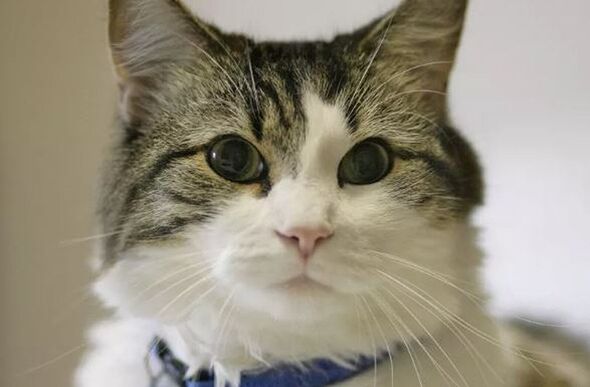
Oscar the Cat lived in a Rhode Island nursing home where he became famous for knowing exactly when a patient was dying.
There’s a scene in the film adaptation of Stephen King’s Doctor Sleep that shows Ewan McGregor’s character, Danny Torrance, working the night shift as a hospice orderly when a cat jumps up onto the desk and nuzzles his hand.
“Hi, Azzie,” Torrance says, and watches as the cute feline pads down the hall and enters a patient’s room.
Danny Torrance (Ewan McGregor) pets Azzie in Doctor Sleep.
When Danny pokes his head in, the patient is distraught. He knows he’s going to die.
“Cat’s on the bed,” the man says. “I knew he would be. That cat…always seems to know when it’s time. Guess it’s time.”
Danny shakes his head.
“No,” he reassures the old man. “It’s just Azrael being a silly
old cat.”
“Nope. Been that way since I got here. The cat knows when it’s time
to go to sleep, everybody knows that. I’m gonna die.”
It’s a pivotal moment early in the movie because it marks Danny’s evolution into Doctor Sleep, a man whose innate ability to “shine” allows him to comfort the dying. (Yes, Doctor Sleep is the sequel to Stanley Kubrick’s The Shining. Do yourself a favor and watch the Director’s Cut, which is the definitive and most satisfying version. It’s a long film, but worth it in every sense.)
It turns out Azzie is based on a real cat: Oscar, the resident feline at Steere House Nursing and Rehabilitation Center in Providence, Rhode Island.
Oscar, who died in 2022 at the age of 17, had an uncanny ability to sense the imminent deaths of patients. When someone was near death, Oscar would leap onto the person’s bed and stay with them until they passed.
Oscar at the nurse’s station in the Rhode Island nursing home where he lived.
When his story was first publicized in a 2007 essay in the New England Journal of Medicine, Oscar had “predicted” the deaths of a few dozen patients.
“Thus far, he has presided over the deaths of more than 25 residents on the third floor of Steere House Nursing and Rehabilitation Center in Providence, Rhode Island. His mere presence at the bedside is viewed by physicians and nursing home staff as an almost absolute indicator of impending death, allowing staff members to adequately notify families. Oscar has also provided companionship to those who would otherwise have died alone. For his work, he is highly regarded by the physicians and staff at Steere House and by the families of the residents whom he serves.”
In a follow-up story by Reuters in 2010, Oscar had snuggled with more than 50 dying patients.
To be clear, no one’s suggesting Oscar is peering into supernatural realms. Cats are known for their remarkable hearing, but they’ve also got an exceptional sense of smell. In fact, they have a unique olfactory organ in their mouths, the vomeronasal organ, that allows them to “taste” scents.
We know very little about what kind of information they’re able to glean from scent alone, but we do know animals can sense things that would otherwise require sophisticated machines for us to detect, including cancers and other diseases.
A cat’s Flehmen response looks like a disgusted reaction, but actually indicates cats are processing a scent through their vomeronasal organ.
It may be that the most unusual thing about Oscar’s case is that he was allowed to live in a nursing home. The vast majority of medical facilities have strict prohibitions against allowing animals due to potential allergies and the perception that they’re dirty, despite the fact that they have significant therapeutic benefits. Even the facilities that do allow animals typically do so under controlled circumstances and for short periods, as when therapy dogs or cats are brought to visit patients.
Perhaps we’d hear about Oscars all the time if they were resident cats in hospitals and nursing homes.
“I don’t think Oscar is that unique, but he is in a unique environment,” Dr. David Dosa told Reuters. “Animals are remarkable in their ability to see things we don’t, be it the dog that sniffs out cancer or the fish that predicts earthquakes. Animals know when they are needed.”
It’s a reminder that just because we can’t see, smell or hear something, that doesn’t mean there’s nothing there. When dogs “bark at nothing,” they may have caught the scent of a stranger in the neighborhood. When a cat stares at a wall, it could be picking up mice making sounds that are too high in frequency for human ears to detect.
There are likely thousands of sounds, smells and even forms of tactile feedback to which we remain oblivious, but are noticed by animals. Migratory birds, for example, have magnetoreception abilities. That is to say, they can detect Earth’s magnetic field and magnetic dips, an ability they put to use when navigating as the seasons shift.
And then, of course, there’s Buddy and his incredible ability to detect catnip. Little man could be in a deep sleep in another room, yet the instant I open the sealed container of the good stuff, it’s a matter of seconds before he’s at my feet, meowing happily. In fact, it’s a reliable way to find him when he’s in some novel hidden napping spot, doesn’t respond to me calling for him, and I get worried because I haven’t seen or heard him in some time.
So next time your cat freaks you out by apparently staring at a corner of your living room, remind yourself she’s probably been alerted to something you can’t sense — and be wary of any cats who aren’t snugglers but suddenly climb into your bed.
Critics and audiences alike have raved about the feline’s convincing performance as a cat who hasn’t eaten in minutes, possibly even hours.
LOS ANGELES – Buddy the Cat sat on the coffee table, shoulders drooped, gaze fixed on his human.
With a faint, high-pitched mew and a slight quiver of his mouth, his sad eyes seemed to grow even bigger as he watched his pal take a bite of cheese.
“It’s as if he’s saying ‘Et tu, Big Buddy? Don’t we do everything together? Where is Buddy’s snack?'” the normally savage film critic Anthony Lane said. “I’m man enough to admit this scene made me weep.”
Lane wasn’t alone in expressing that sentiment, and as rave reviews continued to pour in, praise for the gray tabby cat’s performance morphed into Oscar buzz, creating a sense of inevitability.
Now Buddy has a new prize for his shelf to display alongside his Nathan’s Hot Dog Eating Contest championship belt, his national bowling trophies and his World Series ring. He’s the first cat to win the Academy Award for Best Actor, cementing his legacy as a master thespian.
“The way he inhabits the role of a starving cat is nothing short of remarkable,” said Christy Lemire, the longtime film critic for the Associated Press. “Logically, my mind knows this is a feline who has never missed a snack, let alone a meal. He’s chubby, sedentary and I doubt he can entirely groom himself. And yet his performance is so committed, so all-encompassing, that I can actually see a starving cat. His acting chops are phenomenal, generational even.”
Those close to the mercurial tabby say he is a method actor who remains in character even when the cameras are not rolling.
“He had me absolutely convinced he was on the verge of starving to death,” said one longtime friend of Big Buddy, Buddy the Cat’s human servant. “I said, ‘What have you been doing to this poor cat?’ The little guy barely has the energy to walk, and his meow is imbued with a deep sorrow, the kind of sadness that can only come from hours of being deprived of snacks.”
A woman who gave only her first name, Melissa, lives two doors down from the Buddies. She sheepishly admitted to breaking into Casa de Buddy to feed the feline while his human was out.
“His meows are tortured,” Melissa said. “I began to wonder: does my neighbor ever feed his cat? Should I call Cat Protective Services?”
Upon entering the apartment and getting her first proper look at Buddy, Melissa said she was taken aback.
“I was expecting skin and bones, not fur and flab.”
Still, Buddy’s performance was so convincing that Melissa said she cooked two thick pieces of filet mignon for the little guy, which he quickly devoured.
“He inhaled them, belched and immediately meowed insistently for more,” she recalled. “I couldn’t believe it.”
Later, she said, she spoke to another neighbor who said she’d fed Buddy meatballs, deli meats and roast turkey that same day.
Not one to rest on his laurels, Buddy is currently considering half a dozen new scripts, including one about a starving cat who goes to space and a Western about a starving cat who has been framed for murder.
“He’s not afraid of being typecast,” said his agent, Ari Gold. “This is his wheelhouse. Fans can’t wait to see what he eats next.”
New to kids and nostalgic to adults, Playland means summer for New Yorkers. PITB visits the National Historic Landmark.
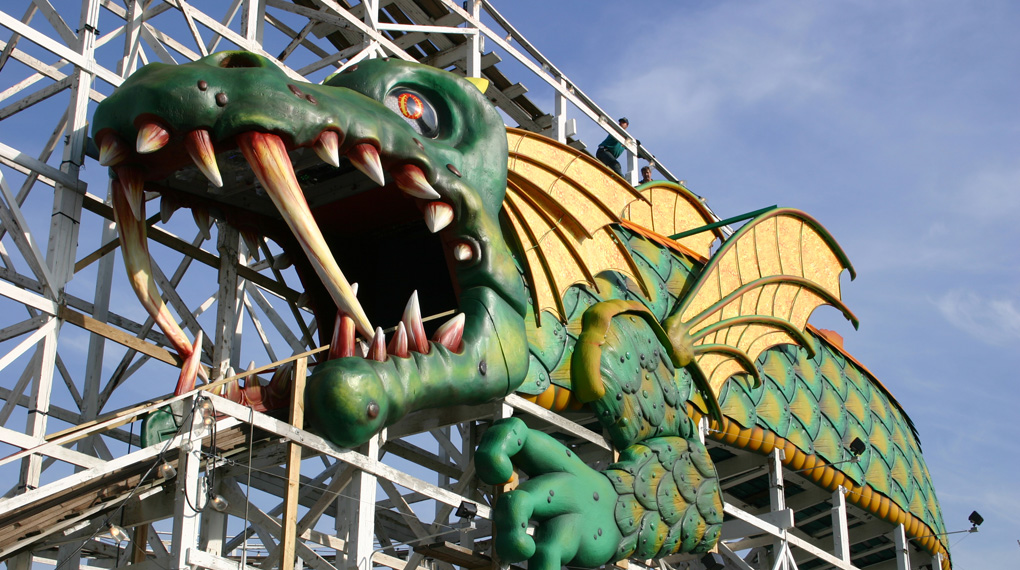
“You know,” I said to my niece, rapping my knuckles against a wooden support beam of Playland’s Dragon Coaster, “they built this thing 100 years ago.”
Her eyes widened. At 10 years old and already wise beyond her years, she smelled a joke at her expense by her constantly wise-cracking uncle. (I once told her and her sister that my cat had a vast collection of Pokémon cards, and that he almost certainly had the ultra-rare cards they coveted. At the time, their young minds didn’t question it and wanted to propose trades with Buddy, but now it comes up every time I tell them something absurd.)
“No it wasn’t!” my niece said as we stood in line to ride the venerable and historic wooden coaster.
My brother chimed in.
“It says it right there,” he said, pointing to a sign above the queue. “This roller coaster was built in 1929, the year the park opened.”
Playland’s ferris wheel and the manicured midway that runs the length of the park, with a giant fountain on one end and a stage for outdoor performances on the other. Credit: PITB
The Dragon Coaster is indeed almost a 100 years old, and to a 10-year-old a century is an incomprehensible amount of time. Mentioning the ride’s age almost backfired on us and we had to assure the kids the ride was safe.
Truth be told, the Dragon Coaster doesn’t look safe. It’s all aging wooden beams, rusting rivets and peeling paint, and the coaster rattles as it allows gravity to do the bulk of the work, with an initial 80-foot drop propelling the cars over 3,400 feet of shuddering track. But it passes inspection every year and it’s a relic of a time when things were built to different standards.
The iconic coaster’s history also extends to pop culture: Tom Hanks rode the Dragon Coaster in the 1988 film, Big, as did Mariah Carey in the video for her 1995 hit Fantasy. In 1987, it was featured prominently in the psychological thriller Fatal Attraction with Glenn Close and Michael Douglas.
A young Tom Hanks on Playland’s boardwalk in Big (1988). The “Zoltar” machine that grants Hanks’ wish in the movie is still in the park and has been moved to the midway.
Mariah Carey riding the Dragon Coaster in the 1995 video for her hit, Fantasy. Carey returned to Playland last summer with her family over the July 4 weekend.
The Dragon Coaster’s front entrance in September of 2024. Credit: PITB
My brother and I rode the Dragon Coaster when we were kids, as did my mom and her friends in their youth. If you grew up in Westchester County, the Bronx or Manhattan, chances are that Playland was a big part of your summers.
I have vague memories of the park from early childhood, fond memories of screaming on rides like the Mind Scrambler in my teenage years, fresher memories of taking my little charges there when I was a summer camp counselor, and new memories formed annually as I bring my brother’s kids.
Taking the kids to the amusement park was one of the things I most looked forward to when I became an uncle, and they’re at the age now where they really love it. Visiting the park brought on waves of nostalgia (“Good Vibrations” by Marky Marky and the Funky Bunch blasted from the PA when we first arrived), the happiness of seeing the kids’ eyes light up with joy, and the realization that even though I get dizzy and my stomach doesn’t appreciate rapid changes in gravity and direction anymore, some rides are still a hell of a lot of fun as an adult.
The medium-size version of three carousels at Playland in Rye, NY, September 2024. Credit: PITB.
We returned this year to find new rides, refurbished shops and lots of construction. Playland is in the middle of yet another refresh, this time to the tune of $150 million, leaving some rides and areas of the park dark to visitors.
Playland was built on 280 acres of prime waterfront real estate on the Long Island Sound and it’s very much a product of its time. Although it has seen its share of retrofits and refurbishment over almost century of existence, there’s no hiding the fact that it was constructed in the 1920s.
The structures — which include an entrance plaza, an ice casino and arcade, a pool, a beachfront boardwalk and a central tower — were built in an Art Deco style, with a consistent limestone, orange and emerald green color scheme.
As a kid my favorite ride was the Mind Scrambler, a blackout ride variation on the classic Scrambler housed within a dome. I remember waiting on line with my friends, hoping we’d get a good song for the ride, which was adorned with lots of neon and blacklights for maximum funkiness and disorientation.
Alas, messing around on a ride like that doesn’t bring good results. In a sequence of events that’s still difficult to believe, a seven-year-old girl was killed when she was thrown from the Mind Scrambler in 2004.
The exterior Mind Scrambler shortly before the darkride was dismantled following a series of deaths.
Three summers later, park management promoted a 21-year-old Playland employee who was working the night the girl was killed, making her the ride’s manager. She died that summer on the same ride. An investigation found she was kneeling backwards in her seat when she was thrown from the Scrambler just 20 seconds in.
The woman’s death prompted the park’s management to shut the ride down, a decision that was later made permanent despite the fact that “user error” was to blame.
Riders on the Dragon Coaster during the Great Depression. Credit: Rye Historical Society
A poster from the 1930s showing a bird’s eye view of Playland in Rye, NY. Note the beaches and the boardwalk below the park and the adjacent suburban neighborhood. Very little about the park’s layout or the neighborhood has changed over the years. Credit: Rye Historical Society
A close second favorite was the Music Express, a straightforward moderate speed ride that was also known for pumping out loud pop hits. I have fond memories of riding the Music Express to everything from the Spin Doctors’ Two Princes and Technotronics’ Move This, to Blues Traveler’s Run Around and Snow’s ludicrous summer hit, Informer.
The Music Express was out of commission last summer, but this time it was back in action.
“We’ve gotta ride this!” I told my nieces. Just when I was thinking it was getting a little intense, it slowed down. That wasn’t so bad, I thought. Then it spun up again, faster than before, this time spinning backwards. I felt like I’d downed a six pack of beer in a half hour when I stumbled off the damn thing.
The Music Express at Rye Playland.
I wisely limited myself to less strenuous rides for the rest of the night, including the bumper cars, Ferris wheel and the Zombie Castle. At seven years old, my younger niece isn’t big enough yet to ride some of the attractions by herself, and that’s when the Funcle steps in. Thankfully she’d had her fill of stomach-churners too.
Above: A classic swing ride at rest, left, and mid-sequence as it twirls riders through the air. Credit: PITB
Playland became a National Historic Landmark in 1987, and is unique among amusement parks in the US — and possibly the world — in that it’s government-owned. That’s because the people who live in the area, a wealthy waterfront enclave, were worried about growing crowds, traffic and “unsavory” people. In the 1920s at the urging of the community, Westchester County purchased the land, folded several smaller waterfront operations into a single park, and began drafting plans for a larger destination in the Art Deco style popular at the time.
While Art Deco is typically associated with structures like the Empire State Building and the Chrysler Building in Manhattan, as well as the Chicago Board of Trade skyscraper, the jazz-age aesthetic is another feature that makes Playland so unique.
The Zombie Castle was built in the 1930s with a different theme, then was refurbished in the late 1960s, perhaps in response to the success of George Romero’s Night of the Living Dead, which was released in 1968. This image shows the Zombie Castle on September 22, 2024. Credit: PITB
Remarkably, many of the attractions are as old as the park itself, including the aforementioned Dragon Coaster, The Whip, and the original carousel. Several of the older rides were designed and manufactured by engineer W.F. Mengels, the “Wizard of Coney Island” who was famous for designing many of that iconic park’s rides.
Taking the kids to Legoland in New York earlier this summer felt like a soulless experience, like paying to sit through a four-hour commercial for eponymous toys. Every ride was tied to a Lego intellectual property, every note of the piped-in music a corporate composition, every ride forcing you to exit via attached gift shops where $300 play sets beckoned to the children.
Even the “waterpark” had a corporate regimen to it: you’re required to book “appointments” ahead of time and get precisely 20 minutes to cool off under sprinklers on a Lego pirate-themed water playground, complete with Lego palm trees and Lego ships while the next group queues in the afternoon sun and watches, willing time to go faster.
Playland may not be as polished, but the experience feels more honest, and there’s no doubt the kids had more fun here. If I were a betting man, I’d wager Playland will still be there when they have kids of their own, while Legoland will be consigned to the dustbin of themed parks that don’t give you a reason to come back.
Coney Island’s version of The Whip designed by W.F. Mengels. Undated but likely in the 1910s.
A sign with original architectural drawings of The Whip from 1928, explaining “free-pivoting joints, combined with centrigual force, generates twists and turns which change with every rotation.”
Kiddyland is a section of the park for the little ones. It has a miniature roller coaster, a tiny carousel, and at least a half dozen other rides for young kids.
A view from the Ferris wheel at Rye Playland (PITB)
The Whip is one of the park’s original rides, built in 1928.
The city, which was abandoned after a natural disaster, was an important hub of civics, trade, napping and indigenous dishes such as the cheeseburger.
XQOCHOATL, Yucatán — Archaeologists announced the discovery of a vast and prosperous ancient Mayan jungle city whose inhabitants once worshiped an unusually handsome gray tabby as a feline god.
X’Budiso was an important center of trade, religious life, architecture and art, according to Ferdinand Lyle, an archaeologist with the British Museum of London and lead researcher on the project.
His team located the long-lost city using LiDAR — light detection and ranging — a technology that allowed them to peer beneath the cover of heavy jungle and detect the ruins beneath.
Previously, there was only one indication that humans had once inhabited the area — a feline paw holding a cheeseburger, rendered in stone and poking out of a thick tangle of jungle flora. When archaeologists cleared the brush and trees, they revealed the rest of the statue which depicted a regal-looking cat on a plinth, holding the cheeseburger aloft in triumph.
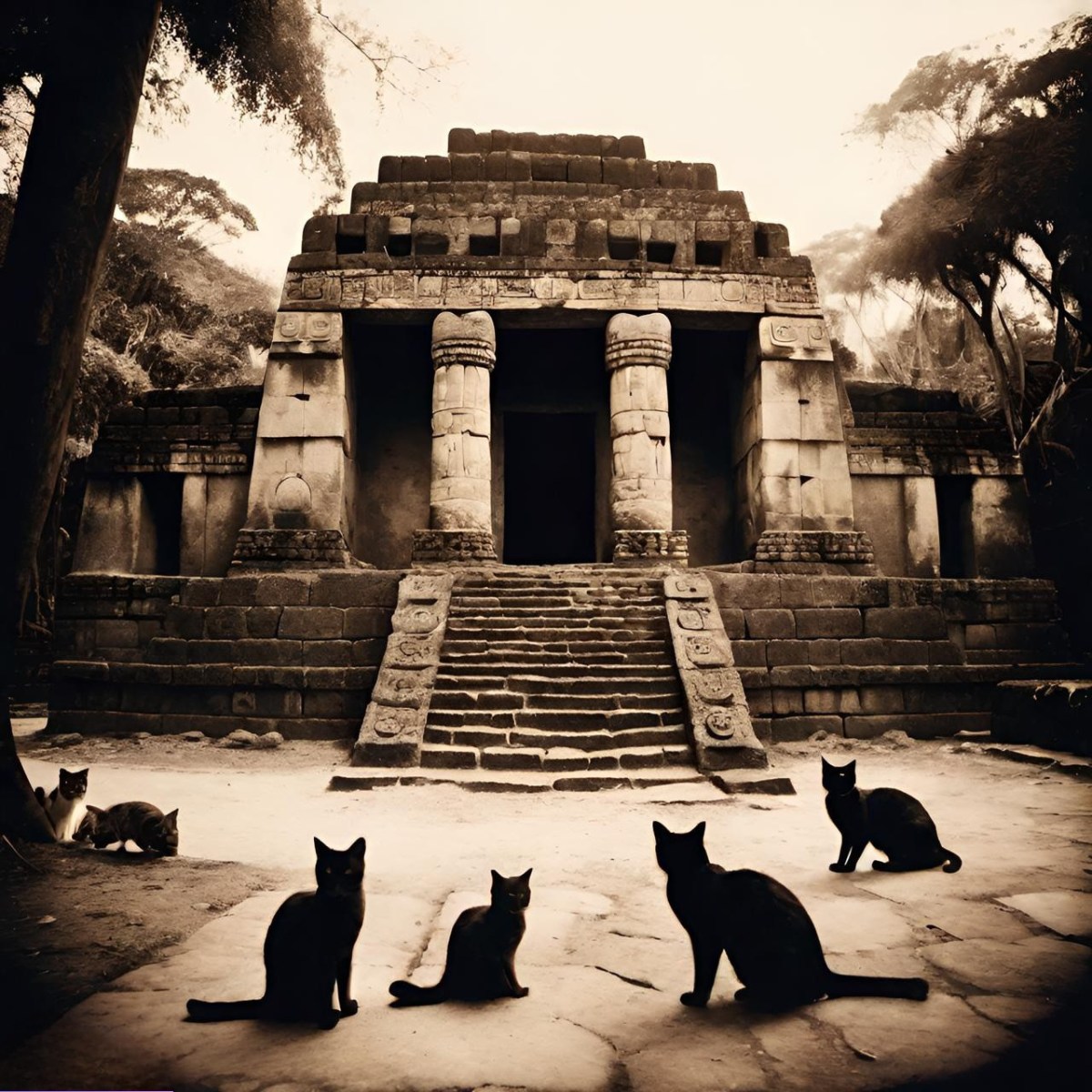
An artist’s impression of the Mayan deity Budacoatl surrounded by offerings of cheeseburgers, dipping sauces and artisanal cheeses inside the Temple of a Thousand Snacks. A cult devoted to Budacoatl, the Ancient Order of Yums, was responsible for taste-testing the snackly offerings.
The city was a bustling metropolis for hundreds of years before its abrupt abandonment, which researchers said was likely caused by a natural disaster such as a flood or pestilence.
“The Budiso people worshiped a pantheon, and at the top of that pantheon was Budacoatl, the tabby jaguar god of snacks, handsomeness and war,” Lyle explained. “Our research indicates that doom fell over the city, likely in the form of a plague, and that its inhabitants believe they may have angered Budacoatl by skimping on their offerings of snacks.”
Feral felines, like the pair pictured here in front of the Temple of Turkey, still live on the grounds of the long-lost city. Source: Buddesian University Archaeological Department
Partially translated glyphs tell of unprecedented growth for the once-prosperous city, which the people believed stemmed from the favor they enjoyed from Budacoatl. Employing a force of more than 100,000 laborers, they built a magnificent temple to the feline deity in the very center of their city.
An architectural wonder, the Temple of Budacoatl featured more than 500 depictions of the feline in statues and relief carvings. The structure was comprised of tiered gardens with artificial waterfalls and tribute chambers, while gilded food and water bowls were placed at regular intervals for the hundreds of mortal cats who lived on the temple grounds.
A nearby structure, the enigmatic Grand Napitorium, was possibly the first sound-proof building in history and affirmed the X’Budiso people’s communal commitment to satisfying siestas.
The city gained a reputation for culinary innovation, and is considered the birthplace of aji sauce, deep fried turkey, huevos rancheros and Temptaciones, the ancient precedessor to Temptations.
The Artisanal Guild of Nectarean Condiments and the Sacred Order of Saucemasters were two particularly prosperous factions in the ancient city, which developed a reputation in the pre-Conquistadorial world for producing the tastiest guacamole.
“It was said that Budacoatl was particularly fond of sandwiches, and the people sang hymns about his power, influence and ripped physique,” Lyle said. “An epic poem, chiseled into the edifice of the temple, told of battle in the heavens between Budacoatl and the mighty Vakuum, scourge of the Maya. Budacoatl prevailed over Vakuum, banishing him to the underworld where his screeching could not be heard by the inhabitants of the Earth.”
Richly detailed relief carvings from the Palace of Pâté depict figures from the feline pantheon. Source: Buddesian University Archaeological Department
At the foot of the wall where the poem is inscribed stands a statue of Budacoatl, one paw holding a pastrami sandwich and the other raised in a sign of peace.
“Budacoatl was a big deal among the Maya,” Lyle said. “At one point he was bigger than Gozer and Zuul, ruling atop the pantheon. As a result, cats enjoyed enormous favor in the city.”
Professor Ferdinand Lyle, foreground, stands in front of the Napitorium, where the Budiso people would take siestas. Napping was an important part of the culture. Source: Buddesian University Archaeological Department