Blog Posts

NASA: We’re Pretty Sure Cats Can’t Commandeer Our Spacecraft

With their cats hovering around their keyboards, NASA employees working from home discussed how to prevent cats from commandeering spacecraft.

If you’re a cat servant working from home in the social distancing era, you know cats have given themselves a new job: Supervising their humans’ professional activities.

It comes naturally to curious felines, who normally supervise mundane household chores like cleaning the litter box.

Among those working from home these days are NASA and ESA engineers, physicists and anyone else whose primary work responsibility is dealing with data rather than hands-on technical work. Many of them have cats and, well, cats are naturally helping themselves to the work:

Daniel Lakey was in the middle of an important meeting when an unauthorized participant decided to chime in.

“He appeared at the door, jumped on the table, meowed in my face, walked across the keyboard, put his furry ass in my face, and eventually curled up sweetly on the desk next to the laptop,” Lakey recounted to me recently.

It was Sparkle, Lakey’s fluffy brown-and-white cat. Sparkle stuck around for the rest of the virtual meeting, in fact, mewing every time Lakey stopped petting him.

Like many people in the pandemic era, Lakey is doing his job from home, with a new set of colleagues who might be less cooperative than his usual ones; his new workspace is now wherever his two young kids and two cats aren’t. Lakey is a spacecraft-operations engineer who works on the European Space Agency’s Solar Orbiter, which means that he spends his days managing a spacecraft flying millions of miles away from Earth. The work is complex and precise, and usually doesn’t involve feline input. Sparkle interrupted a teleconference only that one time, but what else could he do?

That thought recently became a point of public discussion when Amber Straughn, an astrophysicist at NASA, tweeted:
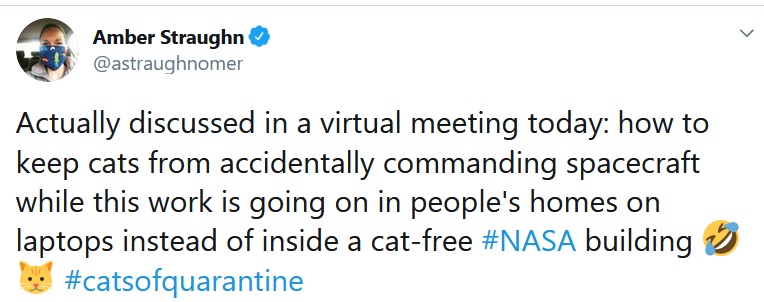
 

nasacats

The Atlantic’s Marina Koren reached out to Straughn, who assured her “commanding spacecraft is a labyrinthian process from start to finish, with all kinds of checks and fail-safes along the way.”

“As absurd as the scenario might seem, it would be nearly impossible for a cat to briefly become a spacecraft-operations engineer, whether at NASA or ESA,” Koren wrote, after speaking to several NASA employees who assured her cats aren’t capable of flying the complex vessels.
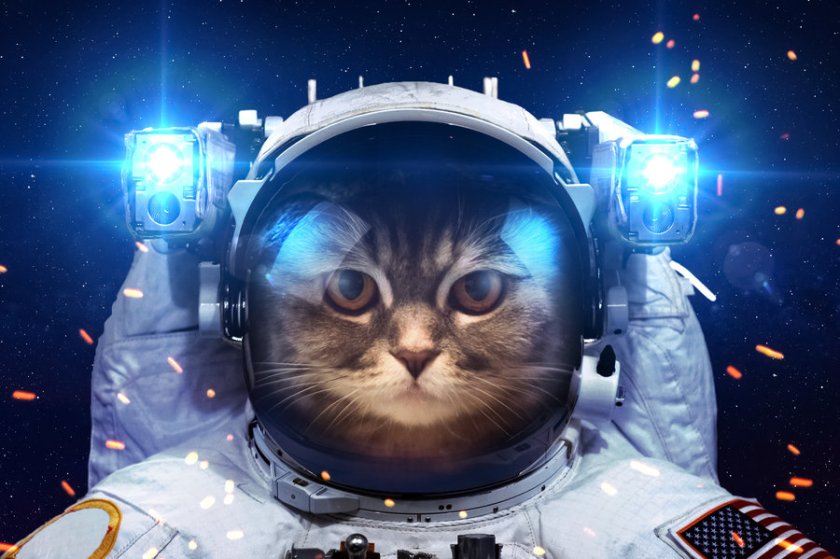
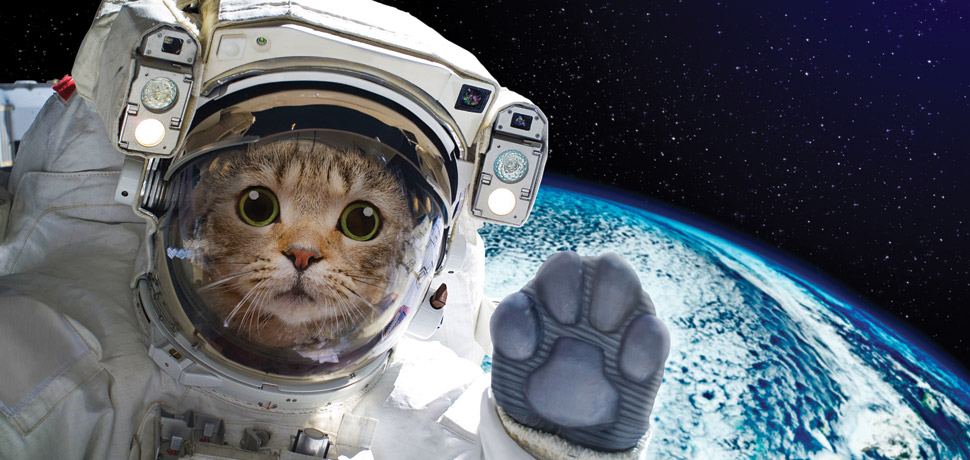
catsinspace3
LOL humans think we can’t fly spaceships.

Most operations require physical access to control rooms and can’t be operated remotely, NASA Jet Propulsion Laboratory spokesman Andrew Good said

“Some of those commands require a mouse clicking on certain options, so it’s not just an issue of commands being written and sent up with typos,” Good told The Atlantic. “A person has to make conscious choices for spacecraft commands to go up.”

While NASA says it would be “nearly impossible” for cats to hijack spacecraft normally used to service orbital telescopes or make supply runs to the International Space Station, cats love a good challenge. And what is the ISS, really, but a big metal box that would be fun to play in?

With at least one alien race recognizing cats as the supreme rulers of Earth — sorry, Felinia — is it really far fetched to imagine cats commandeering spacecraft to explore the final frontier and the Great Big Litter Box in the Sky?
catsinspace_large

Buddy’s Adoptaversary & His Blog’s 1st Anniversary!

Lots of catnip, turkey and photos of the little dude.

Join us, dear readers, as we celebrate the one-year anniversary of Pain In The Bud!

We’ve reached a modest 700 million readers in our first year and plan to do even better in our second year, replacing Google and Facebook at the very top of the traffic rankings and becoming the number one internet destination for people looking to waste their time.

Critics and readers alike are united in their effusive praise for Pain In The Bud:

“Absolute idiots. It’s difficult to tell which one has fewer brain cells, the human or the cat.” – Time

“Doesn’t even qualify as decent bathroom reading material.” – Rolling Stone

“Outstanding! Easily the best blog on the Internet!” – The Buddy Review

“An indictment of the American education system. I feel dumber for having read it.” – Oprah Winfrey

“Why should you care about the exploits of Buddy the Cat? You shouldn’t. His catnip-addled mind is limited to producing tedious fart jokes and dispensing mind-numbingly ridiculous advice to readers misguided enough to seek out his opinion.” – Wall Street Journal

“An extraordinary blog focused on an exceptional cat whose wit is sharper than Valyrian steel. Endlessly entertaining.” – The Buddesian Times

“A catnip junkie and the human who enables him. Gives all cats a bad rep.” –  Veterinary Association of America

“An unfiltered look into the depraved depths of the feline psyche. The blog mostly works as a celebration of legendary stupidity.” – Psychology Today

“Has there ever been a cat more handsome and interesting than Buddy? That’s a rhetorical question, by the way.” – The Chronicle of Higher Buddy

03F54649-8749-47A3-B473-E2C13E515E0B


Meanwhile, we’re celebrating Buddy’s adoptaversary! Well, celebrating is probably not the right word since we’re stuck indoors in the middle of a pandemic, in the area with the most infections if you don’t count Wuhan’s fake statistics.

Still, celebrate we will. No matter how dark these times are, there’s always turkey and catnip!

buddy_logo

buddytable_02

buddytable_05


buddy2020_a

buddyside

buddy2020_b

buddypalico2


Dear Buddy: Everyone’s Acting Like Cats Have Cooties!

Cats have become pariahs since the world learned they can be infected by Coronavirus.

Dear Buddy,

Why is everyone so racialist towards cats all of a sudden?

I’ve been doing my regular laps around the block even though all the humans are huddled in their houses, and everyone’s acting like I have the cooties!

Pete the Pomeranian, who is usually one of the friendliest of my neighborhood amigos, ran away from me this morning, while my neighbor’s snooty purebred poodles were more snooty than ever.

There’s a parrot who lives two doors down, and I heard her saying “Get away! Get away, you dirty cat! I don’t want your filthy feline viruses!”

Buddy, what the hell is going on? Why does everyone hate us?

– Freaked Out In Fayetteville


buddymask2
Dear Freaked Out,

You don’t read the newspapers, do you? Ever since a cat in Hong Kong and a tiger here in New York tested positive for the COVID, everyone is acting like us cats are zombies from The Walking Dead!

These days you can’t even claw or pee on a tree to mark your territory without all sorts of dogs, birds and squirrels coming out of the woodwork to yell at you about spreading “the cat AIDS,” as if we’re all infected and trying to spread it to everyone else.

There’s talk of rounding us all up and quarantinizing us in local cat cafes for at least a year. This is America, not Chairman Meow’s communist China!

We’re the lucky ones, my friend. Some cats have been tossed out of their own homes by the same humans who are supposed to serve them. It’s an outrage! The purrsecution and meowlevolent spreading of rumors has gotten out of claw!

For now, the best solution is to disguise yourself as another species entirely. Get some floppy ears and buck teeth and pretend to be a rabbit. And if that parrot keeps talking trash, tell her you haven’t eaten since yesterday and you’re wondering if all birds taste like turkey and chicken, then smile real evil-like. That oughta shut her up. 🙂

Chin up!

– Buddy

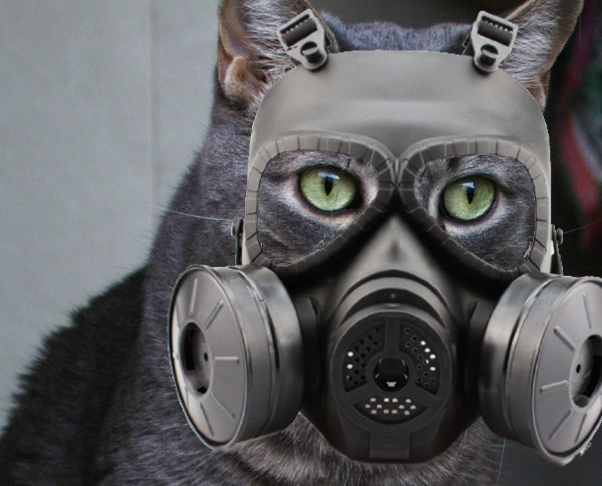
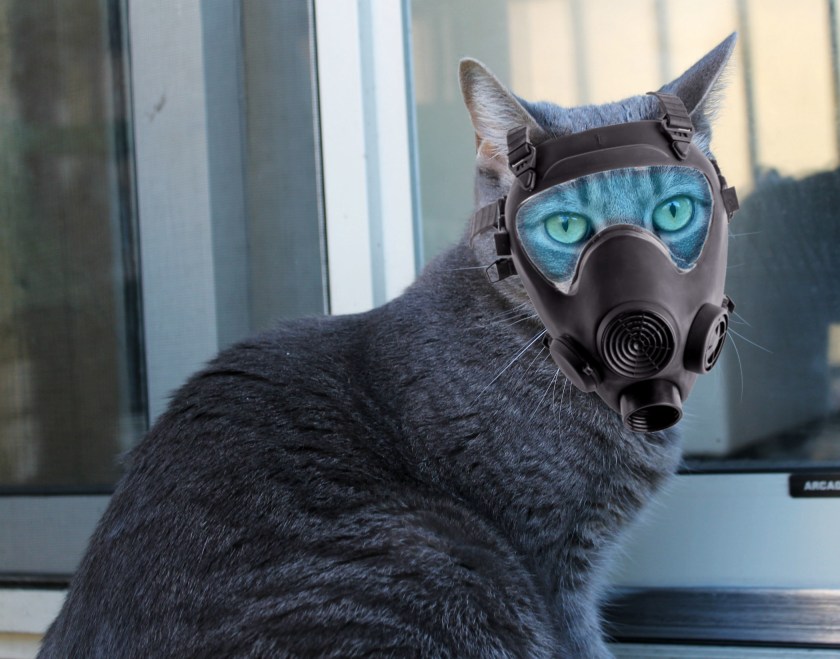
PS: Feel free to steal your human’s face masks. As you can see, they’re quite fashionable.

Turkey Heist: Shipment Vanishes, Cat Suspected

Who could be behind this brazen crime?

NEW YORK — A ship carrying half a million pounds of frozen turkey was hijacked off shore on Friday night by a criminal gang that appeared to take orders from a cat, authorities said.

MV Fowl Call, a US-flagged cargo freighter, was less than 20 nautical miles from port when it was redirected back toward the ocean and its comms went quiet. Witnesses reported seeing a small cat issuing orders to an assault team and cackling with delight as he padded around on the deck of the freighter.

Several members of the assault team reappeared a few minutes later, holding two men at gunpoint.

“Sample the wares, boss?” one of the pirates asked, opening a case of turkey in front of the cat.

The small tabby leaned forward, took a sniff, then took a cautious bite, his expression impassive.

“T-T-T-TIGHT!” the cat shouted. “Oh, TIGHT, TIGHT, yeah! Oh blue, yellow, pink, whatever man! Keep bringing me that!”

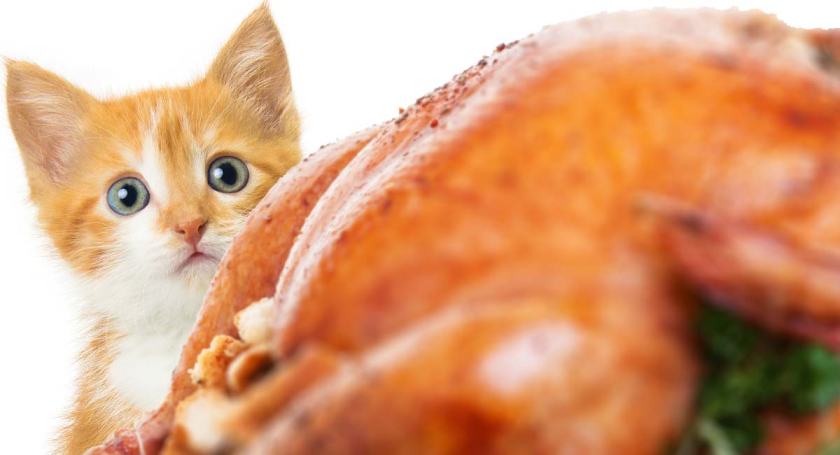
Cat and Turkey
Turkey: Food of the gods.

The crew methodically packed the cases of turkey into three smaller boats, then departed the larger ship, leaving the crew tied up on deck.

A witness told investigators he spotted black-clad men loading cases of frozen turkey into a Los Pollos Hermanos delivery van, then drive off.

“Any suggestion that we were involved in this apparent turkey heist is absurd,” franchise owner Gus “Gustavo” Fringe said. “Los Pollos Hermanos serves the community and supports our police, in addition to serving the most delicious deep-fried chicken and turkey.”

Image credit Wikimedia Commons [1] [2]

This Might Be The World’s Worst Cat Study

A bizarre new study concludes some cats are depressed because they live with men, among other questionable claims.

A Brazilian research team wanted to find out if cats experience separation anxiety when their owners aren’t home, so they visited the homes of 200 cat servants, wired them up with cameras and microphones, and conducted a rigorous study in which they first established a behavioral baseline, then compared the cats’ normal behavior with their actions when their humans weren’t home.

Just kidding.

In what might be the laziest, most assumptive attempt at conducting animal behavioral research thus far in 2020, the team from Brazil’s Universidade Federal de Juiz de Fora handed out questionnaires to 130 cat owners that asked, among other things, about the body language and behavior of their cats when they weren’t at home to witness it.

Did these cat caretakers have Palantirs that allowed them to spy, Sauruman-style, on their kitties at home? Nah.

The information comes third-hand. I’m not joking:

“Since there weren’t any cameras observing the cats, the owners answered based on evidence from reports by other residents, neighbors or any signs the cat left in the home, such as feces, urine or broken objects, [study author Aline Cristina] Sant’Anna said.”

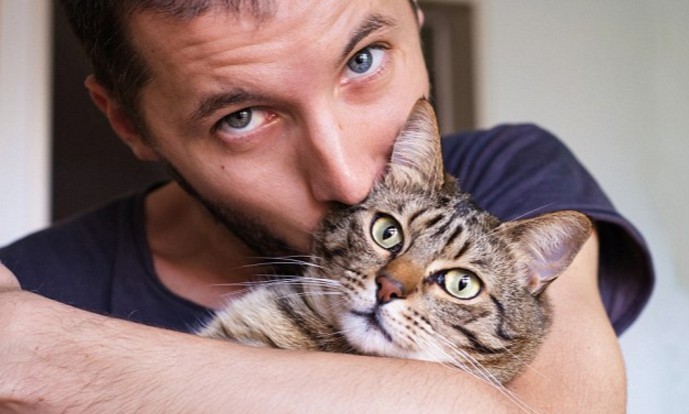
My neighbor’s friend’s Uber driver, who parked outside for 16 minutes, said my cat looked angry when he briefly appeared in the window, so I’m gonna go ahead and write in this here questionnaire that Mr. Socks has terrible separation anxiety. Yep.

catman2

But suppose the data was reliable, instead of fuzzy third-hand accounts from cat owners who quizzed their apparently nosy neighbors about what their cats do in their down time. How do we know a smashed vase is separation anxiety, and not the result of a cat with the zoomies just knocking stuff over?

How do we know a cat who misses the litter box doesn’t have a UTI, or refused to use a dirty box?

But it gets better, dear reader. This team of superstar scientists decided the reason some cats were supposedly depressed or destructive is because they live with male caretakers instead of women:

Cats with behavior problems also tended to live in households without any female adults or more than one female adult; households with owners ages 18 to 35 years old; single pet households; and households with no toys.

“Maybe, for different reasons, the animals raised in households with no female adults or more than one female adult were less likely to develop secure and mentally healthy types of attachments with their owners in the sampled population,” [study author Aline Cristina] Sant’Anna said.

Or maybe the authors are getting paid to make wild, unsupported assumptions and combine them with worthless data.

The CNN version of the story doubles down by quoting a self-appointed expert who expounds on the cats-and-females theory:

Additionally, female cat owners tended to be more affectionate and doting, said Ingrid Johnson, a certified cat behavior consultant for more than 20 years.

Cats might be a little more distressed in the absence of their owners if they are younger adults who are busy and not focused on the fact that they have a pet, the researchers theorized.

“They’re happy to have a pet, but they’re going out, being social, [going on] dates and having parties,” added Johnson.

Right

For those who aren’t keeping score, we now have an academic and a certified behaviorist telling us cats who live with men or adults younger than 35 are more likely to be depressed because they, like, totally heard we don’t scoop the litter boxes as frequently or something.

That’s because all men refuse to be affectionate with their cats, and people under 35 are party animals who snort cocaine off the posteriors of strippers when they should be feeding Fluffy, according to our experts.

Johnson’s credentials include working at a hospital for cats and running her own “cat behavior house call and toy business.”

It’s worth noting that there are dozens of organizations that certify people as cat behaviorists. Sometimes the difference between a certified behaviorist and one without certification is the former simply paid dues to a member group that issues the certificates.

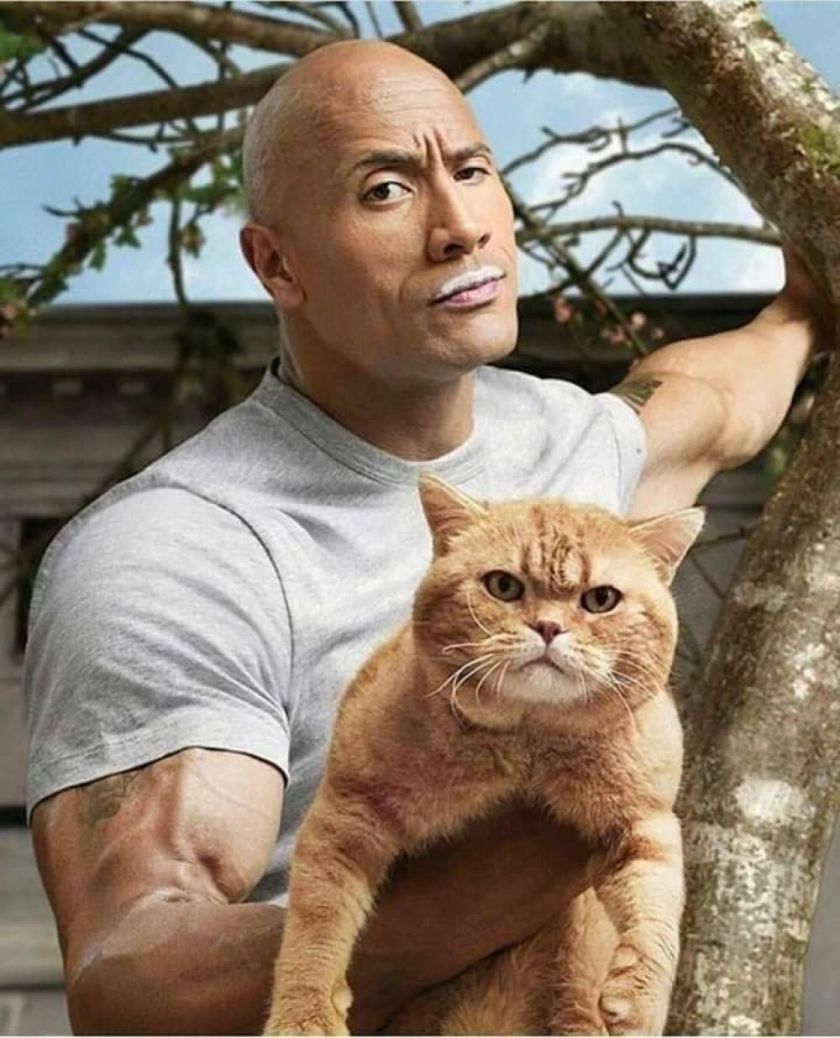
The Rock and His Cat
“Where’s the jabroni who claimed men aren’t affectionate with their cats?”

By now my opinion on this study is abundantly clear. The methods and conclusions wouldn’t pass muster in most undergraduate classes, let alone a research paper published in an academic journal. (The researchers published their work to PLOS ONE, an open access journal.)

What I don’t understand is, why bother? According to the study, 13.5 percent of the cats demonstrated at least one behavior consistent with separation anxiety, but for reasons I elaborated on earlier, the data is worthless. I’m not a fan of questionnaire studies in the first place, let alone questionnaire studies asking people what other people told them about difficult-to-interpret animal body language.

And lastly, I’m not a fan of this idea that there’s a certain “type” of person who is the best kind of cat owner.

We should be dispelling crazy cat lady stereotypes, not perpetuating them. Maybe men are in the minority when it comes to adopting cats, but nothing other than unfounded assumption suggests we men aren’t loving and affectionate with our little buddies, just like there’s nothing but anecdotal evidence to suggest caretakers younger than 35 neglect their pets.

The past few years have seen an authentic boom in research into feline cognition, behavior and emotion, and for that I’m grateful. But we can do better than this.

Image sources: [1] [2] [3]