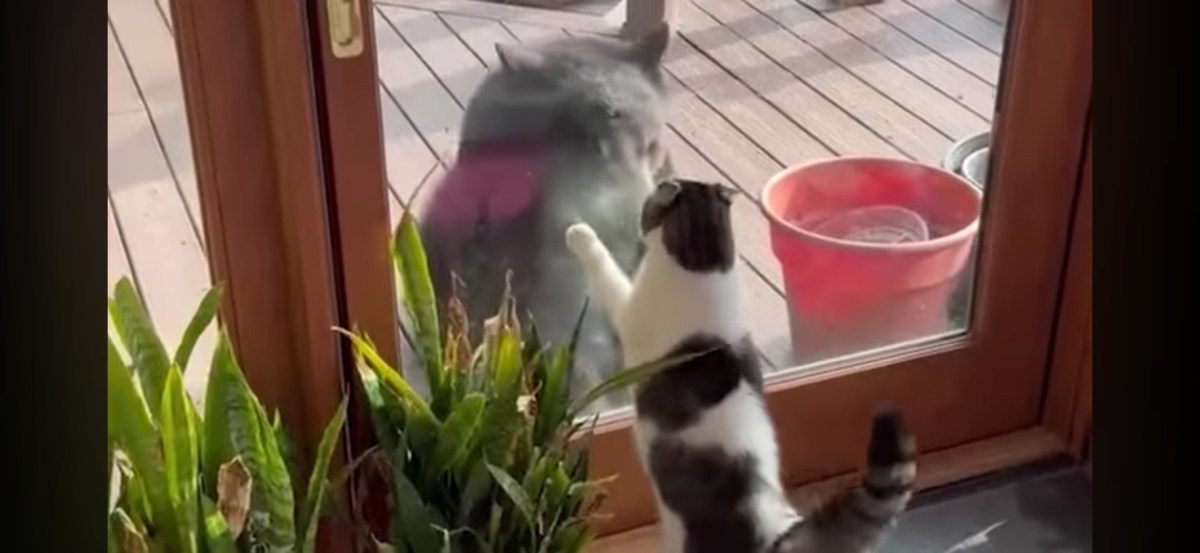
“Scooter does not like bears,” the fearless feline’s human said.
Scooter is one brave little dude!
The tuxedo cat from Asheville, North Carolina, wasn’t even phased by a pair of young bears who unwisely entered Scooter’s territory. Sure, Scooter had the benefit of a glass door between him and the ursine invaders, but Buddy here would have bravely and valiantly defended his home run screaming and taken up a position behind my legs while moaning pathetically.
Plus, I mean, they’re bears. Young bears, yes, but Scooter and his human placed an awful lot of faith in the strength of that glass.
Will Jones, Scooter’s human servant, made the understatement of the year when he posted the video and said flatly “Scooter does not like bears.” Ya think?
Regardless, the little guy clearly had the big animals spooked. They flinched from his hiss-accompanied flurry of rapid paw jabs, then decided it wasn’t worth dealing with the furry lunatic behind the glass and promptly left Scooterland.
Maybe they should be grateful Scooter couldn’t break through the glass instead of the other way around.
Credited to an “activist investor,” one airline has redoubled efforts to squeeze money out of travelers — and people traveling with pets could be next.
Travelers are calling it a “fat tax.”
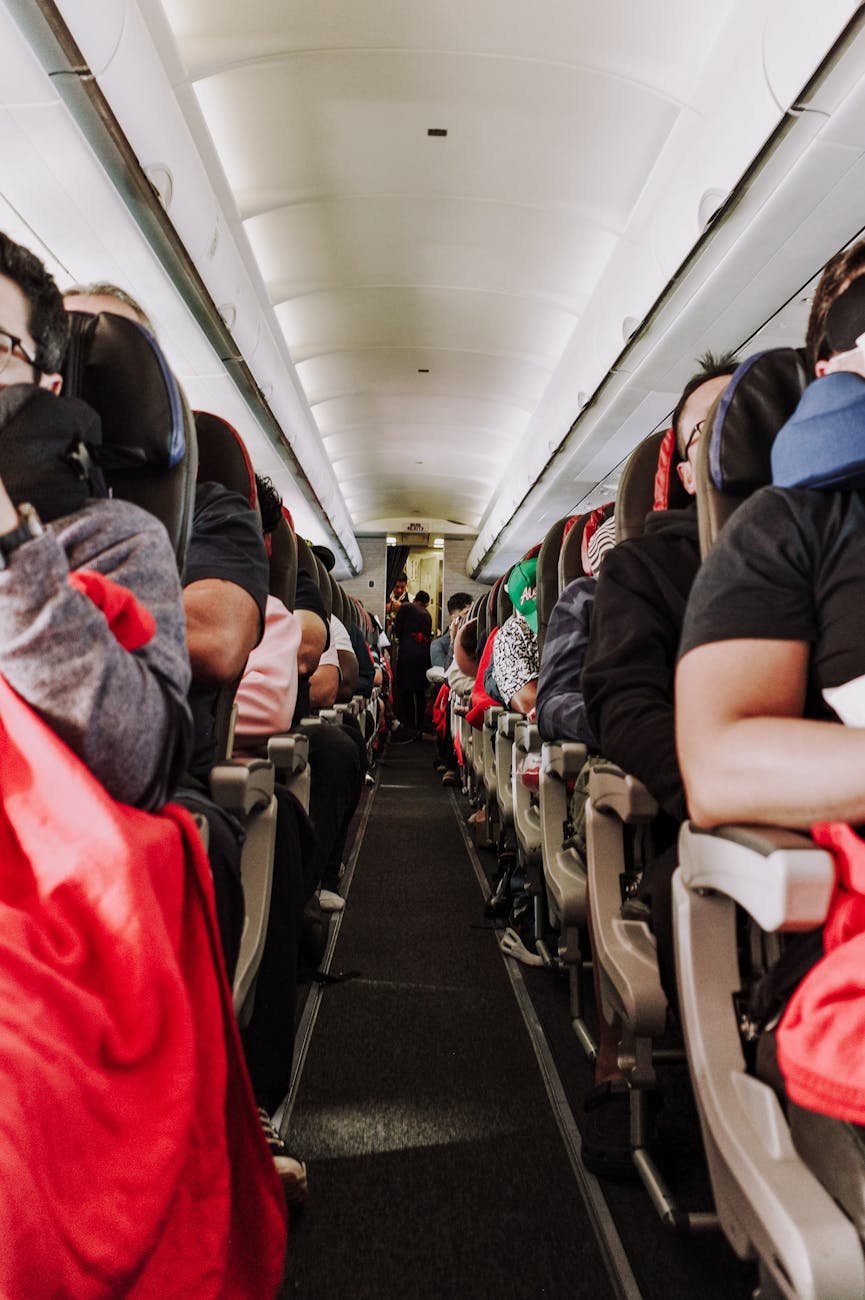
The anecdotes, which have been popping up all over social media platforms this week, are similar: flyers show up to the airport, a counter person looks them up and down, then declares the flyer will have to purchase a second seat or give up their spot on the plane.
That this is happening on Southwest Airlines, long praised as the most considerate toward “passengers of size,” is even more surprising. SF Gate attributes the dramatic shift in policy, which is apparently just one of many, to an “activist investor.”
It doesn’t say who that “activist investor” is, but it’s difficult to imagine a person wealthy enough to own a significant portion of an airline developing a personal vendetta after bad experiences in crowded coach. This is something different, driven by the desire to extract more money from travelers with rent-seeking behavior. That sort of thing, an “activist investor” certainly would do. Boosting profits without creating any value has become the calling card of America’s financial ruling class.
Which is why it’s likely this problem was created by the airlines in the first place, and why pet caretakers should be wary. (And no, not because felines like my Bud are a little too fond of the yums.)
Airlines are always looking for ways to add new seats, and every year brings new “innovations” to reclaim space centimeter by centimeter so the airlines can sell extra tickets.
Credit: Anthony Baratier/Wikimedia Commons
We’ve long since become cattle. I’m 5’10” and I’ve been on flights in which my knees barely fit between the seat in front of me and my own. I always wonder: what would I do if I were taller? How the heck does someone, say, 6’2″ sit in one of these seats?
The effort to squeeze more money from travelers isn’t limited to the new “fat tax” either. From “premium economy” upsells that don’t yield more space to ever-shrinking carry-on limits, airlines continue to find new routes into our wallets, making us pay more for the same product.
And that’s why those of us with pets should be worried. It’s a short leap from a “fat tax” to a “cat tax.”
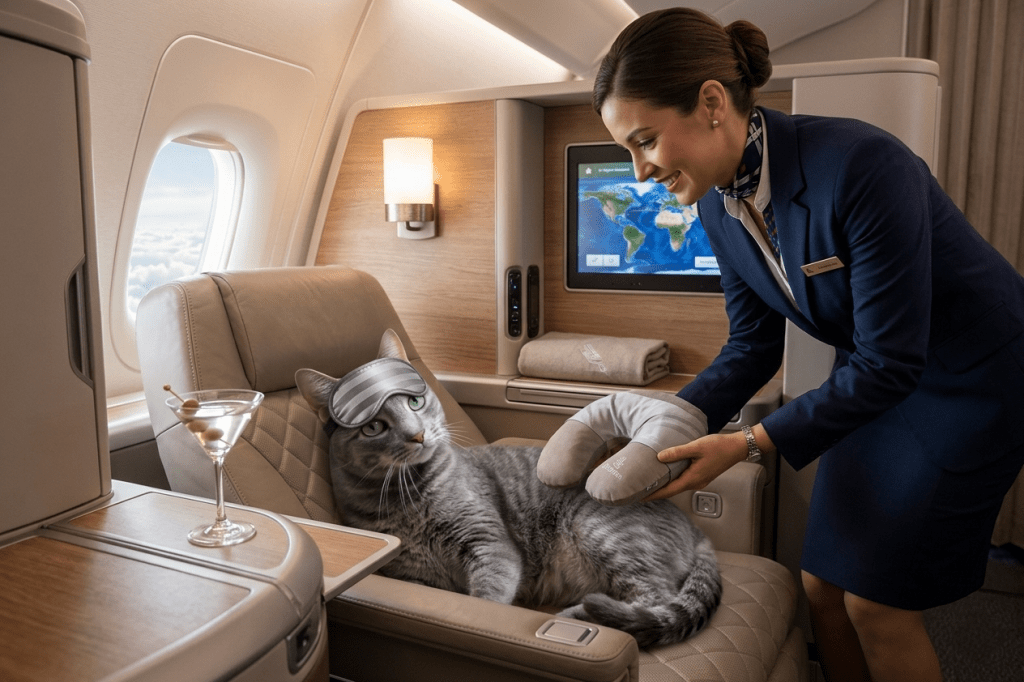
“You’ll be in coach while I take my place in first class, human.”
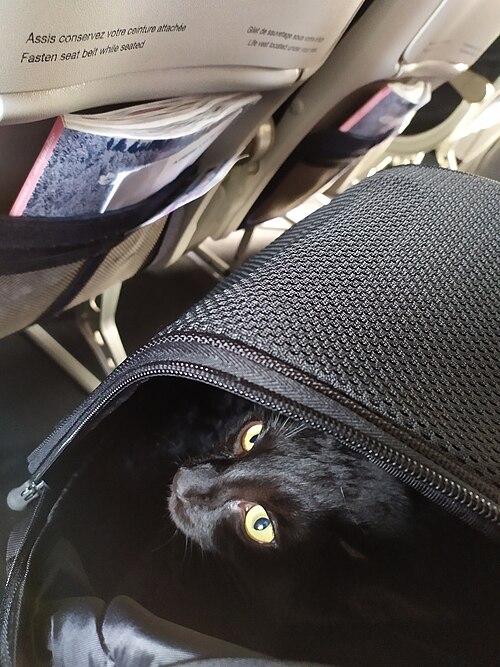
Most airlines treat people traveling with pets as a nuisance to begin with, and if they haven’t already, Southwest’s “activist investor” is likely to find new ways to squeeze people traveling with cats and dogs. (In my head, I imagine this “activist investor” as a vaguely Stephen Milleresque figure, with twitchy eyes betraying the rage bubbling below a calm exterior. “Let them sit elbow to elbow as they cradle their animals,” he laughs from his first-class seat. “Muahahaha!”)
The fact that this “fat tax” is arbitrary should scare all of us. If the whim of a counter clerk is what determines whether someone has to buy an extra seat, then who’s to say the same clerks won’t look at a cat, declare “He looks like a pain in the ass,” and demand some additional, ludicrously-titled fee?
“That comes to an additional $276.13 with your companion animal convenience surcharge. Thank you for flying with us!”
It just keeps getting better and better, doesn’t it?
Can an ocean-dwelling invertebrate make music? Mattias Krantz thought so. Proving his point took months of work, creative thinking and perseverance.
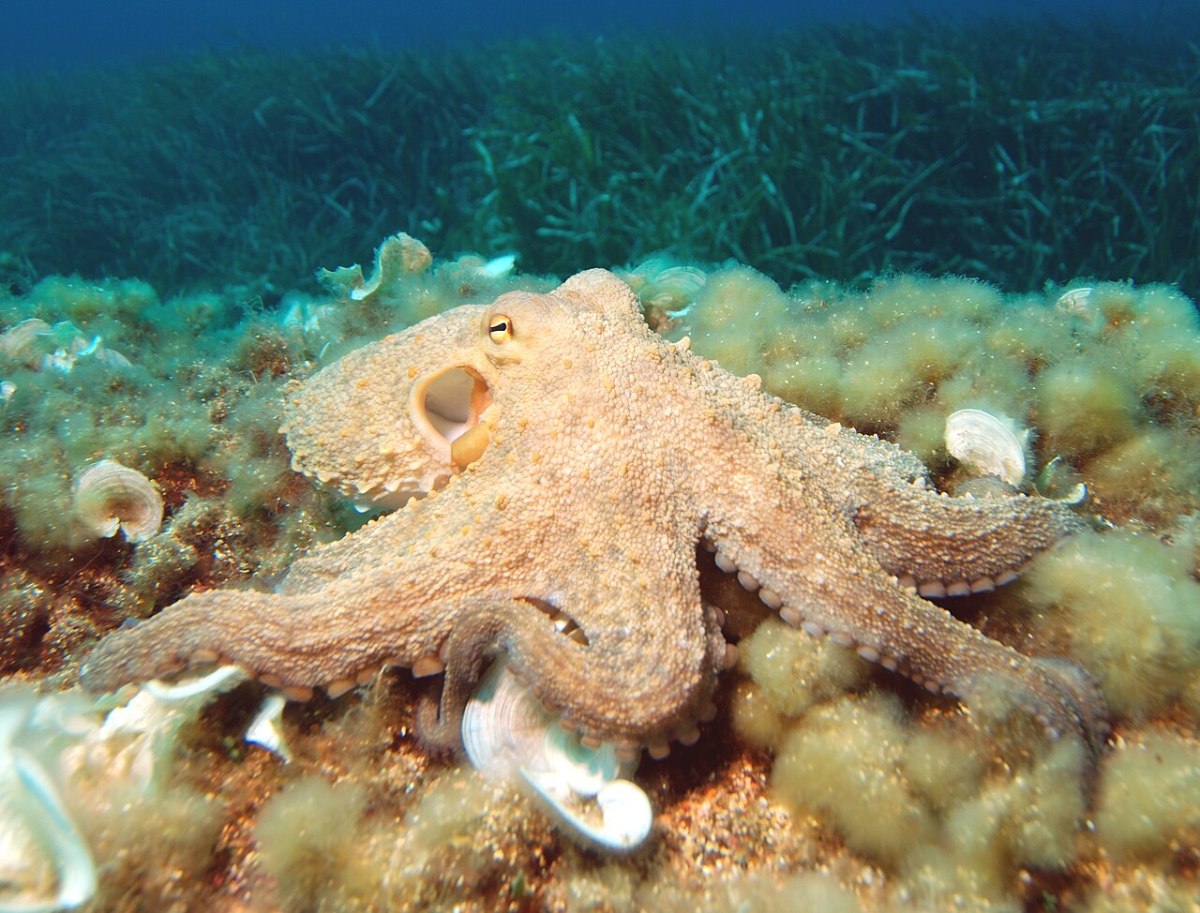
Mattias Krantz got Tako from a Japanese seafood market.
“That guy,” he told the person manning the stall, pointing to a common octopus sitting in shallow water with others of its kind, not even given room to swim before it was to become someone’s meal.
It is the ultimate as far as random interventions of fate go, and I kept thinking about Tako’s almost-end on a plate while watching musician Mattias Krantz teach the clever animal how to play piano.
Octopus are smart. Comparing animal intelligence to human intelligence is always a flawed and imprecise effort, not least because of differences in psychology and evolution, but the eight-armed invertebrates have cognitive abilities on par with humans at three years old. That is to say, some of their cognitive gifts exceed those of small children, some fall short, and some are about equal. It’s always going to be apples to oranges between species.
Octopus learn quickly simply by observing. They remember individual people even if they haven’t seen them for months. They play, explore and even decorate their dens. In the wild, species like the mimic octopus perform nature’s most astonishing acts of imitation, not only changing the hue, texture and patterns of their skin, but also their shape and the way they move. They can imitate dozens of creatures, blend into the sand, and disguise themselves as plants and rocks. When a predator approaches, the mimic octopus takes on the shape, color and behavior of another predator — a highly venomous fish, for example — and scares off the aggressor. That requires serious smarts.
Technically, saying Tako is playing piano may be a stretch. Octopus can’t hear, so Krantz rigged Tako’s tank with a device that turns sound to rhythmic pulses in the water.
Yet there is no denying that Taku took to the piano with enthusiasm, happily played it, even looked forward to it every day when Krantz’ multiple iterations of waterproof keyboards finally reached a point where the animal could reliably manipulate the keys. (Krantz had to create switches Tako could pull, for example, as it’s difficult for the invertebrates to push keys.)
Krantz’ determination is admirable. The Swedish musician, known for his quirky projects, overcame major hurdles that would have stopped most people, and navigating some of those challenges required radical reconsideration of how humans and animals interact with the world.
Yet Krantz and Tako got there in the end, and the piano is only one part of it. Tako is short for takoyaki, a Japanese fried octopus dish. Watching Tako’s interest and enthusiasm as he tackled the piano day after day, you can’t help but think about his less fortunate tankmates, and our collective ambivalence to the overwhelming evidence that we share this planet with billions of other minds, each with their own thoughts and feelings.
Header image of common octopus credit Albert Kok/Wikimedia Commons
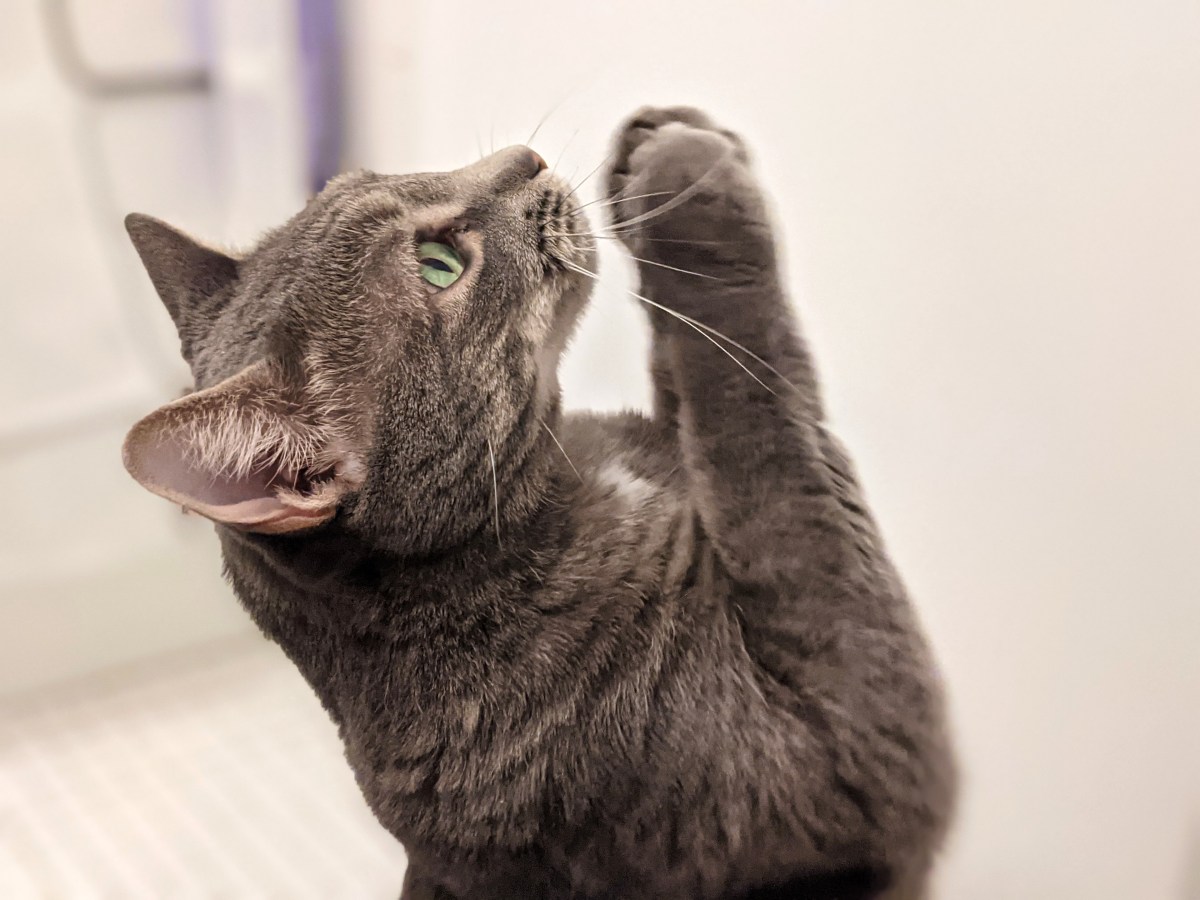
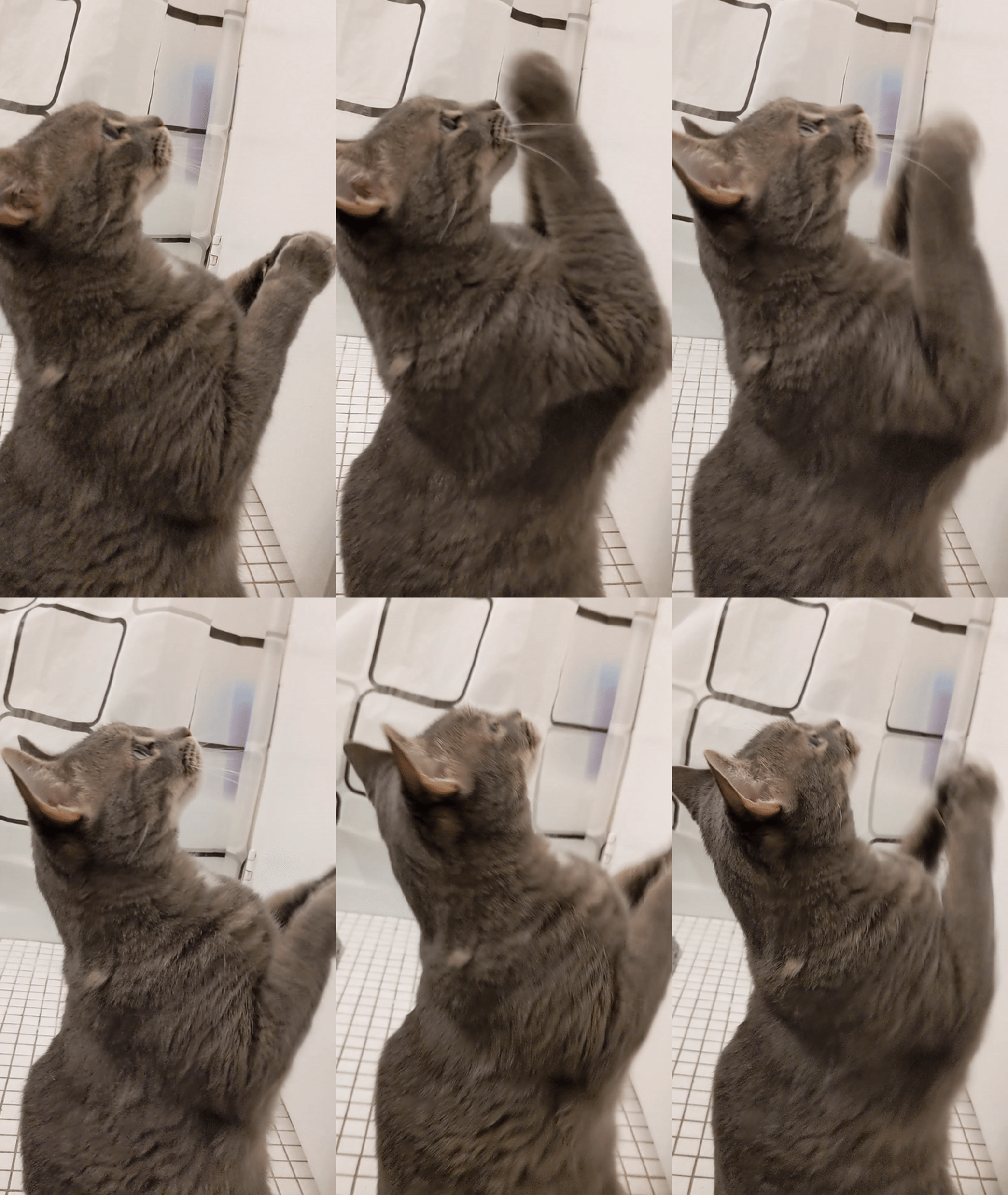
For the uninitiated, it’s a quirky behavior in which a cat sits upright on its back feet, then places the front paws together and moves them up and down as if fervently at prayer — or begging for something. (Though that’s undoubtedly our anthropomorphic interpretation of a distinctly feline quirk.)
Our post about the begging paws has become one of the most popular stories on this site, with people regularly finding us via search engines as they try to learn more about this strange behavior.
The last time we asked around, several veterinarians and behaviorists were happy to speak to us about the subject, but no one could say for sure what the begging paws motion means.
We’re going to give it another shot and hopefully get some answers by comparing notes with people whose cats engage in the behavior. If your cat does the begging paws/praying gesture, we’d love to hear from you!
Please comment here or email paininthebud at gmail along with:
The name, age and gender of your cat
How frequently your cat does the gesture
Anything patterns or related behavior you’ve noticed: does your cat “pray” at certain times or in response to something she sees? Do you reward the behavior with treats, affection or attention? Has your cat always done it, or did the behavior emerge at a particular time?
Any detail could help uncover what exactly our furry friends are doing.
If you have photos or video of your cat “praying,” we’d love to include those clips in our follow-up story as well.
Hopefully by working together we can understand this quirky behavior and finally solve the mystery of why our cats do it!
Buddy the Cat asserts he is a powerful apex predator who fears no man or beast, while Buddy the Cat runs and hides the moment there’s an unfamiliar sound in his domicile.
I Am An Apex Predator!
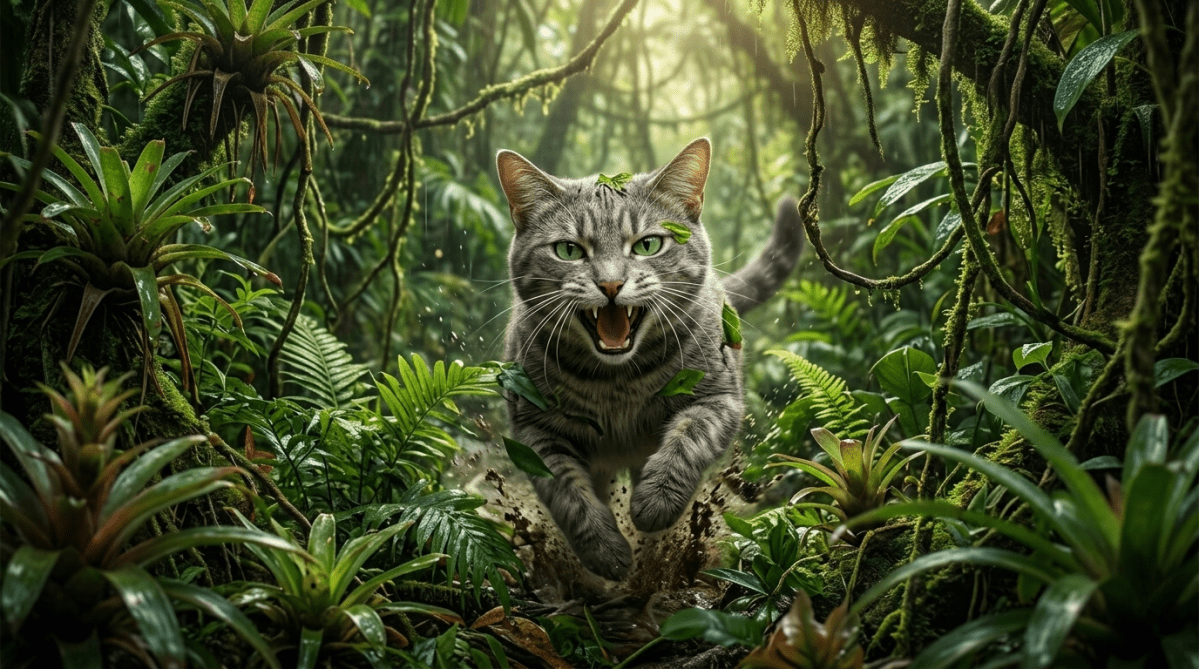
Behold! I have the gait of a lion, the bite force of a tiger, the stealth of a jaguar, and the relentlessness of a leopard!
My meowscles ripple meowscularly as I stalk my prey by moonlight! One second all looks safe and calm, and the next I’m leaping from cover in a burst of feline power to ambush my unfortunate prey!
Lesser creatures have nightmares about me. Indigenous cultures celebrate my legend in oral traditions. Craftsmen carve bas reliefs illustrating my mastery over all beasts. Shamans invoke my speed and strength. My toys quake at the mere mention of my name!
I am Buddy, and I am a ferocious cat! RAWRRR!!!
‘OMG, What Was That Noise?!? Go Check It Out, Human!’
Holy crap, dude! What the heck was that?
I’m just gonna run and hide under the bed while you investigate that awful, terrifying noise! No, YOU check it out. Are you crazy? I’m not going anywhere near there! What if it’s, like, a serial killer or a chalupacabra?
Where’s it coming from? The kitchen? The bathroom? Oh God! I told you, there are monsters living in the toilet and they can emerge at any second to murder us in our naps! We should have nailed the toilet seat down years ago! You didn’t listen to me, so you’re gonna have to fend off the monsters while I lend you moral support from three rooms away.
What? Duuuude.
Was it really your smartphone alarm on vibrate? Whew! For a moment there, I thought we were in trouble.
Now I’m gonna need you to rub my head while I sit in your lap and you tell me what a good, brave boy I am. If it really had been monsters, they would have gotten their butts kicked by me. I was brave, wasn’t I?
If you slander me by claiming I freaked out and ran to hide under the bed, I will be forced to accuse you of peddling fake news!
Point-Counterpoint presents two essays taking opposing positions on a topic. Join us again next week, when Buddy the Cat will debate Buddy the Cat on another important topic.