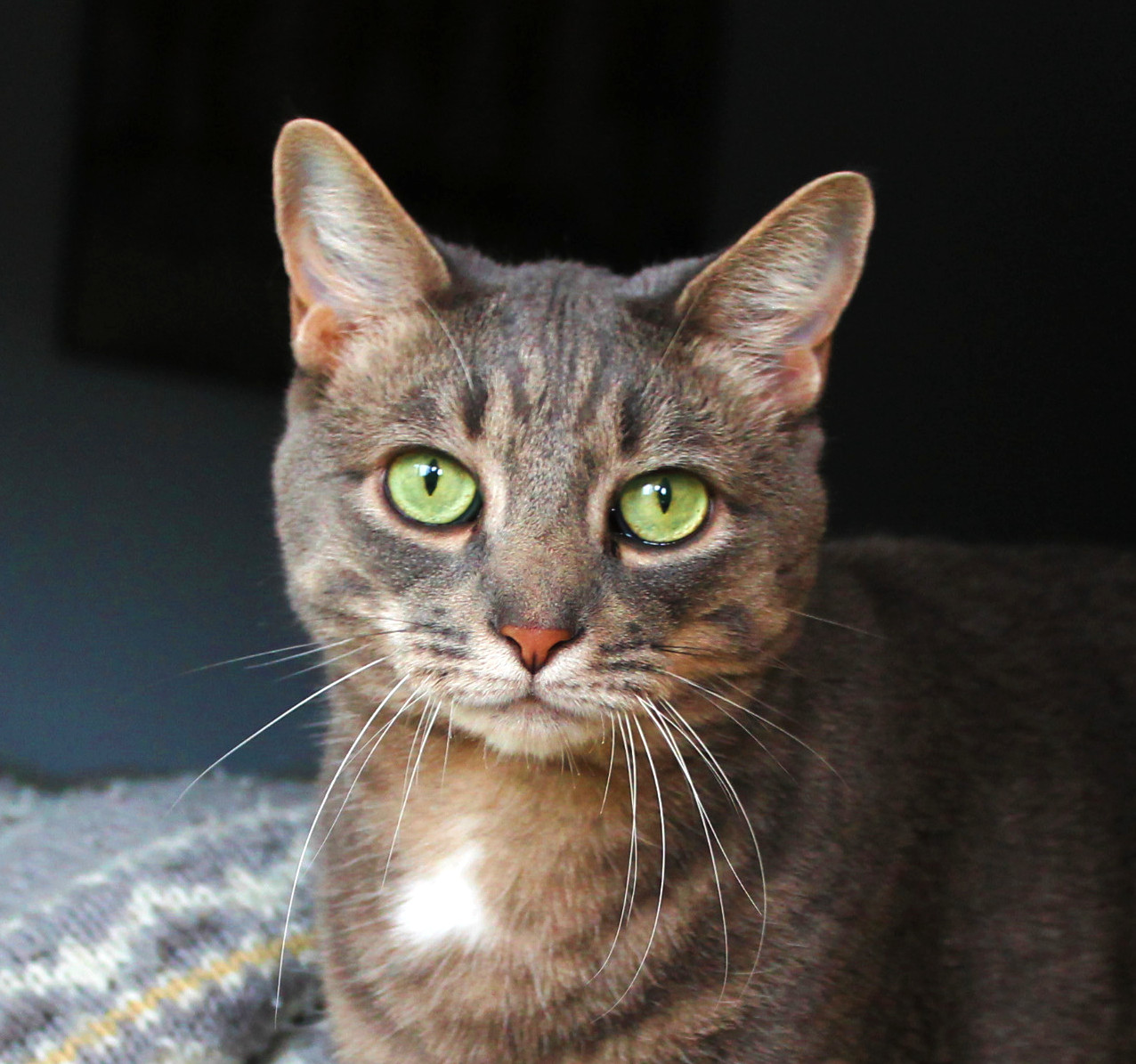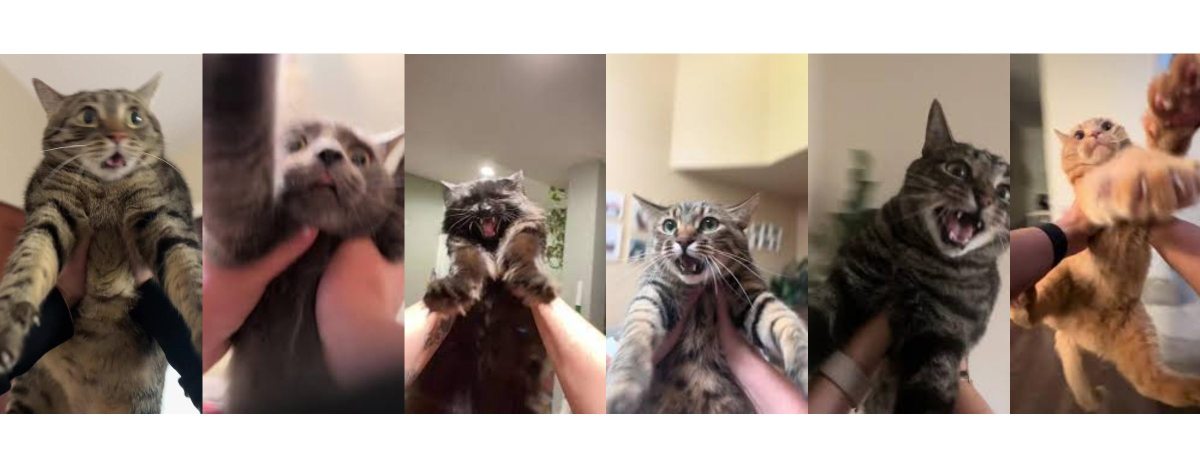
What do felines make of the spy-slash-UFO drama that has consumed the popular imagination for the last week?
The humans have been freaking out about a big balloon flying over Humanland, believing other humans sent it to spy on them. But some humans think aliens are behind the nefarious balloons, and they’re not balloons at all — they’re super sneaky alien craft sent here to scout ahead for an invasion. What do you think?
“If I wanted caviar for breakfast, I would have told you. Stick with the schedule.” – Versace, 13, show cat
“You gonna eat that hedgehog?” – P-84, 1, puma
“Hey up, mates. What’s this, then? Can’t we just fire a few fecking missiles at them and get on with it?” – Liam Gallagher, 8, British cat
“Allow the aliens to land. They look delicious.” – Zanzibar, 5 months, apprentice murderer
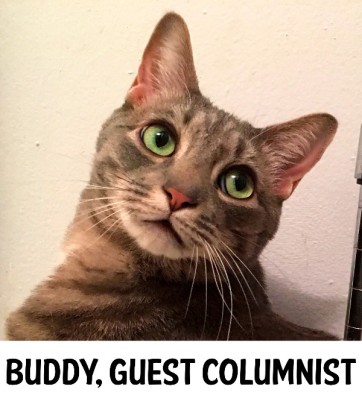
“We need a bunker, do we have a bunker? Well why didn’t you BUILD a bunker? Do I have to think of everything?!?” – Buddy the Cat, 8, ex-president of Americats
“This is clearly the work of the aggressive regime in Luxembourg. We should invade, confiscate all their cheese and make them a vassal state.” – Cicero Nash, 4 1/2 months, couch stylist
Happy Super Bowl, a special day when Americans across the country will gather and watch more than 200 commercials, and some team will play some other team in just 11 minutes of actual game time.
No wonder the NFL and its advertising partners try to sell the commercials as entertainment in their own right: If you watch the Super Bowl, you’ll be subjecting yourself to an relentless onslaught of adverts for everything from Budweiser to Booking.com, insurance companies trying to out-zany each other, and gambling commercials. Lots and lots of gambling commercials for sites like DraftKings, Caesars Sportsbook, MGM and FanDuel.
Super Bowl Sunday was previously made brighter by the Kitten Bowl, but Hallmark canceled the cute fan favorite last year, saying only that it’s “not currently developing original animal-centric programming.”
It was inevitable that another network would move in to capitalize on Hallmark dumping its popular annual special, and taking the place of Kitten Bowl is the Great American Rescue Bowl, an event by the Great American Family Channel and the North Shore Animal League which will feature adoptable dogs and cats on a pet-size football field, along with host Beth Stern revisiting the stories of kittens, cats, puppies and dogs who were featured last year and found their forever homes. If you don’t get the Great American Family Channel you can stream the event on Hulu beginning at 10:30 a.m. (See the previous link for other streaming options.)
Viva la Tiger Bowl!
Watch this space in the coming week for a new longform story about the Champawat tiger, the most dangerous animal documented in more than 5,000 years of recorded human history. Little Buddy and I did quite a bit of research for this one, and we hope it’ll make for a good read.
People come from all over Poland, neighboring Germany and beyond to see Gacek up close.
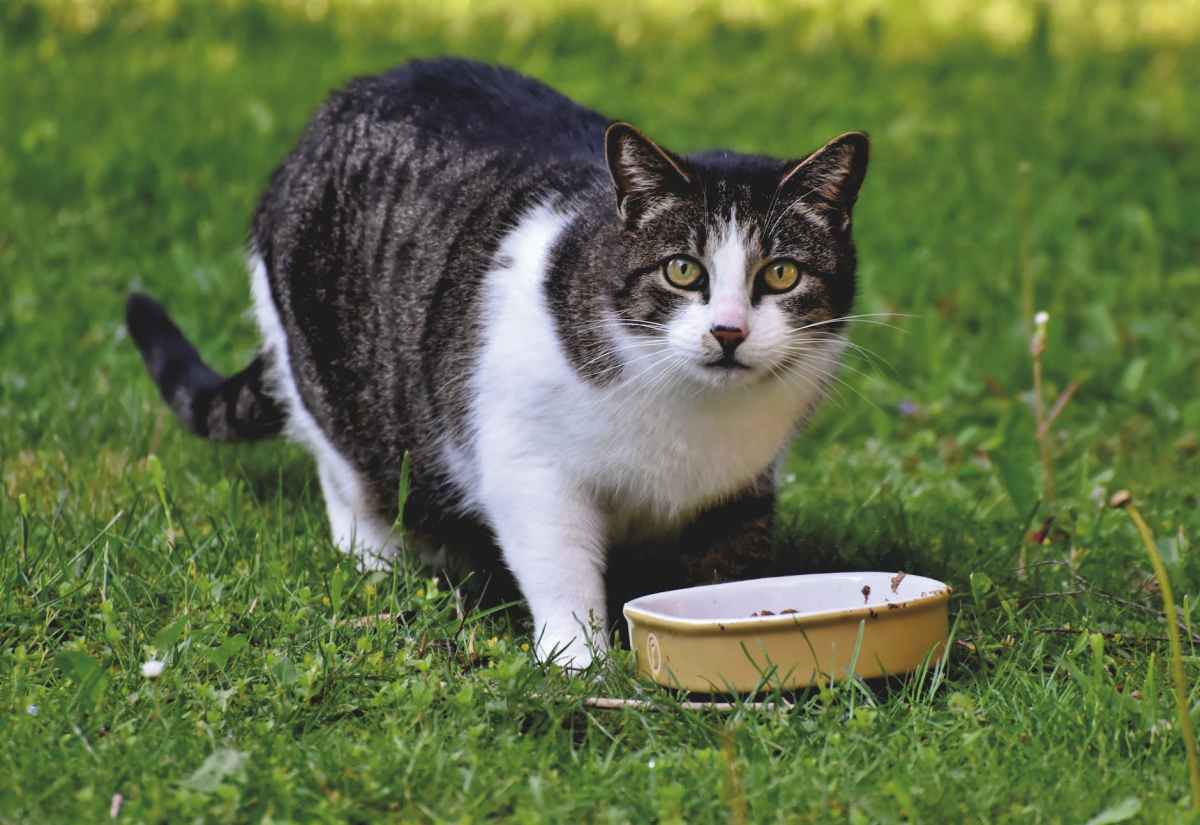
The Polish city of Szczecin has a message for visitors: Come, see Gacek and marvel at his chonky feline glory, but please don’t feed him!
It’s not a joke. The rotund tuxedo kitty, dubbed the “King of Kaszubska Street” in a 2020 local news report, has become so famous that he’s listed as the top-rated tourist attraction in Szczecin, a riverfront city of 395,000 people in northwest Poland. That’s no small feat in a place that boasts a beautiful historic old town and a bustling riverfront lined with shops, restaurants and attractions.
Locals think Gacek is about seven years old, and some years ago they built him his own little house on the street, where he can be found snoozing comfortably when he’s not strolling the block, charming tourists and nibbling on the food they (still) bring him.
Gacek isn’t bothered by street sounds or crowds of admirers as he naps in his house. Credit: Krola_Karo/Reddit
There are more than 1,100 reviews for the big guy on Google, with an average of a 4.9/5 rating. (We suspect the handful of less-than-perfect reviews are from dogs or jealous rivals.)
“It was worth traveling three hours to feel ignored by him,” one reviewer wrote.
Another visitor got too close to the magnificent chonkster and found out what happens: “He stole a sausage,” the reviewer deadpanned.
As Notes from Poland points out, there’s a sign on Gacek’s house informing visitors that Gacek will “happily pose for photos,” and asking for people to leave food in sealed bags in a box, so Gacek’s caretakers can keep him on a somewhat normal diet and prevent him from gaining more weight. A post on the Slavic social media site VK describes Gacek as calm and nonchalant about the attention he draws, but notes he doesn’t particularly like it when people pet him, and he’s not a fan of the cold.
h/t reader Gilda P. for letting us know about Gacek.
Szczecin is especially busy in the warm summer months, but Gacek is a year-round attraction. Credit: InYourPocket
Gacek is accustomed to being the center of attention and seems to revel in his celebrity as he makes his daily rounds around the block. Credit:hollusaurus/Reddit
Gacek responded with a few excited meows when a Polish TV crew interviewed him in 2020.
Cats often scarf their food down as if they haven’t eaten in a week. Are we feeding them enough?
Not all cat food is created equal, and many cats say they’re not getting enough nutrients daily. We asked six cats if their nutritional needs are being met and if their humans are feeding them enough.
Herbert Augustus Lardfellow
“That’s a joke, right? I’m starving over here. Look at me, I’m practically skin and bone!” – Herbert Augustus Lardfellow, 4, barrister
Slim Smudge
“I meow and meow and meow, and all I get are three cans of wet food a day, a bowl of dry and six snacks. I’m constantly hungry.” – Slim Smudge, 9, executive vice purrsident
Sir Snacksalot
“No! I often go two, sometimes three hours between meals. It’s torture!” – Sir Snacksalot, 2, sommelier
Pâté Pete
“Does it look like I get enough calories?” – Pâté Pete, 7, office meownager
Double-Stuffed Oreo
“When you’re as meowscular as I am, you need 10 or 20 times as much protein as a typical cat. I can feel my meowscles wasting away.” – Double-Stuffed Oreo, 5, investment banker
Mr. Delicious
“Too…weak. Can barely…meow. Need Temptations…now…please.” – Mr. Delicious, 3, analyst
Using a network of trail cameras, researchers studied jaguars for years and observed behavior that surprised them.
Lions are famously described as the only social big cats, known for living in extended family units called prides and even forming coalitions, which young males sometimes do before they lead their own prides.
But now, thanks to a research team that monitored trail cameras in the Amazon for years, we know that jaguars form their own coalitions, doing things never before seen like patrolling and marking territory together, cooperating on kills and sharing prey. The researchers focused on areas in Brazil’s Pantanal and Venezuela’s Llanos region, both of which provide varied landscapes and water access for the famously water-friendly big cats, who are strong swimmers and prey on aquatic and land animals.
The team pored through more than 7,000 instances of jaguars appearing on the trail cameras, which gave them a look at a range of jaguar behaviors that normally would not be seen.
“It shows the value of having long-term camera tracking, movement ecology data and direct observations through citizen science,” said Allison Devlin, a co-author of the study. “And from that we’re able to see that if you have a relatively stable jaguar population, healthy prey base, and protection for the species, we can start seeing these more natural behaviors, and start understanding some of the interactions that a solitary species might have.”
Credit: Wikimedia Commons
In two cases, coalitions between jaguars lasted for more than seven years, the researchers said. The jaguars were seen cooperating for almost every activity as they went about their daily lives in the jungle.
Not only are the findings remarkable, but they’re a reminder that we’re still woefully ignorant about the only big cat of the Americas, especially compared to lions, tigers and leopards.
“The secret life of jaguars is more complex than previously thought,” Devlin said. “We still have so much to learn about the intricate lives of these secretive wild cats, with findings that can help scientists better conserve these species and the landscapes on which so many plant, animal, and human communities depend for their survival.”
One reason they’re less studied than other big cats is because jaguars are notoriously elusive. People who have spent their lives in and on the periphery of the Amazon say jaguar eyes are on humans from the moment they enter the jungle, watching from the shadows. Yet there are no recorded cases of man-eating jaguars, and conflicts with the feline apex predators and humans are rare, most often relegated to instances where people got too close to jaguar cubs or tried to corner the animals. Jaguars do a lot of watching, but they don’t allow themselves to be seen.
Of course that doesn’t mean they’re cuddly. Jaguars are the third-largest cats in the world, after tigers and lions. They have the strongest bite force of any cat, which allows them to crunch through giant turtle shells and kill in one bite by literally crushing the skulls of their prey with their teeth. (The name jaguar comes from the indigenous yaguar, which means “he who kills with one leap.” No other cat kills the same way.)
Jaguars are also perpetually confused with leopards, their look-alike African cousins, which leads to further uncertainty about their behavior and habits. Aside from being separated by an ocean and living on separate continents, jaguars are heavier and have thicker limbs than leopards, and the biggest give-away is the presence of spots within their rosettes, which leopards do not have.