The family posted a short statement on social media but refrained from offering details, citing an ongoing police investigation.
Nora the cat is back with her family.
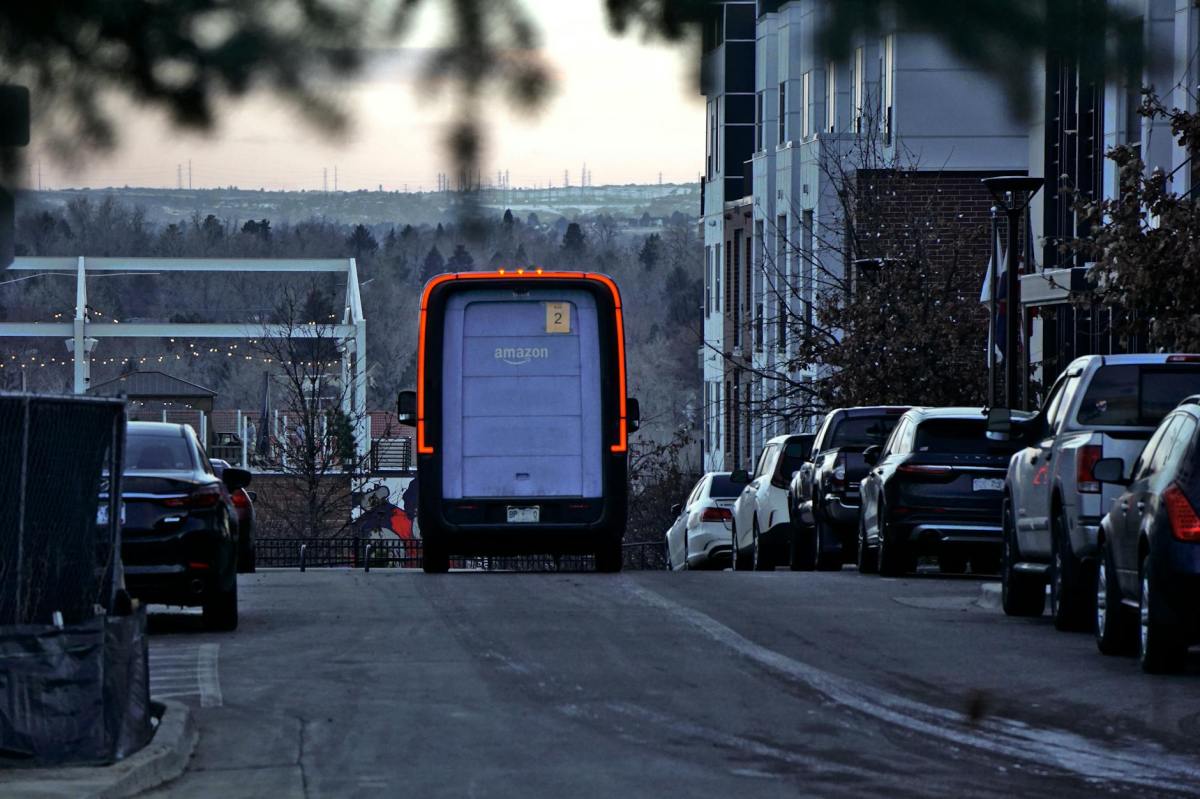
The tabby cat was stolen from outside her West Yorkshire, UK, home on Jan. 18 by an Amazon delivery driver. Nora’s human, Carl Crowther, checked footage from his security cameras and had a clear view of the driver dropping off a package and scooping up the cat before walking off the property with her.
The incident was widely covered in UK media and while the suspect’s face was censored in news reports, an uncensored version was widely shared on social media by animal welfare groups and regular people who helped put pressure on the driver. Nora’s family worried that the kitty could experience health problems without the medication they give her regularly for a heart murmur.
Crowther’s Facebook post.
In an update post, Crowther said Nora had been returned “safe and well.” It’s not clear if the Amazon employee returned the cat or if police were involved in the recovery. Crowther, citing an ongoing police investigation, said he can’t offer more details at the moment.
“Obviously we are over the moon with this outcome,” he wrote on Facebook.
Unfortunately the theft of pets by delivery drivers has been a recurring story in the news, and there are reports of Amazon drivers making off with cats and dogs going back at least a decade. While there is no official count or centralized list, it’s happened often enough to generate outrage from customers and news coverage from local and national media, which is often key to helping the victims get their pets back.
A family’s home security camera captured clear footage of an Amazon delivery driver scooping up their cat and carrying her away.
At a certain point, you’ve gotta wonder whether this is a feature, not a glitch.
After yet another incident involving an Amazon driver stealing a pet, the company stuck to its usual script by being absolutely useless and managing to offend its wronged customer.
On Monday West Yorkshire’s Carl Crowther checked his security camera footage, prompted by the sudden disappearance of his cat, Nora. The footage shows an Amazon delivery driver leaving a package at Crowther’s front door, then scooping Nora up before walking off the property with the feline.
When Crowther called Amazon, the company handled it with the same remarkable tone deafness and lack of care that’s become its trademark in cases like this.
“Their response was disgusting, asking what monetary value we’d put on the cat,” Crowther said. “How can you put a value on somebody’s pet?”
Thankfully Crowther’s local police are taking the case seriously rather than treating it as petty crime or beneath their concern, as many US law enforcement agencies do. That’s not entirely their fault, as outdated laws still define cats and dogs as property with fixed monetary value, fungible assets that can be easily replaced. In many states, stealing a cat will result in nothing more than a low level misdemeanor charge that is pleaded down in court.
West Yorkshire police told The Guardian and the Independent that they’ve opened an investigation and “inquiries remain ongoing.”
The video has been published by several UK news sites, but oddly — perhaps due to UK law — the driver’s face is blurred out.
There’s an additional reason for urgency besides Nora’s family missing her, Crowther said. The stolen feline has a heart murmur and takes medication to manage the condition. Crowther said he’s worried she could succumb to stress between the lack of medication and the frightening abduction. Nora does not do well in new environments, he said.
This is just the latest theft in what has become a fairly routine situation for Amazon. For some reason, perhaps because of lack of training or less vigorous vetting, Amazon’s drivers have been in the news much more frequently for stealing pets than drivers for any other retailer or delivery company.
The online retail giant still seems to have no protocol for handling cases like this, with its representatives treating them like typical customer service issues. Thus the questions about placing monetary value on pets and other insensitive questions.
In cases in which victims have been successfully reunited with their pets, they took the initiative and did not wait for Amazon or the police to act.
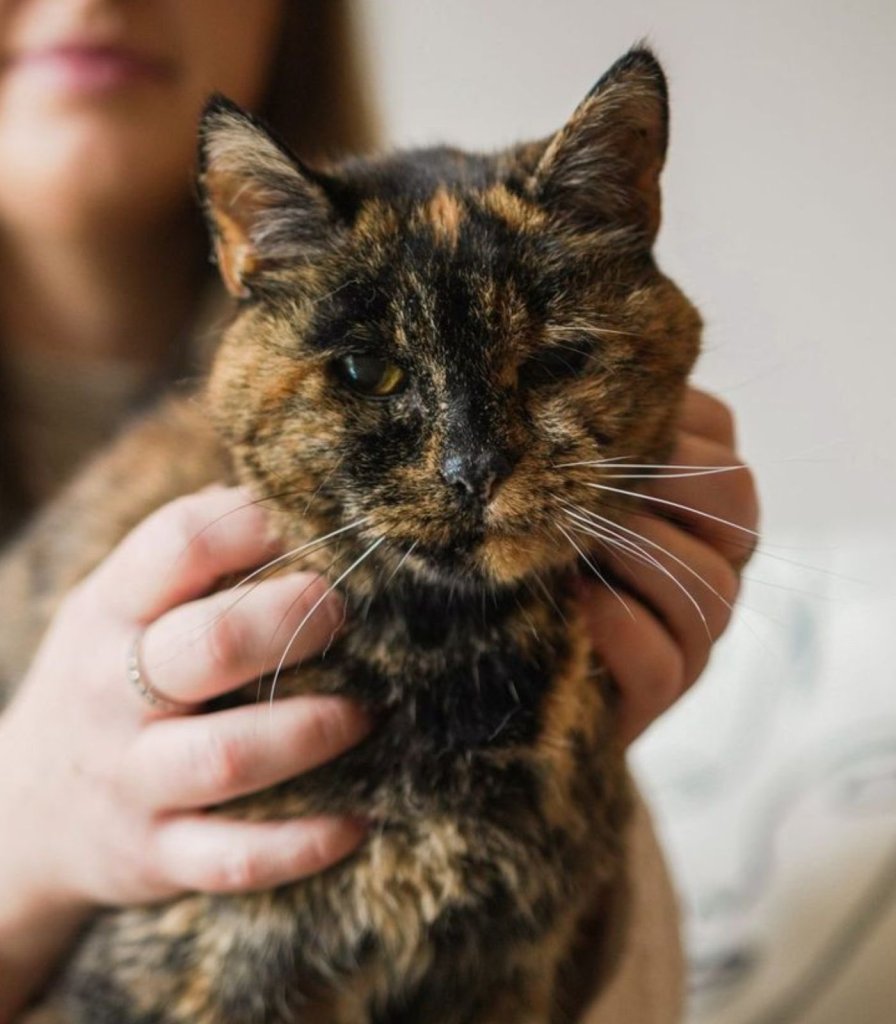
Despite her advanced age and loss of hearing, Flossie is still “affectionate and playful,” her human says.
When Flossie was born, Mariah Carey, Coolio and Pearl Jam ruled the airwaves alongside a band called Deep Blue Something with their hit, “Breakfast At Tiffany’s.”
Robert Deniro and Al Pacino were kings of the box office for their film, Heat, alongside Robin Williams’ Jumanji and Steve Martin’s Father of the Bride Part II. Bill Clinton was still serving his first term as president, and the internet was in its infancy as a network available to the wider public after years of use by the military and academics, with users connecting via cumbersome and painfully slow modems.
Your humble correspondent was just a kid, and Buddy wouldn’t be born for almost another 20 years.
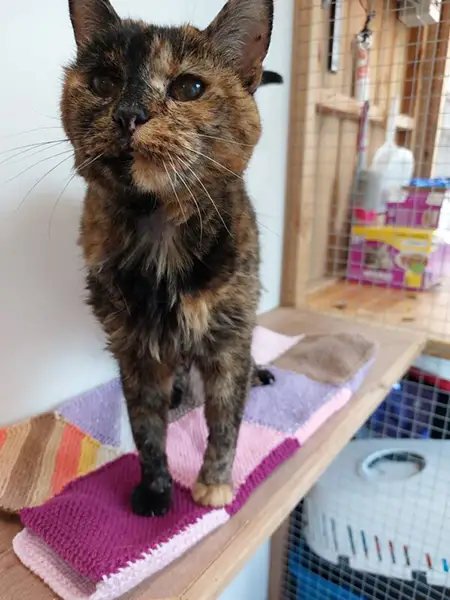
Yet Flossie’s still going and just celebrated her 30th birthday on Dec. 29. The tortoiseshell was officially named the world’s oldest cat in 2022 when she was 26 years old. Flossie, originally a stray living near a hospital, was adopted by her first human, a healthcare worker. When that woman passed away, her sister became Flossie’s caretaker. And in August of 2022, having outlived two of her humans, Flossie was taken in by the UK’s Cats Protection, who carefully screened applicants until settling on Victoria Green, who lived in Orpington, UK.
“I’ve always wanted to give older cats a comfortable life,” Green said when she was chosen as Flossie’s caretaker.
Flossie was deaf and had “limited eyesight,” veterinarians noted when they helped Guiness World Records verify the long-lived feline’s age. But despite that, Flossie remains “affectionate and playful,” Green said.
“I feel like I’m not sharing my home with the oldest cat. I feel like this is her home and I’m encroaching on her space,” Green told Guinness World Records at the time. “She’s a very nice roommate and we get on very well. I don’t feel like I’m living with a senior.”
The oldest cat on record was Creme Puff of Austin, Texas, who was born in August of 1967 and lived until 1995, when Flossie was born.
We wish the birthday girl a happy one and hope she’s got at least a few more birthdays in her.
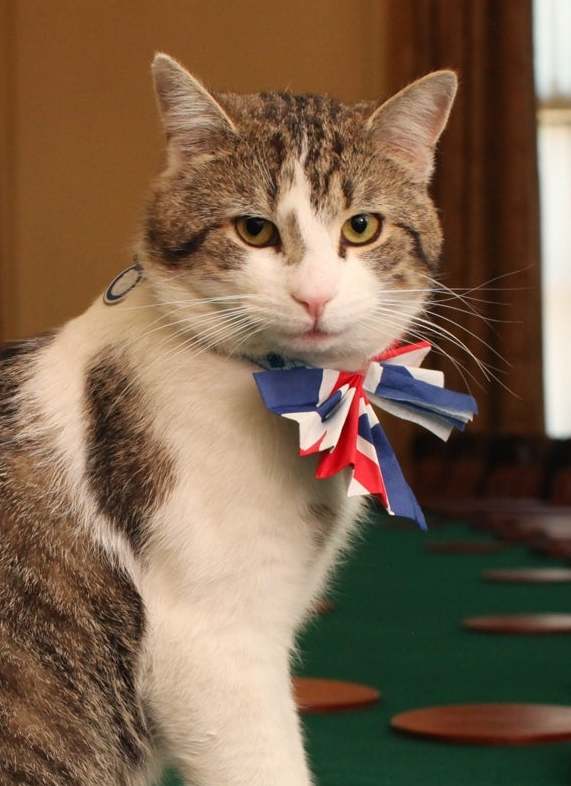
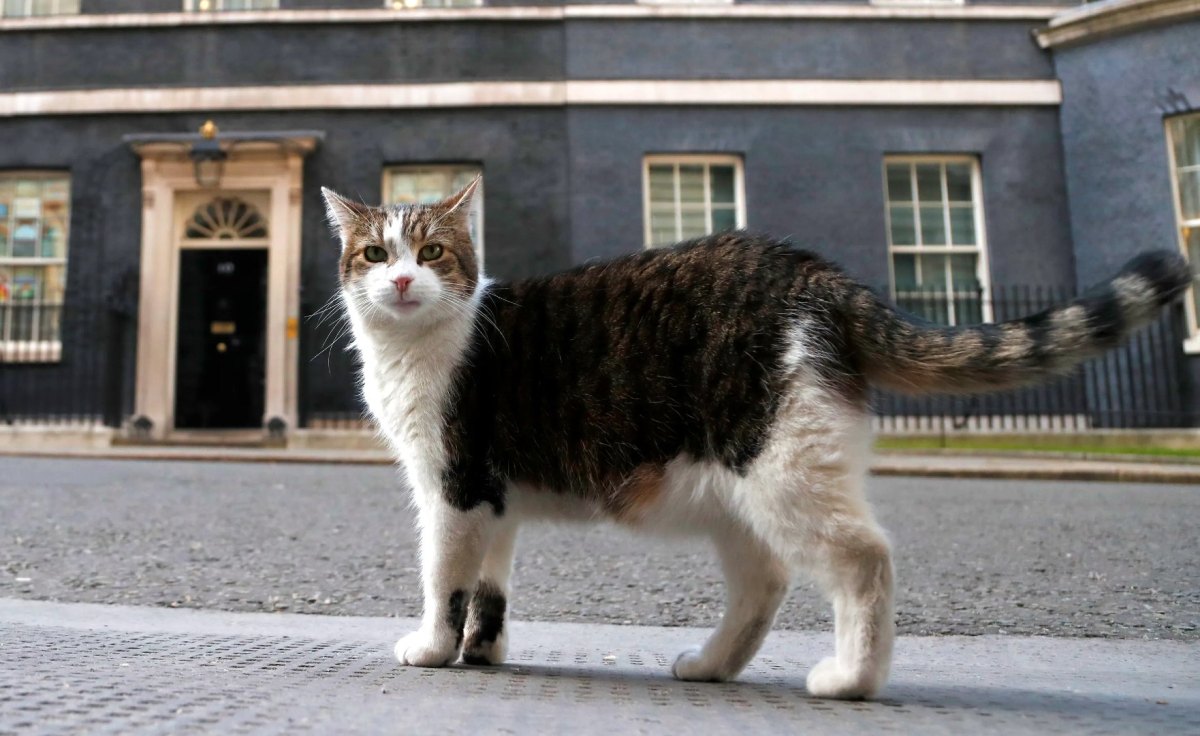
As Larry marks 15 years as the chief mouser in the UK’s seat of power, No. 10 Downing Street, Britain’s most famous feline is a constant amid rapid change.
At first it didn’t look as if Larry the Cat’s tenure would last long.
The striking white and tabby mix came highly recommended from Battersea Cats and Dogs, a London shelter whose staff said he was one of their most skilled little hunters. Larry, they said, would adjust well to the busy surroundings of the prime minister’s office and residence.
Adjust he did, but not in the way then-Prime Minister David Cameron, No. 10’s staff, and the UK press thought he would. Larry began his tenure by taking long naps on the residence’s front windowsill, paying frequent visits to his “lady friend” Maisie — a mouser living in another government building several doors down — and establishing a territorial rivalry with Palmerston, the Foreign Office’s mascot and mouser.
“In a separate development, it can be revealed that Larry has a girlfriend,” a droll BBC report from 2011 confirmed, while reporting on a cat-themed quiz night fundraiser at No. 10 to ensure the chief mouser’s yums cupboard remained stocked. “Maisie, a cat who lives at the nearby St James’ Park keeper’s cottage, has struck up a relationship with Larry, a spokesman for the Royal Parks has confirmed.
“There is, though, no prospect of kittens, as Larry went under the knife some time ago,” the report continued, speculating that the chief mouser’s love life could explain “why Larry spends most evenings out – and most days fast asleep in 10 Downing Street.”
It didn’t take long for the press to begin running tongue-in-cheek stories about Larry failing to deliver on promises just like every other political animal, and for a while it looked like No. 10 would need another chief rodent exterminator.
But then Larry began covering himself in glory by defending his new domicile not only from rats and mice, but also from a fox, territorial incursions by Palmerston, ill-intentioned politicians and other undesirables.
As the years passed, Larry’s legend grew. He outlasted Cameron, then Cameron’s successor, Theresa May, who admitted she was a dog person and wasn’t fond of Larry, even denying him the use of her office chair for naps. Then there was Boris Johnson, Liz Truss, Rishi Sunak, and Keir Starmer.
Starmer is Larry’s sixth prime minister, and no one will be surprised if his tenure ends while Larry’s endures. Meanwhile, Palmerston was “retired” to the countryside and only recently returned to politics when he accompanied his human, Andrew Murdoch, to Bermuda when the latter was appointed governor there. Such is the price of incurring Larry’s wrath.
Now at 18 years old, with 15 years as chief mouser under his collar, Larry represents something rare in modern politics: stability and predictability. With the passing of Queen Elizabeth II in 2022, illness and scandal in the royal family, and the usual ephemeral nature of UK politics, Larry has become more important than ever as the stalwart in the country’s seat of power.
Larry’s given the cold shoulder to Irish and Scottish politicians, nuzzled up for scritches from former US President Barack Obama, and forced President Donald Trump to wait before departing No. 10 while taking refuge from the rain under the president’s limo. The famous feline rarely leaves the public guessing when it comes to his thoughts on visiting political figures.
He’s “the most miserable animal you’ll ever meet,” a snubbed Ian Murray, the Scottish Secretary, said after Larry refused to pose for photographs with him. (Murray, it should be noted, was relieved of his post in September, and now holds the lofty title of minister for “culture, media and sport.” Perhaps he and Palmerston can commiserate.)
But that’s part of Larry’s appeal. The chief mouser’s unimpressed reaction to powerful figures has endured him to the public, who shower him with fan mail, treats and toys.
His unintentionally comedic adventures and ability to nap under any circumstances won him the affection of the notoriously fickle UK press, who enjoy watching, photographing and writing about his antics while waiting for the less popular humans inside to update them on the big news of the day.
That’s not hyperbole, by the way: a 2024 Ipsos poll found Larry is more popular than every prime minister to share his home, and the margins aren’t even close.
It also hasn’t escaped the notice of the press that Larry “rules the roost,” and has attentive staff who open the door at No. 10 any time he wants to go in or out. The famous door is actually a blast-proof, steel replica of the wooden original, custom manufactured after the IRA fired a mortar at the residence in 1991. Thus there’s no cat flap, and staff monitoring the door from inside open it as soon as the building’s most enduring resident decides he wants back in.
The prime minister may be the UK’s most powerful political figure on paper, but Larry’s tenure, run of the place, array of servants and adoring fans all prove he’s the real power at No. 10.
Now Larry’s legend will expand even further as the UK’s Channel 4 has commissioned a documentary series on cats from writer-comedian David Baddiel. The series, which is currently filming, will feature Larry in one of its episodes.
Happy 18th birthday, Larry! We hope you see many more years filled with treats, adventures, historic furniture to nap on, and politicians to push around. And if you achieve world peace while you’re at it, no one would be surprised.
The costumed man has growled, hissed and meowed at passersby in the coastal area, reigniting old rumors of actual big cats prowling the area and freaking out people walking their dogs at night.
Ah, the things you can get away with in a country without guns.
A man in an all-black outfit has been prowling Wallasey beach in Wirral, a peninsula in northwest England, according to people who live in the area.
One witness said the man was “waving his hands in the air and making panther noises,” while others said they saw him approaching cars stopped at lights on roads near the coast.
“Anyone know who the freak in the cat mask and morph suit is at the coastal park near the harvester?” another local wrote online.
One thing was clear from witness accounts, photos and several short smartphone-shot videos: the costumed man wasn’t trying to imitate a friendly house cat.
“Was walking my dog tonight and heard a man making cat noises, shone a torch he was waving his arms at me before crawling up the hill. Never been so scared,” one witness posted to Facebook, per the BBC.
Sad as it may be, the first thing that came to mind when we read the witness accounts was that this doesn’t happen in the US, simply because odds are the costumed prankster would be shot.
“So I decided to bugger off home, had the rest of last night’s takeaway, had a laugh at the Sharons and Waynes on Blind Date, then went to see if any of the lads were up for a pint. Oi, I could really go for a Chinese! Anyone else wanna go for a Chinese?”
It’s possible whoever is behind the strange sightings is making light of decades-long rumors that mysterious and elusive big cats have been prowling the UK countryside.
Similar to persistent rumors of Bigfoot in the US, the phantom cats of the UK have their own believers who argue that there’s an extant population of leopards or pumas who are exceptionally adept at staying hidden from cameras but are occasionally spotted by farmers and motorists in the British countryside.
There’s a podcast dedicated to the topic, and proponents of the idea say it could explain a handful of cases in which livestock have gone missing.
The podcast, Big Cat Conversations, even dedicated a 2021 episode to “Wirral’s liminal leopards,” with its host interviewing several people who say they’ve encountered large melanistic felids on the peninsula over the decades.
Real big cats such as the leopard above tend to leave unmistakable evidence of their presence. Image credit: Wikimedia Commons
But as big cat experts have pointed out, it’s difficult to miss the signs when such apex predators really do claim an area as home. From unmistakable pug marks, to trees scratched and scent-marked with urine, to calls that can echo for miles in right conditions, big cats have many ways of making their presence known— and it’s often advantageous for them to do so, since they’re highly territorial animals.
One man who was out walking his dog told the BBC he thinks the whole thing is a prank.
“I don’t know his name, I think it’s just a wind up. He’s definitely not out to frighten people, he does it for fun,” he said. “He just likes being a giant cat. He doesn’t frighten our dog.”
Local police say they’re aware of the sightings. Merseyside Police and Crime Commissioner Emily Spurrell told local media that anyone who feels threatened by the suited figure should call law enforcement and report his whereabouts.