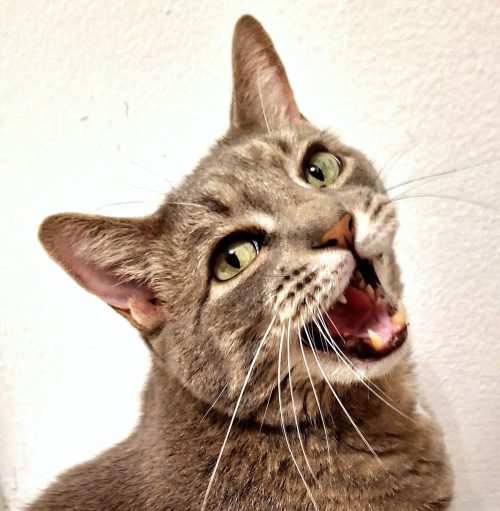
Buddy — Er, Budhotep — Is Apparently Descended From Royal Pharaonic Felines

Sheba and a geneticist who specializes in cats are looking for felines descended from ancient Egypt’s royal buddies.

“You may call me Budtum Ra Budhotep Bhufu Amun Buddeses, human. Now serve me!”

Bud’s already enormous ego just got a little bigger after I used Sheba’s Pharaoh Cat Finder to analyze his pharaohness.

The online tool says he’s up to 75 percent pharaoh:

I didn’t do it entirely out of altruism to give the little guy an ego boost. The winner of the Pharaoh Cat contest gets a lifetime supply of Sheba, and Bud’s been eating Sheba for 10 years. We’ve never endorsed any particular cat food here on PITB, partly because every cat is different, some have special nutritional needs and what works for one furry overlord may not work for another.

But as food motivated as he is, Buddy cannot scarf down more than half a can of wet food at a time, and he’s an enormous pain in the Bud when it comes to leftovers, so Sheba’s Perfect Portions saves me from wasting food.

While the online Pharaoh Cat Finder tool looks like it may be RNG combined with clever marketing,  there’s a genetic basis for the search. The company is working with Dr. Leslie A. Lyons, a geneticist who specializes in the DNA of our furry little friends at the University of Missouri’s Feline Genetics and Comparative Medicine Lab.
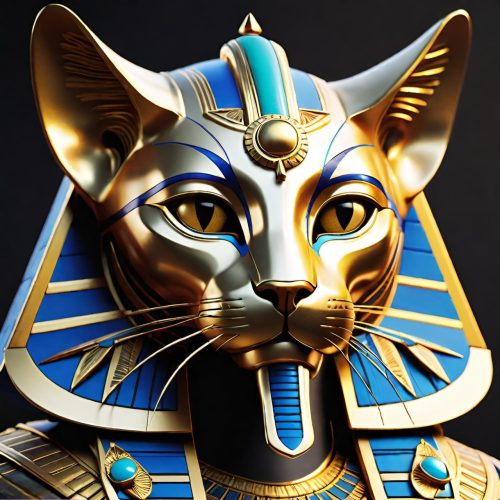
The legendary funerary mask of pharaonic feline Buddankhamun Budstet Ra Budshepsut, Buddy’s royal Egyptian ancestor. Credit: The Grand Museum of Magnificent Feline Stuff

Lyons was part of a research team that extracted DNA from mummified cats buried in ancient Egyptian tombs and sequenced their genetic code.

While the project verified that the Egyptians domesticated cats long before they began mummifying them and affording them revered status, Lyons says a DNA sequence from the ancient felines “has only been found in cats in Egypt and the U.S., unlocking even more questions to be explored.”

“We are looking at mitochondrial DNA only found in these pharaoh cats and a few cats in the U.S. So it’s really hard to find these cats, hence this hunt with Sheba pet food,” she said. “We’re on that quest to find the cats that went from Egypt into the U.S. and are the divine cats of the pharaohs. They should be worshiped like they were.”

The Temple of Amun Bud is guarded by gold statues of domestic cats instead of sphynxes. Credit: National Gallery of Buddesian Artifacts

I don’t think there’s any doubt that the aptly named Dr. Lyons is on team cat.

So here’s to hoping Bud gets a lifetime supply of Sheba, and Dr. Lyons is successful in her quest to find the elusive pharaoh cat lineage. In the meantime, we should probably start work on an impressive new pyramid here in the US, lest we disappoint our new feline pharaoh.
Cats Listed On Google Maps Are Getting Showered With Treats By Enamored Visitors. Buddy Wants In!

Some friendly felines boast five-star ratings in their listings, beating out top restaurants, hotels and nightclubs for highest-rated tourist attractions in their cities.

People have been listing their cats as tourist attractions on Google Maps, drawing five-star reviews from feline fans who come bearing snacks.

Titan the orange tabby, an absolute unit of a chonky cat who lives in Athens and is regularly fed by admirers, as well as “friendly neighborhood cats” in cities like Sydney, Australia, are earning ratings that most restaurateurs would envy.

“Visitors are evaluating a cat’s overall behaviour: enthusiastic purring, chonkiness, politeness and general adorability,” a story in The Guardian notes.

Titan, who likes to hang out in the ruins of the Acropolis, is the venerated subject of hundreds of glowing reviews on Google Maps.

“If there was a king in Athens, it would be him,” one reviewer declared, while another was laconic but no less enthralled: “HE IS GLORIOUS!”

In Sydney, where listing affable cats has become a trend, a moggie simply known as “friendly orange cat” had 117 reviews and a 4.9 rating before someone, presumably the cat’s caretaker, removed the listing.

Friendly orange cat’s listing before it blew up in popularity and the feline’s humans took the little one’s page down. Credit: Google Maps

Perhaps they were concerned F.O.C. was in danger of becoming the next Gacek, a famous chonkster in Poland who was the highest-rated tourist attraction in Szczecin, a city of almost 400,000.

Gacek had his own little house on the street complete with a bed, blankets, a spot where admirers could leave treats, and a note asking them to hold off on feeding him directly because he was gaining too much weight.

While Gacek’s popularity never waned, and in fact increased with each new press story or Youtube video about him, his humans made him an indoor-only cat after too many people ignored their pleas not to feed him. There were also a handful of incidents involving people who tried to take him, which was another factor in the decision to move him inside. It’s a reminder that there are dangers that come with publicly listing cats.

Buddy the Cat was giddy when he learned tourists were visiting specific cats and showering them with treats.

That said, Buddy is enamored with this idea. He envisions a Google Maps listing headlined: “MAGNIFICENT Cat In New York!” and a court of sorts where he can lounge on a gilded throne with red velvet cushions while “supplicants” line up to pay tribute to him in Tempations and Sheba Meaty Sticks.

“Your Grace, it is my life’s honor to greet your esteemed personage and to tell you that I have always been…”

“Yes, yes! What are those, crunchies? Leave them at the base of the steps to my dais and move along, there’s a whole crowd of people here who want to lavish snacks on me. Did anyone here bring any of those soft Blue turkey treats? Well, step forward! Lay ’em on me!”

It really is his dream: to get attention and an endless supply of snacks without having to actually do anything. He could spend the entire day lounging and napping, and people will simply bring him food and give him head scratches when he wants them.

Although, now that I think about it, I’m not sure how that’s really different than the arrangement he has now.

Header image credit: Hasan Albari/Pexels

How Much Does It Cost To Care For A Cat?

Two new reports estimate the cost of caring for a cat over a typical 15-year lifespan.

Two stories published in recent days give wildly varying estimates of how much it costs for the privilege of serving a cat.

First we should note that both reports assume the cats are adopted in kittenhood and the average lifespan of a cat is 15 years. That’s in line with current data showing well cared-for, indoor-only cats live between 12 and 18 years, with outliers on both ends. It’s not uncommon to hear about cats living well into their 20s just as some cats sadly pass on before their time, whether due to natural causes, illness or accidents.

A Texas cat named Creme Puff is the Guinness World Record holder for longest-lived house cat, holding on for an astonishing 38 years until her death in 2005.

Caring for a house panther can cost between $4,250 and $31,200 over kitty’s lifetime, according to an analysis of associated costs by The Ascent, a vertical of financial literacy site The Motley Fool.

Kitty Cash
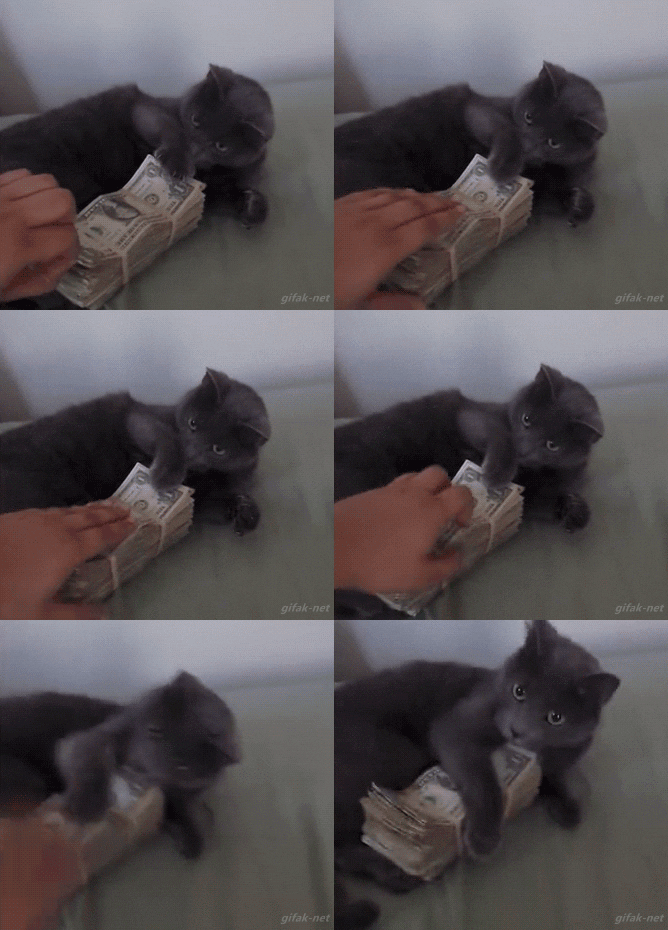
“My moneys, human! MINE! Unpaw those bills!” Credit:@catsandmoney/Twitter

The estimates break costs down into recurring expenses — which include food, treats, litter and veterinary care — and fixed expenses like scratching posts, toys, additional cat furniture, bowls, grooming tools and similar items.

Not surprisingly, the biggest expense is food, the cost of which has been exacerbated by inflation, rising fuel costs and lingering supply chain issues that caused a cascade effect during the pandemic. Everything from sourcing metal for cat food tins to meat availability was impacted as ports were closed and meat processing plants were shuttered at various points since early 2020.

An unrelated estimate from OnePoll, based on a survey commissioned by pet food company Solid Gold, put the lifetime estimate of cat servitude at $25,304. Like the Motley Fool analysis, OnePoll’s respondents cited food as the primary expense, followed by veterinary care.

The wide range from the Motley Fool analysis could be attributable to geography, how well the cat is fed, and how many extra things caretakers do for their cats. A person who lives in Manhattan, splurges on bespoke feline furniture and buys ultra-premium cat food at almost $3 a can is going to spend significantly more than an eastern European cat servant who feeds raw or home-cooked food and builds their own ledge loungers and scratching apparatus.

Teh Bank of Kitteh
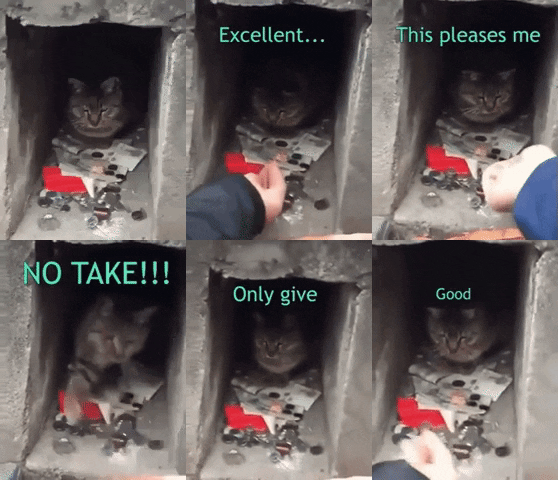
“Welcome to Teh Bank of Kitteh, you may make a deposit but not withdraw!” Credit: @catsandmoney/Twitter

Here in New York the cost of cat food in local grocery stores has spiked dramatically, but online prices have remained steady. Keeping in mind we’ve never really endorsed any particular brand or vendor on PITB, I switched from occasionally buying food online to Chewy auto-shipments during the pandemic because Bud’s favorite food was becoming very difficult to find locally, and that arrangement has worked out cost-wise as well.

Bud’s a true Pain In The Bud when it comes to “leftovers” so his primary wet food is Sheba Perfect Portions. It’s reasonably priced, comes in variety packs and helps avoid waste since each meal comes in its own 1.3oz recyclable blister-like plastic package. (Recycling is especially important with these single-serve packages, tiny as they are.) His dry food is Blue Buffalo Wilderness Adult Chicken recipe, although occasionally I’ll buy the weight control version of the same dry food when it looks like Little Man has gotten a bit chubby. He doesn’t protest, thankfully.

I feed him two 1.3oz wet meals a day and fill his dry bowl less than halfway at night so he can have his late snack and doesn’t have to wake me up if and when he gets hungry overnight. Sometimes I’m dimly aware of him sliding off me, padding over to his little dining nook and munching on dry food before hopping back onto the bed and dozing off again.

Overall it works out to about $21 a month, so I’d call it an even $25 with treats. You can schedule your auto-ship at any interval you choose, edit it at any time, and prompt the shipment immediately if you’re running out of food, so you can save more by ordering a few months’ worth of food at a time and taking advantage of free shipping on orders of more than $50.

Has inflation impacted cat food prices in your local area? How much does it cost to feed your cat(s) every month?

Rich Kitty
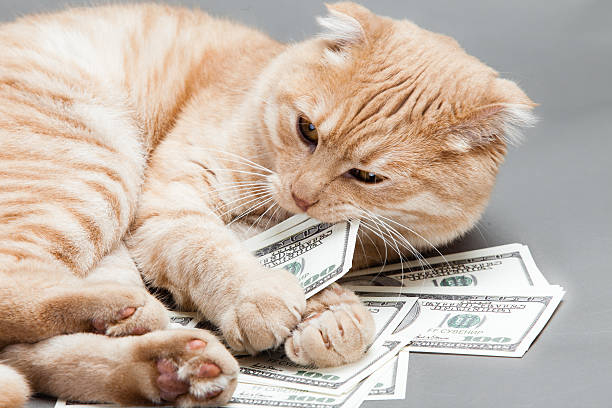
“I’m a nip dealer, so what? Stop judging!”