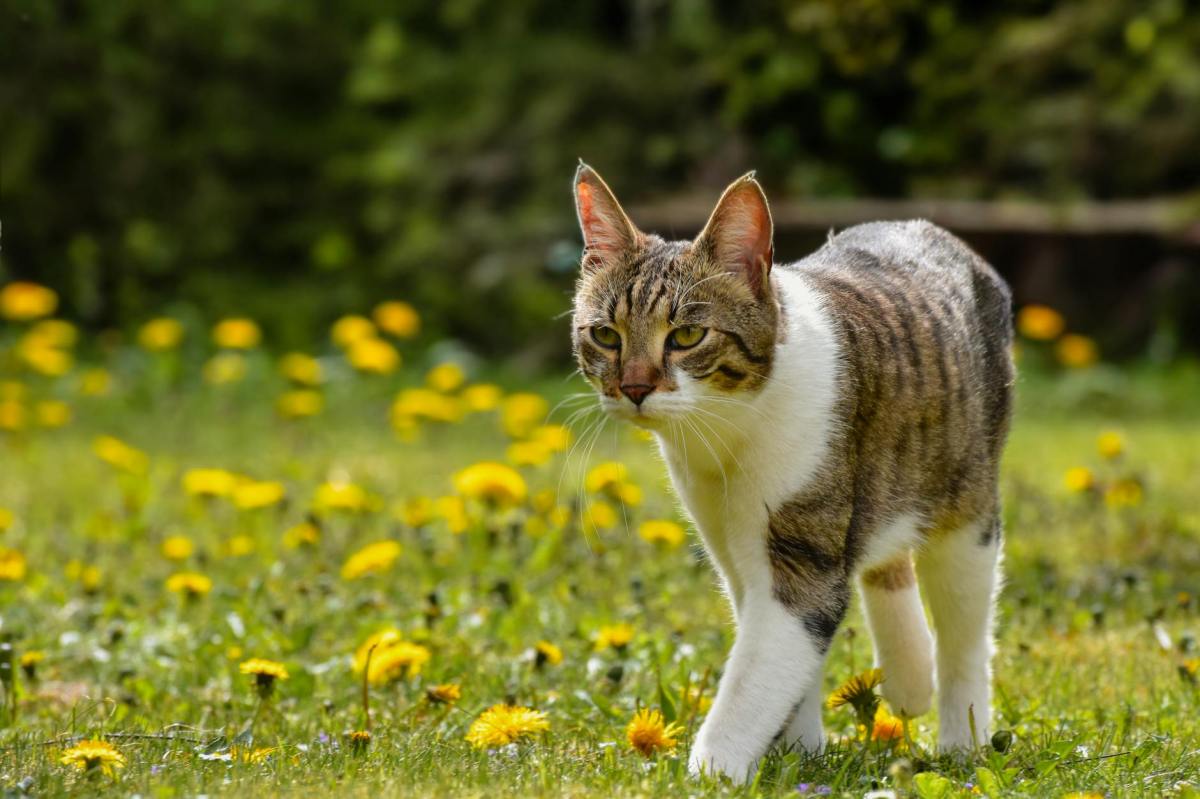
Journalists Need To Stop Citing The Bunk Studies Blaming Cats For Annihilating Wildlife

Free-ranging cats do have a negative impact on wildlife, but we’re not going to solve the problem by demonizing them and culling them by the millions.

The Literary Hub story starts off with a provocative question: what if cats ruled the world?

This is a question I find amusing to ponder, so instantly my mind was filled with images of cats scandalizing foreign heads of state by insouciantly swiping gifts off tables, angering diplomats by yawning and nodding off during summits, and financing the construction of massive and unnecessary coastal walls, on the off chance the ocean decides to move inland and get them wet.

Then the writer cited the repeatedly-debunked “study” that credulous media of all stripes still reference without bothering to read the text — that infamous 2013 Nature Communications paper, published by birders who author books with titles like “Cat Wars: The Consequences Of A Cuddly Killer.”

Some journalists don’t know any better, some are overworked, and some are frankly too lazy to read the study with a critical eye, but I think one of the more likely reasons people continue to cite the paper is because it’s easier to blame felinekind for wildlife extirpation than it is to admit we’re the primary culprits. After all, according to the WWF’s most recent annual review, we’ve killed off 73 percent of Earth’s wildlife since 1970, and we certainly didn’t need house cats to help us push elephants, rhinos, every species of higher non-human primate, and innumerable other species to the brink of extinction.

We did that. We did it with our relentless development, consuming and fracturing wild habitats. We did it with careless industrialization, by dumping chemicals and garbage into our rivers and lakes until more than half of them were rendered too polluted to swim in or drink from. We did it by bulldozing old growth forest and jungle, by exploiting species for fur, folk medicine, ivory, sport hunting and in the illegal wildlife trade.

Cheetahs are critically endangered, and they’re being driven to extinction even faster by poachers, who sell them to wealthy buyers in oil-rich gulf states where they’re trendy pets. Credit: Riccardo Parretti/Pexels

More than 47,000 species — that we know of — are headed toward extinction. It’s so much easier to blame it on anyone or anything else than admit we need to make major changes to our lifestyles and policies.

But don’t take my word for it. Here’s what Alley Cat Allies has to say about the 2013 meta-analysis and its derivative papers:

The Smithsonian-funded study published in Nature Communications is not rigorous science.
It is a literature review that surveys a variety of unrelated, older studies and concocts a highly speculative conclusion that suits the researchers’ seemingly desperate anti-cat agenda. This speculative research is highly dangerous. It is being used by opponents of outdoor cats and Trap-Neuter-Return (including the authors) to further an agenda to kill more cats and roll back decades of progress on TNR. And it is being spread unchecked by the media.

Here’s what a group of ethicists and anthropologists wrote about the claims against cats in the journal Conservation Biology, lamenting the lack of nuance and danger in arguing that cats must be stopped “by any means necessary.” The drive to blame felines, they argue, has “fueled an unwarranted moral panic over cats”:

“Contrary to Loss and Marra’s claims that the scientific consensus is consistent with their views that cats are a global threat to biodiversity, the actual scientific consensus is that cats can, in certain contexts, have suppressive population-level effects on some other species (Twardek et al. 2017). This is something that is true of all predators, native or not (Wallach et al. 2010). Thus, cats should not be profiled as a general threat a priori and without reference to important factors of ecological context, situational factors, clear definition of harms, and evidence thereof.”

“There are there are serious reasons to suspect the reliability of the new, extreme cat-killer statistics,” wrote Barbara J. King, retired chairwoman of the department of anthropology at The College of William and Mary.

Feline predatory impact varies by local conditions. Free-ranging cats in cities and suburbs kill rodents, but have minimal impact on other animals, data shows. Credit: Patricia Luquet/Pexels

Like we’ve often noted here on PITB, the authors of the Nature Communications study can’t even say how many free-ranging felines exist in the US. They say it’s between 20 and 120 million. That’s a 100 million difference in the potential cat population! How can they tell us how many birds and mammals are killed by cats if they can’t even tell us how many cats there are? No amount of massaging the numbers can provide an accurate picture if the initial data is shaky or nonexistent.

Furthermore, the nature of a meta-analysis means the authors depend on earlier studies for estimates on predatory impact, but the 2013 Nature Communications paper does not include any data —not a single study — on feline predatory impact. In other words, they have no idea how many animals free-ranging cats actually kill.

In authentic studies that actually do measure predatory impact, the data varies widely in geographic and demographic context. Data derived from the D.C. Cat Count, for example, shows that cats living more than 800 feet from forested areas rarely kill wildlife, and are much more likely to kill rodents.

Those who cite the bunk study and its derivatives are “demonizing cats with shaky statistics,” King wrote, adding she was alarmed by “an unsettling degree of uncertainty in the study’s key numbers.”

Free-roaming populations are reduced when cat colonies are managed, and the animals are fed and fixed. Credit: Mia X/Pexels

Ultimately, we agree with Wayne Pacelle, former president of the Humane Society of the United States.

The meta-analysis authors “have thrown out a provocative number for cat predation totals, and their piece has been published in a highly credible publication, but they admit the study has many deficiencies. We don’t quarrel with the conclusion that the impact is big, but the numbers are informed guesswork.”

Cats do have a negative impact on wildlife, it varies according to local circumstances, and those of us who love cats have a responsibility to keep our pets indoors and help manage free-ranging populations.

But cooler heads must prevail, approaches to managing cats must be evidence-based, and the effort requires people of all kinds working together — which becomes much more difficult when agenda-driven pseudoacademics whip people into a frenzy by portraying felines as bloodthirsty, invasive monsters who need to be wiped out “by any means necessary.”

When that kind of rhetoric drives public policy, you get countries like Australia killing two million cats by air-dropping poisoned sausages, vigilantes gunning down cats with shotguns in public parks, and local governments offering cash prizes to children who shoot the most cats and kittens. Those efforts aren’t just cruel and inhuman, there’s not a shred of proof that they do a damn thing to help other species.

Solving the problem of free-ranging cats requires us to own up to our own role in species extinction and to take measured, evidence-based steps to protect vulnerable wildlife. Otherwise, we’re inflicting a whole lot of suffering on sentient creatures and accomplishing absolutely nothing.
Amazing Cats: The ‘Fire Tiger’ Is The Stuff Of Legend

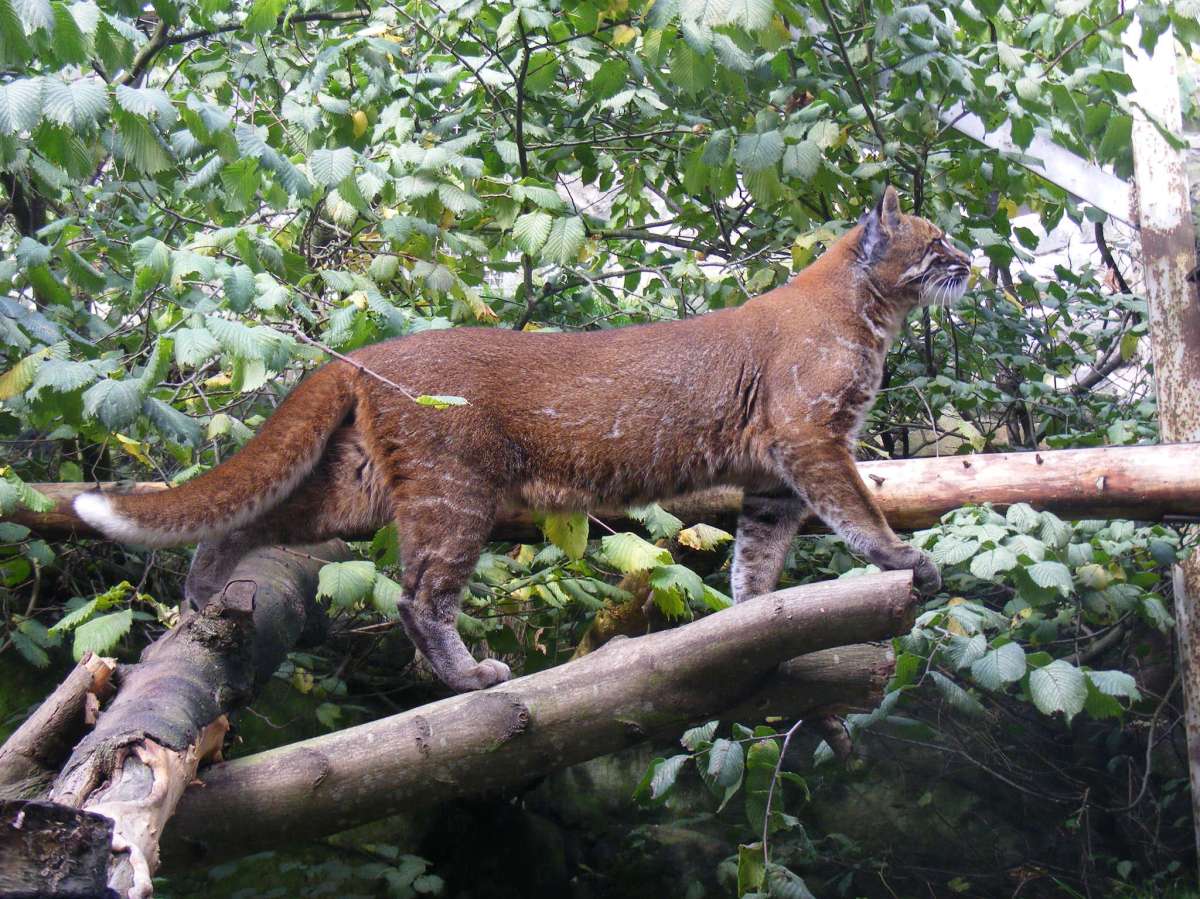
The Asian golden cat, also known as catopuma, is an elusive medium-size wildcat with striking features and exceptional hunting abilities.

It’s extraordinarily elusive, moves with a grace superlative even among fellow felids, and enjoys mythical status in many of Asia’s cultures.

It is the Asian golden cat, a medium-size feline that calls a diverse range of places home, from the mountains of rural China to the jungles of Sumatra.

Known officially as Catopuma temminckii, the species is about three times the size of domestic cats but extremely adept at taking down much larger prey, including young water buffalo and other ungulates several times the cat’s body weight.

An Asian golden cat. Credit: Wikimedia Commons

Asian golden cats inspire legends in many Asian cultures in part because of how difficult they are to find. Even the appearance of one on a trail camera in Thailand’s Khao Luang National Park this summer spawned news headlines, so rarely are they seen.

Often, as was the case with the recent sighting, they’re fleeting, just glimpses before the animals melt back into the jungle. The fire tiger seen in the June 20 trail camera footage pads across a clearing, clearly unhurried, before disappearing back into the ground cover.

In some places it’s good luck to catch a glimpse, while in other locales — like parts of Thailand — people believe a single strand of Catopuma fur is enough to protect the bearer from their larger cousins, panthera tigris. (I wouldn’t rely on that personally, but it does show how large tigers loom in the imagination in areas where they still roam the wild, even as low as their numbers are these days.)

While the Asian golden cat is known as the fire tiger in some places, it’s not a close relative of true tigers, at least not in terms of the cat family.

Credit: Wikimedia Commons

Catopuma is a feline, meaning it can meow and purr, but cannot roar. That puts the species closer genetically to domestic cats, pumas, ocelots, servals and other members of the feline subfamily. True big cats — tigers, lions, jaguars and leopards — are part of the pantherinae subfamily. Aside from their size, they are distinguished by their ability to roar, but they cannot purr or meow.

The Asian golden cat is a feline, but shares some physiological features with big cats

Even though catopuma is genetically closer to small- and medium-size felines, its gait, substantial tail and head shape are reminiscent of big cat features.

The ferocious medium-size cats also have a melanistic color morph that makes them look like smaller versions of jaguars and leopards.

A melanistic catopuma seen on a trail camera. Credit: Panthera

The fire tiger is classified as threatened as its habitats are destroyed to make way for more palm oil plantations, among other agricultural and industrial facilities.

Header image via Wikimedia Commons

Larry The Downing Street Cat Outlasts Another PM, Plus: The Reason For The Loaf

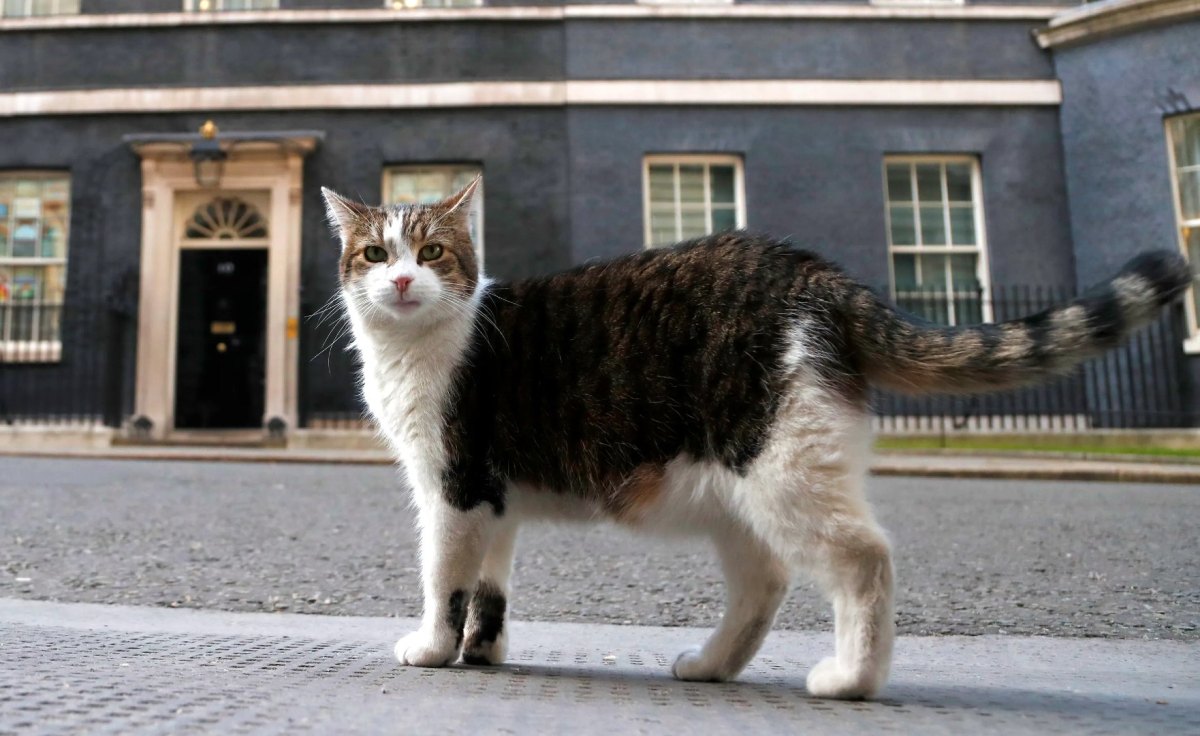
Loafing Larry’s outlasted Liz and Liz’s lettuce. Lucky lad!

No. 10 Downing Street in London is supposed to be the official residence and office of the UK’s prime minister, but we think it should be called Larry’s House.

Larry, the official mouser in chief since 2011, has now outlasted four prime ministers: David Cameron, Theresa May, Boris Johnson, and the short-tenured Liz Truss, who lasted just 44 days. (And became the butt of jokes when The Daily Star set up a live webcast of a head of iceberg lettuce, betting that Truss’s time as PM would be over by the time the lettuce wilted. The lettuce won.)

Now Larry, the de facto leader of the UK, will be served by a fifth prime minister. There’s also a chance he’ll see his fifth prime ministerial term, if not officially a fifth prime minister, if Johnson manages to return to power. Apparently there’s a real chance of that happening.

Why the loaf?

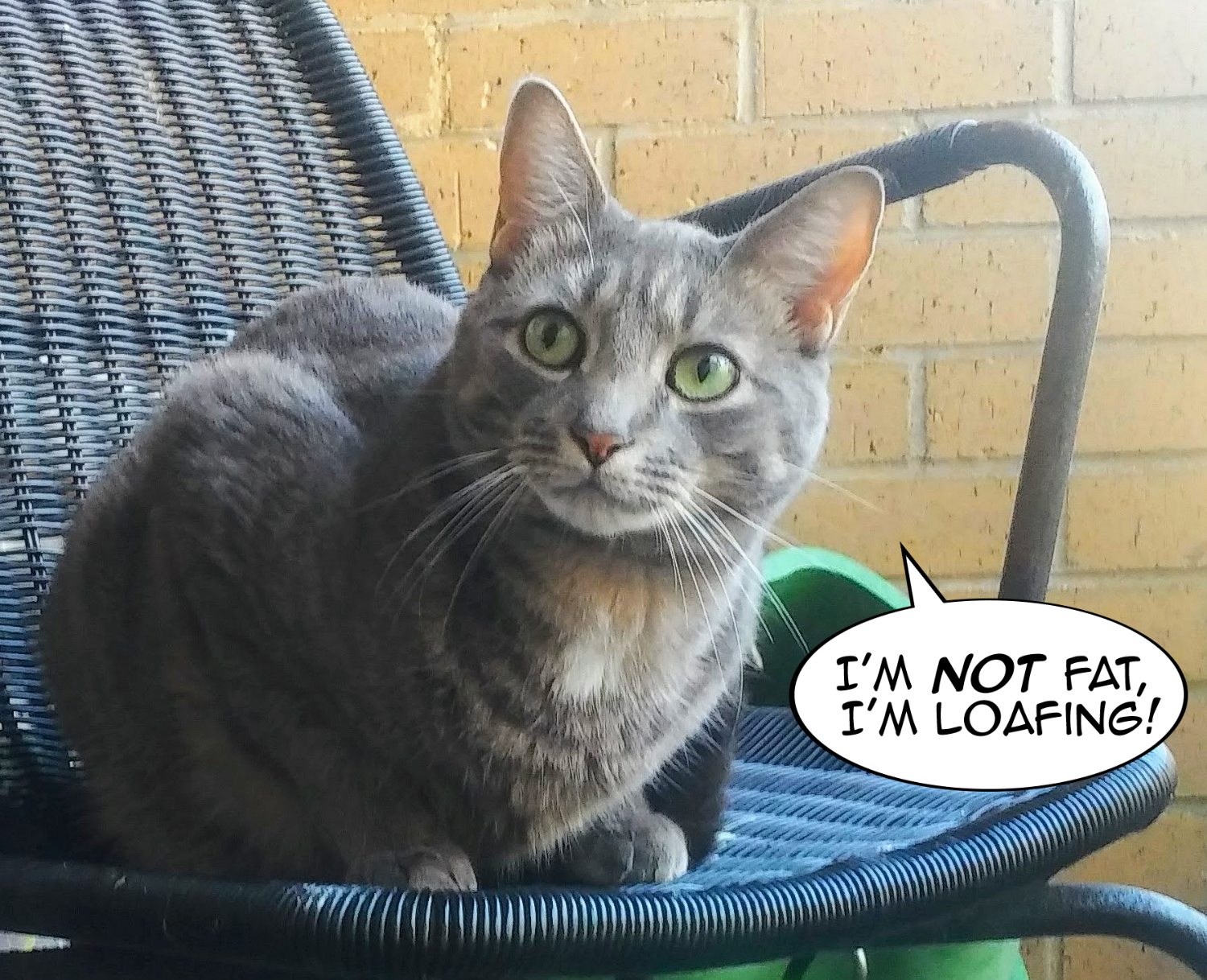
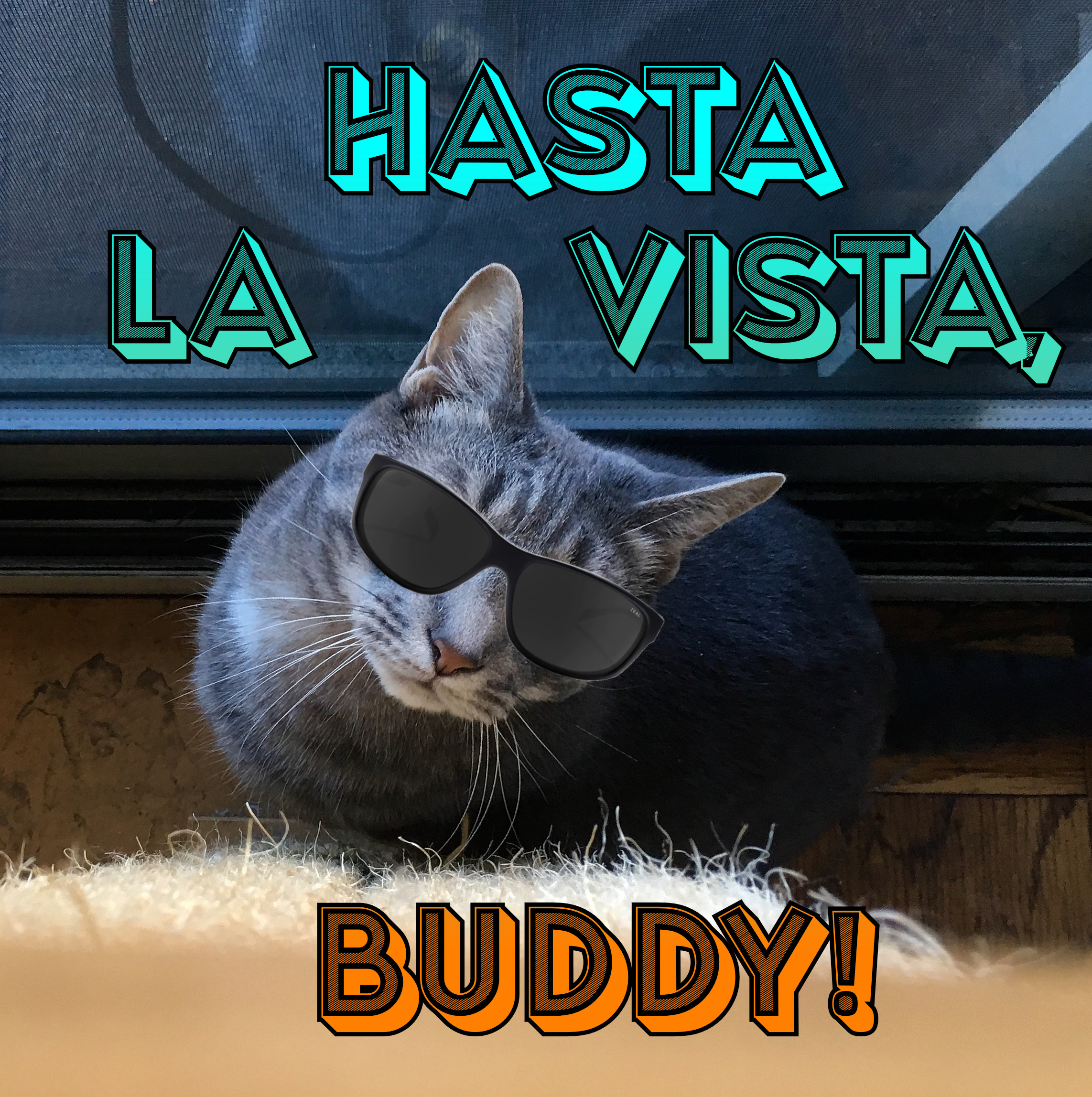
Buddy Loafing
How dare you suggest Buddy is chubby!

If you’ve ever wondered why your cat likes to lay in the famous loaf position, Jackson Galaxy has weighed in on the matter. (There’s a British theme here too. For some reason Galaxy, real name Richard Kirschner, uses a British accent to explain loafing behavior, and it’s…not good.)

“The first thing that we want to look at is the position itself; we’ve got paws tucked under the whole body resting basically on arms,” Galaxy says in a video. “This look right here is decidedly cat. Because what this is saying is I’m not going anywhere.”

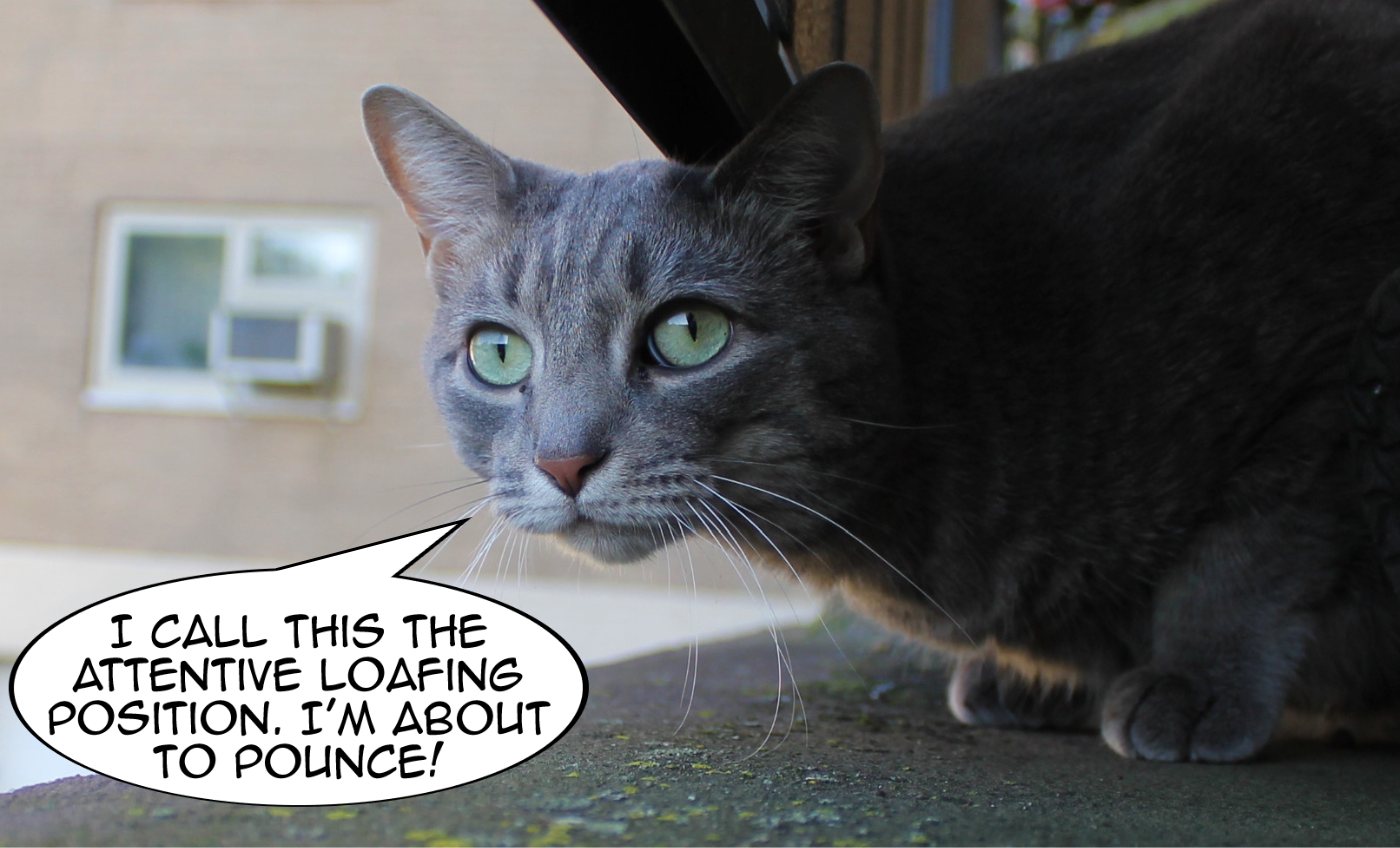
Cats loaf to conserve body heat while remaining in a position that allows them to quickly get up if need be. Galaxy cautions, however, that a “half loaf” position could indicate your cat isn’t feeling too hot, health-wise.

If a cat is half-loafing, he says, that could mean she’s not getting completely comfortable because she feels vulnerable, and for evolutionary reasons (cats are both predator and prey) cats in pain feel particularly vulnerable. Most predators go for the easy kill, which is why cats go to great lengths to disguise pain and discomfort, as opposed to us humans, who whine and complain and make sure everyone knows how lousy we feel.

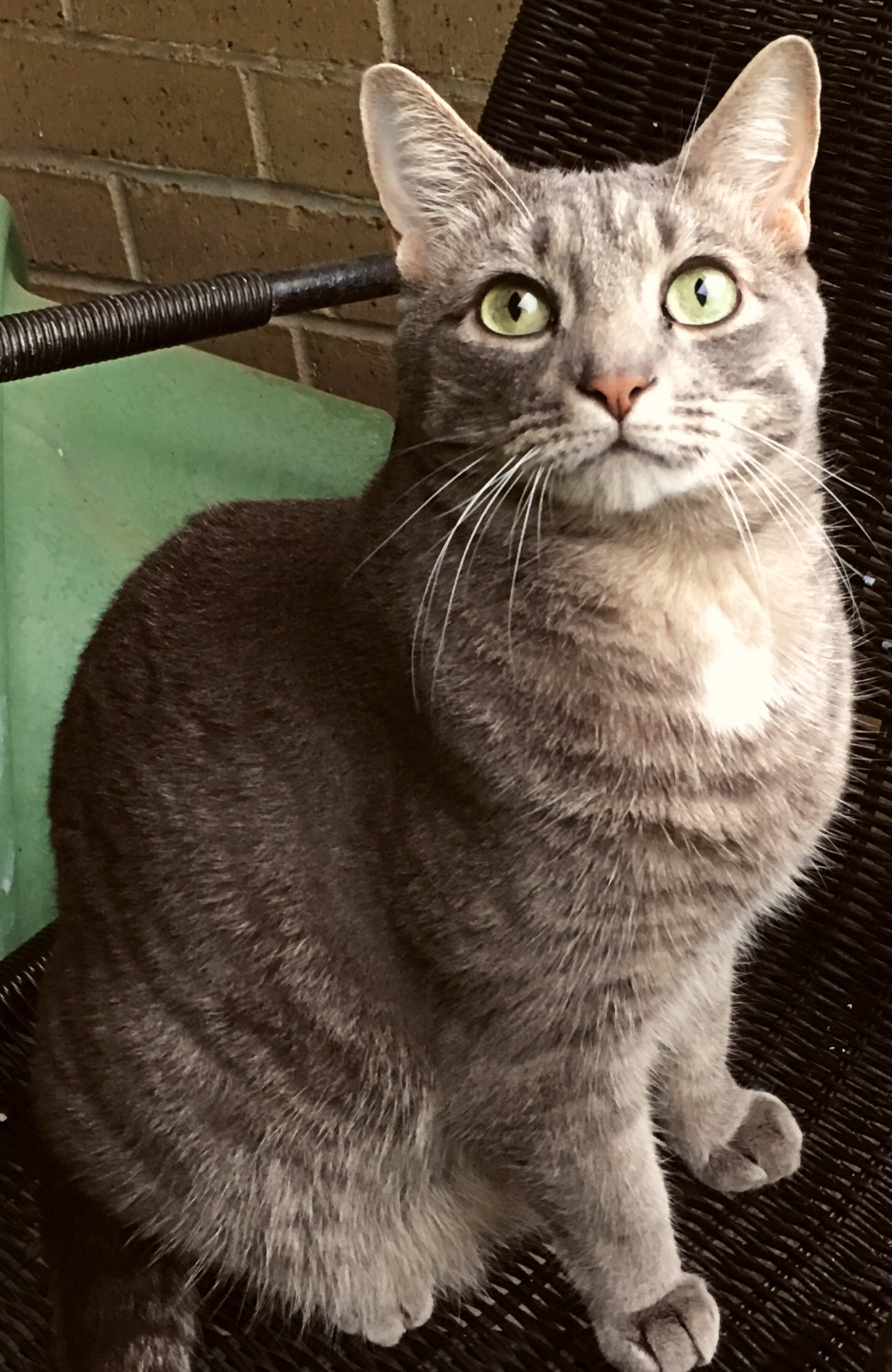
Bud Attentive Loafing
Meowscles coiled, ready to unleash feline fury!

If Cats Sounded Like Arnold Schwarzenegger

“Get to the choppah! Fill my bowl!” Cats and Arnold Schwarzenegger are a ridiculous and lulzy combination.

There’s so much negative and stressful nonsense online that occasionally something will come along and remind us that the internet can also be a platform for fantastic human creativity, silliness and hilarity.

If this isn’t one of those things, I don’t know what is. Some genius dreamed up the idea of cats sounding like Arnold Schwarzenegger instead of the meows we all know and (mostly) love. It’s glorious:

I love every ridiculous second of it, from the Schwarzeneggerian grunts to the insane babbling of the trio of cats watching birds from a windowsill, to the cat who looks at his human and says: “Come on! Come on! Do eeeit! Come on! We’ve got to go!”

It reminds me of comedian Pablo Francisco’s classic bit about Ahnold starring in a movie called “Little Tortilla Boy”:

Can you imagine your own cat(s) making Arnoldesque sounds instead of meowing? 🙂

buddyarnold

Got A Rat Problem? Get A Cat To…Befriend It And Groom It?

If you can’t beat ’em, join ’em?

Cats and humans began their grand partnership some 10,000 years ago, when kitties handled humans’ pesky rodent problem and people repaid the felines with food, shelter and companionship.

Now the deal’s off, apparently.

Yesterday a Reddit user shared a video titled “When you get a cat hoping it will help you get rid of the big rat in your yard.”

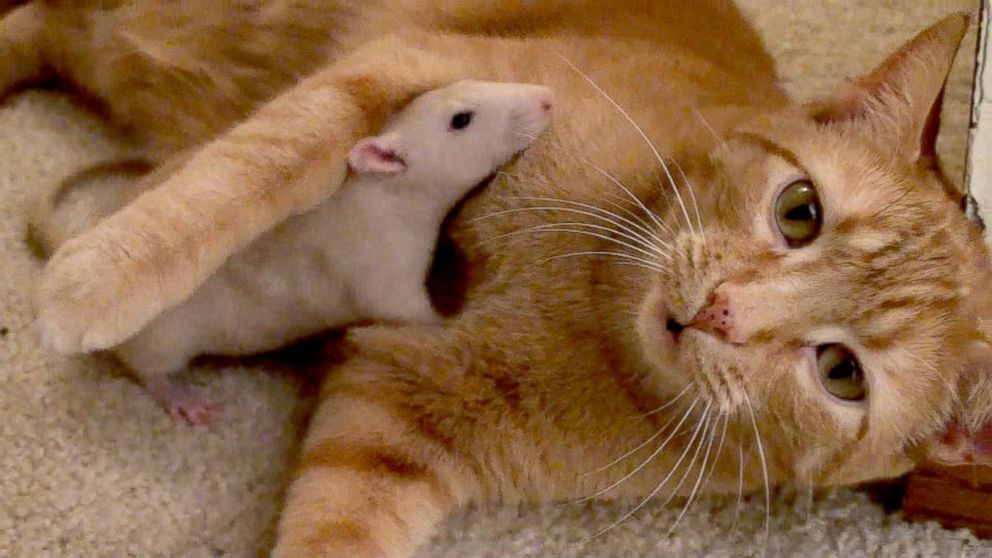
The video shows the user’s new cat, a tortoiseshell/calico, “solving” the rat problem by befriending the rodent, playing with it and even grooming it.

The video has amassed almost 86,000 upvotes in 24 hours.

The odd friendship between feline and rodent is not without precedent. Studies have shown that cats are not effective rodent hunters in urban settings where rats have gone unchallenged for so long that they rival or exceed the size of most members of Felis catus.

In certain neighborhoods of New York City, for example, researchers observed cats essentially ignoring massive rats and in some cases eating trash side by side with them. The largest rats, apparently aware of the truce, are equally unconcerned by the presence of the cats. Other rats were more cautious around kitties.

The scene reminded me of the time my brother wanted me to bring Bud over to handle his rat problem. At the time he was living on 88th St. in Manhattan, less than a block from Gracie Mansion. His apartment had an unusual perk for Manhattan living — it was a spacious ground floor flat that opened up into a private, fenced-in backyard with grass and a few trees.

Mighty Bud
Tremble before him! Buddy the Mighty Slayer of Rodents!

In fact, it was one of the first places I took Buddy after adopting him. He was just a kitten, maybe 14 weeks old, and I brought him with me on a warm summer day when my brother had a few friends over for a barbecue.

Buddy made fast friends with my brother’s Chihuahua-terrier mix, Cosmo, and spent the day playing with his doggie cousin, frolicking in the grass and chasing bugs around the yard. Then he got a treat: Steak from the grill, chopped into tiny Buddy-size pieces.

Having a backyard in Manhattan was awesome, but there was a downside. At night the yard was like a stretch of highway for marauding rats who ran across it in numbers with impunity, probably en route to raiding the garbage bins of a bodega on the corner of 88th. The rats were so emboldened and so numerous, you could hear them scurrying across the yard at night.

My brother proposed bringing Buddy over and letting him loose in the yard after dark, letting his claws and predatorial instincts thin the rodential herd.

I declined, using the excuse that Bud could pick up diseases from going to war with the rats. That was true, but I’m sure it wouldn’t have come to that: At the first sign of those rats, Buddy would have run screaming!

(We don’t acknowledge that around him, of course. Officially, Buddy was not set loose upon the Manhattan rats because it would be grossly unfair to unleash such a meowscular, brave and battle-hardened feline warrior upon them.)

It’s one thing if Buddy won’t kill rats. He’s a wimp. But as the Reddit video illustrates, we are apparently closing the chapter on 10,000 glorious years of human-feline partnership, and officially entering the Era of Zero Reciprocity.

We do everything for our cats, and in return they nap, eat and allow us to serve them. From their point of view, it’s a fine deal.

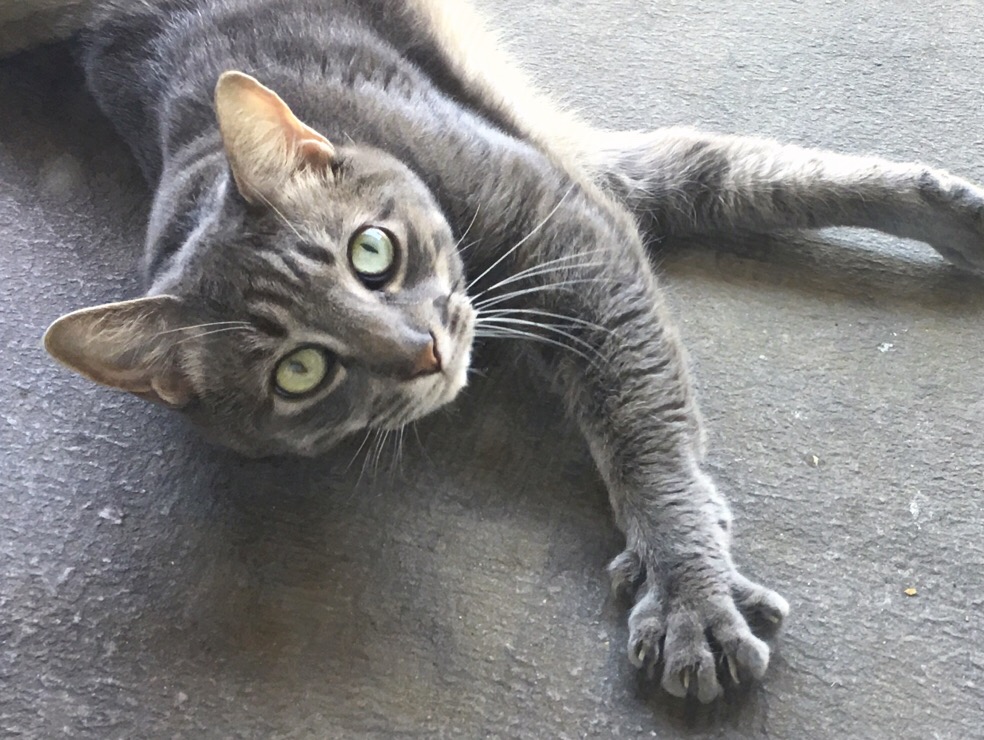
Meowscular Buddy!
Just look at those meowscular guns and vicious claws!