
Happy Thursday! Before we get into today’s cat news, I’d like to share my current Google News search string, which has helped me keep my sanity over the last few weeks. It’s simple:
“cat -doja -vance -shot”
And voila, no more stories about Doja Cat, fewer blood pressure-raising articles about people who think shooting felines is a sport, and you’re mercifully saved from the 17,457th “think piece” about JD Vance and cat ladies.
The “relatable” column about severely neglecting a cat
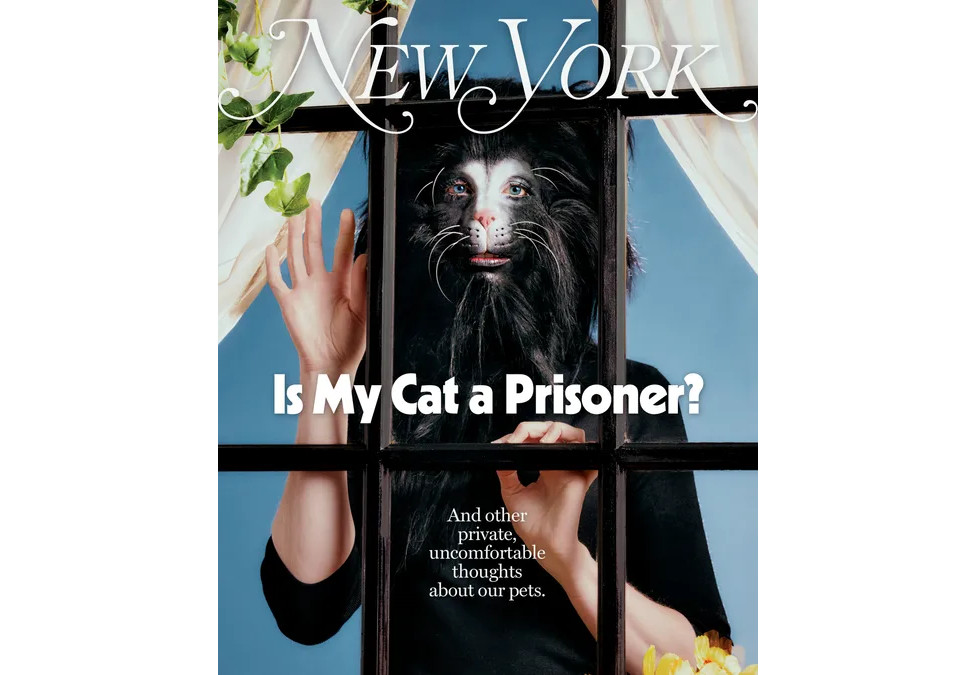
New York magazine’s editors knew they were wading into a minefield with this week’s pet ethics issue, and the author of a story about neglecting her cat knew it too, which is why she took the preventative step of using a nom de plume.
In a column titled “Why Do I Hate My Pet After Having A Baby?” (later softened by the editors to “Why Did I Stop Loving My Cat When I Had A Baby?”), “Audrey” writes about severely neglecting her cat, Lucky, after having her first child.
She not only developed what she calls a “postpartum loathing” of Lucky, she admits to not feeding the poor feline for so long that Lucky ate plants out of desperation, then predictably threw up. The forsaken feline began eliminating on the floor because her litterbox was not being scooped. She lost “at least one tooth” and because even water was denied her, she had to drink out of the toilet. The life-threatening neglect and emotional abuse lasted months.
“If I treated a human the way I treated my cat, I would be in prison for years,” Audrey admits, describing Lucky’s own descent into depression as the cat became the scapegoat for all of Audrey’s negative feelings.
Cats (and dogs) understand a lot more than we give them credit for, especially when it comes to our emotional states, to which they are hyper-attuned because they are directly impacted. We’re talking about animals who have been companions to humans for 10,000 and 30,000 years, respectively. Not only does their companionship predate human civilization and the concept of recorded history, they have evolved to intuitively read human facial expressions and body language. They can even smell our pheromones, which means they’re often consciously aware of our moods before we are.
I’ll never forget what my brother said to me a few weeks after I adopted Bud, upon meeting the little guy for the first time: “You’re his whole world.” I’ve tried to make that world as loving, safe and fun for my cat as I can, because he deserves it. He’s given me back so much in return.
Adopting comes with responsibility. It’s not just about meeting an innocent animal’s basic needs, like food and water. It’s about providing our four-legged friends with good lives and never taking our bad days out on them.
“Audrey” says she tried to get rid of Lucky, leaving the windows of her home open, and because the original version of the story dealt almost exclusively with the author’s mental health, readers were disturbed by the lack of any follow-up on Lucky’s situation.

The negative reaction was so strong that New York’s editors took the unusual step of attaching a note to the story claiming they “confirmed the welfare of the cat prior to publishing the story.”

That didn’t satisfy the magazine’s critics, who accused them of behaving “callously” by presenting the author’s abuse of Lucky as a “relatable” symptom of post-partum depression.
“Why are you ignoring one of the most controversial articles you’ve ever published instead of addressing it?” one reader wrote. “It’s not going to just go away – we will not forget … The people will not stop until that cat is safe and loved, and your publication is held responsible.”
Insisting the magazine’s editors be “held responsible” is a bit much, and I’m not a fan of censorship. The bigger issue is the lack of concern for the cat even in retrospect, and the attempt to normalize postpartum animal abuse, as if it’s just a thing people do. It feels like a missed opportunity to explore why such things happen, and to examine the problem with compassion for all involved, human and animal.
Buddy the Cat’s Le Handsome Club is now open to le handsome cats
This is really just an excuse to show off my latest poster promoting PITB, but readers will recognize the concept of Le Handsome Club from earlier satirical stories about the Budster.

I’ve written before about “real Buddy” and “cartoon Buddy,” which is the version of him that exists in PITB’s world of absurd satire. Cartoon Buddy is real Buddy with his quirks, narcissistic qualities and amusing lunacy dialed up to 11.
Someone once asked me how to write a children’s book because they want to write one about their pets. Since I’ve never written a children’s book I wasn’t much help, but I did share the basic process for Buddesian hijinks: Imagine a situation, then imagine how Bud would respond to it if he could speak.
The more ridiculous, the better, and I think it’s worked out well, with stories about Buddy getting conned by a Nigerian prince’s cat, the ongoing saga of Los Gatos catnip cartel and the meowfia, Buddy’s disastrous first (and only) term as president of the Americats, and the Budster’s ongoing bromance with the jaguars of the Amazon.
So yes, Le Handsome Club. I could definitely see my cat, who thinks he’s Catdonis and Arnold Schwarzenegger rolled into one, founding a club for really, really, ridiculously good looking cats, to paraphrase Ben Stiller’s Zoolander.



 Pain In The Bud