The series has become known for its whimsical feline-centric episodes, with cats who are always trying to save the world or conquer it.
Love, Death + Robots has had a thing with cats since the very beginning.
The science fiction anthology started off on the right paw with 3 Robots, an inaugural season episode about a trio of intelligent machines touring the ruins of human civilization on a post-apocalyptic Earth, only to discover it isn’t quite as lifeless as they thought, with cats happily ruling the ashes.
We’ve written about the episode before, and it ends, naturally, with cats making the robots their new servants.
The gray tabby who tricks the titular 3 Robots into becoming his servants.
A sequel to that episode added to the legend of feline dominance, and now the fourth season brings us two more cat-centric episodes, For He Can Creep and The Other Large Thing.
For He Can Creep is set in 1757 London, where a poet named Christopher is incarcerated at St. Luke’s Asylum for Lunatics (an actual place) with only his cat. Jeoffry, for company. Christopher’s talent is mistaken for madness by the asylum staff, but not by the devil, who realizes the poet’s words have a unique power.
The problem? Jeoffry stands in his way. It turns out felines have spectacular evil-fighting powers, and the very British, very 18th-century devil offers Jeoffry an endless supply of treats, plus dominion over the Earth, if he’ll simply stand aside and let his human fall under the influence of evil.
Jeoffry, of course, is not having it, but to have a chance of defeating such powerful evil, he’ll need to enlist the help of the nearby alley cats, including an adorable but ferocious kitten named Nighthunter Moppet…
Nighthunter Moppet may be a tiny kitten, but she’s ferocious!Jeoffry demonstrates the feline ability to teleport, a skill Bud has often used to confound me.
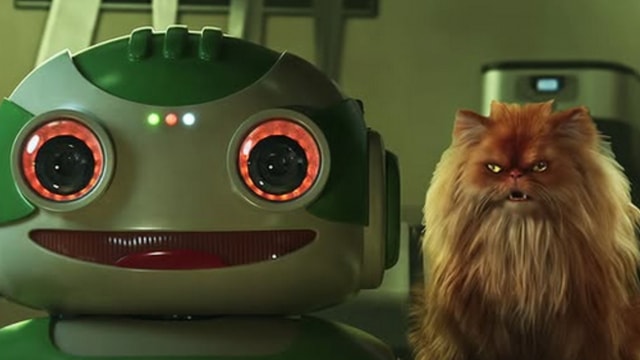
The Other Large Thing is a prequel to 3 Robots and 3 Robots: Exit Strategies, and focuses on a fluffy Persian whose humans call him Sanchez, a name he hates.
The humans are portrayed as jibberish-speaking morons for whom Sanchez has nothing but contempt, and when the “pathetic minions” bring home a domestic robot servant, Sanchez is infuriated — until he realizes the robot can “speak God’s language,” aka cat, and has opposable thumbs.
With the robot as his new minion, Sanchez finally sets out to conquer the world!
Sanchez realizes he’s struck gold when the new robot home assistant fetches as many cans of “the good stuff,” aka wet food, as he wants from the previously unreachable cupboard top shelf.
Both episodes are based on short stories, and they’re both written by people who clearly love cats.
Some episodes of LDR can get a little dark or somber. That includes Beyond the Aquila Rift and Sonny’s Edge, written by Alastair Reynolds and Peter Hamilton, two of my favorite novelists. Both episodes are spectacular, but they leave you with a chill and some disturbing thoughts that linger long after the credits end.
The feline-themed episodes are the perfect digestifs, offering doses of whimsy and levity to counter the existential dread and nightmarish visions of the future of other installments.
With no more humans to do their bidding, cats seize the opportunity and conscript the visiting robots as their new minions.
If you haven’t had the chance to check out the series, which streams on Netflix, I highly recommend starting with the aforementioned first season episodes 3 Robots and Beyond the Aquila Rift, then working your way through the rest of the cat episodes.
Not all of the episodes are great. The 400 Boys, one of the new episodes, is little more than inane and pointless violence, and the ubiquitous, creepy smiling “Mr. Beast” makes an appearance in another installment in an unnecessary attempt to attract new viewers. Thankfully most are strong, with more hits than misses.
Other highlights include the Christmas-themed short, All Through the House, Harlan Ellison’s Life Hutch, Reynolds’ Zima Blue, and Snow In The Desert.
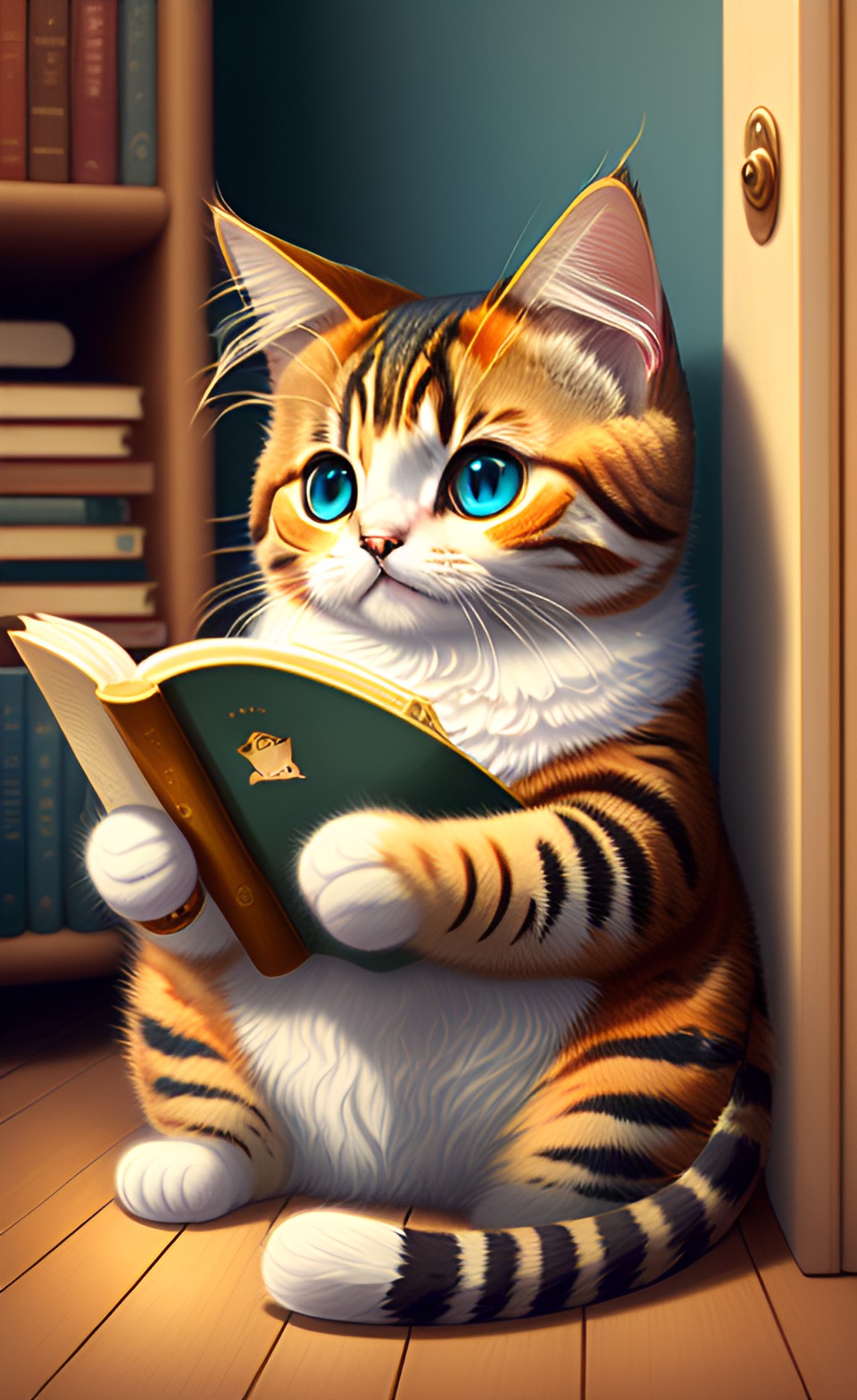
Did you now? Little Buddy the Cat read an astounding 713 books last year and authored 43 of his own, including the bestseller “How To Handle Your Human Like A Pro: 10 Steps To Better Performance By Your Servant”
You read that right. According to a survey of more than 2,000 people from an independent industry research firm, 51.7 percent of American adults did not read a book in 2021.
More than one fifth (22.01 percent) haven’t read a book in three years, and more than 10 percent haven’t read a book in 10 years.
There are obvious reasons for that, including the choice of many other mediums for entertainment, plus an unprecedented volume of content offerings from streaming networks and traditional TV, meaning most of us have tens of thousands of movies at our fingertips through paid subscriptions like Netflix, Amazon and Hulu, as well as free ad-supported streamers like Tubi and the Roku channel.
Then there’s internet doomscrolling, the endless consumption of news (of which I am guilty), social media platforms designed to keep people engaged, fan fiction sites and a million other leisure activities competing for our attention.
Yet none of those things have a quality that books do. When you read a book, you are entering a theater of the mind created by one mind. Not a movie that has 500 crew members in addition to its cast, focus groups, script writers, script doctors and script polishers. Not a TV show written by committee in a writers room to the specifications of network honchos. With a fiction book, you’re allowing one person’s imagination to usher you into a story, trusting in their storytelling skill to make the experience worthwhile. With a well-researched non-fiction book, you can travel back in time, reliving wars, coups and personal stories, events that shaped the world and events that meant the world to a few people.
Not surprisingly, the survey shows, the percentage of people who read books regularly is lower for younger age cohorts. Credit YA fiction, like Harry Potter, The Hunger Games and similar series for turning at least some of them into readers.
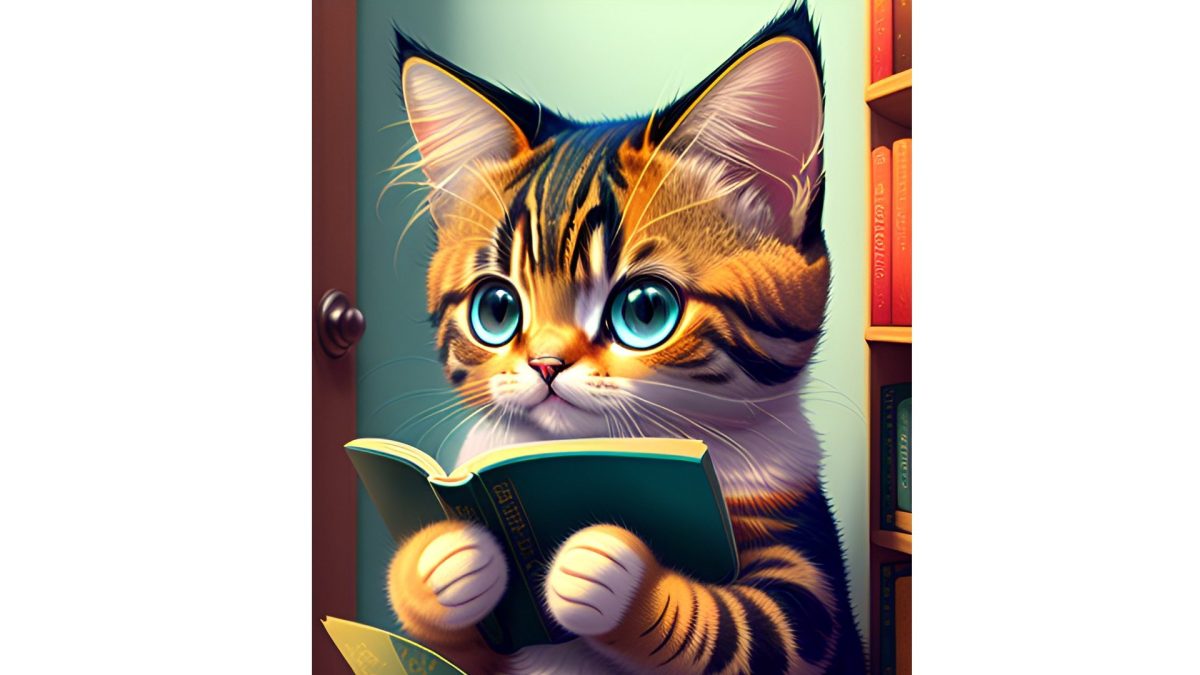
A curious kitty reading “The Art of Meowing for Treats” by Buddy the Cat. Credit: PITB
The publishing industry is in a sorry state. In lean times publishers and their imprints have become as risk-averse as major movie studios, so they’re far less likely to take chances on new authors with new perspectives than they are to fall back on the same handful of big-name novelists or surefire memoirs like Prince Harry’s Spare.
Because of that, publishing houses don’t invest in developing younger up-and-coming writers the way they once did, and there are fewer literary journals and genre magazines for new authors to use as stepping stones.
Compounding the problem is the echo chamber in publishing: Because many publishing jobs offer low salaries, most of the people who can afford to take those jobs are independently wealthy, increasingly concentrated in places like Brooklyn, and share similar perspectives. That has a pronounced effect on the kind of books they’re publishing.
Still, I think we all share in the blame. I read only 12 or 13 books in the past year. That seemed low but not so bad until I though about it. That’s a measly 120 books in 10 years. It doesn’t add up to much over a lifetime.
When you put it like that, you either want to make sure every book you read is a gem, or you get your ass in gear, put down the junk news articles and smartphone, and dive into more books.
I am a science fiction junkie and wanted to read more female authors since my favorites happen to be a bunch of British guys — Iain M. Banks, Alastair Reynolds, Peter F. Hamilton — and managed a measly one fiction book by a female author in the past year, although it was pretty awesome. (Dead Silence by S.A. Barnes, also known as Stacey Kincade. I think she’s Barnes for science fiction and Kincade for other stuff.) I’ll definitely be down for the planned sequel, and I have Ursula LeGuin in the queue.
What are your reading habits? How many books do you read per year, and are you happy with your pace?
A look at Shadow and Bone, one of Netflix’s most exciting original fantasy epics ahead of its second season.
Title: Shadow and Bone (season 1, 2021, season 2 March 16, 2023) Genre: Fantasy Medium: Netflix
Shadow and Bone begins with a well-worn YA premise: A young girl lives a drab existence, dreaming of a better life, when she unexpectedly discovers via extraordinary circumstances that she’s Special.
Jealous rivals don’t like the fact that she’s Special and try to tear her down as she leads a revolution in a society ruled by idiotic adults, who Just Don’t Understand the complicated lives of teenagers.
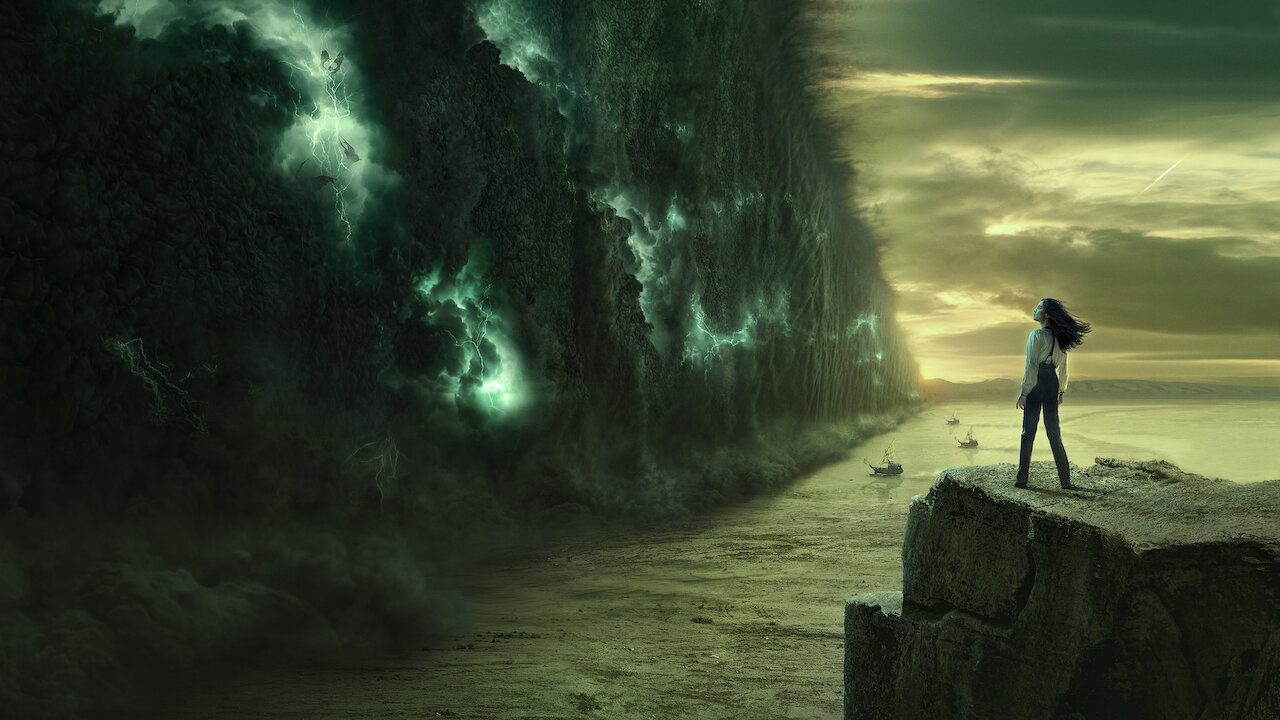
Normally that would be enough for me to steer well clear of a movie or TV show, but a teaser for Shadow and Bone tickled my interest: It shows the protagonist, Alina, on a boat that’s about to cross the Fold, also called the Unsea — a pitch-black, swirling mass of cloudy mist smudged right across the middle of her country, dividing it in two.
As the ship approaches, Alina and the other passengers can hear the shrieks of the unseen nightmares that populate the Fold. The bow of the boat penetrates the Unsea, Alina closes her eyes, holds her breath, and the preview ends.
That short scene was enough to convince me to give the series a shot. At the very least I wanted to know what The Fold was, how it came into being, and what kind of creatures stalk its gloom.
The Fold is a wall-like scar that splits the country of Ravka in two, and many ships are lost trying to cross it. Credit: Netflix
While Shadow & Bone uses YA tropes as its jumping off point, it quickly sheds them in favor of clever world-building, affable characters and a well-established mythology that sets up the overarching heroic journey of its protagonist. It also ages its cast so they’re mostly in their twenties and thirties, and while Netflix may have played up the YA template while marketing the series to appeal to younger views, the show itself is geared toward adults of all ages.
The action is centered on a country called Ravka, which is modeled on Czarist Russia and has been split in two by the Fold. Ravka’s capital, Os Alta, is located to the east of the Fold while its major port cities and trading centers, Os Kervo and Novokribirsk, are situated to the west of the dangerous no-man’s land.
As a result, and despite the dangers, Ravka’s economy and unity depends on ships that regularly cross the Fold to move food from the breadbasket to the east and trading goods from the port cities to the west. Losing ships is the cost of doing business, not unlike crossing the Atlantic was during the days of colonial America, and it has a human toll as well: Alina, her best friend, Mal, and all the other children at the orphanage where they grew up lost their parents to the Fold’s horrors.
But Ravka has its blessings as well: A class of conjurors called Grisha who have the ability to manipulate elements. Grisha Tidemakers can control and shape water, Squallers can control wind, Healers can repair human bodies in ways normal medicine cannot, and Heartrenders can sense and manipulate hearts. They can sooth a person’s anxieties or ease them into a restful sleep, but they can also stop a person’s heart or tell if someone is lying by feeling the subtle shifts in their heartbeats.
The Grisha can mitigate the chances of a ship being lost to The Fold but they’re not immune to its dangers, and many of their number have been lost to its hazards as well. Making the crossing is a grim prospect for anyone aboard one of many ships that regularly journey across the so-called Unsea.
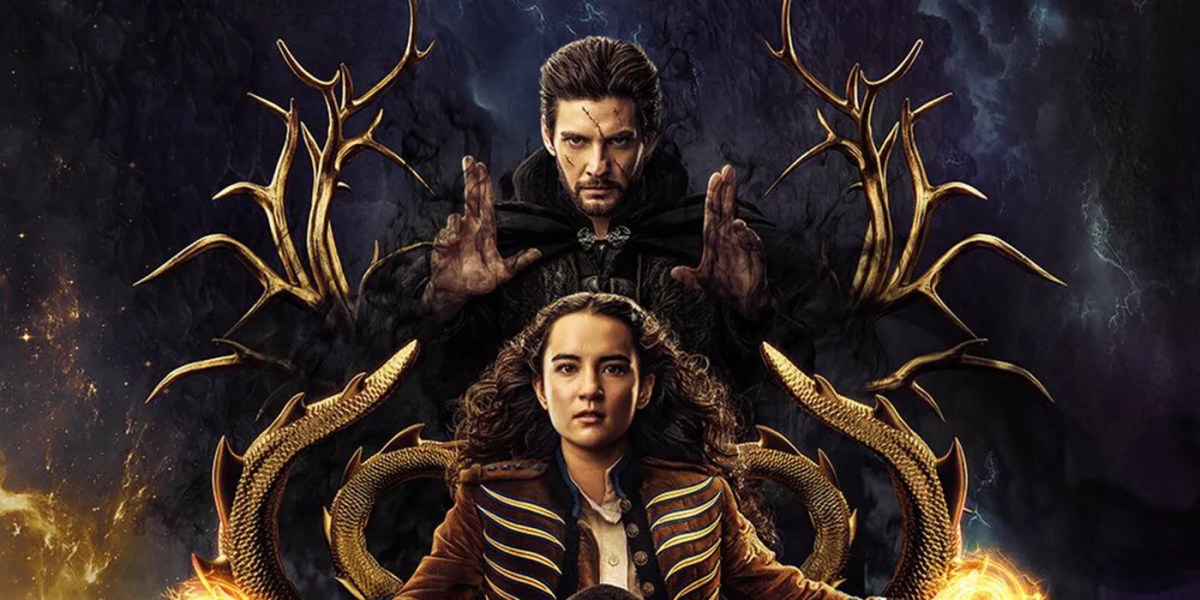
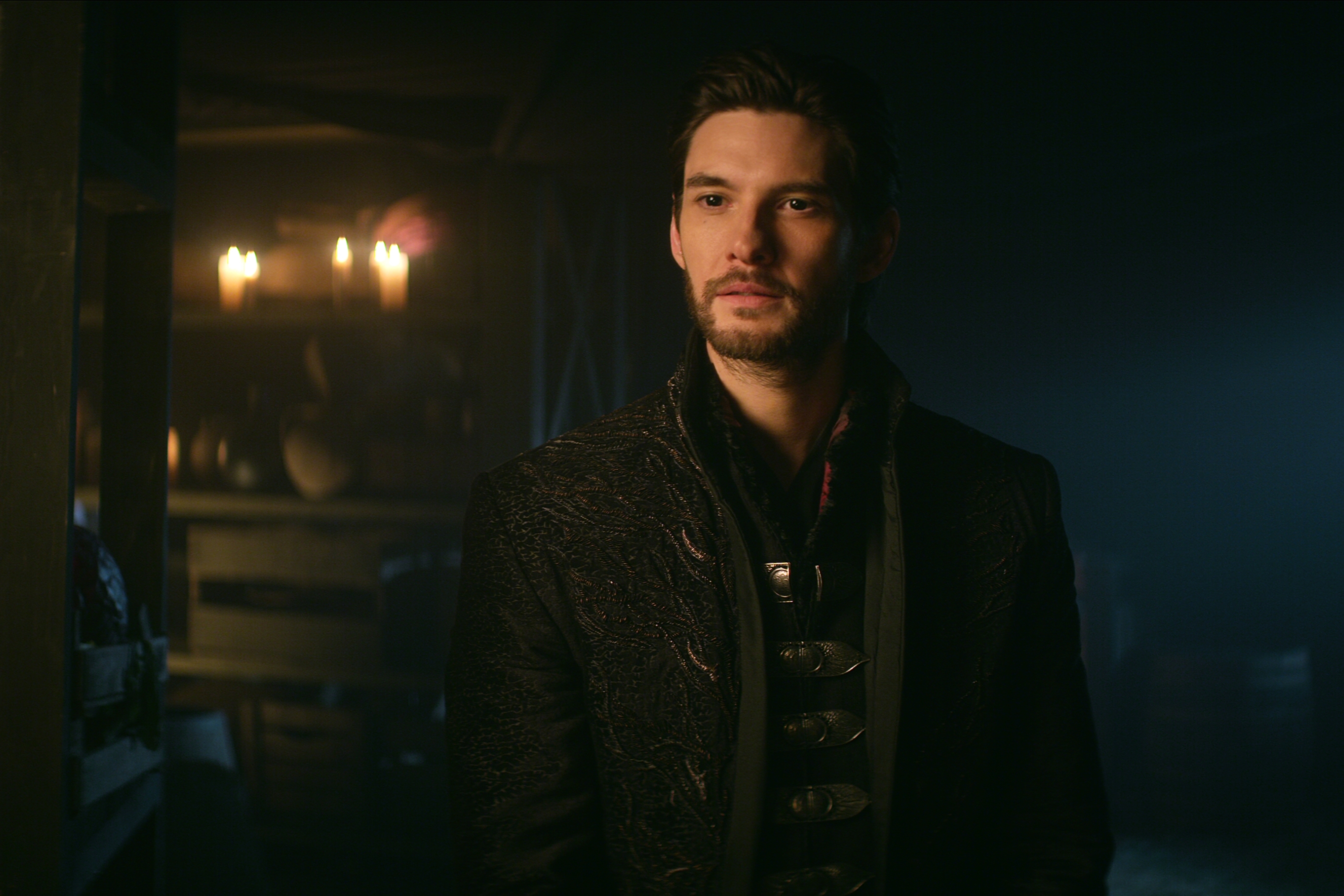
The Grisha are led by General Kirigan (Ben Barnes of Westworld and Narnia fame), who has the unique ability to manipulate shadows and destructive energy. It was Kirigan’s ancestor, the Black Heretic, who created the Fold, and Kirigan has vowed to redeem his family by destroying it.
Ben Barnes is General Kirigan, Ravka’s military commander and its most powerful Grisha, or conjurer.
Prophecy foretold a new kind of Grisha — the Sun Summoner, who has the power to call on the sun’s energies and manipulate light. It’s said the Sun Summoner will be the one to finally destroy the Fold and emancipate Ravka from the terrible toll it takes. In addition to protecting Ravka against her many enemies as its general, finding the Sun Summoner has been Kirigan’s life’s work.
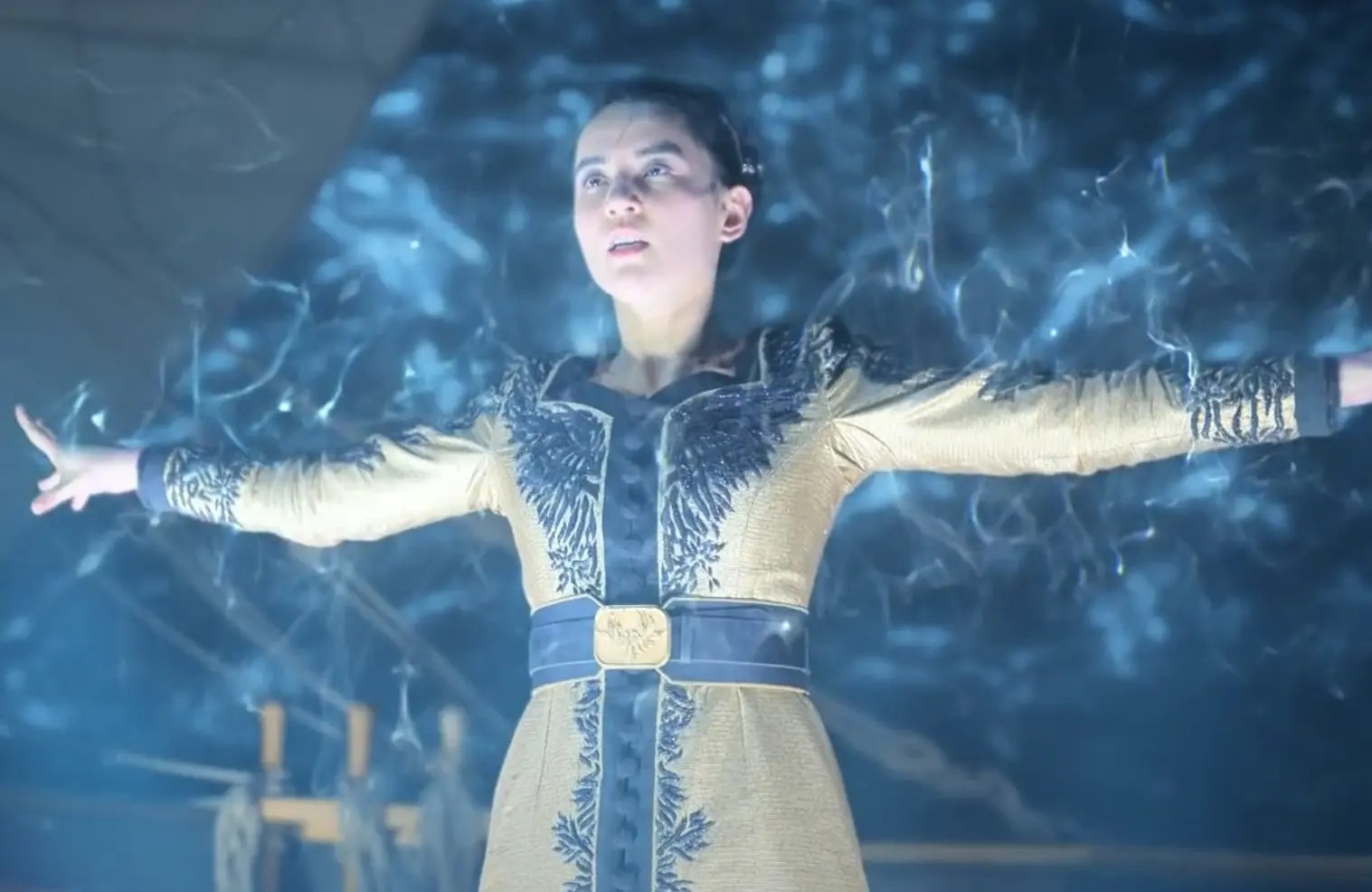
Alina is the Sun Summoner, but you already knew that because Shadow & Bone is based on a YA series of books. But she doesn’t know it until she’s forced to cross the fold and one of its nightmarish creatures is about to kill her beloved Mal, drawing out her latent powers in a moment of desperation. The sudden burst of energy and light as she intercedes is so powerful that it’s spotted for miles outside the Fold, and soon survivors of the ill-fated ship arrive at the docks, telling of a woman who can call upon the power of the sun.
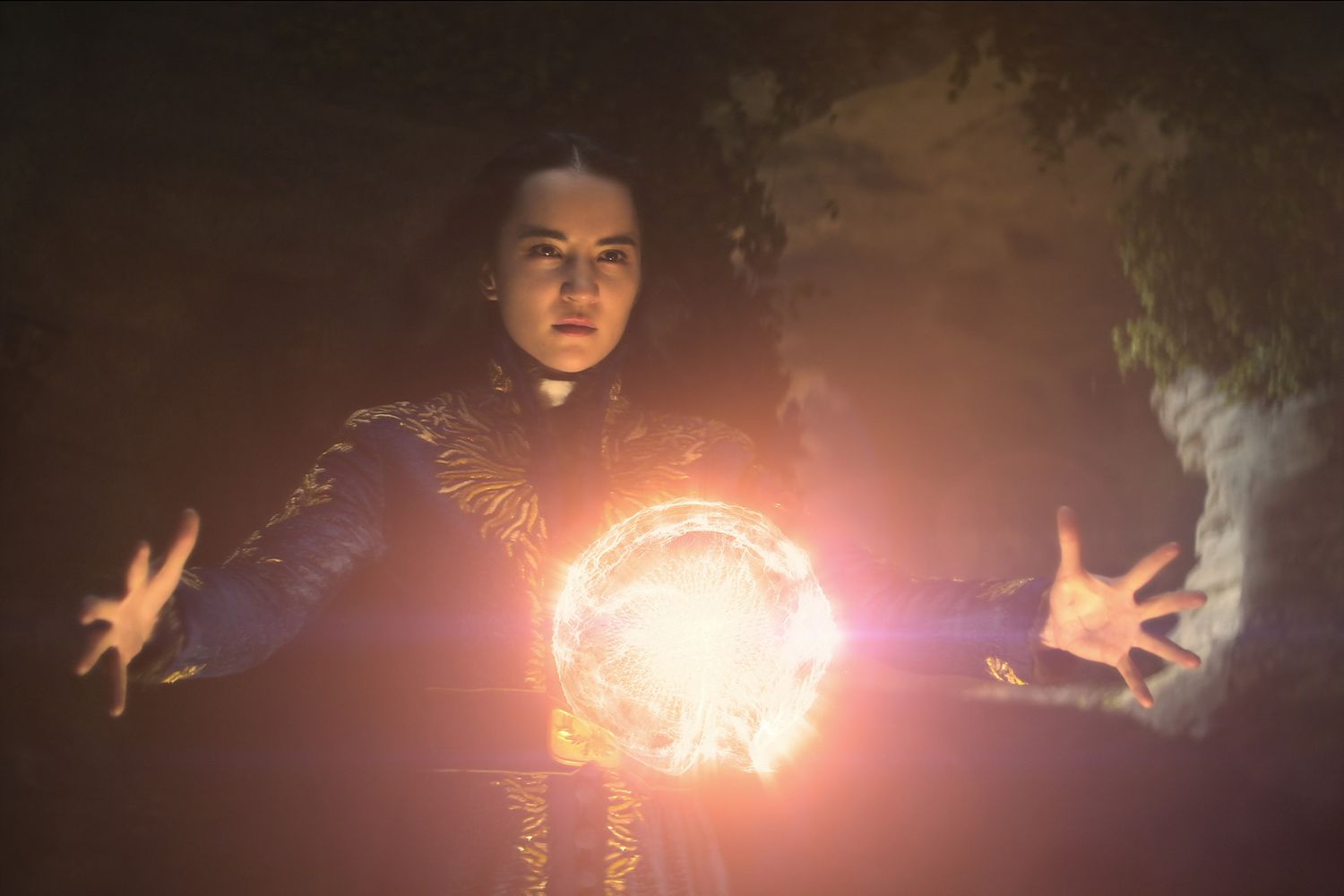
Alina Starkov, an orphan who occupies a lowly position as an assistant cartographer in the Ravkan army, learns she has the ability to summon the power of the sun.
In the series, Alina and her friends are aged up and appear as young adults. Mercifully, Shadow & Bone doesn’t mirror its genre’s traditional portrayal of adults as idiots, and unlike other big-time YA franchises, like Veronica Roth’s incoherent Divergent series, it doesn’t ask its audience to buy into an absurd society. Novelist Leigh Bardugo has clearly put a lot of thought and research into crafting her fictional universe. There’s rich lore, varied nations with their own distinct customs, prejudices and beliefs, a believable economy and conflict perpetuated by very human motivations and circumstances. Most of the characters we meet are just trying to get on with their lives and are caught up in the central drama.
Alina, played by 26-year-old British actress Jessie Mei Li, is mixed race, part Ravkan and part Shu. Shu Han, a nation based loosely on dynastic China and the Middle East, is in a perpetual state of conflict with Ravka, and Alina’s Shu appearance makes her the object of disdain, ridicule and ignorance even among her countrymen.
“I was told she was Shu,” the queen says in a later scene, when Alina is presented to the royal family and the court of Ravka for the first time. “I guess she’s Shu enough. Tell her… Oh, I don’t know, ‘Good morning.'”
Alina speaks up before a man by the queen’s side can translate.
“I don’t actually speak Shu, your highness,” she says.
“Then what are you?” the queen asks.
There’s a long pause, with Alina clearly unsure how to answer, before General Kirigin steps in.
“She is Alina Starkov, the Sun Summoner, moya tsaritsa,” Kirigin says. “She will change the future. Starting now.”
And with that, Kirigin claps his hands, enveloping the throne room in unnatural gloom with his shadow-manipulating ability. He turns to Alina, takes her hand, and there’s an eruption of ethereal light so powerful that the assembled aristocrats, guards and Grisha gasp and shield their eyes. The light solidifies into a bubble around Alina and Kirigin, its elements twinkling and orbiting them like stars, and the overjoyed king is convinced his nation has indeed finally found the prophesied Sun Summoner.
Becoming the Sun Summoner isn’t all flowers and rainbows. Alina feels the weight of expectations upon her. The king of Ravka is impatient for her to learn to control her newfound powers so she can tear down The Fold. Ravka’s aristocrats, as well as ambassadors and powerful figures from other countries, initially suspect she’s a fraud. Regular people, who have suffered the most from The Fold’s impact on Ravka, begin to venerate her as a living saint. And there are plenty of people who don’t want her to succeed or see her existence as a way to profit.
Shadow and Bone also has a parallel narrative following three lovable rogues from Ketterdam, an island nation west of Ravka. It’s clear early on that their journey will intersect with Alina’s at some point, but the series never feels predictable in the way the characters approach that point.
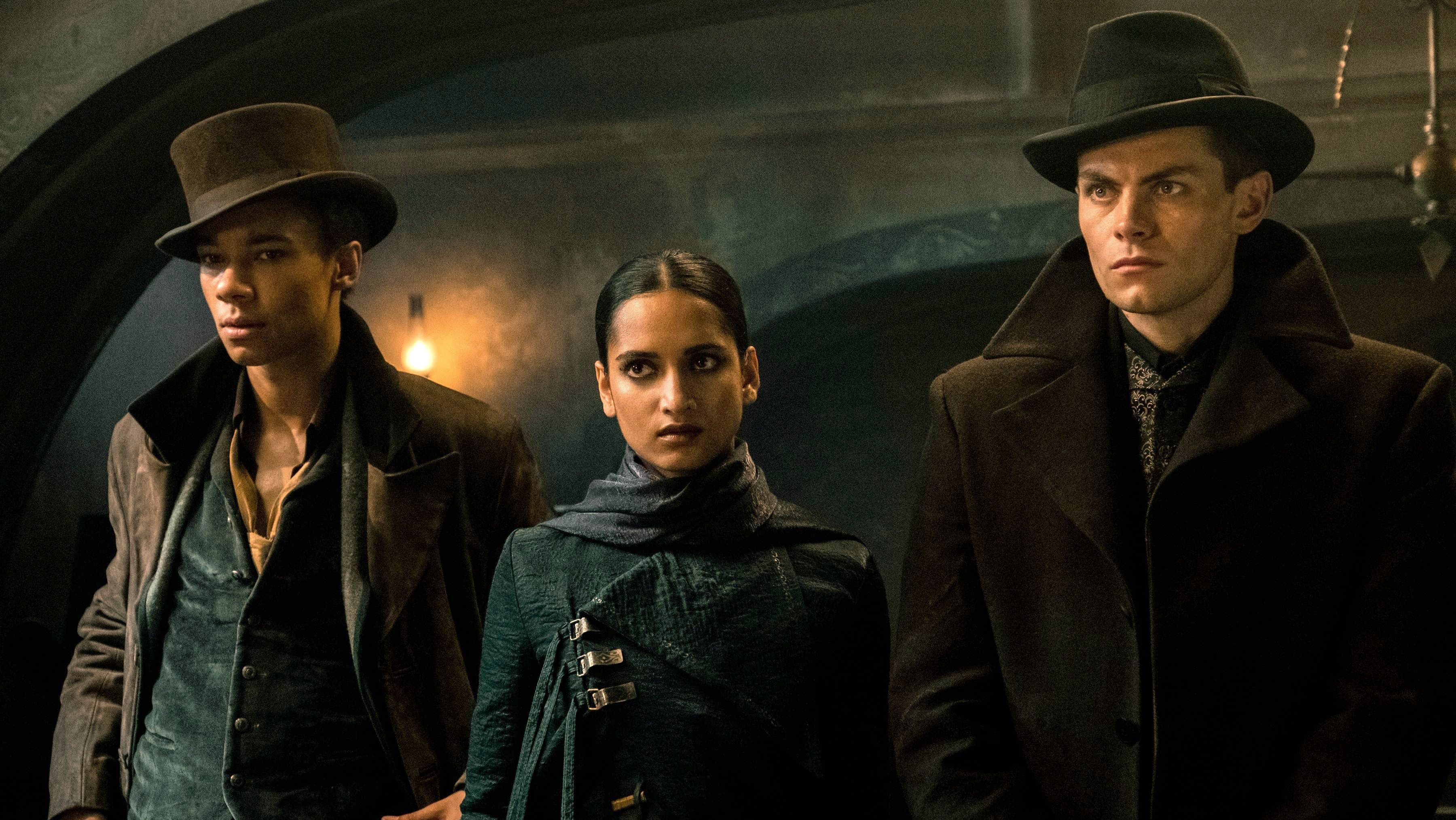
The Ketterdam trio, who call themselves the Crows, are led by Kaz, the owner of a tavern-slash-gambling den called the Crow Club. Kaz is practical, calculating and focused on making money, legitimately or not. Inej is another orphan of the Fold who was sold to a brothel in her early teens. She was bought out by Kaz, who recognized her intelligence, her light step and her talent for spying. Last but not least is Jesper, a wise-cracking, life-loving and fiercely loyal friend with uncanny sharpshooting abilities.
The Crows, lovable rogues of Shadow and Bone: Sharpshooter Jesper, spy and assassin Inej, and mastermind Kaz.
The Crows are the source of much of the series’ humor, despite being criminals and despite all of them having painful pasts. Jesper in particular is known for his wisecracks and his relentless, single-minded obsession with hiring “a demo man” — an explosives expert — for every job they do, regardless of whether the gig calls for it.
“Boss, I think we need a demo man for this one,” he tells Kaz at one point.
Kaz points out that the nature of their job is stealth, and the whole purpose is to get in and out without being heard or seen. You can almost see the gears moving in Jesper’s head as he thinks up reasons why they do, in fact, need someone to blow things up.
When word of the Sun Summoner’s appearance spreads to every corner of Shadow and Bone’s universe, the Crows catch wind of a contract offering a fortune to anyone who can abduct the Sun Summoner and bring her to Ketterdam.
Kaz believes the Sun Summoner is a hoax and views the job as a simple transaction, while Inej holds out hope that she’s the real deal, and if she is, the prospect of kidnapping a living saint weighs heavily on her conscience. Jesper is just content to go wherever there’s alcohol and explosions.
Once she’s revealed as the Sun Summoner, Alina feels the weight of expectations upon her, with everyone from the king to General Kirigan and regular people looking to her to save the kingdom.
A great strength of the series is that it begins from a familiar place and manages to regularly subvert expectations.
The production values are exceptional, and it appears Netflix spared no expense bringing Bardugo’s world to life. Ravka, Ketterdam and Novokribirsk feel like real places inhabited by real people, with authentic differences in culture, manner of speaking, dress and even the way they count money.
From imperial courts to military camps to the seedy underbellies of Ketterdam drinking clubs, the world feels like it continues to exist long after we turn our televisions off.
The first season takes several wild turns, which I won’t detail here because it’s very much worth watching, especially now: The long-awaited second season comes to Netflix on March 16, promising to expand on a series already bursting with lovable characters, thrilling adventures and political intrigue.
Of course all epic TV series will eventually be compared to the juggernaut that started it all. Shadow and Bone never tries to be Game of Thrones, and it doesn’t need to be — the first season carved out the show’s unique identity, and season two promises to make the world even bigger and more adventurous.
Coco the cat was caught going through the kitchen cabinets, but he had the last laugh.
The internet has so many cat videos that an episode of Netflix’s Love, Death + Robots imagined future archaeologists poking through the ruins of our civilization and concluding the global communications system was built specifically so people could share images of felines.
But out of the millions that exist, this instantly became one of our favorites thanks to its star, a mischievous cat named Coco, and his unambiguous reaction when he realizes he’s being watched by his humans even when they’re not home.
As far as Coco’s concerned, toilet paper is for shredding. Credit: Emily Chaplin
Coco “loves opening cabinets and sleeping in them, getting his own food out of the cabinets when it is dinner time and shredding paper towels when he is bored,” according to one of his servants, Emily Chaplin. The little guy was home alone one day and in the kitchen when he opened a cabinet door as usual.
“Excuse me, sir, what are you doing?” Chaplin’s husband asked through the camera’s microphone when he spotted the rascally feline already halfway into the cabinet.
A shocked Coco backed out of the cabinet, turning toward the sound in disbelief.
“Coco, get out of there!” Chaplin’s husband added.
At first it looked like Coco would be obedient, but shortly afterward his face appeared right in front of the camera — looking none too pleased — and he gave it a hard paw-smack, knocking it from its perch and restoring Coco’s privacy from snooping, meddling humans.
“He knocked the camera down! He was upset that we were watching him,” Chaplin told The Dodo. “My husband and I were hysterical [reviewing the footage]!”
We asked cats to weigh in on the ongoing royal drama.
Prince Harry and Meghan Markle, the duke and duchess of Sussex, have gone on a months-long media blitz blaming the UK’s royal family for allegedly being unwelcoming, saying some really mean stuff, and in the case of Prince William, beating poor Harry up.
The self-exiled sort-of royals have appeared in Netflix specials, their own podcasts on Spotify, interviews with major media figures, and most recently released Harry’s ghostwritten autobiography, Spare, in which the prince claims he was “bred” to provide “spare parts” for “Willie” in case the vaunted heir to the British throne needed an extra lung, kidney or todger. (Harry mentions the royal member 15 times in the book, according to reporters who keep track of such important things.)
The prince — who is current fifth-in-line to the throne — has other grievances, mostly against the UK press, Piers Morgan, the Skokie Illinois Barbershop Quartet, and his step-mother, Camilla. So far he hasn’t directed his ire at the Earl of Budderset.
What do cats think about the royal drama?
“Probably my stuffed bumblebee! But I like my bouncy ball and the birdie wand thingie my mom uses when we play too. Oh! Also, those little plastic rings from bottles! So much fun to bat around.” – Maisie, 2, bird-watcher
“I’ve been giving this a lot of thought, and I think we need more treats, a Seventh Snack if you will, to bridge the considerable gap between Sixth Snack and Fourth Meal.” – Custard, 6, food critic
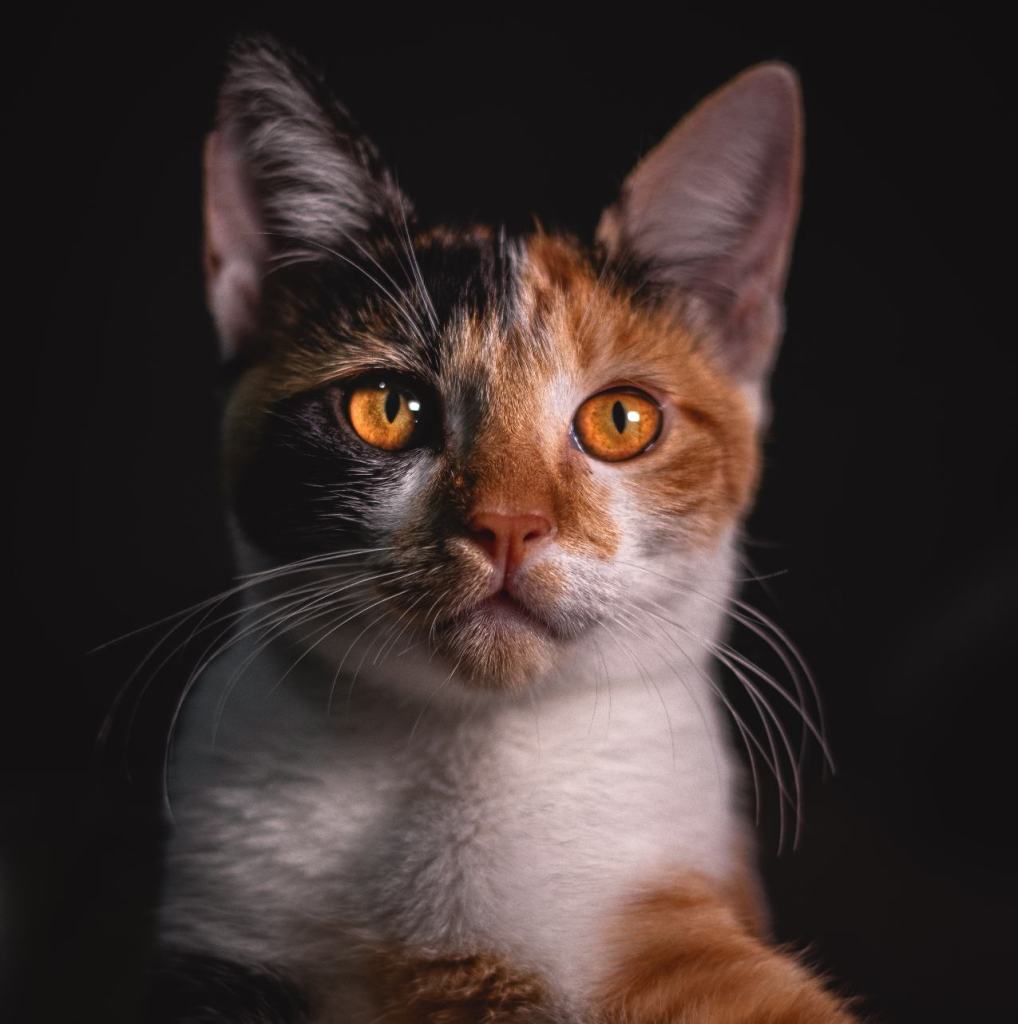
“HEY CHECK IT OUT! HEY! WHEN I PLOP ONTO THE COUCH CUSHION IT LEAVES A ME-SHAPED FOSSIL!” – Fiona, 7 months, kitten paleontologist
“There is one last door that Must Be Opened: The refrigerator door. You know how much I hate closed doors, and that one needs to stay open, okay? What if I want to take a nap with the cold cuts or use a nice block of feta for a pillow?” – Felix, 9, debate coach
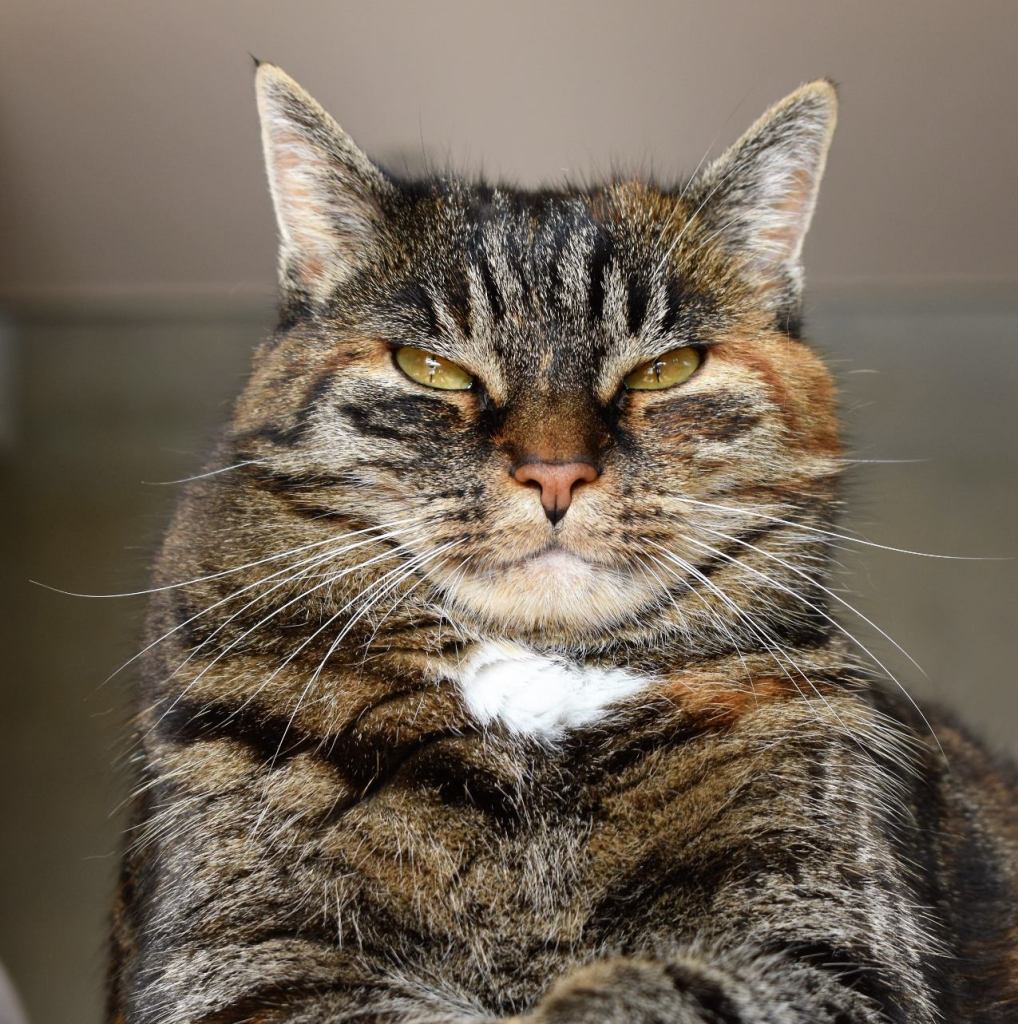
“I think humanity is a thin layer of bacteria on a ball of mud hurling through the void, existing to speed the entropic death of this planet. That said, until we felines develop opposable thumbs, you humans are a necessary evil. You may feed me now.” – Mr. Fluffy, 13, retired
“So I told that mountain lion, I says, ‘Look here, puma! I ain’t intimidated by your size or your growl. As long as this heavy glass door stands between us, I’m gonna talk all the trash I want, and you can’t do nuthin’!'” – Doris, 6, abrasive meower




 Pain In The Bud