A netizen’s cat tolerated an astonishing 176 pets from his human!
An Instagrammer decided to test the limits of his feline overlords’ tolerance for pets, and it was instructional.
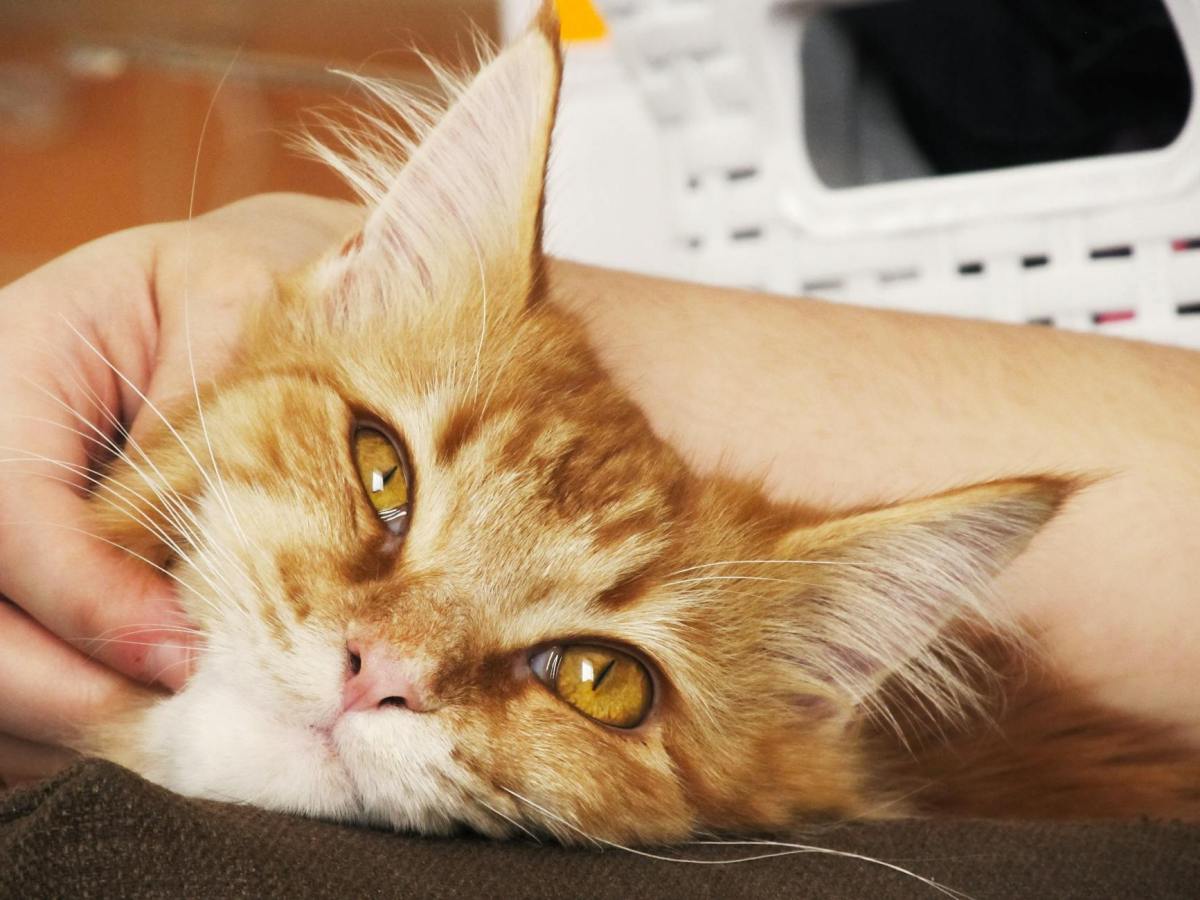
Porky, who looks like he’s a British shorthair, lasted 107 repetitions of his human’s hand rubbing his head before he’d had enough. His brother, Jim, lasted 176 repetitions!
Both are extraordinarily polite. Porky just got up and left when his human kept going despite clear signs that he was at his limit, like a swishing tail and shifting positions. Jim was still enjoying having his head stroked after the 100 pets mark.
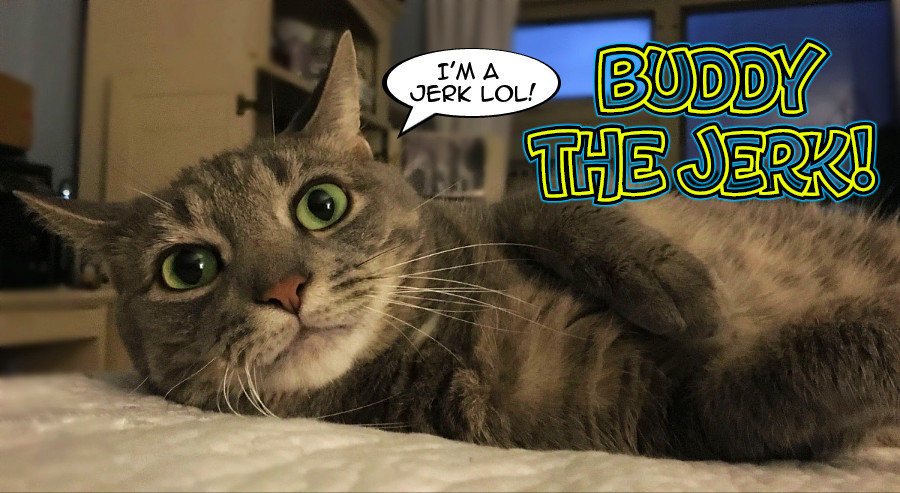
First, Bud doesn’t like that kind of palm-open head petting. I’ve gotta be gentle and very precise, being careful not to touch his ears, which clearly annoys him. The limit is maybe…four? Five?
He likes it when I rub his cheek glands, under his chin, and around his jowls. I know enough to stop and let him give me a signal if he wants more.
He’ll move if he’s had enough, but if I’m not paying attention and I persist, he’s got no qualms about smacking me or biting down on my hand. He’s learned that warning bites should be gentle, but after a clear warning, all bets are off.
I was awarded with ELEVEN scratches on my left arm last week, although that was a case of misdirected aggression, not an overstimulation outburst. I should have seen it coming, since I know the signs indicating he’s frustrated about something and needs to release energy.
Yes, my cat is a jerk. Yes, I still love him. In fact, I’m glad he’s my Buddy and he didn’t end up with people who think cats do things out of spite, or would physically punish him for acting like a cat. A jerk of a cat, but a cat all the same.
He’s taught me to pay very close attention to body language, ears, whiskers, tail swishing, and all the other ways cats signal to us aside from verbalizing their feelings.
How do your feline masters respond to petting, and what are their limits?
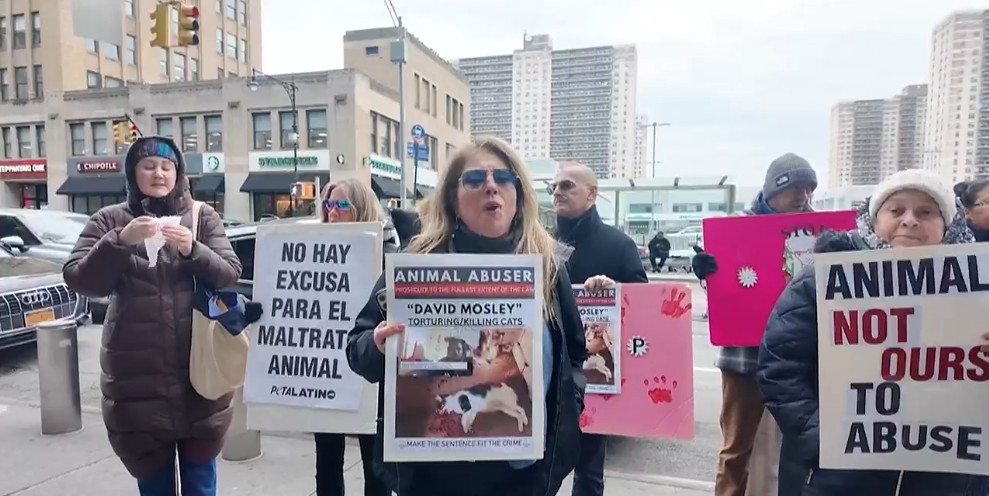
David Mosley wanted attention and allegedly killed a cat on camera to promote his Satanist-themed music.
What to do when you want to be a famous music artist, but your tunes are abominably awful and your gimmick is infantile?
If you’re David Mosley, apparently you beg the internet to notice you exist by allegedly murdering a cat.
The 26-year-old Bronx man was initially gleeful after sharing video and photos showing a dead cat in his Fordham North hovel surrounded by candles and a bunch of nonsense, including the word “SATAN,” spray painted on the walls.
“You should have heard the little bih squeal lol,” Mosley wrote on Instagram alongside a photo of a bloodied and dead cat in his apartment.
“I’m the king, n—a,” Mosley said in a follow-up video after mocking people who were upset that he allegedly killed the cat. “I can reach through the camera and put spells on you like that! That easily! I hexed you through the phone, through the camera. Ya’ll know I do f—ing voodoo, so don’t even call me delusional.”
Mosley during a live stream, during which he claimed supernatural powers.
A relevant question here: who adopted a cat out to this guy? I went through what felt like a CIA-level background check when I first went to adopt, and this Satanist who thinks he’s a wizard apparently had no problem just waltzing into a shelter and walking out with a cat.
Apparently angry that no one turned up to the first “show” in his illustrious music career, Mosley said he was going to take things to the “next level” with another “sacrifice” on Halloween night. In his musical endeavors he called himself Church of Ububal, with the latter word a reverse spelling of “Labubu” in reference to the viral toys.
“Be there or be square,” he wrote, per a screenshot posted to Reddit. “Like I said at my first show and no one came. But you will be at this one. Grab popcorn.”
When he got the attention he wanted, but not the reaction he wanted, he backpedaled during a live stream, claiming he found the already-deceased feline.
By that point, furious Redditors in a Bronx subreddit had closed in on his identity and exact location, and were pestering the NYPD to grab Mosley.
“Y’all are soft for falling for cheap parlor tricks” Mosley said during the live stream.
Incredibly, Bronx criminal court Judge Harold E. Bahr let Mosley walk free without having to post bail after a preliminary hearing this week, and adjourned a hearing this week after Mosley’s original attorney was not present. It’s not clear if that attorney will continue to represent Mosley.
Bahr must be confused about which decade this is. Constituents should (politely) register their displeasure with his office. People from several local cat rescues have already done so.
“We want the judge to take this seriously. We cannot wait for another crime like this to happen,” local animal welfare activist Rachel Ejsmont told News12 Bronx.
Mosley was initially charged with criminal mischief and aggravated cruelty to animals at his Oct. 30 arraignment. Activists are pushing the district attorney for more serious charges.
The court hasn’t set a date for Mosley’s next hearing after the Nov. 12 adjournment. We hope the scrutiny and his mounting legal troubles dissuade him from trying to get attention through violence again.
Lastly, I usually keep my mouth shut about this sort of thing because I know emotions run high and most people are well-intentioned, but already there are grifters latching onto this incident and using it to beg for donations for their activism, which amounts to little more than grumbling about this stuff on social media.
Be careful about who you donate to and make sure you’re giving to registered organizations with financials listed on Charity Navigator or Charity Watch. Donate your hard-earned money to groups that really do make a difference, such as the Humane Society, SPCA and local rescues that do outstanding work, like New Jersey’s Tabby’s Place. A transparent, effective charity will feature its IRS Form 990 on its website and use at least 75 percent of its revenue from donations on program spending. Be wary of “influencers,” people who say outrageous things for attention, clicks and donations, and anyone who claims they have special access to, or influence over, authorities.
The latest viral cat story offers a lesson in healthy skepticism in today’s news environment.
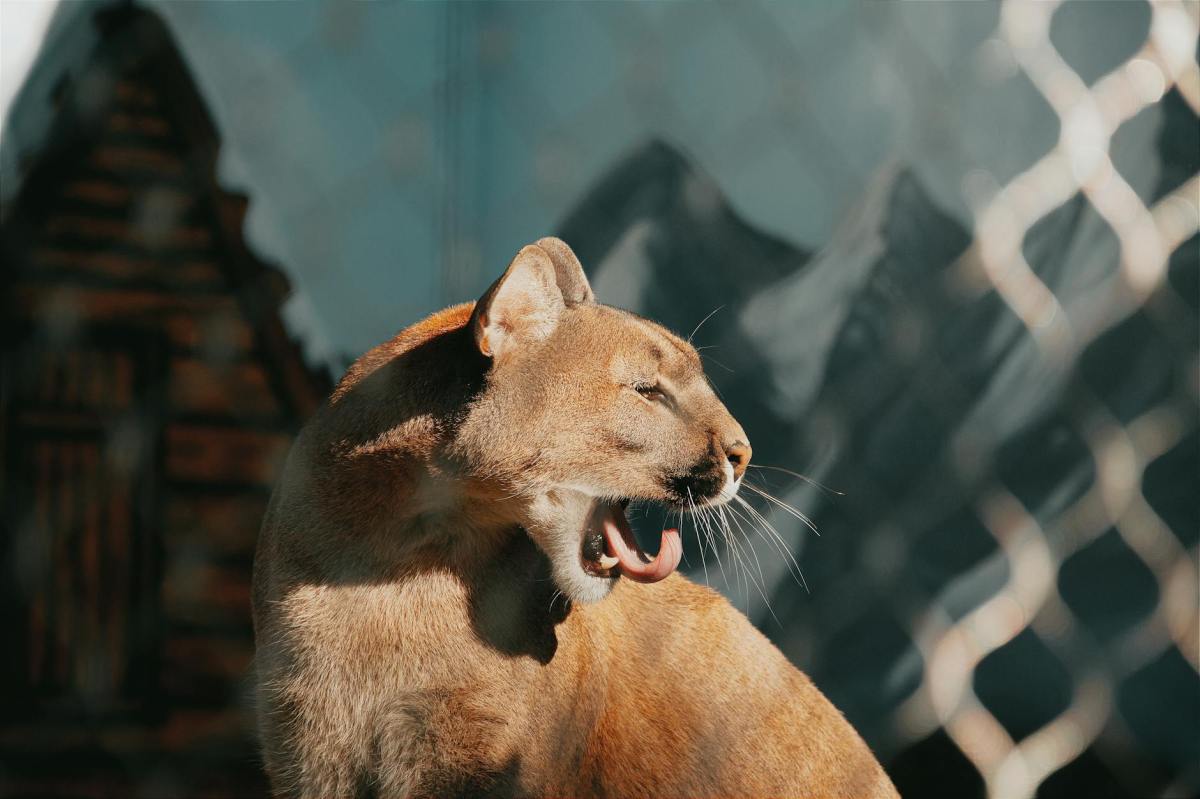
Viral news accounts on social media and less scrupulous news sites have been buzzing this week about a school lockdown in Moses Lake, Washington, which was reportedly caused by a teacher confusing a particularly fat cat for a puma.
I saw red flags immediately while reading the story. While it did give a specific location, it was suspiciously devoid of other details, and the wording on all the posts and stories was dubiously similar. Additionally, a Google news search doesn’t turn up anything recent from reputable press.
Then there’s the photo, which looks a little too good to be true.
This photo is a Getty stock image and does not depict the domestic cat in the school lockdown story, despite accompanying it in dozens of news posts.
So did a school really go into lockdown after a case of mistaken feline identity?
Yes, but it happened in November of 2023, and the photo of the obese cat making the rounds in stories this week does not depict the cat in question. The original story was published by a local news site on Nov. 22, 2023, and says the school went into lockdown at 10:30 that morning, but was quickly lifted after staff confirmed there was no puma stalking the school grounds.
“…educators soon learned that the mountain lion was in fact, a “fat cat eating a rat,” according to the school memo to parents.
‘While we take all reports seriously, this was the first report we’ve ever had of this nature,’ the school wrote in a statement.
Despite the benign nature of it all, safety measures resumed to safeguard students and staff. Classes resumed as normal after a short period of time. “
As for the photo, the particularly rotund moggie’s image is a stock photo from Getty. It was used in a story about feline obesity in 2017 and an April 2018 story from the New York Daily News about public outrage in Jefferson, Iowa, where the police were shooting feral cats instead of dispatching animal control or working with local shelters.
Since the image is from a photo agency and predates the original story about the Washington school lockdown by at least six years, we can rule it out as an image of the feline mistaken for a mountain lion while settling down to a feast of fresh rat.
A deceptive image used to promote the story on Facebook.
So what happened here, and why are so many news sites and channels reporting this incident as if it just happened, accompanied by a deceptive photo that is not credited to Getty?
It’s classic clickbait. That is to say, some administrator or editor saw the old story picking up traffic or noticed a blip in certain search strings, and republished the story as if it’s new while omitting the original date.
Others noticed and followed suit to get the clicks while the getting’s good, fighting over the scraps that fall from the Zuckerbergian table in the form of ad revenue. The story is simple, sharable, has been paired with an amusing image, and is exactly the sort of thing people love to post and comment on via social media.
It’s a reminder to all of us to be skeptical about what we read, and to never take anything on Facebook, Instagram, TikTok et al at face value. In fact, it’s best to ignore anything on those platforms presented as news or fact. Everyone’s got their own preferences, but here at Casa de Buddy, we like the Wall Street Journal, Reuters, The Guardian, Associated Press, al Jazeera, the BBC, and aggregators like RealClearPolitics.
That doesn’t mean they’re above reproach or that everything they produce is a sparkling example of journalism, but they’re institutions that operate under the traditional rules, staffed by professionals who take pride in trying to get stories right. I’ll take that any day over a random Facebook account run by some shady guy in Macedonia or Belarus, who will post anything as “news” as long as it brings him clicks and ad revenue.
This is just one reason why animal advocates are not fond of breeders.
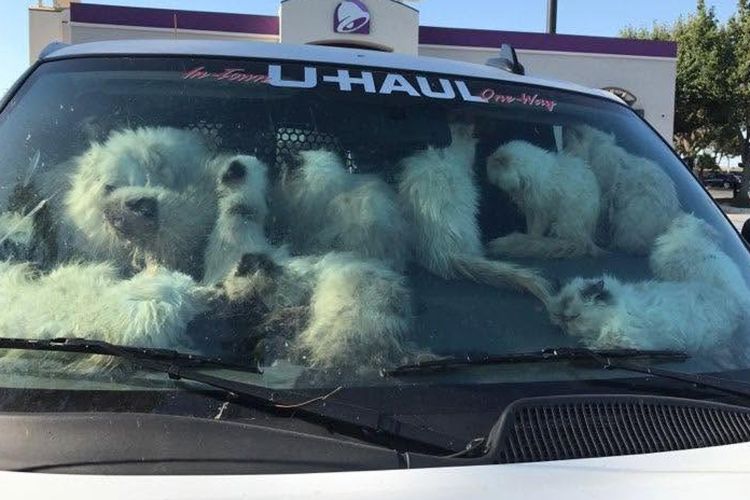
A California woman faces animal cruelty charges after police say she abandoned 134 cats in a U-Haul van without food or water in the sweltering summer heat.
The cats, ranging in age from a week to eight years old, have been removed from the van and the 106 survivors, described as “extremely emaciated,” are receiving veterinary treatment at the Merced County Animal Shelter, according to the Merced County Sheriff’s Office.
Jeannie Maxon/Facebook
A deputy found the van at 5:30 p.m. on Sunday in Santa Nella, a small town about 40 miles south of Modesto. The cats were stuffed in the U-Haul, which was left in a Taco Bell parking lot, and about 20 of them had taken up spots on the dashboard, center console and driver’s seat.
Jeannie Maxon, a 69-year-old woman from Long Beach, Calif., was charged with 93 counts of animal cruelty.
Maxon is the owner of a cat breeding business called Magicattery, which she’s touted on her personal Facebook page and an Instagram page specifically dedicated to the breeding operation. A separate site on its own domain remained up as of Tuesday evening and says the breeding operation specializes in Persian and Himalayan kittens.
A screenshot of Maxon’s Instagram page for her breeding business.
Many of the cats and kittens are dressed up, wrapped in pearls and ribbons, and posted with accessories in the photographs Maxon shared on social media. Maxon was active on Facebook and Instagram until late 2024, according to her visible public activity on both sites.
It’s not clear why she abandoned the cats. California does not have a state licensing system for breeders, but individual towns and cities may require breeders to obtain a license.
It wasn’t immediately clear if Maxon had retained an attorney.
Merced County Animal Shelter said in a Facebook post that the cats will be put up for adoption once they’re all stabilized and receive proper veterinary care.
The cats were found in extremely poor condition and were described as “severely emaciated” by police. They were abandoned without food or water. Credit: Merced County Sheriff’s Office
A woman taunts her cat with ultra-processed snacks, then laughs at his disgusted reaction when he gets a taste. The “cute” video has gone viral.
From the bowels of TikTok comes the latest “cute” video of an attention monger abusing her cat, this time by feeding him Flamin’ Hot Cheetos.
The user opened the bag in front of Butters the cat, waved the Cheetos in his face, held them up to his nose, then feebly protested “These are my snacks! It’s spicy!” after getting the little dude interested.
She allowed Butters to eat Cheetos from her hand and lick her fingers, and his reaction is about what you’d expect from an obligate carnivore who just ate ultra-processed food made from cheap corn filler, chili powder, cayenne pepper, and cancer-causing artificial food dyes. He’s disgusted and uncomfortable.
“You can’t have these! Let me wave them in your face and taunt you, so you know you can’t have them! Haha, isn’t that clever?”
The difference is, Butters can’t guzzle milk or water to wash the taste away, so he settles for angrily swatting at his human while she laughs at him.
The woman thought her video was so clever, she’s shared it online and is enjoying the cheap dopamine hit that comes with accumulating internet points, aka likes.
Here’s a question for people who make social media “content” at the expense of their pets: how many likes are worth destroying the trust between you and your cat(s)?
I’m sure some people think I’m a scold, but all it takes is one clown to start a viral trend, and then all of a sudden you have thousands of people, all of them desperate for validation from strangers on the internet, foisting Flamin’ Hot Cheetos and Takis on their unsuspecting cats. As a general rule, the dumbest and most abusive trends go viral.









 Pain In The Bud