The First Edition Of Webster’s Dictionary From 1828 Says Cats Are ‘Deceitful’ And ‘Extremely Spiteful’

What would the Dictionary Man think of a modern American society dominated by the power and cuteness of cats?

Cats have taken over the internet, claim a mighty share of the $64 billion Americans spent on pet food in 2023, and have essentially installed themselves as the leisurely masters of 28 percent of American homes.

But it wasn’t always that way, and a look at the first-ever edition of Webster’s Dictionary reveals a very different attitude toward our furry overlords:

“The domestic cat needs no description. It is a deceitful animal, and when enraged, extremely spiteful. It is kept in houses, chiefly for the purpose of catching rats and mice.”

Wow. Whoever does feline PR should get a raise, because we’ve gone from “We tolerate the imperious little bastards because they’re good at killing rodents” to “Does my little angel want a snack? How about some ‘nip then? Anything for my bestest little pal!” in the span of two centuries.

Buddy to Noah Webster: Bow!
Buddy 1, Noah Webster 0. Naturally.

Noah Webster, whose name is now synonymous with dictionaries, saw the effort to standardize spelling and pronunciation as central to formalizing an American linguistic identity distinct from our mother country. Or, as he put it, “[t]o diffuse an uniformity and purity of language in America” that would not only differentiate our English from England’s, but also unify the states at a time when many people still viewed the idea of a united states with skepticism.

By doing so, he hoped America would avoid the pitfall of dividing itself into regions of nearly mutually unintelligible dialects, a problem that plagues other countries. Consider the fact that India has almost 800 distinct languages and dialects, down from a staggering 1,652 in 1961 as hundreds of local languages died with the last generations of their speakers. Hindu, the country’s most popular language, is spoken only by about 43 percent of the population.

The goal, Webster wrote when he published his dictionary’s first edition, was “to furnish a standard of our vernacular tongue, which we shall not be ashamed to bequeath to three hundred millions of people, who are destined to occupy, and I hope, to adorn the vast territory within our jurisdiction.”

As dictionary.com notes, Webster wrote that passage in 1828 when the US population was just 13 million and vast swaths of what we now consider familiar territory was at the time largely unexplored wilderness.

His prediction of an America of 300 million people came true in 2006. Today there are approximately 335 million of us.

In other words, a hell of a lot has changed since the Connecticut born-and-raised Webster cobbled together a uniquely American system of spelling and pronunciation, so maybe it shouldn’t be a surprise that attitudes toward cats have shifted so dramatically.

Still, we’d love to see the look on Webster’s face if we could bring him forward in time and show him how the “deceitful” and “extremely spiteful” little furballs have come to such prominence in American culture. What would Webster make of the spoiled modern house cat, with her condos, tunnels, toys, harnesses, bowls filled with salmon and duck, and even psychoactive recreational drugs for their enjoyment?

Bow before your feline overlords, Webster!

Editor Cat Says
“We have made some edits, humans. See to it that the next edition includes this new and improved definition, or we shall withhold snuggles.”

100 Years Ago, An Archaeologist Unearthed The Most Incredible Find In History

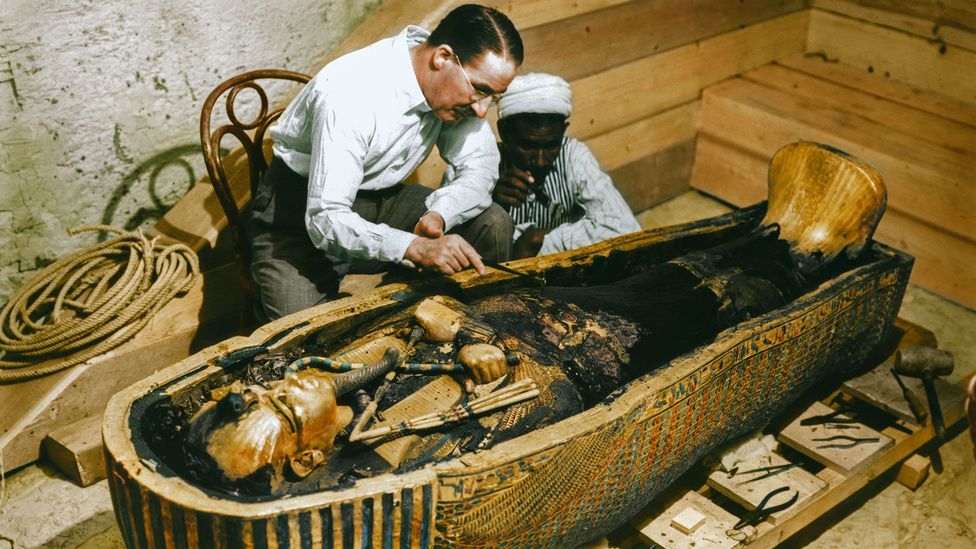
100 years ago today, Howard Carter found a tomb filled with statues of cats, as well as the mummy of some guy named King Tut!

Howard Carter’s peers felt sorry for him.

The British archaeologist’s contemporaries watched him dig in Egypt’s Valley of the Kings year after year, grid by grid in what they were sure was a fruitless search for something that didn’t exist. Everyone knew the sand-covered necropolis had yielded all of its secrets. Everyone knew Carter was wasting his time — and the funds of his patron, the Earl of Carnarvon — looking for the tomb of an obscure, apocryphal boy king who allegedly ruled Egypt for nine years in deep antiquity.

After 15 years, the partnership between Carter and Carnarvon was about to end. Even the wealthy aristocrat had his limits, and after so much time and effort chasing an apparent mirage, Carnarvon declared he would pay for one final season of archaeological work in 1922.

Carter had been laboring in the necropolises along the Nile since he was a young boy and apprentice to the great archaeologists of his time. Aside from seasons that were cut short by war, the Egyptologist had spent three decades digging in those valleys. Now he was about to be out of a job and a patron.

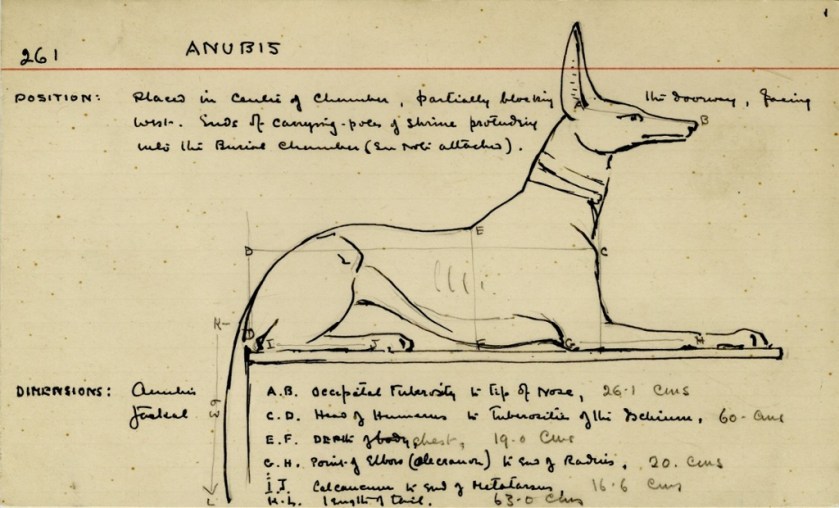
Carter's notes
Howard Carter’s discovery made him the most famous archaeologist in history, but it also left him with the incredible task of preserving and cataloguing everything in the more than 3,000-year-old tomb. Here’s a page from Carter’s notes about a statue of Anubis. Credit: Wikimedia Commons

Exactly 100 years ago today, Carter wrote a terse entry in his journal: “First steps of tomb found.”

Those steps descended to a door of limestone and plaster, marking the entrance to an antechamber. A second doorway lay sealed in the gloom, and after dispatching a letter imploring Carnarvon to make haste to Egypt, Carter waited for the arrival of his patron and chipped away at the second door, peering through a tiny hole.

With trembling hands I made a tiny breach in the upper left-hand corner. Darkness and blank space, as far as an iron testing-rod could reach, showed that whatever lay beyond was empty, and not filled like the passage we had just cleared. Candle tests were applied as a precaution against possible foul gases, and then, widening the hole a little, I inserted the candle and peered in, Lord Carnarvon, Lady Evelyn and Callender standing anxiously beside me to hear the verdict. At first I could see nothing, the hot air escaping from the chamber causing the candle flame to flicker, but presently, as my eyes grew accustomed to the light, details of the room within emerged slowly from the mist, strange animals, statues, and gold – everywhere the glint of gold.

The earl, sensing a shift in Carter’s mood, queried him: “Do you see anything?”

Carter paused to collect himself before answering.

“Yes,” he said. “Wonderful things!”

The rest is history.

It turned out the room Carter first glimpsed was yet another antechamber. It had been breached in antiquity and tomb robbers had taken some of its valuables before resealing it, but they hadn’t breached a second chamber, the one that contained what are now the most famous finds in archaeological history: The iconic gold funerary mask of King Tutankhamun, the ornate sarcophagus inscribed with prayers from the Egyptian book of the dead, a life-size statue of the boy pharaoh and other statuary, impeccably designed furniture, vases, funerary candle holders, textiles, canopic jars, even chariots and a model ship. There were cats too, including statues of felids big and small.

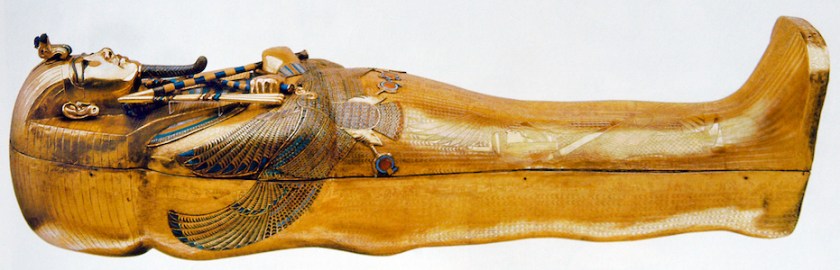
Tut coffin
A second coffin made of wood and gold encased the pharaoh’s body and was placed within the sarcophagus.

Everything was gilded, and everywhere Carter’s torch cast light was the glitter of gold. He had been vindicated. Subsequent rulers had almost erased Tut’s name from history, and many doubted he was a historical figure. Now Carter not only proved the boy pharaoh was real, he had discovered the best-preserved tomb in history, ignited renewed interest in ancient Egypt, and unearthed objects that would leave indelible marks on human culture.

For more about Carter’s historic discovery, King Tutankhamun himself and the impact of the incredible discovery as the world celebrates its 100th anniversary, here’s some further reading:

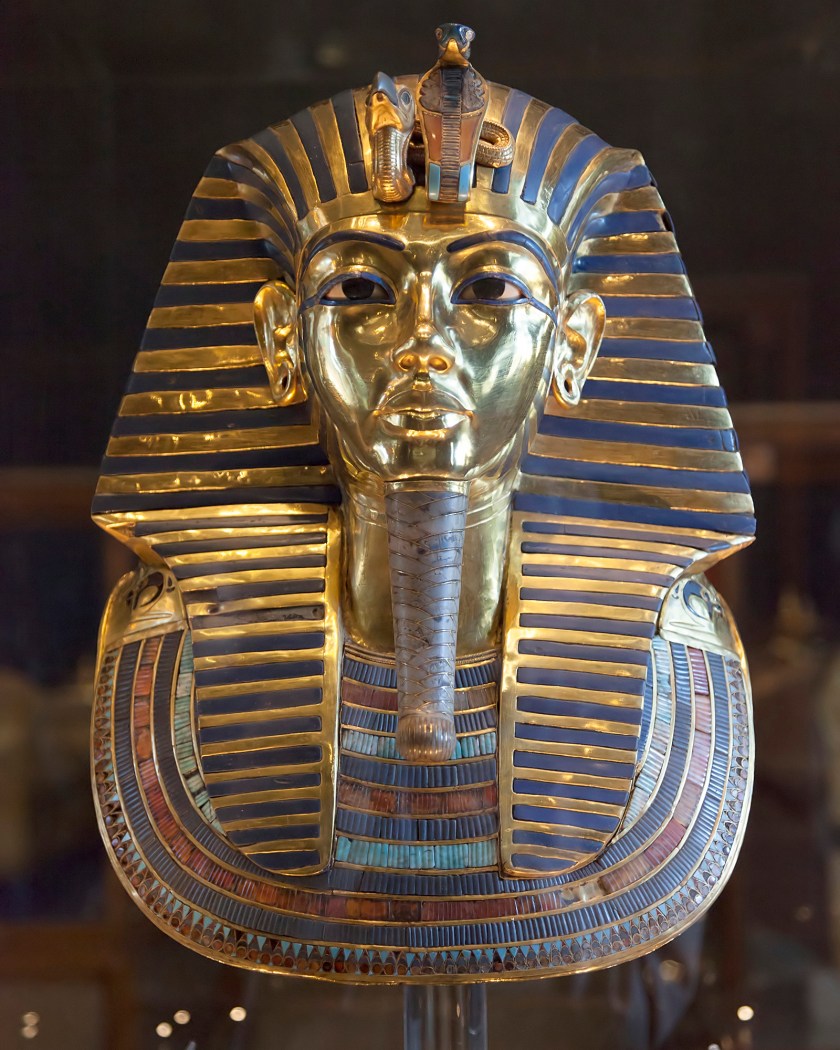
Funerary Mask of King Tutankhamun
The funerary mask of King Tutankhamun is perhaps the most recognizable and iconic artifact from ancient Egypt. Credit: Wikimedia Commons
Leopard from King Tut's tomb
A sculpture of a leopard found in Tutankhamun’s tomb. Cats were important in ancient Egypt, and feline/felid imagery abounds in depictions of deities, statuary and motifs. Credit: Wikimedia Commons

The Ancient Egyptians Lost A War Rather Than Hurt Cats

“Noooo! We surrender, okay? Just don’t hurt the cats!”

Before the great civilizational clashes at Thermopylae, Plataea and Salamis, there was Pelusium.

The strategically important city on the Nile Delta was where the Egyptians under Pharoah Psametik III made their stand against the invading armies of Cambyses II, the king of Persia, in 525 BCE.

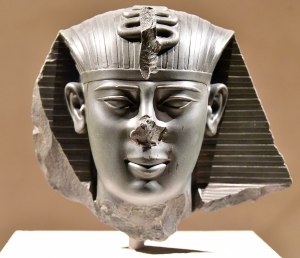
Amasis II was the last great Egyptian pharaoh before Persian King Cambyses defeated his son, Psametik II, and took that title for himself, beginning two centuries of Persian rule over Egypt.

It was a sound decision: Pelusium was heavily fortified, with high stone walls and ramparts. The pharaoh dedicated tens of thousands of men to the city’s defense, lining the ramparts with archers, stone throwers and catapults designed to launch flaming projectiles at the attacking, lightly-armored Persians.

For his part, Cambyses faced the prospect of a long siege or a bloody frontal assault that would cost thousands of lives as his men were tasked with scaling the walls under fire.

But the Persian king knew the Egyptians were not only famously fond of cats, they believed cats were representations of deities.

In a shrewd early example of psychological warfare, Cambyses figured out a way to use felines to his advantage in battle.

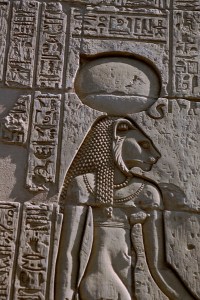
Cats were everywhere in ancient Egypt: Goddesses like Sekhmet and Bastet were portrayed as lion- and cat-headed, while Egyptian artists and craftsmen produced statues, rings, pendants and hieroglyphic cartouches with feline imagery. The beloved pets of royalty and other powerful Egyptians were buried in their own elaborate sarcophagi, while regular people mourned the deaths of their family cats by shaving notches in their eyebrows.

An image of the Egyptian cat goddess Sekhmet carved in relief among hieroglyphic inscriptions.

Cats are found in virtually every significant ancient Egyptian archaeological site, often elaborately mummified alongside their humans, and Egypt is home to the largest and most enduring cat statue in the world, the Great Sphinx. Not only do weathering patterns show the Sphinx is older than previously thought, it’s believed the Sphinx was originally carved with a cat’s head, then later defaced in the image of a pharaoh. That theory is supported by the fact that the head is disproportionately small compared to the Sphinx’s body, indicating it was carved down from its original form.

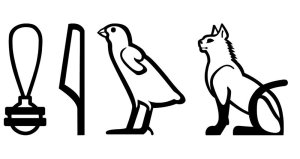
An Egyptian hieroglyph for “miu,” an umbrella word for “cat” that could mean domestic or wild cats, including big cats.

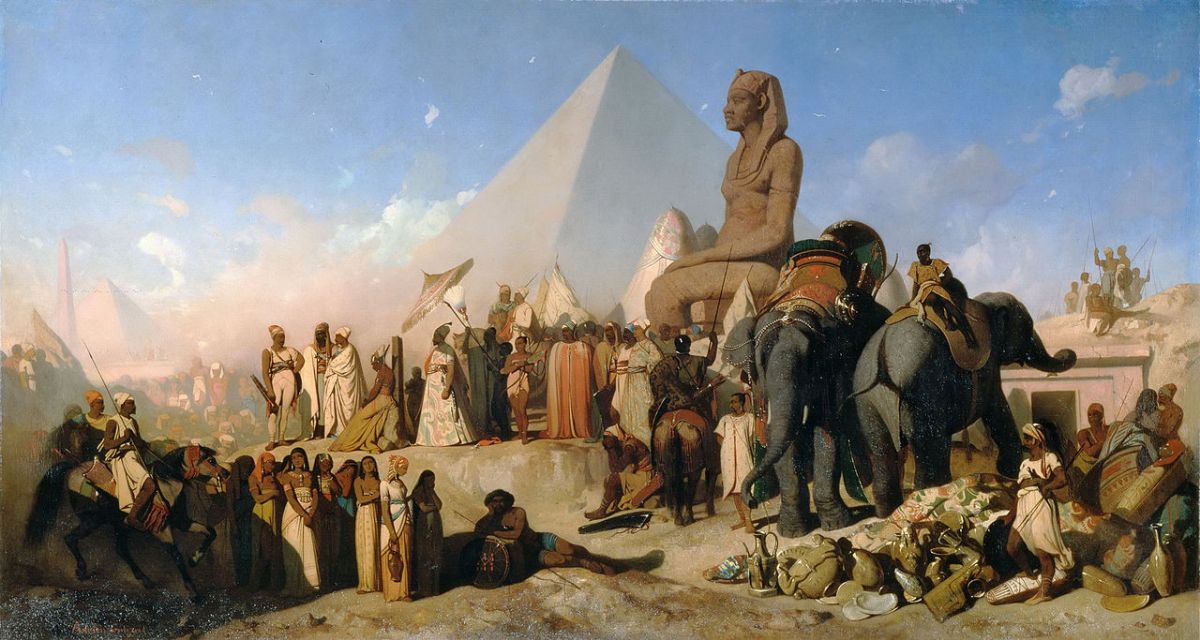
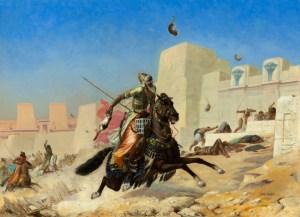
Cambyses realized there was a way to turn the Egyptian fondness for all things feline to his advantage: He had his men round up thousands of cats and carry them into battle as if they were just another part of the soldier’s kit along with weapons and armor.

The Egyptians, who were ready to rain fire and death upon the advancing Persians, were distraught upon hearing the distressed mews of the thousands of felines below.

If they opted to fight they would be killing sacred animals who were avatars of some of their most important gods. If they surrendered Egypt would be subsumed into the growing Achaemenid Empire, joining the Medians, Babylonians, Elamites and other once-proud nations in bending the knee to Persia’s king.

An artist’s depiction of the battle shows Cambyses atop a horse as his men catapult cats over the city walls.

They chose the latter, bringing about two centuries of Persian rule in Egypt and leaving the Persians with no remaining obstacles between them and the loose confederation of city-states of Greece.

The kitties, however, would have their revenge against the Persians, for it was a man named Leonidas (“lion”) who led the fabled Spartan warriors to the narrow mountain pass of Thermopylae, where they and a few thousand fellow Greeks held the pass for three days against an invading Persian army that was the largest fighting force the world had ever seen. (Herodotus, the Greek historian prone to patriotic exaggeration, said the Persians were a million strong, drinking entire rivers dry en route to mainland Greece. Modern historians put the number at about 300,000.)

Regardless, the Lion of Sparta and his men inflicted so many casualties on the Persians that the latter’s morale was shattered, and held the pass long enough to give the other Greeks time to muster their army.

When the Persians finally broke through they sacked Athens and rampaged through Attica, until they met an unstoppable force: All of Greece united under the co-leadership of Athens and Sparta, with 50,000 pissed off Spartan Peers leading the defense. The combined forces of the Greek city-states routed the invading army.

We’re sure the Greeks broke out plenty of catnip for their kitties to join in the resulting celebration, and Herodotus just forgot to include that little detail in his histories.