Lifelong changes in the brains of felines more closely resemble aging in human brains. Studying cognition and cognitive decline in cats could help us better understand brain aging in general, scientists say.
For almost the entire history of modern science, rodents have served as a stand-in for humans in research into everything from metabolism to autoimmune responses.
They’ve even been the go-to for studies examining cognitive decline, diseases and neural mechanisms.
But now research shows there’s a better model closer to home. It turns out cat brains more closely resemble human brains in many respects, particularly in terms of aging and its effect on our mental faculties.
The results are part of a large project, called Translating Time, that compares brain development across more than 150 mammal species, and is now expanding to include data on ageing. The hope is that the data will aid researchers trying to crack the causes of age-related diseases, particularly conditions that affect the brain, such as Alzheimer’s disease.”
One drawback to using mice is they simply don’t live long enough for their brains to deteriorate in ways many human and non-human animals do, scientists told Nature. They also have species-specific mechanisms that ward off certain degenerative diseases, including Alzheimer’s.
Not only do cats live longer, but their brain development and decline mirrors our own on a shorter time scale, scientists say. Tracking brain changes in cats is also more helpful than doing the same with dogs, who have been radically changed by breeding. Felines are mostly left to mate as they please, meaning they’re closer to their natural form, allowing for more useful data.
Credit: Pranjall Kuma/Pexels
Looking to our furry friends makes sense anecdotally as well. Every cat lover has seen the unfortunate confusion and forgetfulness that can afflict senior cats. Older cats tend to sleep a lot more, which is significant for a species notorious for its extravagant snoozing habits.
Thankfully, efforts like the Catage Project do not result in more cats being used in laboratory experiments. Researchers draw their data from veterinary records, brain scans and blood samples.
When asked about how his species could help humans better understand things like cognitive diseases and decline because of their similarity to humans, Buddy the Cat declared the research “fake news.”
“Where’s my bumblebee toy?” Buddy asked. “Did you hide my bumblebee toy? I’ve been looking everywhere for it!”
When told the toy was right were it’s supposed to be, in his toy basket, the 10-year-old tabby grew irritated.
“Fake news!” he meowed. “You put it back there just to mess with me. I’m onto your games! Now where did I put my favorite milk bottle cap?”
With much of the US already sweltering under a summer heat dome, architectural engineers warn most American buildings aren’t designed for extreme temperatures, while energy experts warn of more rolling blackouts.
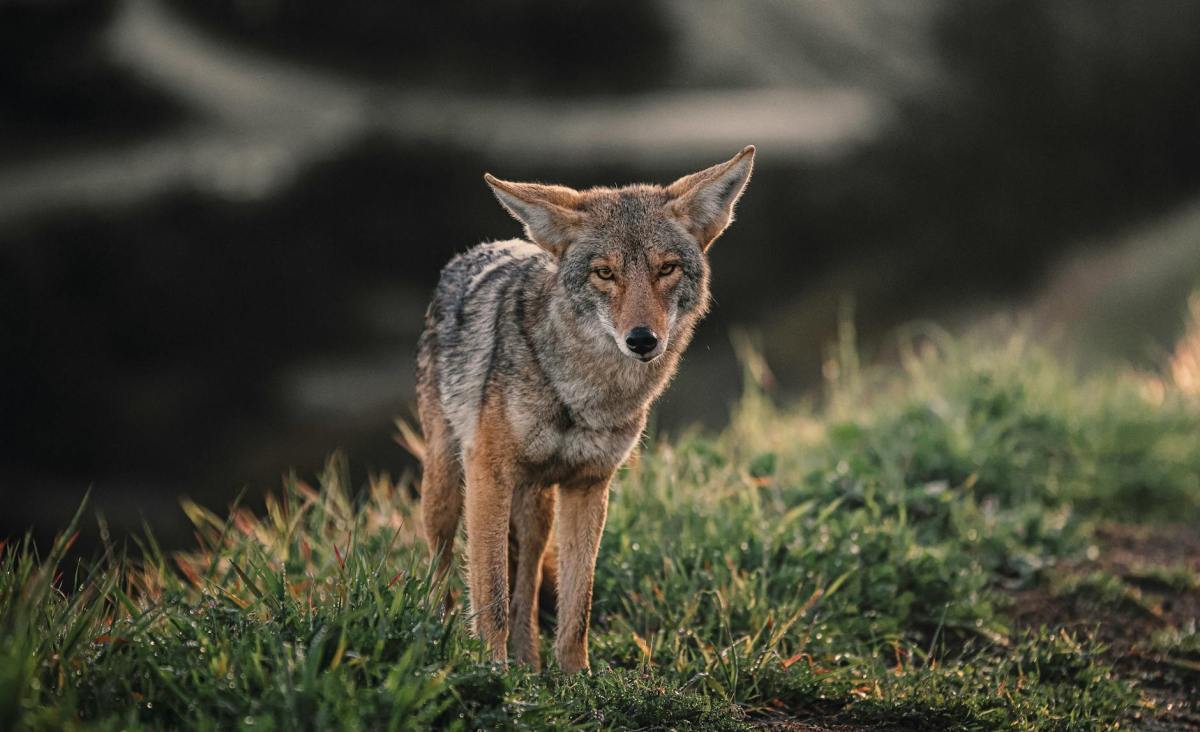
A family in Mission Viejo, Calif., heard a series of loud crashes at their back door, then reviewed their doorbell camera footage to find a determined coyote had been trying to attack their cat.
The footage shows the coyote repeatedly throwing itself at the screen door, which might have buckled if there hadn’t been a baby gate reinforcing it.
“We ended up putting a baby gate up to keep the cats inside,” homeowner Cindy Stalnaker told KABC. “That ended up being what prevented the coyote from getting inside the house because that’s what he was banging into repeatedly.”
Coyotes weigh about 30 to 35 pounds and will attack potential prey smaller than they are, which includes pets as well as young children.
The canids aren’t usually keen on approaching human homes, but in many places they’ve run out of room to roam as towns and cities clear more wild land for new developments. Less habitat means less prey, which can also lead the animals to scavenge and hunt on the fringes of residential and urban neighborhoods.
Stalnaker said she was grateful the baby gate held, but she’s looking into a more stable and permanent solution to keep her cats safe from coyotes.
What if air conditioning isn’t enough?
Human activity isn’t just driving wild animals to extinction, it’s killing them off with temperature extremes, and a Tuesday story from The Guardian provides a bleak look at how our present situation threatens human life as well: Buildings in most US cities aren’t built to mitigate excess heat, air conditioners weren’t designed to keep on chugging indefinitely with temperatures around 100 degrees, and power grids can’t keep up with the demand when millions of AC units are drawing power simultaneously.
At the same time, summers keep getting hotter and there’s no reprieve in sight.
Legal or not, New Yorkers turn to fire hydrants to get relief during heat waves. Credit: NYC Office of Emergency Management
While the heat has major ramifications for animals and sea life, it’s also directly endangering human life now:
“Some experts have begun to warn of the looming threat of a “Heat Katrina” – a mass-casualty heat event. A study published last year that modeled heatwave-related blackouts in different cities showed that a two-day blackout in Phoenix could lead to the deaths of more than 12,000 people.”
An architectural engineer tells the newspaper that temperatures have spiked so much in recent summers that cooling “systems that we sold 10 years ago are not able to keep up with the weather we have.”
The result for people in America’s hottest cities is that even AC doesn’t provide relief.
In the meantime we’re likely to see more headlines about rolling blackouts, punishing energy bills and people dying in their homes, scientists say. Fusion power and significant leaps in battery technology can’t come soon enough.
People whose cats are infected with FIP can now get a legal prescription and buy it from a US pharmacy. A full course of treatment will cost a few hundred dollars instead of the thousands charged on the illegal market.
Starting on June 1, people whose cats are infected with deadly Feline Infectious Peritonitis won’t have to shell out thousands of dollars to shady middlemen importing the cure from China.
FIP is a virtual death sentence for cats, but there’s a drug — GS-441524 — that has a cure rate somewhere around 90 percent, a Godsend for people whose beloved felines are afflicted with the virus.
Previously the only way to get it was through predatory online middlemen who charged exorbitant sums, but thanks to a partnership between UK pharmaceutical company Bova Group and New Jersey-based compounding pharmacy Stokes, the FIP cure will be available legally in the US.
The legal version of the drug will come in a tuna-flavored tablet format and customers can expect to pay a few hundred dollars for a full treatment instead of between $5,000 and $15,000 some paid for the FIP treatment from importers.
A US company invented the drug and held the rights, so it seemed like bringing it to market for cat caretakers would be a no-brainer. Unfortunately, GS-441524 is similar to COVID drug Remdesivir so the company was worried if they submitted the FIP cure to the FDA for approval and the FDA did not grant it, the denial could lead the agency to revoke its approval of Remdesivir due to its molecular similarity.
As a result, innumerable people whose cats were suffering with FIP turned to groups like Facebook’s FIP Warriors to help them obtain GS-441524 illegally. The drug was manufactured by facilities in China, sold to middlemen in the US and Europe, then marked up by eye-watering amounts for sale to people with sick cats.
Jupiter, a British shorthair, was diagnosed with FIP. His human, a young professional from London, paid almost $10,000 for FIP treatment obtained through middlemen.
Last year the feds announced they’d exposed a GS-441524 smuggling ring, alleging a woman from Texas and another from Oregon had made almost $10 million from selling the FIP treatment to panicked cat lovers.
GS-441524 importers knew their customers were desperate to save their beloved feline friends so they’d be willing to pay the extraordinary mark-up — and pay they did.
Here at PITB we’ve interviewed and written about several people whose cats were diagnosed with FIP. One of them, a student, spent her entire savings on GS-441524 obtained through the Facebook group and relied on help from generous donors to raise the rest. Another, a young professional in London, paid even more, spending £7,500 (about $9,400 at the time) on the medication alone, not including vet visits.
A Texas woman whose cat, Seth, was diagnosed with FIP said the middlemen — and women — said the sellers “saw our desperate situation and took advantage of us.”
“It was a very stressful time for us, and every time we needed to refill, they charged us more,” she told PITB. “They knew we couldn’t say no.”
For readers interested in more details about GS-441524, Stokes pharmacy has a resource page that breaks down pricing, shipment times, availability and more.
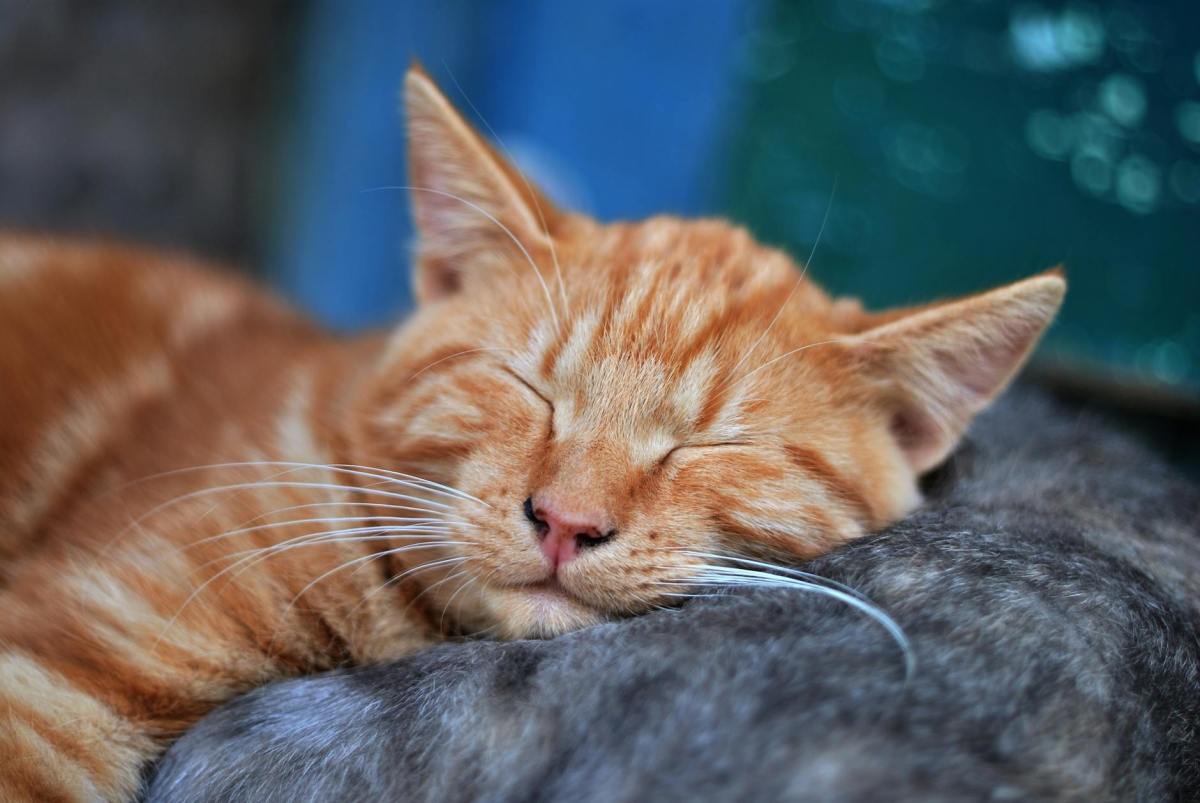
Parsnip, the cat pictured at the top, and Jupiter, the British shorthair pictured within the story, were both cured after taking full courses of GS-441524.
The book received glowing reviews for its comprehensive approach to the world of slumber and promises something for every type of napper.
A new book on napping from the world’s most prolific snoozer has taken the sleep enthusiast community by storm.
“The Art of Napping: The History and Technique of Dozing Off” by Buddy the Cat bills itself as “the world’s most comprehensive guide to taking a siesta” and a “manual on how to commit yourself to a lifestyle of leisure and laziness.”
It includes an illustrated history of sleep science, from its superstition-mired origins to the highly specialized field of modern-day napology, following the rich sedentary traditions of various cultures.
“The chapter contrasting ancient Sumerian nap-walking with Syracusan Somnambulism is not only heavy with detail, it’ll put you to sleep almost immediately,” said Rusty LeFelino, chaircat of the Snooze Studies Department at the University of Catlanta.
“Nap on tatami mat under cherry blossoms” by Hirotaro Buddishida, 1646, is one of many historical depictions of shut-eye included in The Art of Napping.
Reviewers were equally effusive with their praise.
“Buddy the Cat dozes headfirst into the world of segmented slumber, documenting everything from Chicago-Style Snoozing to indigenous bedding techniques pioneered by the jaguars of the Pantanal,” reads a starred review in Publisher’s Weekly. “Whether you’re a weekend warrior who enjoys drooling on your couch during baseball games or a committed napper who swears by episodic DaVinci Sleep, there’s something for everyone in this beautifully bound volume.”
The New York-based feline spent more than a year researching and getting paws-on experience for the book. He visited the California headquarters of Google with its famous employee nap pods, spent a week sleeping under the stars with the pumas of the Pacific Northwest, and interviewed lucid dreamers to find out whether it’s possible to nap within a nap a la Inception.
“Buddy leaves no pillow unturned in his quest for the truth, with spectacularly stale prose that will have even the over-caffeinated yawning into the back of their paws,” a reviewer for Narcolepsy Daily wrote. “Get yourself a cozy blanket, curl up with Buddy and let the Z’s commence.”
Southern Siesta: The author spent several weeks in the Amazon napping with jaguars, jaguarundis and ocelots, an experience described in a yawn-inducing chapter of The Art of Napping.“The ability to nap anywhere at any time is the mark of a master snoozer,” Buddy writes in his new book. Credit: Wikimedia Commons
Although the original perpetrator of the scam was exposed, there are still opportunists selling “Ashera cats” to unsuspecting buyers who have their hearts set on hypoallergenic pets.
Pet site listicles name the Ashera cat as “luxurious,” one of the most expensive and rare breeds ever. Videos show surprisingly large, exotic-looking felines with leopard-like rosettes and a calm demeanor.
In media reports a man named Simon Brodie talks the breed up, presenting himself as the CEO of a biotechnology company that “developed” the Ashera through careful genetic manipulation, selecting only the most positive traits. For a few thousand dollars more, Brodie promises, they come in hypoallergenic versions too.
Brodie often sounded like he was describing the newest iteration of a tech product rather than a cat, calling the Ashera “a status symbol” and listing its optional features the way a car salesman talks about leather and heated seats.
“It’s exotic, but under the skin it’s a domestic house cat, very easy to take care of and extremely friendly,” he told Reuters. “Everybody has thought at one time, wouldn’t it be great to have a leopard at home, or a tiger? Obviously, you can’t and this is about the nearest thing to it.”
Brodie conjured images of engineers poring over genetic data and working with gene-editing equipment in a laboratory to create the perfect pet.
“Anybody can throw the ingredients in, but unless you know what ingredients are the best ingredients in the best percentages, you’re not going to produce the same final product,” Brodie told the U.K. wire service.
The problem? The Ashera doesn’t actually exist, and there’s no evidence Brodie has ever been in a lab, let alone spearheaded the creation of a new breed of feline.
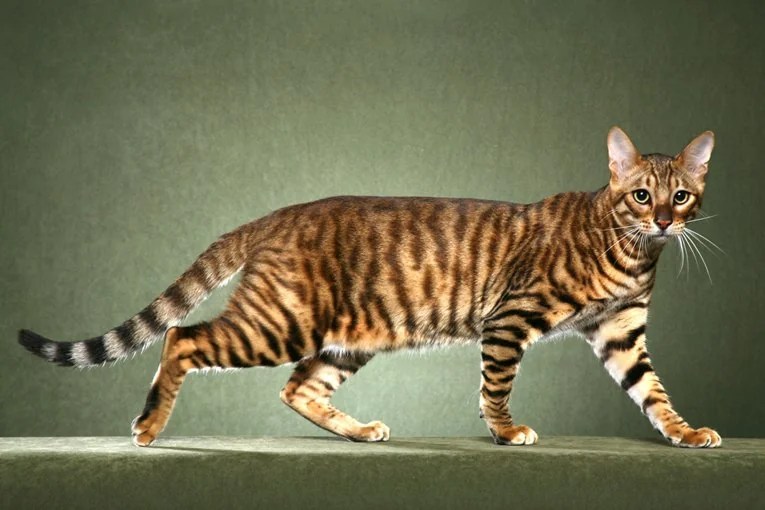
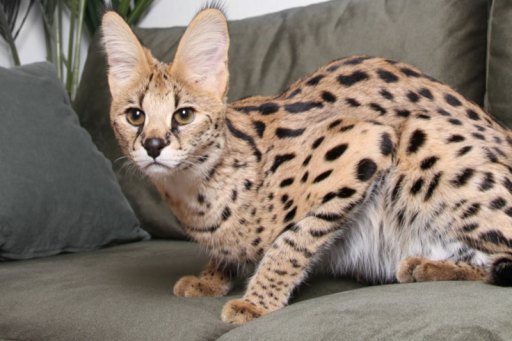
A Savannah cat with clear Serval lineage is shown as an example of an “Ashera cat” on several websites about the fictional breed.
Sadly, people might not realize that right away because of the publish-now, verify-never nature of web publications. Catster maintains a current page for the “breed,” citing its “outstanding lineage” and its supposed status as “one of the rarest and most expensive cats in the world,” potentially setting back its owners $100,000 or more per cat. You have to scroll down before the site warns about the “controversy and skepticism regarding the breed’s origins,” as if there’s still a debate whether the Ashera is a real breed.
Sites I’d rather not link to include the Ashera in their lists of “most exclusive” and “rare” breeds, and recent Reddit threads claim their price owes partly to their rarity because the company “only breeds about 100 cats a year.” When’s the last time you heard cats didn’t breed enough?
There are even “Ashera cat communities” designed to make it look like there are large online groups of happy owners, and Youtube channels featuring videos of Savannahs labeled as Asheras.
A sketchy operation
But dig a little deeper and you’ll find the truth. The Savannah Cat Association calls the Ashera a hoax, says the cats are Savannahs with fancy marketing, and details experiences people have allegedly had with Brodie. His company appeared to be a one-man operation with a voice mailbox, and people who purchased the pets said they were told to wire down payments to an account in the United Arab Emirates.
There are even claims Brodie was drop-shipping the cats, with customers saying they were delivered directly from an Oklahoma breeder of Savannahs.
And the people who saw an opportunity to have a pet cat despite severe allergies? They weren’t happy either, even those who negotiated deep “discounts” with Brodie.
“I don’t think any cat is worth $4,000,” a customer named Mike Sela told Columbia Journalism review, “but this seemed like a magical opportunity, especially with parents trying to get something for kids. You never thought you could get a cat and this is your chance.”
A group of angry customers who were promised hypoallergenic pets contacted ABC News, whose Lookout team enlisted the help of a biotechnology company to test cats purchased from Allerca, Brodie’s company. The tests showed the Ashera cats had the same amount of Fel d 1, the primary allergen in feline saliva, as the typical cat and could find no evidence of Brodie’s claims that he’d engineered an exotic cat sans allergens.
CJR took mainstream and legacy press outlets to task for reporting uncritically on Brodie’s claims despite the lack of any documentation, peer-review studies proving gene-edited hypoallergenic cats are possible, and for a complete lack of due diligence on the man himself. Per CJR:
“What Time, National Geographic, and other major outlets, including The New York Times, missed was that Brodie has no background in genetics—but he does have a well-recorded background in running scams. He was arrested in England, his native country, for selling shares in a non-existent hot-air balloon company. In the United States, he has left a wake of evictions, unpaid loans, and suits by unpaid employees. One judgment against him that stands out is by a company called Felix Pets, founded about a year before Allerca with the same goal of breeding hypoallergenic cats by eliminating the Fel-D-1 gene.”
Indeed, as the complaints piled up and Brodie’s deceptions began to catch up with him, the San Diego Union Tribune reported Allerca had been evicted from its “offices” — Brodie’s home address.
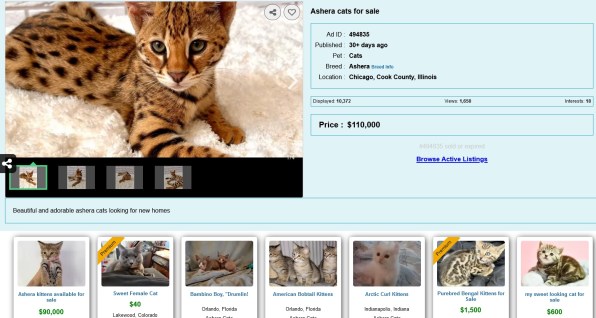
A listing for an Ashera cat and a second listing for Ashera kittens, bottom left.
News stories say Brodie has changed his name numerous times and if he’s still out there, he’s almost certainly not Simon Brodie anymore. But the Ashera cat scam isn’t dead.
We found dozens of sites offering “Ashera kittens,” and online marketplaces for animals still have regularly-updated listings from people claiming they’re selling “genuine” Ashera cats in 2024. There’s also at least one group claiming they’re “officially licensed Ashera cat breeders,” touting a lofty “mission” not only of providing cats for people with allergies, but also “preserving exotic wildlife.”
The myth of hypoallergenic cats
Although there have been recent efforts to neutralize Fel d 1, they come from actual scientists who have published their work for peer review, or from public pet food companies that have paired with scientists to create kibble they claim reduces the Fel d 1 allergen in cats who eat it. They’re also focused on attacking the protein, not breeding or creating cats that lack it in the first place.
People with allergies should understand that despite what they may read online, hypoallergenic cats do not exist. No one has been able to “engineer” a feline without the Fel d 1 protein.
There’s serious debate among geneticists about whether trying it is ethical, as no one knows exactly what function Fel d 1 serves or what the potential consequences may be for editing it out of feline genetic code.
So if you’re looking for a “luxury cat” or you just want a cat that won’t trigger your allergies, beware before you’re separated from your hard-earned cash. As always, if something sounds too good to be true, it probably is.





 Pain In The Bud