Jane Goodall Forever Changed Our Understanding Of Animals

Goodall spent the better part of seven decades with the chimpanzees of Tanzania. Her discoveries were so profound, they forced the scientific community to reevaluate what separates humanity from other animals.

As I’m sure most of you have heard, Jane Goodall passed away Wednesday of natural causes. She was 91.

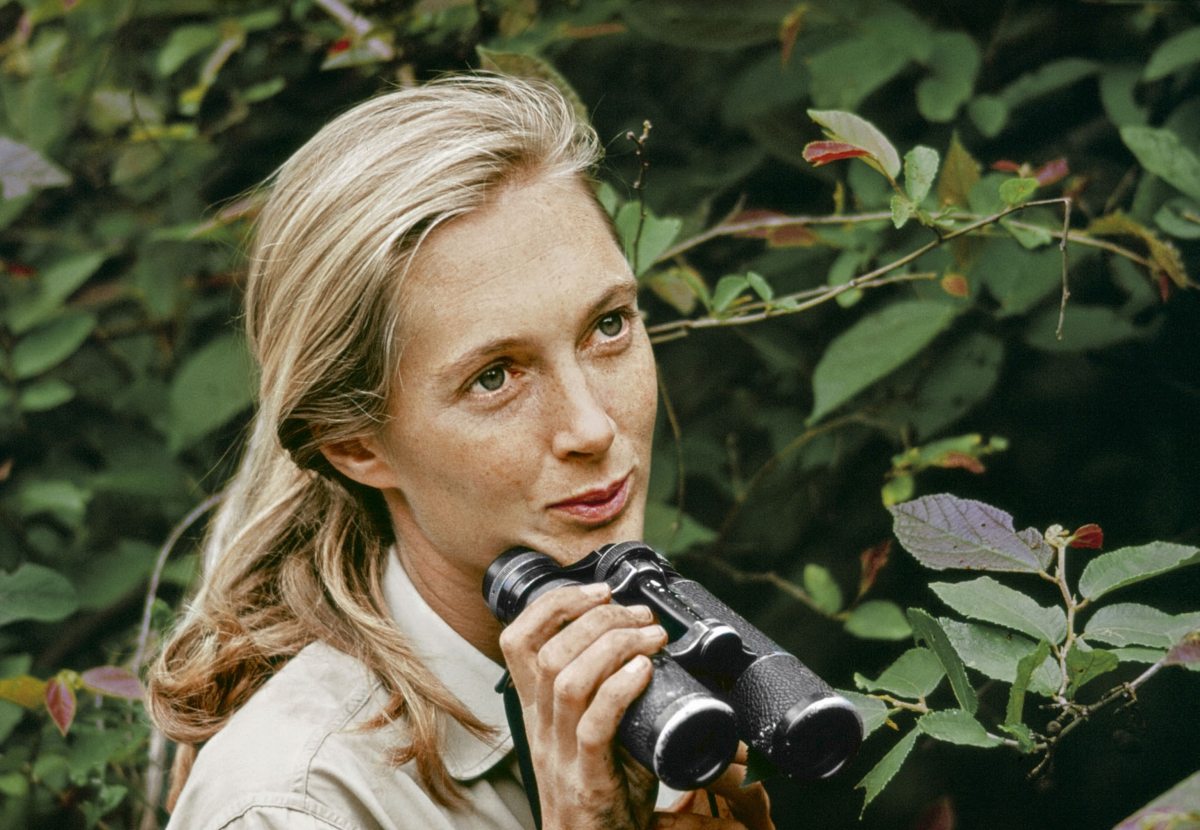
Goodall’s work was revolutionary and her career was extraordinary. It’s difficult to imagine now, but when Goodall first pitched camp in Tanzania’s Gombe Stream National Park in July of 1960, the scientific community knew virtually nothing about great apes.

Goodall wasn’t exactly welcomed with open arms. Being female and photogenic were the first two strikes against her in the eyes of the establishment.

She was self-taught, didn’t have a degree (she later earned a doctorate at Cambridge), and perhaps her biggest “sins” involved empathy and an attitude more buttoned-up scientists saw as anthropomorphizing the animals.

Goodall with a Gombe chimpanzee. Credit: Wikimedia Commons

Goodall gave the chimps names (a no-no at the time among scientists), carefully observed and recorded their family trees, worked out the obtuse — to human eyes– social hierarchy of primate troops, and witnessed behavior that no one had ever seen before.

She saw friendship, love and loyalty among the chimpanzees, witnessed a bitter war between the Gombe troop and a splinter group, followed families over generations, and saw one chimp die of a broken heart after his mother passed away. (I recommend Goodall’s 1990 book, Through A Window: Thirty Years With The Chimpanzees of Gombe, and the 2002 follow-up, My Life With Chimpanzees, for anyone who wants to read more.)

Her first major contribution, in October of 1960, not only fundamentally challenged our assumptions about animals, it forced us to change the way we regard our own species.

Goodall, observing the chimpanzees from a distance despite the rain that day, watched as a male she named David Graybeard repeatedly dipped blades of grass into the Earth. Curious, Goodall approached the site after Graybeard left, grabbed a few blades of grass and imitated what she’d seen the chimp doing.

She was astonished when she pulled the grass out and the strands were covered in termites. David Graybeard had been eating. He was using a tool to eat!

Goodall at Gombe in the early 1970s. The primatologist secured unprecedented access to the chimpanzees by gaining their trust. Credit: Wikimedia Commons

The discovery was huge because scientists believed tool use was, at the time, limited to mankind. We build and use tools, animals don’t, the thinking went.

When Goodall reported her findings to her mentor, anthropologist Louis Leakey, his prompt response indicated the gravity of her discovery: “Now we must redefine ‘tool,’ redefine ‘man,’ or accept chimpanzees as humans.”

Goodall never stopped working with the chimpanzees of Gombe, and today her formerly humble camp has become a permanent compound where researchers — all inspired by Goodall’s story — continue to study our genetic relatives.

But in her later years, Goodall became known for her activism just as much as her work as a scientist. She traveled constantly, engaging audiences on the subjects of animal conservation, respect for nature and understanding our place in the natural order. It’s a job that has become more necessary than ever as relentless human expansion, habitat fragmentation and human behavior push thousands of species toward extinction.

Credit: The Jane Goodall Institute

We lost Frans de Waal, the famous primatologist, in 2024. Now we’ve lost Goodall, and Sir David Attenborough is less than six months shy of his 100th birthday. We’re going to need people to pick up where they left off, and the job is much more difficult than it looks, requiring expertise, charisma and the ability to connect with audiences who know little about the subject matter.

But that’s a problem for another time. For now, let’s remember Jane and appreciate all she’s done over the span of an incredible life and career.
Dear Buddy: Why Should Us Cats Stay Indoors?

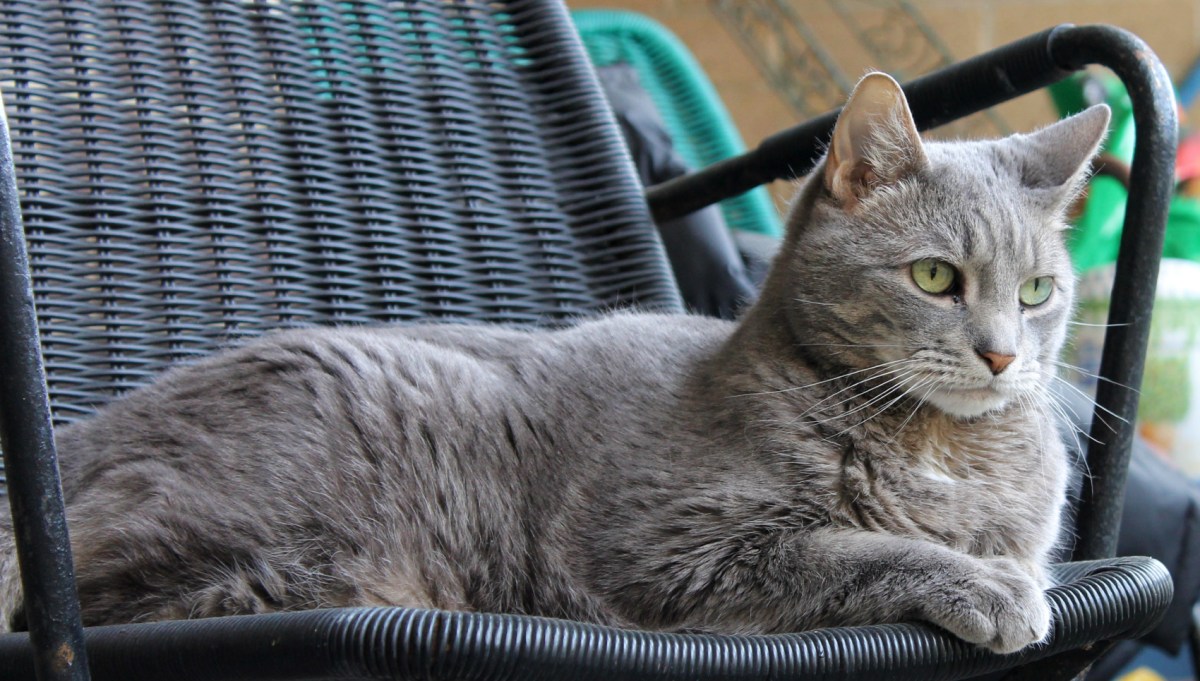
Buddy claims he’s a tiguar, not a domestic cat, and says allowing him outside is tantamount to Queen Daenerys allowing her dragons to roam the countryside in Game of Thrones.

Dear Buddy,

Dude. Everyone’s getting so uptight lately about making sure we stay inside. We’re predators! We should be running our neighborhoods, but no, our humans want to “protect” us.

As a famously fierce and ripped feline, what’s your take?

Frustrated in Fallbsurg

Dear Frustrated,

I empathize with you, I really do, but the way it was explained to me is that I’m a terrifying cat with huge meowscles, and by keeping me indoors, my human is protecting dogs, humans and other lower life forms from my potential wrath.

“Do they let tigers and jaguars run around New York?” Big Buddy asked me.

“Uh, no, I guess they don’t,” I said.

“Of course not. And that’s exactly why we can’t have you roaming the neighborhood. Think of the quandary Daenerys Targaryen had in Game of Thrones when her dragons were feasting on livestock from the farms of her subjects!”

And he’s right. A Buddy on the loose would cause all sorts of panic and other problems. I don’t want to be responsible for what happens when a bunch of humans freak out and go recklessly running in every direction, terrified I’m going to catch them.

If it takes sacrifice on my part to keep people comfortable, then I’m willing to endure the hardship of living indoors with a servant who heeds my every beck and call. It’s just the honorable thing to do.

Your friend,
Buddy

Buddy the Tiguar


Dear Buddy,

Hey, pal! How have you been?

Friendly in Florida

Hey Friendly,

I’ve been handsome, how have you been?

Buddy


Dear Buddy,

You’re not a tiger! Or a jaguar! You’re a chubby, sedentary, spoiled house cat with an enabler of a human who encourages your delusions of being a powerful big cat!

Just stop already, it’s embarrassing!

Cringing In Connecticut

Dear Cringing,

First of all, I am a tiger/jaguar, or a tiguar if you will. I just haven’t hit my growth spurt yet. My human assures me it’s gonna happen.

I also asked my human if it’s true that he’s “an enabler” who encourages my supposed delusions. His response: “That’s absurd. Who’s a big, bad cat? You are, aren’t you? Yes, you are!”

So obviously you’re a hater and soon you’ll see me prowling the jungle with David Attenborough talking about how dangerous I am! Just wait!

Buddy the Badass

Latest Banksy Is A Cat In London

The artist says his whimsical animal images are meant to help lower the national temperature after a week of riots and incrimination following the stabbing deaths of three young girls.

UK street artist Banksy has been busy lately, with a new piece of graffiti popping up in London every day for the past six days.

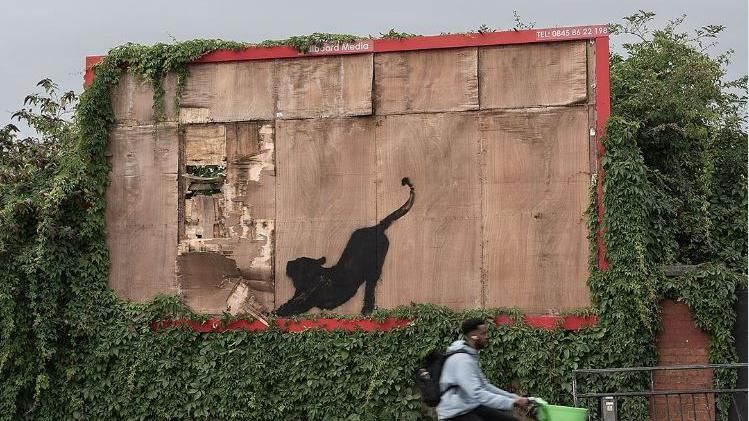
All six new images are animals and the latest is a cat. Sprayed on a billboard in northwest London, the Banksy feline is a black silhouette of a stretching cat and was found this morning.

On Friday, the anonymous artist added a pair of pelicans to a fish shop sign, making it look like the pelicans were eating the fish. That follows a trio of monkeys who appear to be swinging across a bridge, a pair of elephants, a mountain goat, and a howling wolf in the center of a satellite dish, creating the impression that the dish is the moon silhouetting the wolf.

Banksy pelicans
The whimsical animal renderings often show their subjects appearing to interact with their urban environment.

Banksy’s art commands high prices at auction: one piece sold for $25 million, while many others have fetched winning bids well into seven and eight figures.

The wolf piece lasted only hours before a group of men came along and took it. A representative for the artist confirmed to the BBC that the artwork was stolen.

Likewise, the feline was gone by afternoon, removed by contractors who said they were trying to safeguard it.

This isn’t Banksy’s first cat. In 2015 the anonymous artist snuck into the Gaza strip via a tunnel from Egypt and painted a kitten on a fragment of concrete wall that was rubble left over from an Israeli strike. Banksy has also been responsible for at least three other feline-themed pieces of street art, and possibly more.

Banksy Gaza kitten
Banksy’s kitten graffiti in the Gaza strip.

The UK artist is known for using his art to highlight causes, and has made reference to various conflicts around the world, unregulated capitalism, destruction of the environment and distrust of authority, with many of his pieces taking aim at the UK surveillance state. As The Londonist wrote, London is considered one of the most surveilled cities in the world, with between 627,000 and 942,000 CCTV cameras monitoring the public.

However, Banksy’s latest series eschews a political message, his reps told UK media. After a tumultuous week that saw rioting across the country in response to the stabbing deaths of three young girls — and inaccurate news reports about the identity of the attacker — Banksy, his publicist said, merely wants his countrymen to “cheer up.”

Who’s Scared Of Earthquakes? Not Buddy The Cat!

“Oh, did the Earth shake? I hardly noticed?” Buddy remarked.

So apparently the crinkling of a paper bag is terrifying, but the Earth shaking is no big deal.

The New York area experienced a 4.8-magnitude earthquake today. For a fleeting moment I thought maybe some idiot had hit the building with a tractor trailer or something, but as the rumbles continued I realized it had to be natural. Only Mother Nature has that kind of power.

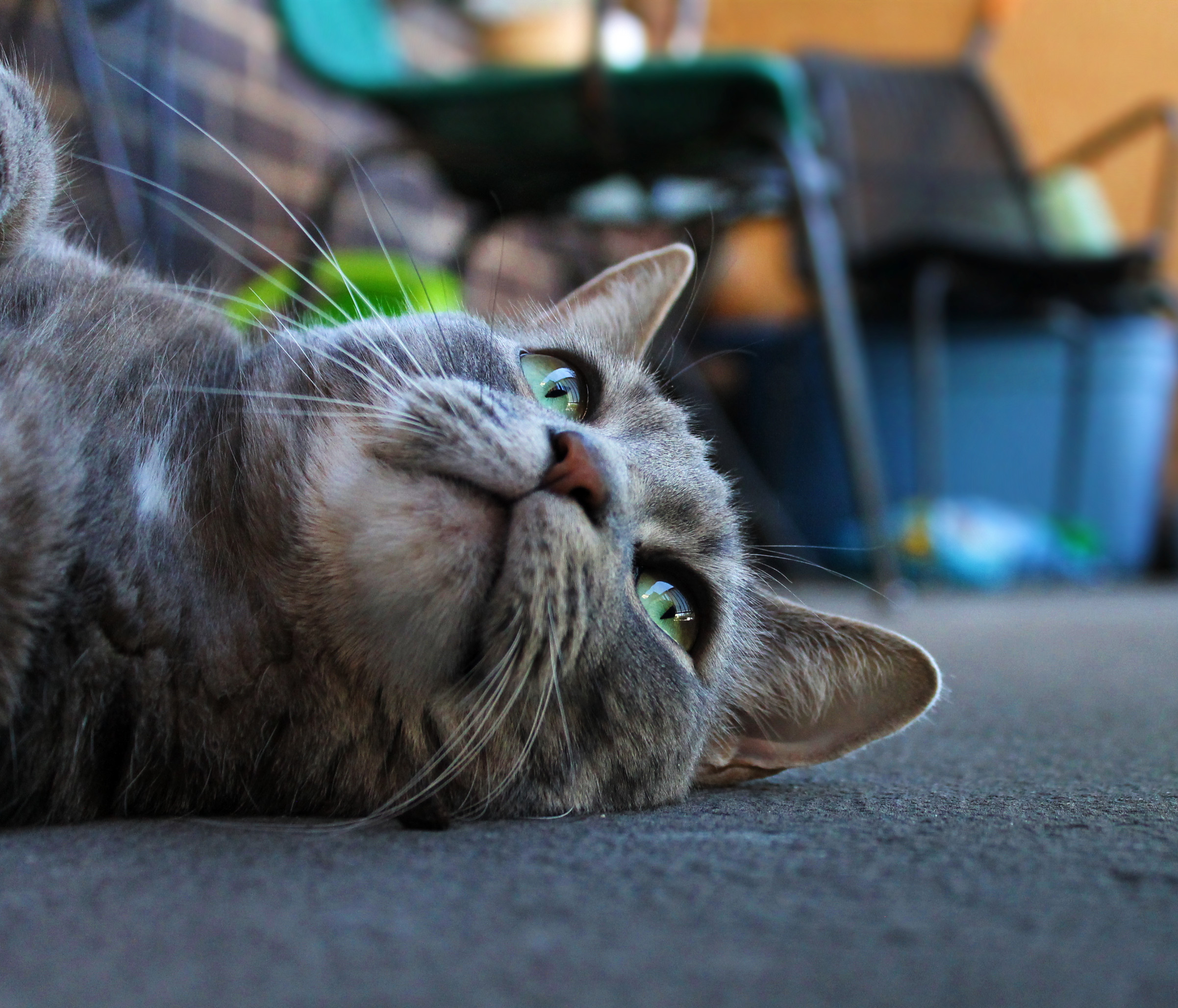
I looked over at Bud, expecting to hear a terrified whimper any second, but he was just laying on my bed with his head up, annoyed that he’d been woken up.

His eyes met mine and I got the sense he was asking me: “Are we good here? Do I have to get up and run around screaming, or is this merely a rude interruption of my nap?”

buddy_layingdownclose

“Good boy,” I said, trying to show him I wasn’t scared either.

In truth I was, just a bit. I suppose there must have been earthquakes around here in my childhood, but I can’t remember them. Even though this one was on the lower range of the Richter scale, as I’d later learn, when you’re not accustomed to earthquakes there’s a moment of surprise and understanding when you realize, for all our tech and the leaps we’ve taken as a species, we are ultimately powerless against forces like this.

It’s a feeling you’ll never get from seeing an earthquake on TV. You have to feel the ground shake to appreciate your own powerlessness.

In any case, this was definitely Bud’s first earthquake and I’m proud of the little guy. If you’d asked me before today how he’d likely respond, I would not have guessed he would be stoic.

We salute you, brave little man!

Memorandum To Human, re: Disgusting New Bug-Based Cat Food

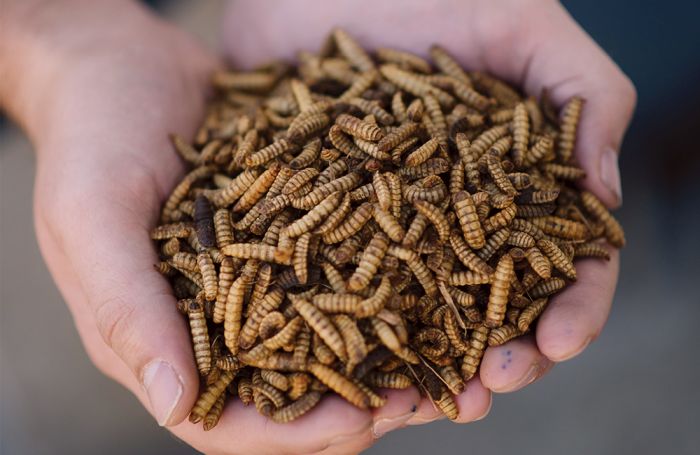
Little Buddy makes it clear he sure as hell won’t eat insect larvae cat food. Yuck!

Dear Big Buddy,

You find yourself in receipt of this notice so there exists a written record of the amendment to section 176.2 in the Little Buddy Care Agreement, forbidding the use of repugnant and objectionable non-approved yums.

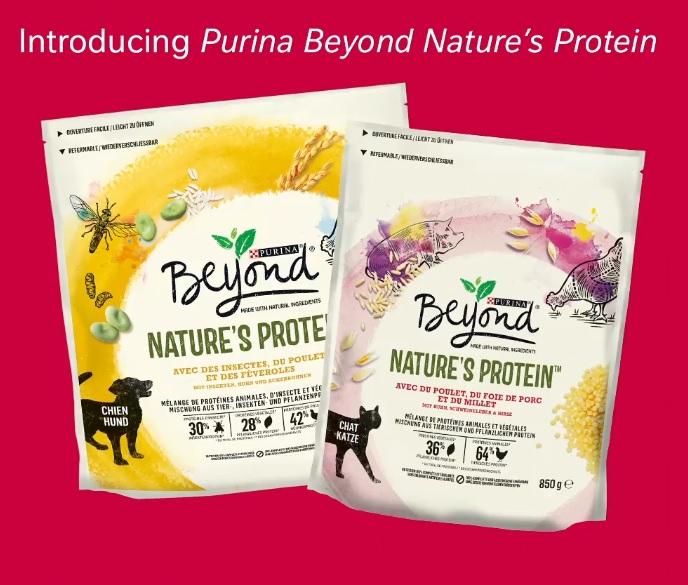
Specifically we refer to the so-called “alternative proteins” hawked by Nestle’s Purina brand, which substitutes Glorious Yums like turkey, chicken and turkey, for unacceptable ingredients such as “fly larvae protein.”

As the language of the new LBCA amendment makes clear:

“At no time shall human serve any Purina products or any products containing ‘alternative proteins’ including, but not limited to, fly larvae protein, invasive Asian carp protein, and any alleged ‘cat food’ that includes insects or non-approved yum ingredients.”

nastyshit
No. Don’t even think about it.

purinabeyondnature
Insect larvae-based pet food is attractively packaged.

Please keep in mind, dear human, that section 176.1 still applies:

‘At no time shall Buddy the Larger serve Little Buddy any abhorrent meat substitute or so-called ‘vegan cat food.’ Violations are punishable by biting and shitting in your shoes.”

We acknowledge that Nestle claims it’s motivated by “the need to diversify sources of protein in food for a variety of reasons, including environmental goals such as fighting climate change and protecting biodiversity.”

But that just means the cheap bastards are looking to increase profit margins beyond the sky-high margins it enjoys for the lowest-grade quasi-meat it uses for its existing pet food lines.

After all, a company run by the environmentally conscious wouldn’t destroy entire swaths of Indonesia and Malaysia, endangering the health of locals and children, and directly driving the pending extinction of orangutans.

As always, we expect you to adhere to the Little Buddy Care Agreement. Violations will be recorded and will negatively effect your score on the annual Service Quality Report Card, so remain vigilant. Only the best yums will do.

Sincerely,

Little Buddy, Esq.