Detective Buddy And The Case Of The Vanishing Yums

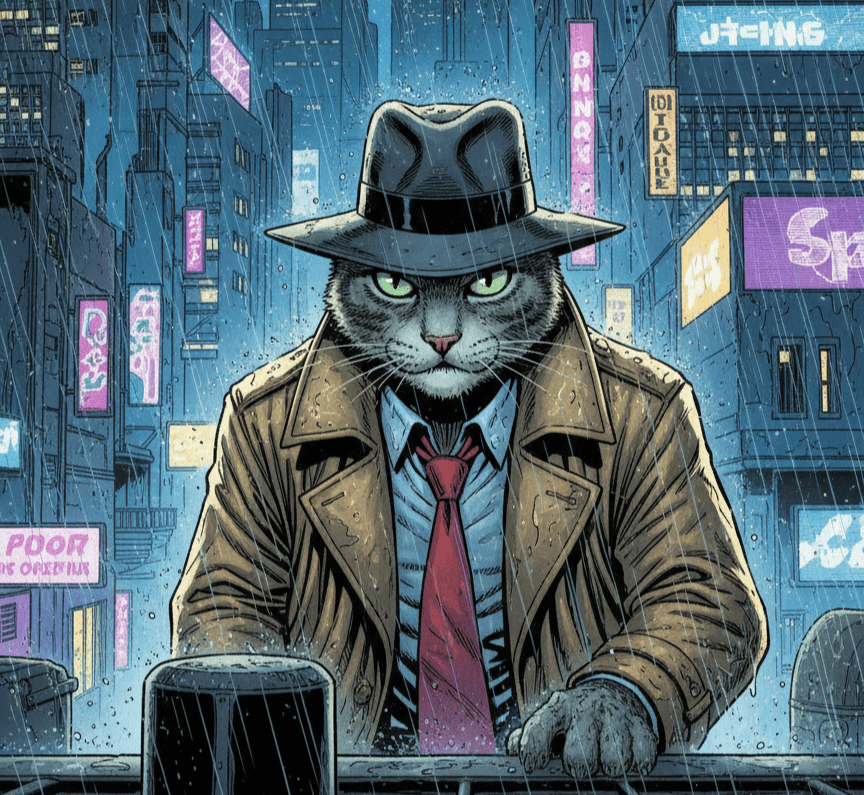
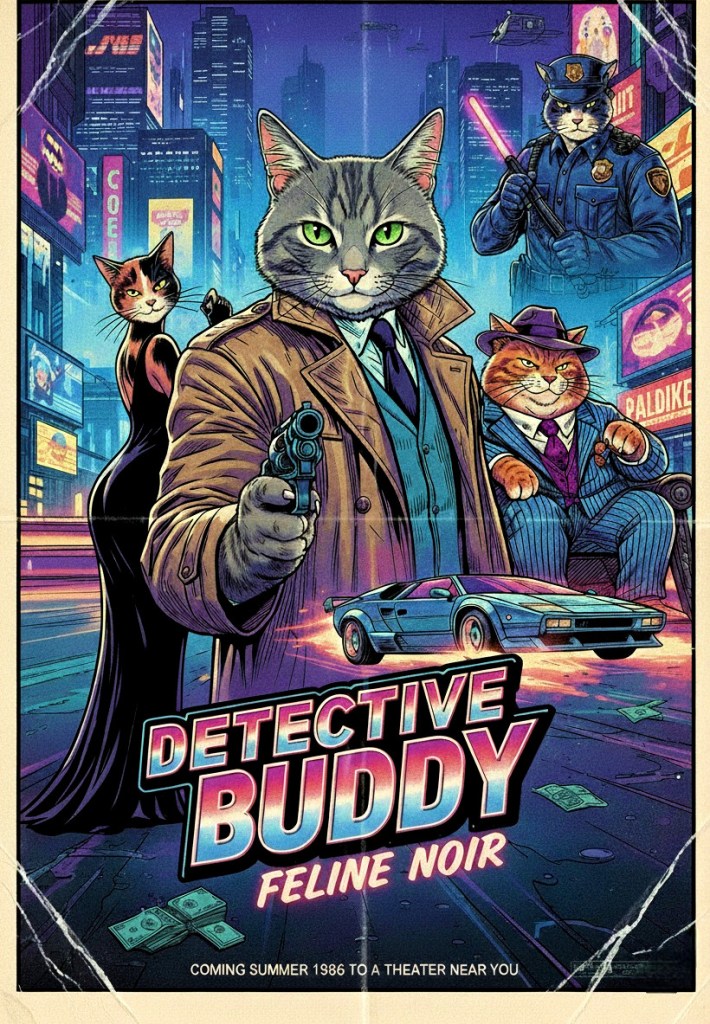
In the seedy underbelly of Paw City, where niplords run kitty crack empires and feral gangs fight eternal turf wars, one unshakable detective brings the bad cats to justice.

The call came in after midnight.

Shots fired near Burmese Boulevard, with witnesses reporting one party fleeing the scene in a car while another took off on foot.
Normally I’d tend to other biz and let one of the kids in the detective bureau have their shot, but the commissioner’s on my ass and the mayor is worried about what the headlines will do to the tourism economy.

Leave it to the leaders of a dump like Paw City to care more about the scratch in their pockets than the felines they’re supposed to protect.
But I’m a grizzled detective. I know where the real power naps, and it ain’t city hall.

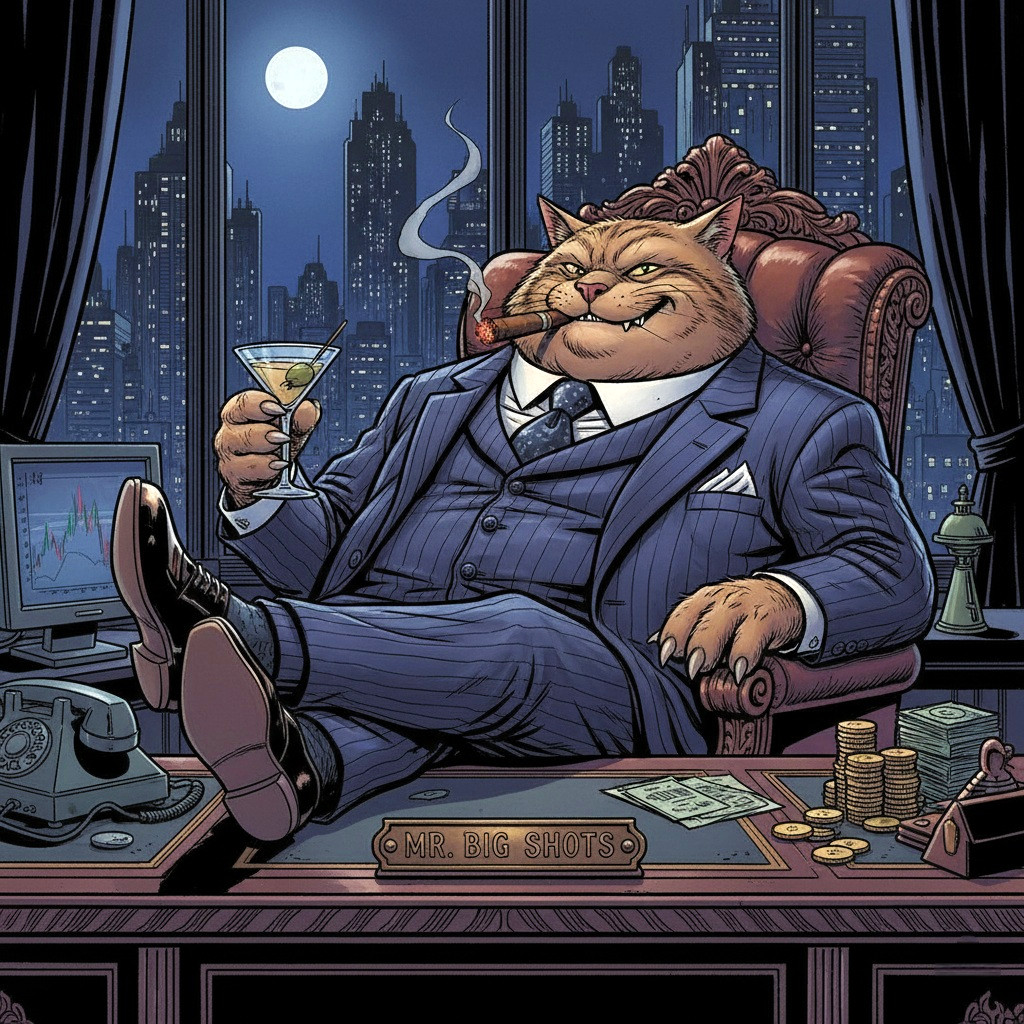
It’s Scratcher Tower, home of the international consortium that runs Big Yums, controlling the flow of every last morsel of kibble into this forsaken city. The Fat Cats on the top floor, they call the shots, control the mayor and have their paws in every pie. If it’s biz, the Fat Cats get their cut.

The feds? They talked a big game last year when they popped Angelo Felinzino and nailed him on a racketeering charge that earned him 15 to 20 in the slammer. But the Fat Cats are a hydra, and even though Felinzino was rumored to be the consortium’s top earner, the fellas in Scratcher Tower’s penthouse didn’t miss a beat.
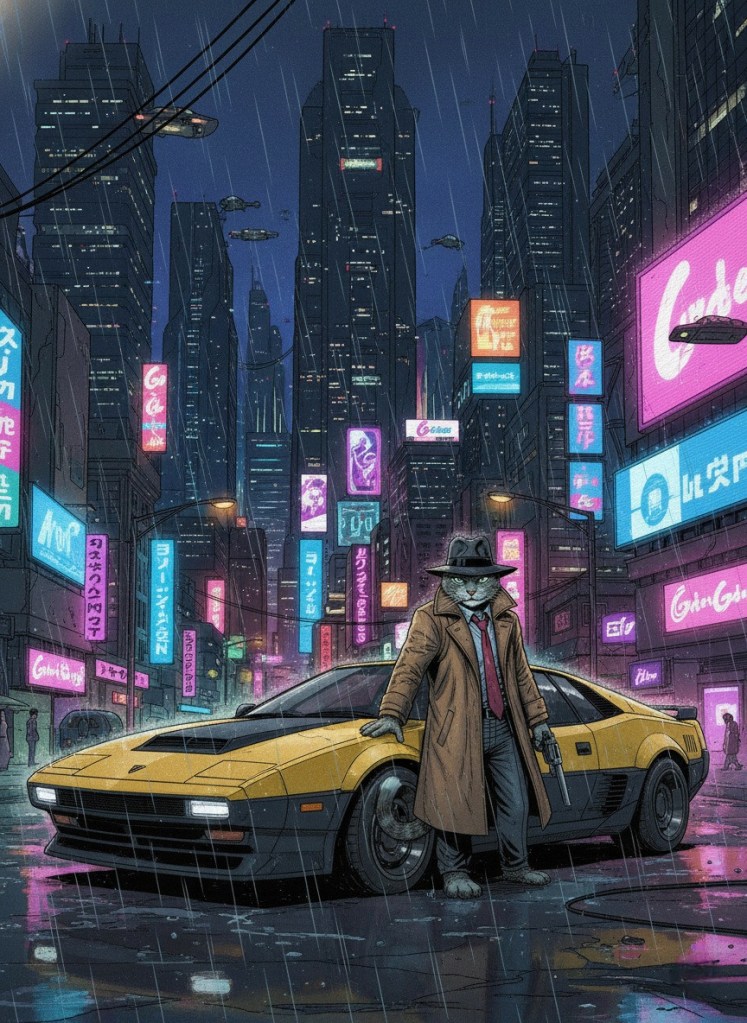
It was pouring by the time I pulled up near the corner of Tortoiseshell Street and Burmese Boulevard. I padded out of the warm comfort of my ride, the Budmobile, and told it to watch my back. The Budmobile’s AI chimed in acknowledgement and miniature silos opened on each rear quarter panel, ejecting a pair of drones. One drone circled above me in a defensive posture while the other zoomed ahead, scouting my path.

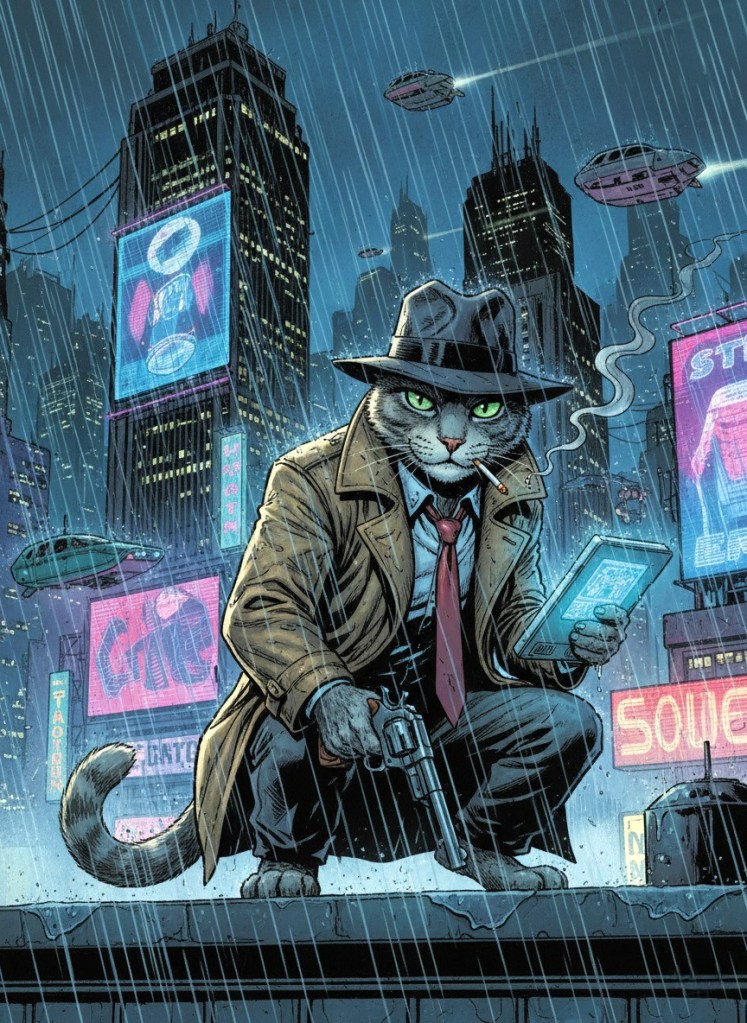
I tasted wet rain and something else. My nose wrinkled, pulling me toward a funky scent. I crouched, sniffing the sidewalk, and that’s when I saw them: crumbs made soggy by the downpour, their addictive chemicals turning a shade of toxic lime as they interacted with the acid rain.

A Temphead had been here not long ago.

Tempheads are dangerous. They’ll do anything to get their fix, even if it means stealing from littermates or breaking into homes to raid the treat cupboards.

No Temphead was going to catch me off guard, I thought as I placed a paw on my holster and felt the reassuring grip of Thunderclaw. The old revolver was reliable and had legitimate stopping power. The sight of it alone was often enough to get bad guys to back down.
Lightning cracked the sky as I followed the crumbs down Burmese Boulevard, under the old wrought iron bridge and into a back alley.

I paused and sniffed. The Temphead had lingered here at the door to a shady-looking ripperdoc clinic, probably trying to get them to buzz him in. The ripperdoc was smart, didn’t want anyone bringing heat down on his clinic, so he turned the Temphead away.

My keen sense of smell and my detective’s intuition told me the Temphead quickly moved on, and sure enough, there were more crumbs ahead, where the alley made a sharp right turn toward a cross street.

I padded ahead, nose leading the way, and looked up.

The Bradbury Building.

Once a symbol of commerce in the city’s gilded age, now a dilapidated microcosm of Paw City, its former glory obscured beneath decades of grime and decay.

Patting Thunderclaw again for reassurance, I pushed against the heavy bronze doors and into the gloom inside.
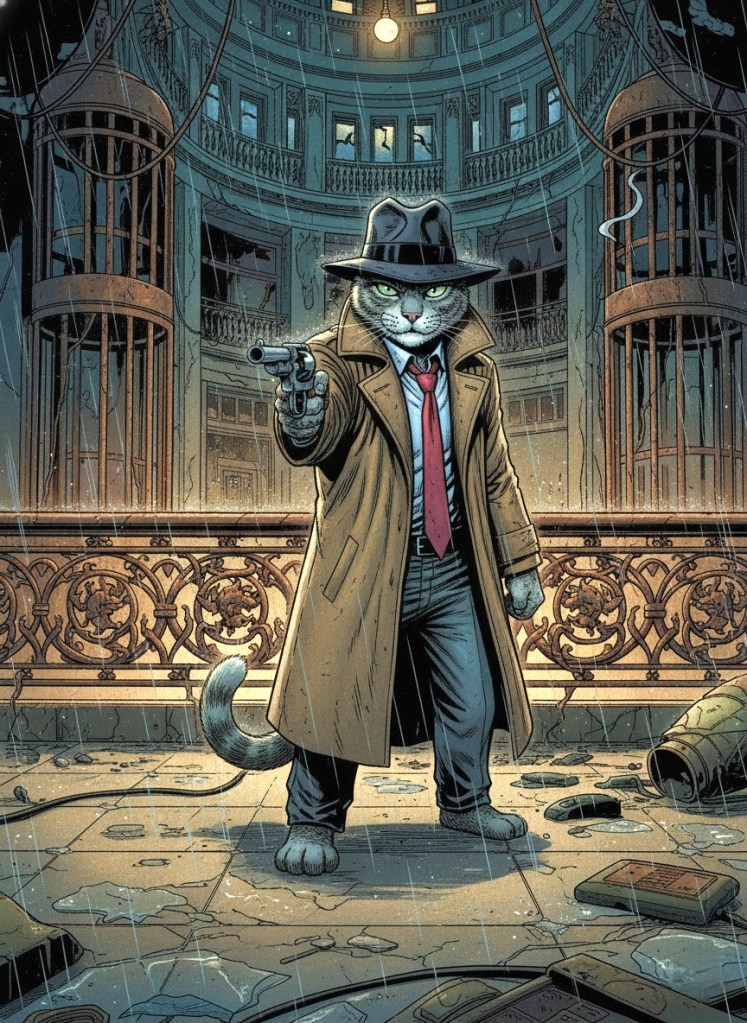
My ears prickled in the funereal silence, and my whiskers felt movement in the air currents. There!

A shadowy figure was heading for one of the exits.

Justice is my job, and what kind of cat would I be if I didn’t have the swiftness of a cheetah and the bravery of a tiger?

I leaped the railing, landing gracefully on my feet as I always do, and followed the shadow through the door. The rain was coming down hard, battering my trenchcoat and cap.

Where’d that cat go?

He was clever, I’ll give him that. Lightning lit the alley, and he used the crackle of thunder to mask the sound of his feet splashing through the puddles before he leaped.
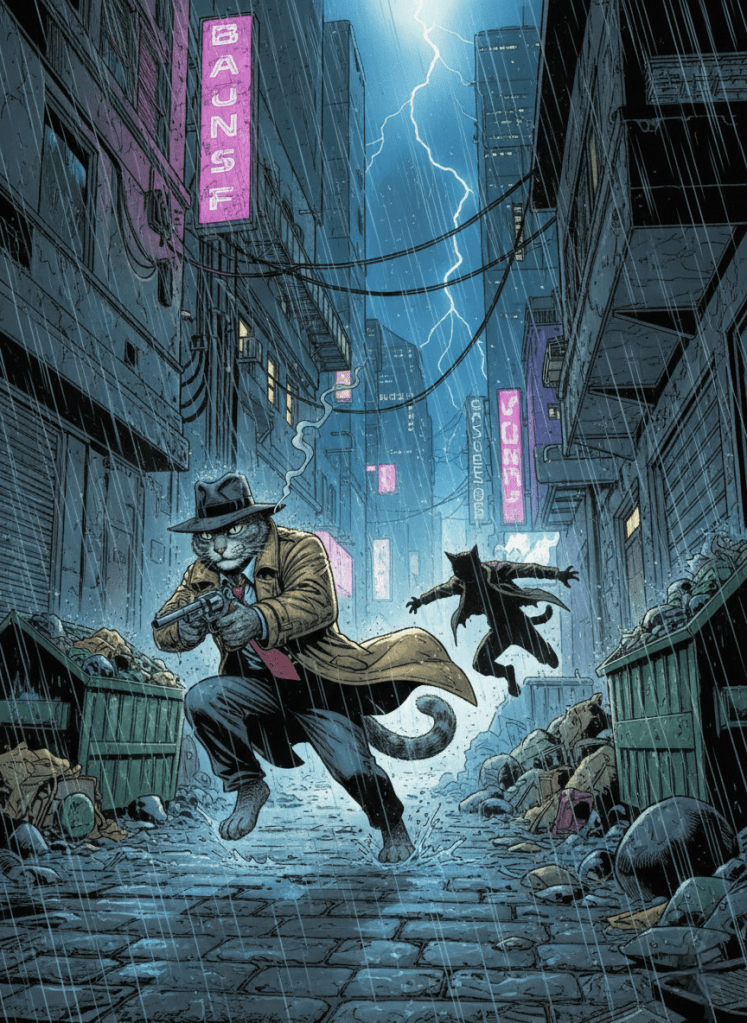
I never even saw it coming. It’s been a long time since anyone’s gotten the jump on me. Maybe I was too confident. The attacker barreled into me, knocking me off my feet, and was already propelling himself up a nearby fire escape as I landed in a puddle of rain water.

Thunderclaw was torn from my grip with the impact and went skidding across the concrete.

The Budmobile’s follow drone chose that moment to reappear, making a lazy loop around the alley before stopping to hover in front of me, its ventral nozzles firing whispers of propellant to keep it stabilized.

“Oh dear,” the drone said, “you seem to have fallen, sir. Shall I bring the car around?”

“This,” I told myself, “is undignified.”

The drone chimed.

“Is that a yes, sir?”
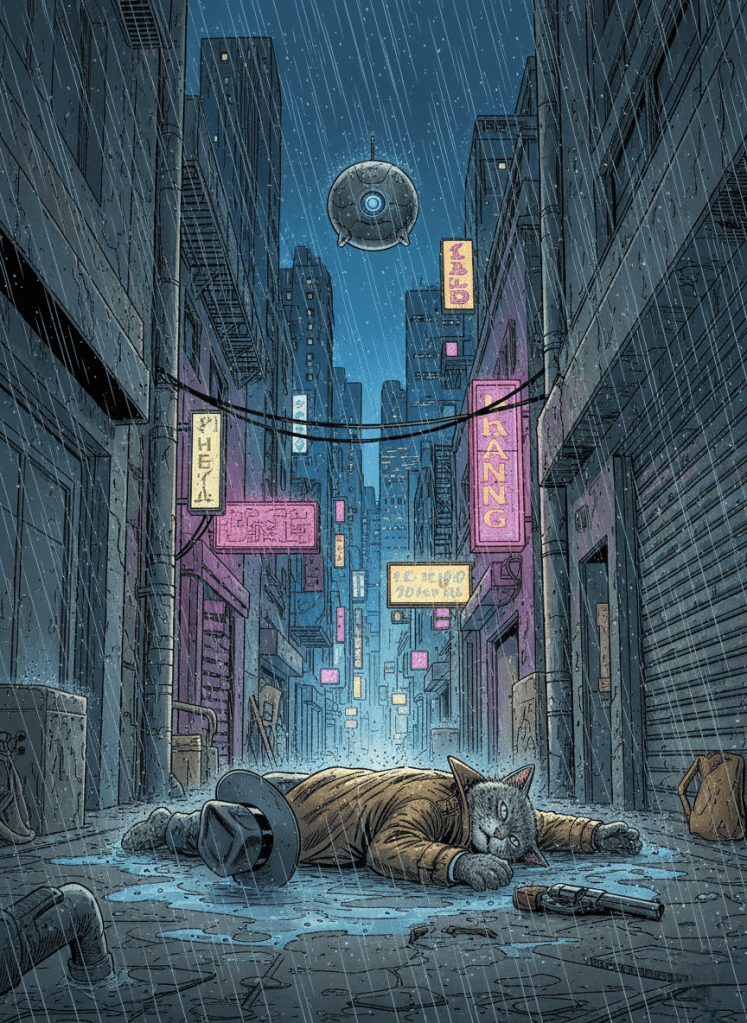
I resisted the urge to paw smack the useless machine.

“Yes! Call the Budmobile to the end of the alley.”

I might have been Paw City’s greatest detective, but I wasn’t going to catch criminals with my clothes and fur all wet, smelling like a dirty mutt.

I retrieved Thunderclaw from the ground, slipping the trusty revolver back into its holster.

That’s when I saw it — a scrap of torn clothing on the end of the fire escape, black as night. Black like the absence of light.

I ran a paw pad over the material, feeling its familiar weave and texture. There was only one shop in this section of Paw City that sold zero albedo clothing. Could the Shadow Void be back to stalk the seedy underbelly of Paw City once again? I put him in the slammer once. Now I may have to do it again.

I climbed back into the Budmobile, grateful for the blast of heat from its dash. It was time to pay Tommy the Tailor a visit…
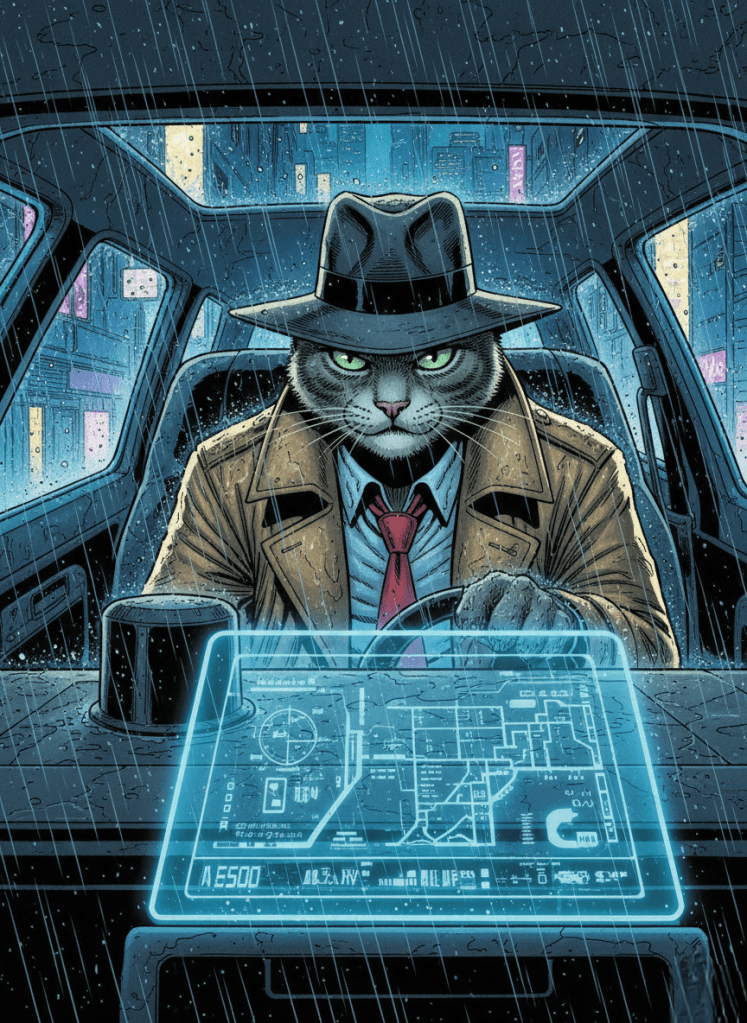
Check back for the next episode of Detective Buddy: Feline Noir!
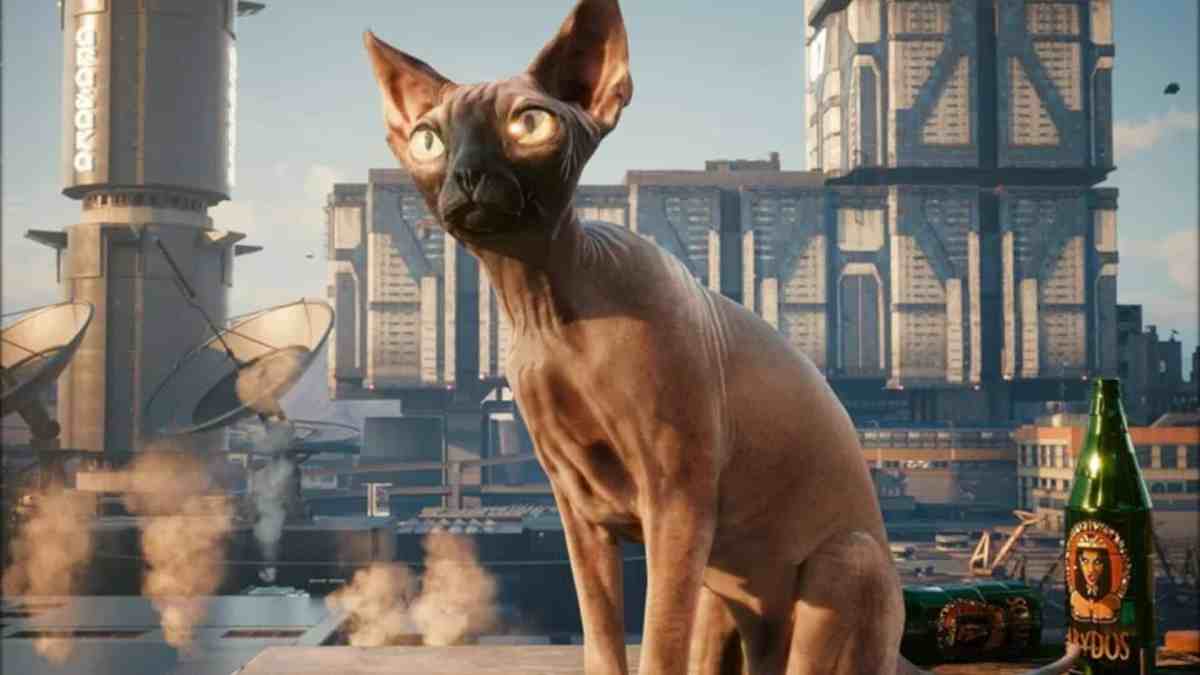
Wordless Wednesday: Nibbles The Cat From Cyberpunk 2077

Nibbles is the feline star of Cyberpunk 2077, a little buddy who adds a little levity and fun to the game’s dystopian future.

For PITB’s inaugural Wordless Wednesday, which is turning out to be a somewhat Wordy Wednesday, we’re celebrating Nibbles, the pet cat of protagonist V in Cyberpunk 2077.

Cyberpunk is an open world video game set in Night City, a sprawling dystopian city-state. If you’ve ever wondered what it would be like to live in the perpetual gloom of Blade Runner’s rainy, neon-soaked future, Cyberpunk 2077 is as close as you’re going to get.

Notably, you don’t start the game with Nibbles, who is initially a stray living in the filthy hallways of your apartment building and subsisting on garbage. You’ve got to find him, feed him real food and convince him you’ll be a worthy servant, because even trash-eating strays have standards.

A gamer shows off her pet cat, who bears a striking resemblance to Nibbles. Credit: Elissa Ayadi/Instagram

After you rescue Nibbles, he makes himself at home in your apartment, faithfully greets you when you return, protests when you use the shower, and meows impatiently for yums. He also enjoys lounging in your laundry basket.

You can pose with Nibbles anywhere in Night City for screenshots.

Nibbles is quite demanding, like all members of his species.

Another gamer with a sphinx cat doing her best Nibbles impression.

Johnny Silverhand, played by Keanu Reeves, also takes a liking to Nibbles. Meanwhile, Nibbles takes a liking to the laundry basket.

Nibbles lounging.

Finally, some screenshots I took of Nibbles, V, Johnny Silverhand (Keanu Reeves) and Reed (Idris Elba):

Nibbles with V and Idris Elba.

Nibbles: “Feed me, lady.”

Nibbles is the star of the show

PITB Reviews: ‘The Peripheral’ Is A Refreshingly Original Science Fiction Thriller

Amazon’s newest streaming hit is heady, fast-moving and a lot of fun. There’s nothing else on TV like it.

Amazon’s newest big-budget prestige drama, The Peripheral, imagines a near future when technology has become even more deeply embedded in every day life.

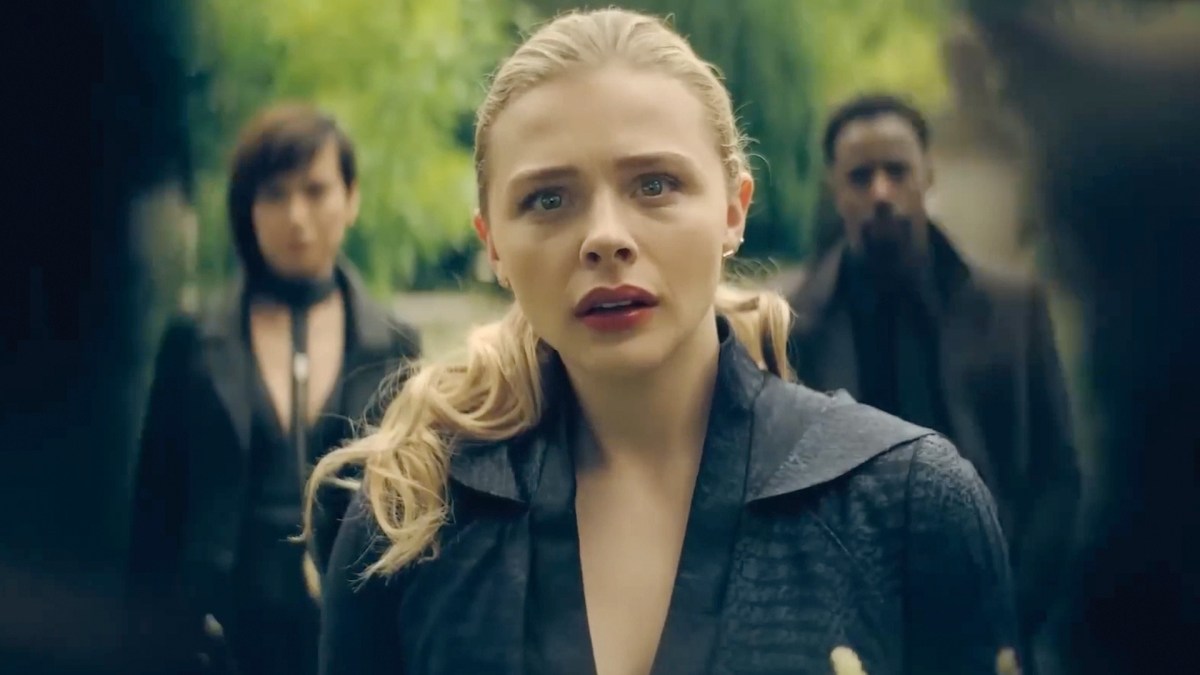
Flynne Fisher (Chloe Grace Moretz) is a young woman who lives in North Carolina’s rural Blue Ridge Mountains, works in a 3D print shop by day and plays virtual reality games by night.

The story is set a decade from now in 2032, and while Flynne’s brother, Burton (Jack Reynor), plays startlingly realistic VR games for fun, Flynne plays them for money. Although Burton is a former United States Marine Corps infantryman and war veteran, his sister is the superior player when it comes to video games, and she’s so good that well-heeled players across the world pay her to carry them through high-difficulty levels.

If that seems fanciful, consider that it already happens in real life: some people fork over big bucks to highly skilled players who can help them win in multiplayer video games like Fortnite, or run them through the most challenging missions in online role playing games to get coveted in-game gear.

Flynne’s side hustle allows her to afford expensive medication for her sickly mother. Apparently in 2032, Democrats and Republicans are still squabbling over how to pass meaningful prescription drug reforms while remaining in the good graces of the corporate behemoths who finance their campaigns. Some things never change.

When a Colombian company called Milagros Coldiron offers Flynne a hefty chunk of change to beta test their newest game — and the incredibly immersive new headset it comes with — Flynne thinks she’s just taking a lucrative but routine job, one that will help pay for her mom’s meds for at least a few weeks.

What she doesn’t know is that her life is going to change drastically the moment she steps into the newest form of virtual reality, revealing things about her world and herself that she never imagined.

The Peripheral
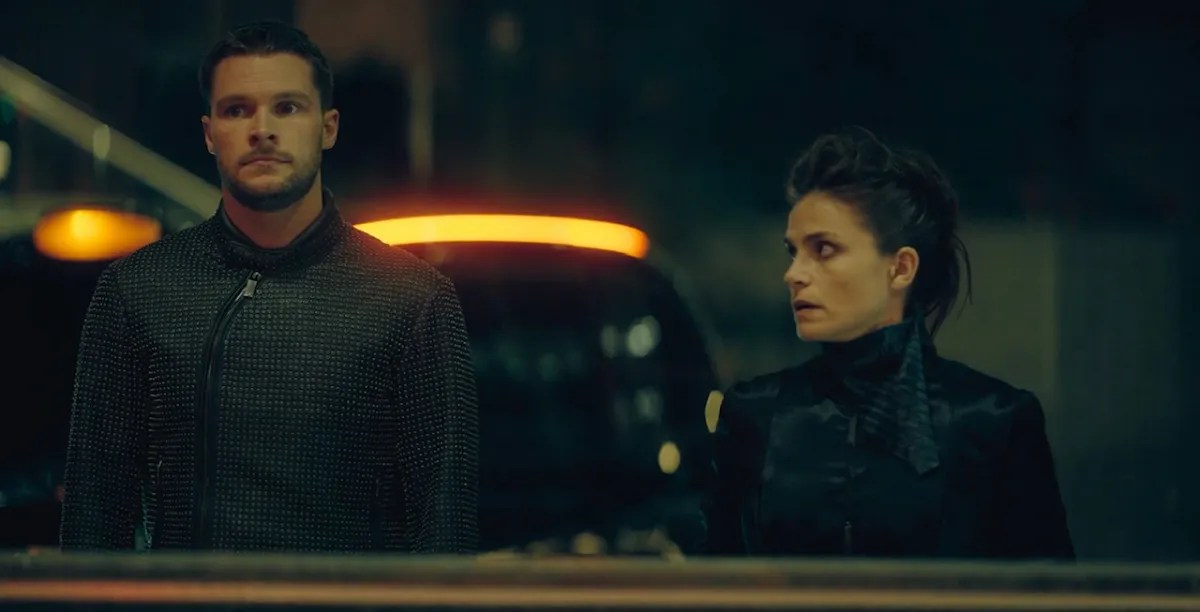
Jack Reynor as Burton Fisher and Charlotte Riley as Aelita West in The Peripheral.

There’s so much more to the story, and in fact we’ve barely scratched the surface, but The Peripheral is the kind of show best appreciated by knowing as little as possible going in.

The ambitious new series is based on a 2014 novel by technoprophet William Gibson of Neuromancer fame. Gibson envisioned the concept of cyberspace in 1981, more than a decade before the first mass market commercial dial-up services were available.

At the time, the idea of exploring almost photorealistic worlds in virtual reality was a radical new idea, and it took more than 35 years for technology to catch up by making it feasible. (We’re still not quite there yet. VR tech has improved by leaps and bounds, and we’re beginning to see the first deeply immersive VR games, but Mark Zuckerberg’s much-hyped version of the metaverse, for example, has fallen flat and been pilloried by press and players alike.)

By choosing to adapt Gibson’s work, Amazon has dipped into the largely untouched world of literary science fiction.

While the science fiction of movies and TV has been treading the same worn ground and returning to the same tired concepts for decades, SF novels are a rich source of astonishingly inventive big ideas, from the existential stories of Liu Cixin (The Three Body Problem) to the galaxy-spanning space opera of the late, great Iain M. Banks, to the gothic horror-tinged, wildly imaginative universe of Revelation Space by Welsh astrophysicist Alastair Reynolds.

Indeed, Netflix is developing a series based on The Three Body Problem, with Game of Thrones showrunners David Benioff and D.B. Weiss taking the helm. Amazon has acquired the rights to Banks’ first Culture novel, and Netflix’s highly-praised anthology series Love, Death + Robots adapted two of Reynolds’ short stories as episodes.

Finally we’ve moved beyond the Alien clones, Star Wars sequels, prequels, spinoffs and crossovers, as well as the unfulfilling JJ Abrams mystery box offerings that have made up the bulk of live action science fiction on the big and small screens.

There are no candy-colored light swords in The Peripheral, nor are there spandex-clad superheroes or franchise installments designed with merchandise sales in mind. Instead, we get a story for adults, one that gives the audience a lot to think about while also holding a mirror up to our own world, as the best science fiction always does.

After all, technology changes but people don’t. Human nature is a constant. What we do with our shiny new toys says a lot about us as a species and civilization.

Although The Peripheral begins with the comparatively low-stakes world of virtual reality, its scope rapidly expands until, by the end of the first episode, it becomes clear the show is asking its audience to grapple with existential questions about humanity and our future.

The Peripheral demands its audience’s full attention as it introduces concepts like the parallel universes of M-theory, nanotechnology and the idea that even if matter can’t be shifted between time and space, information in the form of photons can.

Gibson uses these heady concepts in his narrative sandbox, forcing his characters to consider wild concepts like the possibility that there may be infinite versions of themselves existing in infinite branching realities.

How would you react knowing there’s a version of yourself who chose to study classical literature and move to Athens, or a version who became a software programmer, authored a lucrative app and lives in a Manhattan penthouse? Can you imagine having a different wife or husband, or a different child? (Are there realities in which I am not the loyal and loving servant of Buddy? In that case, who is feeding him snacks, and are they doing it promptly?)

Cherise Nuland
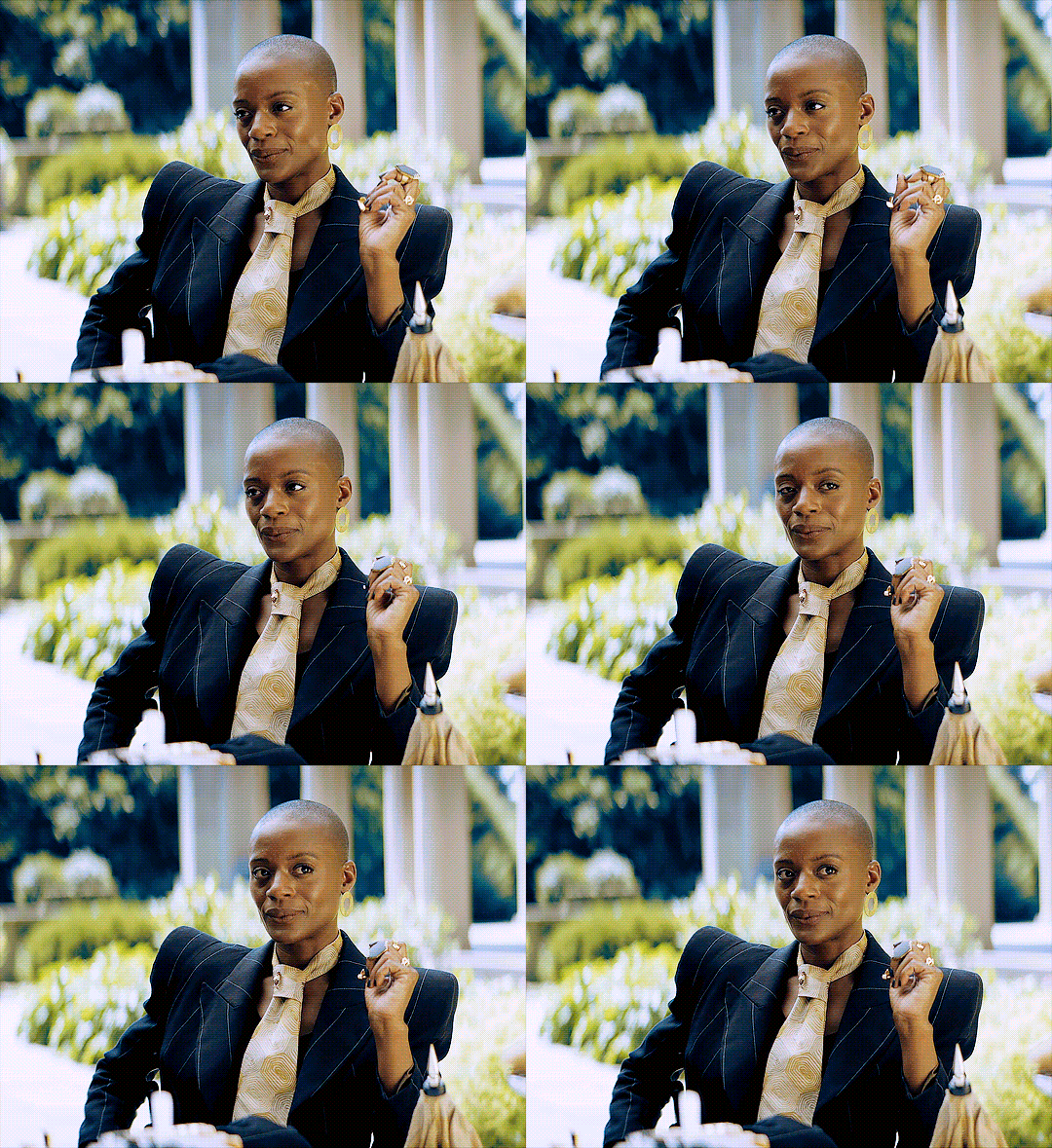
T’Nia Miller radiates malice as Cherise Nuland.

Of course, none of this stuff would matter without interesting characters and a compelling narrative. Moretz and Reynor have the chemistry of a real brother and sister in the way they regularly bicker but ultimately love each other. Eli Goree’s Connor is a man of wonderful paradoxes, and T’Nia Miller steals every scene she’s in as the delightfully malicious Cherise Nuland, an antagonist who loves making her enemies squirm while dispensing witticisms in cut glass RP.

For longtime SF fans, there’s another compelling reason to give the series a shot: Canadian writer-director Vincenzo Natali, best known for his mind-bending 1997 indie film Cube, is an executive producer and directs four of the season’s episodes. Natali is a pro at incorporating heady ideas in ways that enhance his narratives instead of weighing them down.

The first season just concluded, and you can stream all eight episodes on Amazon Prime. Bud and I are already looking forward to The Peripheral’s return.

cube-pic-6
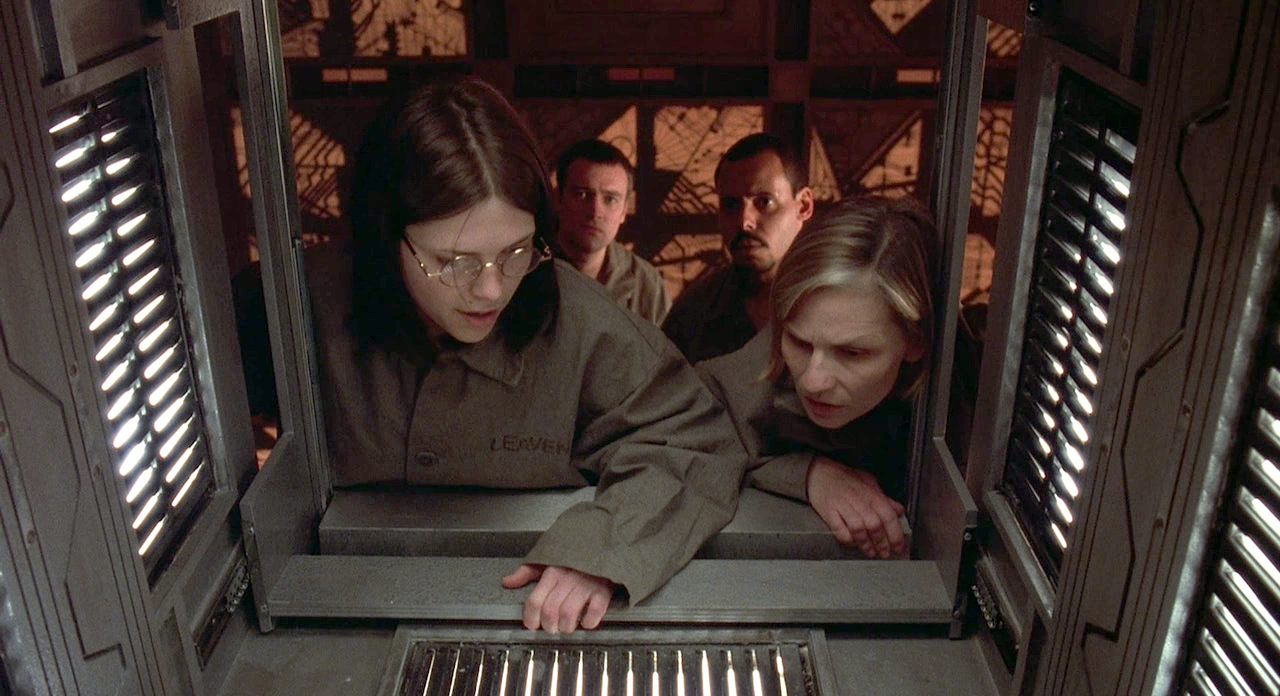
Cube writer-director Vincenzo Natali is behind the lens for half of The Peripheral’s episodes.

You Can Now Play Stray As Your Own Cat And As Garfield Thanks To Mods

Who wants to play as Buddy?

More news in the world of Stray, the play-as-a-cat video game that’s taken the world by storm with rave reviews, plenty of memes and hilarious videos of real cats reacting to their humans playing the game.

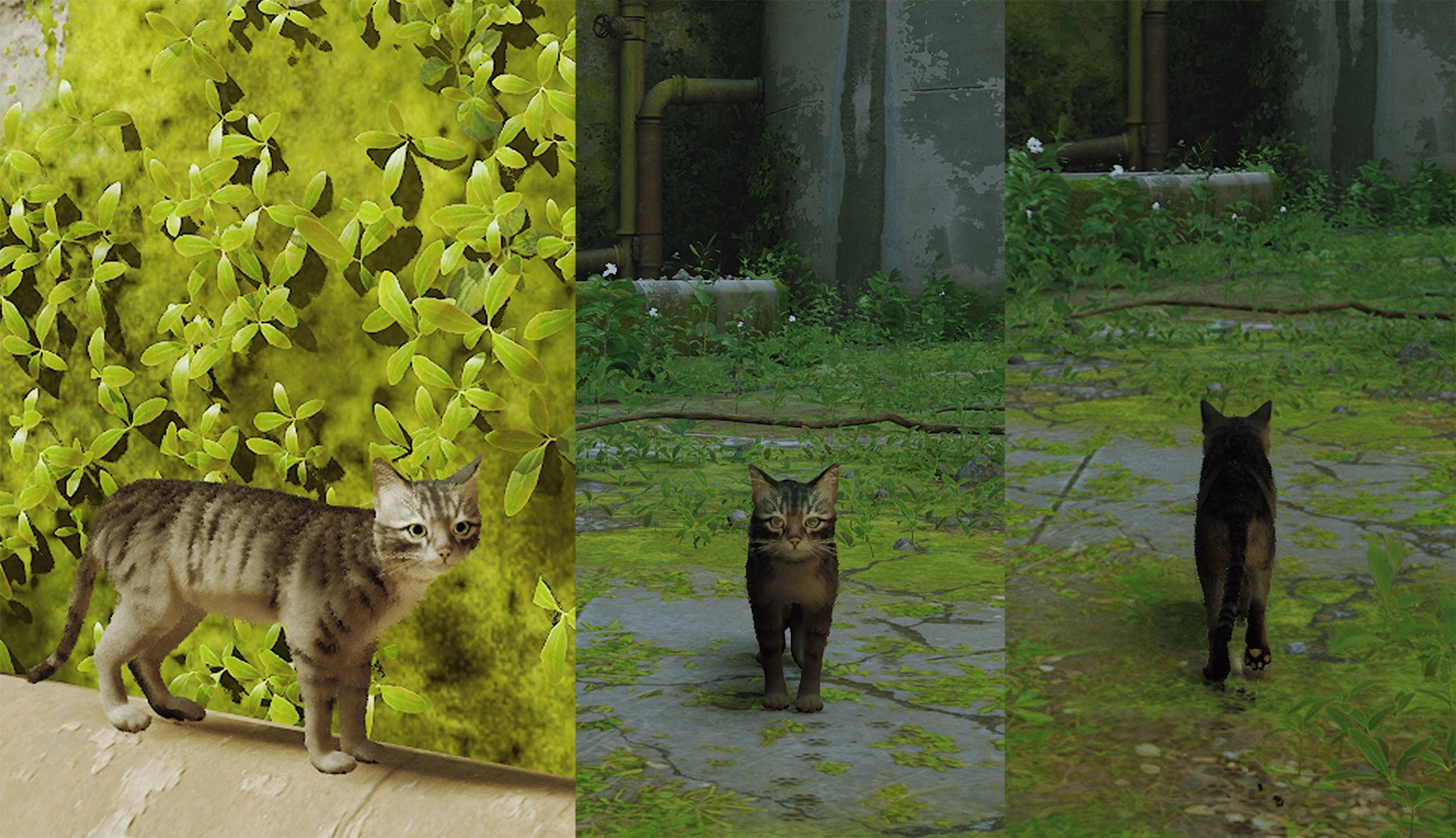
Thanks to players who create custom game mods, short for modifications, Stray players can now replace the game’s ginger tabby protagonist with cats of their choosing. Currently there are mods that make the title cat a Siamese, a black cat with yellow eyes, a white cat with heterochromia (different color eyes), a tuxedo and a Calico, among others.

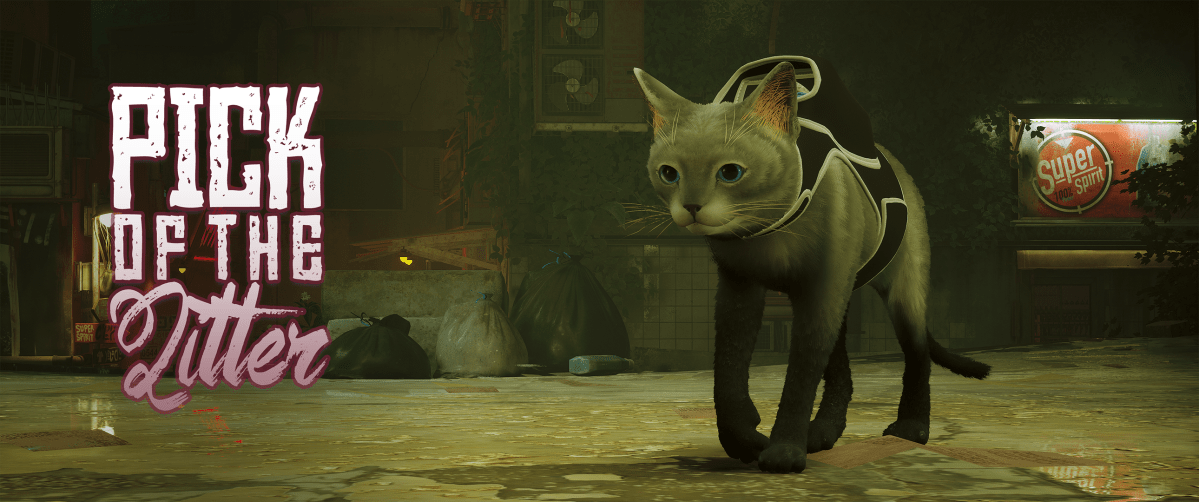
The most popular mod, dubbed Pick of the Litter, features many different coat colors and patterns that users can select and switch between.

There are currently at least two gray tabby mods, but neither of them match Buddy’s chubby incredibly muscular physique.

One modder is taking commissions from gamers and creating custom cat avatars based on photographs, so if a player’s cat has a unique color or pattern — or you just want something more accurate — they have that option. Perhaps we’ll inquire if it’s possible to add huge meowscles as well as edit coat patterns and colors.

graytabbystray
Gray tabby mod: Clearly not meowscular enough to be Buddy.

Other mods allow players to substitute a dog as the protagonist (come on, now…), add snazzy spectacles to the kitty, and tweak graphics settings for greater photorealism.

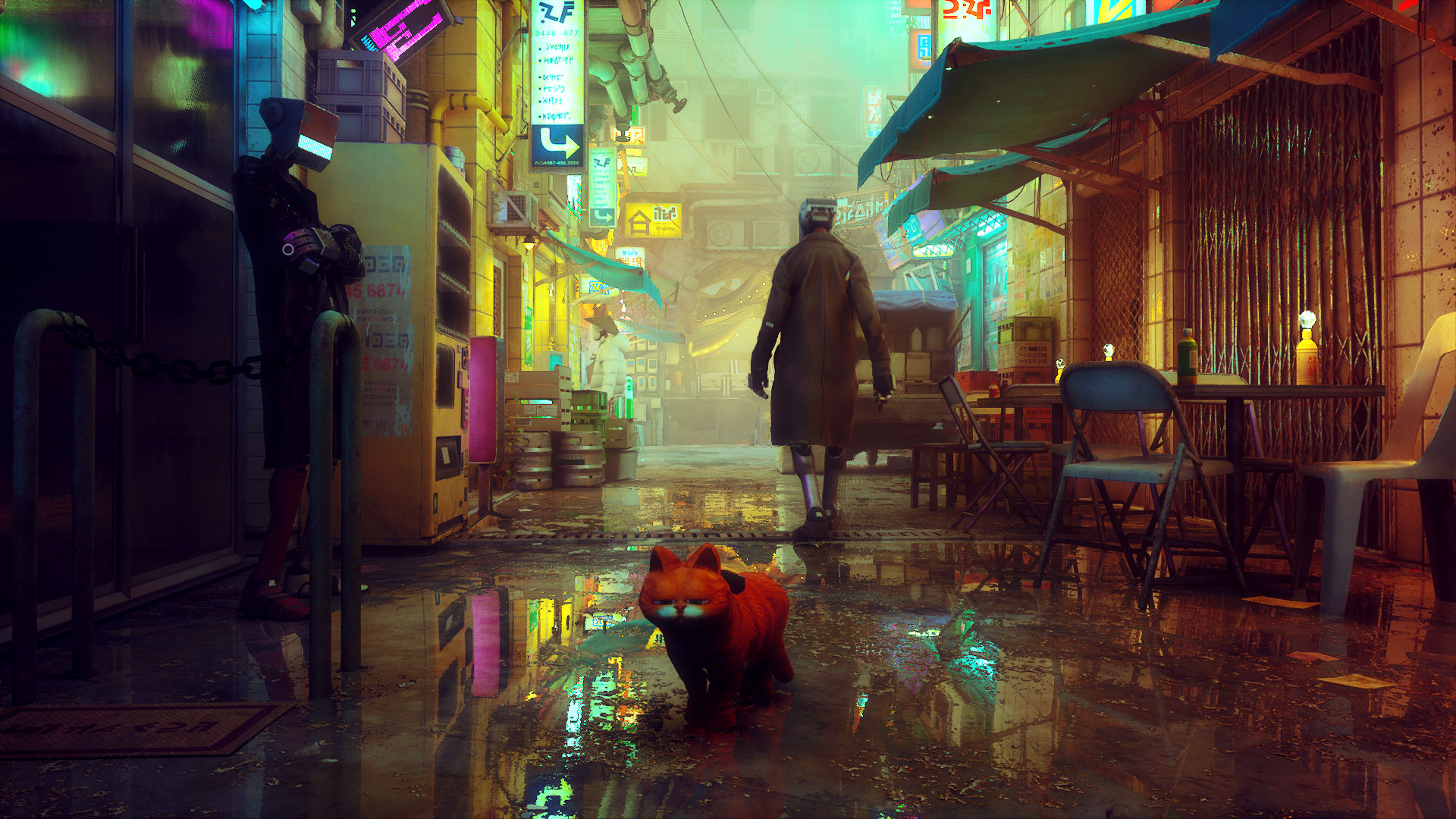
Finally, if you’re a fan of a certain lasagna-loving cartoon cat, you’re in luck: He’s now in the game thanks to the efforts of one dedicated fan, and he’s as lazy and heavy-lidded as he’s always been.

It should be noted that mods are unique to the PC, which is an open platform. If you’re playing the game on a Playstation 4 or 5, you’re out of luck.

58-1658692188-909899575
Garfield in Stray: Maybe you can feed him lasagna to restore his health?

Stray: A Lost, Lonely Cat Gets A Buddy

We continue our journey in Stray, the new game centered around a feline protagonist.

There’s been so much buzz about Stray, so many news stories, memes and people talking about it, that I’m probably not alone in feeling like I’m watching a TV series an episode at a time while most people binged it in a day or two.

But that’s not how I play, and it’s not how most game developers want players to experience their stories. Modern games, especially games like Stray with their bespoke environments and unique encounters, are built to immerse players in their worlds. The entire point of video games is the interactivity, the choices and agency of the players. They’re designed so when you choose to wander off the beaten path or take a few moments to linger over something visually impressive, the experience is rewarding.

Maybe you’ll find a rare item, a compelling vista, a secret passage or a funny sign. The point is, there’s incentive to look deeper. It gives games a feeling of possibility and the thrill of the undiscovered.

20220723074255_1
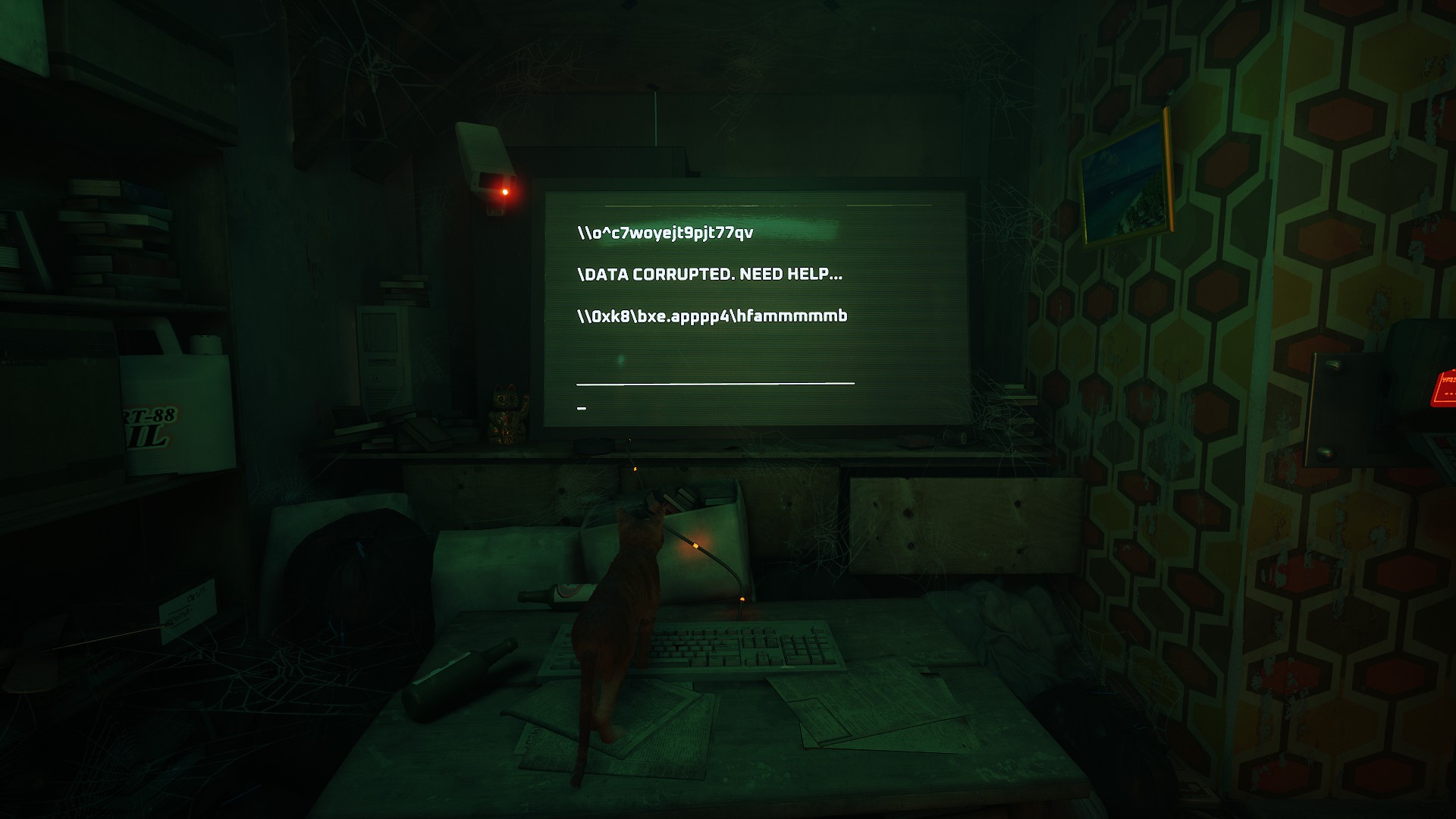
Standing on a keyboard, just like the good old days!

These stories are not meant to be passive experiences, nor are they meant to be devoured. I won’t be speed running through this mysterious alternate future version of Hong Kong. The journey is the entire point.

Picking up where we left off, the Good Boy (that’s what I’m calling him, for now at least) must learn to navigate this new and potentially dangerous urban environment, and he must do so with a feline’s skill set.

There are no opposable thumbs here. If our hero needs to move an object, he’s got to carry it in his mouth like a mom cat does with her kittens. If he needs to move a barrel, he’s got to get inside and run like a hamster in a wheel to propel it forward. If he needs to stop a fan’s blades from spinning so he can get through a window, he’s got to drop or swipe something into the blades to jam them up.

Appropriately, one of the main mechanisms for making new routes is knocking things over. Knock over a piece of plywood and Good Boy has a bridge. Knock over a can or a box at just the right angle to flip a switch and so on.

20220723075459_1
Protagonist cat can navigate the city in different ways and at different heights. Moving above street level means he’s less vulnerable and gives him a nice ambush angle should he encounter anyone who needs a good startling.

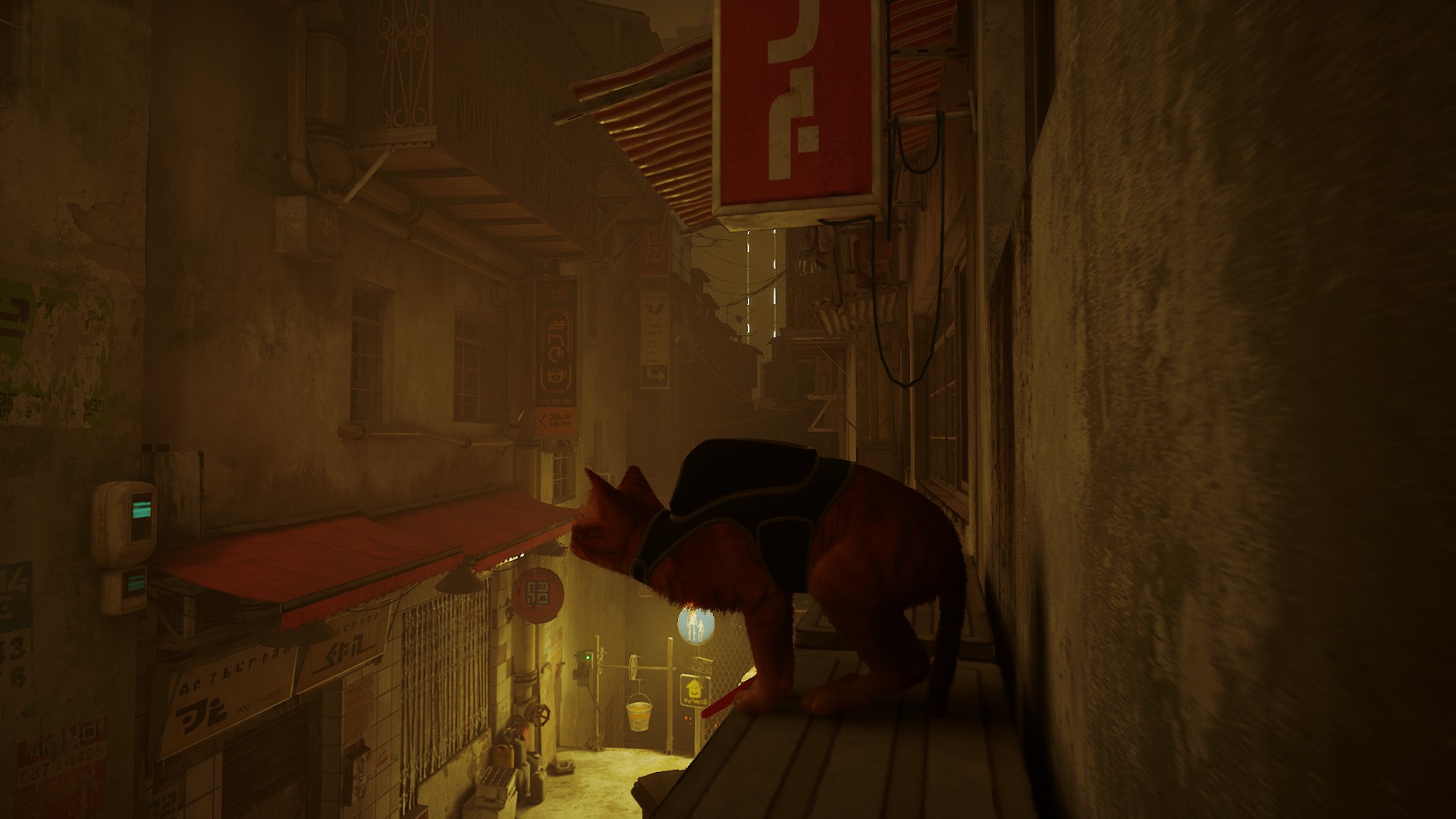
Good Boy meanders through a seemingly abandoned Kowloon City, padding through quiet streets and taking shortcuts through empty flats. There’s power, the city is illuminated by incandescent lights, neon and the glow of TV sets indoors, so someone must be around.

Our feline hero soon learns new tenants have moved in, and they’re not friendly. I’m not sure what they’re called, and the game doesn’t name them, but Kowloon is now home to swarming, artificial tribble-like creatures that attack Good Boy on sight and can take him down if he doesn’t run and shake off any enemies who manage to latch onto him. (Side note: I do not like dying in this game. What did Good Boy ever do to deserve being attacked?)

The first encounter with these enemies turns into a twisting chase through dimly-lit alleys, crumbling staircases and tight streets. Good Boy manages to evade the evil robot tribbles and finds sanctuary in a secure flat.

Once he attends to his needs, which include some carpet scratching and rehydrating, he’s contacted by a machine who uses TVs, computer monitors and other electronics in the apartment to communicate with the tabby.

The machine directs the cat through a few simple tasks necessary to free him, then meets Good Boy in the flesh.

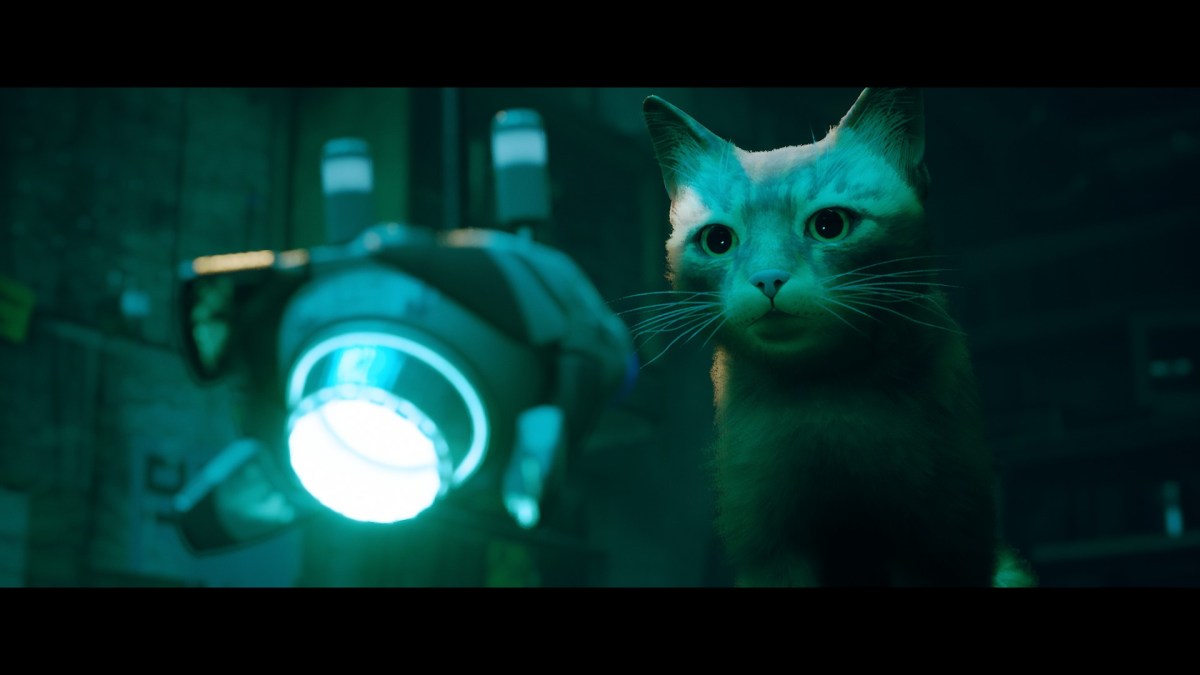
The bot, a palm-size drone named B-12, is damaged and his memory is corrupted. He’s as lost and confused as Good Boy is, and he proposes a partnership. Good Boy, who sees the value in a drone who can open locks, translate signs and communicate with others, agrees. B-12 outfits his new feline friend with a harness that allows him to dock on the kitty’s back, then he saddles up and the new teammates venture forth.

For the first time, the protagonist is able to glean real information about his environment and has a sense of direction. He also gets to travel by makeshift ziplines, hopping into buckets hanging from the city’s ubiquitous wires.

Next episode: Our duo fights back! Same cat time, same cat channel.