Cat Hunt Canceled, Kiwi Journalist Says Cats ‘Need To Be Shot,’ ‘Run Over’ And ‘Wiped Off The Face Of Aotearoa’

Cats are blamed, to the exclusion of almost all other factors, for the decline in native bird populations in New Zealand.

A New Zealand group canceled a cat-hunting competition for kids after receiving massive backlash for the plan, but one Kiwi journalist told a national audience he thinks the cat hunt is a great idea and doesn’t go far enough.

“When it comes to feeral kets, I’m on the soide of the kea, the kākāpō and the kiwi ivery sangle doy of the week and my missige to [the organizers] is ‘Git the competition back on, git the keds back out thea,'” said the vowel-desecrating morning show host Patrick Gower. “If thea gonna hunt and thea’s feeral kets in the way, then we hif to woipe them out. Feeral kets need to be shot, they need to be run ovah, they need to be trepped, they need to be woiped off the foice of Aotearoa and I imploah the school to git it back on, and look, I’ll put up some rewoade as well foah any kets these kids git down theah as well.”

English translation: “I think the cat-killing contest is a wonderful idea, cats need to be shot, run over and exterminated from New Zealand, and I hate cats so much that I’ll put up some of my own money as prizes for the children who bag the most kills.”

You’ve got to wonder what cats have done to Patrick Gower for him to hate them so much, and fortunately dear readers, PITB has the answer!

Gower lost the New Zealander of the Year competition of 2020 to a cute orange tabby named Mittens.

Think about that: All those years of doing Pulitzer-worthy breakfast show kitchen demonstrations, of slaving away at the anchor desk bringing viewers important news about reality TV stars and parroting former Prime Minister Jacinda Ardern’s declaration that New Zealand’s government is “the single source of truth” on COVID, and Gower loses the honor to a damn cat. Mittens even has the key to the City of Wellington, and Gower does not.

So sad.

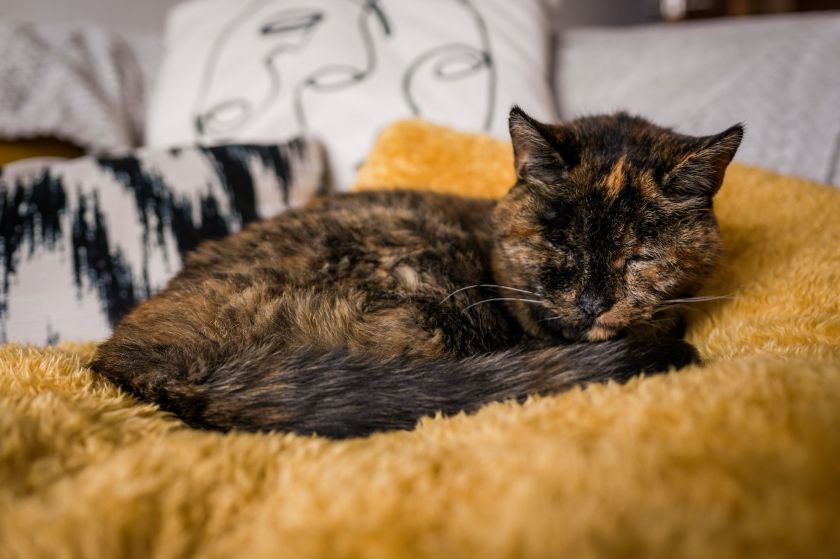
Mittens the Cat
Mittens receiving honors that have eluded morning show host Patrick Gower. Credit: Wellington City Council

It’s unfortunate when a man in influential position, small country or not, enthusiastically encourages children to practice being future serial killers by slaughtering innocent animals because he thinks — despite the complete absence of evidence — that arbitrarily gunning down and running over sentient animals will save birds.

Really, you’d think before calling for the extirpation of an entire species of animal that these people would have something, even a single bogus research study, claiming that bird populations would recover if only people started killing cats on sight.

But no such proof exists, and the burden of proof rests with Gower, fellow Kiwi cat-hater Gareth Morgan and others who harbor an irrational and ill-advised hatred of tiny animals who are simply behaving the way nature designed them to behave.

What we do know is that managing cat populations can be done, but it’s difficult, time-consuming work that requires dedication and patience.

Cities like Washington, D.C., with its exhaustive cat count, and communities across the US have provided the blueprint with TNR efforts and a mass push for all pet owners to spay and neuter their cats. The results have been remarkable, and shelters save more than a million felines a year compared to just a decade ago. There’s still work to be done to bring the number of euthanizations down to zero.

Patrick Gower
Gower

It’s also worth noting that the organizers of the North Canterbury Hunting Competition and supporters like Gower are coming from a place of ignorance. In their original, now-deleted announcement, the organizers offered a “guide” to telling the difference between feral and pet cats, unaware that they are the same species. The only difference is that pet cats are fortunate enough to have homes, and strays and ferals do not.

The group said it was offering its “guide” as a way to prevent children from killing pet cats, but how exactly would they do that when a pet is indistinguishable from a colony stray or a feral? Would they find a microchip on the corpse of a cat they killed and say “Oops, guess that one doesn’t count!”?

Does a cat somehow feel less if it doesn’t have a home? Is its life worth less if it doesn’t have a collar and eat from a bowl?

It’s barbaric and so poorly thought-out, it really boggles the mind that the idea of a cat-killing competition for kids was voiced, let alone approved, planned and promoted by supposed adults.

As for the contest itself, we’re very glad it’s been called off, even if the organizers want to play victim and say their feelings have been hurt by the response to their murderous event.

That, however, doesn’t solve the problem. The fact that the organizers thought this was a good idea in the first place, and the increasingly pitched rhetoric from the likes of Gower and Morgan, are normalizing the idea of slaughtering innocent animals who have their own minds, thoughts and feelings, and who have been shaped by 10,000 years of history to live with and depend on humans.

Instead of calling for blood and whipping people into a frenzy, influential New Zealanders should read about cats and animal cognition in general, so they’re aware that felines experience the full range of primary and secondary emotions and are very much capable of suffering the same way we do when we’re injured, stressed and our lives are in danger.

That, unlike claims that cats are primarily responsible for the decline in bird populations, is hard scientific fact. We can peer into the brains of felines, watch their neurons fire, see different brain regions light up as they think specific thoughts and respond to specific smells and sights.

Maybe if people who hate cats understand what they are, they’ll feel some empathy for a beautiful species, animals who have been companions and literal life savers to humans since before deepest antiquity, animals whose lives have intrinsic value regardless of what they mean to us. At the very least, we owe them that.

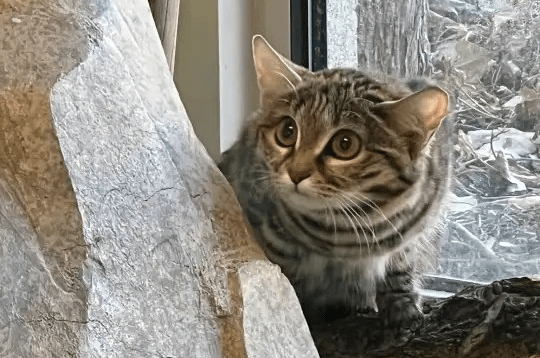
Amazing Cats: The Mysterious Marbled Cat

The semi-arboreal marbled cat is arguably the most elusive feline on the planet.

Dear readers, before you think this is a joke entry about Bud, let me emphasize we’re talking about the marbled cat, not the well-marbled cat.

chubbybuddy
“I am NOT chubby, I am meowscular!”

“I’ve never heard of a marbled cat,” you might be thinking, and there’s a good reason for that.

These little guys are incredibly elusive, live far from most humans and are found only in Asia. They’re extremely difficult to track and locate in the wild and haven’t been the subject of any comprehensive field study, granting them an air of mystery in an era when you can find almost anything you want to know about almost any animal with a few clicks.

There’s a whole lot we don’t know about marbled cats, including their behavior in the wild, how long they gestate, what they eat and how they’ve successfully adapted to so many varied habitats.

marbledcat2
Credit: Wildcats Magazine

The singular species is semi-arboreal. Almost all cats can climb trees. The problem is getting down afterward, which is why so many domestic cats get stuck in trees. They can’t descend head-first and they’re wary of descending tail-first, which makes them vulnerable. Marbled cats have unusually flexible claws that enable them to descend head-first with ease, so they don’t balk at climbing. Their large paws keep them sure-footed on tree limbs and they’re confident off the ground.

In 2011, a trail camera in Indonesia was tripped by a marbled cat, finally giving us a close-up view:

The striking felines are sometimes called “miniature clouded leopards,” and you can clearly see why.

The species is native to the eastern Himalayas, mostly in Nepal, Bhutan, Myanmar and tiny corners of China and India, as well as countries like Thailand, Cambodia and Indonesia. They’re extremely adaptable and live in a variety of habitats, from the forests of high-elevation mountain slopes to the humid jungles of Indonesia’s Borneo and Sumatra.

Marbled cats are about the same size as domestic cats, but they’ve got incredibly big, fluffy tails that are longer than their own bodies, which serve as formidable counter-weights for their tree-hopping. Their ears are a bit more round than the ears of their domestic cousins. They tend to have larger paws, and they have unique clouded coat patterns that are unlike any breed of domestic feline or close wildcat relatives.

Despite their relatively large natural habitat and the difficulty in pinning down population numbers, conservationists estimate there are fewer than 10,000 marbled cats. They’re threatened by the same deforestation by the palm oil industry that has devastated orangutan and clouded leopard habitats, although their strongholds in steep, high-elevation forests are safe for now. Marbled cats are listed as endangered by some authorities and as near-threatened by others, though like all wildlife their numbers are in decline.

Top image credit Joel Sartore/National Geographic Photo Ark

marbledcatrussia
A marbled cat at Novosibirsk Zoo in Russia. Credit: Zoo Institutes

Things Are Looking Up For This Shy Orphaned Puma As He Settles Into A New Home

Nicholas was orphaned and severely injured as a cub as he and his mother tried to cross a busy highway. He’s settling into his new home, where he will have his own habitat, den and even his own pond.

Nicholas the mountain lion has a beautiful home waiting for him with his own pond, a rock den, a grassy area where he can run around and several other little hideaways where he can enjoy some privacy and naps.

But first the three-year-old puma will have to clear quarantine and become more comfortable with his new surroundings and new caretakers.

“He’s doing really well but he’s still very scared, he’s a very timid cat, so we’re just taking it really slow, day by day and the keepers are taking some quiet time with him,” said Bobbi Brink, the founder of San Diego County-based Lions, Tigers and Bears, Nicholas’ new home.

Nicholas the Mountain Lion
Nicholas stretches his legs in quarantine as he awaits the move to his own habitat. Credit: Lions, Tigers and Bears

The golden-coated feline with an expressive face has had a tough journey to the 93-acre sanctuary that will be his permanent home.

In 2020 when he was just a cub, Nicholas was following his mother across a busy highway when both were struck by a car. Nicholas was badly injured and his mom was killed in the collision, an unfortunately common fate for members of their species as their longtime habitats are increasingly fragmented by new developments and highways.

Because they require about two years with their mothers to learn how to survive on their own, it’s almost impossible to release orphaned pumas back into the wild. Unlike, say, the orphaned orangutans of Borneo and Sumatra, who can usually be taught to successfully fend for themselves because humans can show them how to physically manipulate their surroundings, there’s no way to teach orphaned pumas how to select prey, stalk, pounce and deliver kill bites.

A sanctuary in northern California provided a home for Nicholas for about three years, but recently went bankrupt, so the staff at Lions, Tigers and Bears secured him, prepared a habitat for him and took on the Herculean task of transporting him to San Diego County.

Nicholas’ case is even more complicated because he has lasting neurological damage from the car crash that killed his mother, including a pronounced head tilt that worsens when he’s scared.

Brink told PITB it’s normal for cats like mountain lions to be spooked by the commotion and uncertainty of a move, as well as leaving everything they know behind. Nicholas is simply obeying his wild instincts, which urge him to be guarded. But he’s got a loving team of caretakers who will work with him, as well as veterinary specialists who are well versed in caring for animals with neurological damage.

“Sometimes it can take (animals like Nicholas) a month, sometimes it can take three months to build up that trust,” Brink said. “His biggest need is he’s very afraid, so we’re gonna have to work around his fear so we don’t scare him more.”

Nicholas the Mountain Lion
Despite their impressive size, pumas are more closely related to domestic cats than the big cats of the panthera genus. Like their house cat cousins, pumas enjoy tearing up paper and playing with toys. Credit: Lions, Tigers and Bears

While Nicholas will have his own habitat and can keep to himself as much as he likes, recent observations of his secretive species have shown that pumas have “secret social lives,” and Nicholas will have the opportunity to meet and interact with other mountain lions if he’s comfortable with it.

Pumas — which are known by the scientific name puma concolor and are also called mountain lions, cougars, panthers, catamounts, screamers, painters, gato monte and many other names — are among the most adaptable felids in the world and range from the southernmost edge of South America to just over the Canadian border. They’re able to thrive in mountains, tropical regions, deserts, forests, human-adjacent rural areas and even in urban population centers, as the famed “Hollywood Mountain Lion” P-22 did for more than a decade in Los Angeles.

Their ability to adapt has served them well in a changing world, but they’re not immune to the pressures of human expansion.

In California their habitats have been carved up by the state’s busy and deadly highways, leaving the cats in genetically isolated pockets. Pumas who strike out in search of their own ranges are extremely vulnerable to vehicle traffic. P-22 famously crossed several of the world’s busiest highways to reach his eventual home in LA’s Griffith Park, but others like Nicholas and his mom aren’t so lucky.

Solutions like the $90 million Wallis Annenberg Wildlife Crossing, currently under construction in Los Angeles County, can connect fragmented ranges and give pumas, coyotes, foxes, deer, rabbits and other animals safe passage. But experts point out that they are just one component in a long-term solution that must include more careful zoning, fences to funnel animals toward safe crossings, and options like tunnels that run under highways, since not all animals will use overpasses.

As planners and wildlife experts figure out new ways to ensure the survival of wildlife in an increasingly crowded, human-dominated world, sanctuaries like Lions, Tigers and Bears play a crucial role by caring for the innocent animals who are injured, displaced and rescued from bad circumstances.

To learn more about Lions, Tigers and Bears or support their ongoing efforts to provide safe, stimulating and comfortable homes for wild animals, visit the non-profit’s site. To receive updates on Nicholas and the other animals at the sanctuary, follow Lions, Tigers and Bears on Instagram and Facebook. Readers who live in the California area can book guided educational tours or visit during one of the sanctuary’s special events. Thanks to Bobbi Brink and Olivia Stafford for allowing PITB to tell Nicholas’ story. All images and videos of Nicholas courtesy of Lions, Tigers and Bears.

Conservationists Want Cat Owners On Their Side

Wildlife conservationists should work with cat lovers instead of making enemies of them in the ongoing quest to protect small wildlife from felines. Cat owners, in turn, can show good faith by being more responsible about spaying and neutering, and by keeping their cats indoors.

Wildlife conservationists are worried, and they have a right to be.

In addition to the billions of animals we humans kill every year in our ruthless exploitation of life on this planet, our pet cats have their own separate impact, killing birds and small mammals in significant numbers.

Yet conservationists aren’t making headway with cat lovers, primarily because their approach frequently relies on shaming and drastic, often cruel proposals: Some Australian states are outright culling cats, offering $10 a head for adults and $5 for kittens, for example, while a pair of academics from the Netherlands advocate criminally prosecuting cat owners who let their pets outside combined with a policy of euthanizing millions of cats. Extremists in the US are pushing for similar measures, arguing that TNR (trap, neuter, return) isn’t an effective way of managing cat populations.

57336B30-57EA-4829-A5CB-07F0823934C6

Something has to be done, and a few smart conservationists are realizing the accusatory, Richard Dawkins-style of engaging “the enemy” just causes people to withdraw, not to listen and cooperate.

“I get quite sick of the conflict focus of some conservation biologists,” Wayne Linklater, chairman of the environmental studies department at California State, tells New Scientist. “The solutions lie with the people who care most about cats, not with the people who don’t care about them.”

Great. Now there are a few things conservationists should know as they engage with people who care for cats:

  • Most of us want what you want: We want cat owners to keep their pets inside. Cats aren’t wild animals. They have no “natural habitat” and contrary to misconceptions, they don’t belong outside. They’re not equipped to provide for themselves, and they face dangers from traffic, predators like coyotes and mountain lions, fights with other cats, and perverse humans who kill and torture them for fun. Strays and ferals live short, brutal lives (living to an average of 3.5 years) while indoor cats live 17 years on average. The “cats belong inside” angle is common ground from which to start a dialogue.
  • Stop repeating bunk studies as fact! The idea that cats are an all-consuming plague on wildlife came about as a result of a handful of studies, yet all but the most recent of them are based on old data and manipulated numbers compiled by people with an agenda. One of the earliest studies, which claimed cats kill up to 3.7 billion birds and 20.7 billion mammals annually, relies so heavily on invented numbers and massaged data that it’s worthless and outright dangerous to informed discourse on the topic, yet it’s repeated as fact by credulous conservationists and the press. Knowing the true scope of the problem is key to understanding whether mitigation efforts really work. Misinformation only sabotages those efforts.
  • Come get your people: Peter Marra is one of the co-authors of the bunk 2013 Nature Communications study with the above oft-cited numbers, and he’s also the author of the shrill Cat Wars: The Devastating Consequences of a Cuddly Killer. Marra is an advocate of using taxpayer money to kill millions of cats. He also says that anyone who questions his claims about cats — a group that includes major animal rescues, welfare organizations, and many academics — is tantamount to climate change deniers and tobacco companies that denied for decades that cigarettes have a negative effect on health. Marra’s major contributions amount to sowing misinformation, polarizing the issue and inflaming opinions on both sides. Everything about his behavior indicates he wants to sell books and promote himself, not save wildlife from predatory domestic cats. He should not be taken seriously and his research should not be reported as fact.

Cat lovers are, by definition, animal lovers. They’re people who care about wildlife and domestic animal welfare. It shouldn’t be difficult to engage with them.

At the same time, cat advocates need to purge the crazies out of their ranks as well. Sending death threats to scientists (see the New Scientist link up top) is way out of order, it’s inhuman behavior and it only hurts the legitimacy of our cause.

A good first step toward reconciliation could involve enlisting cat owners in an effort to properly study feline impact on small wildlife, producing reliable data to facilitate a measured, fact-based approach that doesn’t begin and end with the notion that cats are hellspawn.
If all sides engage in good faith, there’s no reason why we can’t protect wildlife and cats.

6246936A-DF9E-4BFE-86BA-BAEF7F5300BE

Spectacular Tigress Image Wins Wildlife Photo Of The Year

An ethereal photo shows an Amur tigress scent-marking an ancient tree in Siberia.

A photo of a tigress hugging a tree in Siberia has won the prestigious Wildlife Photo Of The Year from London’s Natural History Museum.

Photographer Sergey Gorshkov beat out almost 50,000 other entrants with his winning photograph, taken in Land of the Leopard National Park, a large reserve for tigers and leopards in Far East Siberia.

Gorshkov set up his camera facing a tree that already had claw marks, signaling that it’s been used as a territorial marker by at least one of more than 30 adult tigers in the park.

Sure enough, a tigress stopped to claw new marks on the tree and rub her scent on it, which is the same behavior we see with house cats when they rub on objects — and people — in the home. Cats have scent glands on their faces and paws which allow them to mark objects with pheromones. It’s a cat’s way of leaving a “sign” saying “This is mine.”

The photo has an ethereal quality, with the tigress and tree illuminated by shafts of sunlight poking through the canopy of the ancient forest.

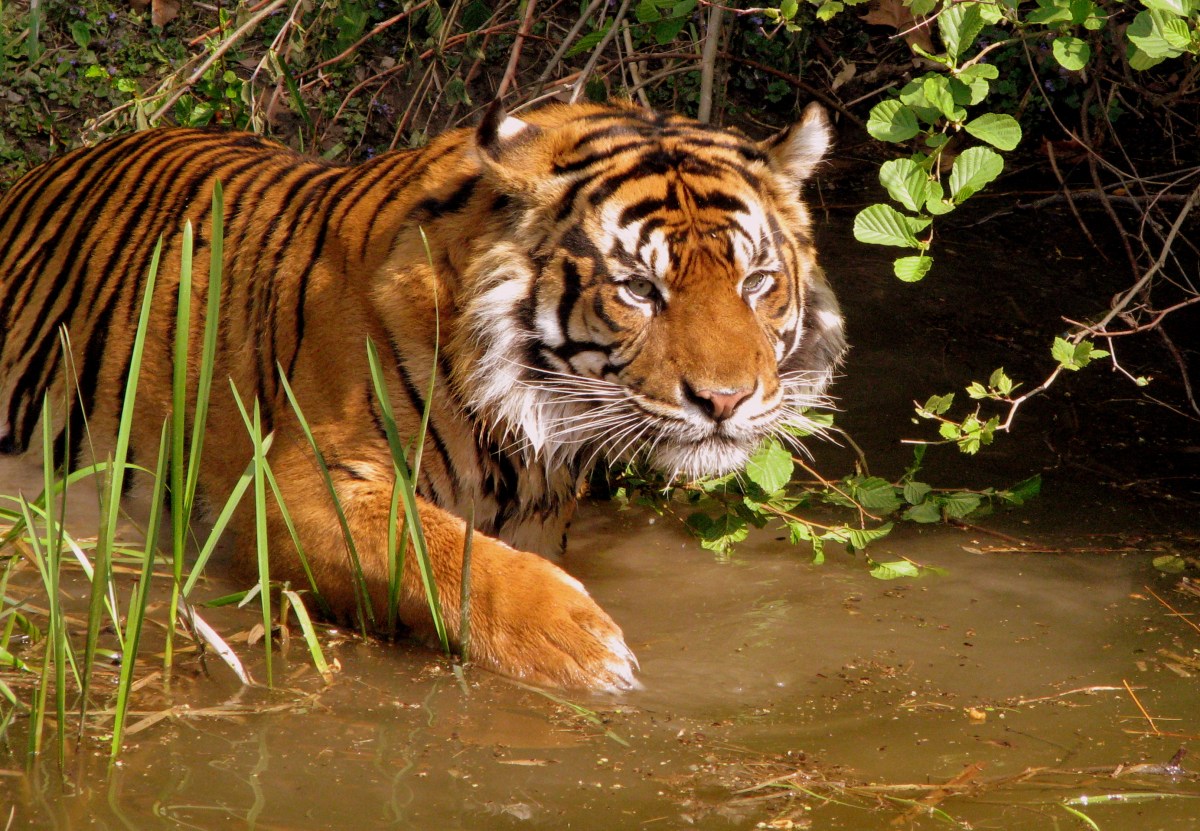
Wild and free Siberian Tiger!

An announcement from the park’s staff describes the scene:

The photo titled “Hugs” shows the moment in which the rarest Amur tiger hugs a century-old fir to mark the target tree with its scent. Sergey Gorshkov, with the support of professional guides from Land of the Leopard, took a picture using a professional camera with a motion sensor.

“This is a scene like no other, a unique look at an intimate moment deep in a magical forest,” said Rose Kidman Cox, chairwoman of the contest’s jury.

The photo “inspires hope” for the endangered Amur tiger, Cox said. In addition to the 30-plus tigers, Land of the Leopard National Park is also home to at least 10 tiger cubs and almost 100 leopards.

Gorshkov’s photo wasn’t the only feline winner this year. “When mother says run,” a photograph by China’s Shanyan Li, shows a trio of Pallas’ cubs with their mother “on the remote steppes of the Qinghai-Tibet Plateau in northwest China.” The photograph won in the mammalian behavior category.

4b3cafb5-321e-44ba-a7d0-468b2447f9f8