‘I Tread Where I Please’ Said Cat Who Left Paw Prints On Manuscript 500 Years Ago

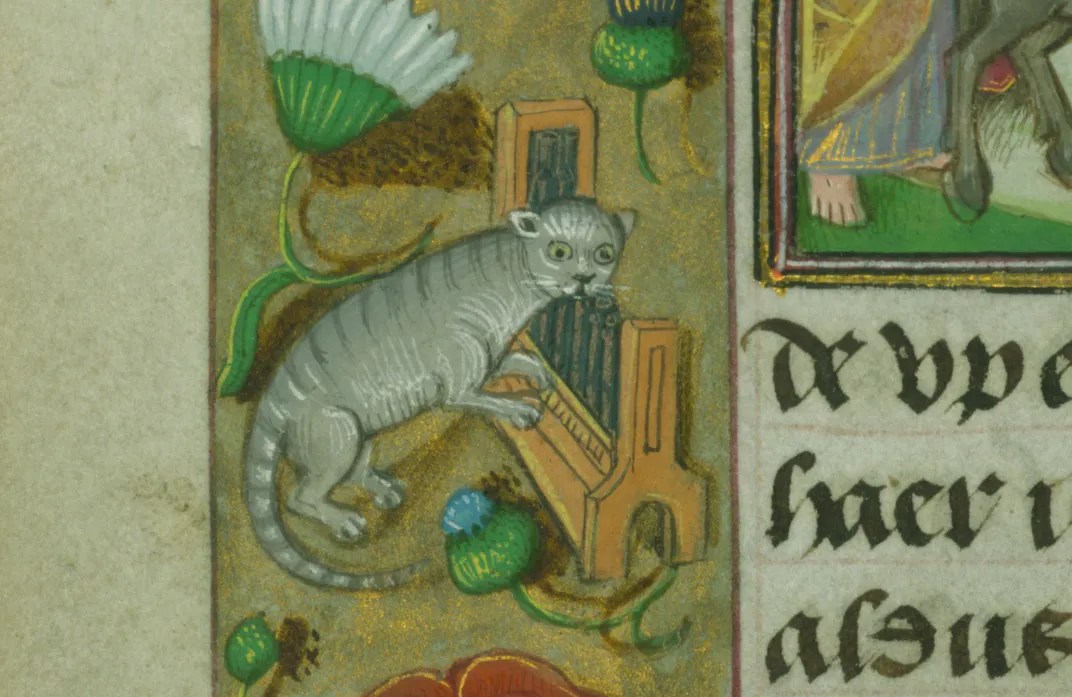
It turns out cats have been adding their special sauce to our communications for as long as written language has been a thing.

Illuminated manuscripts date back long before the printing press, and their manufacture was arduous.

Literacy itself was rare in the Dark Ages and usually only the province of educated nobility and the professionally religious. Most people had no hope of learning to read, so the monks charged with copying religious texts were already practitioners of a rare skill for their time.

They weren’t just writing either. They carefully illustrated each page with drawings, cartouches and other decorative touches, and the text itself was a form of art in its calligraphic symmetry, designed to be beautiful as well as legible.

It took thousands of hours to complete a manuscript. There was no whiteout and no do-overs: a mistake meant the page had to be scrapped even if it represented a week’s worth of work.

So when a Flemish scribe finished a page of his manuscript and set it aside, he thought he was in the clear — until a cat came along and left its own signature in the form of paw prints.

Three of them, in fact, representing one and a half kitty strides. Two of the feline’s little feet found white space, but another landed right on top of the meticulously rendered text.

The feline-marked parchment in all its glory.

It kind of puts keyboard cats in context, doesn’t it? Our four legged friends may occasionally ruin our drafts or emails — or in my case wreck a music recording session with a discordant keyboard solo by walking across a synthesizer at an inopportune time — but at least they don’t cost us dozens of hours of work.

The 500-year-old, kitty-marked manuscript is now the centerpiece of “Paws On Parchment,” a new exhibit at Baltimore’s Walters Art Museum.

Click here for more details from the museum, which is open Tuesday through Saturday, with late hours on Thursday evenings. Admission is free.

And if you ever take up calligraphy as a hobby, keep your work hidden from your feline overlords!

Do You Speak Cat? This Quiz Tests Knowledge Of Real Feline Language

Studies show most of us are pretty bad at interpreting our cats’ moods. A research team in Australia wants to change that.

Cats are constantly telling us how they feel, but many of us aren’t listening.

We’re not talking about chirping, trilling and meowing, although those are some of the ways our cats try to communicate with us.

While they might seem protective of their own thoughts and feelings, cats are actually transparent, and they can’t lie.* Their tails, ears, whiskers, facial expressions and body language all broadcast a cat’s mood.

The question is, are we picking up that broadcast?

In The Conversation, the University of Adelaide’s Julia Henning introduces us to a quiz she designed to answer that question, and invites us to take it.

The goal: to correctly assess each cat’s mood. What I liked most was that we’re asked to evaluate videos — clear, well-lit high resolution clips — instead of the low resolution stills that are often used for quizzes like this.

Sir Talks-a-lot

Henning has been studying the human-cat communication issue because when we misread cats, there’s a good chance we’re stressing them out. Henning and her team published the results of a study in September in which 368 participants from Australia were asked to evaluate a series of clips human-feline interaction.

It turns out they didn’t do so well at reading the signs that a cat is agitated, stressed or doesn’t want to play.

“For videos of cats who weren’t playing and were showing subtle negative cues (such as sudden tension in the body or avoiding touch), participants only recognised the negative cues about as well as chance (48.7%),” the authors of the study wrote.

Even when study participants correctly read a cat’s ears, tail, whiskers and body language, some of them indicated they’d do things that would unknowingly make a cat more agitated and stressed. A classic example is trying to pet a cat’s belly and misinterpreting their derpy way of trying to block you as a playful gesture.

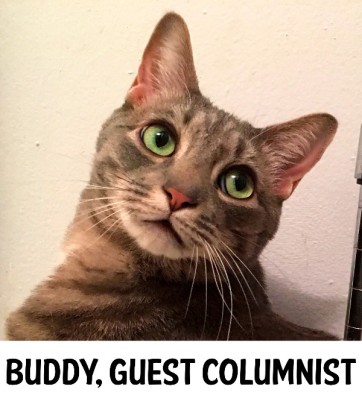
Did you know? Approximately 96% of Buddy’s communication is related to yums.

In the paper, which was published in Frontiers in Ethology, Henning and her colleagues lay out the case for making sure we — the people who take care of cats — are sensitive to what our little buddies are feeling.

It’s not just about strengthening the bond, although that’s an important part. It’s about reducing stress and miscommunication, and increasing quality of life.

Cats are incredibly sensitive to our actions and moods because we are the most important living beings in their lives. We feed and house them, and we’re their pals. If we’re constantly subjecting them to play they don’t like or overstimulating them, they get stressed, and stressed cats can become depressed, sick or resentful cats.

If we want to make sure our buddies live their best lives, we have to understand what they’re trying to tell us.

(*) Except when it comes to food. When food is involved, these innocent, cute little furry creatures become master manipulators and can convince anyone they’re starving.

Note: The first version of this story linked to the study page twice when the first link should have pointed to the quiz. It’s fixed now, and email subscribers can follow the link through this version of the story. Apologies for the error.

Header image credit: cottonbro studio/Pexels

RSPCA Wants Cat Cafes ‘Phased Out,’ Says Cats’ Needs Not Met

Cat cafes offer a unique way for adoptable kitties to find homes, as well as a stress-reducing experience for customers, but two groups in the UK say cafes are not appropriate living spaces for cats.

Two major feline advocacy groups in the UK are urging the government to stop issuing new licenses for cat cafes, arguing they’re not good living situations for the felines who are their main attraction.

Many people see the cafe model as a win-win for cats and people. The latter get to unwind and spend time with cute animals who have a knack for lowering blood pressure, helping the stressed to relax. The cats, who are adoptable, get to run, play and live in an environment much better than a shelter cage while they wait for their forever homes.

But the RSPCA and Cats Protection, the most prominent feline welfare organization in the UK, say its “almost impossible” to meet the needs of the animals, who may be stressed by living with other cats and, they argue, are used as “entertainment” for customers.

“We don’t believe these environments can consistently provide cats with a good quality of life and are hugely concerned that many cats will be unhappy as a result,” said Alice Potter, a cat welfare specialist with the RSPCA.

“Generally cats are not sociable, and many felines often prefer to live without other cats, or prefer to form social groups with their relations.”

A cat cafe in Vilnius, the capital city of Lithuania. Credit: Wikimedia Commons

I’m not sure how I feel about this, and I’m not particularly familiar with how most cat cafes are run. The only ones I’ve been to were in Japan, and they were miraculously clean spaces with lots of things to climb, as well as nooks and private areas where cats could hide. The cats were well cared-for, staff were friendly, and the environments were relaxed.

Cat cafes also offer a unique opportunity for finding homes for the little ones. They’re much more likely to meow their way into the hearts of would-be adopters when they’re given space to run around, play and enjoy themselves as opposed to the often sullen, frightened state they’re in at shelters.

Are the UK cats groups right, or are they making perfect the enemy of good?

Point/Counterpoint: ‘There Are So Many Wonderful Places To Lounge!’ vs ‘Dude, You’re In My Spot!’

Buddy the Cat praises the many comfortable lounging spots at Casa de Buddy, while Buddy the Cat blasts his human for sitting in his favorite spot! Who’s right?

There Are So Many Wonderful Places to Lounge!

buddycolumnYou know what I like about our my home, human? It affords me seemingly endless comfortable places to lounge and nap.

There’s the rug underneath the dinner table, which is soft and makes me feel well-protected with a roof over my head and chairs blocking access to anyone larger than me.

There’s your padded fake leather office chair, which not only retains your butt heat, but is also a fabulous item to scratch.

There’s my bed, which used to be your bed, which I graciously still allow you to use 22.3 percent of. Oh, and the wonderful raised platform above my scratcher, where I can watch birds safely and make weird noises when they fly. In the winter, the radiator provides a toasty alternative to draftier spots.

When I was but a kitten, I never dreamed of having such a vast realm to call my own, with so many comfortable places to be lazy.

Indeed, there’s no place like home, and no places like my spots.

Dude, You’re In My Spot!

buddycolumnCome on! Get up!

This is not funny. You know that’s my favorite spot! The left side of the couch is comfortable, warm, gives me a good view of everything, and smells like you.

Get up! Get up! If you don’t vacate the premises immediately I will be forced to disappear, wait until you’re distracted, then nearly give you a heart attack with a well-timed ambush.

Or perhaps I will take my spot anyway by sitting on your head. How foolish would you look then, eh human?

Yes, there are plenty of other places for me to rest but I like this one because you’re sitting in it.

Grrrr, fine! But I’m sleeping on top of you, so if you need to heed nature’s call, do it now, human. I don’t like to be disturbed by your bathroom trips. Also, could you try to breathe a little less? It’s just that when I’m laying on your chest, I can feel your exhales on my fur and it’s really annoying. If you could keep breathing to a minimum, that’d be great.

Why Do Some Cats Do The ‘Begging Paws’/’Praying’ Motion?

The begging/praying motion is one of the most unusual feline behaviors, but what does it mean, and why do some cats do it?

Readers of this blog know I love my cat dearly, but he’s also very weird.

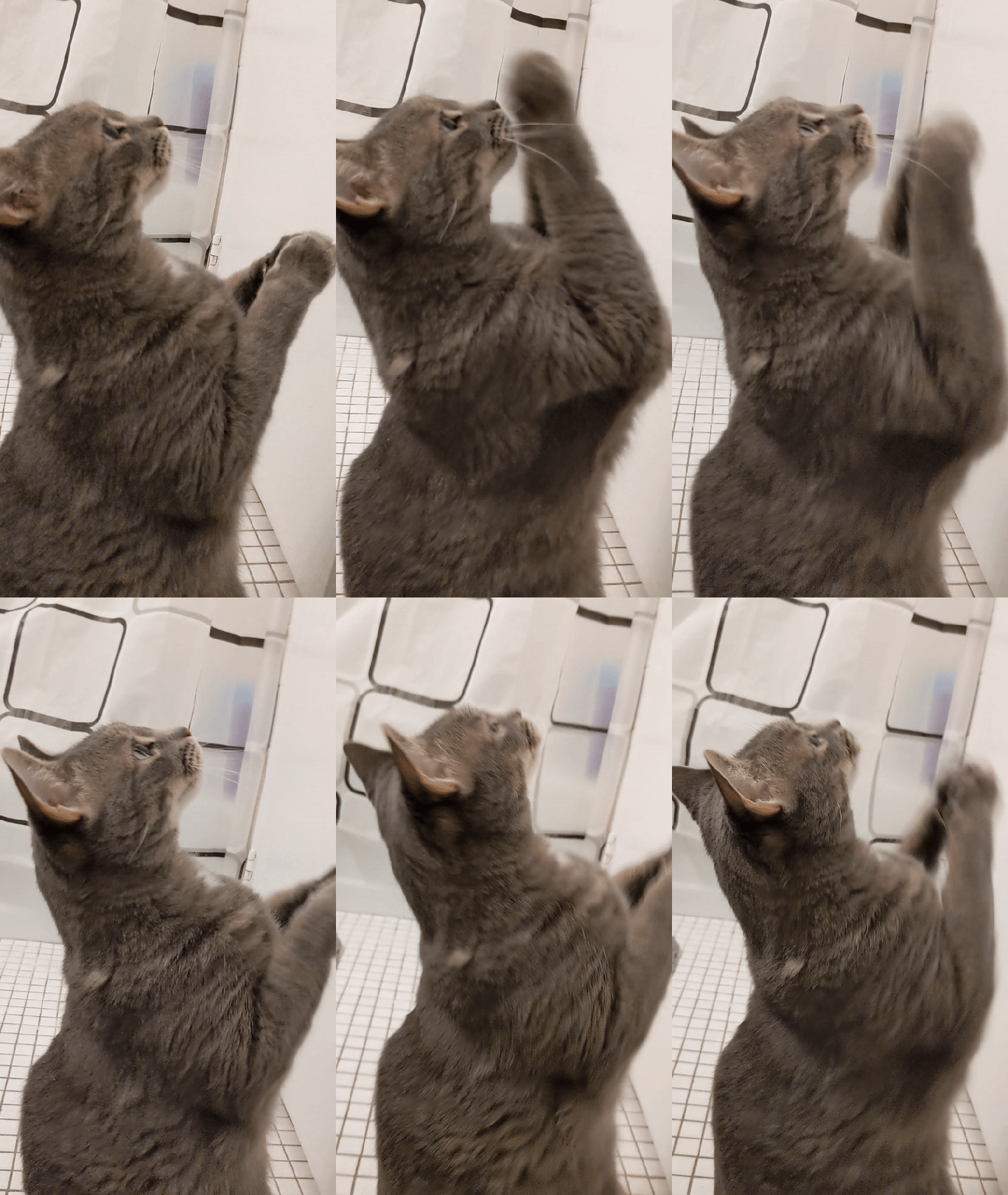
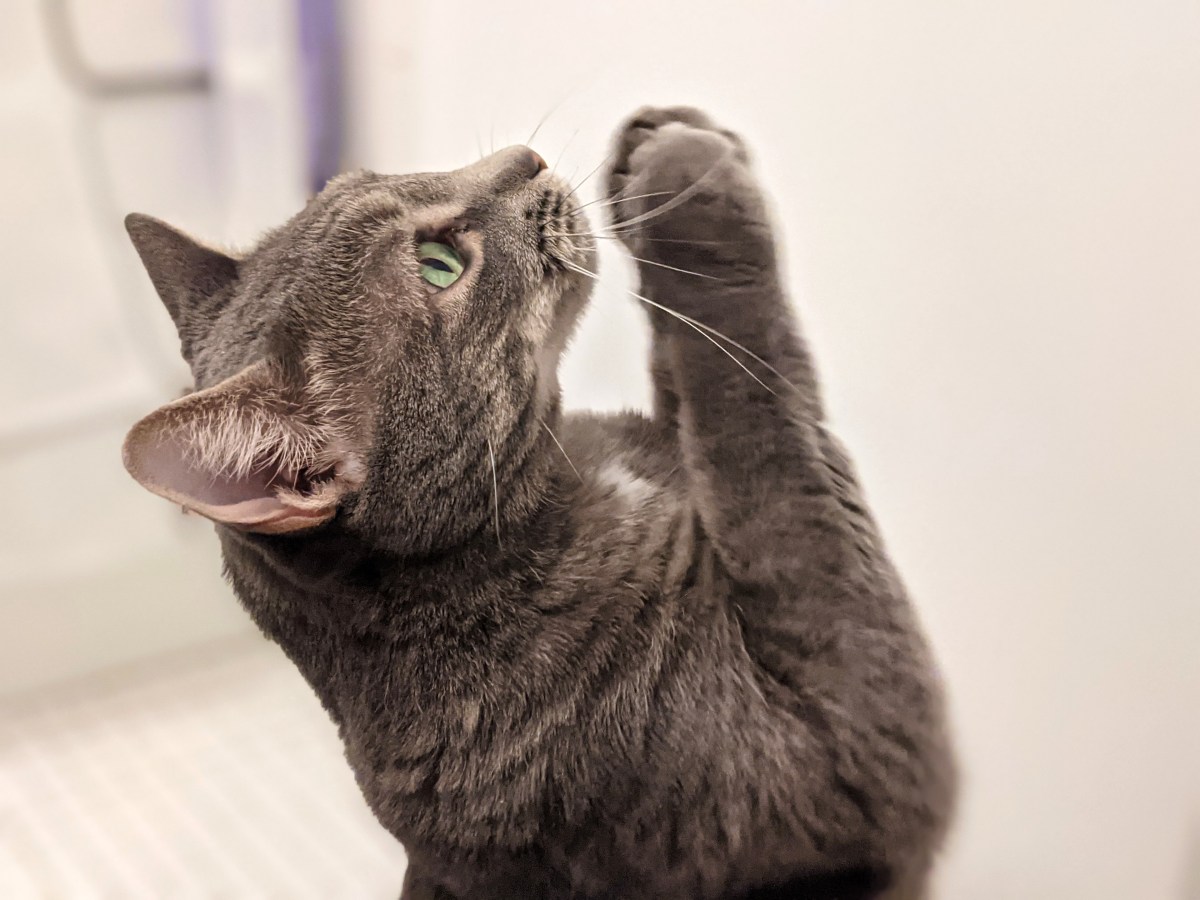
Perhaps his strangest, most mysterious behavior is what I call his “praying” gesture: Buddy sits up on his hind legs, puts his front paws together and raises them up and down as if in fervent  prayer.

The behavior is extremely rare. Out of many millions of cat videos hosted on the internet, only a handful show cats engaging in it.

Here’s Buddy demonstrating his “prayer” form, set to De La Soul’s 1989 track, “Buddy”:

It’s seemingly random and impossible to predict, which is why it’s been so difficult for me to get a decent clip of Bud doing it. The above video is the third time I’ve managed to capture it, and only the second time I’ve been able to get a clear shot following an earlier capture:

ezgif-2-3cfbfed99a30

Some cats do it much more frequently, like the ginger tabby below whose humans have decided it’s an expression of gratitude toward them for giving him a forever home:

I’m confident in saying that, for my cat at least, it’s not an expression of gratitude or a form of begging. First, Bud doesn’t do gratitude, and he doesn’t beg so much as he demands. If he feels I’m not responding quickly enough to one of his directives, he goes right to screeching at me: “Snack now, human!” and so on.

Likewise in the video above, Charlie’s humans say the orange tabby does it “randomly.” They’ve even caught him making the motion on camera when no one else was around, which tracks with my own observations of my cat.

So why do cats do it?

“I’ve seen the ‘begging paws’ online and I wish I had a nice, clear explanation for you,” cat behaviorist Mikel Delgado told us.

Some cats, she noted, learn quickly that it elicits a response from their humans.

“My best guess at why cats continue to do this behavior is that it gets them attention,” Delgado said. “That however, does not explain why they do it in the first place.”

Nancy Meyer, a feline behavior consultant who volunteers for Tabby’s Place in New Jersey, said she believes cats in some of the videos are indeed signaling to their humans that they want something. For example, one clip shows a cat “begging” in front of a refrigerator — which his humans say he often does — while another shows a cat facing its reflection in a mirror while pressing its paws together and moving them up and down.

Some of those cats would be well aware that their behavior is a good way to get their humans’ attention, which could indeed lead to them getting what they want.

“It’s like a meow or gaze alteration; it’s a way of communicating that a cat wants to get something that’s currently out of reach,” Meyer told PITB. “The owners reward the cat for this behavior so the behavior perpetuates.”

In my own anecdotal experience I have witnessed Buddy engage in the behavior when he doesn’t realize he’s being observed, and he’s just as likely to break out in “prayer” while facing away from me. I suspect that because he does it so infrequently, he doesn’t realize it results in attention.

It’s unlikely we’ll get definitive answers unless the behavior becomes the focus of research, but that seems unlikely because of its rarity and its unpredictable nature.

Most of the time it appears benign, but Delgado says caretakers should pay close attention if their cats are engaging in it constantly.

“My only concern is that in some of these cats, the behavior appears almost compulsive – like they can’t/won’t stop,” she told PITB. “I also would recommend chatting with a veterinarian to see if they have any thoughts about whether this might indicate any physiological issue.”

Otherwise it appears benign, so if your kitty occasionally breaks out in “prayer,” enjoy the quirk — and good luck trying to get that elusive footage!