A Missing Genetic Sequence Leads To Orange Fur In Cats. Could It Be Responsible For Behavioral Differences Too?

Scientists have uncovered the elusive mechanisms behind coat color expression, opening the door to a new question: is fur pigment connected to personality?

When Professor Hiroyuki Sasaki retired, he wasn’t done with science. He just wanted to use it to better understand his cats.

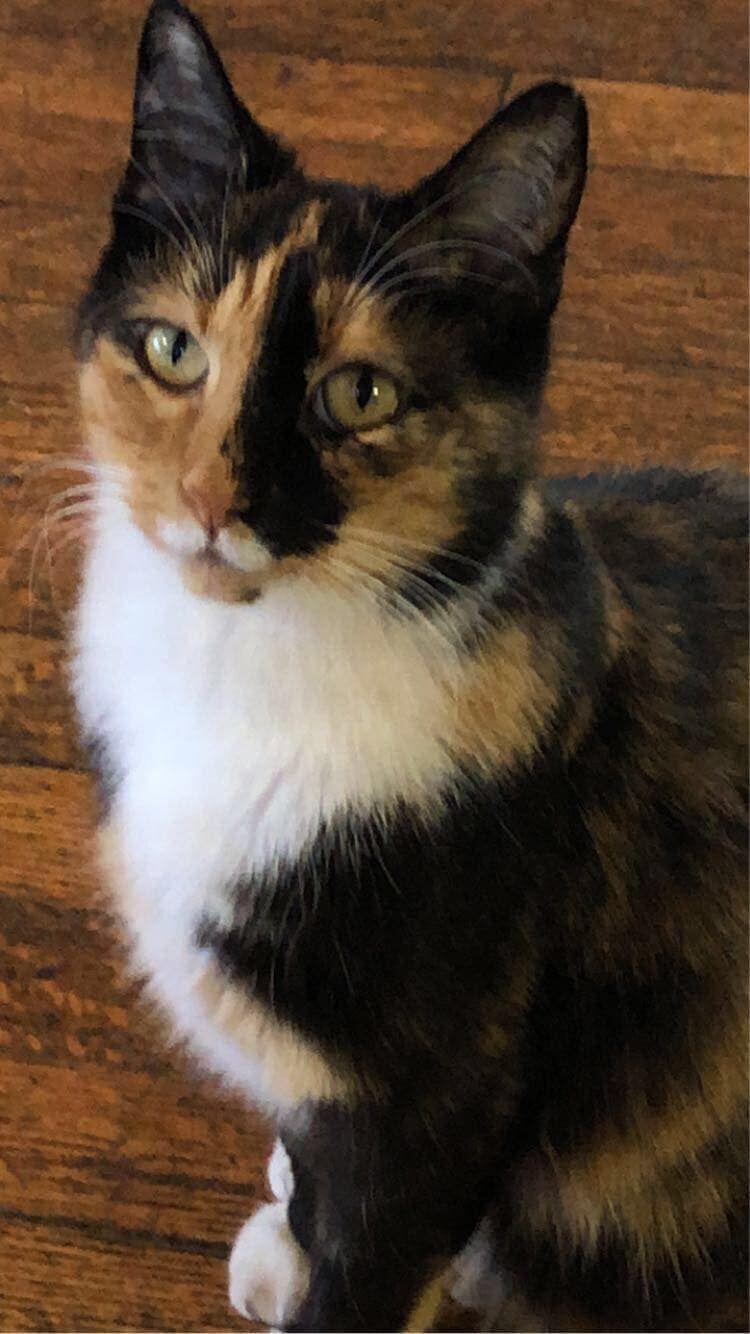
The Japanese geneticist raised more than $73,000 from Japanese and international cat lovers and put together a team, including partners from the US. Then he began the hard work of scrutinizing feline DNA to find out why some cats are orange, and why most all-orange cats are male while virtually all calico and tortoiseshell cats, whose coats have splotches of orange, are female.

It turns out there’s no genetic instruction telling the fur to take on an orange pigment — it’s the absence of a segment of DNA, which governs pigment production, that does it.

In other words, ginger cats are mutants.

Most fully-orange cats are male because the mutation removes the DNA segment in the X chromosome. As males have X and Y chromosomes, they only need the mutation in the single X chromosome for their coats to express in that shade.

Lots of cat lovers swear that coat color and temperament are connected.

Females have an XX chromosomal arrangement, so they need the mutation in both chromosomes to turn tangerine. If the mutation only shows up in one chromosome, you get patches of the color instead of a consistent coat.

That explains why 80 percent of ginger cats are male, and why only one in 3,000 calicos and tortoiseshells are male. A male cat would need an extra X chromosome, XXY, to be born with a calico or tortoiseshell coat. One of the side effects, however, is sterility.

Scientists estimate only one in a thousand male calicos/tortoiseshells can reproduce and pass their unique mutations on.

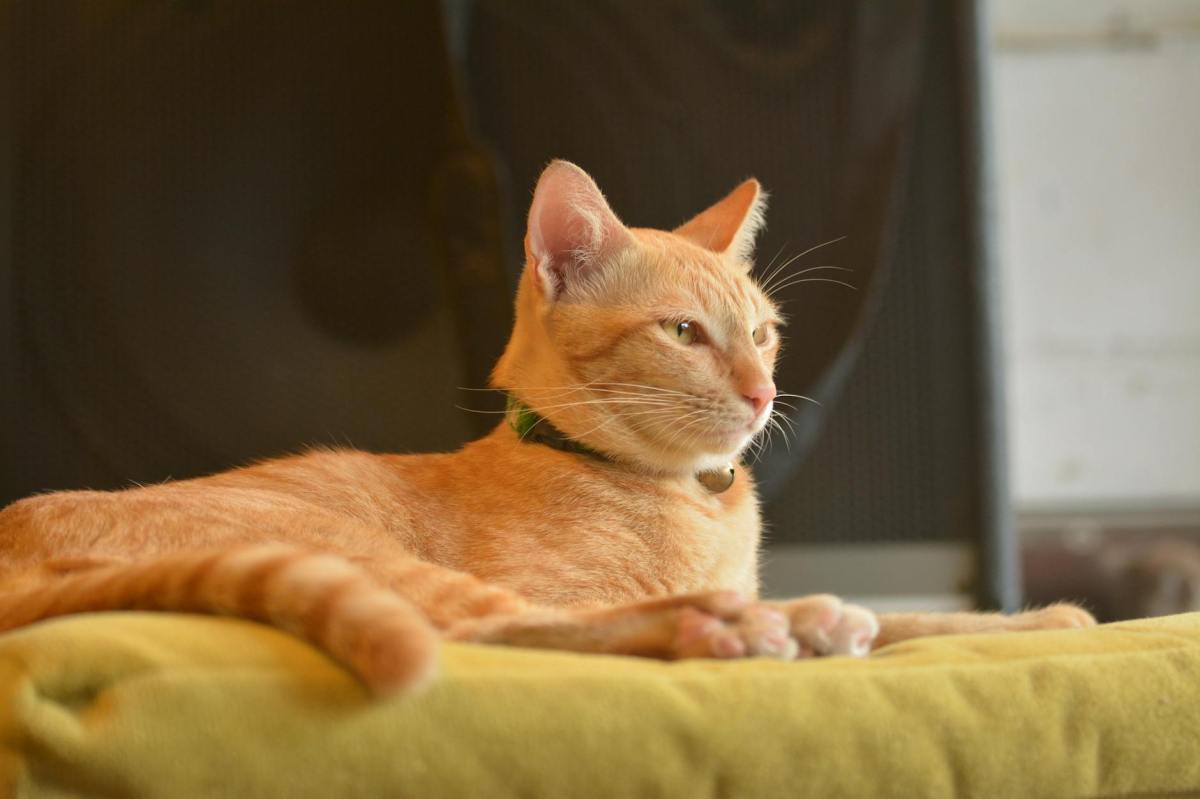
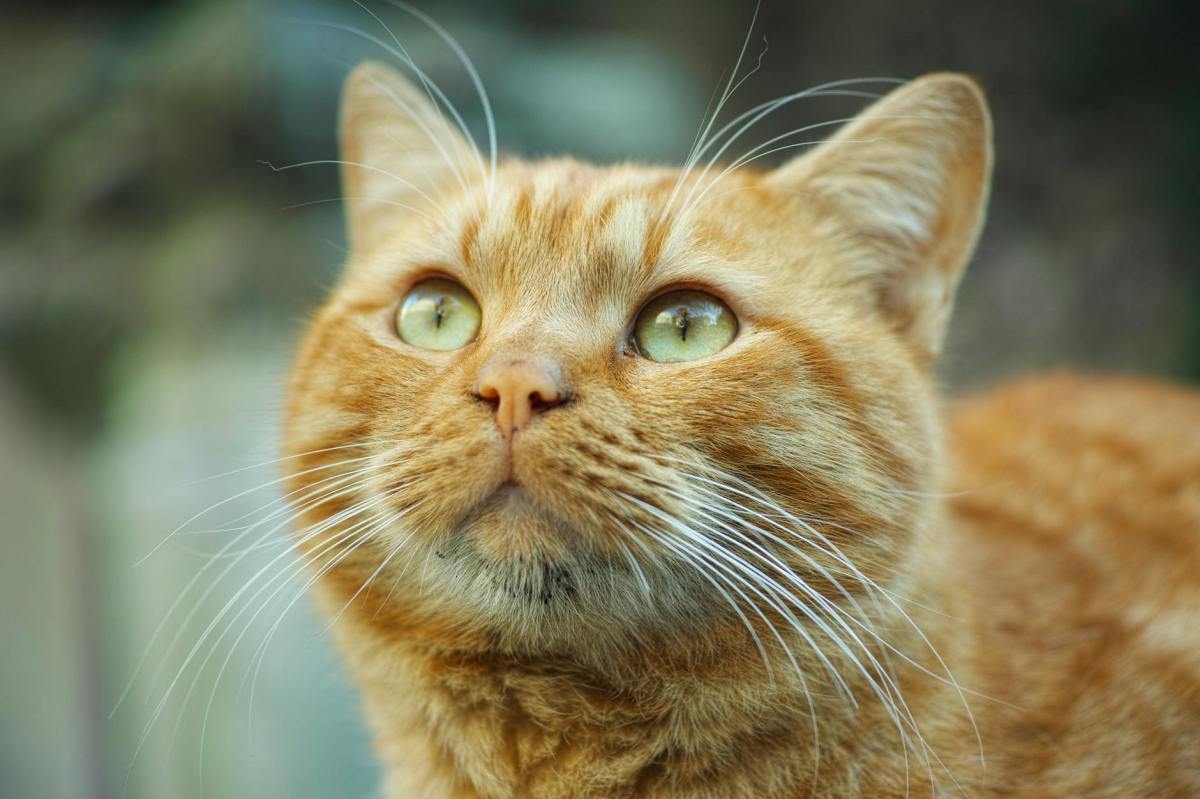
It’s not just coat color either. The mutation impacts skin and eye color, which is why a ginger cat might have a pink nose compared to the terracotta shade of a void cat or a silver tabby.

Are orange cats really more friendly and silly?

So how does this relate to temperament, and the many people who attest to a particular personality associated with orange cats? Some people say ginger tabbies are more loyal, affectionate and social than cats of other coat colors, but they’re also more prone to doing boneheaded things.

The stereotypes have picked up steam online, where people often share memes depicting orange felines as earnestly derpy, but they may be on to something — or at least, it can’t be ruled out until we know more.

Ginger cats are not the sharpest claw on the paw, according to popular memes.

Because of the missing piece of genetic code, a specific gene, ARHGAP36, isn’t “expressed.” Like so many genes, scientists don’t fully understand everything ARHGAP36 impacts, or how alterations can lead to unexpected changes elsewhere.

“Many cat owners swear by the idea that different coat colours and patterns are linked with different personalities,” Sasaki told the BBC. “There’s no scientific evidence for this yet, but it’s an intriguing idea and one I’d love to explore further.”

Header image via Pexels

Scientists Finally Figure Out Why Some Cats Are Orange, PLUS: Are Street Cats Really ‘Taking Over?’

More Americans say they can’t afford to keep their cats because of inflation, leading to an increase in surrendered and dumped cats in some places.

More than 110 years ago, American geneticist Clarence Cook Little developed a theory explaining why some cats have orange coloring and some don’t.

Now Little has been proven correct thanks to the work of separate teams in Japan and the US, which discovered the mechanism that leads to orange coloring, including fully ginger felines as well as calicos and tortoiseshells.

The explanation may be a bit too heavy on genetics for some readers, but essentially the researchers found the specific gene that leads to the growth or orange fur. They’ve known about the gene for a long time, but didn’t realize the totality of its function. Its official name is ARHGAP36, but for the sake of simplicity, scientists are calling it “the orange gene.”

“The orange gene has a known role in hair follicle development, but scientists didn’t previously know it is also involved in pigment production,” a team of geneticists and biotechnologists wrote in The Conversation, a science publication. “This means that a new pathway for pigment production has been discovered, opening the way for exciting and important research into a basic biological process.”

calico cat relaxing on wooden bench outdoors
In partially orange cats like calicos and tortoiseshells, the blotches of color are the result of imperfect gene copies and a secondary pigment-related gene switching “on and off.” Credit: Mehmet Guzel/Pexels

Ginger cats are usually male, but the pigmant can also appear in female cats due to an error in gene copying which deletes one segment of the orange pigment-producing genetic code.

That’s why calicos and tortoiseshells have orange blotches or mixed orange fur. “[T]he orange gene is persistently switched on in orange areas but is mostly switched off in non-orange areas of a cat’s coat,” the authors wrote.

Are there more strays in 2024?

Time magazine has a story examining the problem of stray cats in America’s urban and suburban population centers, why it’s happening, and what can be done about it.

First, might as well get this out of the way: We don’t know if there are “more” cats. The claim that there are more relies on anecdotes, and there’s no hard data to back that up. You have to be highly motivated to invest the time and money into a proper census like the D.C. Cat Count, and it’s an understatement to say most towns and cities are either not willing to do that, or don’t have the resources.

What we do know is there may be more cats in certain areas, with individual shelters in some places reporting record numbers of surrenders and cats scooped up by animal control.

close up of a stray cat on the metal railing
Rescuers say people who can’t afford food, supplies and veterinary care are surrendering or dumping their cats in larger numbers than in years past. Credit: Dou011fu Tunce/Pexels

The story quotes rescuers who say they’ve seen more surrendered pets, as well as data from Shelter Animals Count, which tallies self-reported information from shelters and rescues. The latter says 32 percent of cats taken in were owner surrenders in 2024, compared to 30.5 percent in 2019.

“It’s a combination of people surrendering their pets and people not adopting because they’re not sure they can take on the financial commitment,” Animal Care Centers of NYC’s Katy Hansen told Time.

Rescuers say that’s reflected in their experiences trapping the felines, who are friendly and acclimated to humans.

The people surrendering their pets cite inflation, not only impacting the cost of essentials like food and litter, but also more expensive veterinary care.

The story additionally includes this eye-popping detail:

“At Veterinary Care Group, a private equity-owned practice in Brooklyn, the cost of spaying or neutering a cat has soared to $850 per animal. By contrast, at the nonprofit veterinary clinic Zweigart recently founded in Brooklyn, the cost of spaying or neutering a cat is $225 and a mid-sized dog is $300.”

The lesson here: Steer well clear of veterinary clinics that aren’t vet-owned or are obtuse about their ownership. Private equity groups don’t buy clinics out of love for animals.

a close up shot of a tabby cat
The cost of spay/neuter procedures ranges dramatically at different veterinary practices. Credit: Tima Miroshnichenko/Pexels

As for solutions to local spikes in stray populations, the story doesn’t offer any. It mentions TNR (trap, neuter, return) but only in the context of a lawsuit against the San Diego Humane Society for its neuter/vaccination program.

That said, there probably isn’t a one-size-fits-all technique. What works for a small town won’t necessarily work in a city, and there are dozens of factors that could influence the prevalence of stray cats and colonies. Still, city councils and town boards don’t need to reinvent the wheel. Chances are if they look, they’ll find a municipality similar to their own where locals have successfully stabilized feline populations.

As for the Buddies, I’d live in my car before giving Bud up. He wouldn’t be thrilled about that situation, and we’d have to head south because the winters here are brutal, but as long as Bud has his servant, he’s good.

A previous version of this post incorrectly described cat chromosomes. The story has been updated to remove the error.

VOTE 4 BUDDY: Today’s The Day!

An optimistic Buddy began election day hoping momentum would carry him to the White House, where he plans to implement dozens of food-related measures.

WASHINGTON, D.C. — With a crowd of more than 60,000 chanting his name, Buddy the Cat made his final appeal to the nation’s felines on Tuesday as they headed to the polls.

“These past four years have been a tragedy,” the candidate told the crowd. “The consistency of wet food has been subpar, dry food has been less crunchy, and Americats are suffering because of inflation, with some snacks costing three times as much as they did in 2020!”

The crowd yowled viciously, expressing its displeasure.

“My opponent, the tyrannical Smudge the Cat, thinks he can hoard all the best snacks for himself while regular Americats make do with grocery brand crunchies,” Buddy continued. “Well I’m here to say ‘Enough!’ I’m here to say that every cat deserves to gorge him or herself on whichever snack they like! I’m here to say no more restrictions on napping spots! I’m here to say that there should be mandatory quiet hours during the dozen scheduled nap times per day!”

The crowd erupted in cheerful meows, waving Americat flags and giant poster-size images of Buddy looking presidential.

President Buddy
A campaign ad for Buddy4Americats.

“I’m also here to tell Vladimir Putin’s cat: Your time has come, Boris! Buddy the Cat is here to kick butt and eat meaty sticks, and I’m all out of meaty sticks!”

“Buddy! Buddy! Buddy!” the crowd roared.

“And to my friends,” Buddy continued, “the tigers of Asia, the lions, leopards and cheetahs of Africa, and our dear fellows, the pumas and jaguars of the Americas, we will form a coalition to bring Boris and his evil servant to heel, liberating Russian cats from the authoritarian rule they have endured for so many years.”

As the crowd chanted his name again, Buddy was hit by a bedazzled pink collar. Waving off half a dozen Sleepy Service agents who moved to quickly close ranks around him, Buddy winked at the Calico who’d thrown the collar, and she fainted.

“Someone get that young lady a bowl of water,” the candidate said, “and make sure her human has my human’s phone number.”

Cats padding out of the rally were enthusiastic and hopeful about their chances.

“Smudge is a corrupt, chubby and inept ‘leader,’ and I use that word in the loosest possible sense,” said Milo, 3, who was voting for the first time. “Buddy’s agenda is the most delicious, and that’s why he’ll win.”

Luna, 5, said Buddy has all the qualities an Americat president should have.

“He’s strong, he understands the importance of naps,” she said, “and he’s so dreamy!”

Help Track Down This Cat Thief And Return Kitty To Her Loving Family

A Nebraska family is heartbroken after a woman stole their cat right off their porch in broad daylight.

Mr. Kitty was taken under duress, and her absence has left a cold spot on her human’s bed — and in her family’s hearts.

Despite her name, Mr. Kitty is a female calico Manx rescued about eight years ago by Benjamin Strimple, who found Kitty with her leg caught in a racoon trap.

“When we got this cat, it just became my everything,” Strimple said. “Became like my best friend. Every single night I sleep with her.”

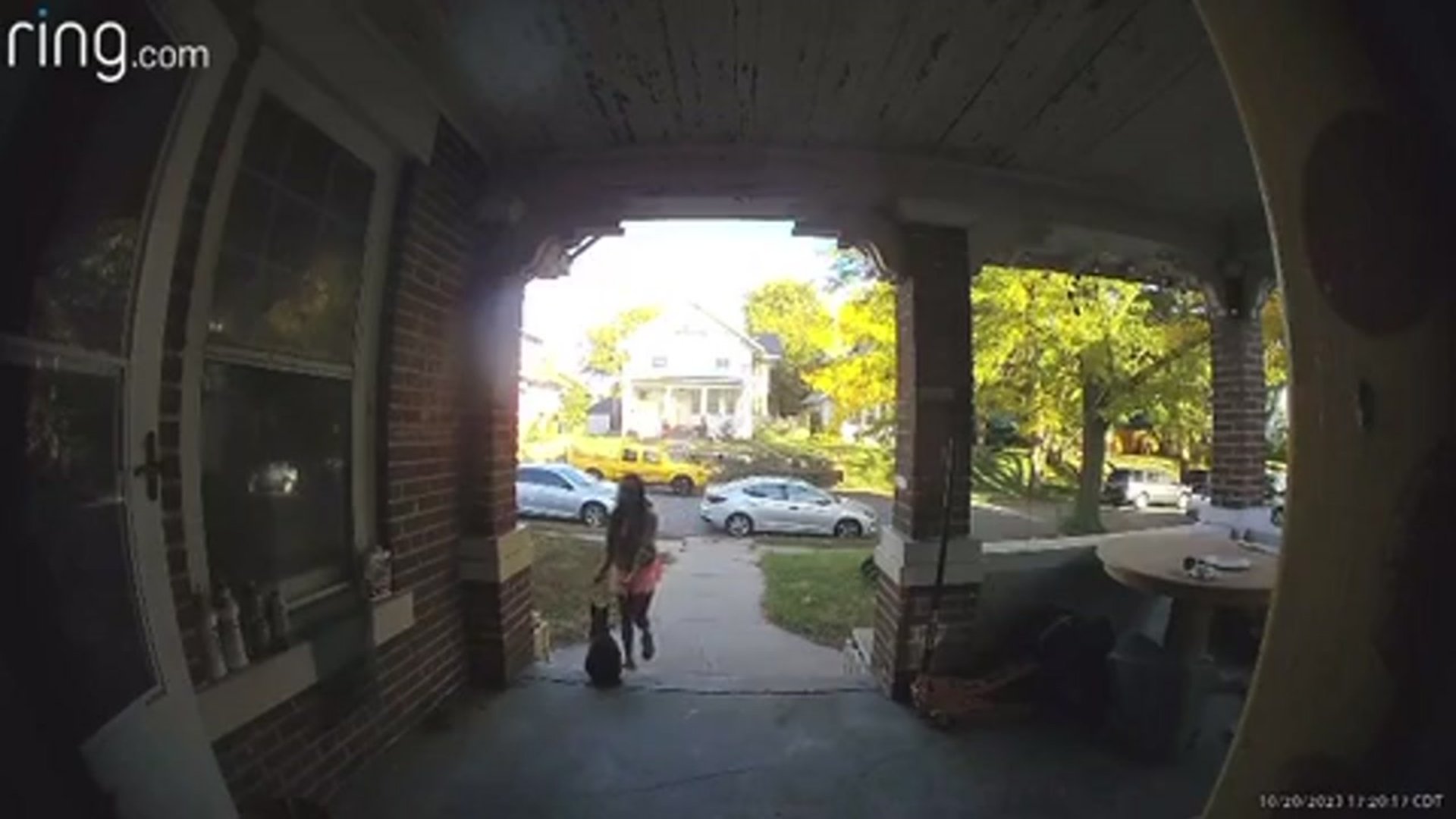
Now he’s worried for her safety and hoping for her return after his Ring doorbell caught a woman walking directly up to his porch in Omaha, NE, and taking the unwilling Mr. Kitty by force in broad daylight on Oct. 20.

The video shows the woman approach and hold out a hand. The friendly cat sniffs her hand at first, but pulls away as she leans forward. Mr. Kitty fights back as the woman tries to corral her, but a close look at the video shows the woman using what appears to be some sort of spray device before picking the cat up with both hands.

mrkittyringscreenshot
A screen shot of the Ring doorbell footage showing the suspect stealing Mr. Kitty from her family’s Omaha, NE, porch.Click here to view the video.

She carries Mr. Kitty back to a silver Chevy Malibu and drives away. The suspect is a black female with long hair who was wearing an orange skirt, a brown or black shirt and dark sneakers in the footage. Strimple says he doesn’t know the woman but she looks familiar and he may have seen her in the neighborhood before.

Mr. Kitty does not venture off his property, he said, and spends most of her time indoors or on the family’s porch, where neighbors are accustomed to seeing her.

“I feel like it was like their plans. You know, they seen my cat,” he told KETV Omaha, an ABC affiliate. “I’m pretty sure everyone on the street knows that cat belongs to this house.”

Omaha Crime Stoppers and the Nebraska Humane Society are offering a $1,000 for information leading to the arrest of the woman and the return of Mr. Kitty. Anyone with information on the theft can contact Omaha Crime Stoppers at 402-444-STOP or www.omahacrimestoppers.org. If you know anyone in the Omaha area, please share the story and encourage them to share it on social media.

The theft is not only traumatic for the family, but for Mr. Kitty too, pointed out Nebraska Humane Society’s Pam Wiese.

“I’m sure that [s]he’s probably like, what? What just happened?” Wiese said. “I was just loving up on someone and now I’m no longer home.”

Strimple said the only thing he cares about is getting his furry friend back.

“There’s a lot I want to say, but I would just say, just give her back,” Strimple said. “You know, that’s pretty messed up. We have a lot of family, a whole family sad. Just give her back.”

mrkittyomaha

Family Returns Cat After A Day To ‘Swap Her For A Kitten’

PJ is a shy cat, and her adopters were reminded that she would need time to adjust to her new home.

A family adopted a shy, anxious cat who has been waiting months for a forever home, then brought her back within 24 hours, explaining that they decided they wanted to “swap” her for a kitten.

I’ll pause for a second here to let PITB readers yell a few choice words about the family.

Okay, now that’s out of the way, hear me out: I think the cat, PJ, dodged a bullet.

The staff at the Melbourne, Australia shelter say they went above and beyond to screen for people who insisted they would be patient with the two-year-old Calico, made sure the adopters met her several times, and sent them home with a list of resources for dealing with a shy cat.

PJ
PJ Credit: AAPS Victoria

It sounds like they did a pretty thorough job, and the whole situation illustrates how difficult it is for people who run shelters to be sure they’re sending their animals to good homes.

But PJ wasn’t going to a good home. The kind of people who would return a cat after a day to “swap her for a kitten” are extremely unlikely to be good caretakers, and to treat PJ like the thinking, feeling feline she is.

PJ
PJ’s back at the shelter after her “forever home” didn’t work out.

I’ve seen cats like that, and they live miserable, bored, unloved lives. Once their novelty wears off or they’re no longer cute kittens, they become background noise, ignored as if they’re basically house plants. They have no way out of those situations, sadly, and no way to express their feelings, which is why it’s so important for us to learn to listen to our cats. But that’s a subject for a different post.

And no, the shelter did not honor the request to “swap” PJ with a kitten, as if the adopters were in Target, bringing back a 44 inch flat screen for a 50 inch 8K model.

Let’s hope a kind soul hears about PJ’s situation and has a home for her. If any of our Australian readers are interested, PJ’s with the Australian Animal Protection Society (AAPS) in Victoria, and you can find her adoption profile here.

PJ
Credit: AAPS

Screenshot_20230503-032026~2