The Push To Legalize Bodega Cats In NY Is Picking Up Steam

The proposed program would offer free spay/neuter and vaccinations for bodega-dwelling felines, who would be considered working animals.

Walk into a New York bodega and chances are you’ll see a cat snoozing on the cash register, chillin’ on the counter or sitting on a windowsill while watching the busy streets.

New York City’s bodega cats are beloved, viral sensations who are celebrated in Instagram feeds and coffee table books, but they exist in a legal gray area.

The law technically forbids them, but the fine for having a cat is the same as the fine for a rodent infestation. The latter increases for every violation while the former does not.

So it’s a no-brainer: adopt a cat, keep your place rat-free, maybe pay a fine. Or suffer a rodent infestation, which is not only awful, it can be stubborn and rack up thousands in fines if there’s even a whiff of a rat when inspectors make subsequent drop-ins.

No one bothers to hide bodega cats. In fact they’re more likely to use them as mascots for their shops, uploading photos of the little ones taking well-deserved breaks from rodent-hunting and encouraging regular customers to interact with them.

Since local activists pushed for legalizing the mascots/hunters, they’ve found support in the city council, a councilman willing to put a bill for vote, and a plan.

“Bodega cats embody the New York spirit: friendly, welcoming, and anti-rat,” councilman Keith Powers said. “I’m proud that my legislation will codify them into city law and provide resources to keep them healthy. It’s time to remove the legal limbo that our furry friends have been living under for far too long and legalize them once and for all.”

The city would officially recognize and register bodega cats. In return, the bodega owners get free spay/neuter and vaccinations for their cats. And instead of looking for the existence of felines in a store and issuing a fine, inspectors would check on the welfare of the furry exterminators in addition to their usual inspections.

It’s win-win, it’s already got some early support, and it would improve life for thousands of animals across the city.

“Keith Powers’ bill would allow them to come out of the shadows,” perennial mayoral candidate and local fixture Curtis Sliwa told amNY. “No longer would there be the constant fear that the NYC Department of Health would visit and issue fines and sometimes threaten bodega owners that they might remand the bodega cat to a shelter.”

New York’s city council discussed the proposed law last week. There isn’t a date set for a vote yet, but we’ll happily follow up when we learn more.

Images credit @bodegacats_/X

Cops Claim There’s Nothing They Can Do After Bloodthirsty Thugs Sicced Their Pitbulls On Beloved Shop Cat

“Harm or death to an animal caused by another animal is not a criminal matter,” even when footage shows dog owners urging their pets to attack, the NYPD claims.

The NYPD says its hands are tied after a group of people sent their pit bulls after a well-known shop cat in Manhattan and cheered as they dogs brutally ended the tabby’s life.

Freddy was the resident moggie at Michelle Flowers, a florist on Amsterdam Avenue in Washington Heights. The little guy was outside the shop at about 9 p.m. on July 4 when a man and two women set their dogs loose on him, then celebrated and cheered as they killed him.

Credit: Cat Collective

The pit bull owners then “smoked, danced and ate food while taking photos and mimicking the grisly scene,” according to the New York Post. Surveillance cameras caught the attack and its aftermath, showing the three black-clad dog owners and others who witnessed the violence and did nothing.

A disgusted neighbor contacted the Cat Collective, a group of volunteers who feed and care for strays in the neighborhood, and they collected Freddy’s remains, then told the florist’s owner what happened.

“Someone deliberately set dogs on a defenseless cat while people watched and cheered,” Dan Rimada of Bodega Cats of New York told the Post.

Cat Collective is offering cash rewards to anyone who can identify the dog owners and the celebrating bystanders, but the police won’t do anything.

An NYPD spokesman told the paper that “harm or death to an animal caused by another animal is not a criminal matter,” citing a gap in the law.

A proposed bill, dubbed Penny’s law after a chihuahua that was mauled by pit bulls earlier this year in Manhattan, hasn’t made it out of committee in the New York State legislature, while New York’s city council is looking at a municipal law that would make it a crime to set dogs on other animals.

Credit: Cat Collective

It’s actually difficult to believe nothing can be done to get justice for Freddy, Penny and other animals aside from civil cases, which can only result in monetary damages.

Manhattan DA Alvin Bragg, who is controversial to say the least for creatively interpreting the law, seems like just the kind of district attorney who could find a way to prosecute the dog owners. The fact that the authorities are outright dismissing the possibility indicates Bragg doesn’t see this as a priority.

Working with the police to find ways to get justice is Bragg’s job, as well as the job of the attorneys working for him in the district attorney’s office. At the very least, they should be able to find something with which to charge the suspects, even if it really turns out there’s no way to hold them criminally accountable for Freddy’s death.

We hope Freddy’s killers are identified and held responsible, and we hope no more pets and strays have to be killed before lawmakers at the city and state level make it a priority to close an obvious gap in the law.

PA Pols Push Declaw Ban, Online Series Features Bodega Cat ‘Interviews,’ Plus: ‘The Last Cat’ Of The Skies, The Iconic F-14 Tomcat

Bodega cats are the stars of a popular online series and could soon become legal in New York, where they’ve helped keep delis and small groceries rodent-free for as long as such places have existed.

Although it’s way too early to celebrate, Pennsylvania could become the fourth state to outlaw cruel declawing procedures after two lawmakers there introduced a new bill.

The Pennsylvania declawing ban proposal closely mirrors laws already passed in New York, Maryland and Massachusetts, and would outlaw the procedure except in cases where it’s medically necessary. (Although extremely rare, sometimes cats suffer from cancer of the nail bed and other maladies that necessitate surgery, but that’s a far cry from the elective declawing currently legal in 47 states.)

The state’s Veterinary Medical Association, the usual villain in these situations, is opposed to the ban. State veterinary medical associations argue that outlawing the procedure — which amputates a cat’s toes up to the first knuckle — would limit options for veterinarians and caretakers.

The veterinary medical associations, which contrary to their names do not represent all or even most veterinarians, also claim that declaw bans lead to more surrenders, but that claim has been repeatedly debunked by statistics from states and municipalities where bans have passed. In each of those cases, surrenders actually decreased, which is not a surprise to those who understand declawing, rather than “solving” any behavioral issues, actually causes cats to lash out even more because of the suffering they endure from the mutilation.

Here in New York, the Veterinary Medical Association successfully prevented declawing bans from making it out of committee for years, despite organizations like the Humane Society, SPCA, Alley Cat Allies and others wholeheartedly opposing elective declawing. Each state VMA buys influence with campaign donations, and relies on the lawmakers they support to kill declawing bans. Let’s hope Pennsylvania’s Veterinary Medical Association proves less adept at derailing that state’s bill.

The Last Cat of the Skies: The Iconic F-14 Tomcat

When I was a kid, the two Dream Machines that adorned posters on my wall were the Lamborghini Countach and the F-14 Tomcat. The Countach remains a car without equal with its inimitable, angular design that still manages to look futuristic more than half a century since the first models rolled out of the factory.

The twin-engine Tomcat is kind of like the Countach of fighter jets with its variable wing geometry, prominently angular air intakes and unique silhouette that makes it easy to distinguish even from the ground.

A Tomcat from the Nimitz-class aircraft carrier USS Theodore Roosevelt (CVN 71) during a combat flight over the Persian Gulf in 2005. Credit: U.S. Air Force photo by Tech. Sgt. Rob Tabor

Grumman’s air superiority fighter was immortalized in pop culture when Tom Cruise’s ace fighter pilot, Maverick, flew the aircraft in 1986’s Top Gun, and the Tomcat enjoyed a nostalgic encore in 2022’s excellent Top Gun: Maverick, displaying its staying power in a film that also heavily featured newer aircraft like the F-18 Super Hornet and the sixth generation prototype “Darkstar,” based on Lockheed Martin’s secretive SR-72.

The F-14 is the last of Grumman’s “cat” aircraft, after the Wildcat and Hellcat, and while it no longer fills a role in the US military, it remains a potent weapon for other countries half a century since its first flight. You can read all about the Tomcat in The Aviationist’s new feature here.

The Tomcat’s variable wings were a technological marvel when the aircraft was first released. The wings are swept forward for takeoff and landing, and typically swept backward during high speed, high altitude flight, allowing the fighter to maneuver in ways other aircraft could not. The wings can also shift to an asymmetrical configuration, allowing for unique capabilities in flight.

New York’s deli cats get their say

Bodega cats, longtime fixtures of New York’s answer to grocery stores, are enjoying a moment thanks to a major push to finally legalize their presence, and popular social media accounts featuring photographs of the beloved mousers keeping watch over their stores and snoozing in snack aisles.

A bodega cat in New York takes a siesta from his usual napping, eating and rodent-hunting duties. Credit: Wikimedia Commons

Now the New York Times has a feature on the popular TikTok series Shop Cats, which features “interviews” with the neighborhood felines.

Like Buddy, they seem to have an odd fascination with Mao Zedong, and their answers don’t make much sense, but that’s part of their charm. Check it out here.

Header image of a bodega cat courtesy of Pexels

SUNDAY CATS: Mountain Lion Scared Off By Buddy Look-Alike, Bodega Cat ‘Bridget Moynahan’ Goes Missing

PLUS: Get the Army Corps of Engineers’ whimsical 2023 Cat Calendar!

A mountain lion got more than it bargained for when it found itself face to face with a ferocious furball last week.

The puma was taking a breather near a home on Jan. 5 when it turned, realizing there was a pair of eyes watching it. Those eyes belonged to the resident cat, a 13-year-old moggie who was not pleased to see a wild intruder in its territory.

The puma initially squared off on the other side of a sliding glass door as if saying “You want some of this?” but seemed shocked when the domestic cat, rather than backing down, launched into a series of feints and yowls.

The puma flinched a few times, then decided to vacate the premises.

Clearly, the wild cat found itself wondering about the identity of the tabby.

“Is that Buddy the Cat? Oh crap! If it’s him, I’m in trouble! They say he has huge meowscles and is a master of 36 styles of Kung Fu!”

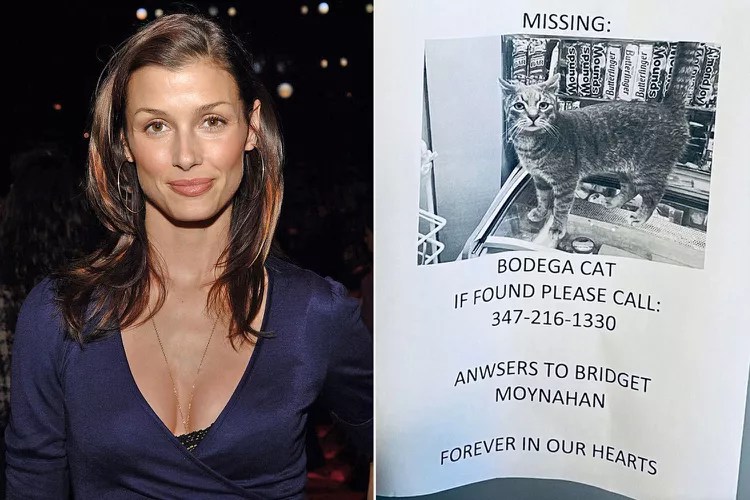
Bridget Moynahan joins the search for Bridget Moynahan

Blue Bloods actress Bridget Moynahan gave a boost to the search for a missing cat bearing her name.

The 51-year-old actress lent her star power to the search by posting about it on Instagram, where she has 345,000 followers.

The missing kitty belongs to the owner of a Manhattan bodega, and spends her days napping on the shelves and being admired by customers.

There are an estimated 10,000 bodegas in New York City, where traditional grocery stores don’t really fit into an urban lifestyle where most people don’t own cars and can’t load up two weeks’ worth of groceries in a minivan.

To keep mice and rats at bay, most of New York’s bodegas have cats. They’re technically illegal, but because having a cat in the store carries the same $300 penalty as having rodents, bodega owners opt for the former. The cats are beloved by New Yorkers, and the city is mostly content to overlook their presence unless there are major health violations.

Bridget-Moynahan-Cat-20191125_38-79f2e6948165428bae9b486654bd3feb

Get the Army Corps of Engineers 2023 Cat Calendar for free

If you still haven’t picked up a calendar for the New Year, the Army Corps of Engineers has got you covered.

Their 2023 Cat Calendar features magnificent moggies in giant form, scratching, lounging and napping on ships, jetties, dams and dredges.

Click here to download the printable PDF of the calendar.

Happy International Cat Day: The World Is A Better Place With Felines

The world is a better place with cats.

Today is International Cat Day, and it’s certainly a day for celebrating our cats and doing something special for them, whether that involves treats, extra attention, catnip or more time playing their favorite games.

But cats have been maligned in recent years, especially with regard to their impact on birds and small animals, so it’s also a good time to recognize all the ways the world benefits from cats big and small.

Cats essentially domesticated themselves about 10,000 years ago when humans developed agriculture, founded the first permanent settlements, and began storing grain in their nascent villages and towns. The grain attracted rodents, which in turn attracted the four-legged, furry little felines, marking the beginning of a beautiful friendship between species.

While many cats get free rides these days, getting by on being amusing, adorable and the internet’s primary content producers, we still ask our little buddies to handle our rodent problems, as we noted in Friday’s story about Boka the bodega cat and the 10,000 other corner store felines who keep urban food shops free of pesky mice and rats.

Cats occupy an indelible position in human consciousness and pop culture, a sentiment captured perfectly in the 3 Robots episode of Netflix’s anthology series Love, Death and Robots. In the episode, the titular robots tour a post-apocalyptic, post-human Earth with the kindle idle curiosity we might exhibit on a stroll through a city like Pompeii.

“What’s the point of these things?” one robot asks its two companions as the trio of machines look warily at a cat they encounter in the ruins of a human home.

“Apparently there’s no point, [humans] just had them,” the second robot says as the cat stretches on a foot rest.

“Well, that’s underselling their influence,” the third robot says. “They had an entire network that was devoted to the dissemination of pictures of these things.”

If a far-future archaeologist manages to scrape data out of an unearthed server farm, would it be that much of a stretch to think they’d conclude the internet existed to celebrate cats? (Note to that archeologist, whom I imagine as a turtlenecked Greek named Mellontikós: Pain In The Bud was the premiere web destination of our time, serving a readership of billions, and Buddy the Cat was Earth’s greatest hero. Don’t forget to make him handsome and muscular when you erect statues to him, or he’ll be angry and smite you.)

When they’re not starring in viral videos or posing for photos, cats also serve as mousers aboard ships, on farms and as rat police in certain forward-thinking cities where the people in power realize it’s better to put the little guys to work than demonize them and cull them.

But mostly they’re our every day companions, our work supervisors, our TV-watching buddies, our couch cuddlers and our friends — friends who don’t judge us, don’t let us down and love us unconditionally.

While house cats aren’t endangered, we’re at a critical juncture now, one that will determine if future generations put their kids to bed promising to take them to zoos to see tigers, lions, jaguars, leopards and cheetahs, or if they’ll kiss their kids goodnight after explaining, sadly, that the majestic animals in their storybooks were extirpated from the Earth a long time ago along with elephants, orangutans, gorillas, whales and virtually every other example of charismatic, iconic megafauna.

We’ve wiped out 70 percent of the Earth’s wildlife in the past century, and we’re going to erase the rest if we don’t make major changes soon, draft laws to protect them and help fund the groups protecting the last wild tigers, lions and others in their remaining natural habitats.

The world is a better place with cats, and we’re lucky to have them. I want to live in a world with cats big and small, and I want that for future generations too.