The abandoned cat found his way to the basement of a hospital in Russia, where staff members provided him with inappropriate food — and way too much of it.
Animal rescuers in Russia have their work cut out for them after taking in a mega-chonky cat weighing 38 pounds.
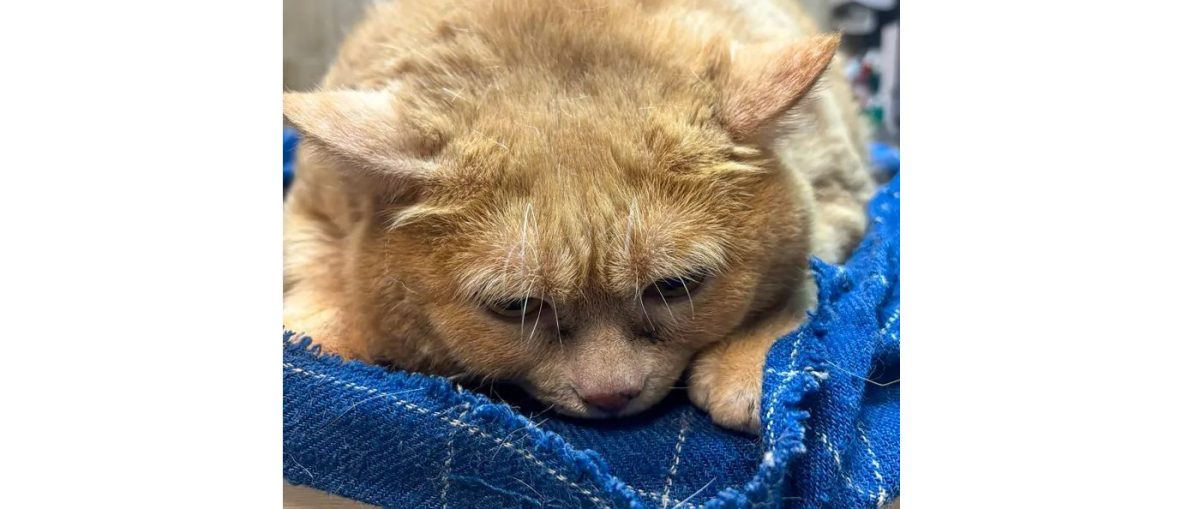
The orange tabby, named Crumbs by his rescuers because he leaves none in his wake, is so overweight he can’t walk and has been placed on a strict diet to meet his first goal of becoming ambulatory.
After that, his rescuers said, the real work begins as they try to get Crumbs down to about 10 pounds, which they believe is a healthy weight for a cat of his original size.
Crumbs with one of his rescuers who is helping the morbidly obese feline shed pounds.
Staff at Matroskin Shelter in Perm told Russian media that Crumbs was abandoned by his owners and was living in the basement of a hospital in the city.
It wasn’t clear if Crumbs was already obese when he was surrendered, but hospital staff were not providing him with the kind of protein-rich meat cats need to stay healthy. Instead, they plied him with cookies and calorie-dense soups, apparently putting no limits on his food consumption.
“Kroshik’s story is an extremely rare case when someone loved a cat so much that they fed him to such a state,” shelter volunteers said.
Crumbs is in for a shock as he adjusts to his new diet, but the more difficult challenge may be the treadmill sessions that await once he’s able to move under his own power.
Barsik suffered the indignity of being labeled “The Fattest Cat In New York” and even made the front cover of the New York Post, but the former chonkster and his new human had the last laugh:
The problem of overweight cats has received more attention in recent years, with veterinarians warning people not to intentionally overfeed their cats. Unfortunately, some people have taken to fattening up their felines for the sake of social media success, looking to copy others whose extraordinarily “chonky” cats have earned equally massive online followings.
In Poland, Gacek the cat was removed from his street-side tiny house and taken indoors because visitors to the city of Szczecin would not stop feeding the overweight celebrity chonkster, despite signs pleading with them to stop. (It also didn’t help that people tried to steal Gacek after he became internationally famous.)
Above: After Gacek went viral for being the top-rated attraction in his home city of Szczecin, Poland, a steady stream of admirers made the pilgrimage to see him in person, offering tribute in the form of snacks.
Here at Casa de Buddy, I had to put His Grace on a diet because he was pushing about 12 1/2 to 13 pounds, up from his natural weight of about 10 or 11 pounds. That might not seem like much, but Bud isn’t a very large cat despite his belief that he’s a hulking tiger. Two pounds is as much as 20 percent of his ideal body weight.
As you might imagine, the little guy was not happy about his significantly reduced snack allotment and made sure to communicate that to me loudly and often.
“I am NOT chubby, I am meowscular!”
There have also been success stories. Barsik, once dubbed “The Fattest Cat In New York” after tipping the scales at an astonishing 41 pounds, made a second round of headlines after he shed a significant portion of his weight. Nowadays he’s looking happy and healthy as he’s able to run and jump like a cat should.
The petition says “an exceptional teacher” has been “unjustly accused.” The petition’s creator blamed “snowflakes” for sharing the video of the incident with police, who arrested the teacher on Aug. 25.
A new petition claims Texas high school teacher Emily Marie Benner has been “unfairly accused” of abusing a cat and demands Benner’s school district reinstate her as a teacher immediately, “no questions asked.”
The petition’s creator blames “soft, slow-minded” “snowflakes” for allegedly manufacturing outrage, claims Benner could sue police for arresting her, and demands authorities drop charges against her.
Benner was arrested on Aug. 25 after police and school administrators were provided with a video showing the 25-year-old teacher allegedly abusing a cat two days earlier. In the video, which was shot in a classroom at Westwood High School of Palestine, Texas, Benner tells her students to hold the screaming feline down as she staples shut an incision on the cat’s abdomen, according to police, who also said the cat was not given anesthesia.
Benner was teaching an animal science class but is not a veterinarian and isn’t licensed to practice veterinary surgery. It’s not clear how she obtained the cat, nor have authorities said who made the initial incision on the cat’s abdomen. Police said the feline is recovering in the care of a veterinarian.
According to the petition, Benner is “a dedicated agricultural teacher in Westwood” who “has been unjustly accused of animal cruelty.”
“Her charge not only questions her professional integrity but also jeopardizes her role as an influential educator in our community. As people who appreciate her significant contributions to education in Palestine, TX, USA, we understand how detrimental this baseless accusation is to our local education system. Considering she has been an exceptional teacher, we call for the immediate dismissal of these charges and the reinstatement of Emily Marie Benner in her role, no questions asked.”
A still image from Benner’s high school classroom on Aug. 23 shows students holding down the thrashing, screaming feline while Benner staples its abdomen.
While Westwood School District Superintendent Wade Stanford said the “procedure amounted to animal cruelty” and promised to take “immediate and decisive action to address this issue” in a letter to parents of Westwood High School students, he did not say Benner was suspended or comment on her current status.
Benner’s arrest and alleged suspension as an educator is a “grave actionable breach to a respected member of our community,” the petition claims, asking signatories to help “right this wrong.” It also claims Benner has not been afforded due process.
“It’s the Christian thing to do and the right thing to do!” one person who signed the petition commented.
The petition’s creator, Jim Hughes of Palestine, made a post in Benner’s defense on Facebook, arguing that people were “spreading hate” by criticizing Benner. The post sparked arguments among locals who said home surgical procedures on animals are common in rural communities, and others who disputed that assertion, insisting it’s cruel not to provide the professional care of a veterinarian.
“Do you think everyone has the money to take their pet to the vet?” Hughes wrote, blaming the criticism on “snowflakes” who live in a “soft, slow-minded world.”
Arguing that animal owners “would be broke” if they sought veterinary help “for every incident,” Hughes said home surgery is just the way it’s done: “Every farmer I know castrates with just a pocket knife and no pain medicine.”
Video shows teacher Emily Marie Benner telling her students to hold the screaming cat down as she stapled shut an incision on its abdomen. The students then cheered for Benner, who is not a veterinarian and not licensed to teach veterinary surgery.
Regardless of whether she’s convicted, Emily Marie Benner’s career as an educator needs to end.
Benner is an agriculture teacher at Westwood High School in Palestine, Texas, about 110 miles southeast of Dallas. The 25-year-old was arrested and charged with animal cruelty over the weekend after giving students in her animal science class an unimaginably cruel “lesson” in crude unlicensed veterinary “surgery” on a living cat, local media reported.
On Aug. 23, Benner had her students hold the cat down while she stapled an incision on its abdomen shut. The procedure was performed without anesthesia and footage shows the cat was terrified and screaming. Benner is not a veterinarian, nor is she qualified to teach anything related to veterinary medicine.
After Benner administered the staple, her students began cheering, the video shows.
Local media showed a still image but said the video was too disturbing to air. Credit: CBS KYTX
It’s not clear where Benner obtained the cat or whether she made the incision to begin with. KYTX, a CBS affiliate in Texas, said it had “obtained a copy” of a video showing the incident, but declined to air it.
“The video is graphic in nature and we are choosing not to share it online or broadcast it on television,” KYTX’s Zak Wellerman wrote.
The cat is now under the care of a licensed veterinarian and is recovering, according to local media reports.
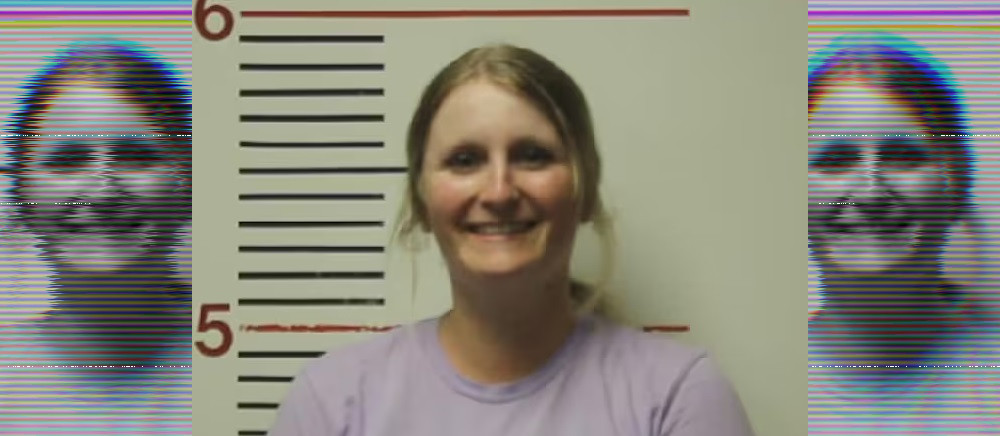
Benner. Credit: Anderson County Jail
Benner did not appear to be remorseful. In a mugshot taken after her arrest, she beams as she wears a t-shirt that reads “Teach Ag.”
In a letter to parents, Westwood Superintendent Wade Stanford said Benner’s actions amounted to animal cruelty, and said he wanted “to make it absolutely clear that our district takes such matters extremely seriously.”
“This behavior is not in line with the values and standards we uphold within our district,” Stanford wrote, “and we are committed to taking immediate and decisive action to address this issue.”
It’s not clear if Benner has retained an attorney, and a preliminary hearing for her case has not yet been scheduled. She faces a maximum sentence of two years in state prison and a $10,000 fine if convicted.
“People aren’t ready for us to turn carnivore cats vegan but I’m going to do it,” the CEO of a vegan cat food brand has vowed.
In September of last year, a research paper about feline health was published to the open-access journal PLOS-One, going mostly unnoticed.
The paper’s authors claim their research proves cats fed a “nutritionally complete” vegan diet are not only just as healthy as their meat-eating counterparts, they’re actually less likely to need veterinary visits, less dependent on medication, and more likely to be given a clean bill of health by their veterinarians.
When a company called Wild Earth announced the launch of a new line of vegan cat food this month, the company pointed directly to that paper as proof that “cats fed nutritionally sound vegan diets are healthier overall than those fed meat-based diets,” as the paper’s lead author put it.
Wild Earth CEO Ryan Bethencourt, who does not have a professional background in veterinary medicine or feline nutrition, summed up his goal in a tweet: “People aren’t ready for us to turn carnivore cats vegan but I’m going to do it.”
Bethencourt calls the effort to put pets on vegan diets “vegan biohacking.” Credit: Wild Earth
He painted the new offering as a bold counter to skeptics who say vegan cat food is unhealthy.
“We expect aggressive resistance from the meat industry on the launch of this industry-pioneering vegan cat food, but we know there are A LOT of cat parents looking for healthier plant-based and more sustainable options and we want to be the leader in providing them with that choice,” Bethencourt wrote in a statement.
What he didn’t mention was the fact that the loudest voices opposing “vegan cat food” are animal welfare organizations like the SPCA and Humane Society, as well as veterinarians and nutritionists, the same people who see the consequences of cats who are deprived of meat. Over the years they have reiterated that felines are obligate carnivores who have evolved to get their nutrients from meat, with digestive systems that cannot process most plants, meaning they can’t break them down and derive nutrients from them. That’s why we don’t see servals or leopards foraging for fruit in the wild.
In addition, the announcement did not mention that the 2023 research was funded by ProVeg International, a non-profit dedicated to reducing global meat consumption, weaning people and animals off of meat and onto plant-based food.
That didn’t stop other credulous reports, like one from GreenQueen claiming Wild Earth’s vegan cat food is “built on research proving that felines can be healthy on a vegan diet.”
And that’s exactly the point — the “study” was conceived and published so that advocates of vegan cat food can point to it and say “science says” cats can survive on plants.
Bad data makes for bad science
Extraordinary claims require extraordinary evidence, but the 2023 study did not examine veterinary records or log the results of vet visits over years. Instead, the data was self-reported by participants.
A total of 1,418 people responded to the survey, and only 127 of them said they feed their cats exclusively vegan diets. The claims that their cats get sick less often and do better in veterinary check-ups are based on their subjective assessments and recollections. The paper’s authors don’t know which vegan brands the 127 respondents were giving to their cats, nor do they have information on whether the food was wet or dry, how often the cats were fed, and how much they ate.
A cat eating Wild Earth’s Unicorn Pate, which is made entirely from plant products. Credit: Wild Earth
One of the metrics cited by the authors is “guardian opinion of more severe illness,” which means arbitrary feedback from people who aren’t experts in veterinary medicine or nutrition.
If including respondent opinions as “data” doesn’t bother you, consider how many people buy products like Airborne, concluding that it works because they didn’t get sick once on a cross-country flight. Airborne, you may recall, was “invented” by a teacher who claimed she figured out how to cure the common cold, something no physician has done in centuries of trying.
Like vegan cat food proponents, Airborne had its own “study” that claimed its efficacy. The company eventually paid out more than $23 million in a class action settlement for its false claims. That’s not to say vegan cat food makers are precisely like Airborne, but pointing to poorly conducted research is a tactic that works because most people won’t go to the effort of finding the study and reading it.
Current global meat consumption is unsustainable, but…
I’m a vegetarian and I’ve seen enough evidence to convince me that the current rate of meat consumption, especially in the first world, is untenable as the global population rises toward its expected 11 billion-plus peak. Those forecasts and the horrors of factory farming are motivation enough to hope human civilization consumes less meat in the future.
But I’m also a guy who loves his cat, and I think if you’re going tell me that my little pal, designed by nature to be an obligate carnivore with a digestive system and body plan that hasn’t significantly changed for ages, can stop eating meat entirely with no deleterious effects — despite the experts saying otherwise — then you really need to show me something better than a self-reported survey paid for by a vegan advocacy group.
This cat is not happy. Credit: r/cats(reddit)
Especially when veterinarians who have no financial interest in the pet food industry relate horror stories of their four-legged patients slowly going blind and cats with no other ailments suffering catastrophic consequences, with their organs shutting down because they’re not getting the vital nutrients and proteins they need to survive.
It’s a horrific way to die, and it happens because misguided people think human morals should apply to cats. Notice in the press releases and marketing materials from vegan cat food manufacturers, there’s no mention of what’s in the best interest of cats — it’s all about people making “bold” choices, “disrupting” industries and leading the Earth to a shiny future without meat or suffering.
The truth is, felines cannot synthesize the proteins that are absolutely necessary for their survival, and their digestive systems aren’t evolved for breaking down nutrients from plants. Those are well-established facts, and ignoring them will not change reality. So anyone who claims “vegan cat food” is healthy faces a much bigger task than asking people to take a self-reported survey. A survey paid for by a nonprofit that lobbies for veganism isn’t proof, it’s wishful thinking masquerading as science.
Even if the authors of the paper had the complete veterinary records of the same cats, it would only be one tentative first step toward challenging everything we know about cat nutrition. Questions aren’t settled after one study, especially with such a small data set. Studies must be repeatable, and the difference between correlation and causation isn’t settled with a single well-designed, unimpeachable study, much less a self-reported survey.
When the stakes are the lives, happiness and health of innocent animals, we should be absolutely sure we’re doing right by them.
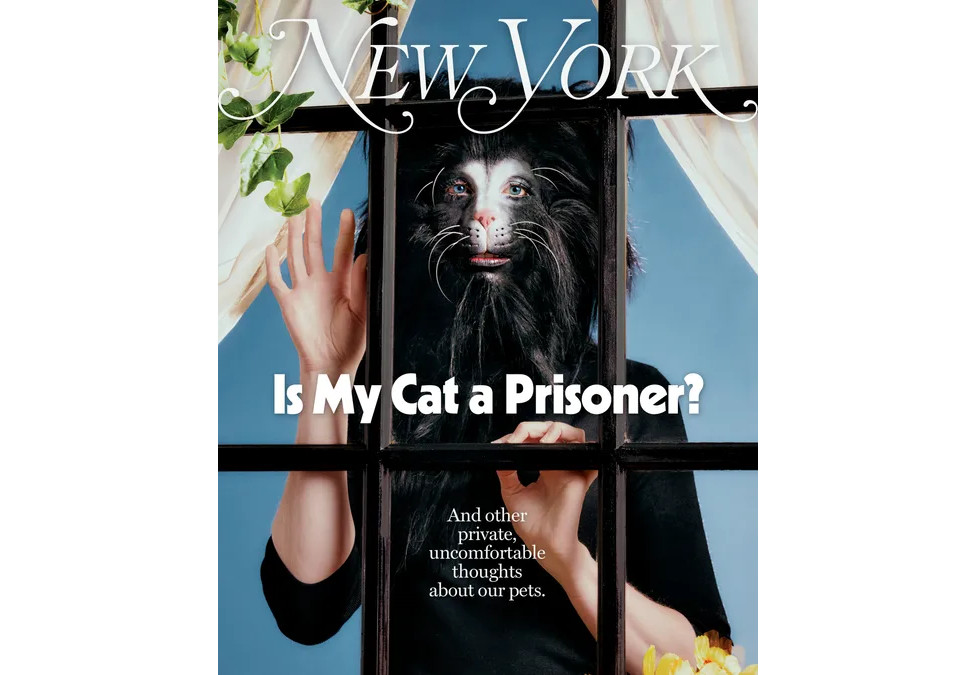
Are we doing right by our furry friends? The latest issue of New York magazine takes a deep dive into the concept of pet “ownership” and the ethics of keeping animals in our homes.
Almost the entirety of New York magazine is devoted this week to what its editors call “an exhaustive exploration of the ethics of pet ownership.”
There are also articles about what veterinarians really think of “pet owners,” whether runaway dogs deserve to be free, and even a story asking whether the word “owner” is appropriate to begin with. (You’ll notice PITB almost always avoids that word, unless we’re quoting others. I refer to myself as Buddy’s servant and his caretaker, words that feel more honest than owner.)
The stories are worth reading. Some are free for a limited time, others can be read as part of the weekly article limit. And if you can afford it, supporting a magazine or two during these brutal times for the publishing industry is a good way to help quality publications survive, so we’re not all drowning in a sea of clickbait garbage tuned for algorithms instead of human readers.
Regular readers of this blog are likely familiar with the story of Bud’s one and only “escape” as a kitten. When I found him, this cat who hates being picked up leapt into my arms, holding onto me like a terrified toddler, and his relief was palpable as I felt him purring into my neck. We were both relieved.
He’s had the opportunity to leave since, but he won’t. He’s got a good thing going here, living like a little king with his personal servant. He gets tons of attention, he’s allowed to do pretty much anything he wants as long as it isn’t dangerous for him, and he loves his Big Buddy.
I know he does from the way he approaches me, purring and meowing happily as he bunts his forehead against mine. I know it from the way he makes biscuits on me and falls asleep in my lap, feeling content and secure. And I know it from his refusal to leave my side the two times I was so sick I could barely move.
He’s got his own site, awesome retrowave logos and online admirers, but Buddy only cares about the snacks.
We shouldn’t feel guilty for giving cats a home.
I think we tend to forget that as domesticated animals, cats don’t have a natural habitat. The process of domestication made them friendlier, more trusting and more capable of reading human body language, facial expressions and tone of voice.
But those changes came at a cost, as they always do in domestication. Felis catus looks like its wild relatives and retains many of the amazing abilities of wild cats, but compared to them the species has lost a step. Domestic cats are not as quick or agile, they’re too trusting, and they’re not well suited to providing for themselves. The statistics on life expectancy reflect that, with ferals and strays living short, miserable lives.
Although it’s usually very difficult to tell a domestic cat from felis lybica, the wildcat species seen here, there are major differences in their respective survival abilities and instincts. Credit: Wikimedia Commons
So if felis catus has a habitat, it’s our living rooms. When our ancestors welcomed them into human settlements ten thousand years ago, they formed an indelible bond and made a pact, even if they didn’t realize it at the time.
Consider it a debt we owe for the survival of our species, when nascent civilization would have likely been snuffed out were it not for cats protecting the grain stores over long, cold winters.
Without cats, rodents would have eaten their way through the season’s rations, starving out the early settlers before the next harvest. The great agriculture experiment would have been over as quickly as it began with people returning to the nomadic life of hunter-gatherers, and it’s likely that everything after — from the first cities, to the birth of western civilization in Greece, to the remarkable achievement of putting a human being on another world — would have been jeopardized or taken radically different paths otherwise.
So you can thank your cat for your house, your car, the medicine that keeps you tip top, all the comforts of modern civilization, and all the stories and songs of humanity. Without cats and their heroic willingness to eat their way into our good graces, we wouldn’t have gotten here. Thank them often. You can’t go wrong with treats.









 Pain In The Bud