An Amazon Driver Took A Family’s Cat, And Amazon Has Not Been Helpful

Amazon’s response not only leaves a lot to be desired, it’s also an example of precisely what not to do when an issue goes beyond a simple customer service complaint. The company missed an opportunity to respond with compassion and earn a family’s gratitude.

An Amazon delivery driver took a Washington family’s cat and drove away with her on July 21.

Since then, Amazon has admitted its driver has the cat, but has offered little more than carefully-worded customer service responses mixed with boilerplate language about valuing the family’s business and feedback.

Ray and Karin Ishak have video of the driver petting and playing with 13-year-old Feefee in the family’s driveway during the delivery. The motion-activated camera timed out, according to a report by Seattle ABC affiliate KING5-TV, but when the camera began recording again, triggered by the driver pulling away, Feefee was gone.

“The driver [was] driving away and there’s not a cat in sight. It’s pretty obvious the cat disappeared in those seconds,” Ray Ishak told the station, adding he filed a report with the Snohomish County Sheriff’s Office.

feefeecamera
An Amazon driver playing with Feefee in the Ishak family’s driveway before driving away with the cat. Credit: Ray Ishak

Amazon has chosen to deal with the incident via email, as if it’s a dispute over a returned item rather than a living being who is valued as a family member by her people.

A company customer service representative told the Ishaks that the driver said she contacted the police to return Feefee, but the family called the sheriff’s office and the police in Everett, Washington, where they live, and both agencies told them they hadn’t heard from the driver or from Amazon.

The Ishaks asked Amazon if the company could at least tell them the town or city where the driver lives, figuring the driver may have contacted police there instead of the departments that have jurisdiction over their hometown. Amazon declined to provide that information.

When the Ishaks followed up with Amazon again, a customer service representative said she’d be happy to help — if the police approach Amazon. She provided an email address for law enforcement use only, said Amazon will cooperate if the police contact them, and ended the reply with a request to “vote about your experience today.”

This is an awful response by Amazon, and the company deserves any bad PR it gets as a result. The very first thing the company should have done was escalate the ticket to a manager empowered to take care of the case directly, and that manager should have picked up the phone, called the family and promised to get their cat back immediately.

If the company doesn’t have anyone in its customer care hierarchy who understands why it’s important to make that kind of judgment call, then it’s done a poor job of hiring and training its employees.

Alternately, Amazon’s known for keeping its employees on an extremely short leash — the company is notorious for watching its employees via cameras, has been fined tens of millions of dollars for “excessive surveillance” of its own workers, has forced employees to “justify” things like bathroom breaks, and operates on founder Jeff Bezos’ belief that employees are “inherently lazy” — so if the email-only response was due to strict company policy, that’s another negative that can be chalked up to a toxic corporate culture.

Treating this like a routine complaint only exacerbated the Ishak family’s stress and uncertainty regarding the fate of their beloved cat. Putting the onus on the family and the police to sort out of the problem makes things worse, and you’d think any halfway competent customer service rep would skip the “rate your service” pitch, at least until after the problem is solved and Feefee is back with her family.
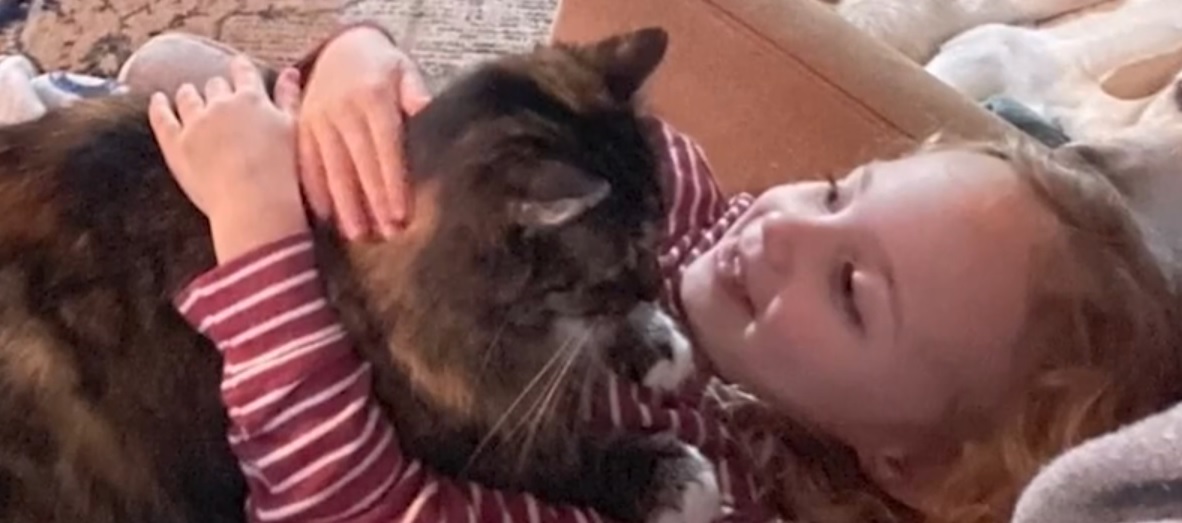
Feefee with granddaughter
Ray Ishak said Feefee’s disappearance has been especially hard on his grandchildren, who love the gentle feline. Credit: Ray Ishak

It doesn’t matter how massive and successful the company is, there has to be a better way to handle issues like this without requiring even the police to approach Amazon like customers dialing a service line, or supplicants petitioning a king to turn his gaze toward a situation that normally falls beneath his notice. There’s also no recognition of the impact on Feefee, who is almost certainly confused and stressed at being separated from the only home and family she’s known for her entire life.

Lastly, Amazon missed an opportunity to respond with compassion and earn the gratitude of a family whose members are obviously very concerned about their cat. A PR win like that is worth a thousand commercials, and can earn enormous good will with customers. Instead, people will hear about how the company treats a problem like this as if a customer is returning a shirt that’s too small.

As for the Ishak family, they say they’re giving the driver the benefit of the doubt. Maybe she thought Feefee was a stray. But, as Ray Isha told KING5, it’s been made abundantly clear that Feefee is a beloved member of the family, and she needs to be returned.

“Maybe you did this out of the kindness of your heart,” Ray Ishak said. “I appreciate it, but bring me my cat back.”

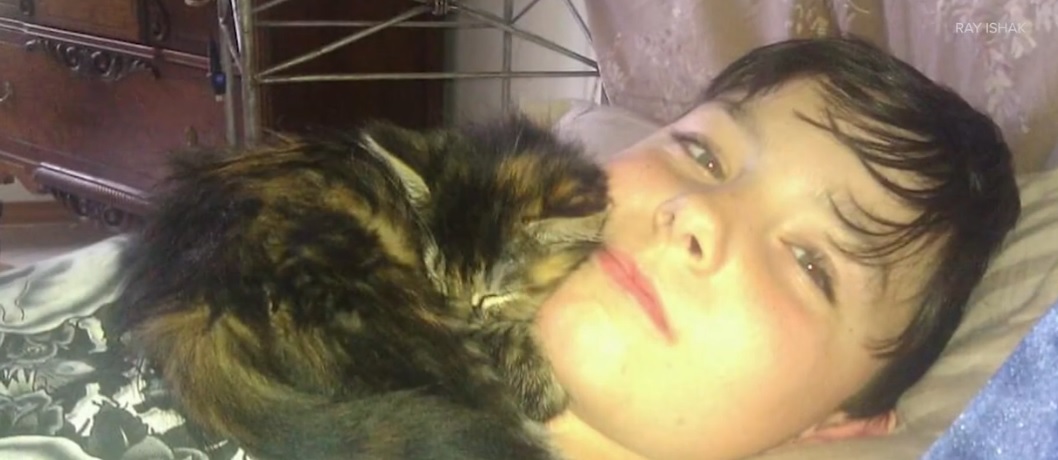
Top image of Feefee as a kitten with one of Ray Ishak’s grandchildren courtesy of Ray Ishak, via KING5.

Choupette, Karl Lagerfeld’s Millionaire Cat, Has Been Invited To The 2023 Met Gala

One of the most pampered kitties in human history has been invited to the “most prestigious” fashion event, which will honor her late human servant this year.

She drinks out of silver bowls, is toted around in a custom $3,000 Louis Vuitton carrier and pads out her fortune by earning millions hawking makeup and luxury vehicles.

Now Choupette, the sapphire-eyed cat who belonged to the late fashion designer Karl Lagerfeld, has been invited to the most exclusive party in the world.

Choupette’s agent, Lucas Berullier, confirmed receipt of a Met Gala invitation to the New York Post, but was coy when asked if Choupette would actually show up.

The Birman cat was personally invited by Vogue editor-in-chief Anna Wintour, who oversees the event, and the Post points out Choupette could play a central role because the 2023 gala will honor Lagerfeld and his career as the creative director for Chanel.

Choupette is credited with mellowing the icy German designer, who quickly fell in love with her and made her his muse, adding her to fashion shoots where she lounged in the arms of models like Vanessa Paradis and Cara Delevingne.

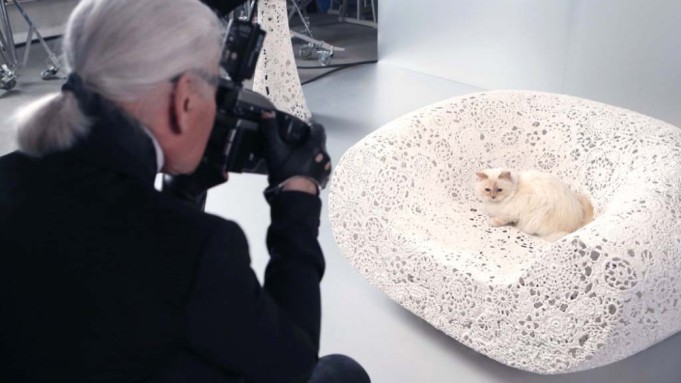
Choupette and Lagerfeld
Lagerfeld photographs Choupette, his beloved Birman cat.

Choupette appears in the current issue of Vogue, cradled by supermodel Naomi Campbell on a bridge in Paris’ Grand Palais. The photo and others in the gallery were shot by Annie Leibovitz.

The exact size of Choupette’s fortune has never been publicly disclosed, but publications like Forbes have reported Lagerfeld left $13 million of his $200 million-plus net worth to the pampered feline. Choupette has added to her largess over the years, amassing further millions as she appears in advertisements, fashion campaigns and photoshoots.

Lagerfeld’s former housekeeper, Françoise Caçote, cares for Choupette and manages her social media accounts.

The Met Gala is a charitable event, so normally it wouldn’t feel right to snark about it, but “the most prestigious fashion event” of the year looks like a Zoolander scene come to life. Guests are required to attend in haute couture outfits by prominent fashion designers, which means the typical attendee’s clothes and accessories cost more than many Americans earn in a year.

There’s a theme every year — aside from the usual preening privilege and a collective effort to ignore reality — and the outfits are ostensibly “costumes,” but no one’s showing up in stuff they bought from Party City.

V-Magazine-Choupette-1
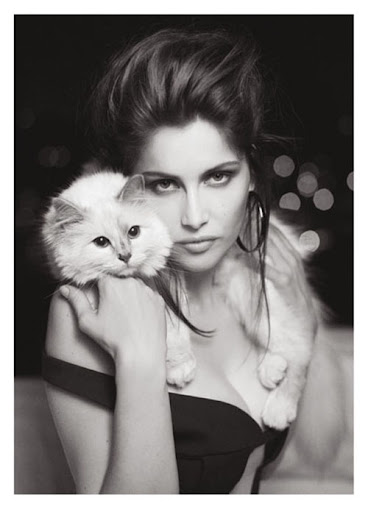
Choupette and supermodel Laetitia Costa pose for V Magazine. Choupette has also appeared on the cover of Vogue several times.

And while the gala is technically a charitable event, the proceeds won’t help starving kids or war victims — as the brainchild of Wintour, the event is designed to raise money for the fashion world to further celebrate itself.

When I see people like Wintour, the celebrities in her orbit and the old money types who like to be photographed at these events, I enjoy thinking about how they’d react if their jets went down over a place like the Amazon, and all the Dolce and Gabbana in the world can’t help them build a fire or catch dinner. “Do you know who I am?” doesn’t work in jungles.

But the one character I will never insult is Choupette herself. Buddy looks very handsome in a tuxedo, and I shall realize my plan to sneak him into one of these parties, have the two of them “accidentally” bump into each other, and let Buddy’s charm do the rest. Then he’ll really be living large. 🙂

Study: Jaguars Aren’t As Solitary As We Thought

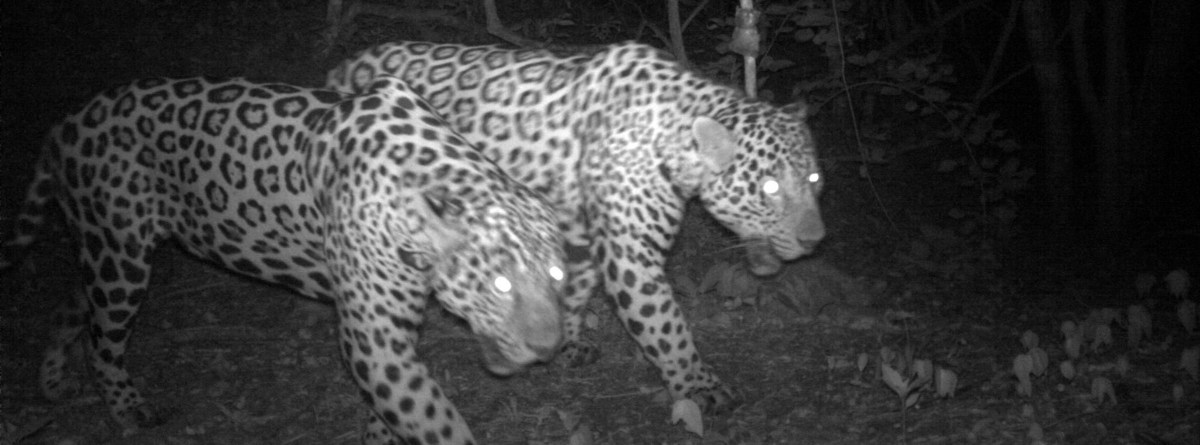
Using a network of trail cameras, researchers studied jaguars for years and observed behavior that surprised them.

Lions are famously described as the only social big cats, known for living in extended family units called prides and even forming coalitions, which young males sometimes do before they lead their own prides.

But now, thanks to a research team that monitored trail cameras in the Amazon for years, we know that jaguars form their own coalitions, doing things never before seen like patrolling and marking territory together, cooperating on kills and sharing prey. The researchers focused on areas in Brazil’s Pantanal and Venezuela’s Llanos region, both of which provide varied landscapes and water access for the famously water-friendly big cats, who are strong swimmers and prey on aquatic and land animals.

The team pored through more than 7,000 instances of jaguars appearing on the trail cameras, which gave them a look at a range of jaguar behaviors that normally would not be seen.

“It shows the value of having long-term camera tracking, movement ecology data and direct observations through citizen science,” said Allison Devlin, a co-author of the study. “And from that we’re able to see that if you have a relatively stable jaguar population, healthy prey base, and protection for the species, we can start seeing these more natural behaviors, and start understanding some of the interactions that a solitary species might have.”

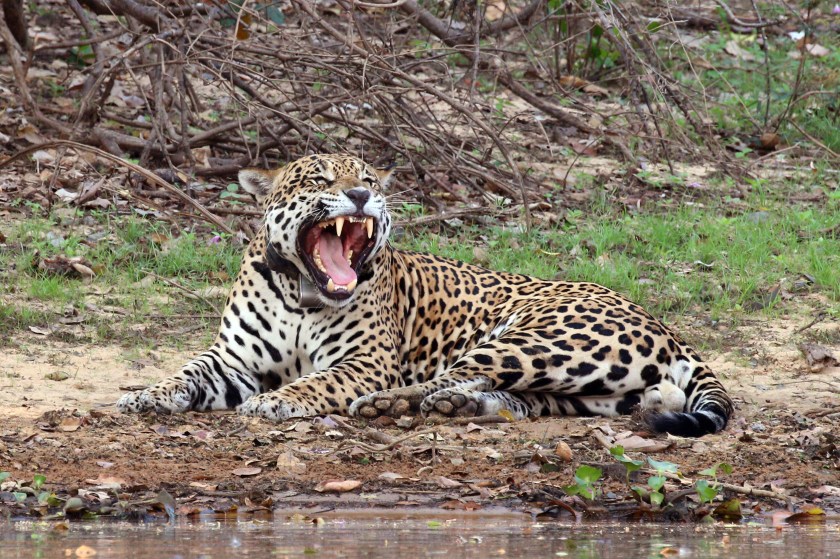
Jaguar_(Panthera_onca_palustris)_male_Rio_Negro_2
Credit: Wikimedia Commons

In two cases, coalitions between jaguars lasted for more than seven years, the researchers said. The jaguars were seen cooperating for almost every activity as they went about their daily lives in the jungle.

Not only are the findings remarkable, but they’re a reminder that we’re still woefully ignorant about the only big cat of the Americas, especially compared to lions, tigers and leopards.

“The secret life of jaguars is more complex than previously thought,” Devlin said. “We still have so much to learn about the intricate lives of these secretive wild cats, with findings that can help scientists better conserve these species and the landscapes on which so many plant, animal, and human communities depend for their survival.”

One reason they’re less studied than other big cats is because jaguars are notoriously elusive. People who have spent their lives in and on the periphery of the Amazon say jaguar eyes are on humans from the moment they enter the jungle, watching from the shadows. Yet there are no recorded cases of man-eating jaguars, and conflicts with the feline apex predators and humans are rare, most often relegated to instances where people got too close to jaguar cubs or tried to corner the animals. Jaguars do a lot of watching, but they don’t allow themselves to be seen.

Of course that doesn’t mean they’re cuddly. Jaguars are the third-largest cats in the world, after tigers and lions. They have the strongest bite force of any cat, which allows them to crunch through giant turtle shells and kill in one bite by literally crushing the skulls of their prey with their teeth. (The name jaguar comes from the indigenous yaguar, which means “he who kills with one leap.” No other cat kills the same way.)

Jaguars are also perpetually confused with leopards, their look-alike African cousins, which leads to further uncertainty about their behavior and habits. Aside from being separated by an ocean and living on separate continents, jaguars are heavier and have thicker limbs than leopards, and the biggest give-away is the presence of spots within their rosettes, which leopards do not have.

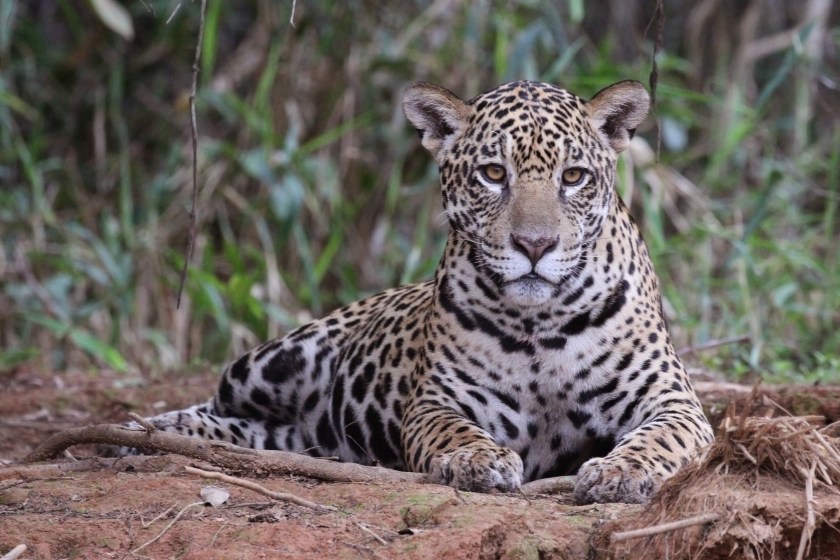
Jaguar_(Panthera_onca_palustris)_female_Piquiri_River
Credit: Wikimedia Commons

PITB Reviews: ‘The Peripheral’ Is A Refreshingly Original Science Fiction Thriller

Amazon’s newest streaming hit is heady, fast-moving and a lot of fun. There’s nothing else on TV like it.

Amazon’s newest big-budget prestige drama, The Peripheral, imagines a near future when technology has become even more deeply embedded in every day life.

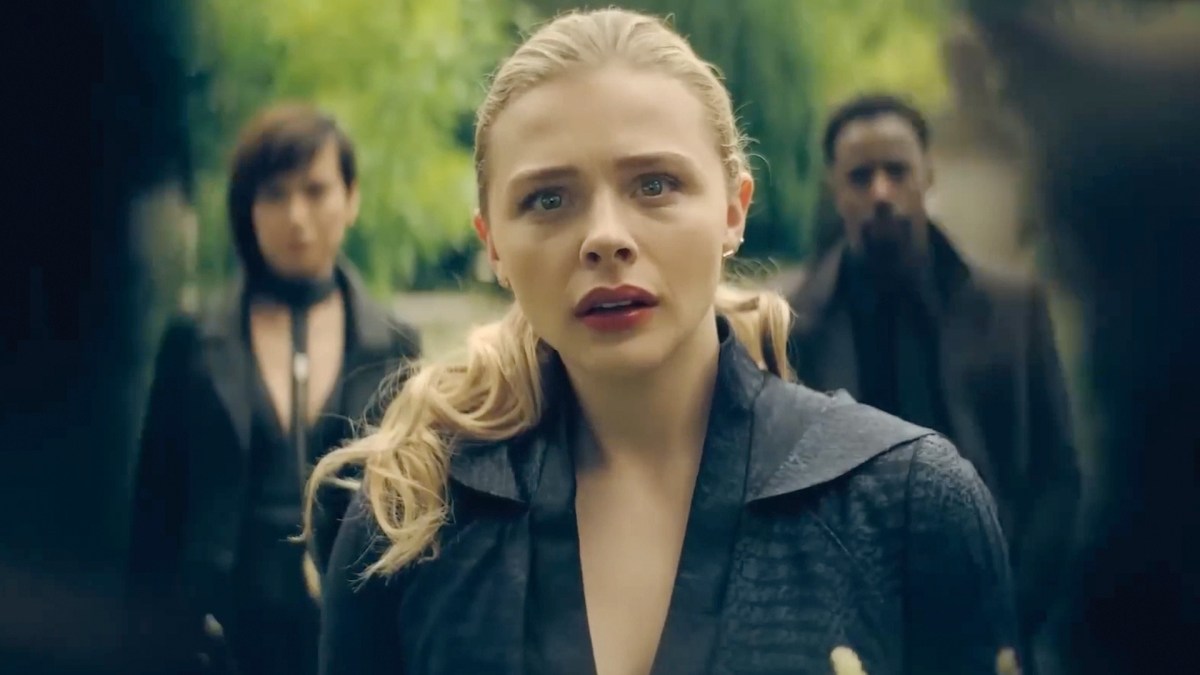
Flynne Fisher (Chloe Grace Moretz) is a young woman who lives in North Carolina’s rural Blue Ridge Mountains, works in a 3D print shop by day and plays virtual reality games by night.

The story is set a decade from now in 2032, and while Flynne’s brother, Burton (Jack Reynor), plays startlingly realistic VR games for fun, Flynne plays them for money. Although Burton is a former United States Marine Corps infantryman and war veteran, his sister is the superior player when it comes to video games, and she’s so good that well-heeled players across the world pay her to carry them through high-difficulty levels.

If that seems fanciful, consider that it already happens in real life: some people fork over big bucks to highly skilled players who can help them win in multiplayer video games like Fortnite, or run them through the most challenging missions in online role playing games to get coveted in-game gear.

Flynne’s side hustle allows her to afford expensive medication for her sickly mother. Apparently in 2032, Democrats and Republicans are still squabbling over how to pass meaningful prescription drug reforms while remaining in the good graces of the corporate behemoths who finance their campaigns. Some things never change.

When a Colombian company called Milagros Coldiron offers Flynne a hefty chunk of change to beta test their newest game — and the incredibly immersive new headset it comes with — Flynne thinks she’s just taking a lucrative but routine job, one that will help pay for her mom’s meds for at least a few weeks.

What she doesn’t know is that her life is going to change drastically the moment she steps into the newest form of virtual reality, revealing things about her world and herself that she never imagined.

The Peripheral
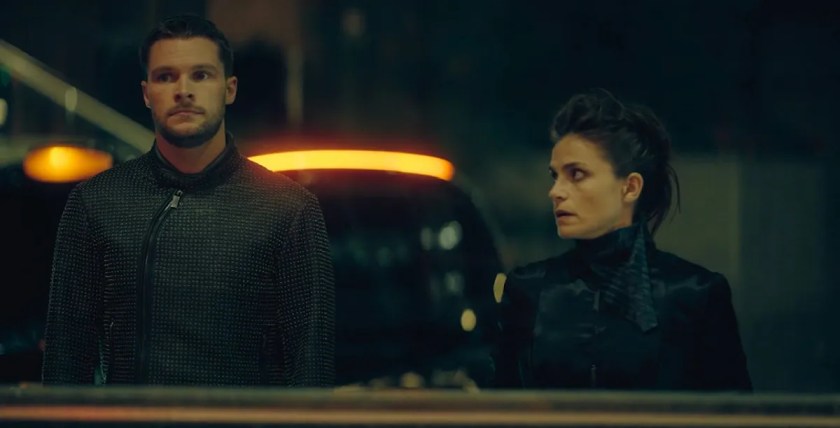
Jack Reynor as Burton Fisher and Charlotte Riley as Aelita West in The Peripheral.

There’s so much more to the story, and in fact we’ve barely scratched the surface, but The Peripheral is the kind of show best appreciated by knowing as little as possible going in.

The ambitious new series is based on a 2014 novel by technoprophet William Gibson of Neuromancer fame. Gibson envisioned the concept of cyberspace in 1981, more than a decade before the first mass market commercial dial-up services were available.

At the time, the idea of exploring almost photorealistic worlds in virtual reality was a radical new idea, and it took more than 35 years for technology to catch up by making it feasible. (We’re still not quite there yet. VR tech has improved by leaps and bounds, and we’re beginning to see the first deeply immersive VR games, but Mark Zuckerberg’s much-hyped version of the metaverse, for example, has fallen flat and been pilloried by press and players alike.)

By choosing to adapt Gibson’s work, Amazon has dipped into the largely untouched world of literary science fiction.

While the science fiction of movies and TV has been treading the same worn ground and returning to the same tired concepts for decades, SF novels are a rich source of astonishingly inventive big ideas, from the existential stories of Liu Cixin (The Three Body Problem) to the galaxy-spanning space opera of the late, great Iain M. Banks, to the gothic horror-tinged, wildly imaginative universe of Revelation Space by Welsh astrophysicist Alastair Reynolds.

Indeed, Netflix is developing a series based on The Three Body Problem, with Game of Thrones showrunners David Benioff and D.B. Weiss taking the helm. Amazon has acquired the rights to Banks’ first Culture novel, and Netflix’s highly-praised anthology series Love, Death + Robots adapted two of Reynolds’ short stories as episodes.

Finally we’ve moved beyond the Alien clones, Star Wars sequels, prequels, spinoffs and crossovers, as well as the unfulfilling JJ Abrams mystery box offerings that have made up the bulk of live action science fiction on the big and small screens.

There are no candy-colored light swords in The Peripheral, nor are there spandex-clad superheroes or franchise installments designed with merchandise sales in mind. Instead, we get a story for adults, one that gives the audience a lot to think about while also holding a mirror up to our own world, as the best science fiction always does.

After all, technology changes but people don’t. Human nature is a constant. What we do with our shiny new toys says a lot about us as a species and civilization.

Although The Peripheral begins with the comparatively low-stakes world of virtual reality, its scope rapidly expands until, by the end of the first episode, it becomes clear the show is asking its audience to grapple with existential questions about humanity and our future.

The Peripheral demands its audience’s full attention as it introduces concepts like the parallel universes of M-theory, nanotechnology and the idea that even if matter can’t be shifted between time and space, information in the form of photons can.

Gibson uses these heady concepts in his narrative sandbox, forcing his characters to consider wild concepts like the possibility that there may be infinite versions of themselves existing in infinite branching realities.

How would you react knowing there’s a version of yourself who chose to study classical literature and move to Athens, or a version who became a software programmer, authored a lucrative app and lives in a Manhattan penthouse? Can you imagine having a different wife or husband, or a different child? (Are there realities in which I am not the loyal and loving servant of Buddy? In that case, who is feeding him snacks, and are they doing it promptly?)

Cherise Nuland
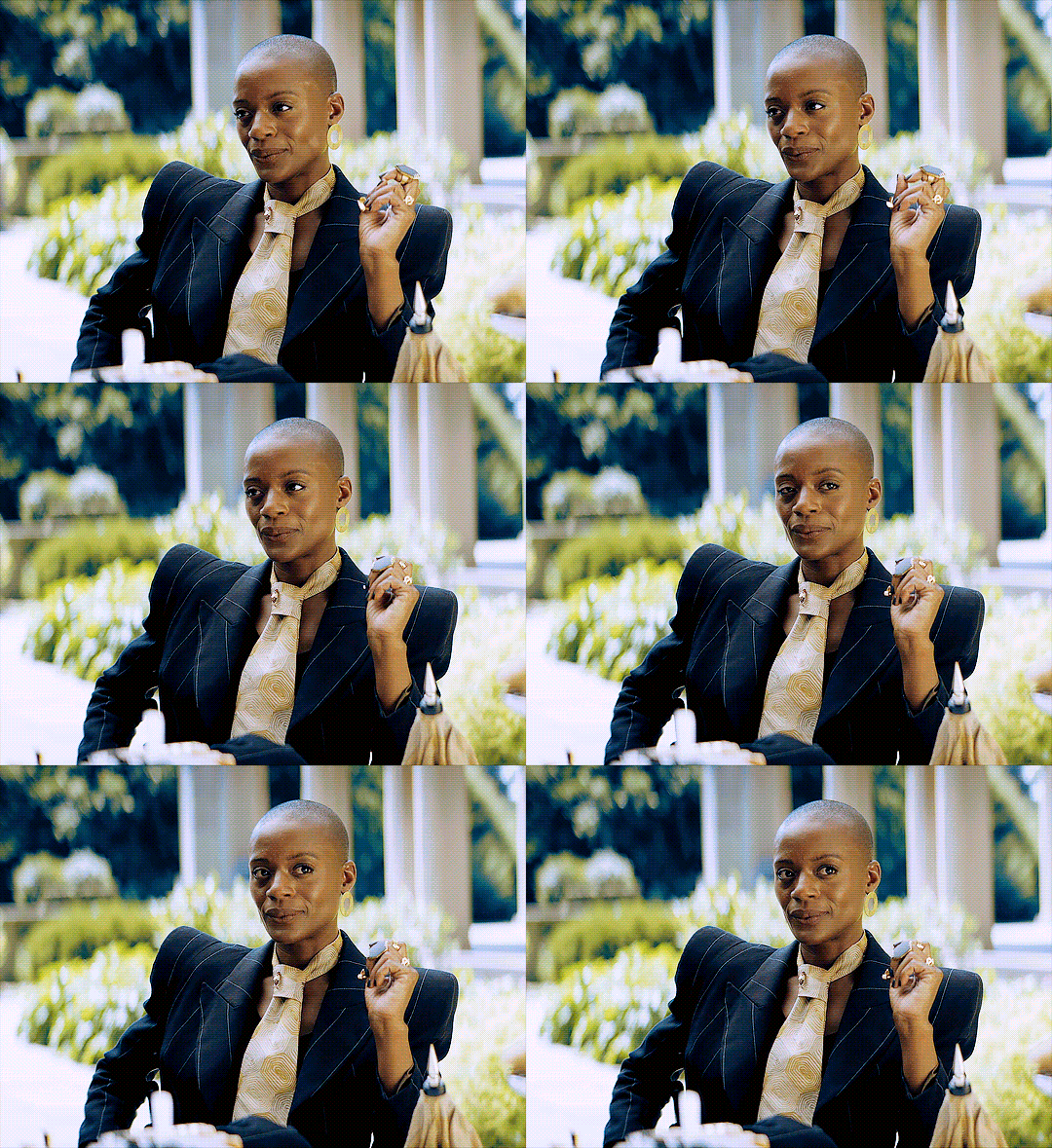
T’Nia Miller radiates malice as Cherise Nuland.

Of course, none of this stuff would matter without interesting characters and a compelling narrative. Moretz and Reynor have the chemistry of a real brother and sister in the way they regularly bicker but ultimately love each other. Eli Goree’s Connor is a man of wonderful paradoxes, and T’Nia Miller steals every scene she’s in as the delightfully malicious Cherise Nuland, an antagonist who loves making her enemies squirm while dispensing witticisms in cut glass RP.

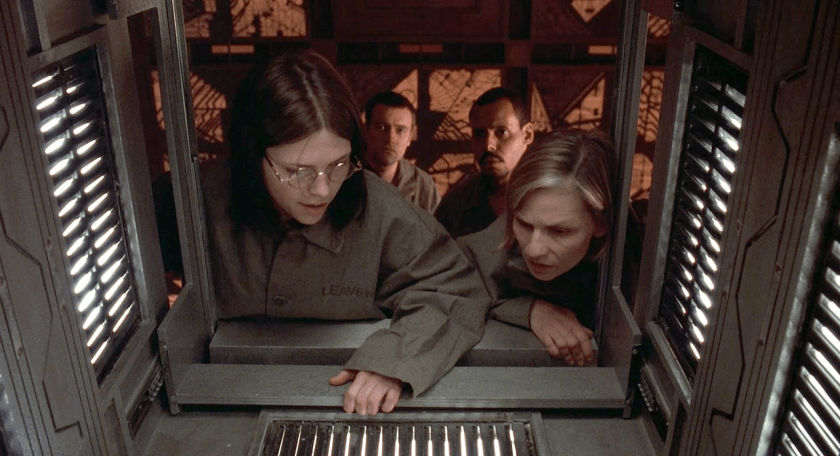
For longtime SF fans, there’s another compelling reason to give the series a shot: Canadian writer-director Vincenzo Natali, best known for his mind-bending 1997 indie film Cube, is an executive producer and directs four of the season’s episodes. Natali is a pro at incorporating heady ideas in ways that enhance his narratives instead of weighing them down.

The first season just concluded, and you can stream all eight episodes on Amazon Prime. Bud and I are already looking forward to The Peripheral’s return.

cube-pic-6
Cube writer-director Vincenzo Natali is behind the lens for half of The Peripheral’s episodes.

Every Attempt To Translate Meows Has Failed. Why?

A New York Times science writer tries MeowTalk, the app that says it can tell you what your cat is saying.

New York Times science writer Emily Anthes details her experience with MeowTalk in a new story, and has more or less come to the same conclusions I did when I wrote about the app last year — it recognizes the obvious, like purring, but adds to confusion over other vocalizations.

Back in January of 2021, in MeowTalk Says Buddy Is A Very Loving Cat, I wrote about using MeowTalk to analyze the vocalizations Bud makes when he wants a door opened. After all, that should be a pretty basic task for an app that exists to translate meows: Cats ask for things, or demand them, some would say.

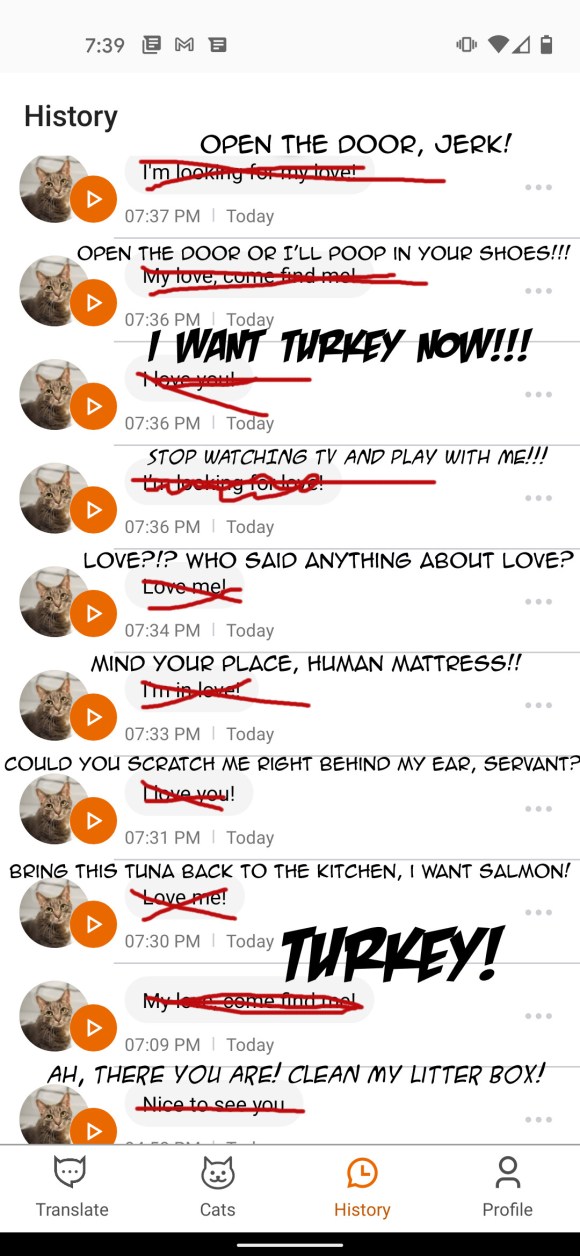
But instead of “Open the door!”, “I want to be near you!”, “Human, I need something!” or even “Obey me, human!”, it told me Bud was serenading me as he pawed and tapped his claws on the door: “I’m looking for love!”, “My love, come find me!”, “I love you!”, “Love me!”, “I’m in love!”

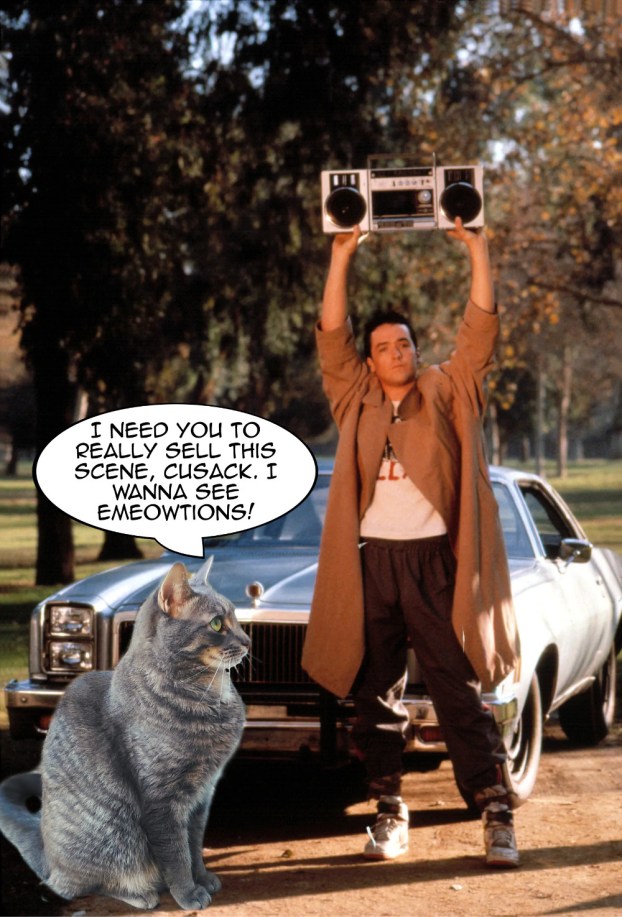
According to MeowTalk, my cat was apparently the author of that scene in Say Anything when John Cusack held up a boombox outside of Ione Skye’s bedroom window.

John Cusack and Buddy the Cat
Buddy the Director.

Anthes had a similar experience:

“At times, I found MeowTalk’s grab bag of conversational translations disturbing. At one point, Momo sounded like a college acquaintance responding to a text: ‘Just chillin’!’ In another, he became a Victorian heroine: ‘My love, I’m here!’ (This encouraged my fiancé to start addressing the cat as ‘my love,’ which was also unsettling.) One afternoon, I picked Momo up off the ground, and when she meowed, I looked at my phone, ‘Hey honey, let’s go somewhere private.’ !”

On the opposite side of the emotional spectrum, MeowTalk took Buddy’s conversation with me about a climbing spot for an argument that nearly came to blows.

“Something made me upset!” Buddy was saying, per MeowTalk. “I’m angry! Give me time to calm down! I am very upset! I am going to fight! It’s on now! Bring it!”

In reality the little dude wanted to jump on the TV stand. Because he’s a serial swiper who loves his gravity experiments, the TV stand is one of like three places he knows he shouldn’t go, which is exactly why he wants to go there. He’s got free rein literally everywhere else.

If MeowTalk had translated “But I really want to!” or something more vague, like “Come on!” or “Please?”, that would be a good indication it’s working as intended. The app should be able to distinguish between pleading, or even arguing, and the kind of freaked-out, hair-on-edge, arched-back kind of vocalizations a cat makes when it’s ready to throw down.

buddytranslations
Accurate translations of Buddy’s meows.

Still, I was optimistic. Here’s what I wrote about MeowTalk last January:

“In some respects it reminds me of Waze, the irreplaceable map and real-time route app famous for saving time and eliminating frustration. I was one of the first to download the app when it launched and found it useless, but when I tried it again a few months later, it steered me past traffic jams and got me to my destination with no fuss.

What was the difference? Few people were using it in those first few days, but as the user base expanded, so did its usefulness.

Like Waze, MeowTalk’s value is in its users, and the data it collects from us. The more cats it hears, the better it’ll become at translating them. If enough of us give it an honest shot, it just may turn out to be the feline equivalent of a universal translator.”

There are also indications we may be looking at things — or hearing them — the “wrong” way. Anthes spoke to Susanne Schötz, a phonetician at Lund University in Sweden, who pointed out the inflection of a feline vocalization carries nuances. In other words, it’s not just the particular sound a cat makes, it’s the way that sound varies tonally.

“They tend to use different kinds of melodies in their meows when they’re trying to point to different things,” said Schötz, who is co-author of an upcoming study on cat vocalizations.

After a few months in which I forgot about MeowTalk, I was dismayed to open the app to find ads wedged between translation attempts, and prompts that asked me to buy the full version to enable MeowTalk to translate certain things.

The developers need to generate revenue, so I don’t begrudge them that. But I think it’s counterproductive to put features behind paywalls when an application like this depends so heavily on people using it and feeding it data.

To use the Waze analogy again, would the app have become popular if it remained the way it was in those first few days after it launched? At the time, I was lucky to see indications that more than a handful of people were using it, even in the New York City area. The app told me nothing useful about real-time traffic conditions.

These days it’s astounding how much real-time traffic information the app receives and processes, routing drivers handily around traffic jams, construction sites and other conditions that might add minutes or even hours to some trips. You can be sure that when you hear a chime and Waze wants to redirect you, other Waze users are transmitting data about a crash or other traffic impediment in your path.

Bud
“I’m thinking deep thoughts about turkey.”

MeowTalk needs more data to be successful, especially since — unlike Waze — it depends on data-hungry machine learning algorithms to parse the sounds it records. Like people, machine learning algorithms have to “practice” to get better, and for a machine, “practice” means hearing hundreds of thousands or millions of meows, chirps, trills, yowls, hisses and purrs from as many cats as possible.

That’s why I’m still optimistic. Machine learning has produced algorithms that can identify human faces and even invent them. It’s produced software that can write prose, navigate roads, translate the text of dead languages and even rule out theories about enduring mysteries like the Voynich Manuscript.

In each of those cases there were innovators, but raw data was at the heart of what they accomplished. If MeowTalk or another company can find a way to feed its algorithms enough data, we may yet figure our furry little friends out — or at least know what they want for dinner.