The legislation aims to ban all private big cat ownership throughout the United States.
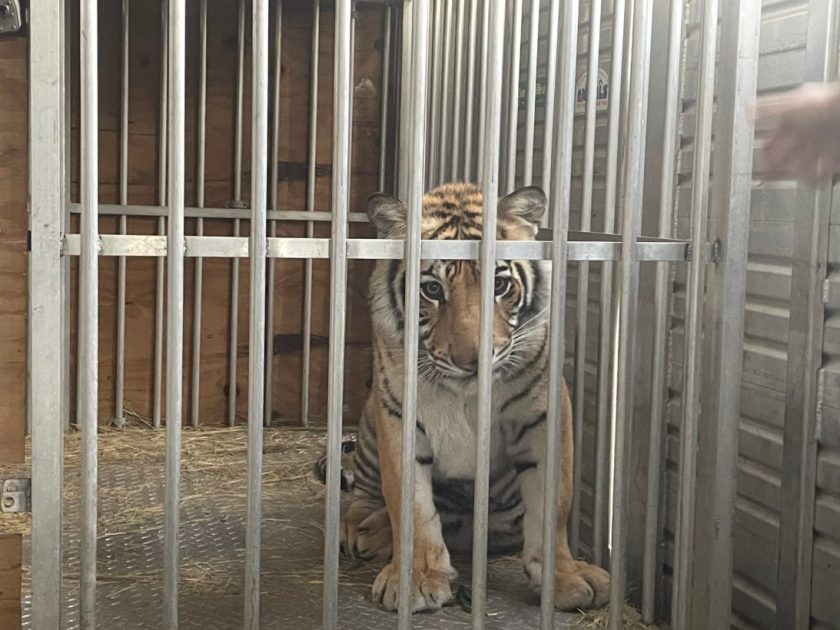
There are more tigers living in cramped backyards in Texas than there are in the wild.
At roadside zoos, shady people like Joseph Maldonado-Passage, Joe “Exotic” of Tiger King fame, breed big cats like rabbits so they have an endless supply of cubs to steal from their mothers before they’re weaned, pumped full of sedatives, and handed off to tourists who take selfies with them but never stop to consider the welfare of those baby cats or the harm they’re enabling.
And in states like Florida, where “Muh freedoms!” reign supreme over all other values, people can own any wild animals they want, with no real oversight and no mechanisms to ensure they’re doing right by the animals. There’s nothing forcing “exotic” animal “owners” to keep the big cats, monkeys and other mammals in proper enclosures where they have stimulation and — just as importantly — won’t escape and hurt neighbors.
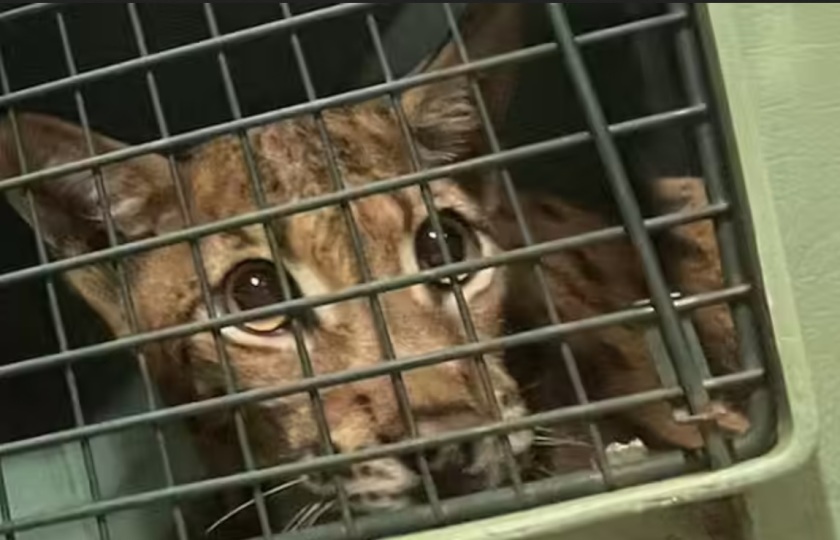
India the tiger was still just a cub when he was spotted wandering through residential neighborhoods in Texas, where he’d been dumped by his former “owner.” Credit: Humane Society
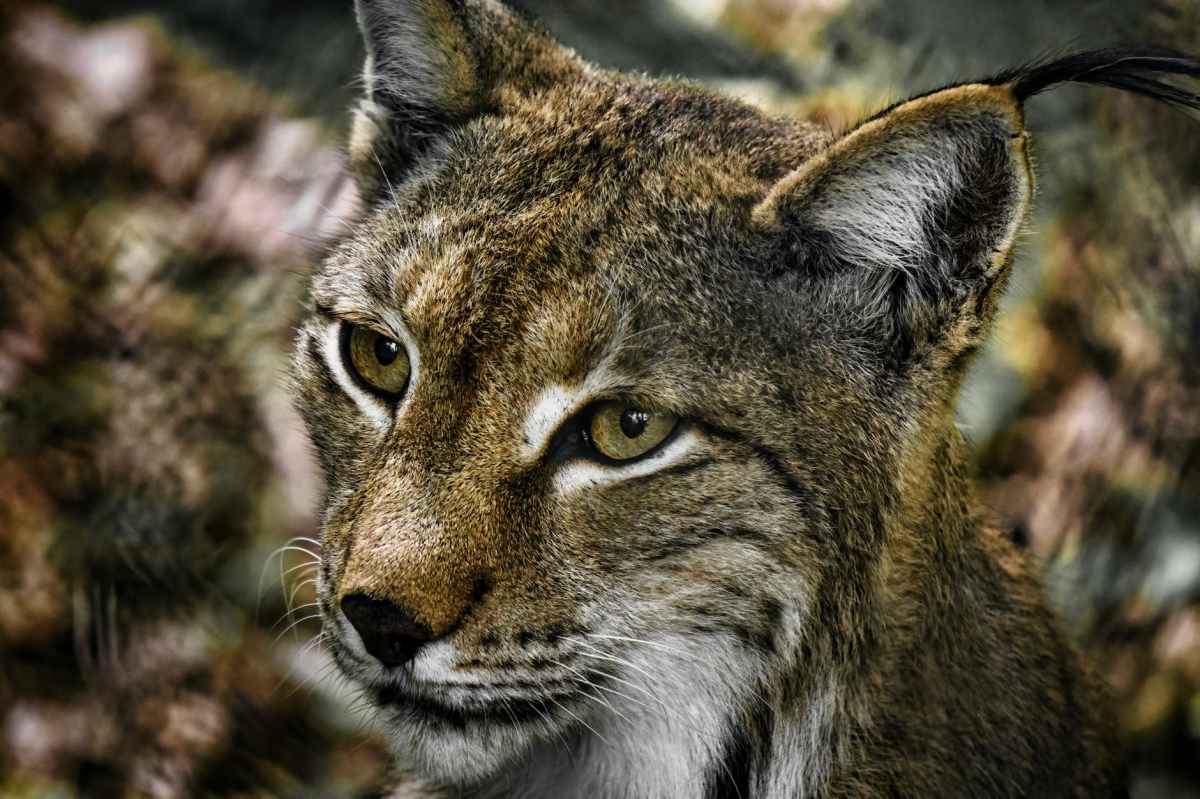
Thankfully, things could change soon as lawmakers are expected to vote on the Big Cat Public Safety Act, a rare bipartisan effort that would finally make it illegal to keep tigers, lions, jaguars, leopards, cheetahs, pumas and other wildcats privately, whether in homes, businesses or non-accredited “zoos.”
Currently keeping big cats is illegal or severely restricted in most states, but like many things in the US, there’s a confusing patchwork of laws and things that would be unthinkable in other states are perfectly acceptable in places like Texas and Florida.
Because, you know, “muh freedoms.”
Now is a good time to point out that this blog has always been, and will remain, politically agnostic. I have my own political beliefs as any other person does, but PITB is a cat humor, news and advocacy blog, and the only politics we discuss here are those that relate to animal welfare. Equally important, Buddy and I want people of all political persuasions to feel comfortable as readers and commenters on PITB. (Although that could change if one or both political parties suddenly makes a move against the nation’s Strategic Turkey Supply. Then Buddy’s gonna have to get biblical.)
The Big Cat Safety Act is co-sponsored in congress by representatives Mike Quickly, D-IL, and Brian Fitzpatrick, R-PA, and in the senate by senators Susan Collins, R-ME, Tom Carpenter, D-DE, Richard Burr, R-NC, and Richard Blumenthal, D-CT.
If your congressional representative or your senators aren’t publicly on board with the Big Cat Safety Act, you can make your voice heard via the Humane Society’s site, which allows you to draft and send letters to the offices of your lawmakers.
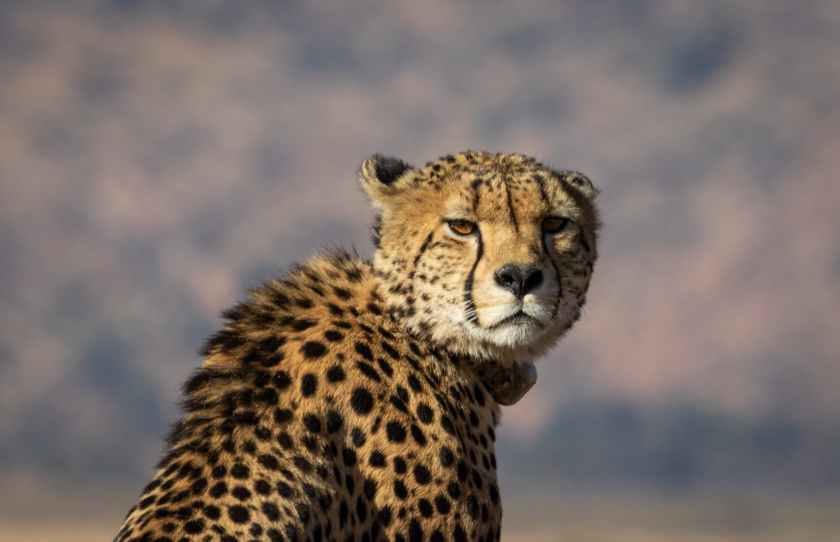
Cheetahs, already critically endangered, have been almost entirely wiped out by poachers who sell their cubs on the illegal wildlife market. Credit: Magda Ehlers/Pexels
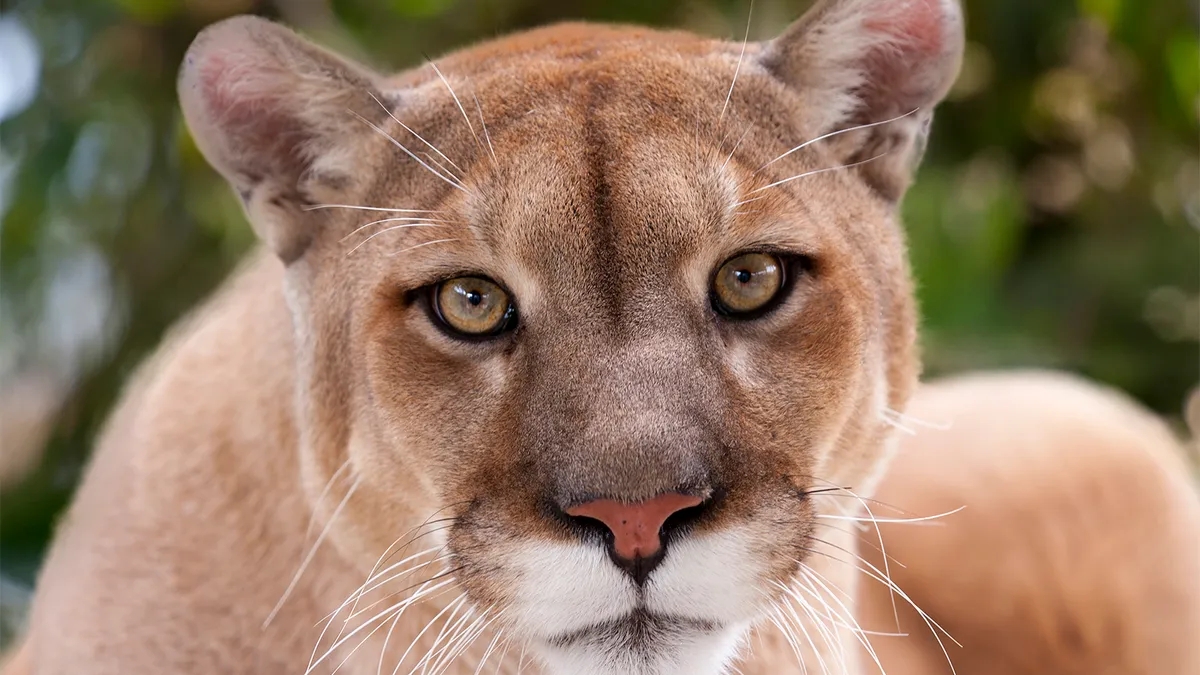
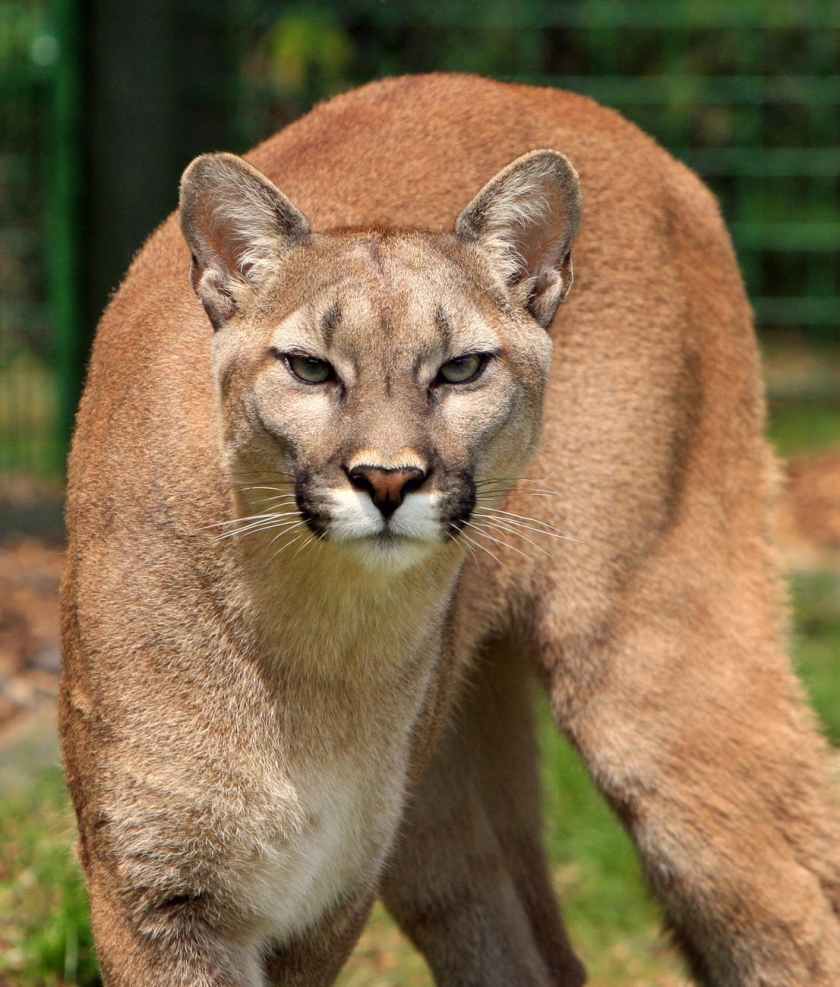
The puma is known by more names than any other mammal, a fact that reflects its incredible resilience and wide range.
The puma goes by a lot of names. So many, in fact, that it holds the Guinness world record for the mammal with the most names, with more than 40 monikers in English alone.
Add the puma’s various appellations in Spanish and the indigenous tongues of south north America, and the large golden cat has probably had at least 100 names by a conservative estimate.
Cougar, panther, mountain lion, catamount, Florida panther, Carolina panther, ghost cat, gato monte, cuguacuarana, painter, screamer — they’re all names for puma concolor, a felid with the size of big cats in the panthera genus but genetics more closely related to non-roaring “small” cats, including felis catus.
Indeed, although pumas are famously capable of the wild cat “scream,” they’re able to purr just like house cats and their small- to medium-size wild relatives.
Why does the puma have so many monikers?
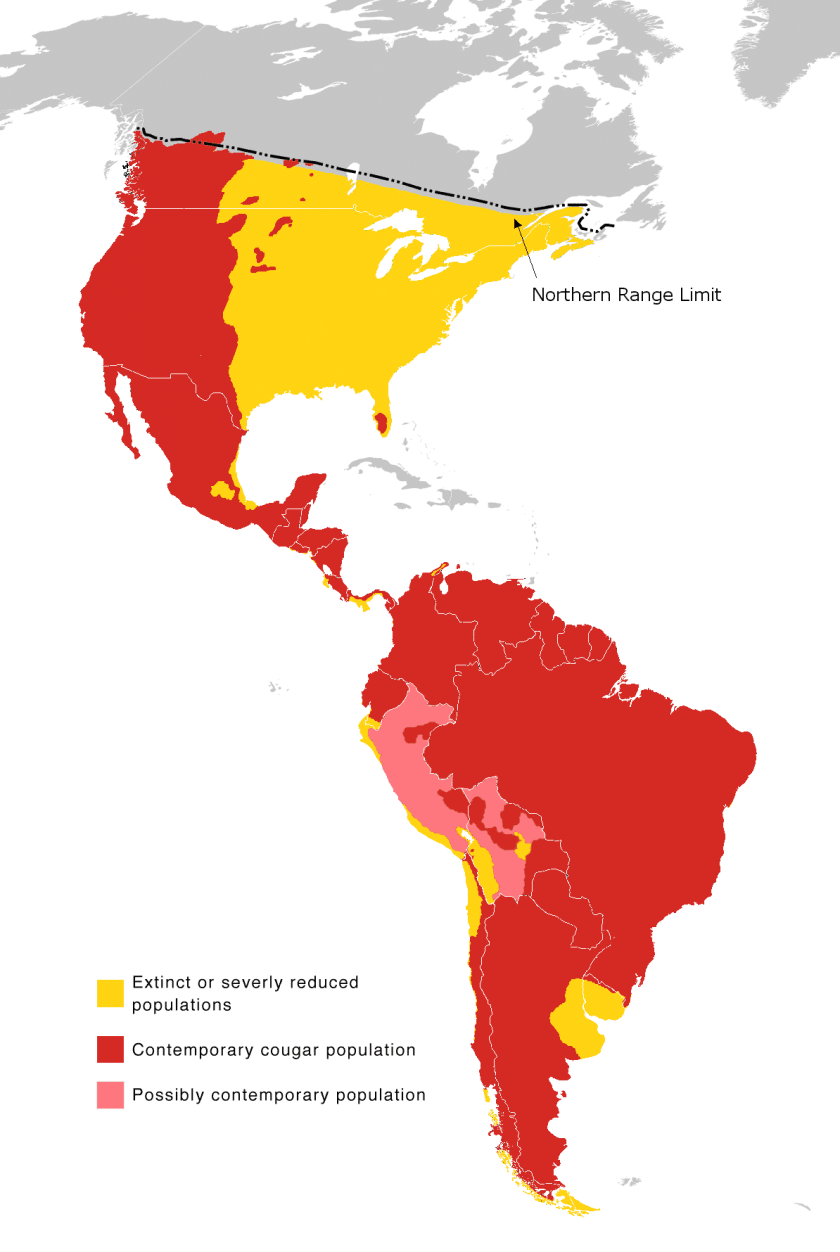
Mostly it’s because the adaptable, elusive feline has a vast range that historically covered almost the entirety of two continents:
Credit: Wikimedia Commons
Even today cougars exist in healthy numbers across most of South America and the western United States. They’re wanderers, with pockets of smaller populations in places like Florida and the midwest, and individual mountain lions have been spotted as far east as New York and Connecticut. (The New York region known as the Catskills, derived from “cat creek” in Dutch, was named after pumas when the area was part of their regular range.)
Throughout their history they’ve been familiar to a diverse group of human civilizations, societies, nations and peoples, from the Aztecs, Inca and Mayans, to the indigenous tribes of North America and the First Nations of Canada, to the inhabitants of modern-day countries like the US, Panama, Brazil, Mexico, Venezuela, Colombia, Ecuador, Paraguay, Bolivia, Chile and Argentina.
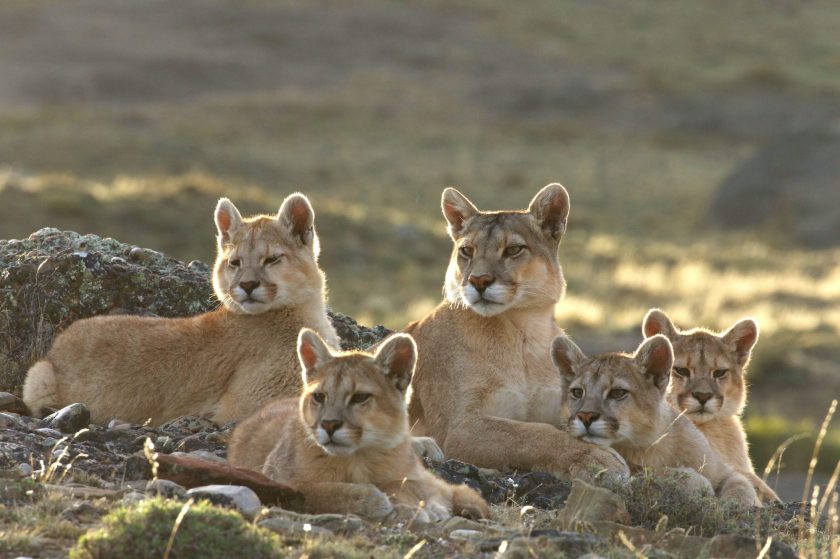
A puma with her cubs. Credit: Nicolas Lagos
But the name confusion doesn’t just stem from the puma’s many monikers bestowed by people of different cultures across space and time. The puma is also one of three cat species that are regularly called panthers. The other two, jaguars (panthera onca) and leopards (panthera pardus), are true “big cats.” That means they’re members of the genus panthera and they can roar but not purr.
Pumas are easily distinguishable from the other two: They have smooth golden fur without adornments, while jaguars and leopards both have blotches called rosettes.
It’s difficult to tell jaguars from leopards, but the biggest giveaway is the fact that jaguars have solid dot-like markings within their rosettes while leopards do not. In addition, leopards have much longer tails than jaguars or pumas, as they need the counterbalance provided by their tails to help them climb trees and balance themselves on tree limbs.
Jaguars are excellent climbers as well, but they don’t need to be as adept at living off the ground — they are the apex predators in the Americas, while leopards coexist with lions and other large animals like Cape buffalo that present a danger to the big cats even if they’re not predators.
Which brings us to our last point: Our many-named friends, the pumas, may be big and they may look dangerous, but they’re not. There have been 27 humans killed by the elusive cats in more than a century in the U.S., according to the U.S. Fish and Wildlife Service, compared to about 3,000 deaths from dog bites over the same period. Between 30 and 50 people are killed by dogs each year.
Most confrontations between humans and pumas happen when the latter are threatened and cannot escape, or when a female is protecting her cubs.
So if you live in an area where you have a chance to see these beautiful cats, admire them and keep your own kitties indoors, but don’t freak out — the puma you see one second will be gone the next.
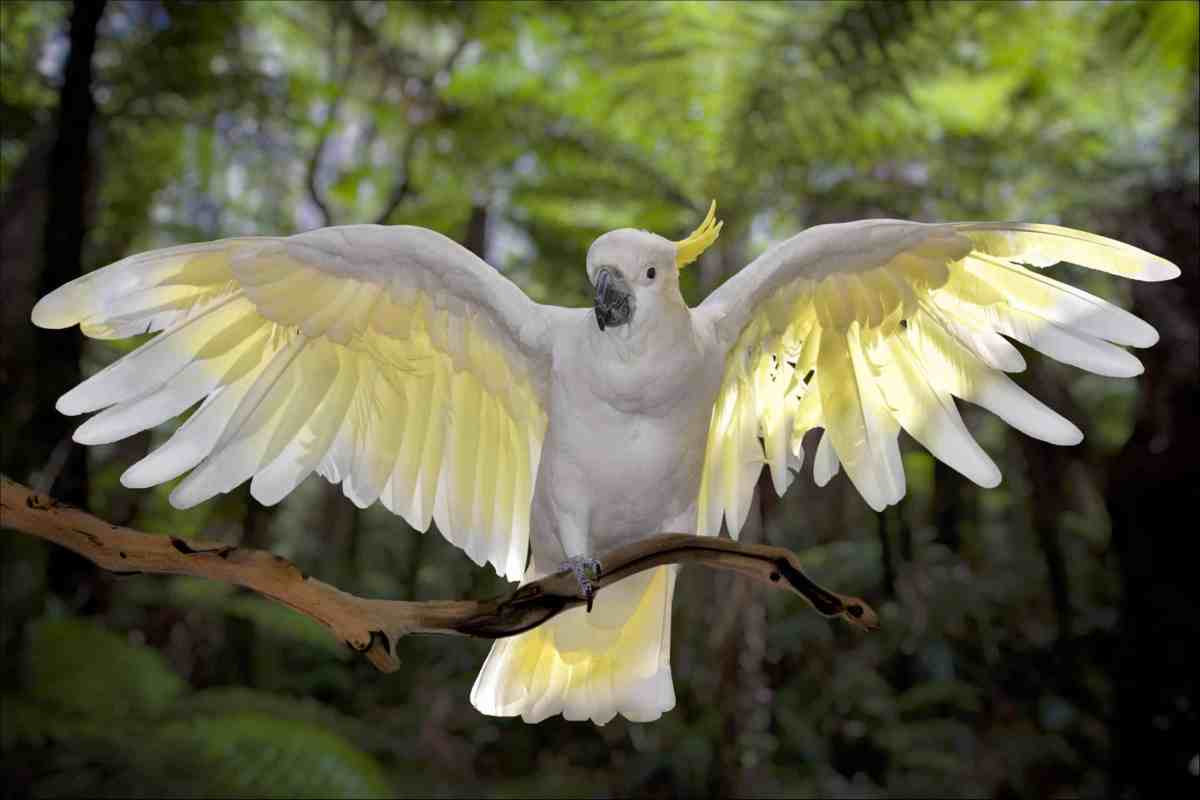
Snowball is the first animal known to dance to the rhythm of music, while Ruby is, well, Ruby.
We take a break from our regularly-scheduled cats to check in on two remarkable birds: Snowball the incredible dancing cockatoo, and Ruby the infamously foul-mouthed African grey parrot.
Both animals have been the subject of viral videos, but haven’t become ubiquitous memes or the sort of superstar that transcends certain corners of the internet.
Snowball is clearly the more wholesome of the two, and it’s immediately apparent why: He dances.
Actually, that’s underselling it. Snowball doesn’t just dance, he feels the beat and moves with it, timing his dance moves — headbangs, foot-wiggles, side-steps and more — to the music, often the snare like people do. Snowball isn’t the first animal to move to music, but he’s the first animal to groove to music, which is an important distinction.
“His owner had realized that he couldn’t care for the sulfur-crested cockatoo any longer. So in August 2007, he dropped Snowball off at the Bird Lovers Only rescue center in Dyer, Indiana—along with a Backstreet Boys CD, and a tip that the bird loved to dance. Sure enough, when the center’s director, Irena Schulz, played “Everybody,” Snowball “immediately broke out into his headbanging, bad-boy dance,” she recalls. She took a grainy video, uploaded it to YouTube, and sent a link to some bird-enthusiast friends. Within a month, Snowball became a celebrity. When a Tonight Show producer called to arrange an interview, Schulz thought it was a prank.”
Other animals are prompted to motion by music, but they don’t time their motions to the beat. Snowball’s talents have attracted curious neuroscientists, who believe Snowball is able to coordinate his body movements with the rhythm because, like humans, he can process language.
It might seem a little odd that such an ability seems to hinge on language until you realize that language itself is rhythmic, ordered sound, and that human communication often pairs speech with coordinated movements. (Think of people who “talk” with their hands, TV presenters who move their heads for emphasis or the simple act of nodding, shaking your head or shrugging to punctuate a point.)
Scientists study Snowball because he’s inherently fascinating, but also because he can help us understand how birds and humans communicate, and how homo sapiens and certain avian species, out of all the animals on Earth, developed this skill.
Ruby the Foul-Mouthed African Grey Parrot
Ruby is a different case entirely. She’s interesting to internet audiences because she’s hilarious, and if she holds academic appeal, it’s because of the way she’s been socialized and the things she’s learned.
Ruby, one of Youtube’s earliest viral stars, lives with her human, Nick Chapman, in Brighton, UK.
First thing’s first: If you’re put off by obscenities or you’re easily offended, you should take a pass on these videos.
For everyone else, well, it’s not just that Ruby swears. That sort of novelty would wear off quick. What makes Ruby unique — and consistently hilarious — is that she’s inventively obscene, working insults into unique combinations. And, as you’ll see, she swears in French as well as heavily-accented UK English. It’s the latter that often makes for her most amusing outbursts.
“I love you,” Ruby tells Chapman in one video.
“Well that’s a nice change, sweetheart!” Chapman says.
“Bollocks.” Ruby takes a half step to her right on the small platform in front of her cage, turning her head toward Chapman. “You fat bastard!”
Chapman laughs. “I knew that wouldn’t last.”
Ruby’s foul language is unmistakably British and as casually vicious as it gets. She hurls invective at the seagulls who are a constant presence in seaside Brighton and expresses her love for Chapman by insulting him.
“Fuck off, you tw-t!” the bird says, prompting laughter from Chapman.
“Oh dear,” Chapman says. “That’s not nice!”
“Eh,” Ruby says. “Tw-t! You’re not funny.”
“I know I’m not funny. I’m immature, I’m irresponsible. But so what?”
In another video, Chapman tries to engage Ruby by telling her he loves her in French.
Ruby sits motionless for a few long seconds, then utters a single syllable with expert comedic timing: “Tw-t!”
Chapman does a deep belly laugh.
“Shut up, c–t!’ Ruby says. “You f—er!’
“Oh dear,” Chapman says between laughs. “You’re shocking, you know that?”
One thing becomes abundantly clear over the course of just a few videos: Chapman loves Ruby and, despite the constant verbal abuse she directs toward him, she loves Chapman too.
For a man who owns a bird who loves foul language, you’d think Chapman would have a dirty mouth, but for the most part he doesn’t. It’s often impossible to predict what a parrot will pick up on.
Ruby is quick to pick up on new words, and Chapman thinks she likes the harsh sounds of some of the language’s most offensive insults. (Perhaps it’s no mistake that many of the most vulgar words in English have a guttural quality, reflecting their meaning.)
Long before Ruby became a Youtube star, Chapman said he realized the potential for awkwardness. One day he was strolling along the waterfront in Brighton when an older woman stopped to chat and asked about Ruby.
“She’s beautiful,” the woman said, admiring the African grey.
“Shut your c–t!” Ruby snapped back.
The shocked woman looked at Chapman, who pretended he hadn’t heard what his bird said.
The issue of whether parrots understand what they’re saying still hasn’t been settled. Like some other animals — cats and dogs among them — they can understand words in their contextual meanings, though it’s very unlikely a swearing parrot knows precisely what it’s doing.
Then again, to insist parrots are just repeating sounds would be to discount examples like the late Alex, an African grey who could count, distinguish between different items by color and shape, and allegedly innovate to some extent.
Then there’s this video of a parrot telling a cat to “shut the f— up” as the cat meows. It makes me wonder, if I had a parrot, what the bird would pick up from my conversations with Buddy. There’d be a lot of “Hi, Bud!” and “What a good boy!”, and the vast majority of it would be kind, patient and loving, but I won’t pretend there aren’t times when I’ve told him I can’t take any more of his hours-long discourses on teleportation, turkey or unifying classical and quantum physics.
That said, I wouldn’t change a thing about Buddy. He’s my Buddy.
Town officials say the step is necessary to protect a ground-nesting songbird native to western Europe.
Elected leaders in Walldorf, Germany, are worried about the crested lark — so much so that they’ve decreed cats must be kept inside, with prohibitively painful fines for anyone whose cat harms one of the birds.
According to the decree, anyone who allows their cat(s) to roam outside from now until August will be fined €500, which is about $527. But if a cat kills or injures one of the European songbirds, Walldorf’s local government will fine the cat’s caretaker up to €50,000, almost $53,000 in USD.
That’s an eye-watering amount of money, especially in light of the fact that the crested lark is listed as a species of “least concern” by the International Union for Conservation of Nature. Experts say humans, not cats, are the biggest threat to the bird.
Officials in Walldorf — a town of about 15,000 people more than 600 kilometers southwest of Berlin — cited the same thoroughly-debunked studies that claim cats kill some 25 billion birds and small mammals annually in the US alone. They say they’re worried because the crested lark nests on the ground, making the birds, their eggs and their chicks particularly vulnerable to predators like domestic cats.
If you’re skeptical that local government officials — a mayor and town councilmen, essentially — are qualified to legislate on matters of conservation, you’re not alone. The decree has been met with pushback from animal rights advocates and feline fans.
“Suddenly preventing cats that are used to going outside from doing so, means immense restrictions and stress for the animals,” German animal welfare group Deutscher Tierschutzbund wrote in a statement. “The negative influence of cats on the population of songbirds is in any case controversial and, to our knowledge, has not yet been proven for the crested lark in Walldorf.”
And that cuts to the heart of the matter, doesn’t it? Like politicians in Australia and parts of the US, Walldorf’s elected leaders aren’t making decisions based on studies or reliable information. They’re taking action based on emotion and deeply flawed meta-analyses that aren’t even applicable to Europe.
We’ve always taken the position here at PITB that cats are much better off indoors. They’re domesticated animals, meaning if they have a “natural habitat” it’s human living rooms. They live much longer, healthier lives indoors and can be happy and fulfilled with a little effort on the part of their humans.
But we also believe decisions impacting living creatures should be based on real information gathered by people who don’t have an agenda. The landmark Washington, D.C. Cat Count is a great example, with birders, conservationists and cat lovers working together to complete an accurate census of domestic felines within city limits.
Now that they’ve established how many cats live in D.C. (about 200,000) and how many are truly feral without anyone caring for them (about 3,000), they can enact sensible solutions that are much more likely to successfully protect wildlife and cats without hysteria, agendas or inhuman proposals like enacting “cat hunting season” (as one US politician proposed), killing millions of cats with poisoned sausages (as Australia has done), or outright gunning cats down, as a rogue conservationist in California’s Bay Area did last year.
Cats are thinking, feeling animals. They deserve better than becoming the victims of human policies based on ignorance.
The rusty-spotted cat of Asia shares the title of world’s smallest cat species with the black-footed cat of Africa.
Stalking the jungles, wetlands and forests of India and Sri Lanka are exceptionally skilled hunters, cats who are as swift as they are deadly.
They’re nocturnal, with large eyes that allow them to see motion and detail in almost complete darkness, and spectacularly sure-footed. Their agility, grace and natural climbing ability not only help them get to prey, but also aid them in avoiding predators.
But unless you’re a lizard, bird or small mammal, you have little to fear from the rusty-spotted cat — unless you get in its face.
The striped-and-spotted felines are as fierce as they are tiny, and they are truly diminutive — at two to three-and-a-half pounds fully grown, rusty-spotted cats are rivaled only by the black-footed cat of southern Africa as the world’s smallest felines.
A rusty-spotted cat mother stands protectively in front of her kittens in Cornwall
Although the little guys are elusive, cat enthusiasts were treated to rare close-up images of rusty-spotted kittens when a litter was born at Porfell Wildlife Park and Sanctuary in Cornwall in 2020. It was an extremely rare occurrence, as there are only a few dozen rusty-spotted cats in captivity worldwide. Like most other wildlife, the species is threatened by habitat reduction.
For context, the tiny feline is only a third the size of a typical house cat, felis catus, and would be dwarfed by the gentle giant Maine Coon.
Little Buddy’s take:These guys are awesome and I’m seriously considering moving to their territory and living among them. Do you know why? At 10 pounds I would be a giant among them, striding meowscularly through the jungle with my own personal army of felines. They would make me their king, naturally, and sing songs about Buddy the Colossal Cat. I would have their most desirable females bathed and brought to my tent, where we would dine and I would regale them with stories of my adventures in America. Sadly, though, there are no turkeys in India or Sri Lanka. Could I live without turkey?