Lupita Nyong’o not only shares the screen with a feline co-star in the new film A Quiet Place: Day One, she’s also a devoted cat mom to a ginger tabby named Yoyo.
Although I haven’t seen most of Lupita Nyongo’s movies — I really liked her performance in Us and her voice work in Disney’s Jungle Book remake — I’m a big fan now that I know she’s a cat lover.
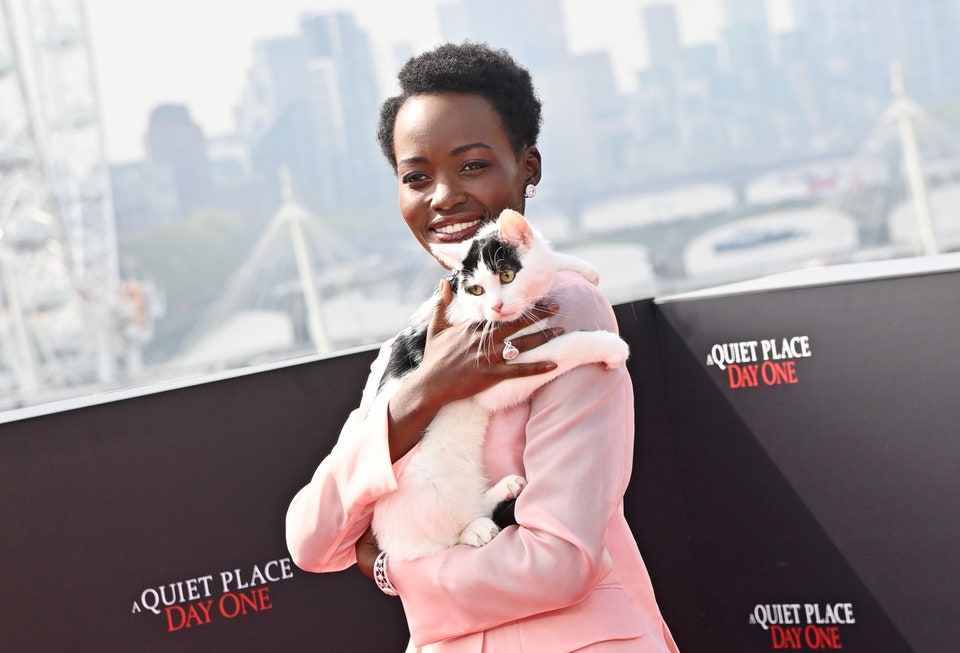
Nyong’o took to the red carpet for the premiere of her newest film, A Quiet Place: Day One in London on Wednesday, and her plus-one was a cat named Schnitzel, who also stars in the movie. Photos show Nyong’o posing along co-star Joseph Quinn, smiling as she cradles Schnitzel in her arms.
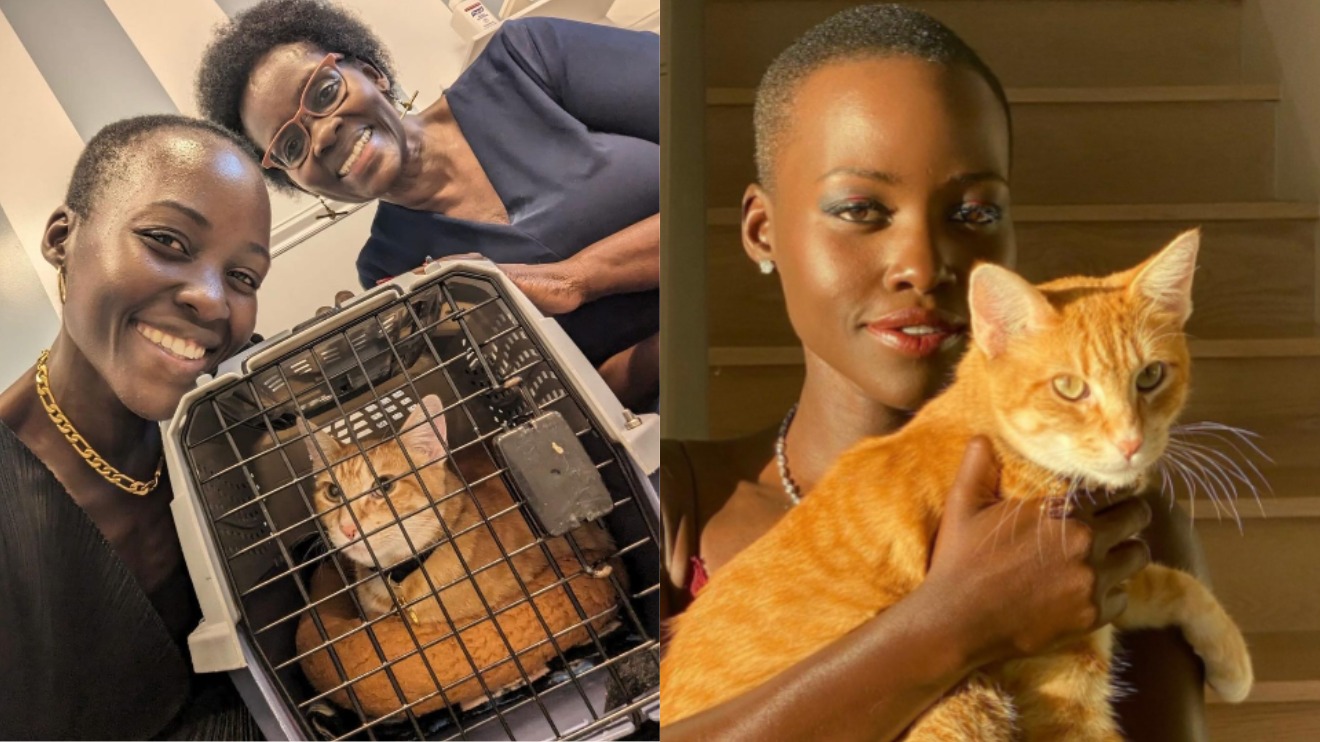
Lupita Nyong’o with her cat, Yoyo. In addition to posing with a cat on the red carpet premiere of her new film, Nyong’o proudly dotes on Yoyo and mentions him often. Credit: Lupita Nyong’o/Instagram
A Quiet Place is a 2018 film about a family that lives a completely silent life on a farm after the civilization has fallen to monstrous creatures that can’t see but are exceptionally sensitive to sound.
The film received nearly universal positive reviews for its use of sound — and the complete absence of it for long stretches — as a tension-building device, and a 2020 sequel continued the story.
Day One, which hits theaters on June 28, promises audiences a look at how the creatures appeared and civilization collapsed.
Schnitzel’s role isn’t entirely clear, but if it’s anything like 2022’s Prey, cats will fill their usual niche as predators, highlighting the difference between terrestrial and extraterrestrial hunters.
Caring for a cat in a world like A Quiet Place could be a double edged-sword: a super vocal cat like my Buddy wouldn’t last very long unless he quickly learned to keep a lid on his constant commentary, but cats are also incredibly sensitive to things that pass beneath the notice of us humans.
Thanks to their incredible hearing, exceptional sense of smell, the advantage of an extra olfactory organ and whiskers that pick up even the slightest stirring, felines are keenly aware of their surroundings.
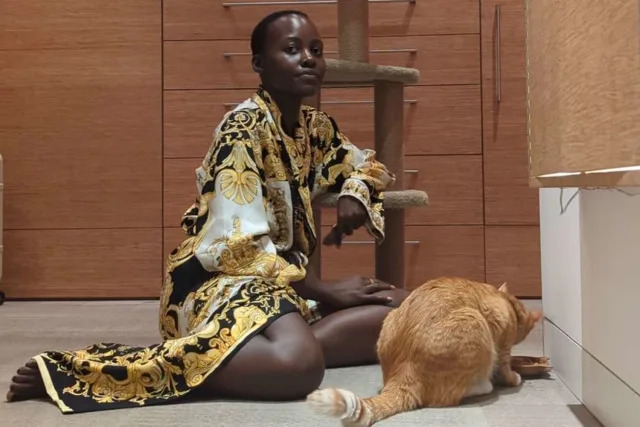
As for Nyong’o, while Schnitzel is not her cat, she’s the proud cat mom of Yoyo, an orange tabby she fostered in late 2023. It only took her three days of fostering the little guy before she realized “I could not give him up,” she said last year shortly after the adoption was made official.
“I never understood people whose phones were full of photos and videos of their pets — now I am one of those people,” she wrote when she adopted the tabby. “It may look like I saved Yoyo, but really, Yoyo is saving me.”
Lupita Nyong’o with Yoyo. Credit: Lupita Nyong’o/Instagram
Have you ever wanted to own or design your own zoo?
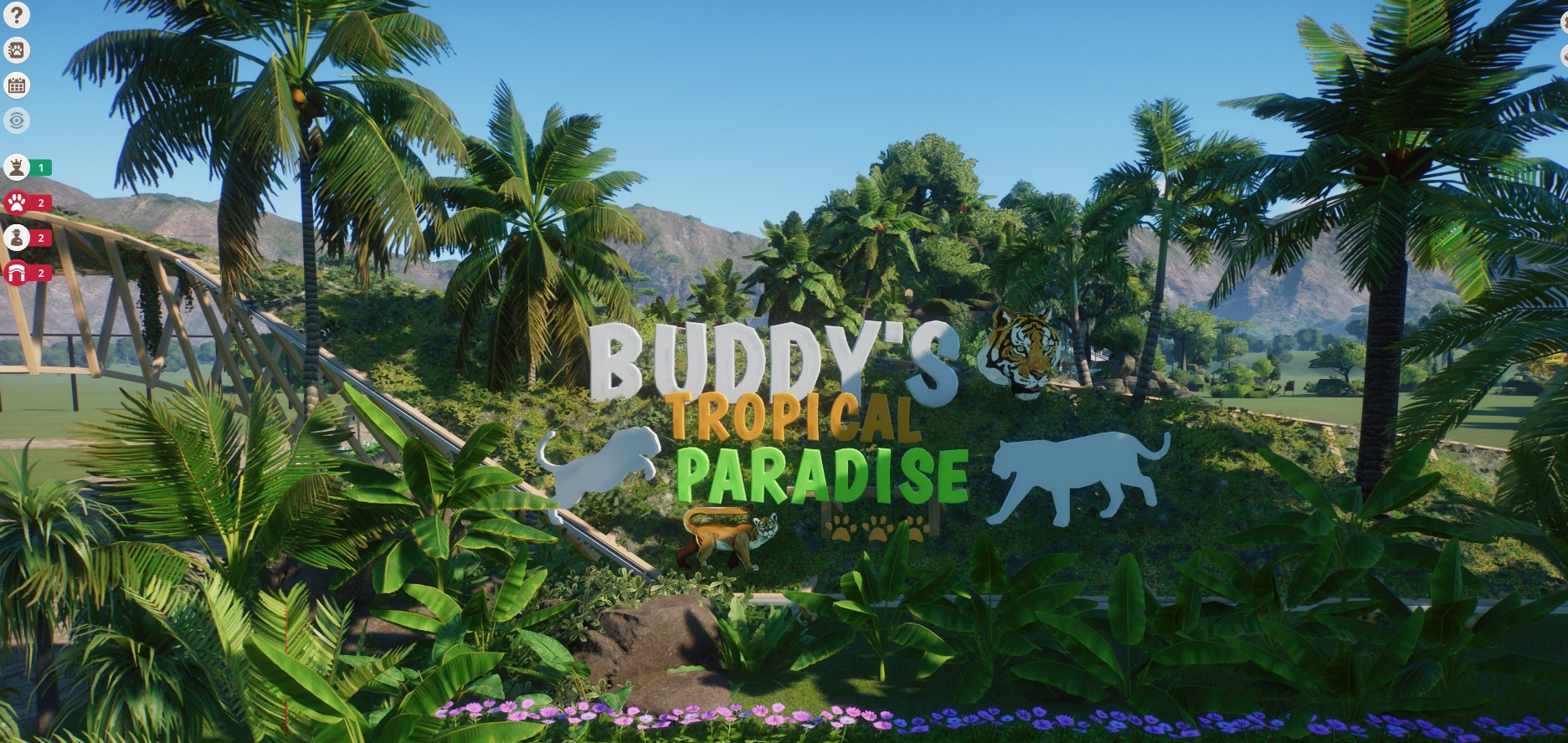
Visitors to Buddy’s Tropical Paradise are greeted by friendly staff who man the entrance, a broad vertical garden shaped like an arch that straddles the main path leading inside.
When they walk through the gate a new vista opens up before them: tiered tropical gardens, waterfalls, and wide boulevards lined with palm trees and flowers. They hear the rumble of big cats calling to each other in the distance and monkeys shrieking as they fling themselves from branch to branch.
Welcome to Buddy’s Tropical Paradise!
A monorail carries passengers above, its tracks looping over animal enclosures and threading tunnels that emerge amid the terraced jungle, eateries and souvenir shops.
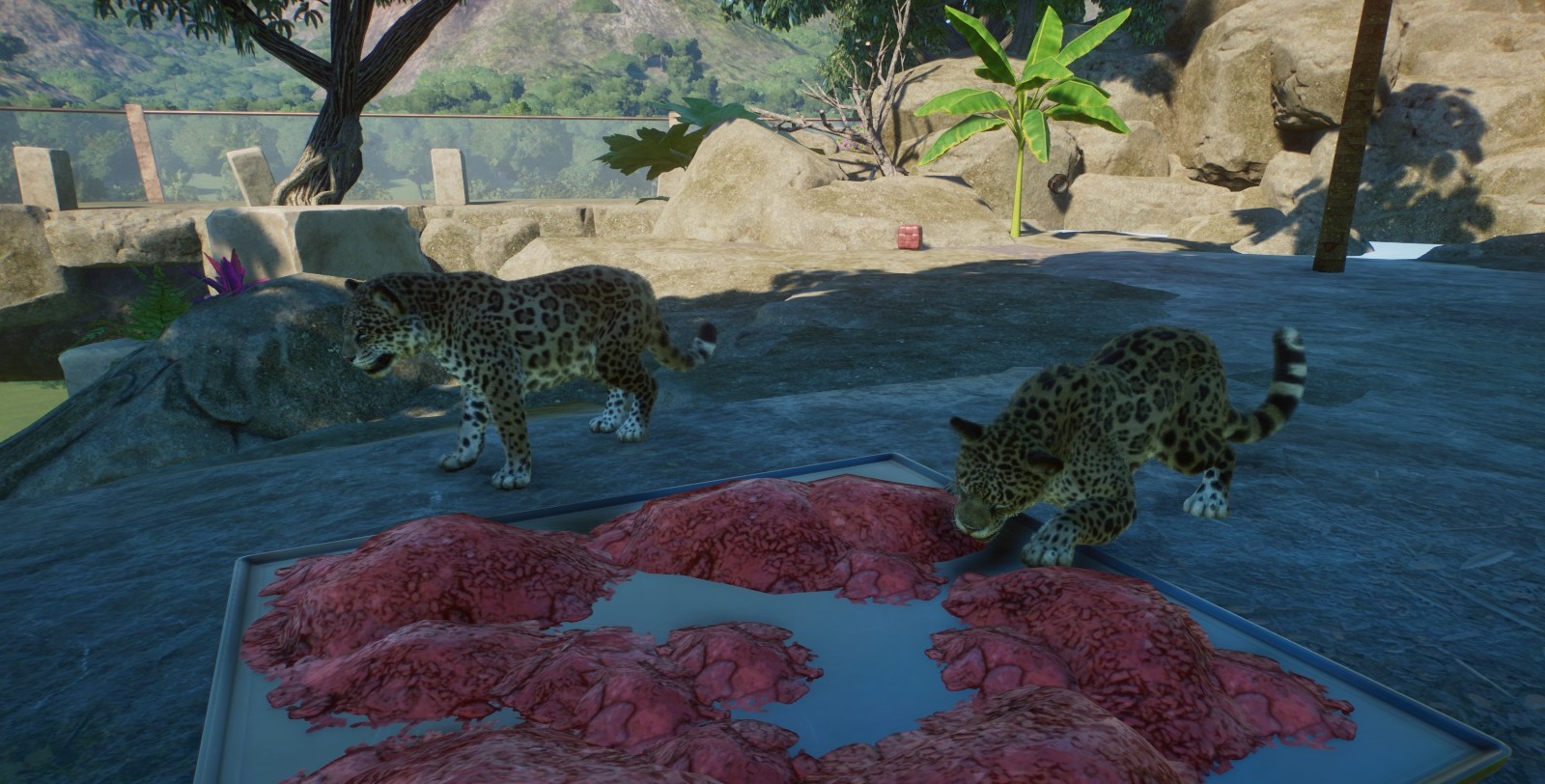
And straight ahead, the first exhibit: a sprawling habitat occupied by jaguars who are enjoying some yums and will probably have a nap in a few minutes.
Buddy’s Tropical Paradise doesn’t exist in the real world, of course. It’s my first attempt at fully functional, guest-attracting park in Planet Zoo, a simulator that allows you to do practically anything you can think of.
You can design your own habitats, enclosures, buildings and scenery. Fancy a monorail that laps the entire zoo? You can do that. Picturing a 1940s style Tarzan-themed jungle boat ride where visitors can see caiman, capuchin monkeys and jaguars up close? Start carving up the river, my friend!
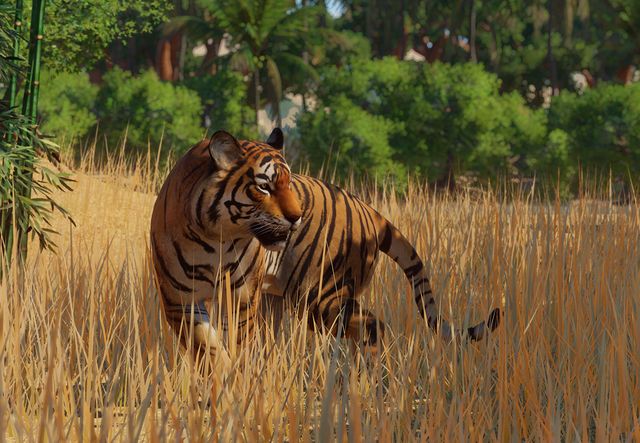
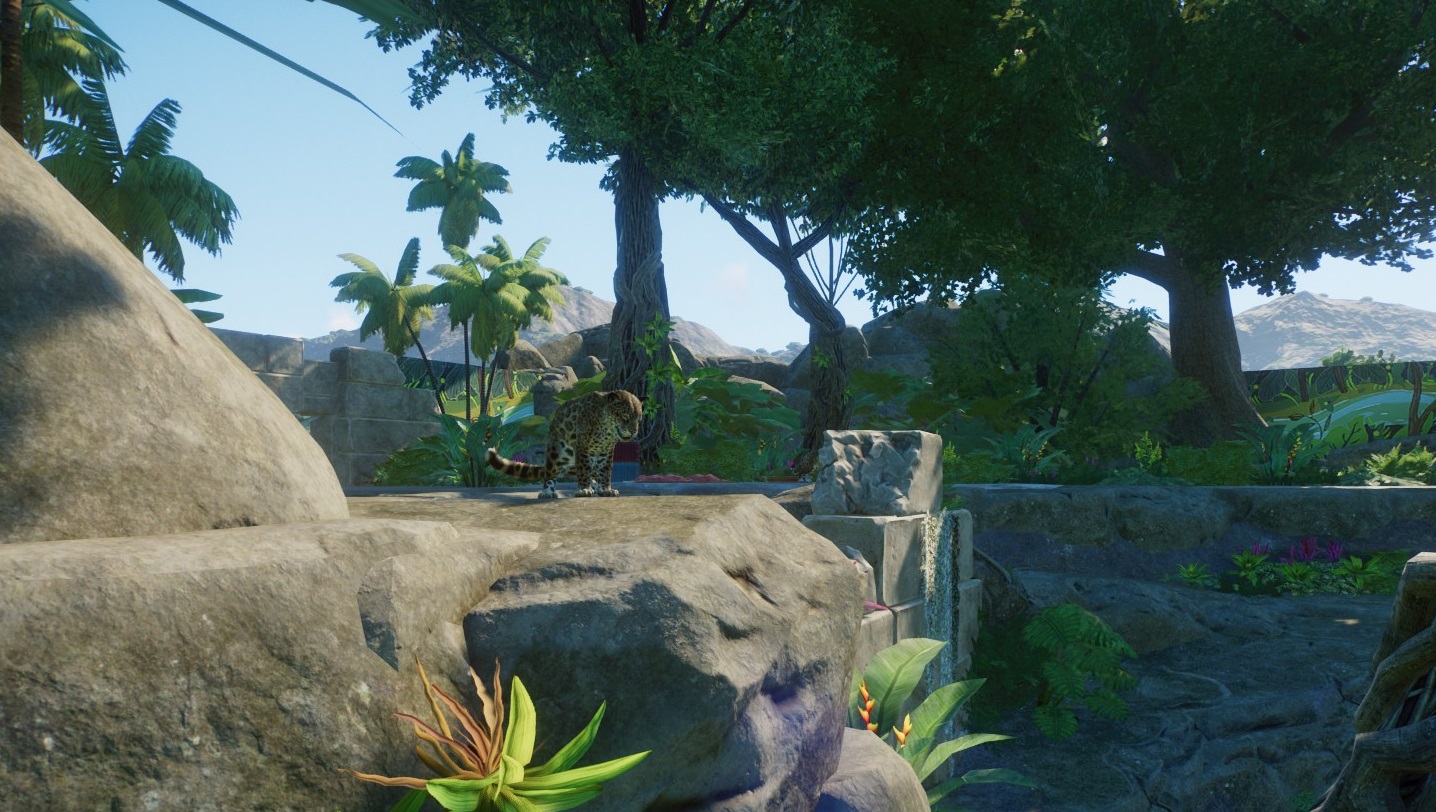
A Bengal tiger stalking the tall grass in Planet Zoo.Lunch time in the jaguar habitat, followed by the all-important nap time.
As the zoo’s architect, you’re responsible for everything. You’ll need veterinary facilities, animal quarantine, keeper huts. You’ll need to staff your park with veterinarians, keepers, security officers, maintenance staff and mechanics.
And don’t forget the vendors to run the souvenir shops and man the food stalls, where your guests can grab hot dogs or cool off with slushies on a hot day.
A suitable home for your animals
Designing a habitat is about a lot more than reserving space for your animals. You’re tasked with picking the right barriers, mindful of which species can climb or leap great heights. A good habitat should reflect the animal’s home in the wild with appropriate flora, temperatures the species thrives in and a feeding system that mimics the way they’d naturally obtain food.
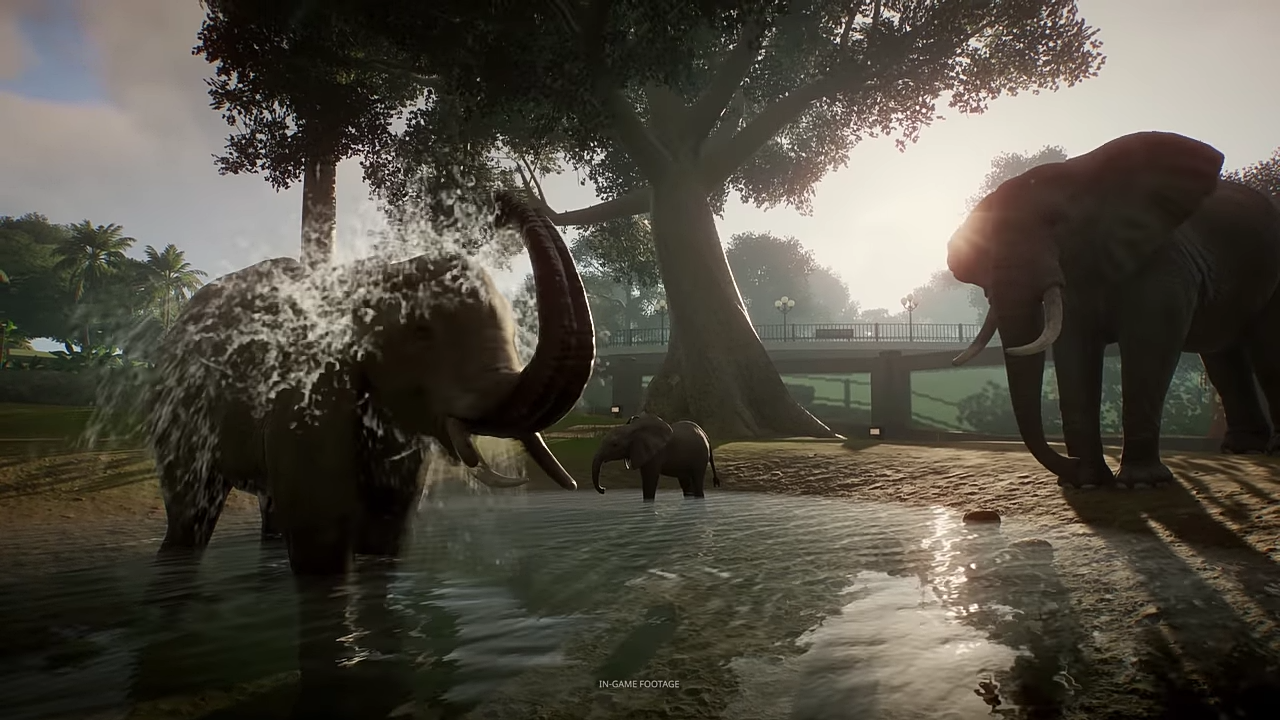
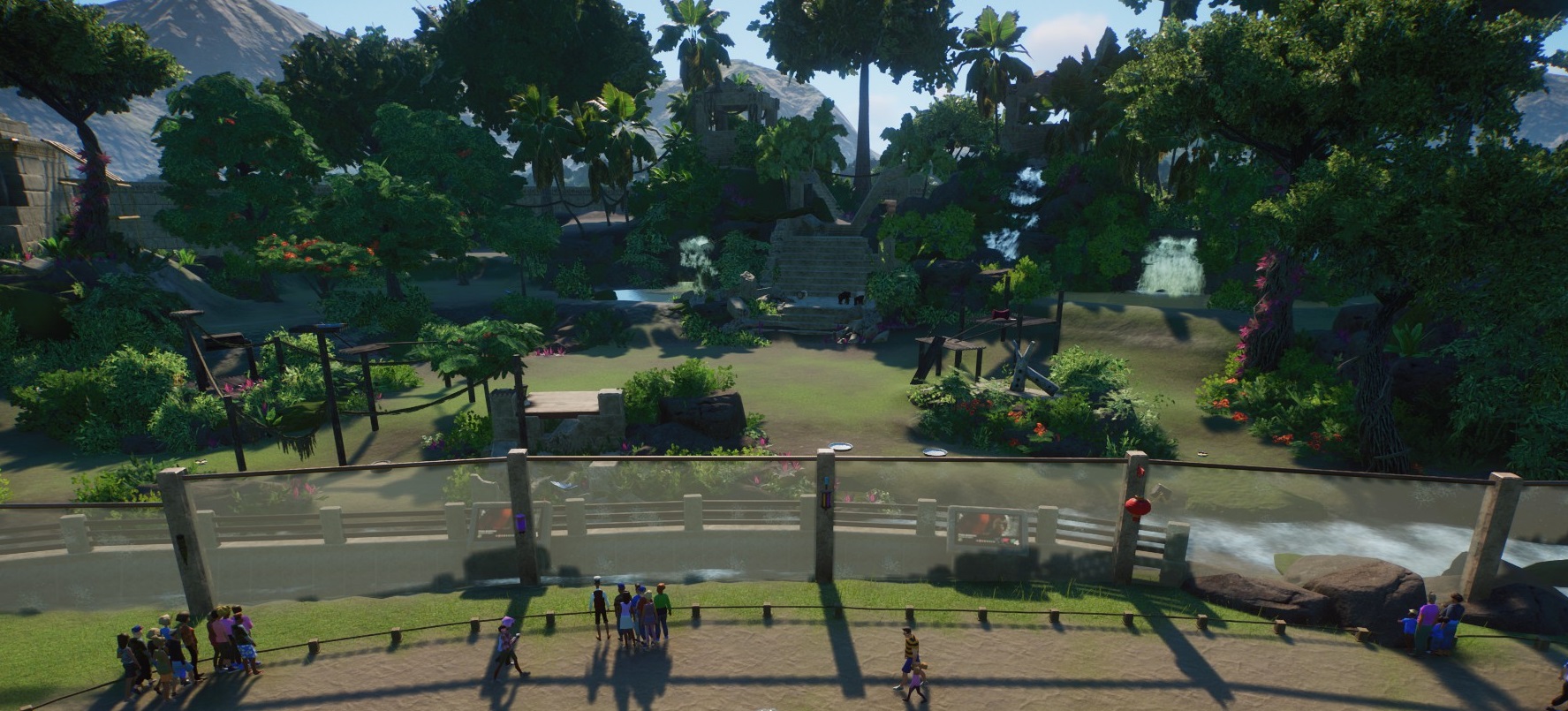
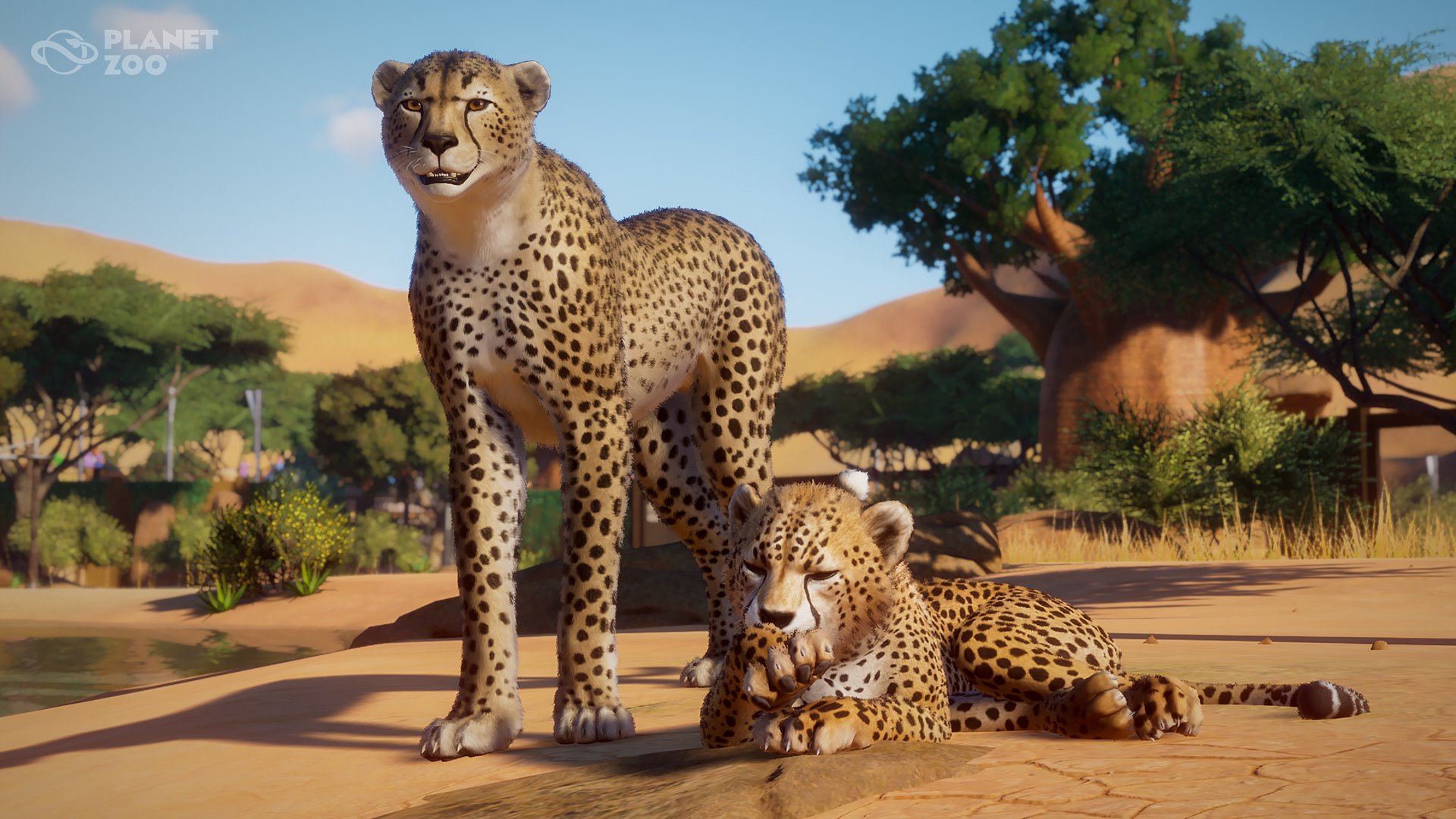
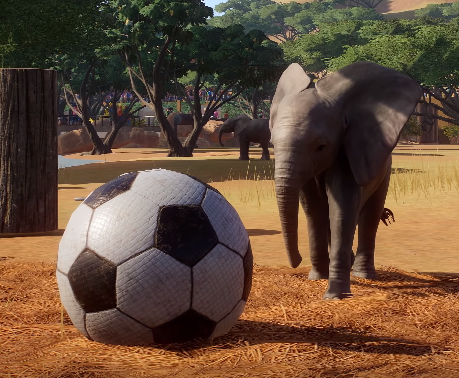
Elephants cool off in their enclosure in Planet Zoo. Every habitat must be designed with the right atmosphere, flora, terrain, shelter and enrichment appropriate for the species it houses.A wide view of my orangutan habitat. Two orangutans are at the base of the stone steps in the distance.Cheetah sisters.
Then there’s enrichment. Trees for your monkeys to climb, ponds for your tigers to take a dip, bushes for your elephants to strip. Different species enjoy different toys and challenges. An ice block with meat in the middle would hit the spot for carnivores on a hot summer day, but your pandas will want bamboo.
Designing habitats and getting them just right is not only fun, it’s an intuitive way to learn about the needs of individual species and how they live.
The leopard learning incident
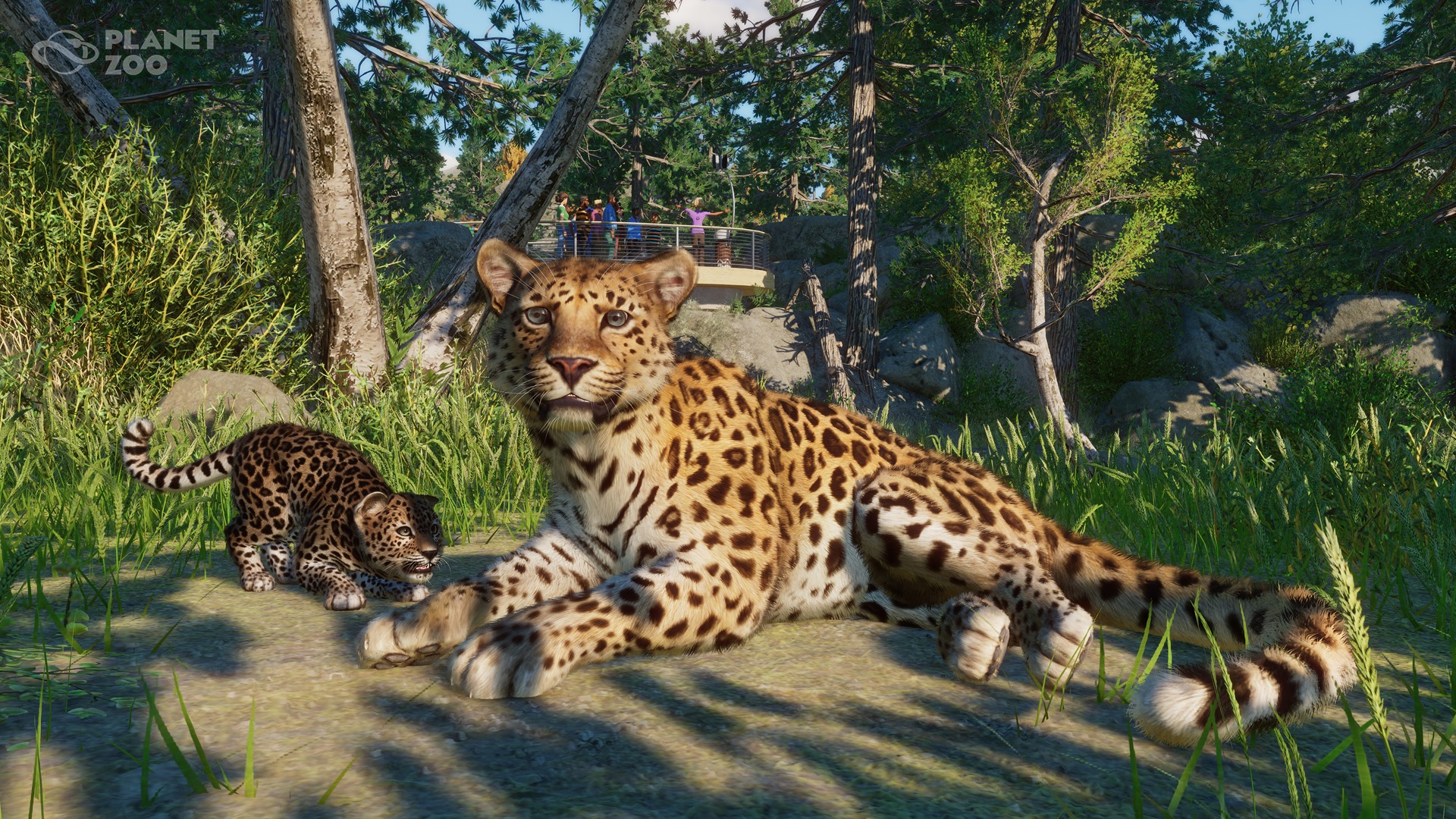
My first stab at building a leopard enclosure was a disaster. It looked pretty enough with its Hindu-inspired temple architecture and pond. There were plenty of scratching posts and trees that could withstand claws.
I installed a sprinkler to help the big cats cool off, designed a series of raised platforms for them to climb, and scattered enrichment items all over the habitat. The leopards had balls to bat around, boxes to sit in, rubbing pads, logs and rocks to climb, and plenty of cover and shade.
But when I had the leopards brought into the zoo, through quarantine and into their exhibit, I realized you can’t just design a home for animals from an aesthetic perspective. I’d used several plant and tree species that weren’t native to leopard habitats, the terrain was wrong and I hadn’t paid any mind to ambient temperature.
Making those mistakes was truly educational. When your animals aren’t happy in Planet Zoo, protesters show up, and it’s up to you to read the alerts about where you went wrong and how to remedy your mistakes. It’s an intuitive and fun way to learn about each species and the environments they thrive in.
The escaped jaguar
I’m still learning the ropes, although I do have a basic knowledge of the way the game is designed thanks to some time playing Frontier’s theme park building game, Planet Coaster. The first time I tried to build a jaguar enclosure, I forgot to wall off a viewing cave with protective glass, which my guests did not appreciate.
Even though jaguars don’t like to confront humans, a big cat is a big cat, and the game sent me urgent warnings as people ran for the exits. When I found the escaped jag, he was lounging not far from his enclosure, watching people freak out.
Enrichment is a key aspect of habitat design. Toys, puzzles, obstacles, climbing platforms for arboreal species, ponds for animals who like to get wet — they’re all necessary to keep animals healthy and happy.
In real life it’d be a disaster, but I was able to revert to a previous save, make sure the viewing cave was sufficiently protected, and this time around I placed only two jaguars — a male and a female — in the large enclosure.
After a while, while I was tinkering with an exhibit meant for capuchin monkeys, the game sent me an alert: the female jaguar was pregnant! She gave birth to two energetic, curious cubs who are currently having fun chasing each other around the enclosure and going for dips in their pond.
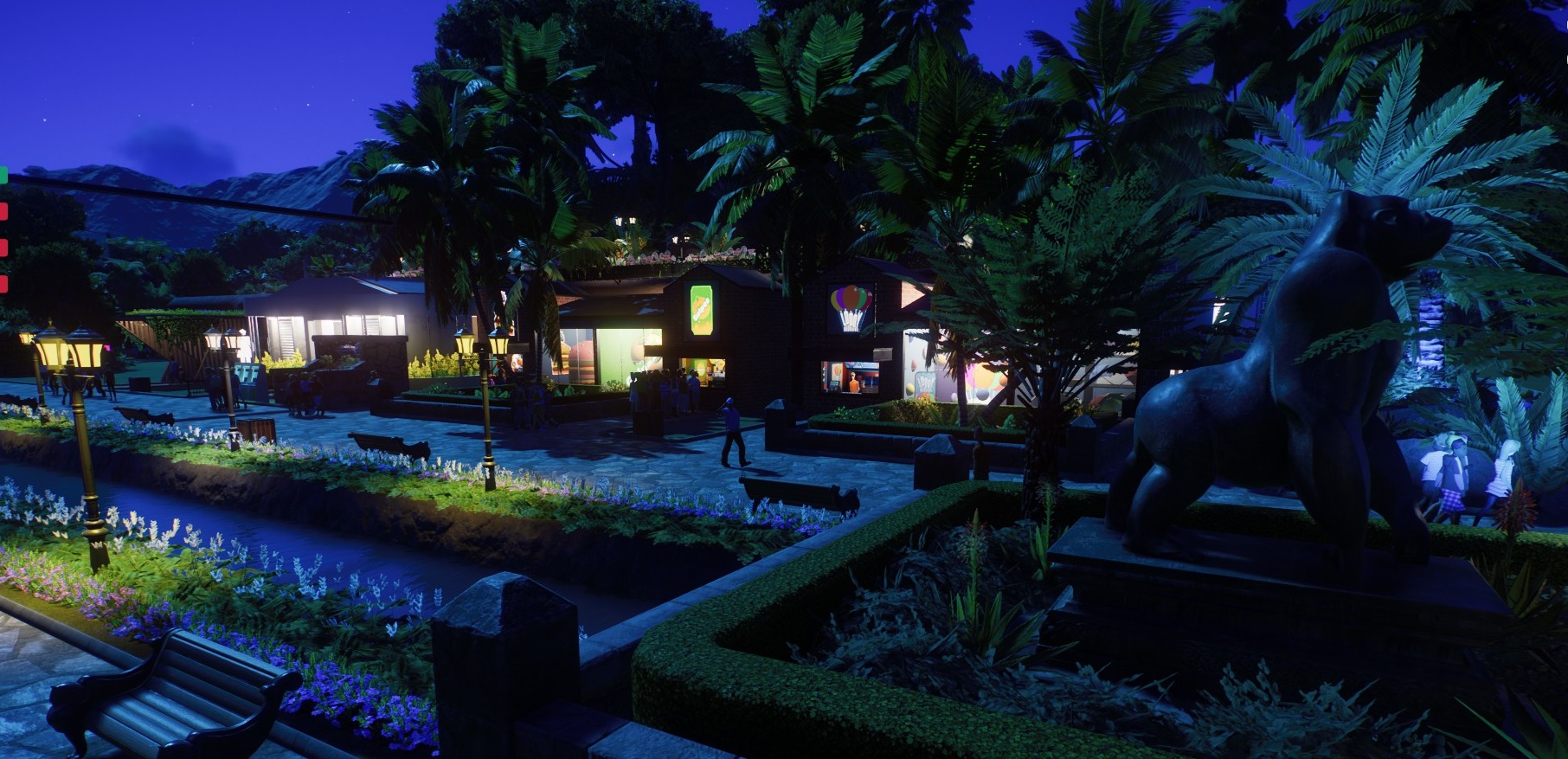
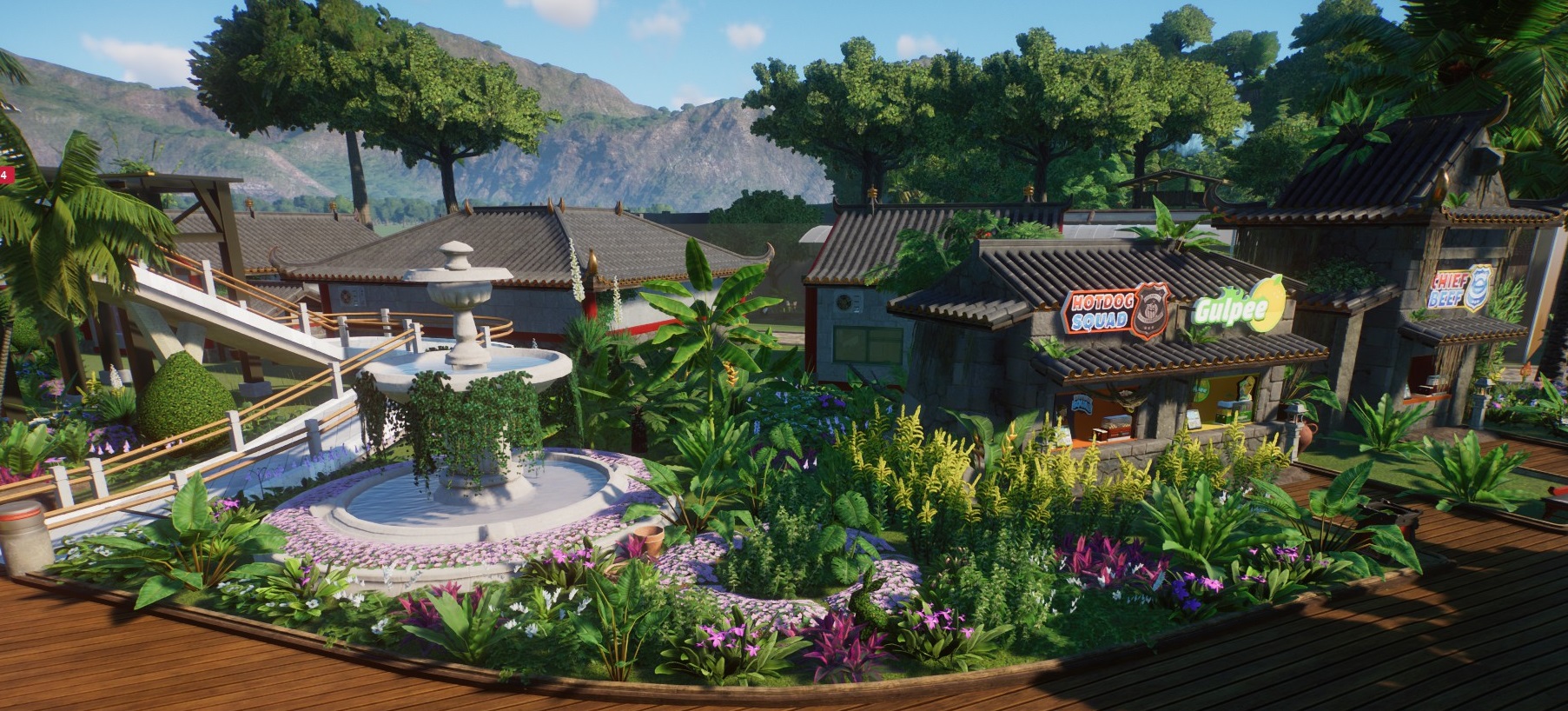
Part of the main boulevard in Buddy’s Tropical Paradise, viewed at night. Players are responsible for everything you see here — lighting, shops, flowers and plants, benches, waste baskets and more.Shops and a monorail station in an unfinished Asia-themed area of the zoo.
As in real life, the game has you source animals from an international pool, with information on breeding and genetics so you can contribute to conservation. When you adopt animals, their first stop is the veterinary facilities for examination, then quarantine. When they pass quarantine, you can have your staff release them into their enclosures.
It took me several hours to familiarize myself with the basics, design an entrance and a main boulevard for the guests, create some tiered gardens with eateries and shops, and get my jaguar and orangutan exhibits up and running.
My monorail currently runs out of track a quarter of the way through the park, and my river boat ride looks pretty cool, with dense jungle, towering trees and the ruins of Mayan temples not far from shore, but completing it will require appropriate barriers to keep the animals in as well as building out more scenery.
A jaguar in her habitat.
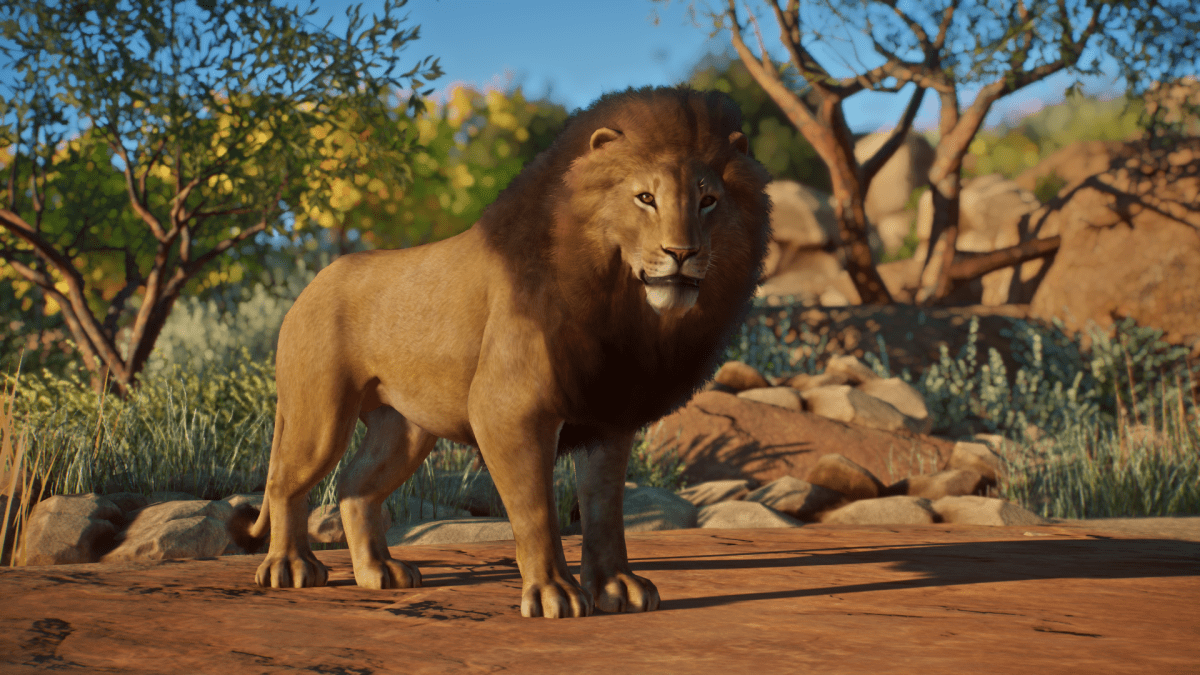
I’ve got my sights set on an elephant exhibit next. It will be necessarily huge, so it’s good to reserve the land early and plan smaller exhibits and facilities around it. I’d also like to put the elephants, lions, zebra, giraffes etc into one Africa-themed section of the park, while the tigers, giant pandas and snow monkeys will be housed in an Asia-themed section, with buildings that reflect the architectural styles of countries like Japan and China.
There are also aquatic exhibits, animals for your own reptile house and aviaries. Those enclosures are more complex than the relatively straightforward orangutan exhibit, for example, so I’ll have to spend some time figuring out what makes a good home for peacocks, sharks and komodo dragons.
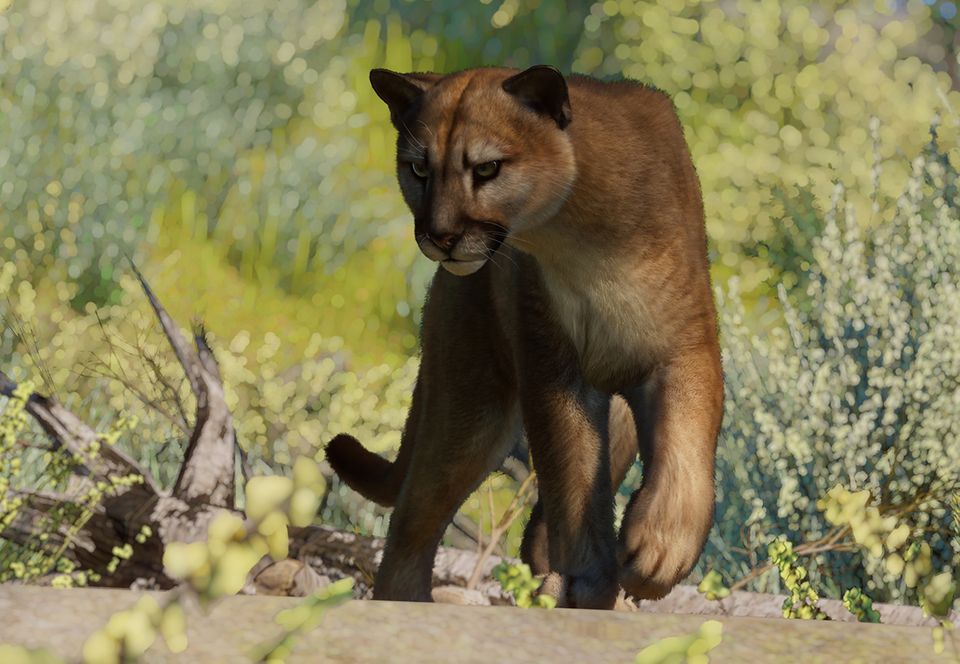
So far I’ve resisted the temptation to make one giant felid park, with snow leopards, pumas and cheetahs joining the tigers, lions, jaguars and others. Of course I did name it Buddy’s Tropical Paradise, so I may be forced down the all-cat road if Bud gets his say.
Planet Zoo is not a traditional video game. There are no winners or losers, and there’s no “end state” unless you intentionally include one.
It’s more relaxing and much slower-paced than your typical game, and it’s a great feeling when you’ve managed to take something from your imagination and perfect the design. When you want to check your progress or just admire your own work, you can set the camera to follow guests and watch as people stroll through your zoo, taking in the sights and sounds.
In that sense it’s more like a virtual model train set or living diorama. You can load up the game and tinker with your zoo when you’ve got a spare 15 minutes, or spend a few hours getting absorbed in the finer details of how to keep pangolin and red pandas happy.
Planet Zoo is appropriate for all ages, although its depth and complexity would probably be a lot for younger kids. In that case, it’s probably best to have an adult guide them so they understand the game is built on interlocking systems: exhibits need power and water, shops need staff, veterinary surgeries need veterinarians and so on.
It’ll have enormous appeal to kids who enjoy Lego, Minecraft and other building games, so if you’ve got a little builder in your life, this could be a good fit. But make no mistake, there’s a lot here for adults to enjoy too.
PITB verdict: Four out of five paws!
The only thing keeping Planet Zoo back from a five-paw rating is the DLC (downloadable content) scheme, which requires users to pay extra for certain “packs” containing extra animals, scenery pieces and scenarios. That’s a problem plaguing the larger video game industry, but if you wait for a sale, the normally $44.95 game can be had for as low as $11.24 on Steam. DLC is likewise discounted. Steam’s summer sale is a great opportunity to get games like this for a fraction of their normal price. This year’s summer sale is scheduled for June 27, though it’s possible Planet Zoo could be put on sale before then as well.
Matt Damon rescued a stray living on the periphery of a Costa Rican jungle.
Matt Damon stopped by the Late Show With Stephen Colbert this week, and somehow they got on the topic of Damon’s cat.
The Oppenheimer actor described how he and his wife gained the feline’s trust while staying at an AirBnB in Costa Rica. The cat, who was living on the edge of the nearby jungle and “fighting for his life every night,” gratefully accepted food from the Damons and grew to trust them over the month they spent at the rental.
“By the end we were like, ‘We have to take this cat. This guy’s gonna die. Now he’s relying on us.'”
It turns out the little brawler was done with living rough and enthusiastically took to the life of a pampered house cat.
“He moves into our house, and I’m thinking ‘I have a little yard out in LA, it’ll be great out there [for him],'” Damon told Colbert. “He never went outside ever again.”
Damon’s cat had a serious health scare, but the story has a happy ending and it’s better to hear Damon tell it, so turn up your speakers/headphones:
Yes, Damon’s cat may be “jacked,” and he may even be the Arnold Schwarzenegger of felines, but surely he doesn’t compare to the OG of ripped and meowscular cats.
Cats have exceptional hearing abilities and can detect sounds in frequencies well beyond what the human ear is capable of hearing, but can they appreciate music?
The question of whether cats appreciate music is an interesting one, and we still don’t have definitive answers despite attempts to make music for our furry friends and study the way they respond to sound.
We’ve mentioned the ongoing efforts to make tunes for felines on this blog before, and previously experimented by playing composer David Teie‘s “Music for Cats“ for our brave volunteer, Buddy.
Excited by the possibility of music specifically designed for cats, and a study in the Journal of Feline Medicine and Surgery that found it had a calming effect on the species, we queued up a track and watched the Budster’s reaction:
“Using Buddy as my test subject, I went to Youtube, selected the track Cozmo’s Air from “Music for Cats” and sat back, expecting Bud to start nodding his furry head at any moment.
Instead his ears pricked up, did their radar-dish swivel toward the speakers, and his eyes went wide. As the song gained volume and intensity, Bud’s ears and whiskers snapped back and he let out a clearly anxious “yerrrrrrrrrrppp!” I tried to calm him down, to no avail, and a second track didn’t improve things.
He wasn’t having it.”
Over at Catster, Christopher Bays writes about his cat, Olga, and her relationship with music.
Olga “has listened to classic rock, jazz, blues, classical, heavy metal, punk (or new wave?), and accordion tunes from Hungary, and it all sounds the same to her,” Bays concludes.
“Spinning the megamix, bro.”/PITB
Noting that our tastes change as we age, Bays said he’s thankful Olga wasn’t around during his teenage punk and metal phase (ditto), and notes she’s not particularly interested in any sounds coming from electronic devices, with the exception of the roaring MGM lion. (Fun fact: The famous “lion’s roar” is actually a recording of a tiger played over footage of a lion yawning. The creators apparently felt lions don’t sound sufficiently badass enough.)
Bays points out our cats don’t exactly have control over what we play, and while that’s true, if you’re a genre-hopper like me, you’ve probably observed your furry friend’s reaction to various types of music.
Given the fact that the small amount of research done so far indicates cats do respond to tunes — and the existence of music-loving animals like Kiki and Snowball — I think felines probably are capable of enjoying the organized, rhythmic arrangements of sounds we call music.
I can’t say whether a favorite track can unleash a wave of emotion, nostalgia or energy the way it can for us humans, but I’ve played a lot of music around Bud and even played music for him on my guitar and keyboard.
He seems very comfortable with old jazz, soul and funk, he comfortably loafs when I’m in the mood for classic 90s hip hop, and he seems to tolerate the prog rock of Coheed and Cambria well enough. More recently he’s been on a 90s nostalgia trip with me: Blues Traveler, the Spin Doctors, Nirvana, Oasis, Better Than Ezra, Letters to Cleo, Ash, Weezer, Blur, The Roots.
And he seems especially chill in the sonic presence of synthwave, also called retrowave, an EDM-inflected genre that evokes nostalgia for an era that never really existed outside of 80s retrofuturism. It’s highly rhythmic, with steady 4/4 beats and vintage synthesizers cranking out arpeggios that rise and fall like waves, which may be a source of comfort to a species that likes things just the way they are without any big surprises.
Have you noticed your cats responding to music? What’s your kitty’s favorite genre or song? Is there anything they clearly don’t like?
The last few decades have revealed birds like crows and parrots possess astonishing intelligence. “Bird brain” might not be much of an insult after all.
Meet Kiki the cockatiel, a bird who loves Earth, Wind and Fire so much that he sings the band’s classic hit, September, regularly — whether he’s just chilling by himself, singing along to the recording or driving his human crazy by whistling the catchy hook at ungodly hours.
“Kiki, it’s seven in the morning!” she tells him in one clip, raising an admonishing finger. “Silence!”
I’ve always thought parrots are a fascinating example of animal cognition and further proof that we share our planet with billions of other minds who think and feel.
Humans and birds last shared a common ancestor more than 300 million years ago. That means between them there’s been more than 600 million years of divergent evolution resulting in radically different physiology, abilities and minds.
Yet parrots can speak while non-human primates (apes and monkeys) cannot!
For decades scientists thought apes and monkeys, by virtue of their relative similarity to humans, possessed an inmate affinity for language and that the physical limits of their vocal apparatus is what keeps them from speaking.
But a 2016 study by a team from Princeton University found monkeys do possess the vocal “hardware” to speak, meaning their mouths and throats are capable of making the sounds necessary for human language. It’s the lack of associated brain circuitry that prevents them from talking.
If the ability to speak and the ability to dance/appreciate music and rhythm is uniquely human among the primate order, and birds arrived at it at a different point in their evolutionary history, that means language and appreciation for music/rhythm developed separately along two divergent evolutionary lines!
That’s incredible and has intriguing implications for the cognitive abilities of animals.
A common argument is that birds with the ability to form human speech are simply mimicking sounds and don’t understand what they’re saying. That’s a natural assumption given what we think we know about non-human capacity for understanding language, but research suggests it’s wrong.
Take a look at this video of the famous late African grey parrot, Alex:
When Dr. Irene Pepperberg asks Alex how many blue blocks are present on a tray with a random assortment of blocks, balls and triangular toys in different colors, Alex can’t give a rote answer. First he has to understand that a question is a request for information and not part of the strange human ritual called small talk. He can’t simply count or guess at the number of blocks either.
Instead, Alex has to perform two calculations. He must tally the blue objects and count the number of them that are blocks, or he’s got to count the number of blocks and figure out how many of them are blue.
If he was simply repeating information in context — like saying “Hello!” when a person walks into a room — Alex wouldn’t be able to correctly answer the questions, and Pepperberg’s research funding would have dried up. Instead, Alex became a focal point of research that persisted for decades.
There’s no indication Alex could master syntax, which has proven elusive for even the smartest animals. But the African grey, who died in 2007 at 31 years old, was curious, asking questions that were unique and unexpected of an animal. He once asked his caretakers to describe his physical appearance, and the night before he died, he told Pepperberg: “You be good. I love you. See you tomorrow.”
We’ve talked about parrots before on PITB, including Snowball the dancing cockatiel who not only appreciates music and has a great sense of rhythm, but also has an entire repertoire of unique dance moves. Then there’s my personal favorite, Ruby the African grey, who has demonstrated mastery of absolutely vile, uniquely British insults.
Sure, there may not be much research value in hearing Ruby hurl verbal abuse at her very loving human, Nick Chapman, but few things have made me laugh as hard as that extraordinarily foul-mouthed bird. She has to be seen and heard to be believed. (But if you’ve got kids in the room, stick with the wholesome Snowball. He’s got serious moves.)
Scientists credit Snowball with choreographing his own dance routines, with dozens of individual dance moves and combinations, and moves that change depending on the song he’s rocking out to.
Now if you’ll excuse me, I’m off to teach a certain feline a few Earth, Wind and Fire songs in the hope that he’ll give up on the screeching meows and use his natural falsetto for a more gentle wake-up experience.
Hey, hey, hey Ba-dee-ya, hey there my Big Buddy Ba-dee-ya, Little Buddy’s hungry! Ba-dee-ya, get your lazy ass up and feeeeeed me!