Today Is ‘Respect Your Cat Day’!

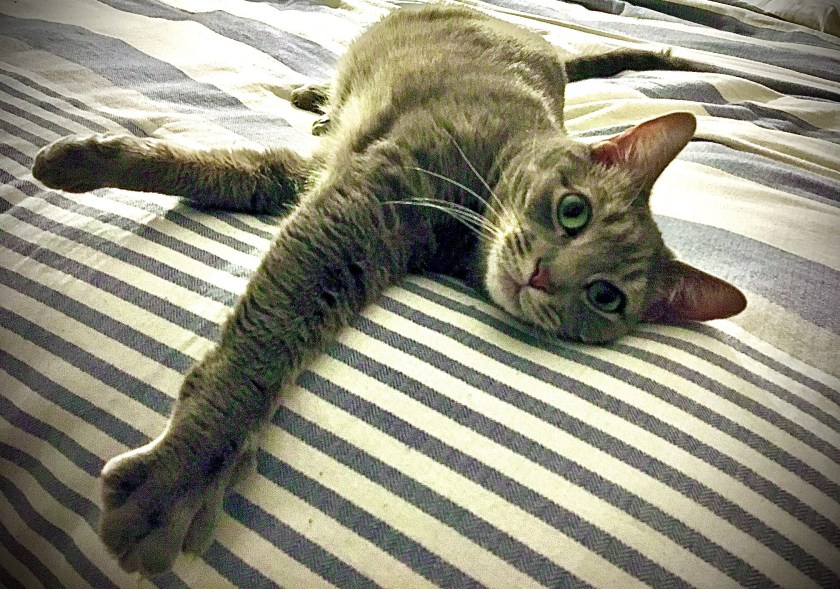
Buddy expects a proper spread for National Respect Your Cat Day.

To: Buddy the Larger

From: Buddy the Smaller But Smarter and Better Looking

Memorandum on National Respect Your Cat Day

Dear Big Buddy,

As you know, Sunday (March 28) is National Respect Your Cat Day, a very important holiday!

Last year’s spread was subpar and underwhelming, so you find yourself in receipt of this message in an effort to avoid repeating the Great Tragedy of 2020.

This year’s spread should include a selection of cheeses including cheddar, swiss, provolone and my personal favorite, gouda, in addition to a delicious array of meats including turkey, turkey and more turkey.

You can skip the veggies: No plants except catnip and silver vine!

In the spirit of today’s holiday you must play with me more than usual, give me more massages, tell me I’m a good boy at least 20 times, and above all, respect my authoritah!

It’s gonna be an epic partay!

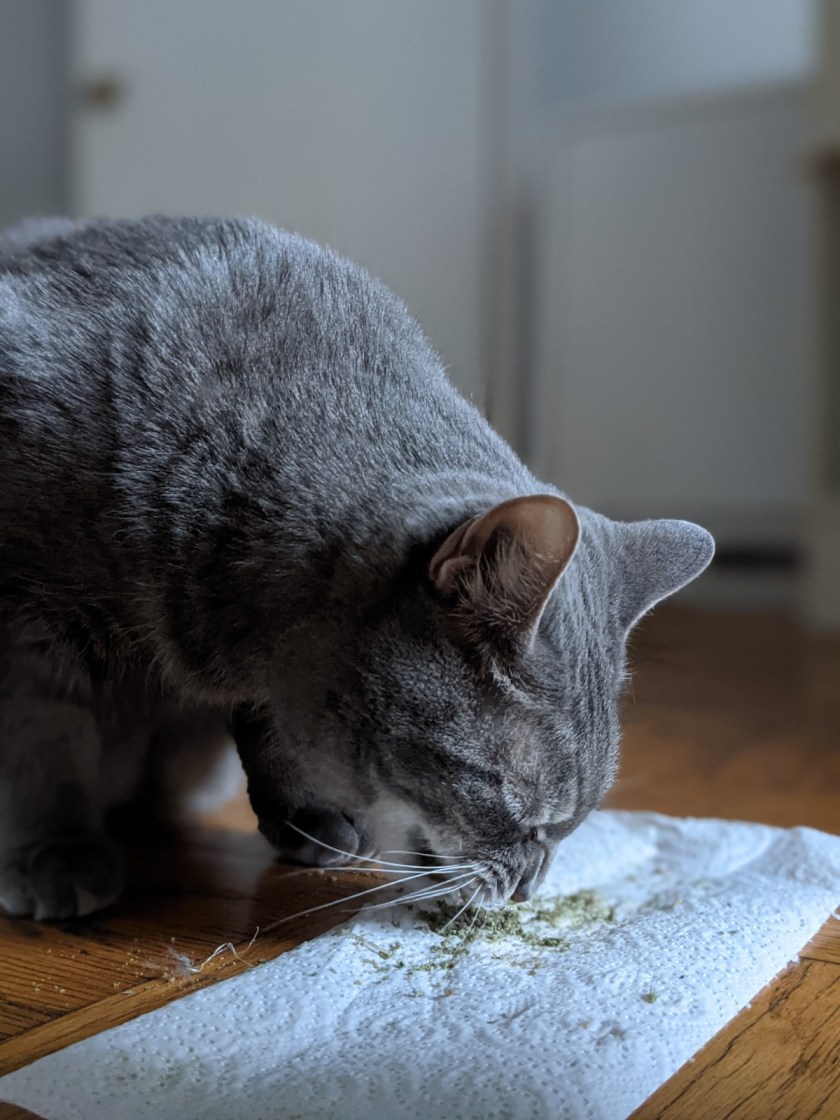
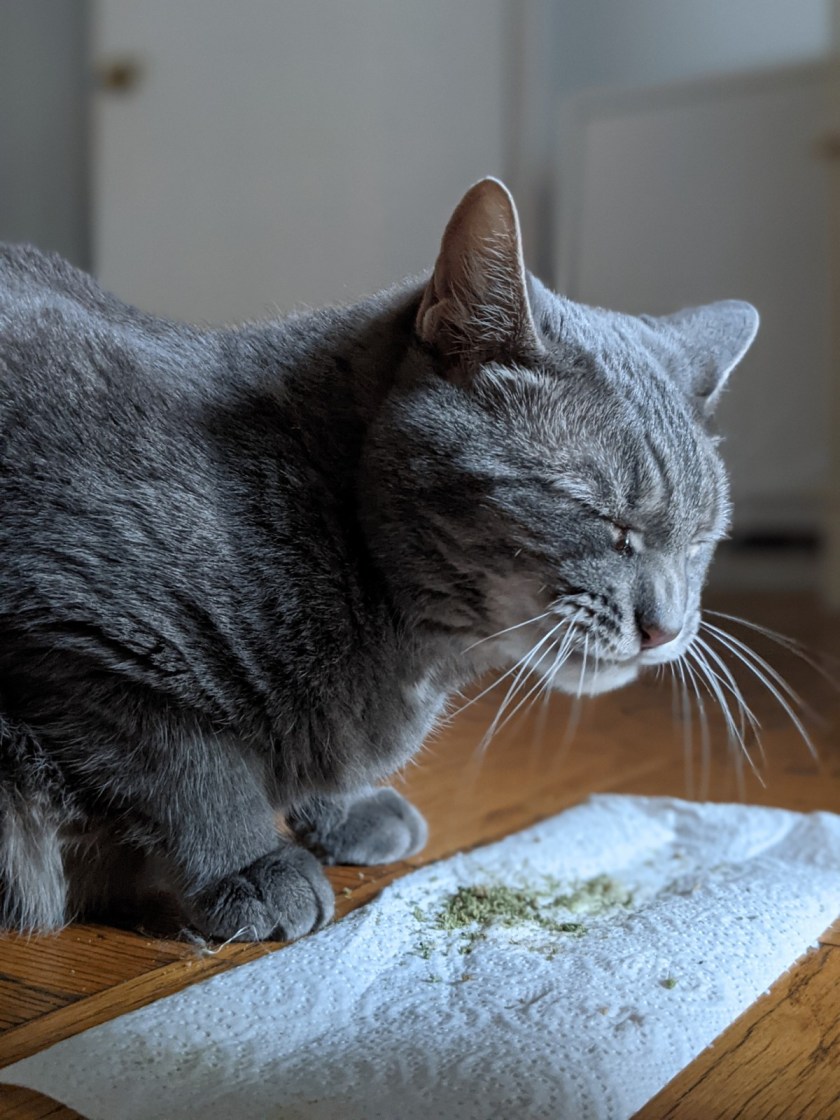
Buddy on catnip
Mmmmm, catnip!
Buddy on Catnip
Oh yeah! That’s good!
Buddy on catnip
“I think…I’m pretty sure I’m feeling it. Oh yeah! Break out the laser pointer and the snacks!”
2FCDCAEB-2EB1-427B-B340-D4003AB9D8AB
Buddy the Cat, a true hero.

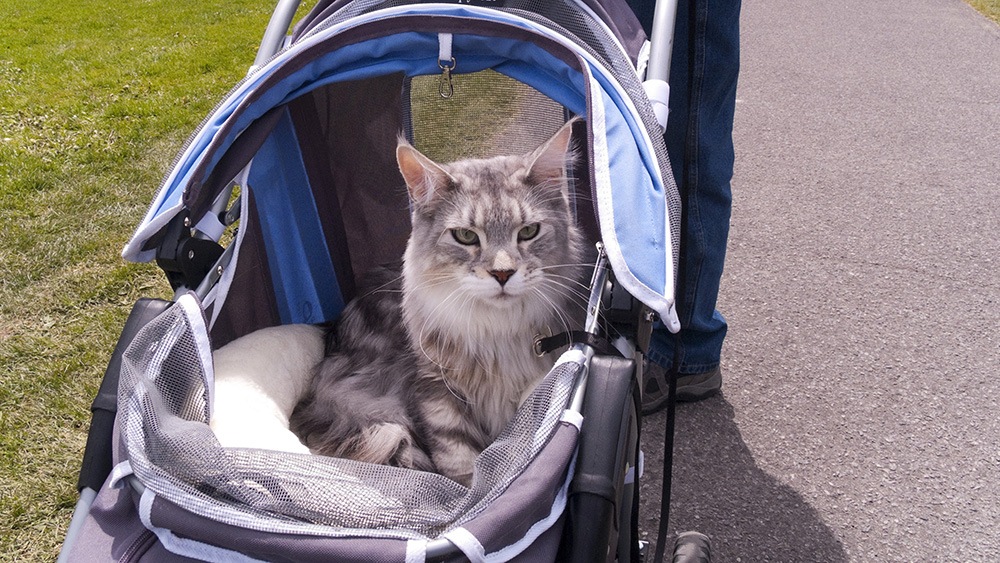
Buddy Acquires Chariot From Which To Lead His Armies

Little Buddy dreams of becoming a military general.

NEW YORK — Buddy the Cat came a step closer to achieving his dream of becoming a powerful feline warlord on Saturday with the acquisition of a glorious chariot, sources confirmed.

“From this chariot, adorned in full battle dress, I shall survey the fields of conflict and lead my forces, bringing to heel all who would oppose me,” Buddy said, excitedly jumping onto his new vehicle of conveyance.

“Perish in the flames of my righteous fury!”

Sources familiar with the militant tabby cat said that after completing the HBO series Rome, his past several days have been consumed with talk of “raising fresh levies,” and constructing a campaign map out of cat food, with clumps of kibble representing legions and treats representing generals.

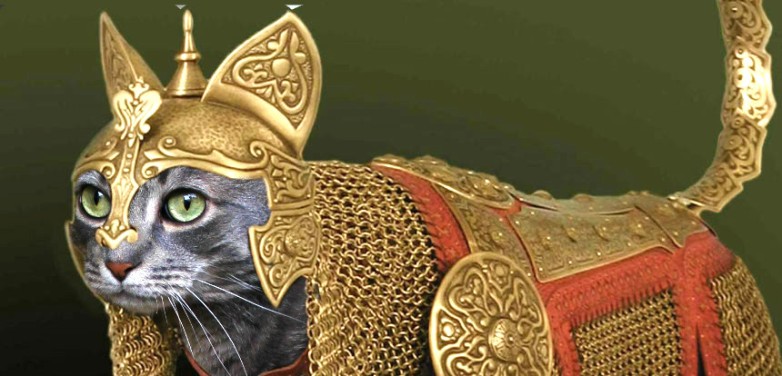
Warrior Bud
Buddy in his battle armor.

Several felines familiar with his thinking said he’d assembled a plan to capture and conscript the strays and ferals of his immediate neighborhood before turning toward the next realm, which is ruled by Lord Lorenz Macaro, a powerful shorthaired Chartreux.

From there, Buddy would set his sights on conquering the fabled Store of Groceries.

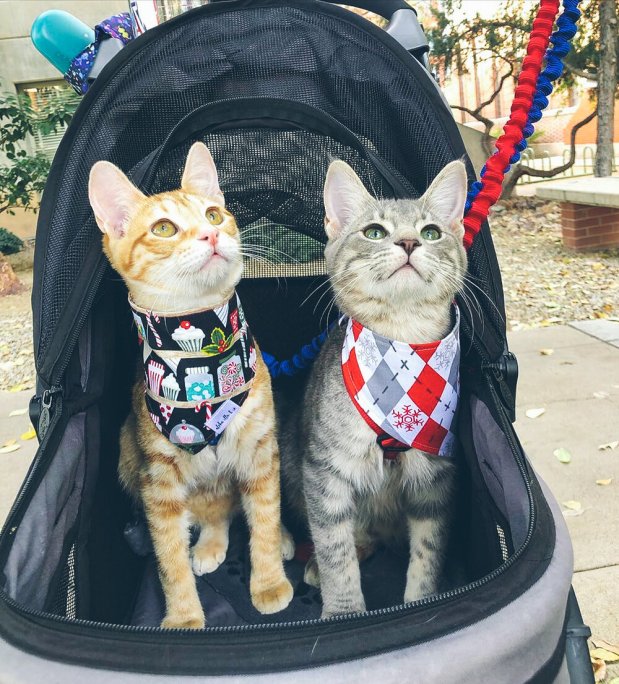
The aspiring warlord cat had his human take him on a test run and was surprised to see several human infants in their own chariots.

“Excuse me,” Buddy asked a young mother pushing twins. “I didn’t know human babies rode war chariots.”

The woman laughed.

“War chariot, is it?” she laughed. “May I say, you look so adorable in your own little kitty pram!”

As of press time, sources close to Buddy said the enraged tabby cat had refocused his ire on Big Buddy for lying to him and telling him a baby stroller was a war chariot.

Cats in Mighty War Chariot
“On my mark, unleash hell!”

Why Your Cat Doesn’t Want A Hug

Kitty does NOT want a hug.

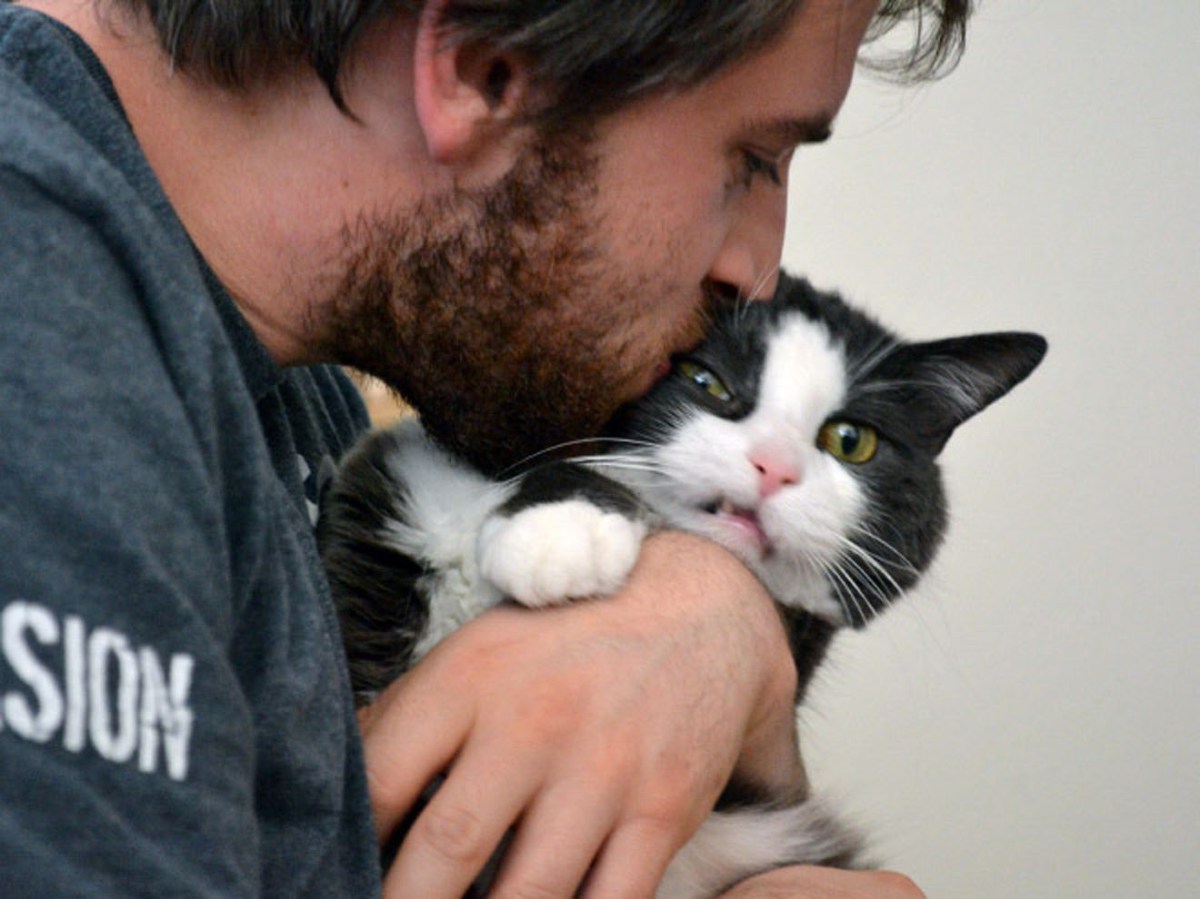
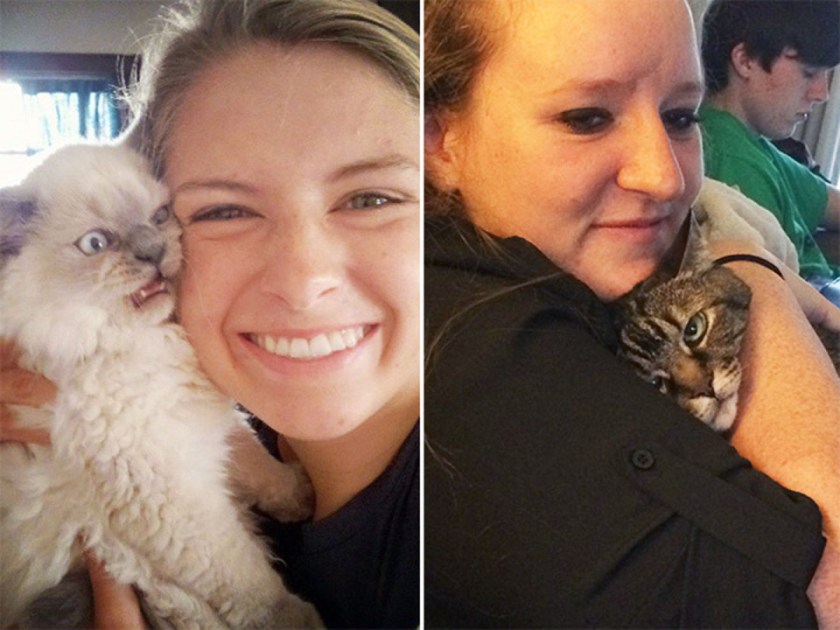
The Daily Mail has an amusing photo gallery of cats looking annoyed as their human servants pull them in for hugs.

Some of the cats have unmistakably disgusted looks on their faces, some use their paws to push their people away, and a few even sink their teeth into their humans when the latter prove themselves oblivious to every other form of communication.

40343966-9351261-image-a-22_1615477179636

I’d like to think most of the people pictured aren’t experienced caretakers, because while every cat is different, as a general rule cats aren’t fond of hugs. That should be apparent almost immediately to anyone who bonds with a cat.

Why? Because cats don’t like feeling restricted, and to them, a hug is an animal 10 to 25 times their weight manhandling them and preventing them from leaving under their own power.

Cats aren’t comfortable with that for the same reason they don’t like being cornered and having their escapes blocked.

Of course we all understand the impulse to hug cats. They’re small, cute, fluffy little animals who behave a lot like furry toddlers and amuse us with their endearing quirks.

But as with petting, if you want your cat to enjoy hugs, your best bet is to allow kitty to come to you and seek affection on her own terms.

In short, treat them like the living beings they are and respect their feelings. They’re not pillows.

I try to limit my unsolicited petting to a quick chin-scratch or head rub in passing. If Bud wants more, he lets me know. By respecting his boundaries I’m also letting him know that approaching me when he does want affection will result in a stress-free experience: The little dude will climb onto my shoulder or pad up onto my chest, his entire body vibrating with his powerful purring, and nuzzle his cheek against me.

That’s his way of letting me know he’s in the mood to have his head and cheeks rubbed and his chin scratched. Often I’ll just hold out a hand at first, letting him guide my hand to the top of his head.

That builds trust so that when Bud is relaxed and lays down on my chest, I can hold him for a few minutes and rub his head as he purrs. He knows I’m not going to stifle him.

That’s how you hug a cat. Many dogs seem to enjoy getting scratches and pets any time, indefinitely. Cats don’t.

Buddy the Manly
“Back off, human, or face the wrath of my fangs and claws

Again, cats are like humans — they each have their own personalities, likes and dislikes. Learning them shouldn’t be difficult, but one thing is universal in feline-human relationships: The more trust you build, the more your cat will seek you out and want to spend time by your side.

nintchdbpict000261274812

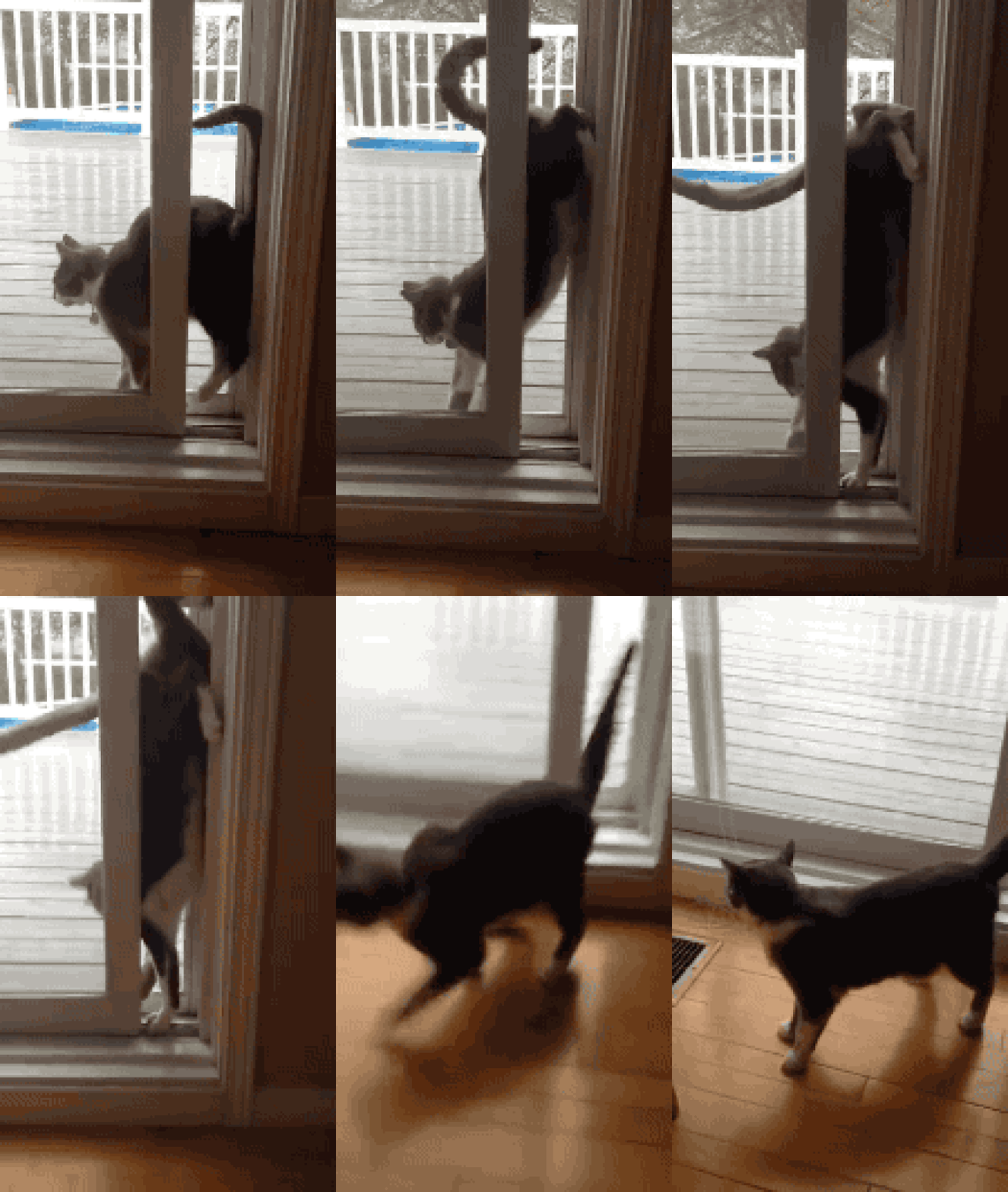
Cat Figures Out How To Open Sliding Glass Door

Cats never fail to surprise us.

Folks, this has terrifying implications for the Budster. Whatever you do, don’t show him this video!

The short clip shows Olive, a tuxedo kitty belonging to Beth Belnap of Oregon, prying open a sliding glass door that leads to a porch outside. Olive was able to get the door open by jumping, grabbing onto the door handle and pressing her little feet against the door frame to give herself enough leverage to slide the door open a crack.

The setup here is similar, and Bud is already well-versed in the “feet against the frame” trick because he’s used it to open my bedroom door from inside. Thankfully I believe the sliding glass door is too heavy for Buddy to push, but we’re talking about the same cat who pulled a 20-pound mirror off a wall when he was a kitten weighing no more than three or four pounds. You never know.

Here’s Olive doing her thing:

Bonus: Check out this little guy’s technique:

Whoah
The judges awarded him style points in addition to praising his door-opening technique.

Study: Cats Will Happily Accept Food From Jerks

A new study shows cats will take food from anyone, even people who refuse to help the cats’ owners with a problem.

Taking studies designed for children and dogs and applying them to cats has been all the rage lately after a series of studies yielded new insights about the way cats bond with their humans.

Earlier studies showed cats, like kids and dogs, look to their humans for reassurance in strange situations and derive comfort from the latter’s presence. Likewise, they’re less confident if they’re forced to face unknown situations without the “security blanket” of their big buddies nearby.

Now a research team in Kyoto has taken another study designed for dogs — known as the “helpful stranger” study — and placed cats in the same situation to find out how they react.

Sure, I'll Take A Treat!
A new study shows cats don’t discriminate when it comes to who’s giving them food.

Both humans and dogs show a preference for what researchers call “prosocial individuals.” In plain language, it means they pay attention to the way strangers treat the people they care about. A dog who sees a stranger respond negatively to its caretaker will avoid the stranger, even if the latter is waving a delicious treat.

In the study, cats watch their owners try to open a box while two strangers are present:

“[C]ats watched as their owner first tried unsuccessfully to open a transparent container to take out an object, and then requested help from a person sitting nearby. In the Helper condition, this second person (helper) helped the owner to open the container, whereas in the Non-Helper condition the actor refused to help, turning away instead. A third, passive (neutral) person sat on the other side of the owner in both conditions.

After the interaction, the actor and the neutral person each offered a piece of food to the cat, and we recorded which person the cat took food from. Cats completed four trials and showed neither a preference for the helper nor avoidance of the non-helper.”

At first glance it looks like cats really don’t care if a person is helpful or friendly toward their “owners.” If a person is offering them yums, why shouldn’t they take them?

That sounds like exactly the sort of thing cats would do, but the research team says we should hold off on judging our food-loving feline friends. It may be that cats simply don’t understand that the stranger(s) aren’t being helpful. After all, if your cat sees you struggling with a package, does she offer to help?

If it is true, it’s not necessarily cats’ fault: We’ve long known they aren’t as well-attuned to human social cues as dogs are, a fact that can be attributed to their route to domestication. There simply wasn’t any reason to carefully breed cats to pick up on those cues, as we did historically with dogs, because cats were already wildly successful at their primary job, which was rodent extermination. Taking on cuddle and companionship duties didn’t happen until later when people began to value the little ones for more than their sharp claws and teeth.

“We consider that cats might not possess the same social evaluation abilities as dogs, at least in this situation, because unlike the latter, they have not been selected to cooperate with humans,” the scientists wrote.

The research team says the results are suggestive, but more studies should be done before drawing any real conclusions about our furry friends. Knowing cats often get a bad rep due to stereotypes and misunderstandings, we agree.