Here Are Some Cats Singing The Imperial March From Star Wars, Plus Some Feel-Good Cat-Human Reunions

Stories from the past week in kitty-related news.

Since we featured some sad news in our last post — though tempered with some really good news from a Portland cat cafe — we’ll wrap up the week with some humor, absurdities and science, all cat-related of course:

  • Do you have two cats? If so, you can help researchers from UC Davis and the University of British Columbia, who are studying the ways cats interact with each other in human homes. All you have to do is watch a few cat videos online, then answer a handful of questions about the behavior of the cats in those clips, as well as the behavior of your own kitties. With enough data from participants, the research teams hope they can better understand the often-inscrutable interactions, squabbles, truces and social hierarchies that define relationships between domestic felines sharing the same home territory. “Ultimately, we hope this research can help identify gaps in owners’ knowledge of cat behavior,” U of BC’s Sherry Khoddami told Gizmodo. “The welfare of cats in the home is an under-researched area.”

  • Yes, cats do have a long and distinguished history of “messing shit up,” and they simply don’t care. Maybe that’s why cats singing the Imperial March from Star Wars — okay, cats sampled and pitch-shifted to the Imperial March’s melody — feels appropriate. Our fluffballs are inevitable.

This week brought us stories of two cats who were reunited with their humans after more than a decade apart, both in the UK.

  • Tom, a tuxedo in Cardiff, Wales, went missing in 2009. He spent most of the past decade-plus living with another cat in the safety of a cemetery with the help of a nearby family, who kept them well-fed. It wasn’t until recently that someone tipped off a local rescue to the presence of the two “strays,” and finally Tom’s microchip was scanned. On Friday, Tom’s human, Donna, was overcome with emotion when she reunited with the little guy at Anna’s Rescue Centre of Cardiff, fighting back tears as she stooped down to stroke his fur. Donna also adopted Tom’s longtime companion from the cemetery. (Click the link for video, which we were not able to embed.)
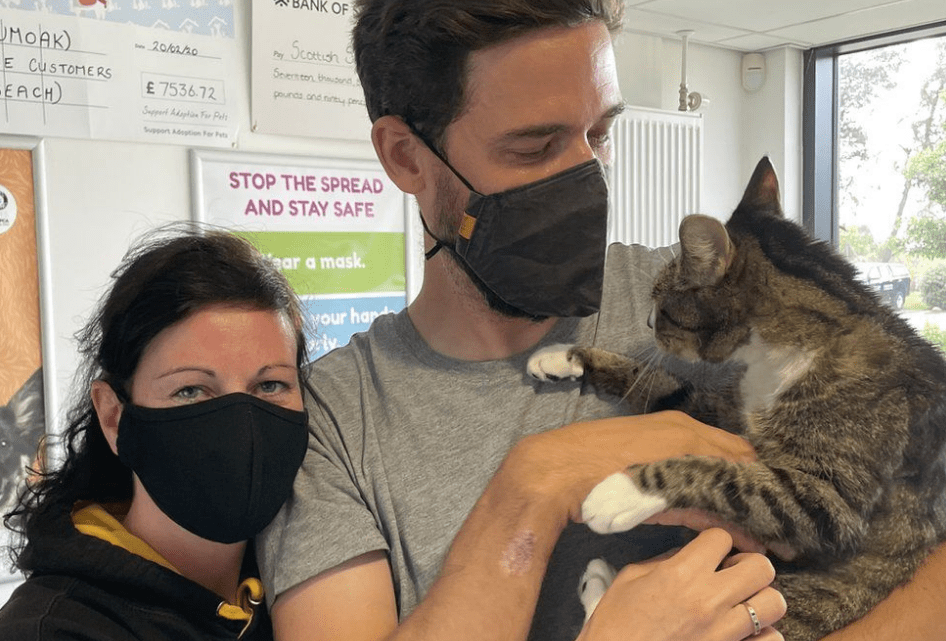
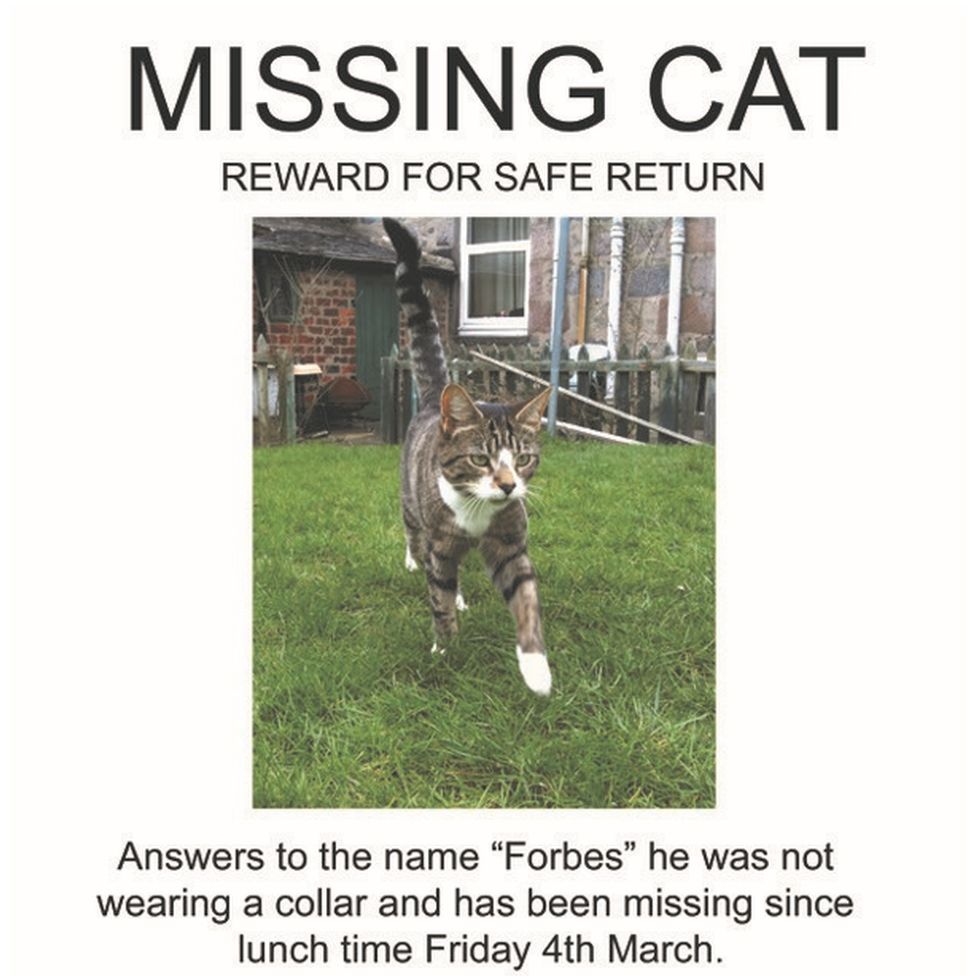
  • Meanwhile in Aberdeen, Neil and Lucy Henderson were reunited with their tabby, Forbes, who had gone missing in 2011. Neil Henderson was so shocked, he had to pull over and stop his car when his wife told him Forbes had been located by the SCPA. “I was completely unprepared for what I was about to be told and hearing that Forbes had been found left me completely astounded,” he told the BBC. Forbes was picked up by an animal control officer who realized he was very friendly and had a microchip. The Hendersons “have no way of knowing where Forbes had been all this time or what adventures he might have been on,” but they’re ecstatic that he’s back home.
Forbes the cat's missing poster
The original missing poster created by the Hendersons when Forbes disappeared in 2011.

Worship Us, Oh Puny Humans!

Originally posted on Pain In The Bud:
Dear Buddy, Did you hear the news about the cat mummies and the big trove of cat statues found by archaeologists in Egypt? My dad says Egypt is a special place ‘cause that’s where humans used to worship us a long time ago. Is that true? Why did…

thebigbuddy's avatarPain In The Bud

Dear Buddy,

Did you hear the news about the cat mummies and the big trove of cat statues found by archaeologists in Egypt? My dad says Egypt is a special place ‘cause that’s where humans used to worship us a long time ago. Is that true? Why did they stop?

Kitten in Kentucky


Dear KiK,

Your dad is right! Egypt is a magical land, a place where humans were once keenly aware of our status as the most awesome species on Earth.

Egypt is where you’ll find the biggest litter box on the planet. It stretches for miles and miles until finally the horizon reveals a huge weather-worn statue of a cat and three stone pyramids jutting out of the litter.

The Great Sphinx and Pyramids of GizaThe Great Sphinx of Giza keeps watch over the world’s most sacred litter box.
It is said that by pooping in front of the Great Sphinx and reverently burying…

View original post 369 more words

Why Thank You, Bud!

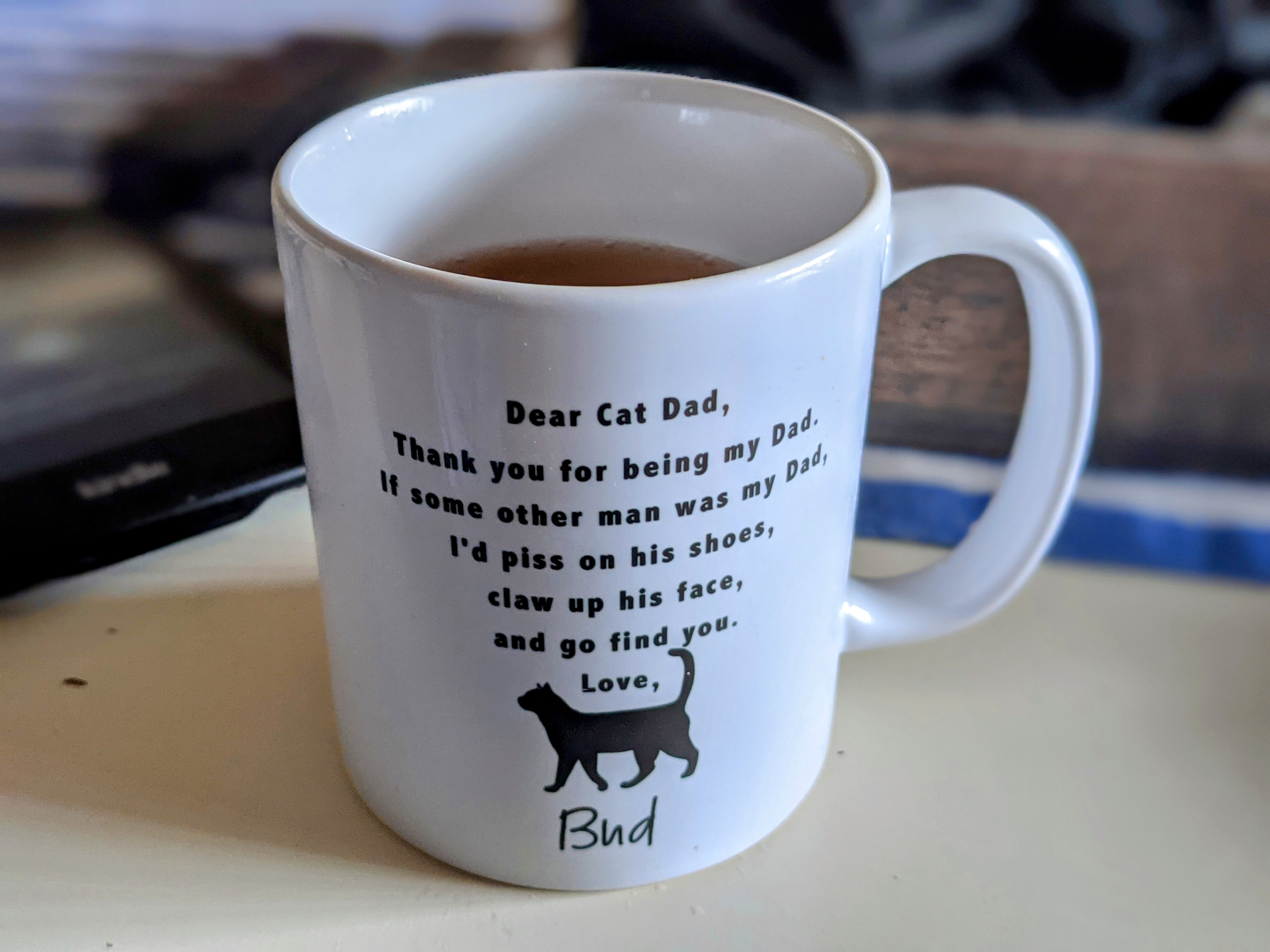
Buddy wouldn’t tolerate another human being his servant.

Buddy may be demanding and parsimonious with praise, out of the firm belief that the service he receives can always be better, but he’s also a loyal little guy:

PXL_20210828_204234733.PORTRAIT~2

Those aren’t idle threats, by the way, not from a cat who attacked his own sitter — whom he’s known for his entire life — in a bratty outburst prompted by his disappointment that it was her and not Big Buddy coming through the front door. She’ll still feed him, God bless her, but she will no longer hang out and play with him, and who can blame her? 🙂


How Much Can AI Teach You About Your Cat?

A new AI algorithm promises to help you gauge your cat’s mood — and determine if she’s in pain — by analyzing facial expressions.

In the photograph, Buddy is sitting on the coffee table in the classic feline upright pose, tail resting to one side with a looping tip, looking directly at me.

The corners of his mouth curve up in what looks like a smile, his eyes are wide and attentive, and his whiskers are relaxed.

He looks to me like a happy cat.

Tably agrees: “Current mood of your cat: Happy. We’re 96% sure.”

Screenshot_20210730-092555

Tably is a new app, currently in beta. Like MeowTalk, Tably uses machine learning and an algorithmic AI to determine a cat’s mood.

Unlike MeowTalk, which deals exclusively with feline vocalizations, Tably relies on technology similar to facial recognition software to map your cat’s face. It doesn’t try to reinvent the wheel when it comes to interpreting what facial expressions mean — it compares the cats it analyzes to the Feline Grimace Scale, a veterinary tool developed following years of research and first published as part of a peer-reviewed paper in 2019.

The Feline Grimace Scale analyzes a cat’s eyes, ears, whiskers, muzzle and overall facial expression to determine if the cat is happy, neutral, bothered by something minor, or in genuine pain.

It’s designed as an objective tool to evaluate cats, who are notoriously adept at hiding pain for evolutionary reasons. (A sick or injured cat is a much easier target for predators.)

But the Feline Grimace Scale is for veterinarians, not caretakers. It’s difficult to make any sense of it without training and experience.

That’s where Tably comes in: It makes the Feline Grimace Scale accessible to caretakers, giving us another tool to gauge our cats’ happiness and physical condition. With Tably we don’t have to go through years of veterinary training to glean information from our cats’ expressions, because the software is doing it for us.

Meanwhile, I used MeowTalk early in the morning a few days ago when Buddy kept meowing insistently at me. When Bud wants something he tends to sound whiny, almost unhappy. Most of the time I can tell what he wants, but sometimes he seems frustrated that his slow human isn’t understanding him.

I had put down a fresh bowl of wet food and fresh water minutes earlier. His litter box was clean. He had time to relax on the balcony the previous night in addition to play time with his laser toy.

So what did Buddy want? Just some attention and affection, apparently:

Screenshot_20210801-181618

I’m still not sure why Buddy apparently speaks in dialogue lifted from a cheesy romance novel, but I suppose the important thing is getting an accurate sense of his mood. 🙂

So with these tools now at our disposal, how much can artificial intelligence really tell us about our cats?

As always, there should be a disclaimer here: AI is a misnomer when it comes to machine learning algorithms, which are not actually intelligent.

It’s more accurate to think of these tools as software that learns to analyze a very specific kind of data and output it in a way that’s useful and makes sense to the end users. (In this case the end users are us cat servants.)

Like all machine learning algorithms, they must be “trained.” If you want your algorithm to read feline faces, you’ve got to feed it images of cats by the tens of thousands, hundreds of thousands or even by the millions. The more cat faces the software sees, the better it gets at recognizing when something looks off.

At this point, it’s difficult to say how much insight these tools provide. Personally I feel they’ve helped me understand my cat better, but I also realize it’s early days and this kind of software improves when more people use it, providing data and feedback. (Think of it like Waze, which works well because 140 million drivers have it enabled when they’re behind the wheel and feeding real-time data to the server.)

I was surprised when, in response to my earlier posts about MeowTalk and similar efforts, most of PITB’s readers didn’t seem to share the same enthusiasm.

And that, I think, is the key here: Managing expectations. When I downloaded Waze for the first time it had just launched and was pretty much useless. Months later, with a healthy user base, it became the best thing to happen to vehicle navigation since the first GPS units replaced those bulky maps we all relied on. Waze doesn’t just give you information — it analyzes real-time traffic data and finds alternate routes, taking you around construction zones, car accident scenes, clogged highways and congested shopping districts. Waze will even route you around unplowed or poorly plowed streets in a snowstorm.

If Tably and MeowTalk seem underwhelming to you, give them time. If enough of us embrace the technology, it will mature and we’ll have powerful new tools that not only help us find problems before they become serious, but also help us better understand our feline overlords — and strengthen the bonds we share with them.

Buddy is bored
Buddy’s bored of all this AI talk and wants a snack.

Buddy The Cat Wins Dunk Contest, Earns Coveted Catnip Cup

Buddy turned heads with an explosive performance in Sunday’s National Cat Basketball Association Slam Dunk Contest.

MIAMI — Buddy the Cat cruised to victory in the annual NCBA Slam Dunk Contest on Sunday, throwing down a thunderous jam that rattled the backboard.

“Boom shakalaka!” the announcers shouted as the 10-pound gray tabby returned to Earth, flexing his muscles before the camera in celebration.

“Buddy now dunking and spelunking, flying and energizing!” said color commentator and Hall of Fame Knicks guard Walt “Clyde” Frazier. “A serendipitous throw-down from the inimitable feline!”

airbud_01
Buddy the Cat soars to the rim during practice ahead of Sunday’s dunk contest.

For Buddy, the moment was vindication from his late-round loss to Stephen Purry in the three-point contest, when he missed a critical shot that rimmed out as time expired.

“Terrible!” ESPN analyst Stephen A. Smith said after the three-point competition. “Buddy is the most overhyped ball player in all of catdom! He shouldn’t even have a roster spot. He’s going to embarrass himself during the dunk contest on Sunday, take that to the bank.”

After Buddy’s critic-silencing performance in the dunk contest, Smith revised his earlier hot take.

“Amazing!” Smith said. “Has there ever been a better player than Buddy the Cat? I don’t think so. That cat is so incredible, even dogs want to be him. I called it! I said he was gonna take it to the bank!”

The high-flying feline was a favorite topic of conversation among the analysts on TNT.

“Everybody knows Buddy,” Shaquille O’Neal said. “Forty points, fifty points. Buddy!”

The mercurial Charles Barkley, who is normally stingy with praise for the game’s young players, nodded in agreement.

“That cat is incredible,” Barkley said. “I thought he was gonna be turrible, but he was tremendous. That dunk…and by the way, I love dunking Krispy Kreme in my coffee. Sit back with my newspaper and my Krispy Kreme and read the headlines. Can you believe what’s happening in Cuba right now? I can’t. People taking to the streets and…by the way, those cigars are terrific. You ever have a Cuban? So smooth…”