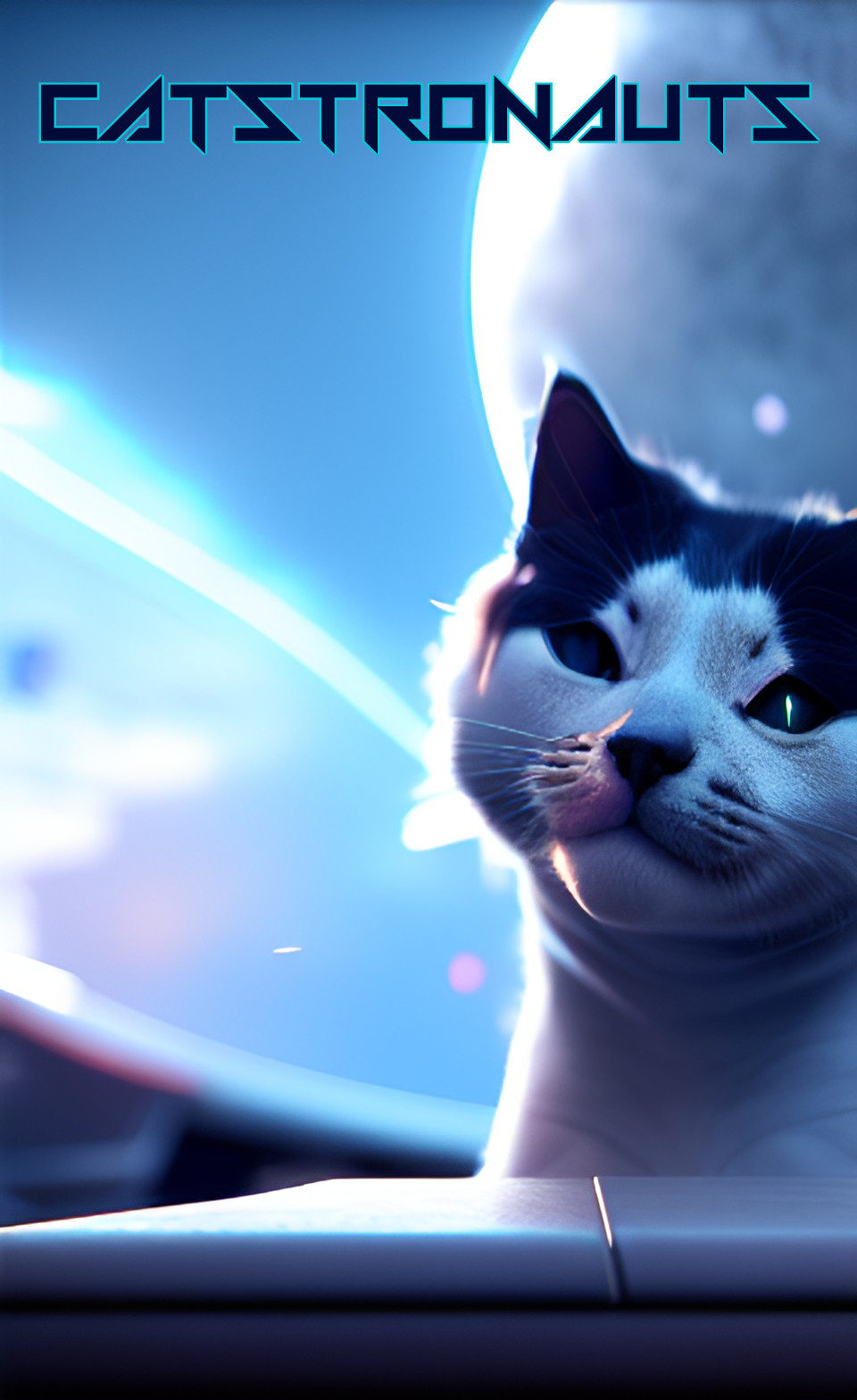
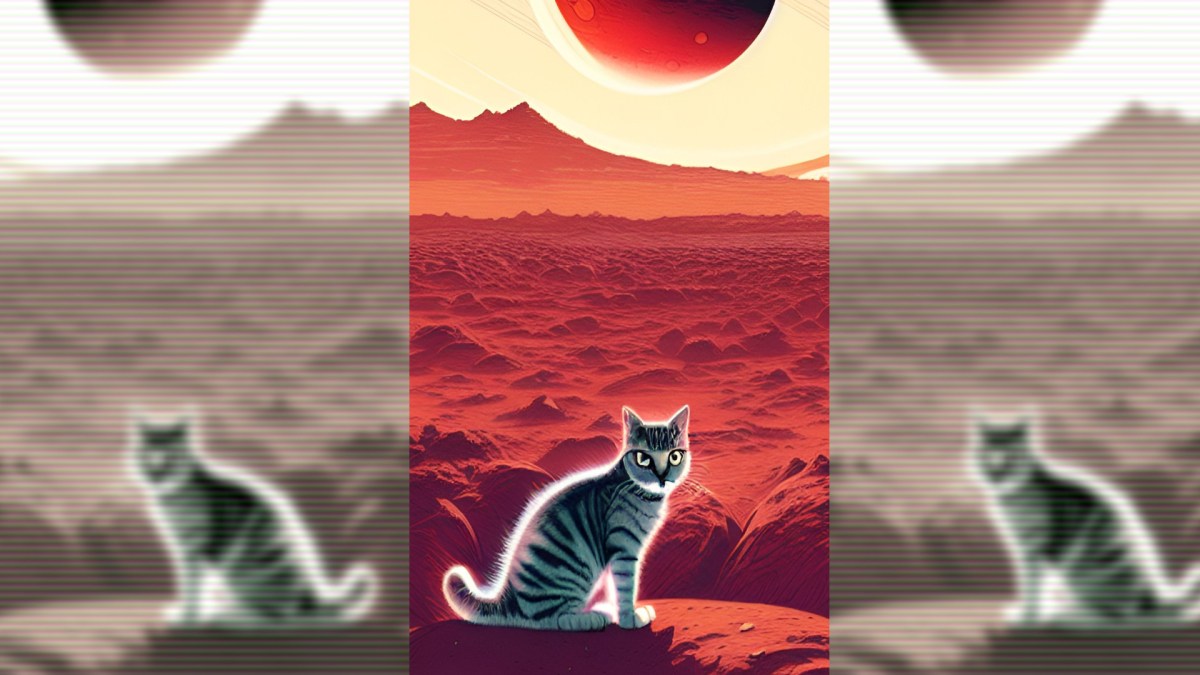
Felines explore the final frontier in these new images from Catstronauts Series I and Series II.
Why do cats explore space? Will they still need humans in the future? How do they squeeze litter boxes into those space suits? What about litter boxes in zero G on their starships? Is it the USS Enterprise, or the USS Enterpurrize? If aliens are observing Earth from afar, will they correctly identify felines as the superior species on this planet?
These are all pressing questions. Little Buddy and Big Buddy invite you to ponder them as we reveal Catstronauts, a project we’ve been working on. Watch out for new series of Catstronauts in the future as kitties boldly go where no feline has gone before. Click images for full-size versions.
Oblivious humans didn’t seem to realize how valuable the truck’s cargo was, providing a prime opportunity for sneaky cats.
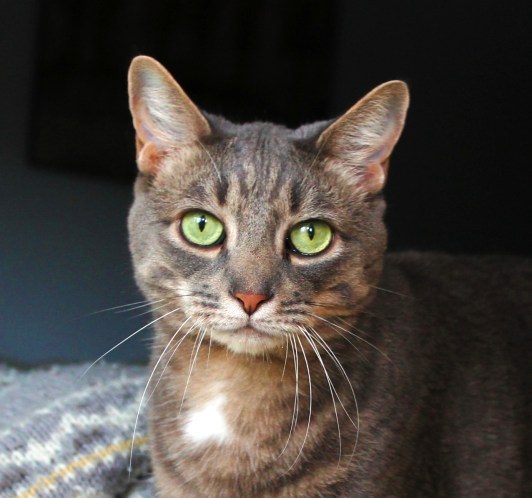
SHELBINA, Missouri — Standing in the shade of his command tent on the side of a rural highway, Buddy the Cat holds a pair of binoculars up to his face with both paws early Thursday morning, scanning for cat food.
“I don’t see a damn thing,” the silver tabby cat says, squinting.
A four-year-old striped ginger cat, an assistant, clears his throat. “You have to take off the lens caps, sir.”
Buddy turns, glares at his assistant, then makes a show of removing the lens caps as if that had been his idea all along.
“Aha!” he says triumphantly. “I see the cans!”
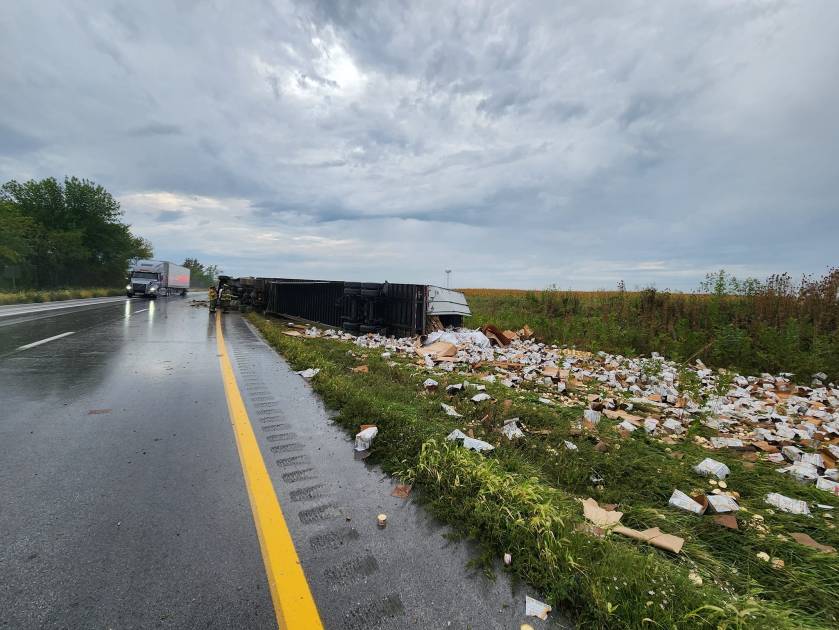
Valuable cans of delicious yums were scattered off the shoulder of the highway, with stupid humans oblivious to their value. Credit: Shelbina Fire Protection District
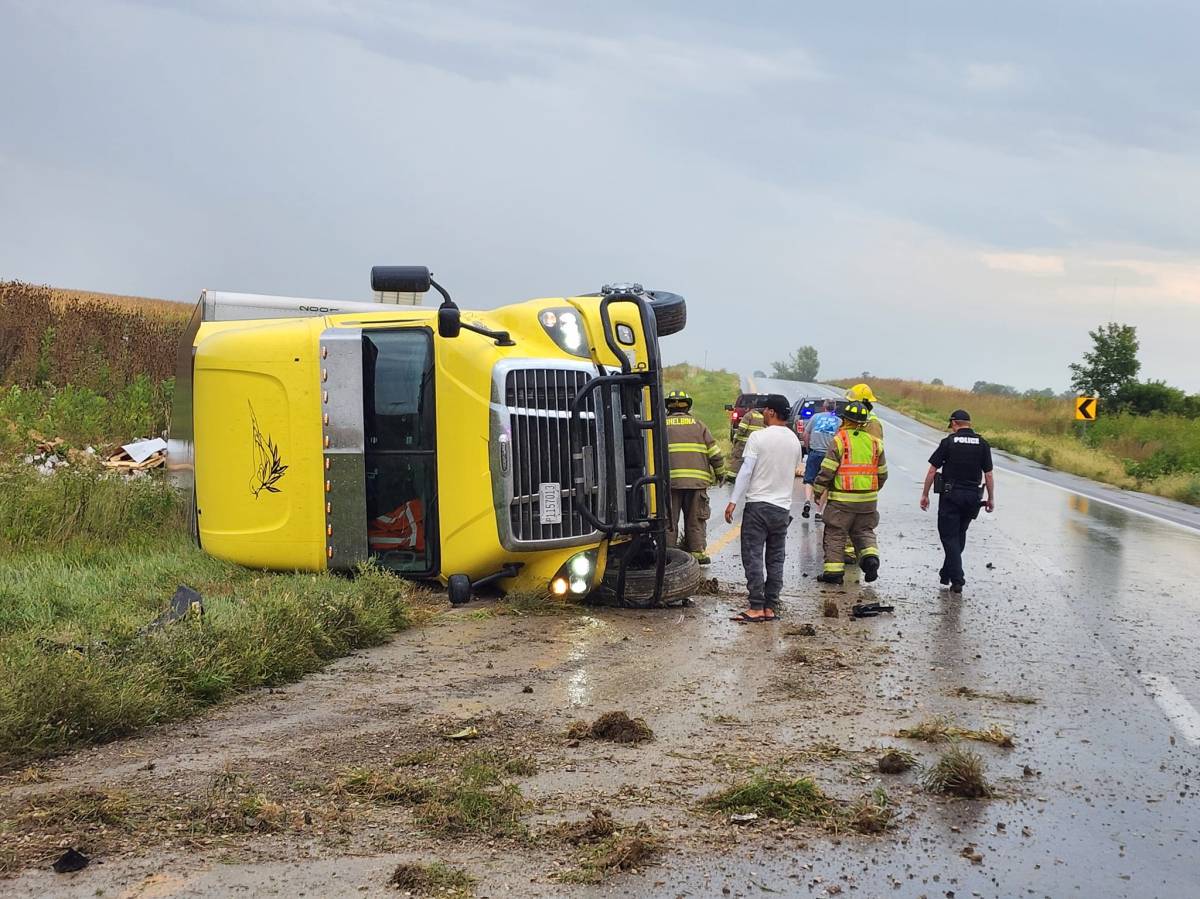
That was the scene at what the mercurial feline is calling Operation Yums HQ, less than a half mile from the site of an overturned tractor trailer on Missouri’s Highway 36. The truck, which had been headed east, drifted onto the right shoulder of the highway and tipped over into a ditch, spilling its glorious, delicious, must-be-acquired cargo onto the surrounding grass and concrete.
“Look at it,” Buddy said, surveying the scene as firefighters, police and paramedics saw to the driver, closed down one lane and directed traffic around the accident. “Soon, it will be all mine. Er, I mean ours. Muahaha!”
Authorities weren’t initially sure what caused the tractor trailer to tip over, but said rain and a slick road could have been factors. They’re still investigating.
In the meantime, the human emergency services personnel were oblivious to the cats huddling just out of view, licking their lips and preparing to raid the site under the cover of darkness.
“Stupid humans, they don’t even know they’re sitting on a gold mine!” said Buddy’s second-in-command, Smushface McCutiePants. “Take heart, dear companions, for tonight we dine on Fancy Feast!”
A rock on Mars resembles a crouching cat ready to pounce.
Cats are sneaky, quiet as a ghost when they want to be and have a habit of seemingly teleporting between spots, but could they somehow use their feline superpowers to beat us to Mars?
As the Perseverance rover continues to chug along and take photos as well as samples of rock and soil, people following the rover’s progress can vote for “image of the week,” and this time around they picked an image that, when seen from a distance, appears to show a crouched cat with its behind raised, in mid butt-wiggle as it prepares to pounce on some unfortunate Martian.
A Martian Desert Cat spots a rich vein of Temptatiums in a natural deposit and is ready to pounce.
This isn’t the first time Mars enthusiasts have spotted a “cat” in an image from the red planet. In 2015, some people said a group of rocks resembled a “giant cat statue” poking out from the Martian soil in a photo taken by the Curiosity rover.
I don’t really see it. YMMV:
An “enhanced” image of the same formation.
The “cat statue” on Mars as encountered by the Curiosity rover in 2015.
Perseverance is exploring the site of a former crater lake and an adjoining former river delta. The Bad Astronomy blog says it was “very clearly a lake of standing water at some point in the past.”
The blog provides a breakdown of the geography of the crater and what it can tell us about the Mars of the past. Knowing there was water on Mars makes the idea of life elsewhere in the solar system seem possible. Astronomers believe Jupiter’s moon Europa, for example, potentially hosts life. The satellite exists so far from the sun it’s in a permanent deep freeze and would normally be inhospitable to life, but the evidence strongly suggests there are oceans beneath Europa’s icy surface, and those oceans are heated by massive vents on the ocean floor.
Water, warmth, energy. The conditions for life are there. If Mars was covered with lakes at one point, what’s swimming in the oceans of Europa?
Credit: NASA
So Mars had water and the entire planet was pristine litter box. If it had some prey to hunt and an atmosphere, the red planet could have been the perfect homeworld for felis sapiens, who would rival humanity in technology if not for the tragic fact that their species is only awake eight hours a day.
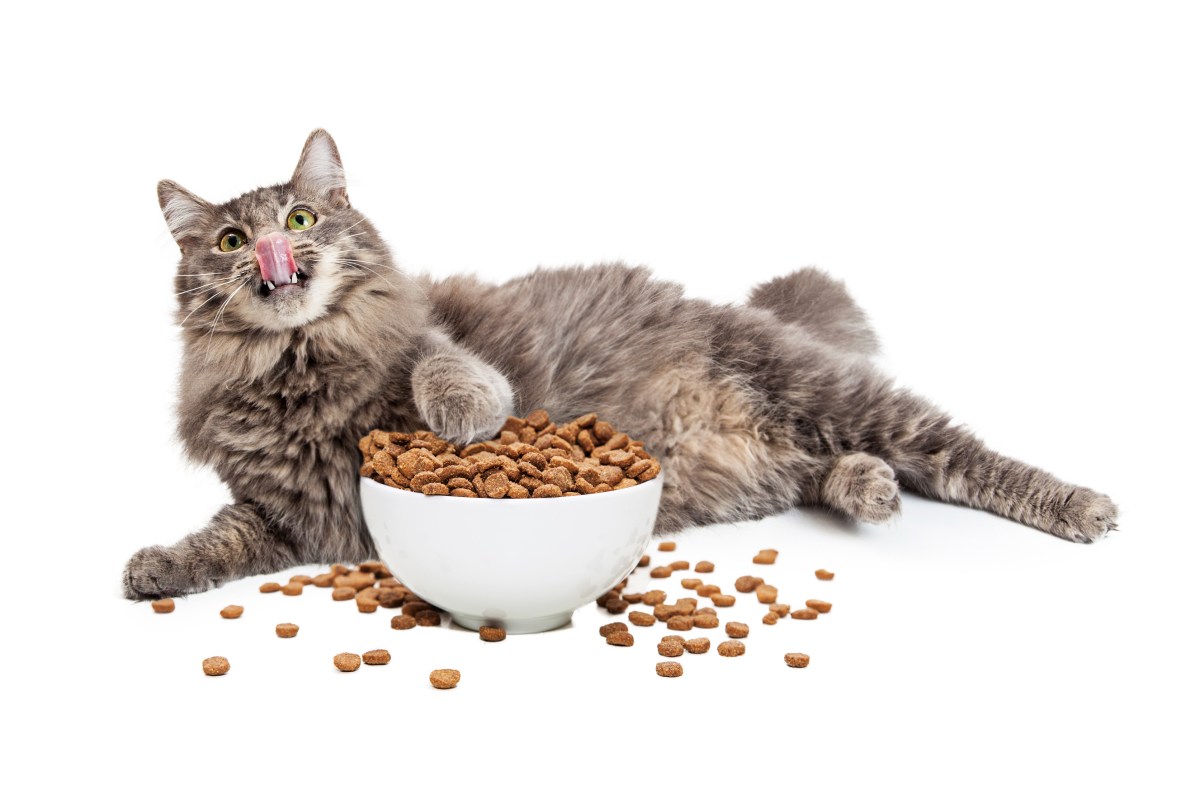
The AI-powered device ensures felines never have to see the bottom of their bowls again.
NEW YORK — Life is full of unpleasantness, like being able to see the bottom of your bowl. But what if someone told you he could fix that?
Enter Buddy the Cat’s SmartHuman Feeding System™, a device that harnesses the power of AI and cutting-edge hardware to make sure you never see the bottom of your bowl again.
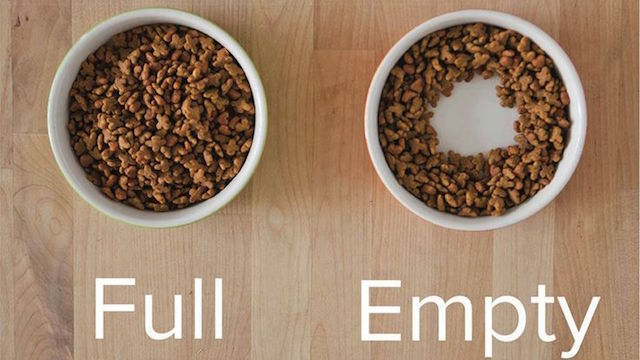
SmartHuman was designed with weight sensors and an AI-enabled camera system to determine when the food in your bowl is getting low. If the on-board algorithms detect low levels of kibble, SmartHuman sends a text to your servant every 15 seconds until the device registers fresh kibble in the bowl.
And if the unthinkable should happen and you really are subjected to the horrific sight of the bottom of your bowl, SmartHuman’s built-in klaxon and emergency lights guarantee your human servants won’t have a second’s peace until they do what they’re supposed to and promptly refill your bowl. The system even requires the human to issue an apology before the sound and lights subside.
“I haven’t had to meow in annoyance or raise a paw once since I got the SmartHuman system,” raved Def the Defenestrator, a popular catfluencer with more than 240,000 followers on Meower. “The threat of getting bombarded with 110-decibel alerts to refill my bowl is enough to make my human servant get off her lazy behind and make sure my bowl is refilled before there’s a problem.”
The SmartHuman’s inventor has a background in feline teleportation and string cheese theory, but was prompted to design his device when he saw the bottom of his dry food bowl twice in as many months.
“I was literally starving,” Buddy said, adding that his “lazy human servant made me wait four minutes and 13 seconds before he refilled my bowl” during the second incident.
Vowing never to go hungry again, the entrepawneur built the first SmartHuman prototype in his garage, using a Raspberry Pi and a digital scale he ordered off Amazon.
He brought his idea to Shark Tank in late 2021 and successfully pitched Mr. Wonderful, who bought a 15 percent stake in SmartHuman™ in exchange for a $150,000 investment. The product entered production earlier this summer and is now available in stores and online.
“Cats love the SmartHuman™, but humans? Not so much,” Buddy the Cat admitted.
Mr. Wonderful (Kevin O’Leary) outbid fellow Sharks Mark Cuban, Barbara Corcoran and Laurie Greiner to partner with Buddy the Cat and invest in SmartHuman™.
Not one to rest on his laurels, the inventive feline said he’s working on a software update that will make the device compatible with wet food as well. In early beta testing, SmartHuman successfully prompted humans to feed wet food to their feline masters on time. Wet Mode includes a new feature as well: If the wet food remains untouched after a three-minute timer elapses, SmartHuman sends another text to the human, informing them the food isn’t satisfactory and should be replaced with another meal.
“Humans are stupid, and they don’t understand when we meow to them in complaint because we don’t feel like eating tuna or whatever on a given night when we’d prefer turkey,” Buddy said. “When this update goes live, cats will be able to enjoy meals of their choosing, every time.”
Maximino the Cat figured a good way to get his human’s attention was by singing along with her.
A young opera singer was practicing on a live cast when her cat joined in for an impromptu duet.
Maura, who goes by @maura.music online, seemed annoyed at first when her cat, Maximino, hopped up on the desk and walked between her and the camera.
She opened her mouth and drew breath for the next line, then cackled with delight as Maximino cut in for the second verse:
Maura, who has been involved in opera for about 10 years, told Newsweek the video was recorded “a few years ago.” She posted it online on Aug. 11 and it’s since gone viral.
Maximino “loves music, and the only way I can get him to follow me is by whistling his favorite tunes,” she said.
The Persian is an especially vocal cat who “screams” at Maura when he wants something, which sounds an awful lot like another furry little guy we know.
In a second video recorded after the first one went viral, Maura tells Maximino “you’re famous!” before trading off with him again, with her singing in Italian while he answers in meow:







 Pain In The Bud