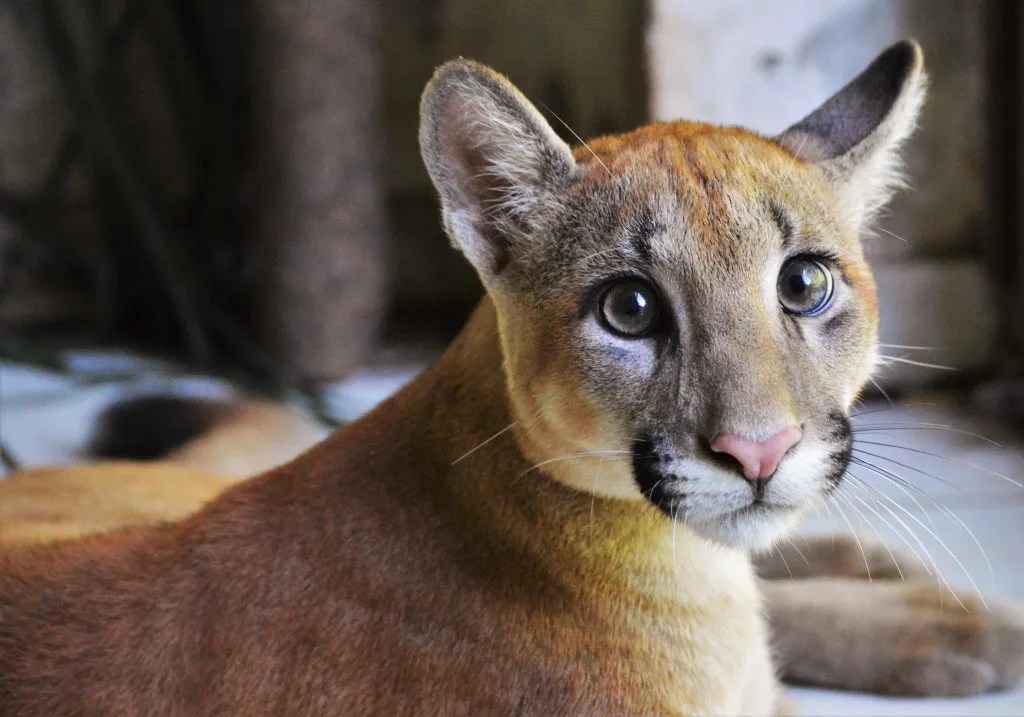
Is he yawning? Screaming in terror before dashing behind my legs? Reacting to someone spilling the tea about a friend? Awestruck at a giant turkey?
Well, that’s up to you!

Caption a photo of the world’s most Buddinese feline!
Is he yawning? Screaming in terror before dashing behind my legs? Reacting to someone spilling the tea about a friend? Awestruck at a giant turkey?
Well, that’s up to you!

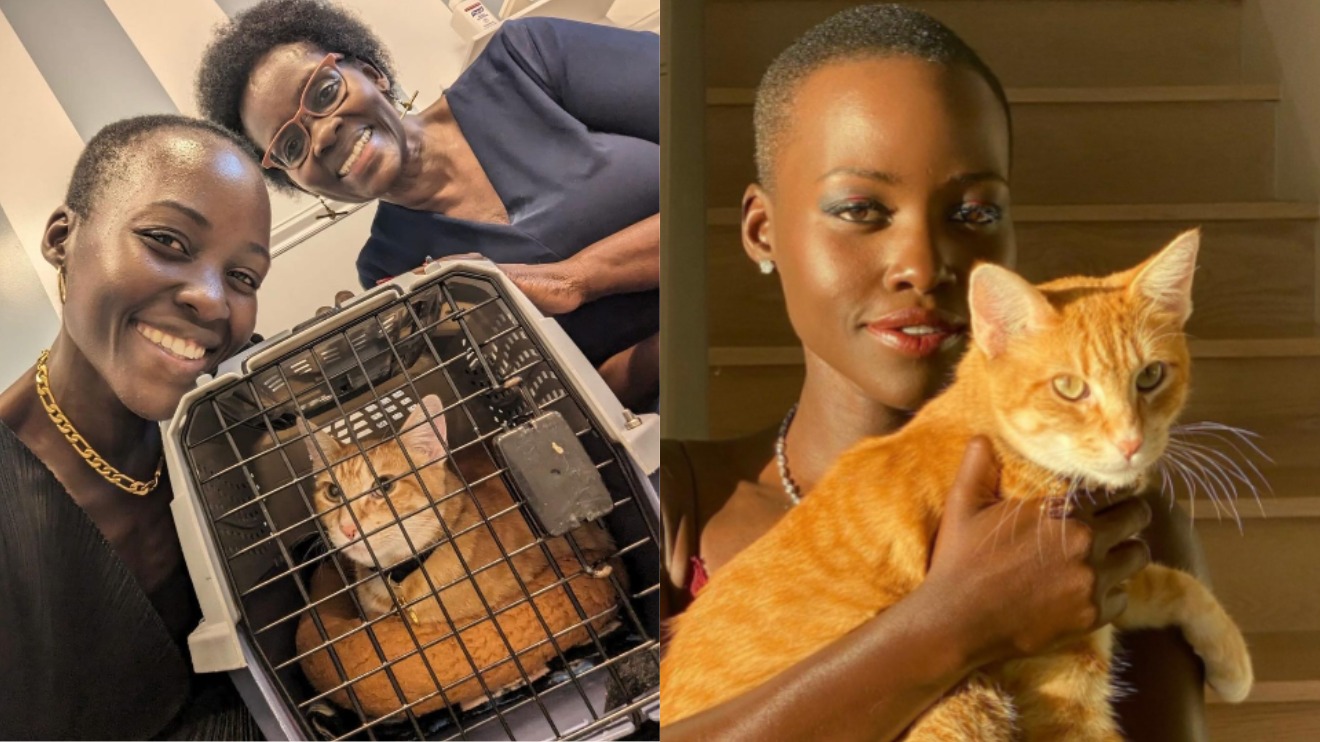
Lupita Nyong’o not only shares the screen with a feline co-star in the new film A Quiet Place: Day One, she’s also a devoted cat mom to a ginger tabby named Yoyo.
Although I haven’t seen most of Lupita Nyongo’s movies — I really liked her performance in Us and her voice work in Disney’s Jungle Book remake — I’m a big fan now that I know she’s a cat lover.
Nyong’o took to the red carpet for the premiere of her newest film, A Quiet Place: Day One in London on Wednesday, and her plus-one was a cat named Schnitzel, who also stars in the movie. Photos show Nyong’o posing along co-star Joseph Quinn, smiling as she cradles Schnitzel in her arms.
A Quiet Place is a 2018 film about a family that lives a completely silent life on a farm after the civilization has fallen to monstrous creatures that can’t see but are exceptionally sensitive to sound.
The film received nearly universal positive reviews for its use of sound — and the complete absence of it for long stretches — as a tension-building device, and a 2020 sequel continued the story.
Day One, which hits theaters on June 28, promises audiences a look at how the creatures appeared and civilization collapsed.
Schnitzel’s role isn’t entirely clear, but if it’s anything like 2022’s Prey, cats will fill their usual niche as predators, highlighting the difference between terrestrial and extraterrestrial hunters.
Caring for a cat in a world like A Quiet Place could be a double edged-sword: a super vocal cat like my Buddy wouldn’t last very long unless he quickly learned to keep a lid on his constant commentary, but cats are also incredibly sensitive to things that pass beneath the notice of us humans.
Thanks to their incredible hearing, exceptional sense of smell, the advantage of an extra olfactory organ and whiskers that pick up even the slightest stirring, felines are keenly aware of their surroundings.
As for Nyong’o, while Schnitzel is not her cat, she’s the proud cat mom of Yoyo, an orange tabby she fostered in late 2023. It only took her three days of fostering the little guy before she realized “I could not give him up,” she said last year shortly after the adoption was made official.
“I never understood people whose phones were full of photos and videos of their pets — now I am one of those people,” she wrote when she adopted the tabby. “It may look like I saved Yoyo, but really, Yoyo is saving me.”
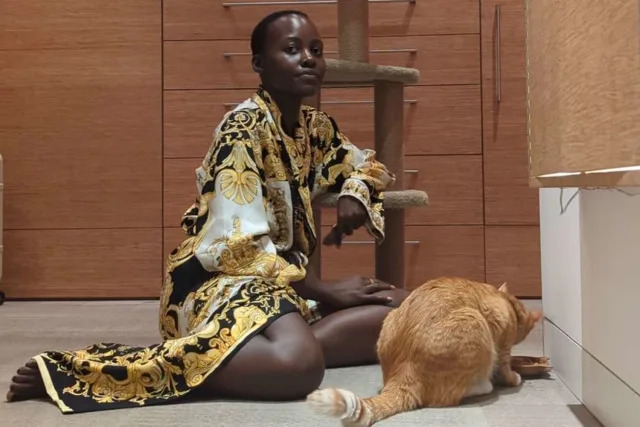
An order from Chewy brought food, a new laser pointer and catnip, but Bud was most excited about the box because, well, because he’s a cat!
We’ve covered some heavy stuff lately, so I thought we’d get the week off to a happy start by turning things over to Buddy, who has a very important message.
“I have a new box. Behold my new box, humans! It is new and comfortable, and it smells like catnip and silvervine since my servant ordered a new tub of the stuff. Yes, he has done well. I am pleased.”


The shipment brought quite a few goodies for the Budster including a new laser pointer, two months’ worth of wet food and catnip.
We don’t normally endorse products on PITB, but we’re making an exception for From the Field’s catnip and silvervine blend not only because Bud loves the stuff, but also because it calmed him down and soothed his stomach when he was hurting last month.
I gave him some before I brought him to the veterinary hospital and again four or five days later when he had a little relapse. Both times he was crying and yowling in distress, and both times the catnip-silvervine blend settled him down, relieving his pain enough so he was able to rest comfortably and go to sleep. It’s a horrible feeling when your cat’s suffering and you can’t do anything to relieve the pain. This stuff did the trick and will have a permanent place in the Buddy Cupboard.

Finally, I created a new image of the little dude. What you’re looking at is a render based on a photograph of Bud, which was then run through an AI natural language processor with instructions not to alter the substance of the image, but to give it more of a surreal look. The image below is not actually what I was going for, and sometimes the failures can produce nice images in what Bob Ross would call “happy little accidents.” But it is a way to take a subpar camera phone shot, one in which I liked Buddy’s expression and pose but couldn’t fix the blurry bits, and turn it into something interesting.

A historian casts doubt on tales of widespread cat purging, tracing the origin of the claims to a novel published in the 1990s.
The Washington Post has a new guide for taking better photos of cats and dogs with some solid advice for people using smartphones as well as more traditional cameras.
The article is in front of the paywall so you don’t need a subscription to view it, and it emphasizes a few major points I’ve often written about when people ask me how I’ve been able to get certain shots of Bud:

It’s often claimed that Europeans murdered felines en masse during the waves of Black Plague that devastated Europe during the Dark Ages, visiting countless cruelties on cats while inadvertently amplifying the spread by nearly wiping out disease-carrying rodents’ most effective predators.
In a new post that closely examines documents and evidence from burial sites of the era, Snopes concludes there was much less cat-killing than claimed, and the claims of widespread purging at the hands of pandemic-weary zealots have their roots in a 90s novel, which was then circulated on the web as fact.
Sites where as many as 79 sets of cat bones from the era were found show clear signs that the animals were slaughtered for their fur, and a singular slaughter in 1730s Paris often cited as proof is not only a few centuries off but was also motivated by class hatred, not fears of the plague.
While the papal bull Vox In Rama was real, and a famously zealous inquisitor really did make the preposterous claim that Satanists had a ritual that involved literally kissing the asses of black cats, the pope never called on anyone to kill felines and there’s no evidence that people took it upon themselves to do so. There was plenty of other unbelievable superstitious idiocy that led to the deaths of animals at the time, including the practice of putting animals on trial for alleged crimes, but Europeans weren’t rampaging through towns and killing cats.
Snopes quotes Welsh historian Mike Dash, who says the modern claims of widespread cat-killing are “almost certainly a modern internet-based fabrication.”
“The camera never lies,” the old saying goes, but it turns out that’s not quite true.
During my crime reporting days I wrote an unusual story about a guy who’d been picked up on armed robbery charges. The suspect’s face was visible, the security camera footage was unusually sharp, and the suspect himself had a previous armed robbery conviction from years earlier.
It looked like an open and shut case.
There was just one problem: The man had an airtight alibi. He had half a dozen people willing to go on record saying he was at a party 70 miles away when the robbery happened, as well as ATM receipts showing he’d withdrawn cash that night far from the site of the robbery. When he retained a lawyer, the attorney was able to show his cell phone records placed him at the party, and forensic videography showed the man in the armed robbery footage, despite bearing a striking resemblance to the suspect, was taller and moved differently.
In the end the police dropped their case and found the real robber, but I never forgot the story, nor my conversations with forensics experts who explained how something as simple as taking measurements at a crime scene, from the same angle and using the same cameras, could prove a case of mistaken identity. Things like gait, observing the dominant hand and other body language also factor heavily.
One forensics expert told me it’s like watching the replay in a baseball game: You can be absolutely sure a runner is out by watching footage from one angle, but footage of the same slide from another angle can clearly prove the runner’s foot made contact with the base before the fielder’s glove tagged him.
That kind of attention to detail is what helped Thomas Keller rule out the possibility that a mountain lion was roaming the fields of Lower Macungie Township in Pennsylvania. On Sunday, Pennsylvania state police issued a warning to people in the area that “a large feline was seen in the fields” near a residential road.
Keller, a furbearer biologist with the Pennsylvania Game Commission, headed down to the area earlier today and found the exact spot where a local homeowner had photographed the supposedly wild cat. Using a life-size cut-out of a puma, which he placed carefully where the cat was standing, and a camera placed at the same height and angle used in the original photograph, Keller proved the cat in the photo was much smaller than a puma.
“It’s just a house cat,” Keller said flatly after producing his own photos of the spot.

Like the forensic videographer who helped clear a man of a robbery charge, Keller was able to disprove the immediate conclusions of people who saw the image. He says the work is important because “there’s a lot of fear and panic that can spread.”
“We will generally go out and try to talk with who reported it and get perspective on where the photo was taken,” Keller told the Lehigh Valley News. “We look at original picture and measure what we can … We look at things in the picture that we can get scale from. It might look like a mountain lion, but we need to know what those measurements are to get the scale.”
Confusion over what the camera shows is compounded by the optical effects of zoom, which can throw off the observer’s sense of scale, he told The Morning Call, a local newspaper. He said people who aren’t sure what they’re looking at should call their state game commissions, or comparable offices, to get help from experts.
As for Pennsylvania, while there have been historical reports of mountain lions, most were decades ago and the handful that panned out were cases in which the large felines escaped from private captivity or traveling circuses.
Although it’s not unheard of for pumas to migrate east, they’re no longer extant in the region and sightings of the elusive cats are almost always cases of mistaken identity when people see bobcats or large housecats.
“There’s none,” Keller said. “We get hundreds of these reports every year and we haven’t been able to substantiate one yet.”
Header image credit Cindy Lou Photos/Wikimedia Commons