Amazing Cats: The Sunda Clouded Leopard

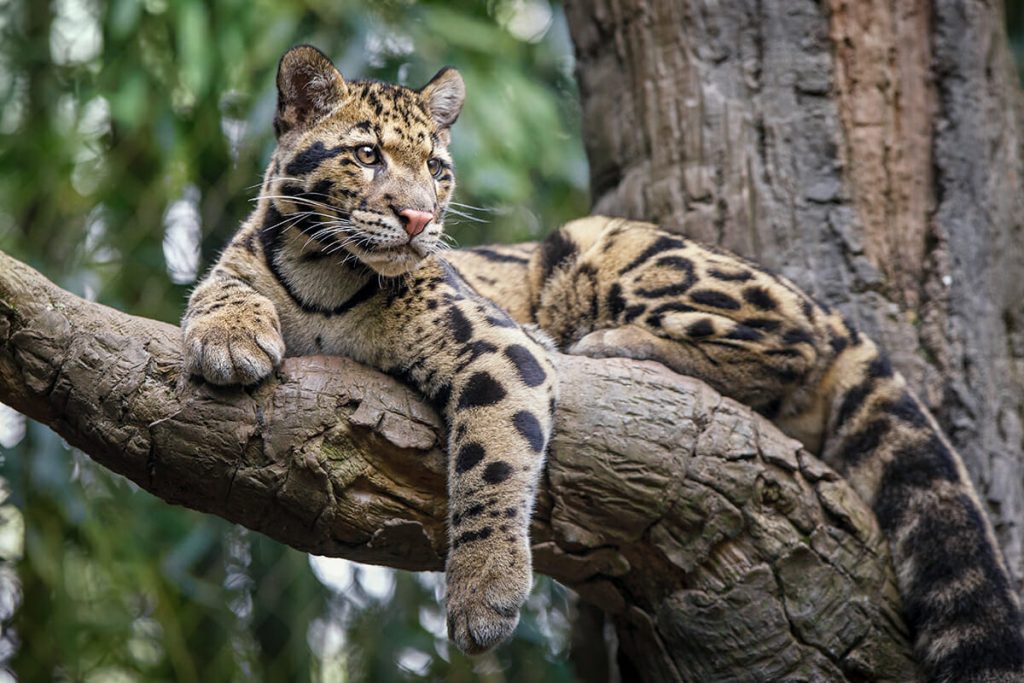
This singular species of wildcat exists only on two islands and has evolved to live a semi-arboreal existence deep in the jungle.

While tigers, lions and domestic cats are the stars of the felid world and command the lion’s share (pun intended) of the attention, even from cat lovers, there are obscure species living in far-off locations where they’re rarely glimpsed by human eyes.

There’s the fishing cat, the black-footed cat and the sand cat, and then there are species that are obscure even among the obscure. The Sunda clouded leopard fits into that category, inasmuch as the unique felid can fit into any category.

Like orangutans, the Sunda clouded leopard can be found in only two places in the world: the Indonesian islands of Borneo and Sumatra. They’re faced with the same existential threat that has pushed orangutans dangerously close to extinction, which is the relentless destruction of old-growth jungle to clear land for more palm oil plantations.

Sunda clouded leopard
The species has an incredibly long tail that can match or exceed the length of its body. The large tail is crucial in a jungle environment, where it acts as a counterbalance high above the ground. Credit: Panthera

Palm oil is coveted by multinational corporations in the food and cosmetics businesses, and it’s in everything from chocolate and instant noodles to lipstick and margarine, according to the World Wildlife Fund.

The problem with razing old growth jungle and forest is that it doesn’t just grow back. They’re extremely delicate ecosystems that have arrived at a natural balance over thousands of years, with every species of animal and plant contributing something vital to the vibrant tapestry of life the jungles host and support. You can’t just plant trees and usher animals to a new home. It would take hundreds of years for those new jungles to even superficially resemble the lifegiving old growth jungle.

There are heartbreaking images of shocked orangutans sitting in the ruins of their former homes, with nothing but the stumps of trees and dozer-trodden vegetation as far as the eye can see.

Those are the lucky ones. The loggers who work for massive multinational corporations aren’t bound by rules or ethics, and they won’t wait for animals to clear out before they destroy.  They often shoot orangutans on sight regardless of whether the animals are carrying young.

Baby boot camp
Roux, a baby orangutan in a “boot camp” for orphans, learns how to walk. Credit: Phys.org

That’s the primary reason why Borneo and Sumatra are now home to entire academies for orangutan orphans, who spend at least eight years learning how to fend for themselves with the help of specialists who teach lessons that would normally be taught by the orphan orangutans’ mothers. They include the very basics, like how to move and climb through the jungle, as well as crucial information such as which berries to avoid while foraging.

While there’s no “academy” for clouded leopards and the felids are more adept at avoiding human wrecking crews, they’ve suffered the same fate as orangutans when it comes to dwindling jungles.

This is the situation Sunda clouded leopards find themselves in, so when a trail camera recently captured footage of a mother and her two cubs, conservationists were thrilled.

The footage comes from camera traps belonging to the Orangutan Foundation, and it’s the first time anyone’s managed to obtain video of the Bornean clouded leopards with cubs in tow. The brief video shows the little family bounding through the jungle. They quickly move past the camera, but not before one of the cubs stops to look right at it with typical kitten curiosity.

Sunda clouded leopards are extraordinary cats. Size-wise, they are firmly in the “medium size wildcat” category, with males weighing about 50 pounds. Despite that, they are members of pantherinae, the genus of big cats, having diverged from a common ancestor shared with tigers, leopards, lions and jaguars.

As further proof of their in-between status, Sunda clouded leopards can neither purr nor roar. Typically, each species of felid can do one or the other. Even the species’ scientific nomenclature, neofelis nebulosa, references its intermediate status. (If you encounter alternate taxonomy for them, it’s because the clouded leopards of Borneo and Sumatra are considered distinct subspecies.)

“Due to a different bone structure in their neck, the clouded leopard cannot roar like the larger cats, but also cannot purr because it lacks the fully ossified hyoid bone that allows small cats this ability,” the Smithsonian National Zoo’s keepers explain.

Sunda clouded leopards have several unique adaptations that allow them to thrive in arboreal environments. Their massive tails act as crucial counterweights, allowing them to traverse branches high above the ground without falling. Their paws and paw pads are specialized for gripping tree branches, and their ankles can articulate in ways other felid ankles cannot, allowing the jungle-dwelling wildcats to descend from trees head-first.

Domestic cats infamously lack this adaptation, which is why firefighters are also part-time cat rescuers, coaxing the terrified little ones down from trees, utility poles and rooftops.

sundacloudedleopard
Credit: Panthera

The clouded leopards of Borneo and Sumatra are also undeniably cute. People have noticed, which is why one of Google’s auto-complete suggestions for Sunda clouded leopard suggests the word “pet” as an addition. It’s okay to fantasize about having a clouded leopard buddy, but in addition to the fact that they are endangered, they’re also wild animals.

Consider the fact that across the estimated 200,000 years of our species’ existence, homo sapiens have domesticated precisely one felid species, and even that’s not entirely accurate. Felis catus played just as much of a role — and arguably more — than humans did in their own domestication. As predators and obligate carnivores, they are unique among domestic animals, and it took and equally unique set of circumstances to bring cat and man together.

Instead of lamenting the fact that Sunda clouded leopards can’t be pets, we can admire them in the best way possible, from a distance, while helping ensure the survival of this extraordinary, distinctive species by donating to groups like Panthera, the WWF and Global Conservation.

Previously:

Amazing Cats: The Mysterious Marbled Cat
Amazing Cats: The Rusty-Spotted Cat
Amazing Cats: ‘He Who Kills With One Bound’
Amazing Cats: The Puma
This Cat Pretends To Be Asleep To Steal His Human’s Food

The video is thoroughly amusing, but it also illustrates profound truths about feline intelligence, showing cats understand a lot more than people often give them credit for.

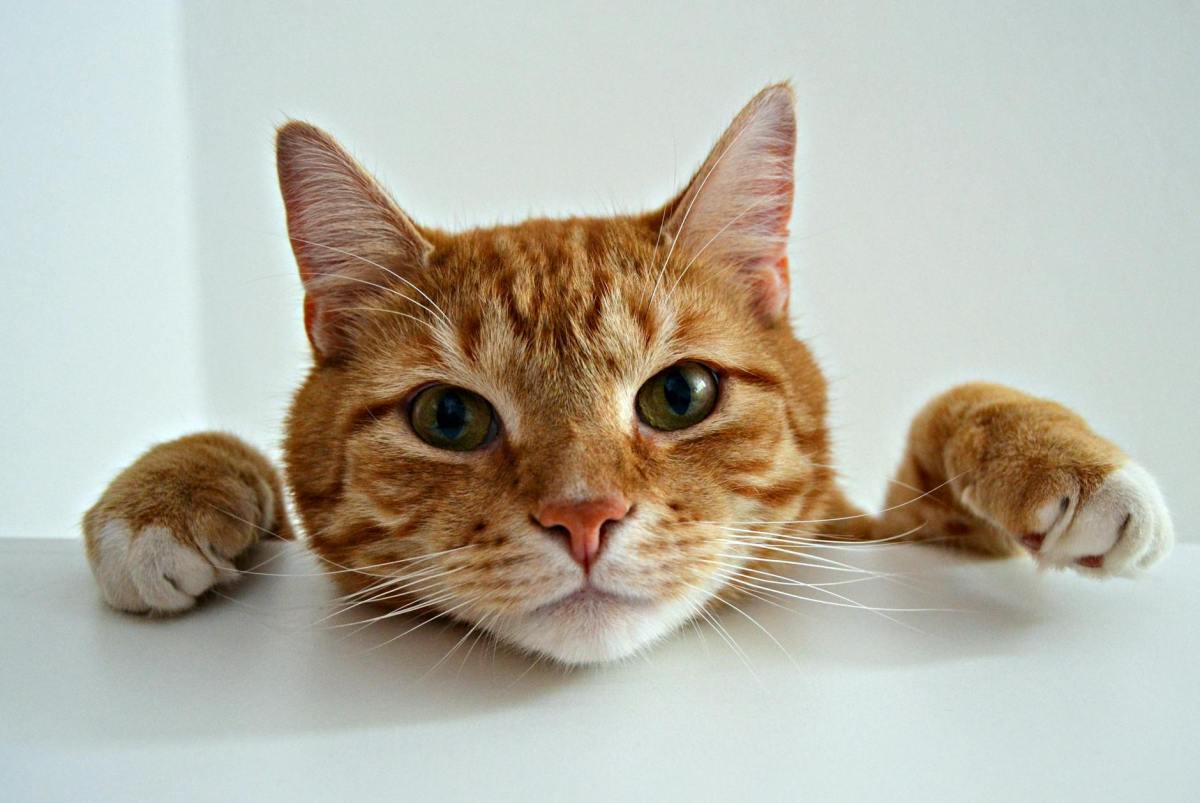
I’m loving this video of a sneaky orange tabby pretending to snooze while helping himself to his human’s food.

Little dude lays down and closes his eyes, then slowly reaches a paw out to the cap of an ice cream container, which has a glob of the good stuff on it. He checks to make sure the coast is clear by opening his eyes just a tiny bit, then slowly moves the cap over incrementally, pausing at intervals to make sure he’s still unobserved. (It looks like his human set her phone to record, then left the room so her little buddy thought no eyes were on him).

@caitlyn_davis34

“If I pretend to be alseep and move REAL slow, she won’t notice” #OrangeCatActivities #DontBeSuspicious

♬ Stealthy mischief(1088178) – KBYS

Aside from being hilarious and cute, this short clip actually illustrates something profound: Cats are much more intelligent than people usually give them credit for.

Consider the fact that to pull this off, the cat needs to be self-aware, and he needs to possess theory of mind. In other words, this cat understands he and his human have different perspectives, know different things, and that if he can move stealthily and appear to innocently nap, he can get away with eating some ice cream.

That may not seem like a big deal at first, but it means the cat understands humans can be deceived, and he understands how to do it. He cannot possibly know we have technology that can record him while we’re not looking, so that’s not a strike against him. There are plenty of things we don’t understand about animals, and we’re supposed to be the more intelligent species.

To truly appreciate how profound this is, consider that human children do not fully possess theory of mind until they’re four or five years old! That’s when they begin to appreciate the fact that other people have internal thought processes and emotions — even if they can’t articulate that — and, crucially, that what a person thinks she knows may not align with reality.

Footage like this goes well beyond refuting the old, debunked claim that animals like cats are biological automatons without thoughts or feelings. It shows they are in full possession of the cognitive tools that form the basis for higher modes of thinking. Again, while some people might hear that and say “What’s the big deal?”, it destroys all arguments that animals don’t have emotions or don’t understand what’s happening to them when humans mistreat them.

It also shows that cats are at least as intelligent as young children in all the ways that matter. They cannot verbalize their thoughts and feelings, but that has no bearing on their existence. After all, no one would argue that a child doesn’t have feelings simply because he’s unable to speak.

Lastly, there’s one more important lesson here: hide your ice cream from your fluffy pals!

Top image via Pexels.

It’ll Take More Than Sketchy Surveys To Prove Vegan Cat Food Is OK

“People aren’t ready for us to turn carnivore cats vegan but I’m going to do it,” the CEO of a vegan cat food brand has vowed.

In September of last year, a research paper about feline health was published to the open-access journal PLOS-One, going mostly unnoticed.

The paper’s authors claim their research proves cats fed a “nutritionally complete” vegan diet are not only just as healthy as their meat-eating counterparts, they’re actually less likely to need veterinary visits, less dependent on medication, and more likely to be given a clean bill of health by their veterinarians.

When a company called Wild Earth announced the launch of a new line of vegan cat food this month, the company pointed directly to that paper as proof that “cats fed nutritionally sound vegan diets are healthier overall than those fed meat-based diets,” as the paper’s lead author put it.

Wild Earth CEO Ryan Bethencourt, who does not have a professional background in veterinary medicine or feline nutrition, summed up his goal in a tweet: “People aren’t ready for us to turn carnivore cats vegan but I’m going to do it.”

bethencourt
Bethencourt calls the effort to put pets on vegan diets “vegan biohacking.” Credit: Wild Earth

He painted the new offering as a bold counter to skeptics who say vegan cat food is unhealthy.

“We expect aggressive resistance from the meat industry on the launch of this industry-pioneering vegan cat food, but we know there are A LOT of cat parents looking for healthier plant-based and more sustainable options and we want to be the leader in providing them with that choice,” Bethencourt wrote in a statement.

What he didn’t mention was the fact that the loudest voices opposing “vegan cat food” are animal welfare organizations like the SPCA and Humane Society, as well as veterinarians and nutritionists, the same people who see the consequences of cats who are deprived of meat. Over the years they have reiterated that felines are obligate carnivores who have evolved to get their nutrients from meat, with digestive systems that cannot process most plants, meaning they can’t break them down and derive nutrients from them. That’s why we don’t see servals or leopards foraging for fruit in the wild.

In addition, the announcement did not mention that the 2023 research was funded by ProVeg International, a non-profit dedicated to reducing global meat consumption, weaning people and animals off of meat and onto plant-based food.

That didn’t stop other credulous reports, like one from GreenQueen claiming Wild Earth’s vegan cat food is “built on research proving that felines can be healthy on a vegan diet.”

And that’s exactly the point — the “study” was conceived and published so that advocates of vegan cat food can point to it and say “science says” cats can survive on plants.

Bad data makes for bad science

Extraordinary claims require extraordinary evidence, but the 2023 study did not examine veterinary records or log the results of vet visits over years. Instead, the data was self-reported by participants.

A total of 1,418 people responded to the survey, and only 127 of them said they feed their cats exclusively vegan diets. The claims that their cats get sick less often and do better in veterinary check-ups are based on their subjective assessments and recollections. The paper’s authors don’t know which vegan brands the 127 respondents were giving to their cats, nor do they have information on whether the food was wet or dry, how often the cats were fed, and how much they ate.

wildearthfood
A cat eating Wild Earth’s Unicorn Pate, which is made entirely from plant products. Credit: Wild Earth

One of the metrics cited by the authors is “guardian opinion of more severe illness,” which means arbitrary feedback from people who aren’t experts in veterinary medicine or nutrition.

If including respondent opinions as “data” doesn’t bother you, consider how many people buy products like Airborne, concluding that it works because they didn’t get sick once on a cross-country flight. Airborne, you may recall, was “invented” by a teacher who claimed she figured out how to cure the common cold, something no physician has done in centuries of trying.

Like vegan cat food proponents, Airborne had its own “study” that claimed its efficacy. The company eventually paid out more than $23 million in a class action settlement for its false claims. That’s not to say vegan cat food makers are precisely like Airborne, but pointing to poorly conducted research is a tactic that works because most people won’t go to the effort of finding the study and reading it.

Current global meat consumption is unsustainable, but…

I’m a vegetarian and I’ve seen enough evidence to convince me that the current rate of meat consumption, especially in the first world, is untenable as the global population rises toward its expected 11 billion-plus peak. Those forecasts and the horrors of factory farming are motivation enough to hope human civilization consumes less meat in the future.

But I’m also a guy who loves his cat, and I think if you’re going tell me that my little pal, designed by nature to be an obligate carnivore with a digestive system and body plan that hasn’t significantly changed for ages, can stop eating meat entirely with no deleterious effects — despite the experts saying otherwise — then you really need to show me something better than a self-reported survey paid for by a vegan advocacy group.

Cat with a salad
This cat is not happy. Credit: r/cats(reddit)

Especially when veterinarians who have no financial interest in the pet food industry relate horror stories of their four-legged patients slowly going blind and cats with no other ailments suffering catastrophic consequences, with their organs shutting down because they’re not getting the vital nutrients and proteins they need to survive.

It’s a horrific way to die, and it happens because misguided people think human morals should apply to cats. Notice in the press releases and marketing materials from vegan cat food manufacturers, there’s no mention of what’s in the best interest of cats — it’s all about people making “bold” choices, “disrupting” industries and leading the Earth to a shiny future without meat or suffering.

The truth is, felines cannot synthesize the proteins that are absolutely necessary for their survival, and their digestive systems aren’t evolved for breaking down nutrients from plants. Those are well-established facts, and ignoring them will not change reality. So anyone who claims “vegan cat food” is healthy faces a much bigger task than asking people to take a self-reported survey. A survey paid for by a nonprofit that lobbies for veganism isn’t proof, it’s wishful thinking masquerading as science.

Even if the authors of the paper had the complete veterinary records of the same cats, it would only be one tentative first step toward challenging everything we know about cat nutrition. Questions aren’t settled after one study, especially with such a small data set. Studies must be repeatable, and the difference between correlation and causation isn’t settled with a single well-designed, unimpeachable study, much less a self-reported survey.

When the stakes are the lives, happiness and health of innocent animals, we should be absolutely sure we’re doing right by them.

Radio Broadcast Details Buddy’s Incredible Accomplishments

Did you know Buddy the Cat invented the George Foreman Grill and diffused the Cuban missile crisis? Me either!

I was looking through some of my old files the other day when I came upon this forgotten radio broadcast, which provides just a taste of Buddy’s heroics and adventures:

Of course I live with the little guy, so it’s easy to forget how accomplished he actually is. In addition to serving a term as president of the Americats, Buddy has won multiple gold medals at the Olympics, led the New York Yankees to a World Series championship, single-handedly took on the meowfia, and holds the Guinness World Record for most stylishly executed nap.

To me he’s just my Buddy, my fluffy little friend who likes to hang out, meows a lot, and enjoys purring and making biscuits while I rub his head and tell him what a cool dude he is.

Still, it’s nice to know that if I need him to take on evil robots or win a competitive eating contest, he’s got that covered too.

‘Best Video Of A Lynx We’ve Ever Captured’: Wild Cat Shows Off For Camera

The trail camera is operated by a team studying the behavior of wolves, but this felid became the main character for a short while, posing majestically right in front of the lens.

Happy Monday! We’re starting the week off in style with an amazing video courtesy of the Voyageurs Wolf Project.

As its name implies, the project is a collaboration between wildlife biologists, ecologists and academics to learn more about wolves, specifically how they survive in the summer months.

While there’s a wealth of research on the behavior of wolves during winter, the pack animals go their separate ways in the warm weather to raise newborn cubs and hunt smaller prey.

Because it’s much more difficult to track individual wolves under the cover of heavy brush compared to following entire packs in the snow, the project relies on a combination of GPS collars and trail cameras. The latter pick up all sorts of wildlife in the Minnesota wilderness, which is how the Voyageurs Wolf Project captured this clear, close-up footage of a stunning medium size wild cat:

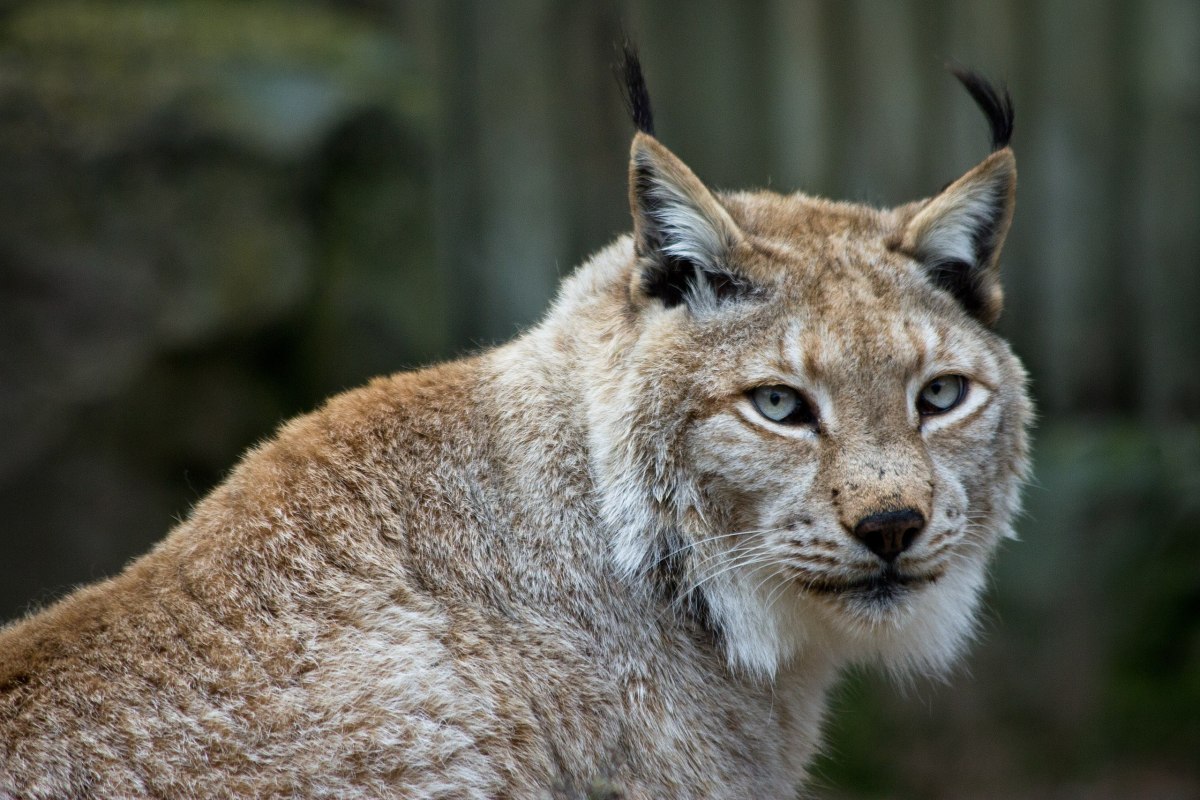
That’s lynx canadensis, better known as the Canadian lynx, and the footage is so perfect it’s as if the wild cat said “Ah, a trail camera! I’m gonna sit right here and let the humans see how beautiful and regal I am!”

From its pronounced ear tufts to its snow-soft fur and dark stump of a tail, this lynx is a fantastic example of its species. Canadian lynx are well adapted to the demands of their environs in Canada and the northern US, with heavy coats and soft, wide feet that allow it to traverse snowy landscapes quickly and silently.

They’re famously elusive and difficult to track in the wild, but maybe all we have to do is give the lynx a chance to strut its stuff.

Top image credit Carlos Delgado/Wikimedia Commons.