NYC Mayoral Candidate Has 16 Cats

Both major party mayoral candidates in NYC are longtime animal welfare advocates.

We normally avoid politics on this blog except for the occasional light-hearted satire imagining Buddy as a comically inept president of the Americats, but we’ll make an exception for the New York City mayoral race, which features two animal-loving major party candidates.

Eric Adams, a Democrat, is a former NYPD captain, Brooklyn borough president and vegan who has supported TNR programs in Brooklyn, pushed for more animal-friendly housing in the city and hosted adoption events in his home borough, according to the Humane Society’s Legislative Fund.

Curtis Sliwa is best known nationally as the founder of the unarmed crime prevention group the Guardian Angels, and in New York as a host on the city’s biggest talk radio station. (He’s been on hiatus since launching his mayoral campaign to comply with election law.)

He survived an attempted mafia hit in 1992, jumping out of a cab after he was shot several times by Gotti family enforcers, and he’s a dedicated cat lover, sharing his home with 16 rescues. Most of Sliwa’s cats have disabilities or were pulled from local shelter kill lists. Not all of them are permanent, and the Sliwas consider themselves long-term fosters until they can find the right homes for special needs cats. Last year they were able to place 10 kitties in good homes.

Still, the felines come first in their 87th Street apartment.

“Guess what? It’s the cats who rule the roost,” Sliwa told a New York Post cameraman in June. “We take whatever room is left after the cats carve out their territory.”

Cat furniture dominates the studio apartment Sliwa shares with his wife, Nancy, who told the Post she’s considering adopting more furballs, including a special-needs rescue who is blind. (They had 15 cats at the time and have adopted one more since then.)

Turning to her husband, she quipped: “We might have to lose your half of the closet.”

The couple share litter box duties and clean the multiple boxes in their home at least three times a day, they told the Post.

NYC mayoral candidate Curtis Sliwa plays with his cats.

At the end of Tuesday’s televised mayoral debate, when asked which qualities they admire in their opponents, both Sliwa and Adams praised each other for their work with animals.

The city and its surrounding environs lean heavily blue. Sixty-eight percent of registered voters in the five boroughs are registered Democrats, and Adams holds a commanding 36-point lead according to the latest poll.

Like all Republicans who set their sights on the mayor’s job, Sliwa knew it was going to be an uphill battle even though New Yorkers have tired of the current mayor, Democrat Bill DeBlasio. Sliwa hopes one of his central campaign promises — to enact a no-kill policy across the city’s shelter system — will resonate with voters across the aisle.

Republicans who have won in the past have been centrist, like former Mayor Rudy Giuliani, or nominally Republican, like businessman turned politician Michael Bloomberg. The latter enjoyed widespread name recognition before he turned to politics and supplemented his campaign hauls with his own considerable resources.

Still, the Guardian Angels founder sees Gracie Mansion, the mayor’s Upper East Side home, as a potentially fantastic cat house.

“I’ve been in Gracie Mansion before,” Sliwa told New York magazine. “There is easily room in there for 60 cats.”
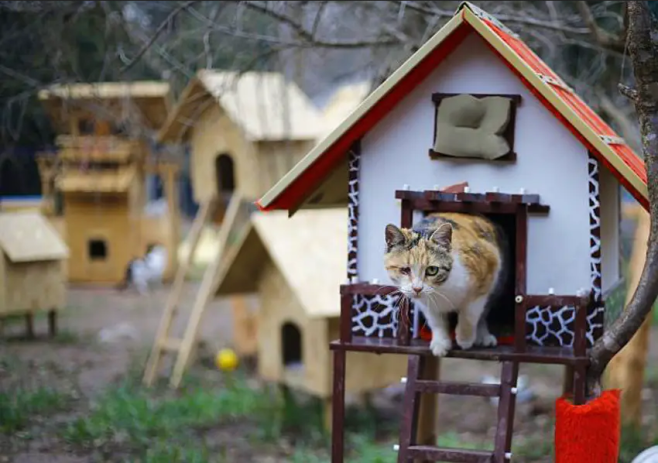
The Cat Houses of Istanbul: ‘Everybody Accepts Cats Must Have Their Own Life Spaces In The City’

Thanks to a young architect’s impulse, cat houses — miniature shelters for strays and ferals — are now common all throughout Turkey.

We’ve written quite a bit about Turkey and how it serves as a model for co-existence and fondness between humans and cats, as well as other animals.

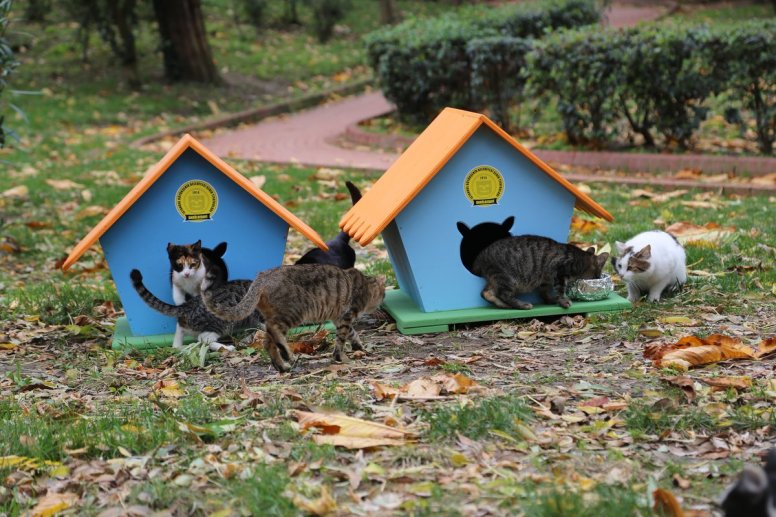
In Turkey — and especially in ancient Istanbul, the most populous city in Europe — cats are fed, welcomed into homes and shops, and taken care of by the entire community. Pets are still a thing there, but Istanbul’s stray population is the best cared-for in the world. They have their own parks, they’re protected by the people, and they’re even given miniature shelters which famously dot the city of 15 million.

“The whimsical structures — more like miniature apartment buildings than single-kitty houses — can be found in parks, outside shops and cafes, abutting private homes, and on university campuses, providing shelter for the city’s estimated 125,000 strays,” Reason to Be Cheerful’s staff wrote.

Cat house Turkey
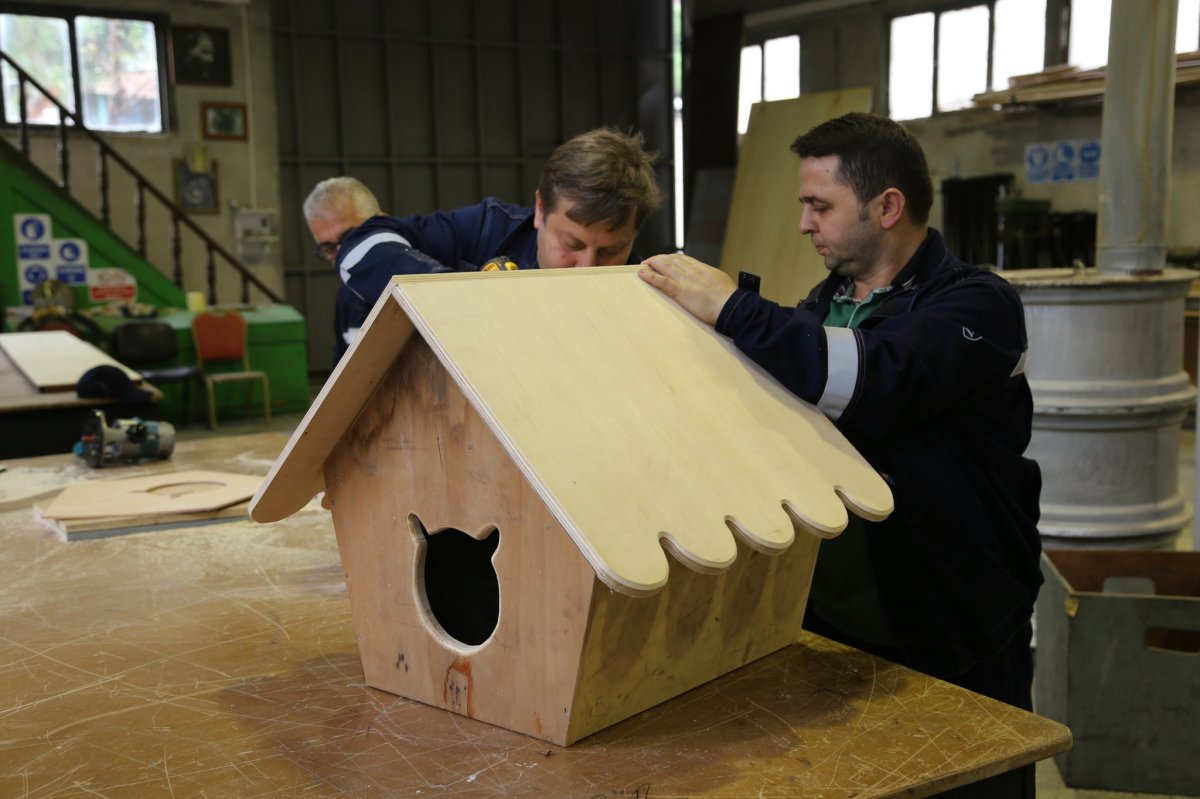
A custom-built wooden cat house in Turkey.

The practice of creating shelters for strays and ferals began in 2008, when a young architect named Didem Gokgoz would pass strays in Istanbul’s Mistik Park as she walked to and from work every day.

“Every day I passed the park and saw them looking for a place to get some warmth during the winter, and I felt desperate,” Gokgoz said.

At first she began making small shelters from recyclable materials, but the compact structures weren’t always tolerated in parks and other places where people felt they were an eyesore, so after meeting with the city’s mayor, Gokgoz engaged in an experiment: She built larger, more aesthetically acceptable permanent structures in the park, including one that looks like a large catio with a sloping, house-like roof, draped in greenery and nondescript among the park’s other features.

Mistik Park cat house
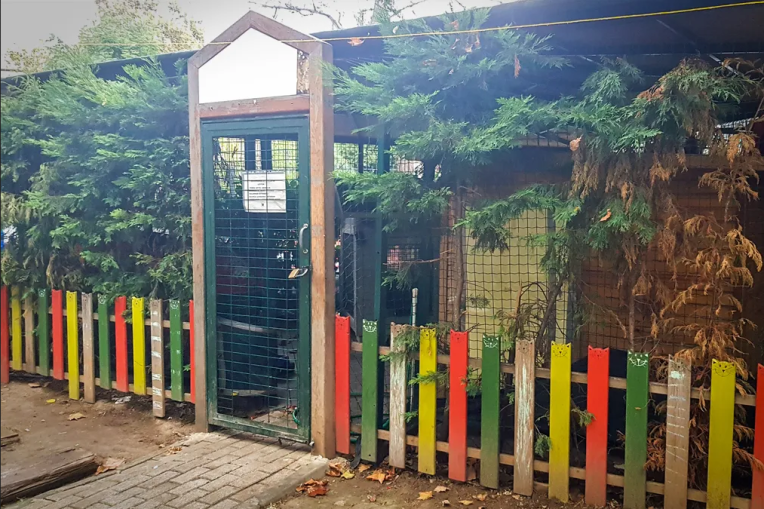
The Mistik Park cat houses are protected by a catio-like structure. Only volunteers can use the human-size door, while small cat-size openings allow felines access. Credit: Transitions.

The project was a success, and soon she found herself with requests to build more. But they aren’t just built and installed: Each cat house is run by about a dozen volunteers who keep track of the local cats, feed them, get them spayed/neutered and see to their other needs.

Almost 14 years later, cat houses have become a permanent fixture not only in Istanbul, but in other Turkish cities as well.

“It became something normal; individuals make requests for cat houses,” Gokgoz told the Turkish journalism site Transitions. “That was our main goal, and we’ve reached it. Today, everybody accepts that cats must have their own life spaces in the city.”

Istanbul cat houses
Credit: Istanbul Metropolitan Municipality

Sunday Cat Round-Up: Sanctuary Welcomes Baby Snow Leopard, ‘Two-Face’ Cat Goes Viral

A sanctuary wants help naming a rare snow leopard cub, and the founders of dating app Tabby will pitch to Shark Tank later this month.

When Venus’ human posted photos of her to Instagram, people thought the half-black, half-ginger cat was photoshopped. A video of the unique kitty debunked that rumor, showing the heterochromatic, multitone cat in all her glory. Now Venus is a star, amassing tens of millions of views on Instagram and TikTok:

Welcome baby!

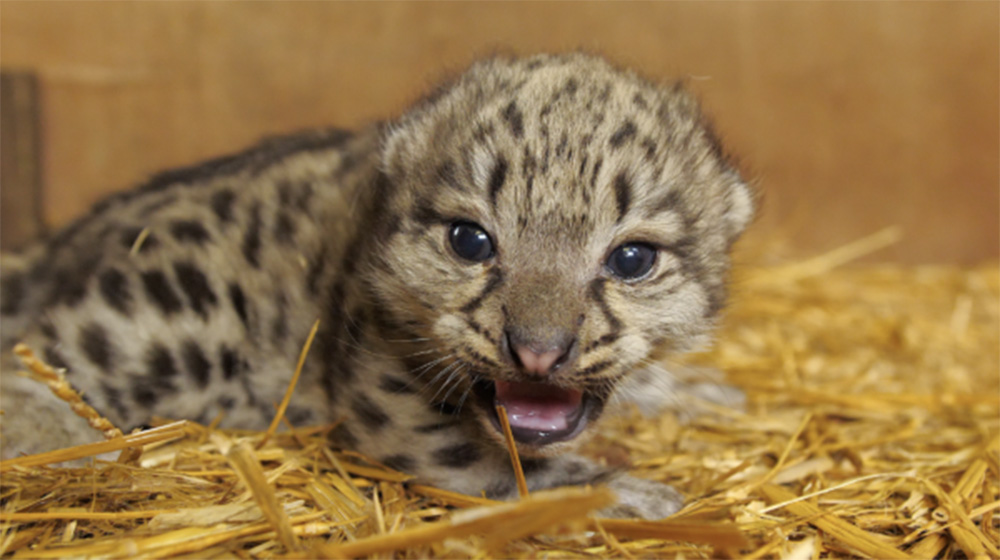
Snow leopards Laila and Yarko of the UK’s Big Cat Sanctuary are the proud parents of a newborn cub, and the sanctuary wants the public to help name the little guy, whom they’re calling Little Cub in the meantime.

“He appears to be developing and growing beautifully and is becoming more active day by day. Laila is an experienced mother and is just as attentive and devoted with this little one as she has been before,” Big Cat Sanctuary curator Briony Smith wrote.

Although Little Cub was born on Sept. 15, his birth was not announced until Oct. 21 in the video below:

Tabby founders pitch to Shark Tank

Remember Tabby, the cat dating app that Bud insisted was “fake news” because he can’t even fathom the possibility of sharing his kingdom with another cat?

The app’s founders will pitch to the big fish of Shark Tank on Friday, Oct. 29, looking for investments in return for a stake in their company.

Somehow I don’t see Mark Cuban or Lori Greiner as cat lovers, but Mr. Wonderful strikes me as the kind of guy who has a chonkster at home and secretly dotes on her, as he doesn’t want to harm his image as a ruthless businessman. (Edit: I searched around to see if O’Leary really is a cat lover, and while he described himself as a “non-cat guy,” he reached a deal with cat DNA company basepaws back in 2019, so clearly he understands businesses related to our feline overlords are good investments.)

Mr. Wonderful
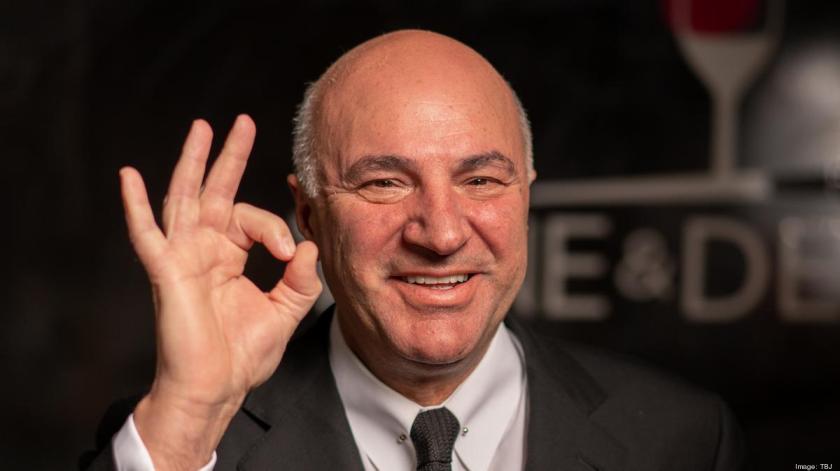
Kevin O’Leary, aka Mr. Wonderful

Dear Buddy: Why Do Cats Follow Their Humans Around?

Buddy dispels the myth that cats follow their people around, as if they would stoop so low!

Dear Buddy,

Why do cats always follow their humans around? I mean, you guys might not want us to pet you all the time, but you sure do go everywhere we go.

Human in Honolulu


Dear Human,

This is a common misconception, one of those myths about cats like the one that says we love milk or we like it when you talk to us in baby voices.

The sad reality is that you follow us around but you don’t want to admit it, so you come up with elaborate fictions about our habits. My human believes I weave around his legs to rub against them after he wakes up, which is absurd. Clearly he steps in my path and I have to swerve, causing incidental contact. I would prefer not to, but he makes it impossible.

Or how about the myth that we like to bother you guys in the bathroom? Big Buddy knows that every day at certain times I like to put my paws under the bathroom door and cry. I mean, I do it all the time and he knows it, so he decides to use the bathroom at those times and tricks himself into believing that somehow I go into hysterics if I’m not actually inside the bathroom with him.

Do you see how delusional you people are?

What kind of crazy people say “I know my cat is going to knead and purr in this spot in the next 5 to 10 minutes, so I’m going to sit here and force him to knead on me”?

I think you guys need to get help.

Buddy

Why Do Americans Love Shooting Cats?

Americans are exceptionally cruel to cats, especially strays and outdoor kitties. Why?

Seriously, what the hell is wrong with people in this country?

American cruelty to cats is even more upsetting within the context of human behavior elsewhere. In Turkey, where it’s practically a national pastime to care for felines, people build shelters for strays, welcome them into their shops with food and affection, and kitties are so trusting of humans that mother cats have on several instances brought their kittens into human hospitals and clinics for help.

Then we have ‘Merica, where apparently it’s a sport for people to sit on their front porches drinking beer and shooting stray cats with pellet guns.

Like, for instance, in Long Island this past weekend, where some stain on the human race shot a ginger tabby named Abraham and left him with a pellet lodged in his spine. Or in northern California, where a couple brought their cat to the vet because they thought he’d been attacked by a coyote, only for x-rays to show the little one had been shot several times by someone with a pellet gun. Or Augusta, South Carolina, where a cat was shot with what appears to be a bullet from a 9mm handgun. Or tiny Brookville, Pa., where a man shot his neighbor’s cat for the unthinkable crime of exploring his porch.

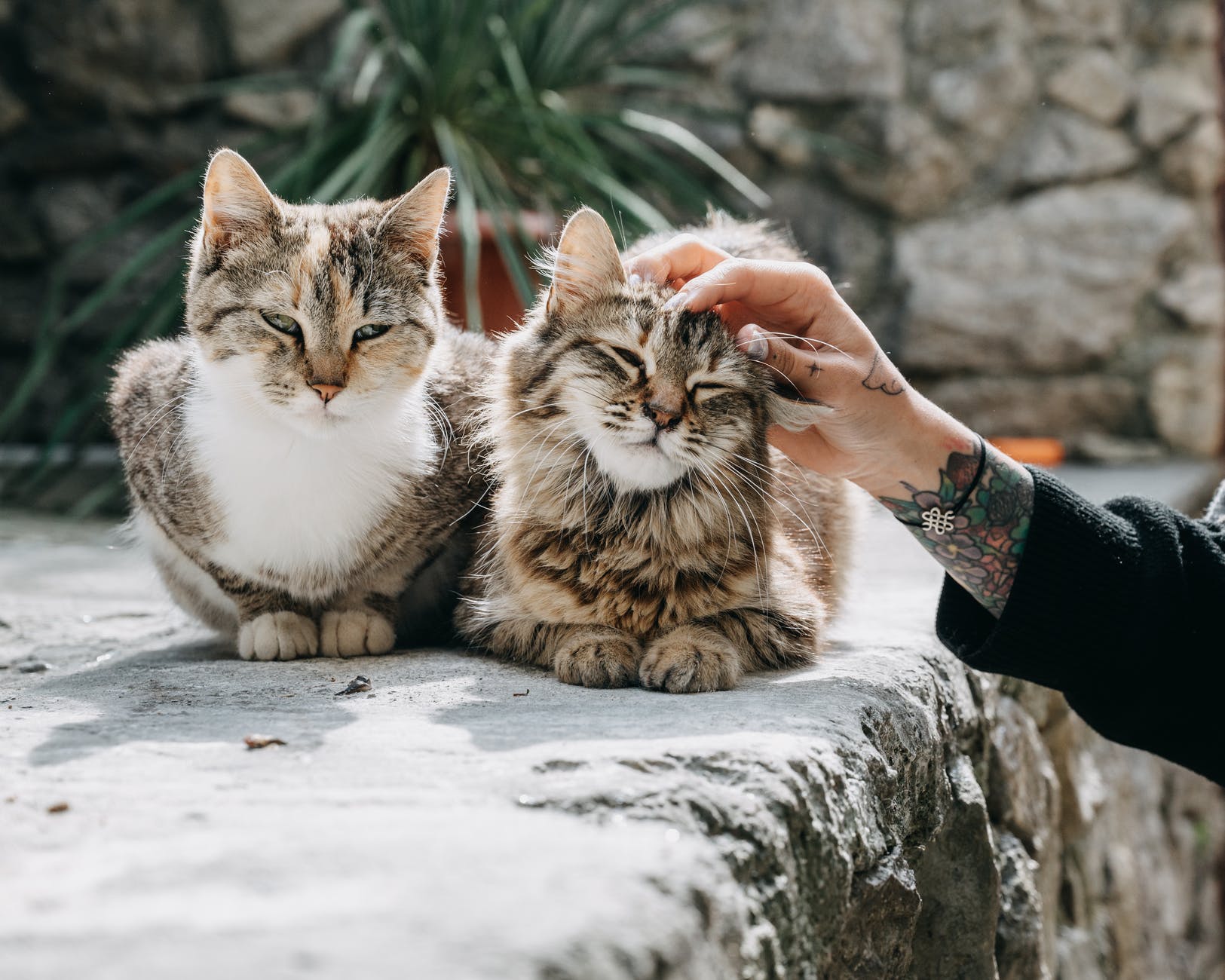
hipster with tattoos stroking cute cats on stony fence
Credit: Dmitriy Ganin/Pexels

I have Google News alerts set up for cat-related stuff to mention here on PITB, and a lot of it is great: Compassionate rescues, feline hi-jinx, heroic cats saving kids.

But those stories are always sandwiched in between articles about people shooting cats. Constantly, incessantly, apparently without a thought about the suffering they’re causing sentient animals who have feelings just like we do and experience pain, anxiety and fear the same as us. That’s not conjecture, contrary to what some people might believe, but objective scientific fact as proven experimentally many times over in recent years.

When Americans aren’t shooting cats they’re stealing them, mutilating them and killing them, like the recent nightmare case out of Tennessee: A woman left her cat in the care of a friend while she was traveling, and the friend allowed the cat to roam outside. Another woman saw the cat wandering, didn’t like what she saw and stole the kitty, eventually giving it away to 19-year-old Deamion Robert Davis via Craigslist. Davis now faces charges of animal cruelty for allegedly binding the cat’s paws and stabbing it to death with a screw driver, according to police. Detectives said they traced the killing to Davis by lifting fingerprints from the tape Davis allegedly used to bind the cat.

So because some busybody saw a pet cat on the street and decided a random, sketchy 19-year-old who responded to a Craigslist ad would provide a better home, a woman’s cat was brutally killed.

Meanwhile hatred for cats continues to be driven by bad science, like this meta-analysis of 202 toxoplasma gondii studies by researchers who need to be reminded that correlation does not imply causation. The research team looked at data on toxoplasma infections recorded in wild animals, then with no evidence whatsoever framed their study around the suggestion that cats “may” be and “probably” are transmitting the parasite to wild animals because the rates of infection are higher in urban areas.

Never mind that humans are much more likely to be infected by eating under-cooked food, certain meats, touching contaminated soil, or using utensils that were used to cut contaminated meat and shellfish. The study ignored that fact and posited — again without evidence — that cats are the primary vector for other animals and humans.

It would be nice if people in the scientific community took responsibility for the fact that their research influences the behavior of others, and blaming cats for everything from bird extinctions to parasite infections drives people to do cruel things like cull cats or poison their food. If they’re going to publish studies drawing a link between cats and extinctions or diseases, scientists have a responsibility to make sure there’s a connection more substantial than “we think, therefore we publish.”

That will conclude this rant on human cruelty to animals.