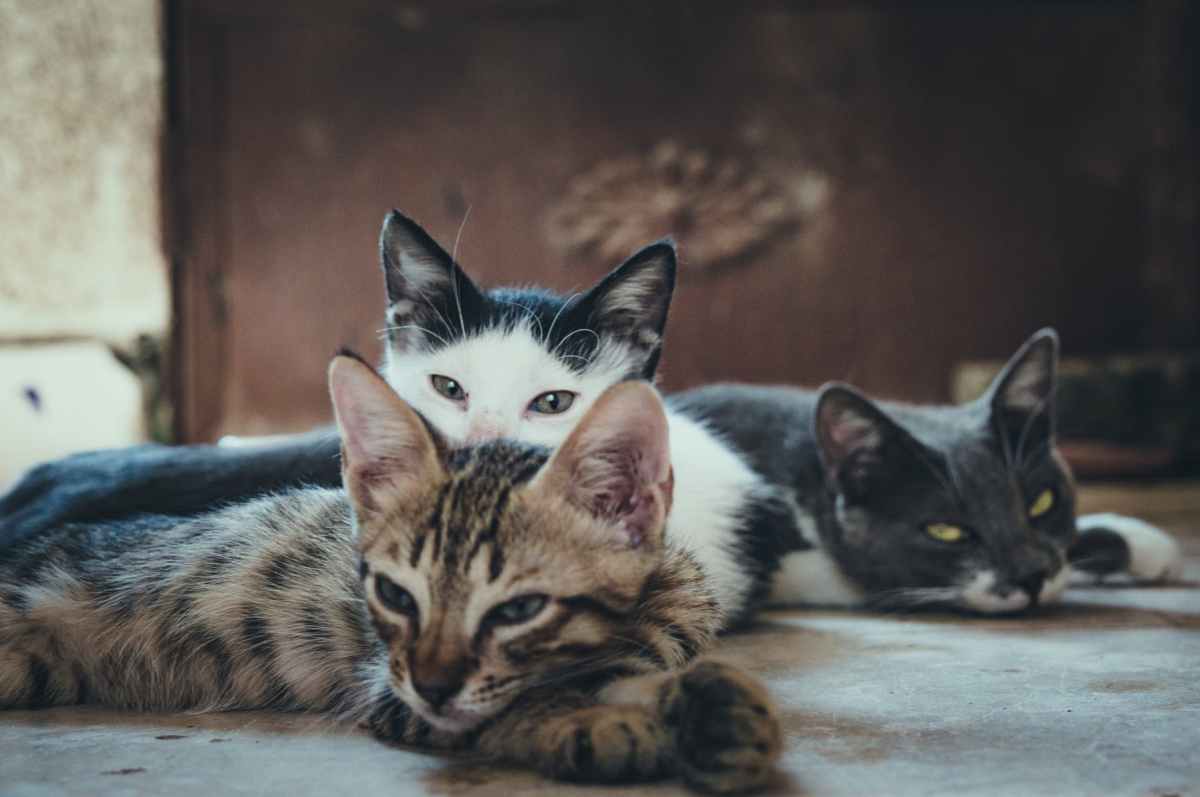
Studies have shown that when people who have pets are victims of domestic abuse, the pets often become victims too.
A Redditor says her beloved cat, Midnight, is missing after her girlfriend stole the innocent kitty and dropped her off on a random road on Friday as a revenge tactic for an argument the couple had the night before.
Midnight is still missing. Midnight’s owner, using a burner account called Throwaway29374639, updated concerned Redditors and said she was putting up flyers, setting up humane traps and looking in the area where her girlfriend claims she abandoned the cat as she was en route to work.
For her part, the Redditor says her girlfriend admitted what she did and “said she just had a moment of rage, but I just can’t even look at her right now. I kicked her out of my apartment and have been crying in my room for the last few hours. I feel so lost without my cat.”
In the thread, which attracted more than 1,400 comments and tens of thousands of views, many people advised her to report her (now presumably ex) girlfriend to the police, as well as to change the locks to her home and any passwords the two might have shared on various accounts.
We’ve talked before about the strange phenomenon of people who take their anger out on the pets of their partners or ex-partners. Studies have found that men are more likely to do so, and they’re much more likely to target cats than dogs because they see cats as an extension of femininity. In cases where domestic abuse is expanded to include a dog or a cat, the abusers view the pets as proxies for their victims.
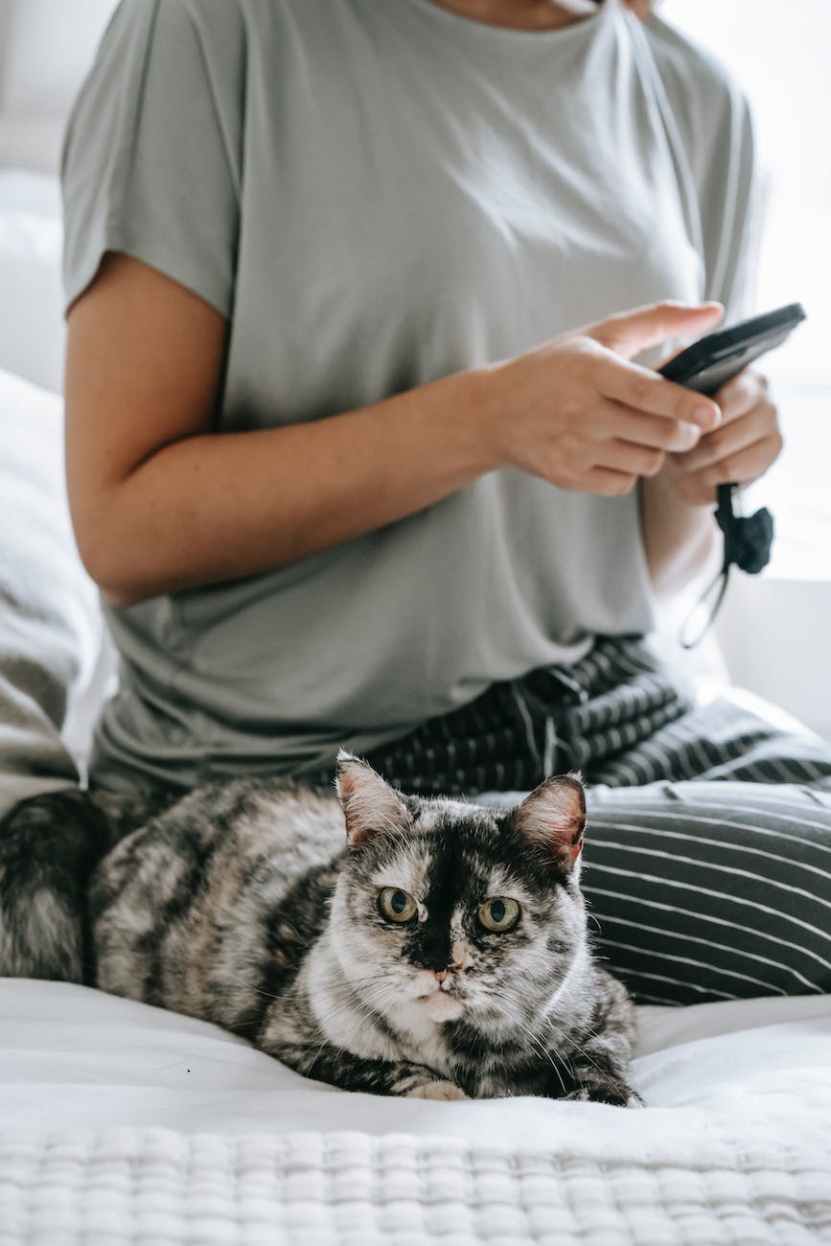
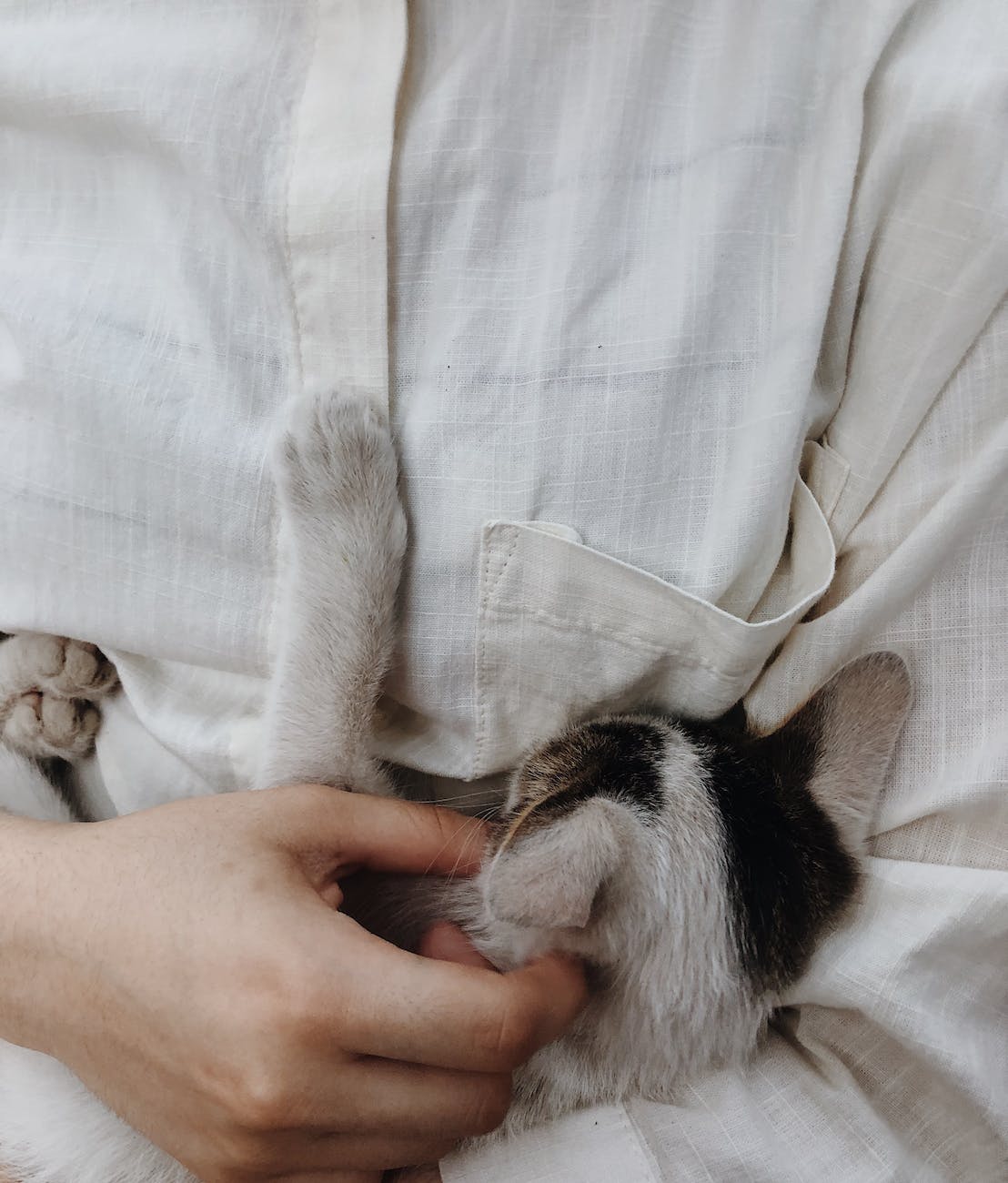
When woman are abused by their partners, their pets are often abused as well because they’re seen as proxies for the victims. Credit: Sam Lion/Pexels
Regardless, studies show that the pets of domestic abuse victims are likely to suffer at the hands of their owners’ abusers, and statistics show women who check into domestic violence shelters report their pets were also abused in the majority of cases. Some studies found more than 80 percent of pets who belong to domestic violence victims also become victims.
Women who worry about what will happen to their pets are less likely to leave their abusers and seek temporarily relief at shelters. As a result, some shelters also make arrangements for the pets of abuse victims, giving them safe shelter and taking another worry off the minds of their caretakers.
After maintaining busy and hectic schedules all year, cats get to kick their paws up and finally relax on the holiday weekend.
Today is Labor Day, a federal holiday first recognized 128 years ago to highlight the achievements of the US labor movement and the rights of workers. Labor Day caps off a three-day weekend marking the end of summer.
What are your plans for Labor Day?
“Lots and lots of napping. I’ve been getting by on a paltry 14 hours a night all week.” – Jimmy, 7, couch warmer
“Nothing special. I’m just going to relax and kill a few insects.” – Tilda, 12, window sentinel
“CHECK IT OUT MY SHADOW MOVES!!! WATCH MY TAIL!! MY TAIL’S SHADOW MOVES WHEN I MOVE MY TAIL!!” – Fluffistapheles, 3 1/2 months, kitten scientist
“First of all it’s labour, dear chap, and it puts ghastly ideas about slacking off in the heads of our bipedal servants. I plan to studiously ignore it, particularly because you Americans celebrate it on the wrong day.” – Alastair, 3, British cat
“What’s labor?” – Marshmallow, 5, professional napper
“Why? You plan to tell me what I can do? LOL!” – Apollo, 10, taste tester
This is why we always say it’s better for cat servants to regulate themselves than allow the government to get involved.
A Karen in Australia issued a $280 fine to a homeowner for allegedly allowing his cats to roam — after she lured the kitties onto the street herself.
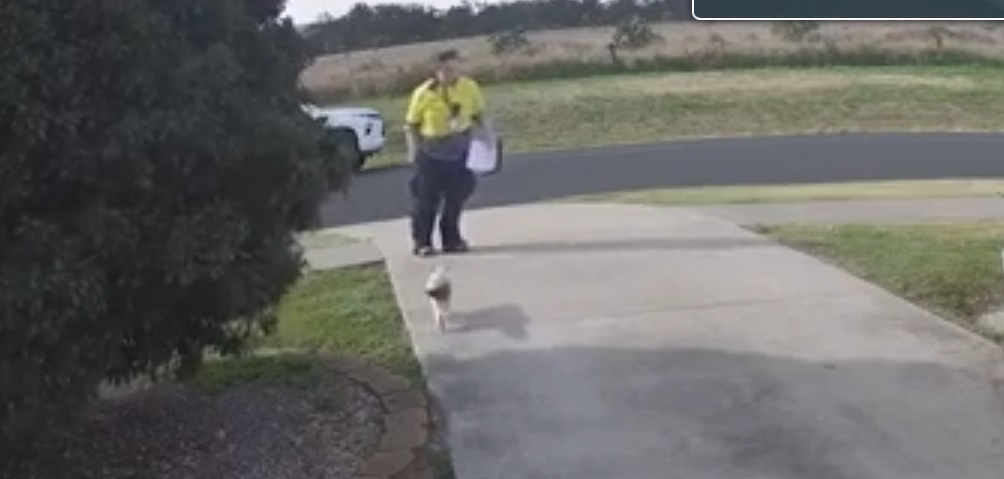
The entire bizarre spectacle was captured on security cameras at the home of Julie and Steven Stephens, a couple in Toowoomba, about 80 miles west of Brisbane. The uniformed Karen, who is employed by the Queensland council, totes a clipboard in one hand as she walks up the Stephens’ driveway in broad daylight.
As one of the curious cats approaches, Karen reaches for a pen in her pocket and starts scribbling on her clipboard, apparently eager to get started on the paperwork, before slowly backpeddling so the kitty will continue to follow her. When the cat reaches the sidewalk, the unnamed woman scoops it up and walks to her government-issued vehicle parked in front of the Stephens’ home.
Steven Stephens was watching the episode unfold via his camera system and bolted outside to stop the government employee from taking his cat, he told Yahoo News Australia.
The Karen wasn’t able to “impound” the cat, but she wrote Stephens a hefty fine for “allowing his cat to roam,” and promised she’d be back to inflict more misery.
“She said she would be back in two weeks with the police to take all but two of our dogs,” Mr Stephens said.
A municipal employee from the Queensland council is seen luring a cat away from its home in this still shot from surveillance video. Credit: Steven Stephens
We’re unable to embed the video, but you can watch it at Yahoo News Australia.
Unbelievably, Toowoomba Regional Council “CEO” Brian Pidgeon doubled down and quoted the relevant section of law on pet roaming when a local newspaper asked him about the incident. Pidgeon did acknowledge his employee was accused of luring the Stephens’ cat, but said he couldn’t talk about that because he’s conducting an “internal investigation,” which is bureaucrat-speak for figuring a way to worm his way out of the situation. There is, after all, clear video showing the Karen luring the cat away. There is nothing ambiguous about what happened.
Stephens admitted he and his wife have “too many” dogs according to local law, which has set arbitrary limits on animal custodianship, but said there are good reasons for that. The dogs sooth his wife, he said.
“A few years ago she had a severe car accident, her partner at the time died, she has a metal plate in her head and now has severe depression and anxiety,” Stephens said. “The dogs help with her anxiety.”
The family has been so rattled by the incident, and apparently has so little faith in their local government to treat them fairly, that they told Yahoo News they’re looking to sell their home and move to “a larger parcel of land in the bush.”
That in itself is an extraordinary admission, indicating they don’t expect basic courtesy, honesty or professionalism from the local authorities.
Now imagine how this would have played out if the Stephens family did not have security cameras. The council worker would have said their cats wandered off the family’s property of their own accord, and that would have been it. The Stephens would be forced to pay the fines, have a legal battle on their hands to get their cats back, and would be fretting over the impending confiscation of their dogs.
I know I sound like a broken record with regard to how local governments, guided by bunk “research” studies, impose themselves on pet caretakers, especially those of us who have cats. That’s why it’s important not to give them any reason to interfere — and to make sure everything is recorded, as the Stephens family wisely did.
Who knows what the government Karen’s motivations were. Was she trying to meet a quota? Does she dislike animals? Does she enjoy flexing the little bit of power she has, or inflicting misery on others? By preempting legislation on cat ownership and roaming, we can avoid putting ourselves at the mercy of such people in the first place, which is in the best interest of cat caretakers, and most importantly cats themselves.
Feline fact fail
I’m sure Nigel Barber, PhD., is a nice guy. I don’t mean to give him any grief. But when you present yourself as an expert on a topic and you write an authoritative column on a trusted site that has millions of readers, you really should make sure you’re not spreading misinformation or providing a picture of a situation that is decades behind the current science.
In a column for Psychology Today titled “Does Your Cat Love You?“, Barber rattles off a list of cliches, half-truths and outright falsehoods about cats, the kind of thing you might have expected 20 or 30 years ago before a wealth of research helped us dispel incorrect assumptions about felis catus.
Credit: Sevra Karakuu/pexels
After mucking up the domestication timeline, Barber says cats are “fearful of people,” “tend to withdraw from strangers,” and paints an outdated picture of aloof animals who technically don’t need human care to thrive. He also says cats attack people, including their caretakers, without warning or provocation.
Then there’s this nugget:
“As essentially wild predators, cats can be quite unpredictable. Many owners who are devoted to their cats complain that the cat often scratches them unexpectedly. One acquaintance had the cat declawed and found that the pet reverted to using its teeth on her!”
Can you believe it?!?! A woman had her cat declawed, and the cat bit her!
It’s not just that we know cats give off plenty of nonverbal warnings when they’re uncomfortable, or that declawing makes a cat much more likely to bite. Organizations like the Humane Society, SPCA, The Paw Project and others have been saying that for years.
It goes well beyond that — studies, including the most comprehensive study to date on the effects of declawing, have proven without a doubt that cats are much more likely to bite when they’re subjected to the cruel and painful declawing procedure. (See “Pain and adverse behavior in declawed cats,” a 2017 paper in the Journal of Feline Medicine and Surgery.)
That’s because declawing a cat not only inflicts a lifetime of physical pain and psychological trauma, it robs felines of their primary defense mechanism, making them feel much more vulnerable. Without claws with which to warn off unwanted handling, the poor declawed cats have only one defensive weapon available to them — their teeth.
An evolutionary psychologist should understand that, and should also understand that scratching is a natural and necessary behavior for cats. It’s not right or wrong, it’s cats being cats. Mutilating innocent animals to protect inanimate objects like furniture is objectively wrong and cruel. When you adopt a cat, scratching comes as part of the package along with all the positives like unconditional love, amusing antics and calming purring.
There are ways to dissuade and train your cats to mostly avoid scratching furniture, but no one should expect their cats will never put a claw on their couches. If you don’t want your furniture scratched, don’t get a cat. End of.
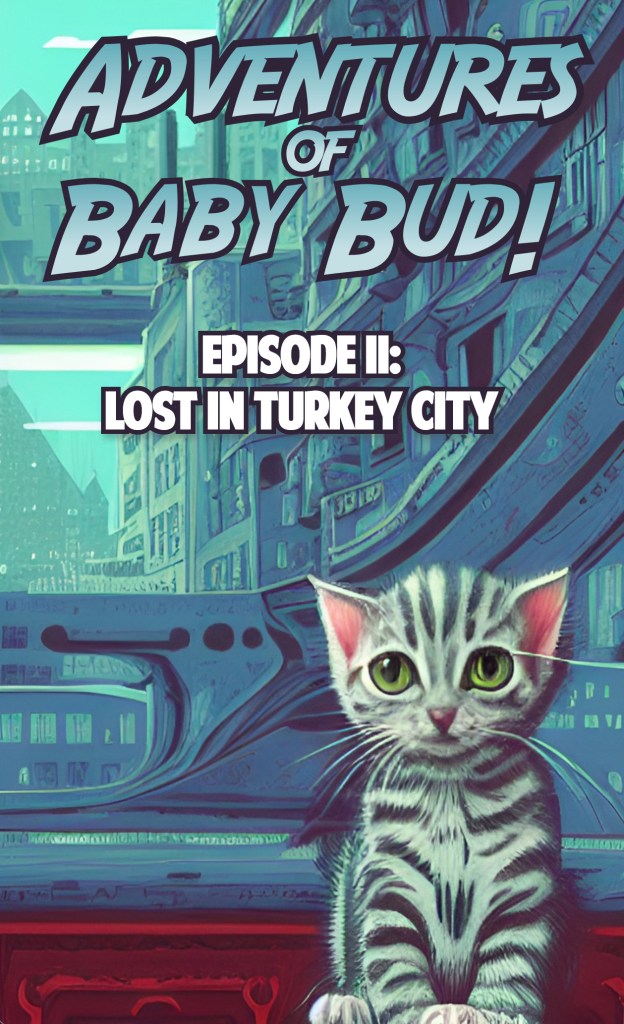
TMT: Too Much Turkey chronicles Chubby Buddy as he eats his way out of Turkopolis, the City of Delicious Turkey.
Buddy the Tiger: Meowscular Hunter follows a fully grown Buddy as he takes his rightful place as king of the jungle and doesn’t have to wait for stupid humans to feed him.
Meowstar 2177 centers on the exploits of Space Admiral Pâtéstalker and the fabled starship UCN Nap Enforcer.
Join Bud on his very first dangerous mission in Turkopolis, back when he was just a tiny kitten.
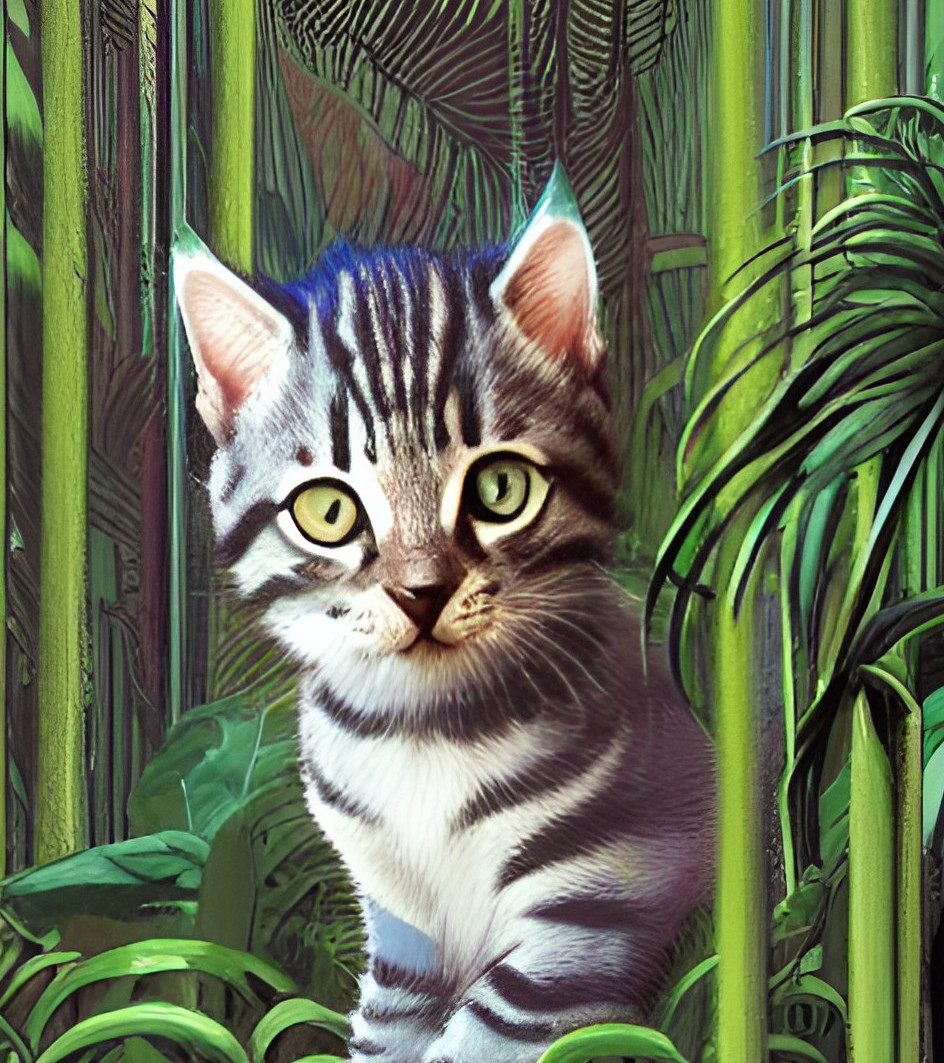
I created all the artwork in this post using a natural language processing AI and pixlr.
Cats from all walks of life react to news that humans want to join the species.
There have been several controversial stories lately about humans who identify as cats, or want to become cats. Most of them are hoaxes, but you can’t put things past crazy humans. We asked actual cats what they think about the idea.
What do you think?
“Does this mean they’re not going to be our servants anymore?” – Princess Sprinkles, 6, house cat
“I identify as a hulking tiger.” – Tiger, 11, indoor-outdoor menace
“They can identify as Jovian moons for all I care, as long as dinner is still served on time.” – Crispy Cream, 4, house cat
“I say, dear fellow, I should rather think they lack the fur.” – Niles, 10, British cat
“What am I thinking about? I’m thinking about chocolate rivers, candy-coated gumdrops, and Lifesavers made of cheese!” – Chonkmatic the Magnificent, King of North American cats
“WATCH ME GO!!! WATCH ME! I’M GONNA RUN FAST NOW!!! YEEEEAAAHHH!” – Mari, 4 months, house kitten