Buddy The Cat’s ‘The Art Of Napping’ Debuts Atop NYT Bestseller List

The book received glowing reviews for its comprehensive approach to the world of slumber and promises something for every type of napper.

A new book on napping from the world’s most prolific snoozer has taken the sleep enthusiast community by storm.

“The Art of Napping: The History and Technique of Dozing Off” by Buddy the Cat bills itself as “the world’s most comprehensive guide to taking a siesta” and a “manual on how to commit yourself to a lifestyle of leisure and laziness.”

It includes an illustrated history of sleep science, from its superstition-mired origins to the highly specialized field of modern-day napology, following the rich sedentary traditions of various cultures.

“The chapter contrasting ancient Sumerian nap-walking with Syracusan Somnambulism is not only heavy with detail, it’ll put you to sleep almost immediately,” said Rusty LeFelino, chaircat of the Snooze Studies Department at the University of Catlanta.

Nap on tatami mat
“Nap on tatami mat under cherry blossoms” by Hirotaro Buddishida, 1646, is one of many historical depictions of shut-eye included in The Art of Napping.

Reviewers were equally effusive with their praise.

“Buddy the Cat dozes headfirst into the world of segmented slumber, documenting everything from Chicago-Style Snoozing to indigenous bedding techniques pioneered by the jaguars of the Pantanal,” reads a starred review in Publisher’s Weekly. “Whether you’re a weekend warrior who enjoys drooling on your couch during baseball games or a committed napper who swears by episodic DaVinci Sleep, there’s something for everyone in this beautifully bound volume.”

The New York-based feline spent more than a year researching and getting paws-on experience for the book. He visited the California headquarters of Google with its famous employee nap pods, spent a week sleeping under the stars with the pumas of the Pacific Northwest, and interviewed lucid dreamers to find out whether it’s possible to nap within a nap a la Inception.

“Buddy leaves no pillow unturned in his quest for the truth, with spectacularly stale prose that will have even the over-caffeinated yawning into the back of their paws,” a reviewer for Narcolepsy Daily wrote. “Get yourself a cozy blanket, curl up with Buddy and let the Z’s commence.”

Jungle Napping
Southern Siesta: The author spent several weeks in the Amazon napping with jaguars, jaguarundis and ocelots, an experience described in a yawn-inducing chapter of The Art of Napping.
Sleeping_cat
“The ability to nap anywhere at any time is the mark of a master snoozer,” Buddy writes in his new book. Credit: Wikimedia Commons

Study: Jaguars Aren’t As Solitary As We Thought

Using a network of trail cameras, researchers studied jaguars for years and observed behavior that surprised them.

Lions are famously described as the only social big cats, known for living in extended family units called prides and even forming coalitions, which young males sometimes do before they lead their own prides.

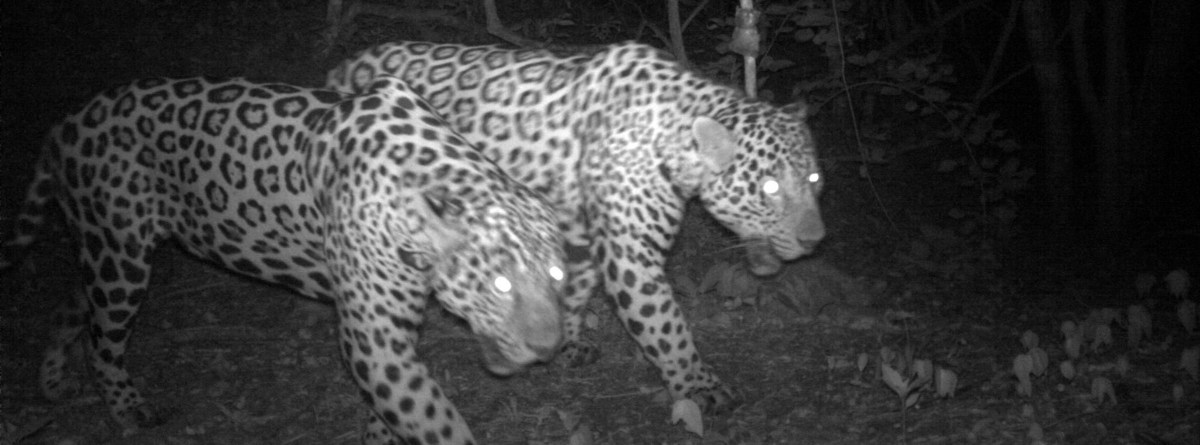
But now, thanks to a research team that monitored trail cameras in the Amazon for years, we know that jaguars form their own coalitions, doing things never before seen like patrolling and marking territory together, cooperating on kills and sharing prey. The researchers focused on areas in Brazil’s Pantanal and Venezuela’s Llanos region, both of which provide varied landscapes and water access for the famously water-friendly big cats, who are strong swimmers and prey on aquatic and land animals.

The team pored through more than 7,000 instances of jaguars appearing on the trail cameras, which gave them a look at a range of jaguar behaviors that normally would not be seen.

“It shows the value of having long-term camera tracking, movement ecology data and direct observations through citizen science,” said Allison Devlin, a co-author of the study. “And from that we’re able to see that if you have a relatively stable jaguar population, healthy prey base, and protection for the species, we can start seeing these more natural behaviors, and start understanding some of the interactions that a solitary species might have.”

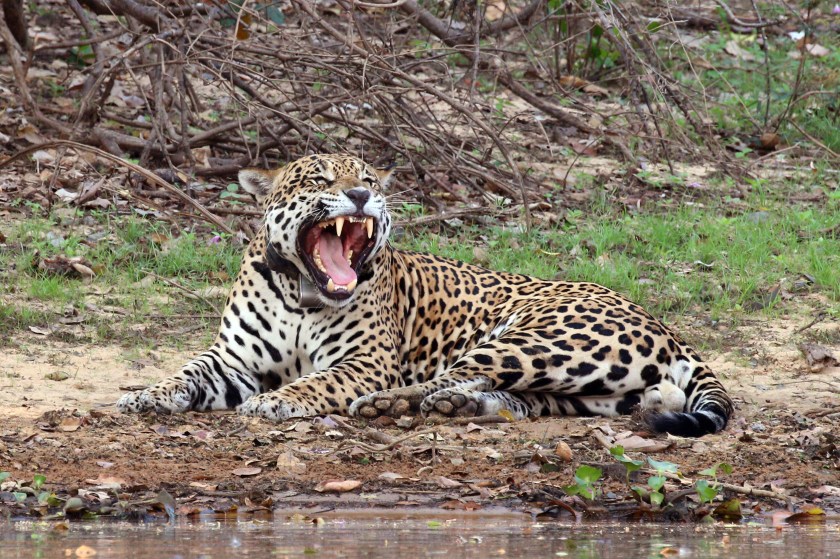
Jaguar_(Panthera_onca_palustris)_male_Rio_Negro_2
Credit: Wikimedia Commons

In two cases, coalitions between jaguars lasted for more than seven years, the researchers said. The jaguars were seen cooperating for almost every activity as they went about their daily lives in the jungle.

Not only are the findings remarkable, but they’re a reminder that we’re still woefully ignorant about the only big cat of the Americas, especially compared to lions, tigers and leopards.

“The secret life of jaguars is more complex than previously thought,” Devlin said. “We still have so much to learn about the intricate lives of these secretive wild cats, with findings that can help scientists better conserve these species and the landscapes on which so many plant, animal, and human communities depend for their survival.”

One reason they’re less studied than other big cats is because jaguars are notoriously elusive. People who have spent their lives in and on the periphery of the Amazon say jaguar eyes are on humans from the moment they enter the jungle, watching from the shadows. Yet there are no recorded cases of man-eating jaguars, and conflicts with the feline apex predators and humans are rare, most often relegated to instances where people got too close to jaguar cubs or tried to corner the animals. Jaguars do a lot of watching, but they don’t allow themselves to be seen.

Of course that doesn’t mean they’re cuddly. Jaguars are the third-largest cats in the world, after tigers and lions. They have the strongest bite force of any cat, which allows them to crunch through giant turtle shells and kill in one bite by literally crushing the skulls of their prey with their teeth. (The name jaguar comes from the indigenous yaguar, which means “he who kills with one leap.” No other cat kills the same way.)

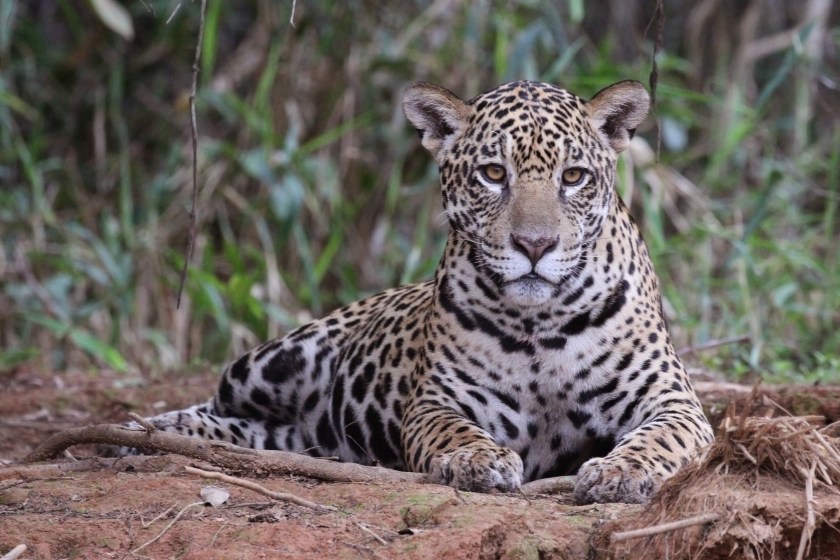
Jaguars are also perpetually confused with leopards, their look-alike African cousins, which leads to further uncertainty about their behavior and habits. Aside from being separated by an ocean and living on separate continents, jaguars are heavier and have thicker limbs than leopards, and the biggest give-away is the presence of spots within their rosettes, which leopards do not have.

Jaguar_(Panthera_onca_palustris)_female_Piquiri_River
Credit: Wikimedia Commons