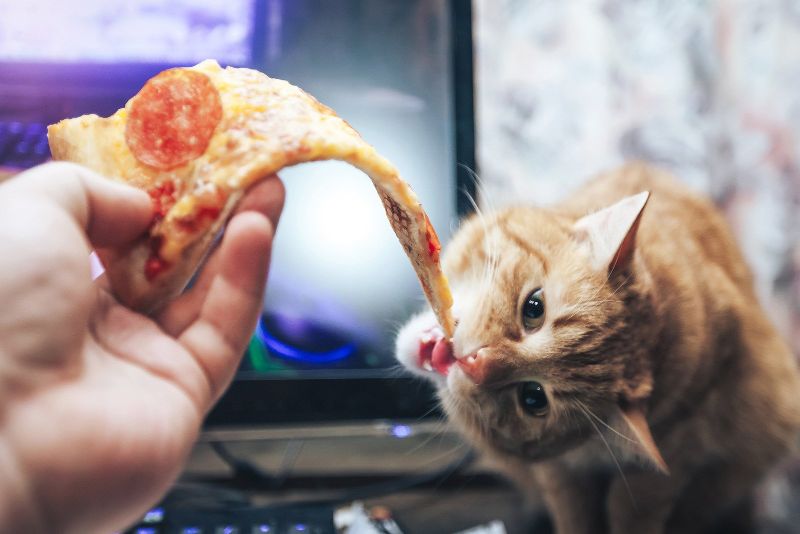
Bird Flu Kills 20 Big Cats At US Sanctuary And Prompts Pet Food Recall

Cats of all kinds are at risk of avian flu infection if they hunt birds outdoors, consume raw meat or drink unpasteurized milk.

In a tragedy that underscores how vulnerable cats of all types are to bird flu, more than half the big cats residing at a sanctuary in Washington were killed by the virus in less than a month.

Twenty cats in total died at the Wild Felid Advocacy Center, including five servals, four bobcats, two Canada lynx and a Bengal tiger.

Only 17 cats are left at the sanctuary, according to its operators.

Mark Matthews, the sanctuary director, called the H5N1 avian influenza a “wicked virus” that killed the cats in his organization’s care within 24 hours of each animal contracting it.

“We’ve never had anything like this,” Matthews said, adding that he and his staff are accustomed to cats in their care dying of old age after living long, happy lives.

In California, Gov. Gavin Newsom declared a state of emergency on Dec. 18 after infected birds were found at more than two thirds of the state’s dairy producers.

cows in barn
California’s dairy industry has been hit hard by the spread of bird flu, with more than half the state’s dairy producers impacted. Credit: Ralf R/Pexels

As of Dec. 26, bird flu had infected 65 Americans, the majority in California.

And the virus has now resulted in its first pet food recall, with Northwest Naturals pulling its turkey recipe “raw diet” food. A cat in Oregon died after consuming the food, according to the Oregon Agriculture Department.

As we noted in our earlier post about the variant of avian influenza, there’s no reason to panic. Even if you live on the west coast, the chances of your cats being infected are small.

But it’s probably a good idea to make sure your cats remain indoors, as health authorities warn cats can contract the virus directly by catching and eating birds. In one case, health officials believe three indoor cats may have caught the virus after killing mice in their home.

In addition, the American Veterinary Medical Association advises caretakers to avoid giving their cats milk, which they should not be drinking anyway, and raw meat. Domestic cats are generally lactose intolerant, and while cats can be infected with bird flu by eating raw poultry, they can also contract the virus by eating raw meat from other animals.

Pet Theft Up 40 Percent Since Pandemic, Criminologist Says

Incidents like Sunday’s attempted cat robbery are happening more often in recent years, a forensic investigator specializing in animal-related crimes says.

Pet theft is a low-risk, high-reward way for the criminally-minded to make a quick buck, which is one reason why such crimes have become much more common since the pandemic, a forensics professor told the New Haven Register.

Virginia Maxwell, who specializes in forensic investigation of animal cruelty, spoke to the newspaper in the wake of Sunday’s failed gunpoint robbery when two men broke into an East Haven, Conn., home and demanded the victims’ “high dollar value cat.”

But first we’d like to draw your attention to an announcement we made back in February of 2021. At the time pet theft was in the headlines after robbers shot a man walking Lady Gaga’s breed dogs, while across the country in Portland a man stole a van full of daycare-bound pups.

Here’s what we wrote at the time:

“Buddy would like everyone to know he does not actually live in New York, and that his true location is a secret.

“I could be living in Rome,” the troublemaking tabby cat said. “I could be Luxembourgish. Maybe I live in Königreich Romkerhall or the Principality of Sealand. You just don’t know.”

“The one thing you can be certain of is I definitely don’t live in New York.”

We would like to make clear that we continue to blog from Not New York.

On a more serious note, financial woes brought on by the pandemic, painful inflation and a generally difficult economy have attracted the criminally inclined to the petnapping trade, and as Maxwell pointed out to the Register, few people are held accountable for animal-related crimes. That includes darker endeavors like dog fighting and puppy/kitten mills.

“Sadly, animal cruelty in general is under-prosecuted, and very, very few actually end up resulting in jail time,” Maxwell said.

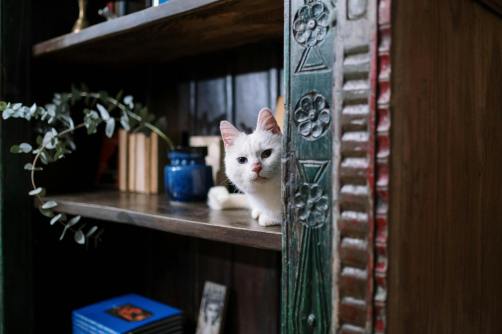
white cat on brown wooden shelf
A cat stays above the fray and surveys her surroundings from an elevated perch. Credit: cottonbro studio/Pexels

Sometimes pet thieves are opportunists who see a cat or dog who catches their fancy, or they believe might be worth money. Those cases often include people luring well-loved animals off porches and property with food.

Most, however, are people who intentionally target breeds that command high prices and are primarily responsible for what Maxwell says is a 40 percent spike in petnappings since early 2020. For felines that means Bengals, Savannahs, Ragdolls, Maine Coons, Norwegian Forest Cats and other breeds that can net the thief a solid payday for minimal effort.

“They’re going to steal your pedigree cat, your pedigree dog that’s worth thousands” and immediately flip the animal, Maxwell told the newspaper.

Social media, it turns out, is a double-edged sword.

While cops and animal welfare organizations warn people against showing off valuable pets online — and urge people to disable features like location tagging — the same platforms are often invaluable for retrieving stolen cats and dogs. Groups on sites like Reddit and Facebook help people find their well-loved four-legged family members and warn others when they identify resellers.

You can help keep your furry friends safe by making sure they’re microchipped, only allowing them outdoors when you’re there to accompany them, and keeping gates, doors and garages closed and locked.

Jury Awards Oregon Man $1.4 Million In Stolen Cat Case

The man’s attorney styled the decision as a victory for animal lovers.

An Oregon man didn’t get his cat back but he could be almost $1.4 million richer after a jury decided in his favor in a cat-napping case.

Joshua Smith, 41, adopted a cat he named Frank in 2017 after finding the little guy, apparently a stray, in an alley.

At the time Smith was living in a single room in a group drug recovery home in Portland, according to the Oregonian. The terms of his lease didn’t allow him to keep pets so when Smith’s landlord — a man named Devon Andrade — discovered Smith had been keeping a cat, Andrade took matters into his own hands and stole Frank, admitting under oath he’d taken the tabby and given it to his girlfriend, who then took Frank to a local shelter.

Smith and Frank were never reunited: It turns out Frank has a microchip and he was returned to his original family, the people who were his caretakers before he went missing and Smith discovered him more than six years ago.

Frank the cat
Frank the cat, as seen in a photo Fuller showed to the jury.

But it took a jury less than two hours to decide against Andrade and Pine Street LLC, the company behind Pine Street Recovery Housing. The defense argued that even though Andrade should not have acted unilaterally, Smith was still in violation of his lease agreement, but the jurors weren’t buying it.

“The jury’s message should be loud and clear to landlords,” said Michael Fuller, Smith’s lawyer. “You need to respect the rights of tenants, especially when it comes to pets.”

The jury awarded Smith a shocking $1.375 million although it’s not clear how much of that Smith will see. An earlier story, published in 2019, said Smith had sought $250,000 in damages. It’s not clear why the jury went with the much larger amount.

Fuller credits the jury, saying there were several sympathetic animal lovers in the juror box.

Smith said he’s been successfully sober for years. He’s since married, moved to California and opened his own barber shop.

“The most important thing was that I got my day in court,” Smith said. “I got really lucky because I told the truth, no matter what.”

‘Every Time We Needed To Refill, They Charged Us More’: FDA Says 2 US Women Made Millions Off Desperate People Whose Cats Had FIPV

The importers are accused of jacking up prices almost 16 fold on FIPV drugs they illegally imported from China, the FDA says.

FIPV is pretty much a guaranteed death sentence for cats, and the only way to cure it is with an experimental drug that doesn’t have FDA approval.

Oregon’s Nancy Ross and Nicole Randall of Texas knew that, and as importers selling the cure via the popular Facebook group FIP Warriors, the FDA says they banked on the desperation of people who would do almost anything to save their cats — including forking over vast sums of money.

Ross and Randall are now accused by the FDA of smuggling GS-441524 from China, where it’s manufactured illegally, and hiking the price by almost 16 times what they paid for it as they served as the middle women between desperate cat owners and the suppliers in Hong Kong.

Feline infectious peritonitis kills some 95 percent of cats it infects, and veterinarians often tell their clients with FIPV cats that while they can’t prescribe GS-441524, they will help administer it, track their cats’ progress through bloodwork and hopefully save feline lives — if the clients obtain the drug themselves.

FIP Warriors — now in its fifth incarnation as FIP Warriors 5.0 on Facebook — is where people with FIPV cats go to find suppliers. The group has more than 43,000 members, and the FDA says Randall made millions off of them, charging as much as $385 for vials of GS-441524 she obtained for between $25 and $45 from manufacturers in Hong Kong and mainland China.

Randall sold $9.6 million worth of GS-441524 to clients in the US, according to the FDA. Per The Oregonian:

“A spreadsheet found in Randall’s Google email showed customer orders of at least 58,460 vials and 236,836 pills of GS-441524 from July 2020 through June 6, 2022, the affidavit said.”

PITB spoke to several people who paid thousands of dollars for GS-441524 after their cats were diagnosed with FIPV. All of them said they were surprised by the news of the FDA’s investigation, and said they were given various reasons for why the drug was so expensive to acquire.

One customer from Texas, whose cat Seth began his regimen in July of 2020, told PITB she doesn’t regret spending the money to cure Seth, but she “can see how the people saw our desperate situation and took advantage of us.” She was told prices were at a premium because of scarcity.

“It was a very stressful time for us, and every time we needed to refill, they charged us more,” she said. “They knew we couldn’t say no.”
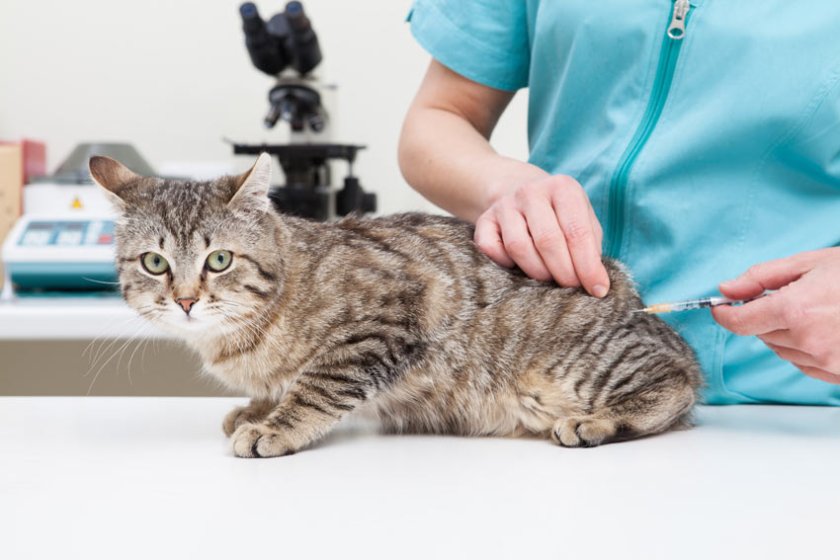
Cat-Cat_Guide-A_grey_tabby_cat_having_its_first_vaccination_injection

Another woman, whose kitten was diagnosed with FIPV in 2021, “was told that the prices were set because they ensure the medication was purchased from a trusted source.”

As a college student at the time, she used her savings and crowdfunded the other half, paying more than $5,000 for her kitten’s treatment. She said she doesn’t think the administrators of the group were ripping her off, since they had FIP cats of their own, and likely didn’t know the importers were making huge profits. She trusted the seller — who was not Ross or Randall — because the group vouched for that person, assuring her they supplied real pills.

“Of course, I don’t think this is a valid justification for hiking up prices up to 16x the amount,” she told PITB, “but I’m sincerely hoping the individual [accused by the FDA] had a valid reason for setting the prices that she did.”

Others paid even more exorbitant prices: a British woman we interviewed for a story about FIPV in 2022 said she paid about £7,000, or $9,400 at the time.

FDA investigators said they intercepted shipments from China and Hong Kong disguised as COVID masks, cat shampoo and chewable medicine for pets, and the Oregonian report says the shipments were listed as “essential oils” and “beauty products” in import documents.

Randall and Ross have not been charged criminally, but they are now targets of a civil asset forfeiture case:

“The government seized five of Randall’s bank and brokerage accounts and her 2022 Tesla Model Y car last year based on a warrant signed by a federal magistrate judge in Oregon.

The warrant identified the bank accounts and car as proceeds from the “crime of smuggling” and subject to forfeiture, according to the affidavit. It also alleged Randall, now 35, used the proceeds to buy several properties, including a ranch in Leander, Texas, in July 2021.”

While the FDA’s affidavit went into detail regarding Randall’s earnings, it describes shipments sent to Ross but does not specify how much she may have made in profit. An attorney for Randall told The Oregonian that the Texas woman will fight the civil asset forfeiture.

The illegal market for GS-441524 exists because the drug’s creator, Gilead Sciences of California, declined to submit it to the FDA for approval. That’s because it’s chemically similar to another drug the company makes, remdesivir, which was floated as a possible treatment for COVID-19. The company was worried any snags in a potential approval process for GS-441524 would also ensnare remdesivir, according to reports, putting the latter drug in limbo during the pandemic.

Now that the pandemic has retreated to much lower levels of infection and death, it’s not clear if Gilead Sciences will reconsider its FIPV medication, but there may be hope in the form of alternate treatments. A report from the American Animal Hospital Association (AAHA) says scientists at the University of California-Davis and UC San Diego are working on several promising therapies, including a potential treatment using CRISPR gene-editing technology.

But until another cure or treatment passes trials and earns FDA approval — a process that could take years — people with FIPV-diagnosed cats remain at the mercy of strangers on the internet, spending thousands of dollars per regimen and hoping the drugs they buy are the real deal.

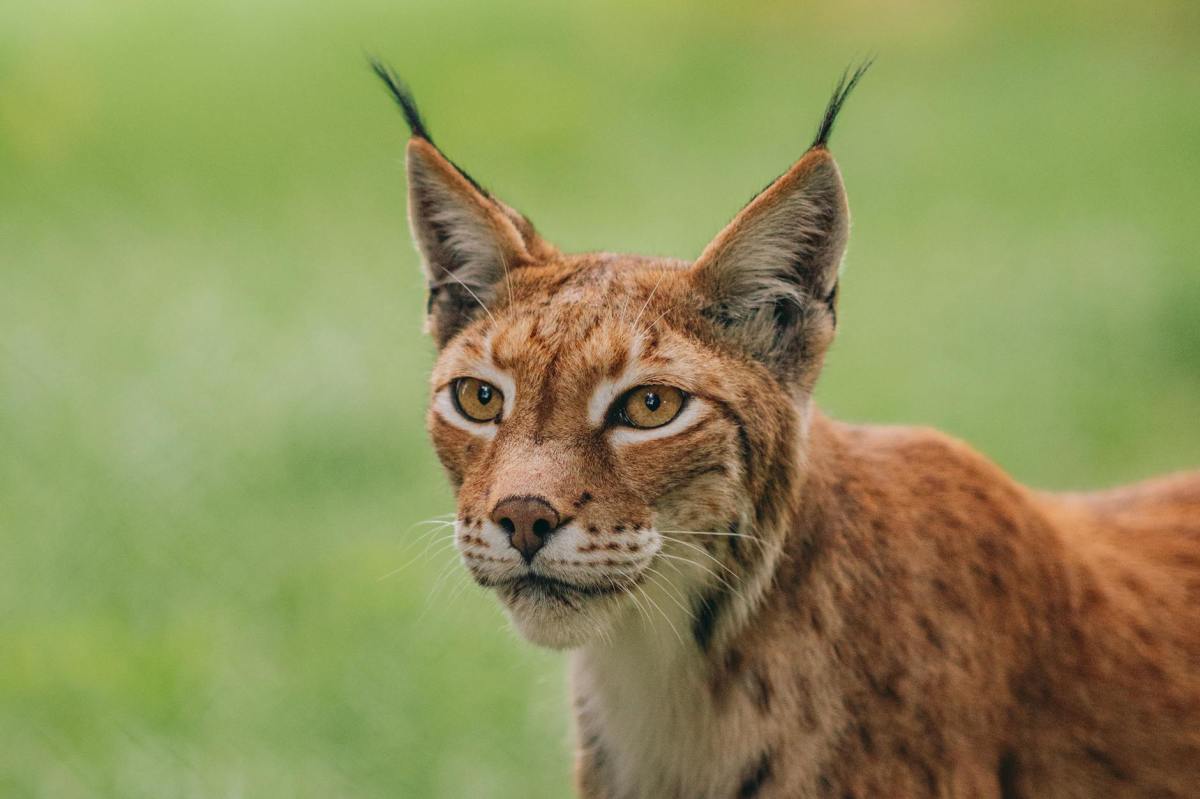
‘Damn You, Humans!’ Pizza-Obsessed Cat Foiled By Microwave Lock

One meat lover’s pie with extra pate coming right up!

I’m pretty sure Buddy regrets teaching me all about animal cognition and emotion, which led me to adopting a vegetarian diet in 2015.

He’s never gone on the kitchen counters (such a good boy!) and when he does express interest in the fridge, it’s more of a rote status check, a defeatest confirmation that there’s nothing of interest for him in there aside from cheese.

But Bentley has no such scruples. The feisty feline from Oregon got his greasy little paws on a pizza one night and loved it so much that he’s become obsessed with the microwave, which is where he found that fateful slice.

Bentley’s human, Britney Shizo, said she put the leftover pizza in the microwave, then forgot about it until she returned to the kitchen and found Bentley happily feasting.

“The microwave is wide open and the pizza is on the floor and it’s gone, pretty much,” Shizo said.

Footage of Bentley, which has since gone viral, shows him determinedly trying to open the microwave door, gripping the handle with both front paws and using all the strength in his little body to get to that sweet, delicious pizza.

But, alas, he’s foiled by a child safety lock, which he refuses to accept as he strains, pulls and pushes the microwave in the hilarious footage: