Did A School Really Go Into Lockdown After A Teacher Confused A Chonky Cat For A Mountain Lion?

The latest viral cat story offers a lesson in healthy skepticism in today’s news environment.

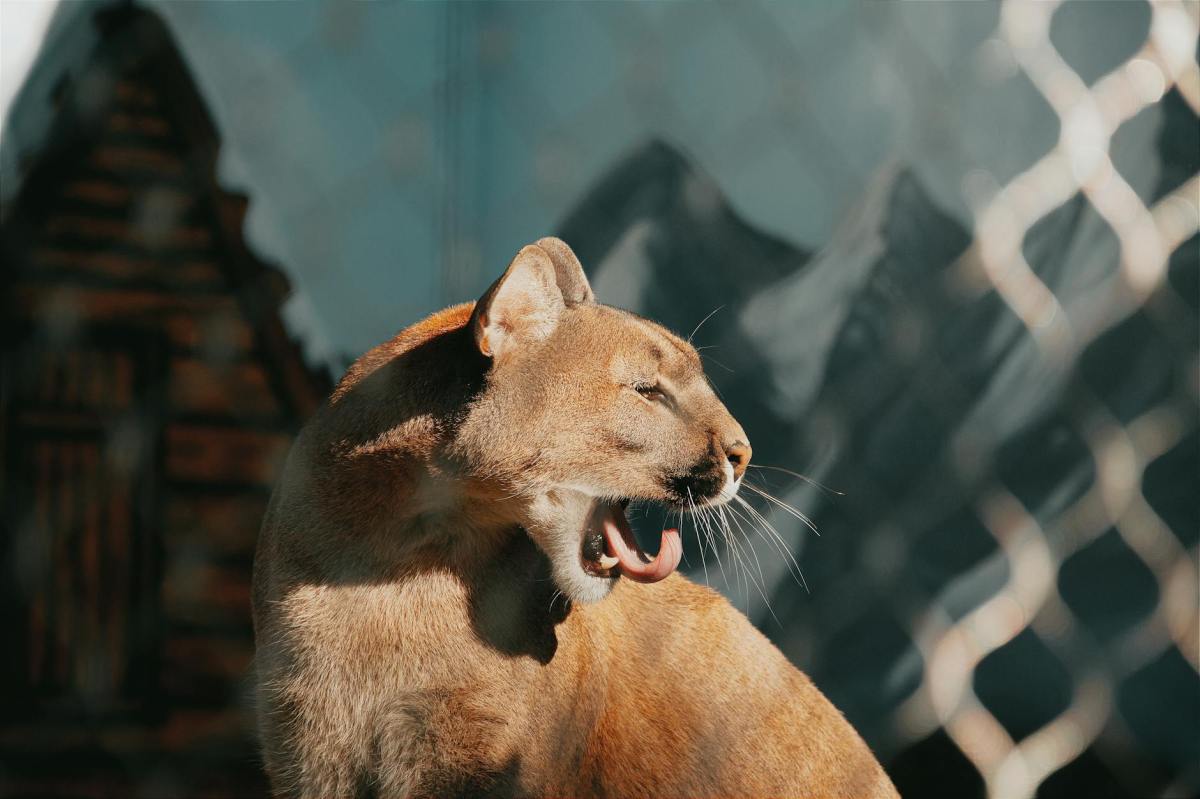
Viral news accounts on social media and less scrupulous news sites have been buzzing this week about a school lockdown in Moses Lake, Washington, which was reportedly caused by a teacher confusing a particularly fat cat for a puma.

I saw red flags immediately while reading the story. While it did give a specific location, it was suspiciously devoid of other details, and the wording on all the posts and stories was dubiously similar. Additionally, a Google news search doesn’t turn up anything recent from reputable press.

Then there’s the photo, which looks a little too good to be true.

This photo is a Getty stock image and does not depict the domestic cat in the school lockdown story, despite accompanying it in dozens of news posts.

So did a school really go into lockdown after a case of mistaken feline identity?

Yes, but it happened in November of 2023, and the photo of the obese cat making the rounds in stories this week does not depict the cat in question. The original story was published by a local news site on Nov. 22, 2023, and says the school went into lockdown at 10:30 that morning, but was quickly lifted after staff confirmed there was no puma stalking the school grounds.

“…educators soon learned that the mountain lion was in fact, a “fat cat eating a rat,” according to the school memo to parents. 

‘While we take all reports seriously, this was the first report we’ve ever had of this nature,’ the school wrote in a statement. 

Despite the benign nature of it all, safety measures resumed to safeguard students and staff. Classes resumed as normal after a short period of time. “

As for the photo, the particularly rotund moggie’s image is a stock photo from Getty. It was used in a story about feline obesity in 2017 and an April 2018 story from the New York Daily News about public outrage in Jefferson, Iowa, where the police were shooting feral cats instead of dispatching animal control or working with local shelters.

Since the image is from a photo agency and predates the original story about the Washington school lockdown by at least six years, we can rule it out as an image of the feline mistaken for a mountain lion while settling down to a feast of fresh rat.

A deceptive image used to promote the story on Facebook.

So what happened here, and why are so many news sites and channels reporting this incident as if it just happened, accompanied by a deceptive photo that is not credited to Getty?

It’s classic clickbait. That is to say, some administrator or editor saw the old story picking up traffic or noticed a blip in certain search strings, and republished the story as if it’s new while omitting the original date.

Others noticed and followed suit to get the clicks while the getting’s good, fighting over the scraps that fall from the Zuckerbergian table in the form of ad revenue. The story is simple, sharable, has been paired with an amusing image, and is exactly the sort of thing people love to post and comment on via social media.

It’s a reminder to all of us to be skeptical about what we read, and to never take anything on Facebook, Instagram, TikTok et al at face value. In fact, it’s best to ignore anything on those platforms presented as news or fact. Everyone’s got their own preferences, but here at Casa de Buddy, we like the Wall Street Journal, Reuters, The Guardian, Associated Press, al Jazeera, the BBC, and aggregators like RealClearPolitics.

That doesn’t mean they’re above reproach or that everything they produce is a sparkling example of journalism, but they’re institutions that operate under the traditional rules, staffed by professionals who take pride in trying to get stories right. I’ll take that any day over a random Facebook account run by some shady guy in Macedonia or Belarus, who will post anything as “news” as long as it brings him clicks and ad revenue.

Vigilante Mob Targets Wrong House While Looking For Serial Cat Killer, Plus: Maine Coon Renders Buddy Liliputian!

The gathering, originally billed as a vigil, turned violent when the mob began breaking windows, tore down part of a fence, and pepper sprayed a father who tried to shield his children from the crowd’s wrath.

A mob of protesters, enraged by the actions of an accused cat killer, terrorized an innocent family on Sunday night.

The crowd gathered in Santa Ana, Calif., for what was billed as a vigil for the slain cats and a condemnation of their alleged killer, 45-year-old Alejandro Oliveros Acosta. The Santa Ana man was arrested last week and charged with felony cruelty to animals after “dozens” of felines in the neighborhood disappeared under suspicious circumstances, per police.

With emotions running high, the crowd followed its more unruly members to a house they mistakenly identified as Acosta’s. The homeowner said he was related to Acosta’s wife but didn’t know anything about the cat killings until Acosta was arrested. He told the protesters he hadn’t seen Acosta since the arrest and asked them to calm down, but they broke windows, attacked him with pepper spray and terrorized children living there.

“The peaceful protesting wasn’t so peaceful. They’re scaring kids here. It’s scaring the whole family. There are kids, seven kids in this house. Two little babies, one that is autistic,” the man told KTTV. “You know, breaking our fences… pepper spraying us for no reason. If you did what you did, I didn’t know anything about it. You know, when we found out [about the cat murders] we were shocked.”

It took Santa Ana police an hour to respond, according to multiple news reports. Even after the police told the protesters that they had the wrong house and were breaking the law, the mob refused to leave and accused the victims of being complicit in Acosta’s alleged crimes. Officers had to manually break up the crowd by physically removing individual protesters.

On Monday, police took the unusual step of publicly commenting on the fallout from Acosta’s arrest, pleading with people to “allow the judicial process to take its course.”

“I don’t think it needs to be like this. I think it should have remained a vigil,” one protest participant told KTTV, a Fox affiliate in Los Angeles. “I knew it’d be a protest, but I didn’t think it would get violent. I don’t think anybody should be touching property.”

Needless to say, we don’t need people making the animal welfare community look like a bunch of lunatics, and vigilante “justice” is wrong. As humans, we’re at our worst when we engage in mob behavior, which obliterates reason, civility and empathy.

Although a lot of people seem to have difficulty with this simple concept nowadays, everyone is entitled to due process, and we’re a nation of laws where alleged crimes are litigated in court, not on the street, on front lawns or online.

Zeus the mighty, meowing from atop Olympus

A cat named Zeus has been turning heads lately, and for good reason: he’s huge even by Maine Coon standards.

Zeus is fluffy, imposing, and so big that he can help himself to food left on a counter just by getting up on his hind legs.

At almost 30 pounds, he’s practically three Buddies in mass. I texted a photo of Zeus to Buddy, and Bud responded with a photo of his own, claiming he’d just finished a grueling bench press session:

Bud hitting the gym to pump iron and stuff.

Hmmm.

Something tells me Buddy’s going to complain that I didn’t bestow him with the name of a Greek god. Is there a diminutive, glib deity to be found in the Olympian pantheon?

‘Swift And Lethal’: Cats Have No Defense Against Bird Flu, And It Keeps Showing Up In Their Food

Bird flu is killing cats domestic and wild, in captivity and in nature. Experts are sounding the alarm, warning people not to feed their cats raw food, allow them to drink milk, or let them roam outside where they can easily catch the virus by going after small prey.

Highly Pathogenic Avian Influenza, the clinical name for bird flu, is a danger to all animals, but for cats it’s a virtual death sentence.

Only a handful have survived infection thanks primarily to early diagnosis, intervention and round-the-clock veterinary care. In the vast majority of cases, the virus burns through its feline victims in three or four days.

Bird flu has become even more deadly for felines of late. Of the 126 domestic cats killed by H5N1 since 2022, according to the US Department of Agriculture, half of them have have died in 2025 — and it’s only been three months.

Notably, that total doesn’t include captive wild cats and big cats, such as the 20 pumas, bobcats, tigers and other felids who succumbed to the virus at the Wild Felid Advocacy Center, a sanctuary in Washington state. Nor does it include cats living in the wild, like two pumas in the same state that died in December.

To appreciate the true scope of the problem, the more illuminating statistic may be 82 million, which is the number of chickens “culled” — killed — in the US since 2022 because they were infected or raised at facilities where other birds tested positive for the virus.

Factory farming compounds the matter: more than 1.6 million egg-laying hens and 337,000 “pullets” — chickens less than a year old — were “depopulated” at a single facility in Texas last year. As staggering as those numbers are, Texas’s Department of Agriculture noted the figure merely “accounts for approximately 3.6% of the company’s total flock.”

Per the USDA:

“To provide context on the overall size of the U.S. poultry flock, there are more than 378.5 million egg-laying chickens in the United States. In 2023, more than 9.4 billion broiler chickens and 218 million turkeys were processed in the United States.”

If there ever was an example of putting too many eggs in one basket, this is it. American food supplies are vulnerable with so much concentrated in the hands of so few companies, a lesson the general public is learning the hard way now after eggs peaked at record prices last month. Things have cooled off a bit since then, but shoppers aren’t getting any benefit as grocery chains continue to charge a premium: the nationwide average for a dozen eggs was $5.90 in February, but stores in some states are still charging $10 or more.

It also raises questions about the sustainability and ethics of eating animals. Humans slaughter more than 75 billion chickens every year, and projections indicate there will be three billion more of us by the mid-2080s.

Meat from infected chickens can still end up in your cat’s bowl

Media reports about culling give the impression that those birds are removed from the food chain, but that’s not entirely true. The pet food industry has always cut corners by harvesting meat not fit for human consumption, a category that includes everything from the carcasses of sick animals, to “meat by-products” that can include beaks, hooves, eyes, hearts and other organs.

So while the culled chickens won’t show up in shrink wrap at the grocery store, they are making it into the pet food supply chain. Most pet food is “rendered,” cooked at such high temperatures that potential pathogens have been destroyed.

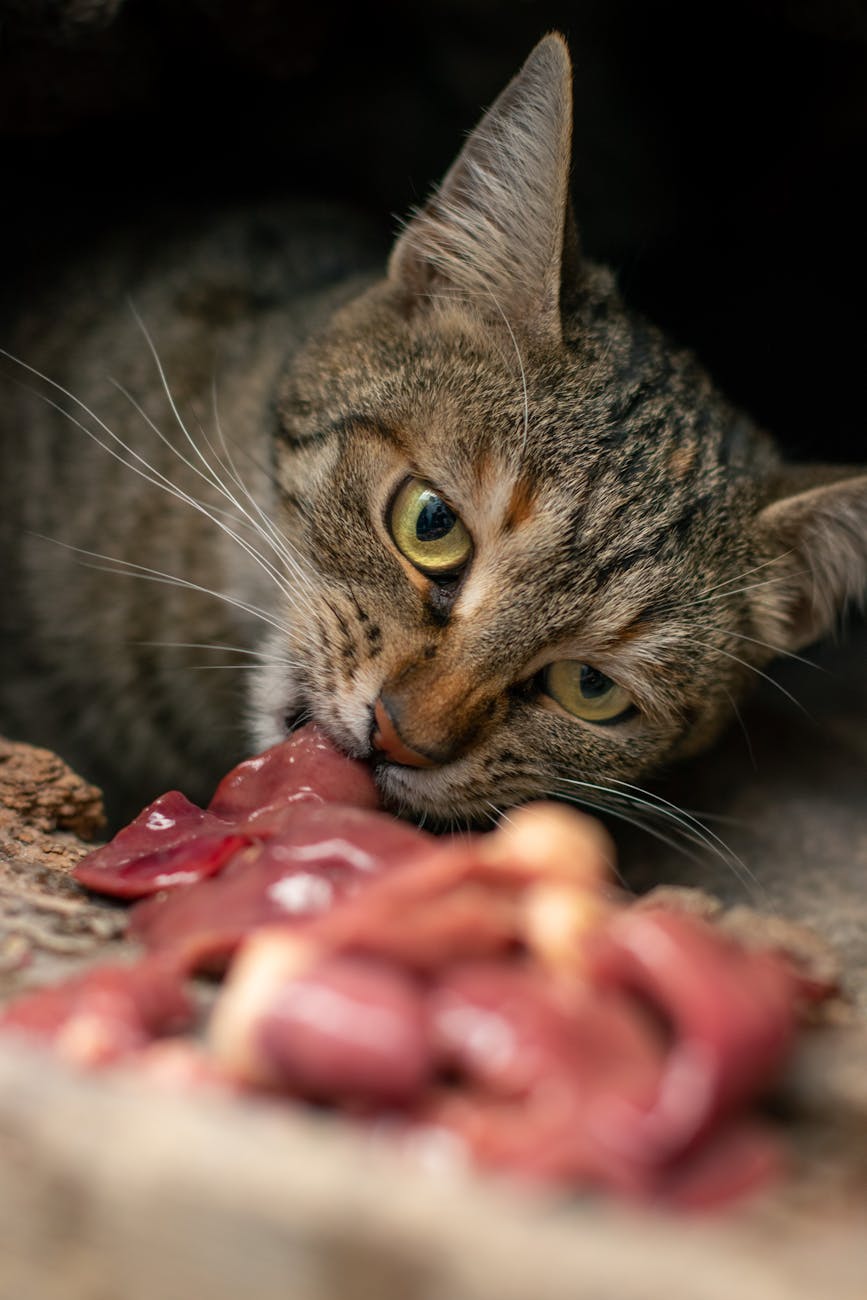
But an increasingly bigger slice of the market has been claimed by companies selling “premium” raw food — and that’s been the primary infection vector for domestic cats, particularly indoor cats who otherwise would have little or no exposure to the virus. (Cats who spend time outdoors can catch bird flu by preying on infected animals, just as wild cats do, and barn cats have caught it by drinking the milk of infected cattle.)

Cats are mostly lactose intolerant, and should not be given cow’s milk, despite the common misconception that it’s healthy for them.

“The animals that were depopulated could potentially have ended up in the food chain for pets,” Laura Goodman, an assistant professor at Cornell University’s Baker Institute for Animal Health, told NBC News. “It’s not uncommon for substandard meat to end up in the pet food chain.”

That’s what happened to Tim Hanson’s beloved cat, Kira, who died in February after eating raw food from a company called Wild Coast. The company has recalled the product, Boneless Free Range Chicken Recipe. It’s one of four recalls in the last month alone.

Hudson is suing Wild Coast for the veterinary bills — about $8,000 — and said he was devastated that Kira, whom he called “the happiest cat,” is gone. He said he thought he was doing right by her by feeding her the expensive raw food, but now urges people to avoid feeding their cats raw food at all costs.

“I don’t want any more cats dying,” he said. “Hopefully people can learn from Kira’s passing.”

Top image via Pexels. All other images via Wikimedia Commons

Massachusetts Becomes 3rd State To Ban Declawing

The Massachusetts law is a significant victory in the quest for a national ban on the cruel procedure, which involves amputating cat toes at the first knuckle

There’s good news today from Massachusetts, which just joined New York and Maryland in banning cat declawing.

The bill, signed Friday by Massachusetts Gov. Maura Healey, prohibits all declawing surgery except for rare circumstances when it’s medically necessary, like cancer in the nail bed.

Veterinarians who violate the law face fines up to $2,500 and professional discipline if they continue the practice.

Despite its name, declawing is the partial amputation of cat toes, equivalent to cutting off human fingertips at the last knuckle.

a little cat playing
Photo credit: Alex Ozerov-Meyer/Pexels

Declawing changes a cat’s gait, causing the animal pain when it walks, and usually leads to early arthritis. It causes cats to stop using their litter boxes, because the act of standing on and shoveling litter becomes painful for them.

Last but not least, it has a profound psychological impact on felines, making them vulnerable by taking away their primary form of defense. Consequently, cats who are declawed are much more likely to bite than those with intact claws.

Most of all, declawing is cruel and inflicts a lifetime of pain on innocent animals, punishing them for doing what cats naturally do.

Aside from New York, Maryland and Massachusetts, a few dozen cities and counties have banned the procedure, ranging from places like St. Louis, Missouri, to Austin, Texas, and eight cities in California, including Los Angeles and San Francisco.

Bird Flu: Study Warns Virus Has 90% Mortality Rate In Cats, Wild Pumas Succumb To Infection, Sanctuaries On Alert

“If you feed your pet contaminated raw meat or milk, they will likely die. I’m not exaggerating, just giving it to you straight,” one infectious disease specialist warned.

In more disconcerting news from the bird flu front, a new study warns of exceptionally high mortality rates for cats who are infected with the virus.

The study found 89.6 percent of avian influenza cases in cats are fatal, making the virus a virtual death sentence.

That applies to all species of cats, from the true big cats in the panthera genus — tigers, lions, jaguars and leopards — to felines, a broad group that includes domestic cats, lynx, cheetahs, pumas, ocelots, servals, jaguarundis and others.

“We don’t know if the cats are more susceptible than anybody else,” the American Veterinary Medical Association’s Michael Bailey told USA Today. “It’s just the fact they’re exposed to higher viral burdens because of where they go.”

Whether cats are more susceptible is up for debate, but one SPCA chapter said felids of all species are “uniquely vulnerable” to avian influenza because there are so many ways it can be transmitted to them by doing nothing more than what they typically do.

https://platform.twitter.com/widgets.js

Cats can be infected by catching and eating birds and mice, drinking raw milk, eating raw meat (including commercial raw pet food), and exposure to infected animals, including cows.

In Washington state, two wild pumas died after contracting the virus from prey, a development Panthera puma director Mark Elbroch called “troubling.”

“It certainly raises eyebrows and makes one wonder: is it indicative of a bigger pattern out of sight?” Elbroch asked, noting pumas are at the top of the food chain in the Pacific northwest.

mousegeoffreyscat

To date, as many as 900 cattle herds across the US have tested positive for bird flu, according to the US Department of Agriculture, while two thirds of California’s dairy farms — 660 out of 984 — had confirmed cases as of Dec. 26.

Bird flu was the confirmed cause of death in a house cat from Washington who died after eating Northwest Naturals commercial raw food, which has since been recalled. Three house cats in Texas succumbed to the virus, which they possibly contracted from hunting mice. The bird flu was also responsible for the deaths of two domestic cats in California who drank raw milk, and 20 of 37 wild cats — including a tiger, several pumas, bobcats and a Geoffroy’s cat (pictured at left) — at the Wild Felid Advocacy Center, a sanctuary in Washington.

adorable cream kitten drinking milk outdoors
Contrary to popular belief, cats are typically lactose intolerant. Credit: DHG Photography/Pexels

Veterinarians are warning people to keep their cats indoors and to avoid raw meat diets, which have become more popular in recent years. Cats should not be given cow’s milk anyway, since most are lactose intolerant. As a general rule, kittens should consume milk from their mothers or kitten-specific formula, but should not be given milk from any other source.

“If you feed your pet contaminated raw meat or milk, they will likely die. I’m not exaggerating, just giving it to you straight,” tweeted Dr. Kristen Coleman, an assistant professor at the University of Maryland’s School of Public Health.

While the west coast accounts for the majority of confirmed bird flu infections, the virus continues to spread. A map from the Centers for Disease Control shows where infections have been verified as of late December:

Credit: Centers for Disease Control

Unfortunately, the bird flu outbreak comes on the heels of a heavily politicized pandemic and a major loss in trust in American institutions like the CDC after efforts to obscure the origins of SARS-CoV2, the virus that causes COVID-19.

It’s not clear if the fallout will make Americans less likely to heed warnings about bird flu and other potential viruses, but animal welfare groups and virologists say people can keep their cats safe with a handful of common-sense steps.