Tigers Make A Triumphant Return To Russia’s Far East, Bringing Hope To The Species’ Future

For the first time, humans have successfully returned orphaned tiger cubs to the wild after raising them and training them to hunt.

For more than 50 years, tigers were absent from Russia’s Pri-Amur region.

Sparsely-populated, mountainous and blanketed in forest, the domain borders the heart of the Russian Far East, offering hundreds of thousands of contiguous square miles for the most robust sub-species of Earth’s most magnificent predator.

Here, tigers can roam without fear of conflict with local farmers, or roads that carve up habitat and pose a danger to animals trying to cross. Prey is abundant, and adaptations for surviving in the local terrain are coded into the tigers’ DNA.

Now that scientists have proven for the first time that tigers can be successfully reintroduced into such an environment, big cat advocates imagine Russia’s Far East as a haven for the large felids. It’s a place where tigers can thrive, mate, reproduce and change the outlook for their species, which has dwindled to only 4,000 or so remaining in the wild.

tigers in nature
Credit: Leon Aschemann/Pexels

The project to reintroduce Amur tigers to their native habitat is a cooperative Russian-American endeavor. The team started by building a tiger conservation center in the Amur oblast a decade ago.

The facility is built in a way that orphaned tigers can be raised and taught how to hunt without directly interacting with their human caretakers. That’s a crucial component, because tigers who see humans as potentially friendly or sources of food have drastically reduced chances of surviving in the wild, and are easier marks for poachers.

After 18 months, the cubs are brought to remote locations in Pri-Amur and released. Of the first group of orphan tigers released into the wild, 12 were able to survive on their own.

One gluttonous tiger failed: he crossed over the border into China and began eating domesticated animals, including 13 goats in what researchers called “a single event.”

The fattened tiger then retraced his steps to Pri-Amur, and when he didn’t show fear of humans, the team decided he had to go. They captured him and sent him to a zoo, where he gets all the free meals he wants and contributes to the captive breeding program helping his species maintain genetic diversity.

With 12 out of 13 tiger re-introductions successful, the program provides “a pathway for returning tigers to large parts of Asia where habitat still exists but where tigers have been lost,” said Viatcheslav V. Rozhnov, who leads the reintroduction project.

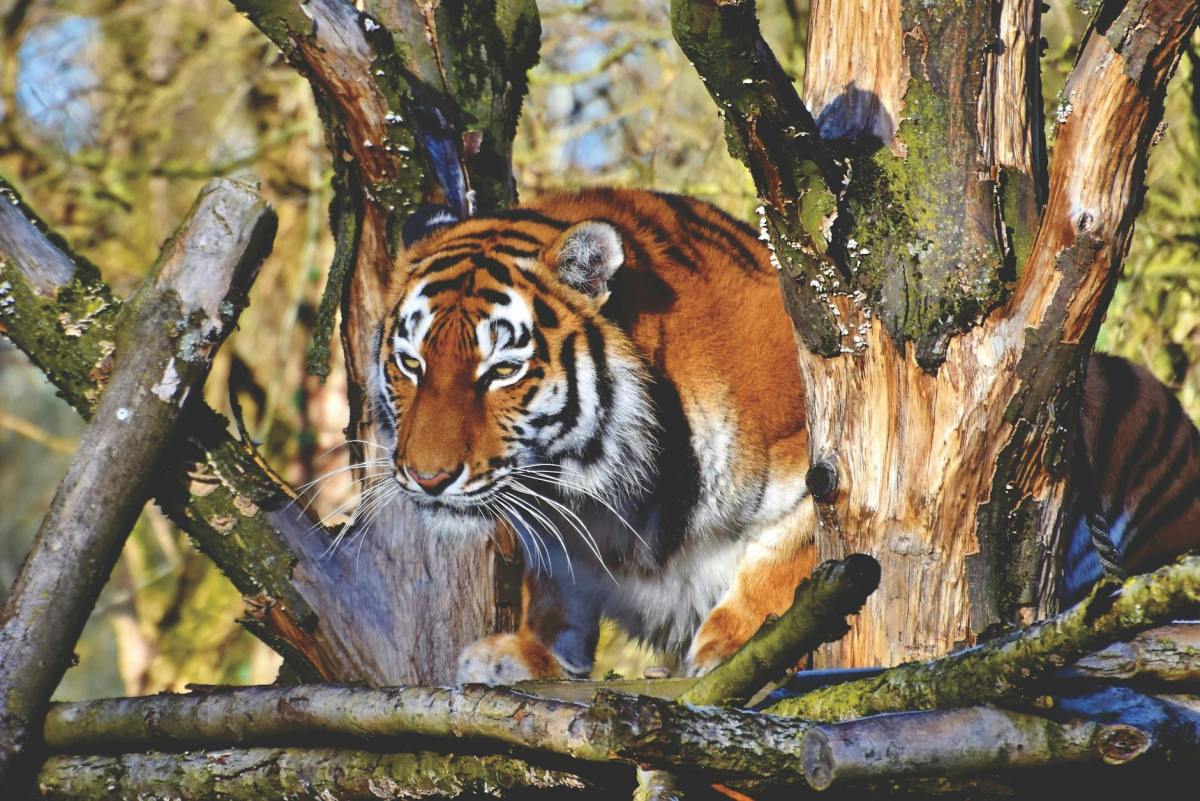
tiger
Amur tigers are the largest cats on Earth. They’ve evolved to survive in regions where winters can be brutally cold and snowy, but they also thrive in spring and summer when the snows melt and prey is abundant. Credit: Pexels

The successful reintroduction has also led to some surprising developments. Two of the cubs, Boris and Svetlaya, were unrelated but were rescued at about the same time and raised in the Russian orphanage for their species.

Using tracking devices they’d placed on the newly-released young tigers, the research team watched as Svetlaya settled into a home range and Boris made a beeline for her, “almost in a straight line,” crossing 200km (120 miles) of terrain to reunite.

The team’s hopes were confirmed six months later, when Svetlaya gave birth to a healthy litter of cubs, the first natural-born tigers to result from the reintroduction project.

Another tigress, Zolushka, also gave birth to a healthy litter when she was reintroduced in an area closer to a still-extant population of Amur tigers. The researchers believe the father was born wild in the region and was not part of the reintroduction program.

The wilderness in Pri-Amur and its environs is so vast, untouched and undesirable to human habitation that it could be home to generations of tigers, securing their future after so many decades of grim news for the iconic big cats.

“The grand vision is that this whole area would be connected,” Luke Hunter, executive director of the Wildlife Conservation Society’s Big Cats Program. “There’s lots of habitat that could be recolonized by tigers.”

More Than 400 People Applied To Adopt Foul-Mouthed Parrot

Requirements for adopting Pepper included a sense of humor and experience caring for birds. He’s now found a home with patient caretakers and another mercurial parrot to hang out with.

It’s too bad cats can’t swear.

While kittens don’t often have problems finding homes due to their overwhelming cuteness and antics, it usually takes a sad story to drum up considerable interest when an adult feline is up for adoption.

As the SPCA of Niagara learned, talkative parrots, especially birds who can swear up a storm, have their pick of homes.

In June, a potty-mouthed parrot named Pepper was surrendered to the shelter, and when the SPCA put the call out — specifying they’d prefer someone with experience caring for birds and a sense of humor — the applications kept rolling in, totaling more than 400.

“His famous line is ‘Do you want me to kick your ass?'” a shelter employee said in an interview last month shortly after announcing Pepper was up for adoption.

Shelter staff asked applicants to include photos of their bird enclosures in addition to the usual pre-adoption questions, eventually narrowing the Pepper Sweepstakes down to 10 potential homes.

This past week, Pepper was finally taken to his new abode in Olean, a small city in western New York. The couple who adopted him are not only experienced with birds, they know all about avian vulgarity. They have a parrot named Shelby who apparently “makes Pepper look like a saint.”

As for Pepper, it looks like he’s getting his bearings before heaping abuse on his new caretakers.

“He hasn’t cursed at them yet, but we know it’s coming,” shelter staff wrote in an update.

In recent decades, research has shown birds can be exceptionally intelligent. Crows, for example, use tools, can differentiate between human faces, and remember which humans have wronged them or treated them well.

While many people assumed parrots merely imitate human language, long term behavioral studies show the birds are able to use words in context and invent novel combinations of words. As with other animals, syntax remains elusive.

The most famous example was Alex the African Gray, who was the subject of research by animal cognition expert Dr. Irene Pepperberg. Alex, who died in 2007 at the age of 31, was able to count and could perform simple calculations. He was talkative, conversant and often told his caretakers how he was feeling, what he wanted, and what he thought of the tests they’d give him. (Like a child, Alex would try to get out of exercises he was bored with by asking for water, saying he was tired and wanted a nap, or just flubbing his answers.)

We are not above crude humor here at PITB, and in the past we’ve written about Ruby, our favorite talking parrot. Ruby lives in the UK with her owner, Nick Chapman, and the pair were among the very earliest Youtube stars thanks to videos of Ruby’s shockingly vulgar, extremely British tirades and Chapman’s infectious laugh.

Warning for those who are offended by bad language or are viewing at work: Ruby is known for liberal use of c-bombs-, t-bombs, f-bombs and just about every other linguistic bomb you can think of, in addition to British slang like “bollocks.” If that’s a problem for you, skip this video.

Eric the Legend, a parrot who lives in Australia, is also a favorite on Youtube for his habit of declaring himself “a fookin’ legend!

We’re glad Pepper has found a home where his idiosyncratic nature will be cherished, and we hope the future will bring videos of Pepper and Shelby going back and forth. Parrots are social animals, after all, and what fun are insults if you’ve got no one to trade them with?

Top image of Pepper courtesy of Niagara SPCA.

Foundation Offers $10m For ‘Cracking The Code’ Of Animal Language

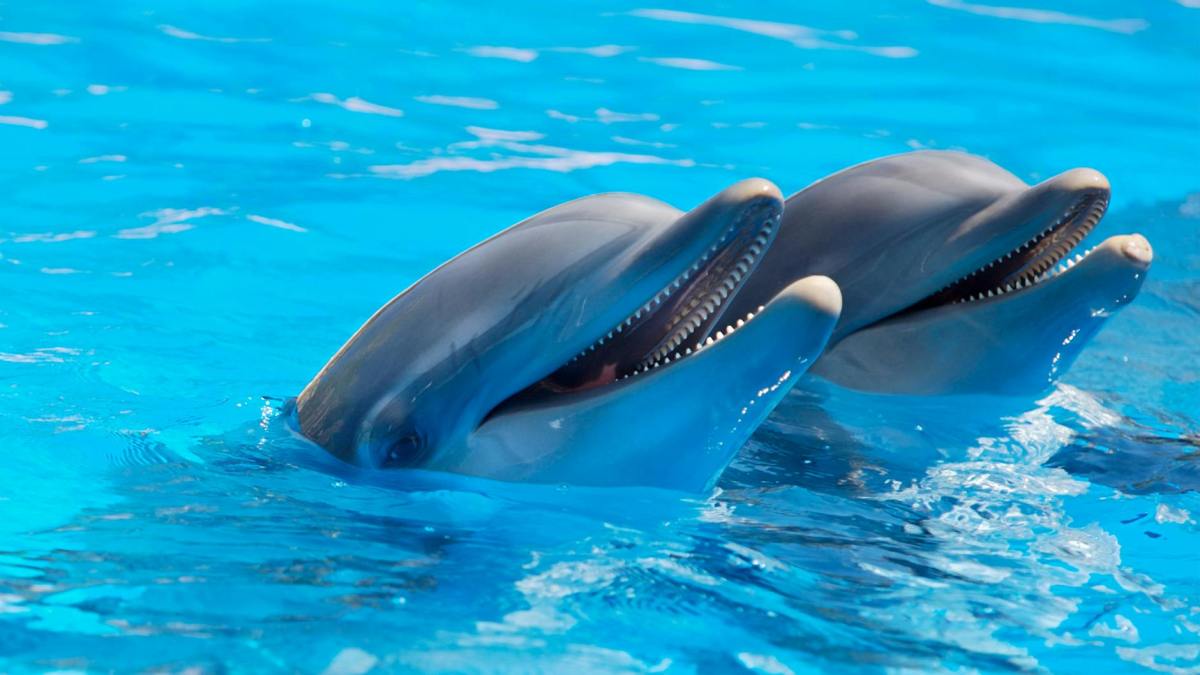
Think you can decipher the rhythmic clicks and whistles of dolphins or the grunts and alarm calls of monkeys? A foundation is offering big prizes for progress in communicating with animals.

Looking to prompt renewed efforts at decoding animal communication, a non-profit founded by an investor and a university are offering prizes — including a hefty $10 million — to teams that can figure out what animals are “saying.”

The Coller Dolittle Challenge for Interspecies Two-Way Communication is a collaboration between the Jeremy Coller Foundation and Tel Aviv University. (Yes, it’s named after that Dr. Dolittle.)

Entrants aren’t asked to come up with a Star Trek-like “universal translator” for animals. Rather, the people behind the Coller Dolittle Challenge want to see methods that allow for two-way communication between humans and individual species.

“We are open to any organism and any modality from acoustic communication in whales to chemical communication in worms,” said Yossi Yovel, a professor at Tel Aviv University and co-chairman of the challenge.

The grand prize is a $10 million grant or $500,000 in cash, chosen by the winner, while the Foundation will offer $100,000 prizes each year for the best entries that make significant progress toward communicating with animals. The yearly prizes will be assessed “for significant contributions to decipher, interface or mimic non-human organism communication.”

While it may seem far-fetched — and there are those who believe humans will never be able to fully understand animal communication in proper context — there have been efforts to communicate with and decode the communications of bats, dolphins, whales and some primate species. Scientists have also pushed the boundaries on understanding group communication, such as the coordination involved in avian murmurations.

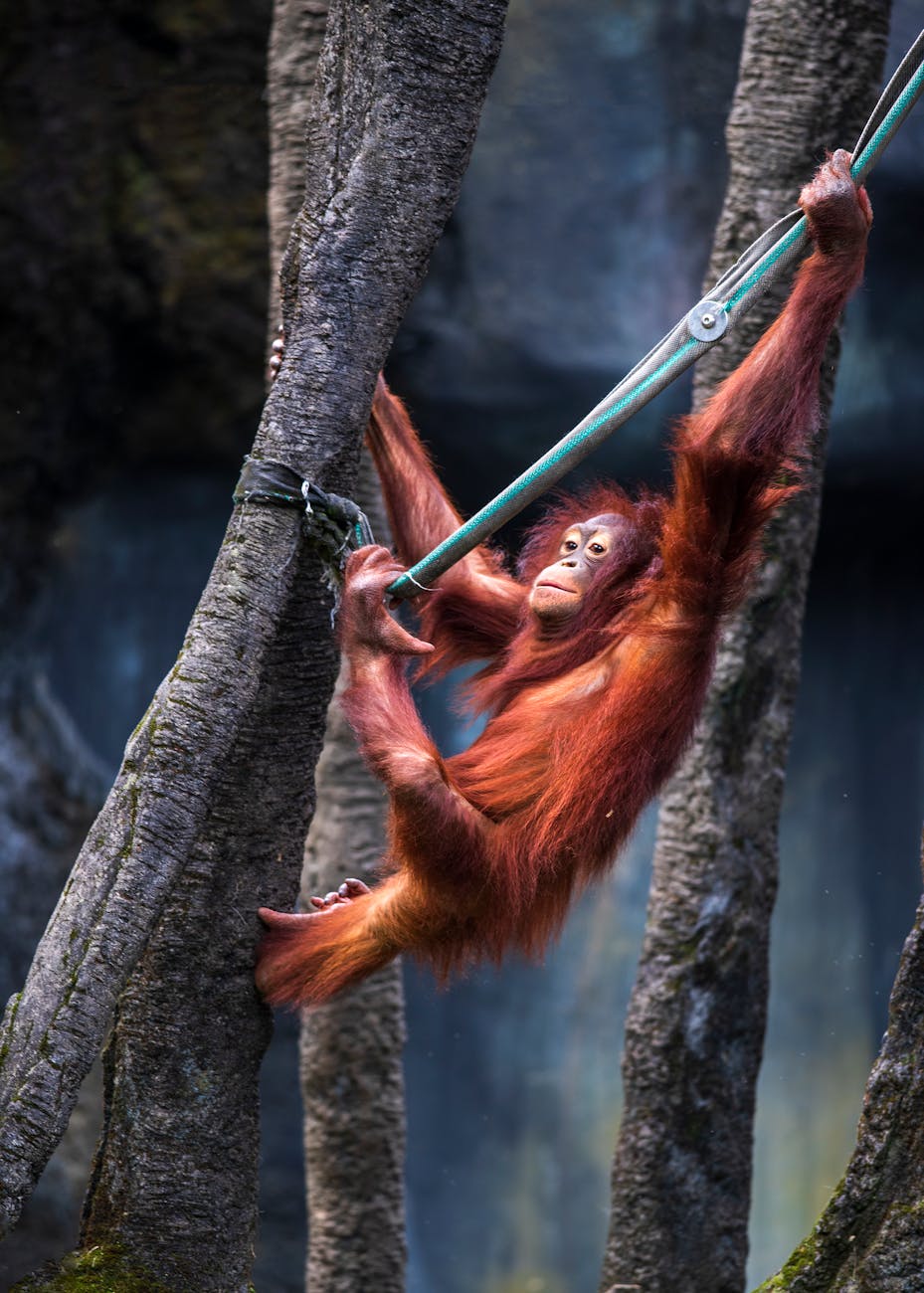
orangutan on tree
Orangutans have demonstrated the ability to understand abstract concepts, like using money, rudimentary sign language, and have even deceived humans. One orangutan in the 1960s repeatedly escaped his zoo enclosure by hiding a small strip of metal in his mouth and using it to pick a lock. Credit: Klub Boks/Pexels

The organizers believe artificial intelligence will be the tool that ultimately helps crack the communication barrier, but entrants aren’t required to use AI. The technology is incredibly useful for tasks involving pattern recognition and sorting large amounts of data, both of which are important in this kind of work when researchers are tasked with analyzing thousands of audio samples or hundreds of hours of footage.

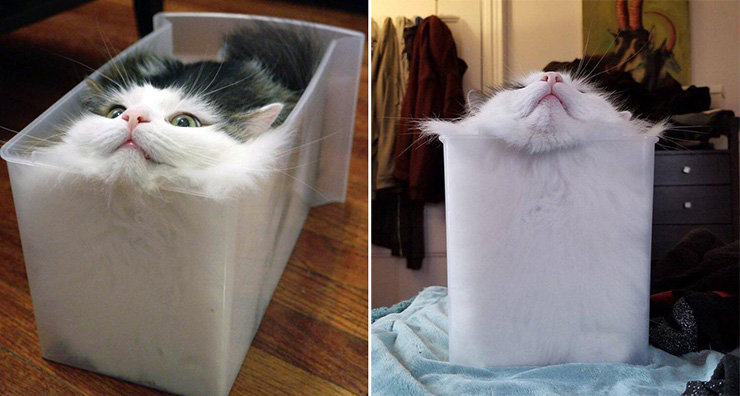
Alas, we don’t think the foundation will be interested in the Buddinese language, which boasts 327 different ways of demanding food and features a timekeeping and calendar system based on meals and naps. A short trill followed by a series of staccato meows, for example, means “I expect prompt service at salmon o’clock,” while a truncated meow ending with a scoff is used to indicate displeasure when a human napping substrate tosses too much during sleep.

Still, maybe we’ll dress it up to make it look properly academic and give the challenge a try. Those prizes could buy a lot of Roombas!

Puma P-22’s Potential Successor Tries Out Hollywood Range

The new puma will have big paw prints to fill if it decides to make its famous predecessor’s range its own. People in Los Angeles are thrilled to have another mountain lion prowling the Hollywood Hills.

When the mountain lion known as P-22 died in late 2022, people in Los Angeles were so distraught they painted murals of him on building facades, buried him after a indigenous tribal funeral and even held a festival in his honor.

The famous feline had already been the subject of books, documentaries and an iconic photograph by National Geographic’s Steve Winter. The image showed P-22 in mid-stride, perfectly centered in a small pool of light beneath the Hollywood sign in the hills of Los Angeles at night. It was a natural symbol of wildlife adapting and surviving.

The love for P-22 wasn’t only based on the incredible fact that a mountain lion had established his “range” in Griffith Park, an oasis of wilderness surrounded by urban landscapes. The puma had to cross Interstate 405 and Route 101, heavy-traffic highways that are famously lethal to his species, to get there. For the next decade he skillfully avoided cars and trucks as he went about his business, popping up on trail cameras or in the backyards of Los Angelinos.

Now there’s a potential successor to the vacant throne.

The new puma isn’t collared and wildlife experts don’t know where it came from, but like P-22 it had to cross several dangerous highways to reach the city.

It’s not clear yet if the mountain lion is male or female. Jeff Sikitch, a biologist with the National Parks Service who is part of an ongoing, decades-long study of pumas, told the Los Angeles Times that he thinks the cat is likely a young male, but there’s not much to go on so far except for witness sightings and a low-resolution video taken by a man who lives in an apartment building near the edge of Griffith Park.

“Will this cat be as skilled as P-22 was at avoiding cars for a decade?” the National Wildlife Federation’s Beth Pratt told the BBC. “We don’t know what’s going to happen here.”

New puma in LA
The only images of the newcomer so far are grainy video stills, but Griffith Park itself has trail cameras that are used to monitor wildlife. Credit: Vladimir Polumiskov

For now, wildlife officials are waiting and watching to see if the potential puma successor puts down roots in P-22’s old hunting grounds or tries to make the dangerous trek out of the city.

If the new puma decides to stay, it will enjoy plentiful deer and a benefit most members of its species do not have — a local population that understands mountain lion attacks are extraordinarily rare, and will support them by giving them a wide berth.

On the other hand, despite the 4,000 acres of Griffith Park and the residential neighborhoods below, the cat’s inherited range would be much smaller than what’s typical for the species. Like humans cramming belongings into apartments, pumas sacrifice space when they live in or around cities.

Suzanne Pye, a local who admired P-22 from afar, said she welcomes the newcomer and isn’t worried about attacks on people. The presence of a mountain lion after almost 18 months without one prowling the hills, she said, will add “a frisson of excitement to the morning hikes.”

P-22_2019
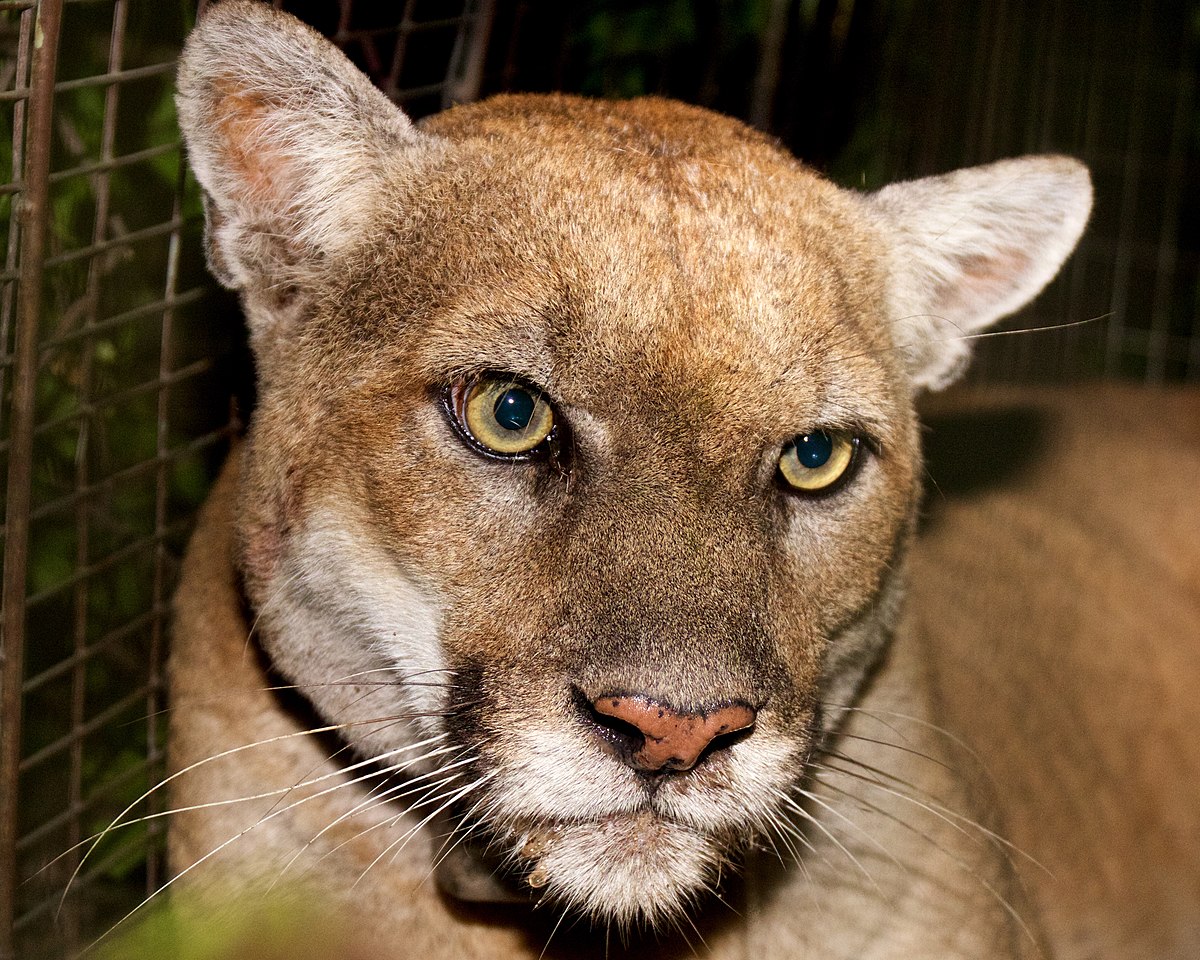
A close-up of P-22 in 2019, when he was briefly captured for a health check-up. Credit: Wikimedia Commons

Geniuses Pull Wild Bear Cubs Off Tree To Take Selfies, Orphaning One

A group of people in North Carolina plucked two bear cubs off of a tree, dancing and laughing as they took selfies with the traumatized baby animals.

The World Wildlife Federation’s last Living Planet Report warned in 2022 that 69 percent of all wildlife has disappeared since 1970. A terrifying report from conservationists this year brought news that the natural world has fallen silent, with billions of animals erased from existence.

Why?

Because humans reproduce and rampage across the planet, no longer subject to survival of the fittest, with absolutely no regard for the species we share our world with.

That was proven again this week when a group of five people spotted bear cubs clinging to a tree not far from an apartment complex in Fairview, North Carolina, and decided the best course of action was to tear the terrified cubs off the branches so they could take selfies with them.

“So she can say, ‘Here, take my picture, post it all over. I’m holding a black bear,'” a horrified witness, 21-year-old Rachel Staudt, said as she filmed the group on Tuesday. “That’s insane. That’s 100% what she’s doing. She’s taking pictures of him.”

People taking selfies with bear cubs
A still from Staudt’s video shows members of the group holding the bear cubs.

The woman called the authorities, who responded with a biologist from the North Carolina Wildlife Resources Commission, but not before the damage was done.

“Did she just drop it?” the woman filming the group said as one of the group members did a “celebratory dance move,” dropped one of the cubs, then chased it to get it back and take more photos.

The group told police and the biologist that both bears had “escaped,” but the biologist found one of the traumatized cubs near a retention pond on the property.

“The cub appeared to be lethargic and frightened. It looked to be favoring one of its front paws and was wet and shivering,” Game Mammals and Surveys Supervisor Colleen Olfenbuttel told CBS News. “The cub’s condition is likely a result of the unnecessary and irresponsible actions of the people involved.”

That cub has now been orphaned, as authorities said it’s not in any condition to be returned to the wild and will have to be raised and rehabilitated for the next four to six years. The other cub couldn’t be found. Hopefully it escaped.

Bear cub
The orphaned and traumatized bear cub that was recovered Tuesday after a group of people plucked the cub and its sibling out of a tree to take selfies with them.

Authorities noted it’s not uncommon for mother bears to leave their cubs briefly to go foraging, much like mother cats do with kittens and cubs when they need to hunt to feed themselves.

Common sense and a basic respect for wildlife is usually enough to keep people from snatching the animals, but much like people who pay money to take selfish with tigers who have been sedated to their eyeballs, any concern for the welfare of animals — if it existed in the first place — is quickly shelved as people can’t resist the opportunity to grab a selfie in the age of narcissism-fueled social media.

Authorities say they’re conducting an investigation, although it’s not clear what needs to be investigated. The people involved documented their behavior with selfies, and Staudt’s video clearly shows them handling the confused and scared baby animals.

The kind of ignorance demonstrated by the group doesn’t remedy itself. Authorities should make an example of them by prosecuting them to the fullest extent of the law while redoubling efforts to educate people about keeping their distance from wild animals. And if that’s not enough motivation, or if people can’t be bothered to respect wildlife, they should consider that this would be a very different story if the cubs’ mother had been nearby.

Top image courtesy of Pexels