Did A Japanese Scientist Really Double Feline Lifespans?

A new story claims a Japanese immunologist has “created a miracle” with his treatment for cats.

The cat world is abuzz with a new report that hails the efforts of a Japanese scientist, claiming he’s “created a miracle” that can extend cat lifespans to 30 years.

The story on Bored Panda claims the drug has “astounding potential,” boasting “a level of efficacy that has exceeded all expectations and has the potential to revolutionize feline healthcare.” According to Bored Panda, we’re headed toward a gleaming future and “soon we will be able to grow old with our beloved pets and be grey together.”

“Cat Lovers Rejoice As New Medicine Will Extend Cat Lifespan To 30 Years,” the headline declares.

Okay, let’s dial it back a bit and break down what’s true and what’s not.

First and most obvious, the story oversells the treatment and if you’re counting on your cat living to 30, you’ll need to readjust your expectations.

That’s unfortunate because there’s a good story at the heart of this, and there may be real benefits to cats eventually.

Toru Miyazaki is an immunologist who discovered a protein that helps the kidneys flush out toxins. Eight years ago, he realized the protein — apoptosis inhibitor of macrophage, or AIM — doesn’t always work properly in felines, which is why so many cats are susceptible to kidney failure, especially when they reach age 10 or so.

The AIM protein, Miyazaki explained, launches from immunoglobin antibodies “like a jet fighter from an aircraft carrier,” removing waste and debris from the kidneys.

But in cats, sometimes the AIM protein — the fighter jet — is “too tightly bound” to the antibodies, meaning it doesn’t “launch” in the first place and can’t do its job of flushing out toxins.
Free cute european shorthair cat

Miyazaki was continuing his research into feline kidney failure while he was a professor at the University of Tokyo, but funding dried up in 2020 as the lion’s share of research money in immunology was directed toward addressing SARS-CoV-2 and the disease it causes, COVID-19.

When a Japanese newspaper published a story about Miyazaki having to abandon his research, donations came pouring in. Cat lovers across Japan donated an astounding $2.3 million, prompting Miyazaki to leave his post at the University of Tokyo and found a non-profit dedicated to tackling kidney disease in cats.

As of September 2023, Miyazaki’s organization is running clinical trials on his AIM therapy, and it has partnered with a Japanese pet food company on new food that is supposed to reduce the possibility of kidney disease.

There’s not enough data yet to make any definitive statement, and even if the data existed, the AIM therapy is not a cure: Miyazaki says if all goes well, kittens who are given AIM therapy injections from an early age, and eat a diet with the AIM-enhancing formula, could have their risk of developing kidney problems reduced and potentially live longer lives.

That’s a far cry from Bored Panda’s image of cat lovers dancing in the streets, joyous with news of a miracle pill that will allow Socks and Oreo to run around like kittens for three decades.

While it’s natural to be excited about the potential of AIM therapy, calling it a “miracle” that will “revolutionize feline healthcare” and allow us to grow old with our cats can give people false hope.

Even if the trials go perfectly and AIM therapy breezes through the approval process, the soonest the injection therapy could be available in Japan is 2025. The US, UK and Europe have their own regulatory agencies and clinical data requirements. That means it might help kittens born years from now, but it won’t double the lifespans of the cats we love now.

It’s also worth mentioning that not everyone is thrilled to hear Miyazaki has partnered with a pet food company that sells ultra-processed kibble. Over at bark&whiskers, Karen Shaw Becker — a veterinarian who specializes in preventative care — points out that ultra-processed dry food is thought to be a major contributor to the feline kidney problems, with the ingredients, rendering methods and lack of moisture (water) all posing health hazards to cats. Cats have low thirst drives and get most of their hydration from meat.

While Becker writes she’s watching the trials closely, like other veterinarians, she recommends cat lovers continue to feed their furry friends wet and/or fresh food with high quality ingredients, no fillers and lots of protein.

Bring Your Cat To The Movies? One Theater Chain Now Welcomes Furry Friends

Would you bring your cat(s) to the movies?

The whole pet thing takes on a different vibe in Asia.

I first saw it in Tokyo where people push their cats along in baby strollers and luxury shops sell thousand-dollar accessories for felines and canines alike.

In countries like China it’s become a thing to dress pets in “cute little outfits” and pose them like dolls for social media snaps.

Now in Thailand — which is second only to China in pet ownership on the continent — people can bring their cats and dogs to the movies.

Agence France-Presse sent a reporter there to witness costumed Chihuahuas and poodles arrive by stroller and sit next to their humans for a screening of The Little Mermaid. A cat, who probably had no idea what the hell was going on, was plopped down on the seat next to her human.

Movie cat
“Shhhh! Some of us are trying to watch The Lion King here!” Credit: PITB

A spokesman for the Bangkok cineplex told AFP he thinks pet-friendly cinemas will bring people back to the movies after the pandemic. Pet owners, he said, have been less likely to leave home because their animals are now used to having them around all the time and experience separation anxiety when they leave.

As Bud’s loyal servant I know he does have separation anxiety, but I wouldn’t bring him to the local Alamo Drafthouse or AMC even if they had pet-friendly screenings here.

For one thing, he’s a damn cat! He’s not interested in screens unless they’re showing birds feasting on seeds in a forest, with all the accompanying sounds, while he’s viewing it from the safety of his own home

Second, I know precisely how he’d react, and he wouldn’t take well to being in a theater with a bunch of dogs and a handful of other cats. He’d spend half the movie hissing and the other half crying. I can’t imagine it being a fun experience for him.

Then there’s the “dress code.” Pets in Thailand’s new animal-friendly screenings must wear diapers and sit in bags provided by the theater. This is to ensure they won’t defecate all over the seats, obviously, but my cat has never even tolerated a collar. The chances of him accepting a diaper are zero.

Cat at the movies
“You gotta see Keanu in IMEOWX, my feline friends. It’s meowgnificent.” Credit: PITB

Lastly, at the risk of getting myself into trouble, the entire idea sounds about as appealing as trying to watch a non-kids movie in a theater full of screaming six-year-olds.

Don’t get me wrong, I loved accompanying my nieces to see the Super Mario Brothers movie, watching their delight at seeing the Mushroom Kingdom, Princess Peach, Mario and Luigi brought to life. (“You kids today with your Nintendo Switches, your fancy graphics and your networked games. We had Gameboy. It only had two colors, and you had to put little cartridges inside it to play games, and when they didn’t work we had to blow the dust out of ’em. You don’t know how good you got it, you kids today!”)

But do I want to be responsible for a feline with the intellectual development of a young child while I’m trying to watch a movie? If by some miracle Bud would stop hissing and/or crying, he’d focus on me and start yapping for snacks.

The movies just aren’t a great place for cats, and I’m not sure dogs would be thrilled to be there either.

Now, a hookah bar where you could bring your cat and give him his own little hookah filled with catnip? Maybe that could work.

“Yes, I’ll take an Amstel Light and a bag of your best Meowie Wowie for my little buddy here. Can I see the bar food and pate menus as well? We’ve just come from seeing John Wick 11 at the movies and we’re both famished!”

1685408359906~2
John Wick 11: Buddy’s Revenge! Credit: PITB

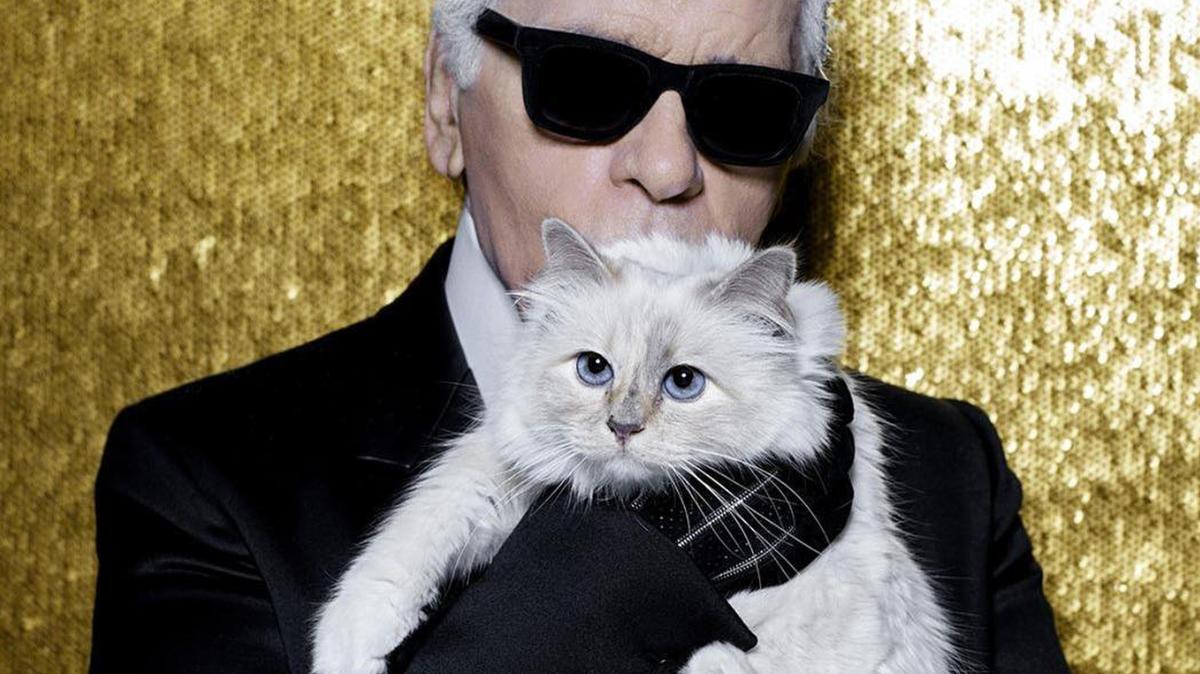
Karl Lagerfeld’s Millionaire Cat Travels By Private Jet, Drinks From Silver Dishes

Choupette has her own custom Louis Vuitton carrier and enjoys perks like a personal chef.

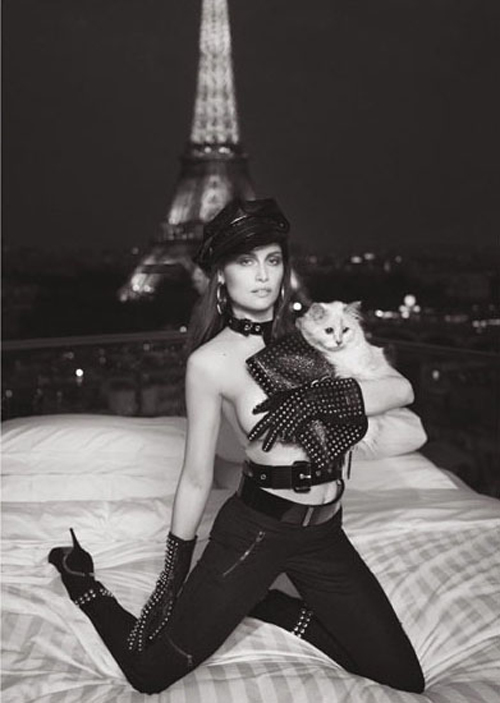
Choupette Lagerfeld travels the world in her own private jet, appears in commercials for Japanese beauty projects and has graced high fashion covers, including a shoot with French supermodel Laetitia Casta for V Magazine.

At one point she traveled with a body guard, two minders, a personal chef and her own doctor, according to the New York Times. She drinks and eats from silver bowls and enjoys a one-of-a-kind Louis Vuitton carrier.

Oh, and she’s worth millions.

Choupette (“sweetie” in French) is a white-and-cream Birman with subtle tabby marks on her head, and she was adopted by Karl Lagerfeld in 2011. The German designer, who was the creative director of fashion houses Chanel and Fendi, died of pancreatic cancer in February of 2019 but left a considerable fortune to his cat.

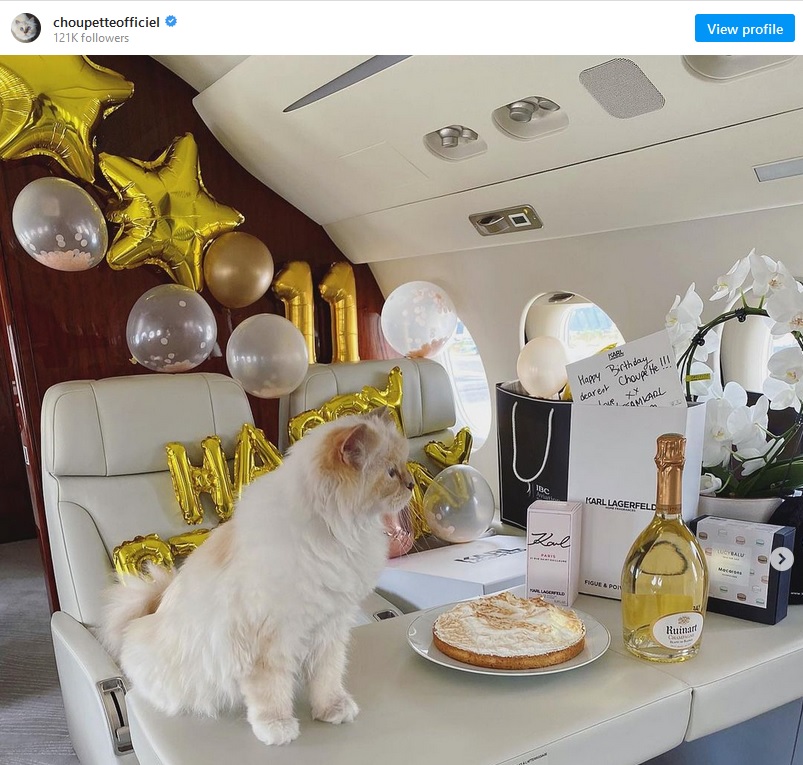
On Thursday, Choupette’s minders marked her 11th birthday by sharing a snap to her Instagram, choupetteofficiel, showing the fabulously wealthy feline aboard her private jet, with a cake presumably made of pâté, a bottle of champagne, balloons and various gifts from her late human’s fashion collections.

“Happy birthday to me,” the post reads. The pampered puss’ Instagram has 121,000 followers.

Choupette's birthday
Choupette celebrated her birthday on Aug. 18. A snap shows her celebrating on her private jet, which ferries her between modeling gigs and vacation spots like Ibiza.

No one’s sure precisely how much Choupette is worth, but Lagerfeld — who had a net worth between $170 million and $300 million, per reports — left her a considerable sum.

“She’s an heiress,” Lagerfeld told an interviewer. She “has her own little fortune.”

Like human celebrities she’s the subject of net worth profiles on various sites, which list an often-cited $13 million number. Some of that money includes her own earnings for commercials in Japan and Germany, where she’s been the face of beauty products and luxury cars, respectively.

Laetitia Casta and Choupette
Sacre bleu! The Eiffel Tower, a French supermodel and Choupette! This photo was printed in V Magazine, which featured Laetitia Casta and Choupette in a 10-page spread.

I’m kind of at a loss for words here. Anything I could say seems so obvious.

However, I’m thinking it may be time to put Buddy’s good looks and charm to use for once and arrange some sort of meet cute with Choupette.

The name Buddy would have to go. He’d have to be called something appropriately, Frenchly snooty, like Jean-Luc Budélard Lucien or Yves Buddiene Baptiste. I’d have to school him in Parisian meowing, invent a suitably bohemian upbringing for him, and fabulate a skill that hints at his creative genius. Perhaps he’s inspired by Choupette’s late human and works as creative director of the Buddeaux fashion house, or maybe he creates abstract art by smearing paint on a canvas with his paw pads.

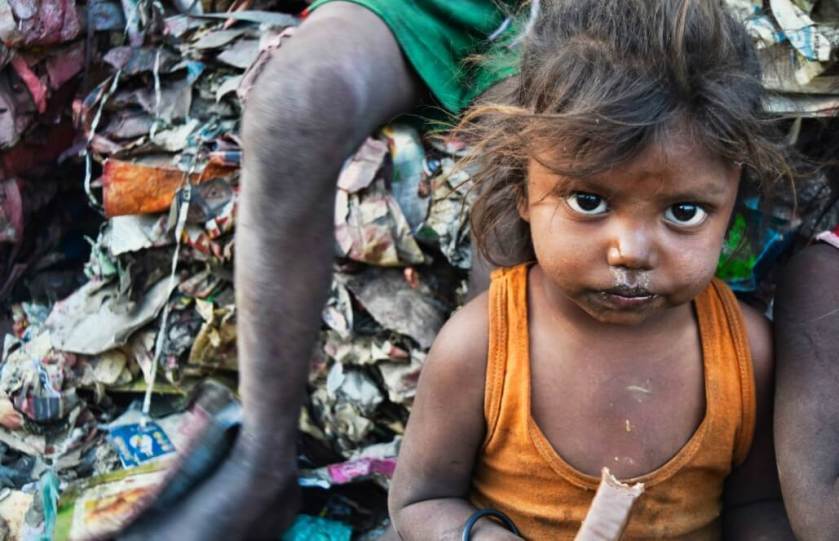
Meanwhile, in India…

article-street-children-of-india1
Street kids eat from the garbage, wear tattered clothes and exist beneath the notice of the rest of society.

Sunday Cats: A Cat Fluent In Sign Language?

Plus a Japanese artist’s stunningly real-looking bespoke cat backpacks.

A Reddit post with almost 30,000 upvotes claims a cat took it upon himself to learn sign language after realizing his human is deaf.

You don’t need me to tell you it’s nonsense, do you? It’s interesting how we’re willing to believe a cat can endeavor to learn sign language, but we — the supposedly more intelligent species — can’t be bothered to watch for emotions conveyed by the curl of a tail or a twitch of the whiskers.

Cats are incredibly smart little furballs, but just like the people who claim their cats are meaningfully communicating via talking boards with 100 buttons, this is just social media fodder for the credulous.

Unfortunately the credulous are numerous, although a few Redditors had a good time at their expense. One user complimented the addition of a VHS-like filter over the video clip, giving it a vintage quality.

“Not a filter. It’s been around for a while,” another Redditor responded. “The cat now knows ASL, English, French, Spanish, and is working on its doctoral thesis.”

A cat in a backpack? No, a cat backpack

In a reminder that the Japanese have an endless appetite for all things cat-related, the newest hot item among the Land of the Rising Sun’s neko-infatuated is a bespoke cat backpack hand-sewn by a housewife in Fukui prefecture.

The bags don’t come cheap. It takes Miho Katsumi between one and three months to make each one, and they’ll set you back about $1,000 each via Katsumi’s site. Check out her Instagram for more images.

How quickly do you think Bud would murder me if I came home with one of these in his image one day? 🙂

Does Your Cat Know Your Name? Study Says Maybe

If your cat doesn’t know your name, it’s nothing personal. You’re just a human, after all.

I’m pretty sure Buddy does not know my name, and why should he?

He doesn’t hear my name spoken often, and in his mind I’m probably “Big Dumb Benevolent Human And Butler,” or BDBHAB. That’s a mouthful, even in meow, thus the much easier-to-say “Big Buddy.”

But a new study from Japan claims cats “possibly” know the names of their humans.

First, the parameters of the study would have eliminated the Buddies from the start: the research team from Kyoto University enlisted only cats who lived with at least two other felines. This is because they also wanted to find out if cats knew the names of their furry roommates as well.

The 48 cats who participated in the study lived in regular homes or cat cafes. The team played a recording of their human calling the name of one of their buddies, while a monitor showed an image of a cat. Sometimes the names and the images matched, and sometimes they didn’t.

The cats took longer looks at the images when the feline image shown didn’t match the name they heard, which the researchers said was indicative of surprise.

Separately, 26 cats were run through a similar experiment. In that scenario, the researchers played an audio clip of the cat’s human’s name and showed an image of either the human caretaker, or a cat. Like they did with the first experiment, cats looked longer when the images didn’t match the names, expressing apparent puzzlement.

What's your name, dude?
“I’m a Buddy, you’re a Buddy. We’re all Buddies.”

In case you’re wondering, it does seem to matter if a cat grows up in a home rather than a cat cafe. When the name and face matched, researchers called that a “congruent condition.”

“Half of the trials were in a congruent condition where the name and face matched, and half were in an incongruent (mismatch) condition,” they wrote. “Results of Exp.1 showed that household cats paid attention to the monitor for longer in the incongruent condition, suggesting an expectancy violation effect; however, café cats did not.”

The reasons are fairly straightforward. In a home setting, cats almost always interact with their human family members, while felines in cafes interact with different employees on different shifts, and with customers, who might be regulars or strangers. Either way, the cats living in homes are much more likely to hear their own names and the names of their feline roommates.

“The latter probably have more opportunities to observe interactions between the owner and each of the other cohabitating cats, which might facilitate learning of the face–name relationship,” the team wrote.

The Kyoto team pointed out that many wild animals, particularly mammals and birds, make sounds that correspond to animals, objects or abstract ideas. Monkeys and birds, for example, use a range of different calls to communicate to each other when they’ve found food or spotted a predator heading their way.

The stakes are much lower in a home setting, but evolutionary traits can still serve cats and dogs well. One reason pets may be keen to recognize the names of their furry roommates, the research team speculated, is competition. After all, Socks would want to know if Oreo is getting more treats or head scritches.