Tigers Make A Triumphant Return To Russia’s Far East, Bringing Hope To The Species’ Future

For the first time, humans have successfully returned orphaned tiger cubs to the wild after raising them and training them to hunt.

For more than 50 years, tigers were absent from Russia’s Pri-Amur region.

Sparsely-populated, mountainous and blanketed in forest, the domain borders the heart of the Russian Far East, offering hundreds of thousands of contiguous square miles for the most robust sub-species of Earth’s most magnificent predator.

Here, tigers can roam without fear of conflict with local farmers, or roads that carve up habitat and pose a danger to animals trying to cross. Prey is abundant, and adaptations for surviving in the local terrain are coded into the tigers’ DNA.

Now that scientists have proven for the first time that tigers can be successfully reintroduced into such an environment, big cat advocates imagine Russia’s Far East as a haven for the large felids. It’s a place where tigers can thrive, mate, reproduce and change the outlook for their species, which has dwindled to only 4,000 or so remaining in the wild.

tigers in nature
Credit: Leon Aschemann/Pexels

The project to reintroduce Amur tigers to their native habitat is a cooperative Russian-American endeavor. The team started by building a tiger conservation center in the Amur oblast a decade ago.

The facility is built in a way that orphaned tigers can be raised and taught how to hunt without directly interacting with their human caretakers. That’s a crucial component, because tigers who see humans as potentially friendly or sources of food have drastically reduced chances of surviving in the wild, and are easier marks for poachers.

After 18 months, the cubs are brought to remote locations in Pri-Amur and released. Of the first group of orphan tigers released into the wild, 12 were able to survive on their own.

One gluttonous tiger failed: he crossed over the border into China and began eating domesticated animals, including 13 goats in what researchers called “a single event.”

The fattened tiger then retraced his steps to Pri-Amur, and when he didn’t show fear of humans, the team decided he had to go. They captured him and sent him to a zoo, where he gets all the free meals he wants and contributes to the captive breeding program helping his species maintain genetic diversity.

With 12 out of 13 tiger re-introductions successful, the program provides “a pathway for returning tigers to large parts of Asia where habitat still exists but where tigers have been lost,” said Viatcheslav V. Rozhnov, who leads the reintroduction project.

tiger
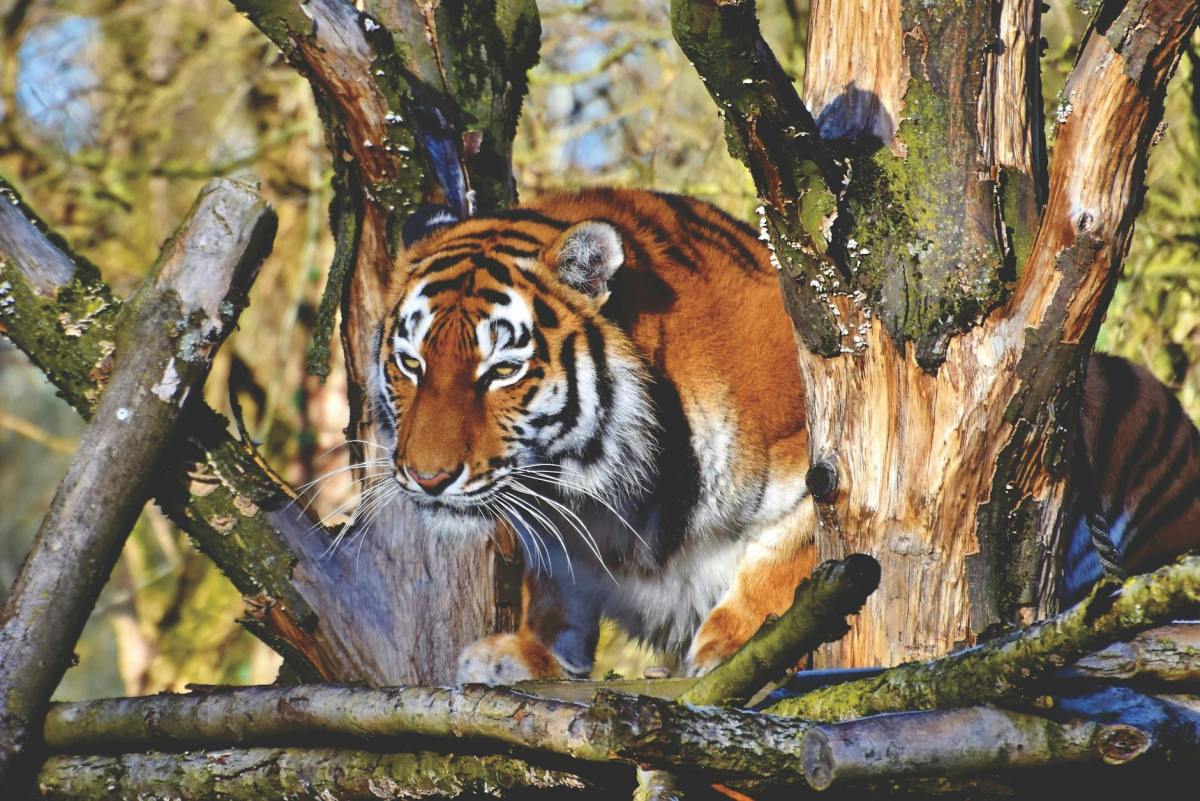
Amur tigers are the largest cats on Earth. They’ve evolved to survive in regions where winters can be brutally cold and snowy, but they also thrive in spring and summer when the snows melt and prey is abundant. Credit: Pexels

The successful reintroduction has also led to some surprising developments. Two of the cubs, Boris and Svetlaya, were unrelated but were rescued at about the same time and raised in the Russian orphanage for their species.

Using tracking devices they’d placed on the newly-released young tigers, the research team watched as Svetlaya settled into a home range and Boris made a beeline for her, “almost in a straight line,” crossing 200km (120 miles) of terrain to reunite.

The team’s hopes were confirmed six months later, when Svetlaya gave birth to a healthy litter of cubs, the first natural-born tigers to result from the reintroduction project.

Another tigress, Zolushka, also gave birth to a healthy litter when she was reintroduced in an area closer to a still-extant population of Amur tigers. The researchers believe the father was born wild in the region and was not part of the reintroduction program.

The wilderness in Pri-Amur and its environs is so vast, untouched and undesirable to human habitation that it could be home to generations of tigers, securing their future after so many decades of grim news for the iconic big cats.

“The grand vision is that this whole area would be connected,” Luke Hunter, executive director of the Wildlife Conservation Society’s Big Cats Program. “There’s lots of habitat that could be recolonized by tigers.”

The UK’s Big Cats Are Just Like UFOs, Existing In Blurry Photos And Human Imagination

Blurry photos and fleeting encounters keep the legend of big cats in the UK alive. Could there be leopards, pumas and other large cats roaming the countryside?

For all the advances in optics and camera technology over the last 20 years alone, there are two kinds of people who love blurry, low-resolution footage: UFO enthusiasts and people who are convinced the UK is like a cold, rainy Africa with big cats lurking in every bush and field.

To be a member of either group you’ve got to shut down critical thinking faculties, suspend disbelief and put faith in the highly improbable. (Or the impossible when it comes to people who insist little green men are zipping across the night sky in sleek ships that defy all we know about physics and aerodynamics.)

The UK’s big cat believers claim the country is home to a thriving native population of large felids. Some of them think they’re “panthers,” not specifying which species of cat they think is out there, while others claim jaguars, leopards or tigers are prowling the English countryside, spotted only fleetingly at the edges of fields or in the brush, and only by people who own two-decade-old Nokia flip phones with rudimentary cameras.

They believe a native, breeding population not only exists, but for centuries has eluded capture and avoided leaving compelling evidence.

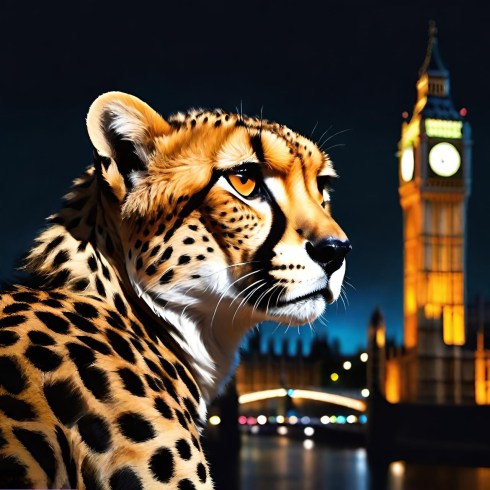
Cheetah in London
“Pardon me, mate, could you point me toward Aldersgate Street?”

The phantom cats have remarkable stealth abilities. They’ve never tripped a trail camera or appeared in a single frame of CCTV footage. Not a single tree marked for territory, not a single pile of cow bones picked clean by giant barbed tongues, not a single clump of panthera dung. Not even a hungry cub drawn into a village by the smell of barbecue on a summer night.

The reported sightings say more about human capacity for imagination — and how poor we are at estimating size over distance — than they do about the crypto-pumas and melanistic tigers some people swear they’ve seen.

When alleged big cats are spotted in the UK, they’re always seen fleetingly and from afar. When witnesses try to confirm what they’ve seen, the animals are gone.

“I was coming up to Jolly Nice from Oxford at around 7.50pm and the car in front of me was travelling at a steady pace. I looked to the verge of the other side of the road because I saw a bright pair of eyes low down. Upon further inspection, I suddenly realised there was a large outline of a low and stocky cat that was huge.”

That’s the testimony of a UK man who told the Stroud Times, a local newspaper, that he encountered a big cat a few minutes before 8 p.m. on Friday in Nailsworth, a town of about 5,600 people a little more than 100 miles west of London. His description mirrors that of others who say they’ve spotted large felids, mostly in the UK’s countryside and small villages.

Small Cats Looking Big
Photograph from a previous “big cat sighting.” It’s typical of the photos that surface with claims of leopards and pumas stalking the countryside. Blurred details and digital zoom make it difficult to gauge distance and scale.

The story’s headline reads: “Big cat expert’s verdict: beast spotted was a leopard.”

The expert in question is Rick Minter, an amateur biologist who has made UK big cat legends into something of a cottage industry by publishing books, hosting a podcast and frequently speaking to newspapers about the phenomenon. It’s not clear how Minter decided the animal in Friday’s sighting was a “black leopard,” but he’s said in previous interviews that he believes most alleged big cat sightings in the UK are leopards, with pumas accounting for most of the others.

Neither animal is native to Europe. Pumas range from South America to the American northwest and midwest, with isolated populations in places like Florida. Leopards are native to Africa and Asia, with ranges that overlap with lions on the former continent and tigers on the latter, mostly in India.

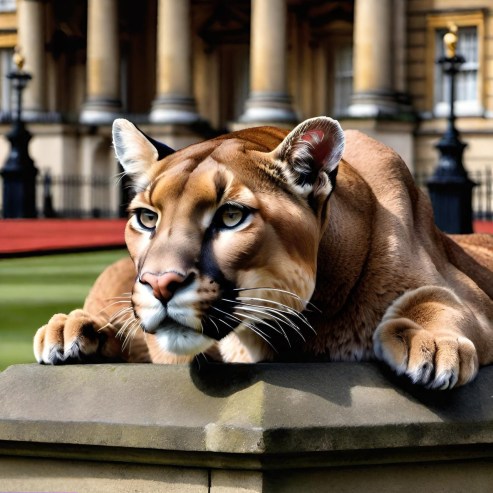
Puma at Buckingham Palace
“I’m originally from San Diego, actually, but the expat life suits me and the British are very tasty.”

Some have floated the possibility that the mysterious felids are escaped pets who have successfully adjusted to the countryside. Minter says the evidence points to breeding populations.

If there are thriving populations, the cats would need to exist in numbers, with at least 50 on the extreme low end. If they’re escaped pets, the authorities would know.

Unlike the US, where big cat ownership was banned in the vast majority of states even before the recent Big Cat Public Safety Act was passed, owning a massive carnivore slash killing machine isn’t illegal in the UK. But owners have to register their animals, seek approval for the habitats and enclosures they’ve built, and submit to annual inspection.

There have been a handful of escapes over the decades and each time the authorities were able to capture or kill the animals, often tracking them via livestock kills. Pet tigers and leopards might be dangerous, but they’re still at a disadvantage compared to their wild brethren, meaning they go for the easy, guaranteed kills when they’re hungry. Nothing’s easier than a docile farm animal that’s never seen a big cat.

Tiger at a pub
“Oi, wanna have a pint and watch Man U vs Arsenal on the telly?”

More recently, big cat hunters in the UK have tried to find more compelling evidence than a couple of blurry photographs of house cats out for a stroll. They’ve touted suspicious-looking pug marks, and in August 2022 found black fur on a barbed wire fence. According to the believers, a UK lab confirmed the fur belonged to a leopard, but there was no chain of custody, no documentation of how the sample was found and handled. Big cat experts remain skeptical.

Indeed, Oxford’s Egil Droge, a wildlife conservationist, points out that in places where big cats live, you don’t have to go hunting for evidence. It’s everywhere.

“I’ve worked with large carnivores in Africa since 2007 and it’s obvious if big cats are around. You would regularly come across prints of their paws along roads. The rasping sound of a leopard’s roar can be heard from several kilometres,” Droge wrote, noting that leopards in particular are not discriminating about what they kill and leave ample evidence of their handiwork when they’ve hunted.

Still, as improbable as the sightings are, the big cat enthusiasts of the UK have one up on UFO enthusiasts and hunters of cryptics like Big Foot, the Loch Ness Monster and the Jersey Devil: the creatures they’re looking for actually exist and may surprise us yet.

Things Are Looking Up For This Shy Orphaned Puma As He Settles Into A New Home

Nicholas was orphaned and severely injured as a cub as he and his mother tried to cross a busy highway. He’s settling into his new home, where he will have his own habitat, den and even his own pond.

Nicholas the mountain lion has a beautiful home waiting for him with his own pond, a rock den, a grassy area where he can run around and several other little hideaways where he can enjoy some privacy and naps.

But first the three-year-old puma will have to clear quarantine and become more comfortable with his new surroundings and new caretakers.

“He’s doing really well but he’s still very scared, he’s a very timid cat, so we’re just taking it really slow, day by day and the keepers are taking some quiet time with him,” said Bobbi Brink, the founder of San Diego County-based Lions, Tigers and Bears, Nicholas’ new home.

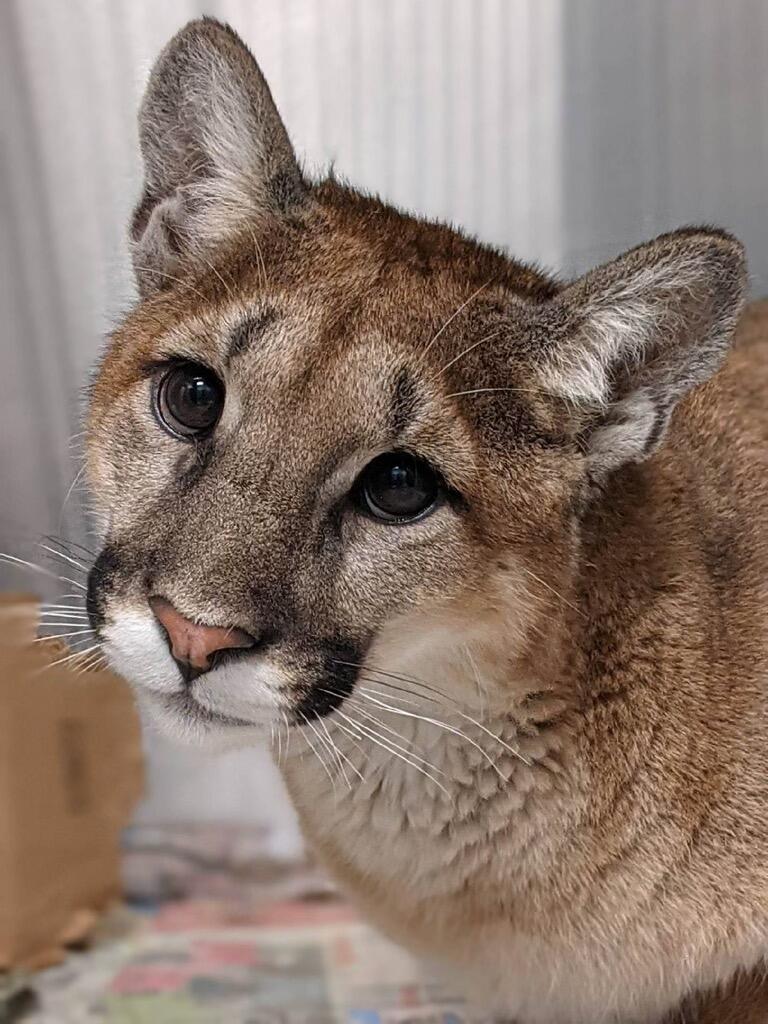
Nicholas the Mountain Lion
Nicholas stretches his legs in quarantine as he awaits the move to his own habitat. Credit: Lions, Tigers and Bears

The golden-coated feline with an expressive face has had a tough journey to the 93-acre sanctuary that will be his permanent home.

In 2020 when he was just a cub, Nicholas was following his mother across a busy highway when both were struck by a car. Nicholas was badly injured and his mom was killed in the collision, an unfortunately common fate for members of their species as their longtime habitats are increasingly fragmented by new developments and highways.

Because they require about two years with their mothers to learn how to survive on their own, it’s almost impossible to release orphaned pumas back into the wild. Unlike, say, the orphaned orangutans of Borneo and Sumatra, who can usually be taught to successfully fend for themselves because humans can show them how to physically manipulate their surroundings, there’s no way to teach orphaned pumas how to select prey, stalk, pounce and deliver kill bites.

A sanctuary in northern California provided a home for Nicholas for about three years, but recently went bankrupt, so the staff at Lions, Tigers and Bears secured him, prepared a habitat for him and took on the Herculean task of transporting him to San Diego County.

Nicholas’ case is even more complicated because he has lasting neurological damage from the car crash that killed his mother, including a pronounced head tilt that worsens when he’s scared.

Brink told PITB it’s normal for cats like mountain lions to be spooked by the commotion and uncertainty of a move, as well as leaving everything they know behind. Nicholas is simply obeying his wild instincts, which urge him to be guarded. But he’s got a loving team of caretakers who will work with him, as well as veterinary specialists who are well versed in caring for animals with neurological damage.

“Sometimes it can take (animals like Nicholas) a month, sometimes it can take three months to build up that trust,” Brink said. “His biggest need is he’s very afraid, so we’re gonna have to work around his fear so we don’t scare him more.”

Nicholas the Mountain Lion
Despite their impressive size, pumas are more closely related to domestic cats than the big cats of the panthera genus. Like their house cat cousins, pumas enjoy tearing up paper and playing with toys. Credit: Lions, Tigers and Bears

While Nicholas will have his own habitat and can keep to himself as much as he likes, recent observations of his secretive species have shown that pumas have “secret social lives,” and Nicholas will have the opportunity to meet and interact with other mountain lions if he’s comfortable with it.

Pumas — which are known by the scientific name puma concolor and are also called mountain lions, cougars, panthers, catamounts, screamers, painters, gato monte and many other names — are among the most adaptable felids in the world and range from the southernmost edge of South America to just over the Canadian border. They’re able to thrive in mountains, tropical regions, deserts, forests, human-adjacent rural areas and even in urban population centers, as the famed “Hollywood Mountain Lion” P-22 did for more than a decade in Los Angeles.

Their ability to adapt has served them well in a changing world, but they’re not immune to the pressures of human expansion.

In California their habitats have been carved up by the state’s busy and deadly highways, leaving the cats in genetically isolated pockets. Pumas who strike out in search of their own ranges are extremely vulnerable to vehicle traffic. P-22 famously crossed several of the world’s busiest highways to reach his eventual home in LA’s Griffith Park, but others like Nicholas and his mom aren’t so lucky.

Solutions like the $90 million Wallis Annenberg Wildlife Crossing, currently under construction in Los Angeles County, can connect fragmented ranges and give pumas, coyotes, foxes, deer, rabbits and other animals safe passage. But experts point out that they are just one component in a long-term solution that must include more careful zoning, fences to funnel animals toward safe crossings, and options like tunnels that run under highways, since not all animals will use overpasses.

As planners and wildlife experts figure out new ways to ensure the survival of wildlife in an increasingly crowded, human-dominated world, sanctuaries like Lions, Tigers and Bears play a crucial role by caring for the innocent animals who are injured, displaced and rescued from bad circumstances.

To learn more about Lions, Tigers and Bears or support their ongoing efforts to provide safe, stimulating and comfortable homes for wild animals, visit the non-profit’s site. To receive updates on Nicholas and the other animals at the sanctuary, follow Lions, Tigers and Bears on Instagram and Facebook. Readers who live in the California area can book guided educational tours or visit during one of the sanctuary’s special events. Thanks to Bobbi Brink and Olivia Stafford for allowing PITB to tell Nicholas’ story. All images and videos of Nicholas courtesy of Lions, Tigers and Bears.

Who Freed Dallas Zoo’s Clouded Leopard? Cops Say Cat’s Enclosure Was Intentionally Breached

The 25-pound wildcat was found late on Friday afternoon. Now investigators are trying to determine who freed her and why.

A clouded leopard who went missing from her enclosure was intentionally let loose according to police, who have opened a criminal investigation.

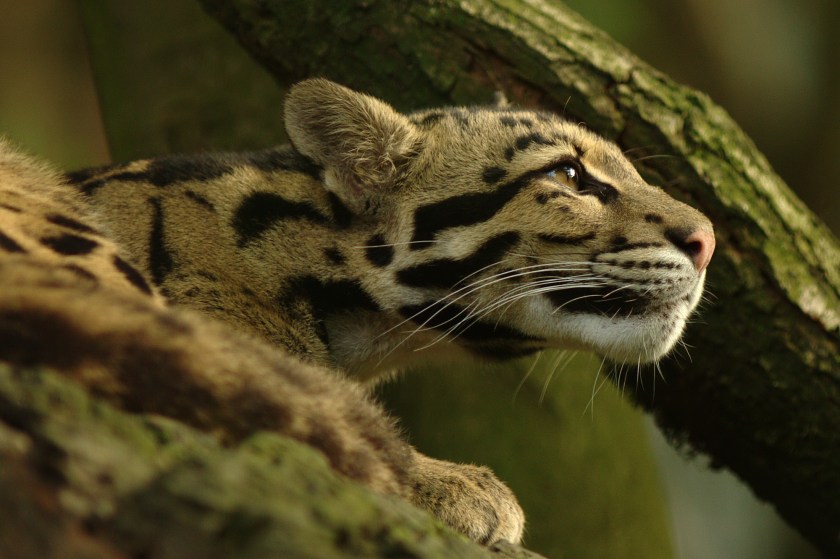
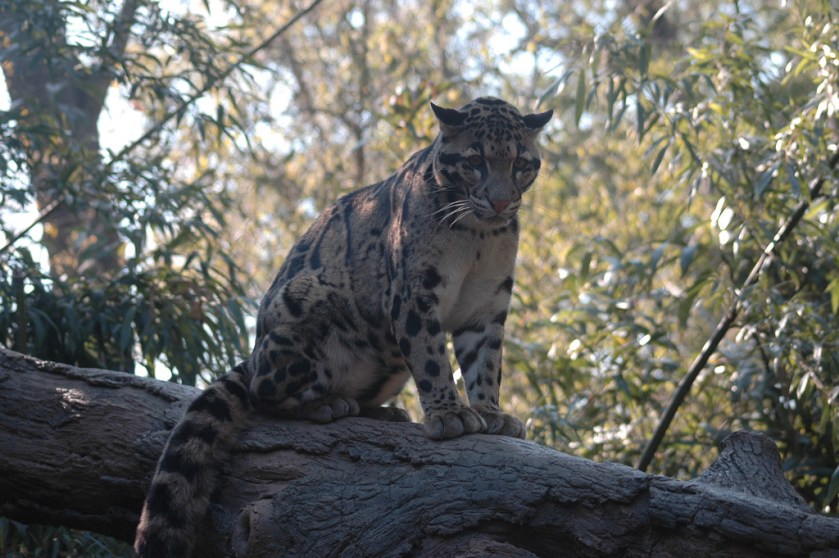
The medium-size wildcat, whose species is native to the foothills of the Himalayas, escaped from her enclosure some time between late Thursday night and Friday morning, prompting a zoo-wide shutdown and a massive coordinated search. During that time, zoo staff emphasized to local press — and in social media posts — that clouded leopards are not aggressive toward people and the escaped cat wasn’t a threat.

She was eventually found safe and unharmed on zoo grounds, hiding in a tree not far from her enclosure, at about 4:40 p.m. on Friday. She was secured within 35 minutes, zoo officials told the Fort Worth Star-Telegram.

But that’s not the end of the saga. Zoo staff say the leopard, a three-year-old named Nova, didn’t escape on her own — a person or persons breached the two-story exhibit by cutting through the mesh fence. Nova’s sister, Luna, lives in the same enclosure and did not leave the area.

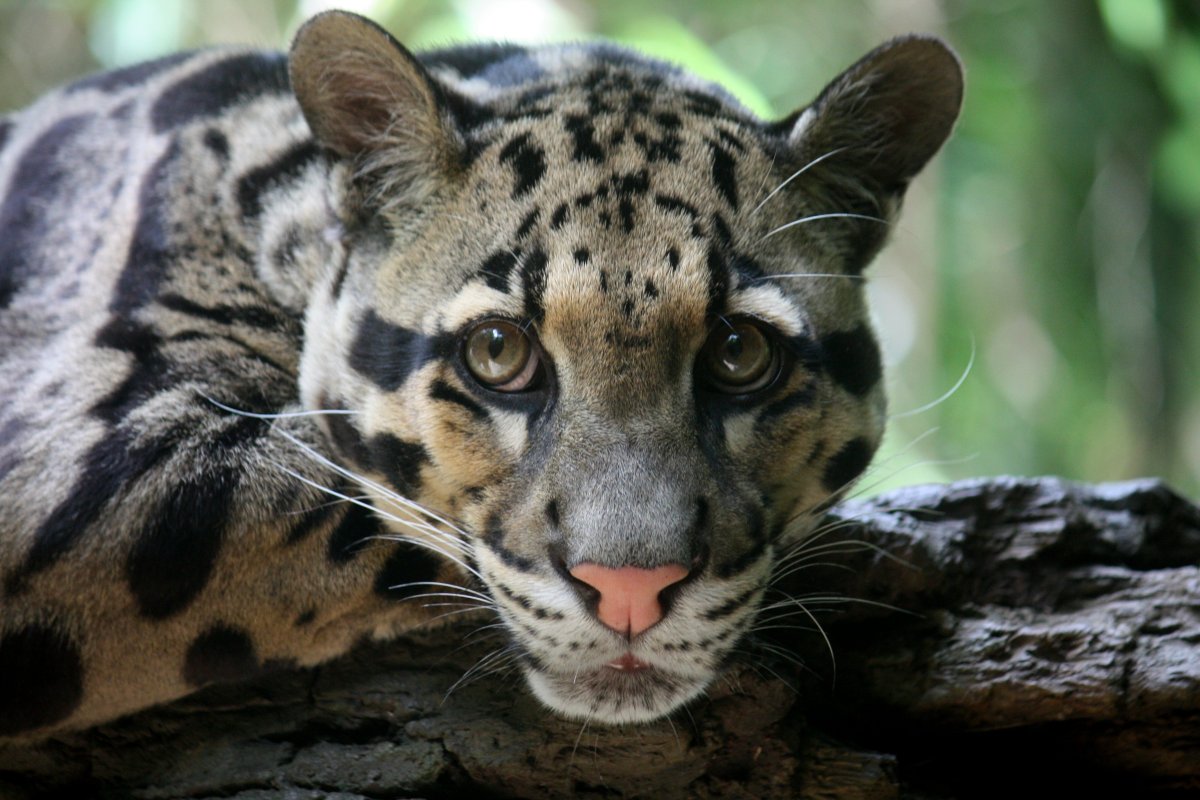
Clouded_leopard_(14134537190)
A clouded leopard. Credit: Wikimedia Commons

Now investigators are trying to determine if the people responsible for breaching the enclosure were committing an act of vandalism or intended to take the 25-pound wildcat.

“We found a suspicious opening in the habitat wall in front of the exhibit,” a Dallas Zoo official told reporters on Friday afternoon. “It was clear that this opening was not exhibit failure and it wasn’t keeper error.”

Police are reviewing surveillance footage and looking for clues in the 106-acre zoological park, which is located about three miles south of downtown Dallas and is home to more than 2,000 animals.

“It is their (Dallas Zoo officials’) belief and it is our belief that this was an intentional act, so we have started a criminal investigation,” Sgt. Warren Mitchell of the Dallas Police Department said.

Harrison Edell, vice president of animal care and conservation at the Dallas Zoo, warned against anyone attempting to steal zoo animals.

“This is a cat of conservation concern,” Edell said. “This is not a pet — she’s a critically important member of our family at Dallas Zoo.”

Clouded_Leopard_b_d
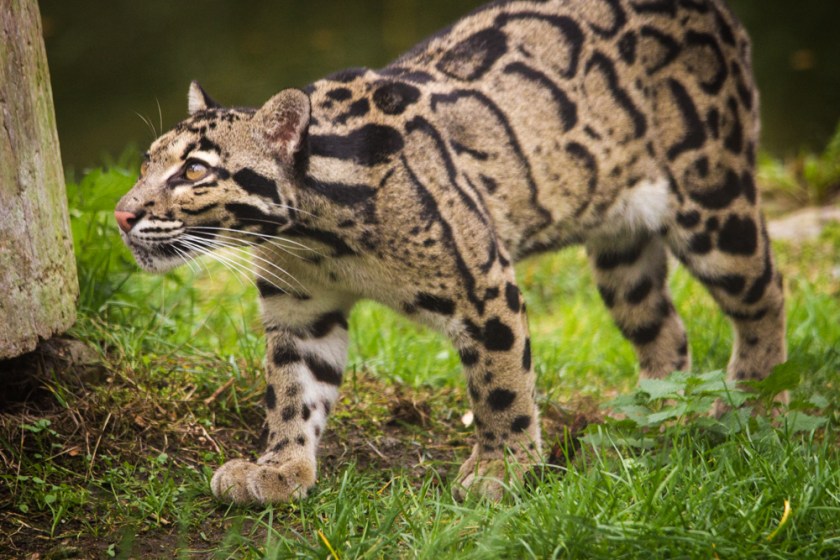
Clouded leopards diverged from a common ancestor shared with big cats, but typically don’t grow to more than 30 or 40 pounds. Credit: Wikimedia Commons
Clouded_Leopard_(36997885773)
There are fewer than 10,000 clouded leopards left in the wild. In captivity, the wildcats live for 11 years on average. Credit: Wikimedia Commons

Why Are UK Cat Owners So Intent On Allowing Their Cats To Run Free?

A UK couple created a cat flap that uses algorithmic AI to determine if their cat is trying to come inside while carrying prey in her mouth. If she’s carrying prey, the cat flap won’t open.

Jinx the cat was so grateful to UK couple Martin Rosinski and Michelle Bowyer for giving her a home that she decided to bring them a gift.

“The first time I was working at home, I heard Michelle making a commotion because Jinx had come in with a mouse and dumped it on the carpet in front of her as a ‘thank you’. That’s their way of expressing love. You can’t tell her off, so we thanked her a lot for it and took it away from her,” Rosinski said.

“Then this started happening more and more often to the point where we would be woken up at 2 a.m. as Jinx would meow loudly and announce, ‘Hey I have a gift. If we didn’t get to her fast enough she would decide to eat it herself, which would involve piles of mouse parts being smeared into the carpet. This was happening at 2 a.m., then again at 4 a.m. on many nights and we’d not get any sleep having to deal with this. Her record was four in one night – that night was a frenzy of three mice and one bird. It was something that was a real cause of stress.”

The solution is pretty simple, right? Keep Jinx inside.

The former stray won’t like it at first. There will be an adjustment period when the meowing will be seriously annoying. But it’s better than allowing your cat to play Predator at night and waking up to find your cat sitting on your chest, proudly presenting a twitching mouse to you.

Rosinski and Bowyer didn’t take Jinx inside.

Instead they created a bespoke intelligent cat flap that allows Jinx to come and go as she pleases, but won’t open if she’s carrying prey. They both have backgrounds in tech: he’s a researcher who also tinkers with software and hardware, and she’s a web developer.

cute brown tabby cat
Despite being domesticated, cats retain their predatory instincts and many will kill small mammals and birds if allowed to wander on their own outdoors. Credit: Aleksandr Gorlov/Pexels

Their system, OnlyCat, uses a camera and an algorithm to determine if Jinx is carrying something in her mouth. If she is, the cat flap won’t grant her access, and Bowyer and Rosinski will get a text informing them Jinx has been up to her hi-jinx again, along with a photo of her entry attempt.

The OnlyCat prototype has prevented Jinx from bringing in 42 prey animals since June of 2021, the couple said. OnlyCat may prevent her from bringing her prey inside, but it hasn’t dissuaded her from killing.

“Two months ago I think something clicked and she realized, ‘I can’t bring these home. It’s just not going to work,’” Rosinski told the UK’s South West News Service. “She still catches them outside but she’s learned that there’s no point even trying to bring them home, which is a relief.”

The couple developed the OnlyCat into a full product, which launches on Aug. 16 at £499. (A little more than $600 USD.) Their site says the retail version of the flap has worked 100 percent of the time in tests, and the developers believe “99%+ accuracy should be achievable for everyone.”

It’s similar to a device built by Amazon engineer Ben Hamm which uses DeepLens, an AI-enabled camera system, and Sagemaker, a software tool for training machine-learning algorithms, to determine if cats are carrying prey.

Hamm’s version, which he created for his cat Metric in 2019, initiates a 15-minute lockout timer if Metric tries to enter while carrying a kill, and automatically sends a donation to the National Audubon Society, which protects birds and their habitats. The algorithm was trained using tens of thousands of images of cats approaching normally, and with prey in their mouths. So far, Hamm hasn’t developed a retail version of his AI-enabled cat flap.

orange tabby cat on gray rock
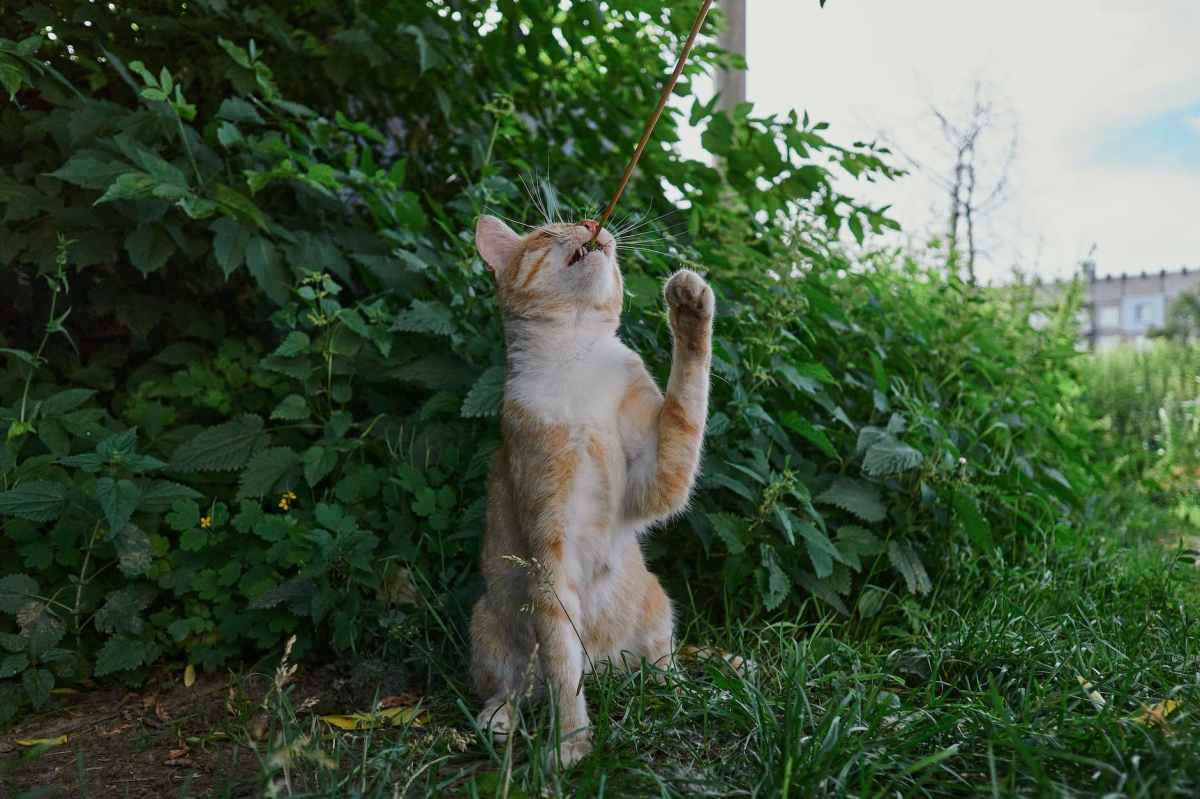
The feline predatory drive is instinctual. Indoor cats can exercise that drive with wand toy games and by chasing laser pointers. Credit: Aleksandr Nadyojin/Pexels

We don’t think there’s any one way to raise cats, and it’s obvious there are different cat cultures in various countries.

Nevertheless, seven out of 10 cat owners in the UK allow their cats to roam free, and anecdotes like the ones about Jinx, with her multiple kills a night habit, draw the ire of birders and conservationists.

Peter Marra is the author of Cat Wars: The Devastating Consequences Of A Cuddly Killer and co-author of many of the leading studies claiming cats are the primary threat to bird populations. He’s currently making the media rounds and endorsing strict policies — many of them in enacted in response to his studies — that would make it illegal to allow cats outdoors.

The Australian government is airdropping poisoned sausages by the ton in a plan to cull as many as two million cats, a town in Germany tried to ban outdoor cats, a US politician recently suggested starting a “hunting season” for feral and stray felines, and some people — including wildlife biologists and conservationists — have gone vigilante and convinced themselves they’re doing good by randomly picking off cats with shotguns and poisoning feeding stations for strays.

Maybe it’s time for more people to reconsider allowing their cats to roam free. Like putting a cat on a diet or trying to break a bad habit, there’ll be loud and annoying protests in meow, and it’ll get worse before it gets better, but eventually cats always adjust to changes if given long enough.

As domesticated animals they don’t have a natural habitat anymore, and they don’t actually need to be outside. It’s entirely possible to keep things fun and interesting for the furry little guys, and that’s on us. All that’s required is our time, attention and affection. Interactive play time. Toys that can keep a cat occupied by herself. Catnip. Condos and tunnels. Window perches. Cat TV on Youtube. Simple things to play with, like plastic bottle rings, crinkled tin foil and cardboard boxes.

We don’t think anyone should be required to keep their cats indoors, and that’s the point. We have an opportunity to meet conservationists halfway and make a real effort to reduce feline impact on small wildlife. If we don’t, eventually we’ll be forced to comply by laws that’ll be draconian compared to the voluntary measures we could have taken to prevent the government from getting involved.