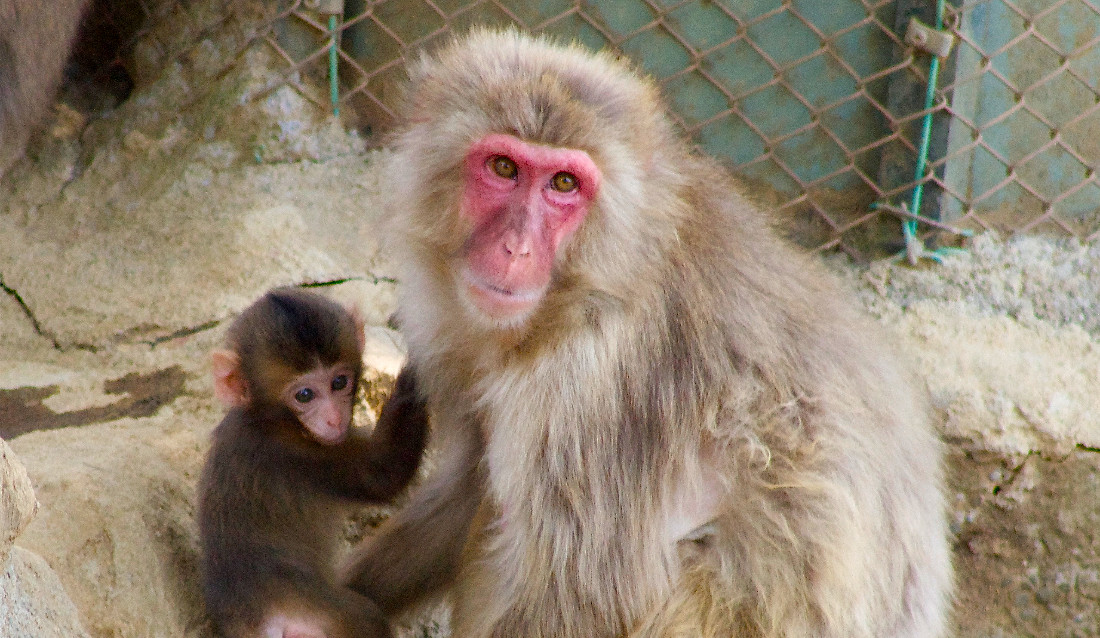
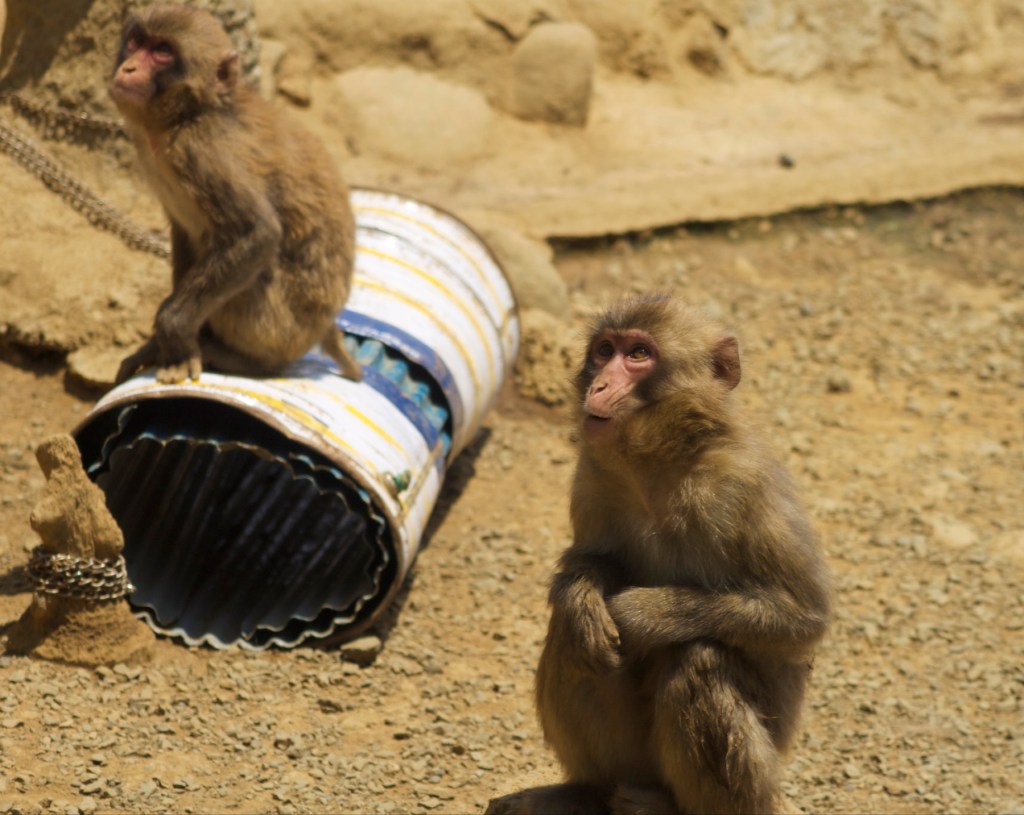
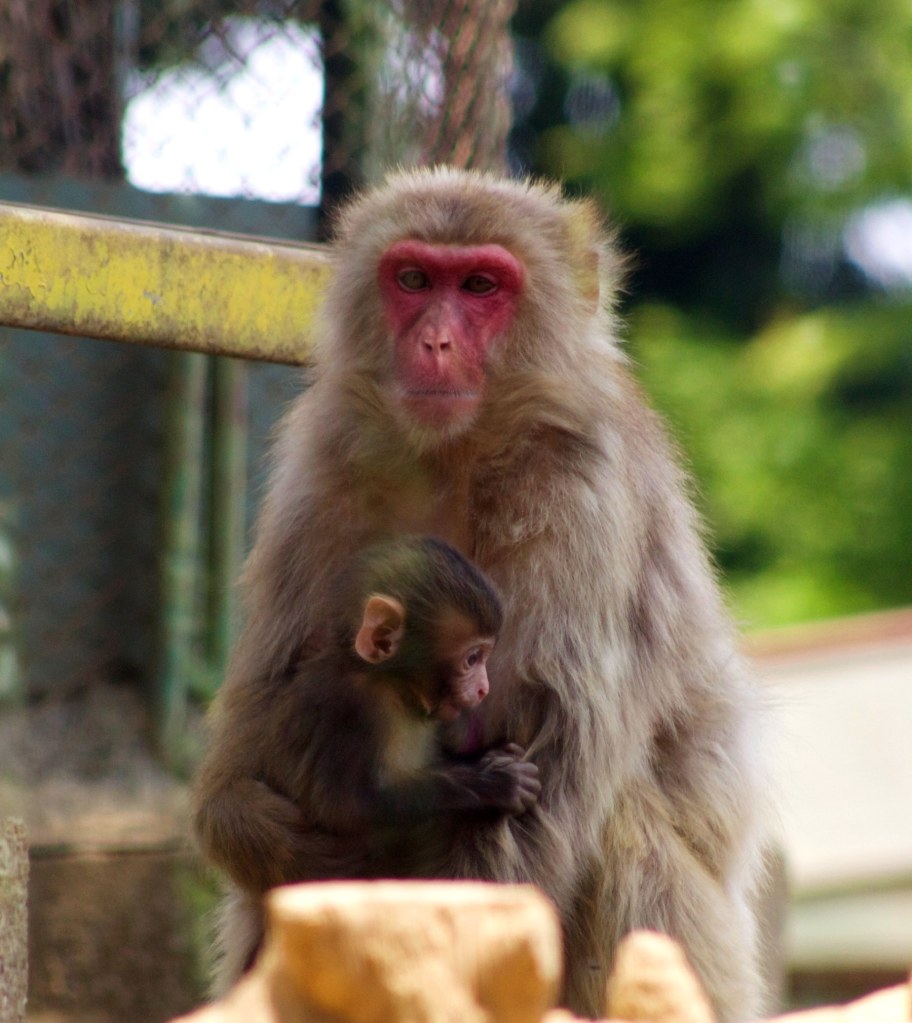
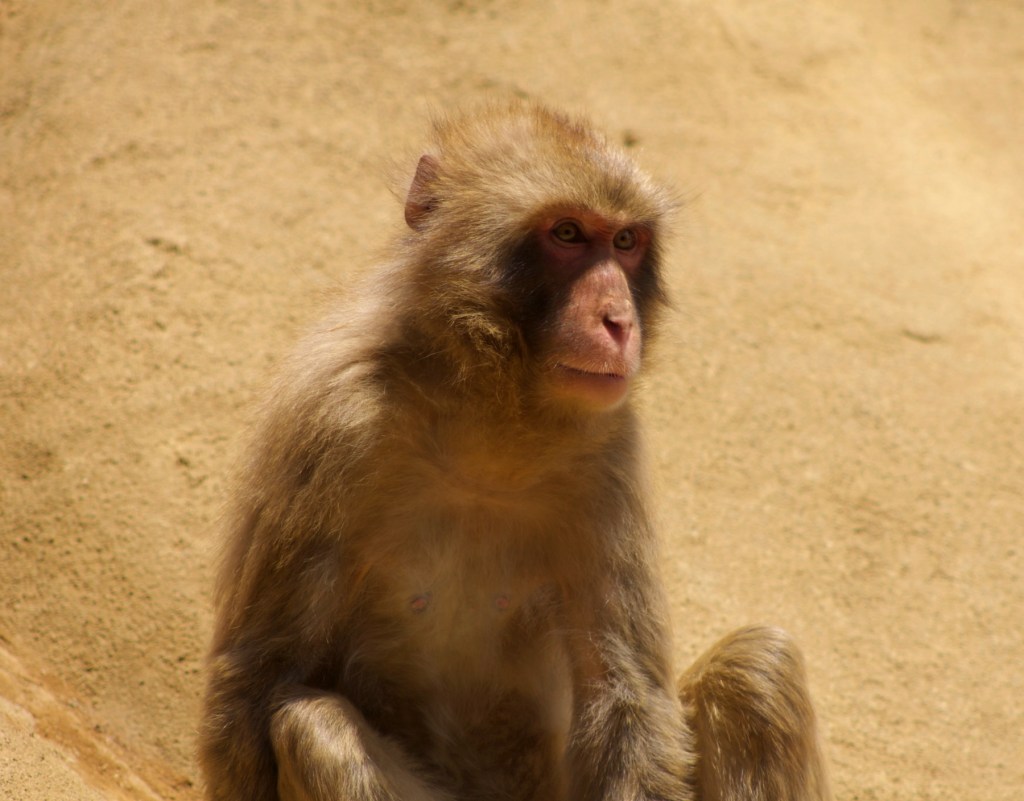
Meet the Japanese macaques, also known as snow monkeys, living in an enclosure on the side of Mt. Takao, about an hour from Tokyo.
A note on this series: Although I published some of these photos earlier, the majority have been recovered from an old drive that took a circuitous route of more than five years, three continents and four countries to get back to me. I plan to run them in themed segments on Wednesdays this summer, including Tokyo nightlife, shrines, cityscapes and more. This week’s photos are from the snow monkey exhibit at Mt. Takao.
Japanese macaques are the northernmost-dwelling of any non-human primate species.
They’re built for the cold, with heavier coats than their cousins, the rhesus, long-tailed and bonnet macaques. They also sleep in well-organized groups, rotating so each monkey gets time in the center to soak up body heat, and they’re famous for keeping warm in northern Japan’s hot springs.
But as these photos show, snow monkeys are also adaptable, and they make the best of things during the hot, humid summers at Mt. Takao, about 51 km (30 miles) from Tokyo.
These photos were taken on a hot day in June when I was one of only a handful of visitors.
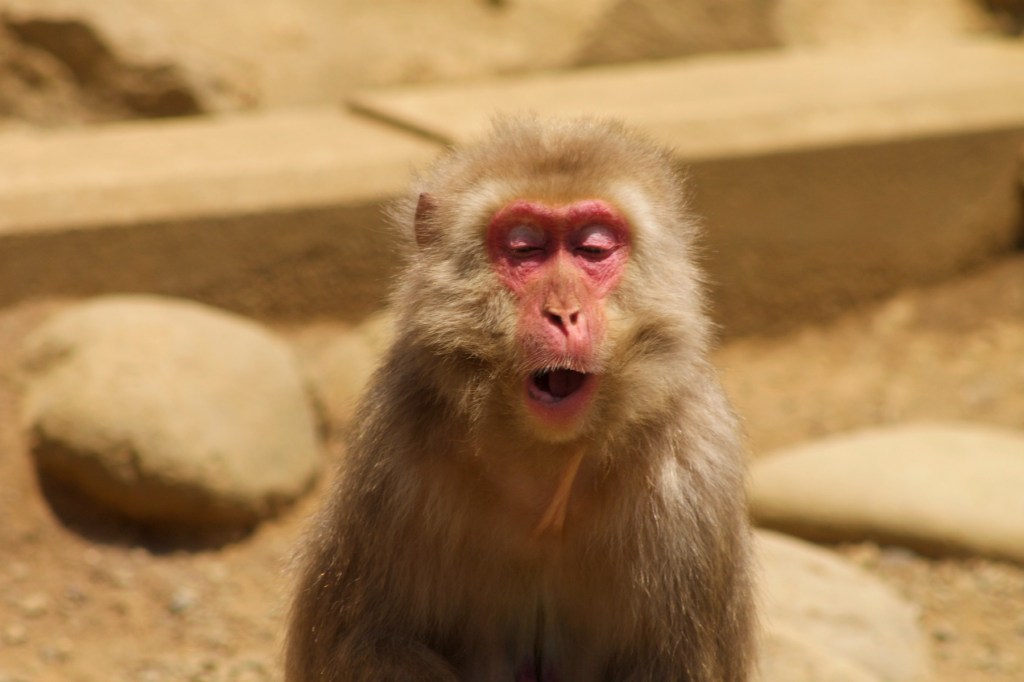
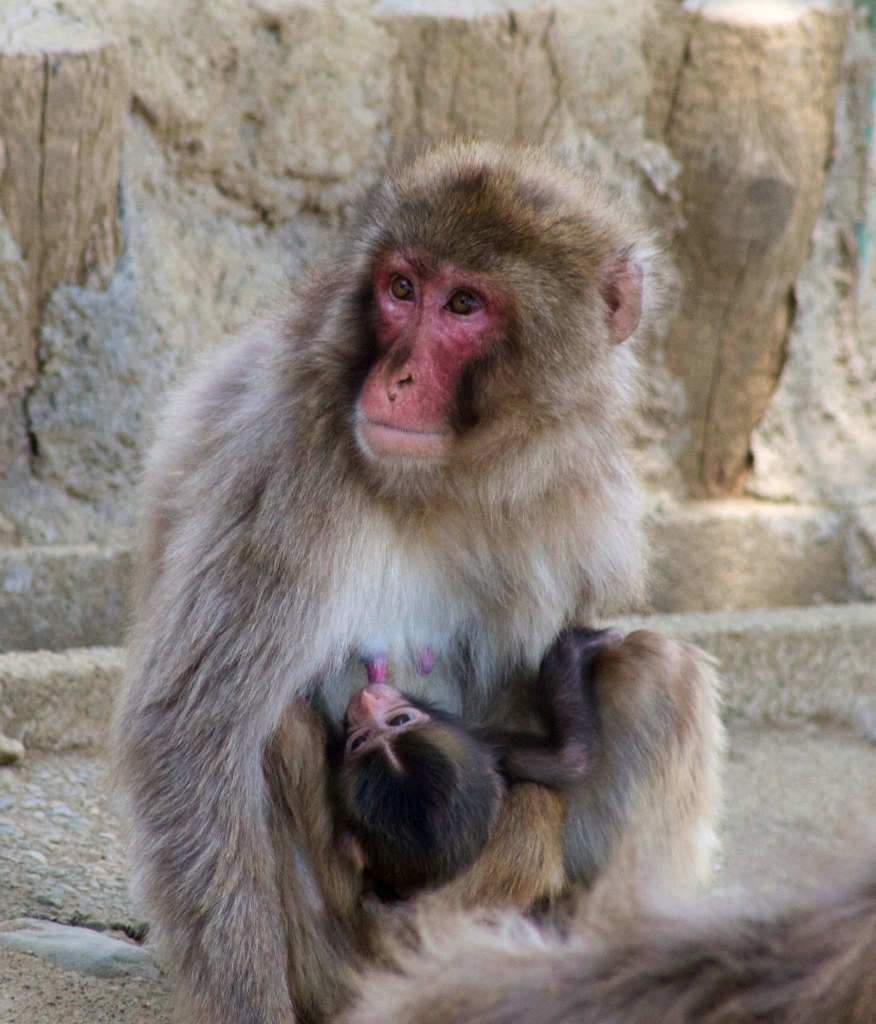
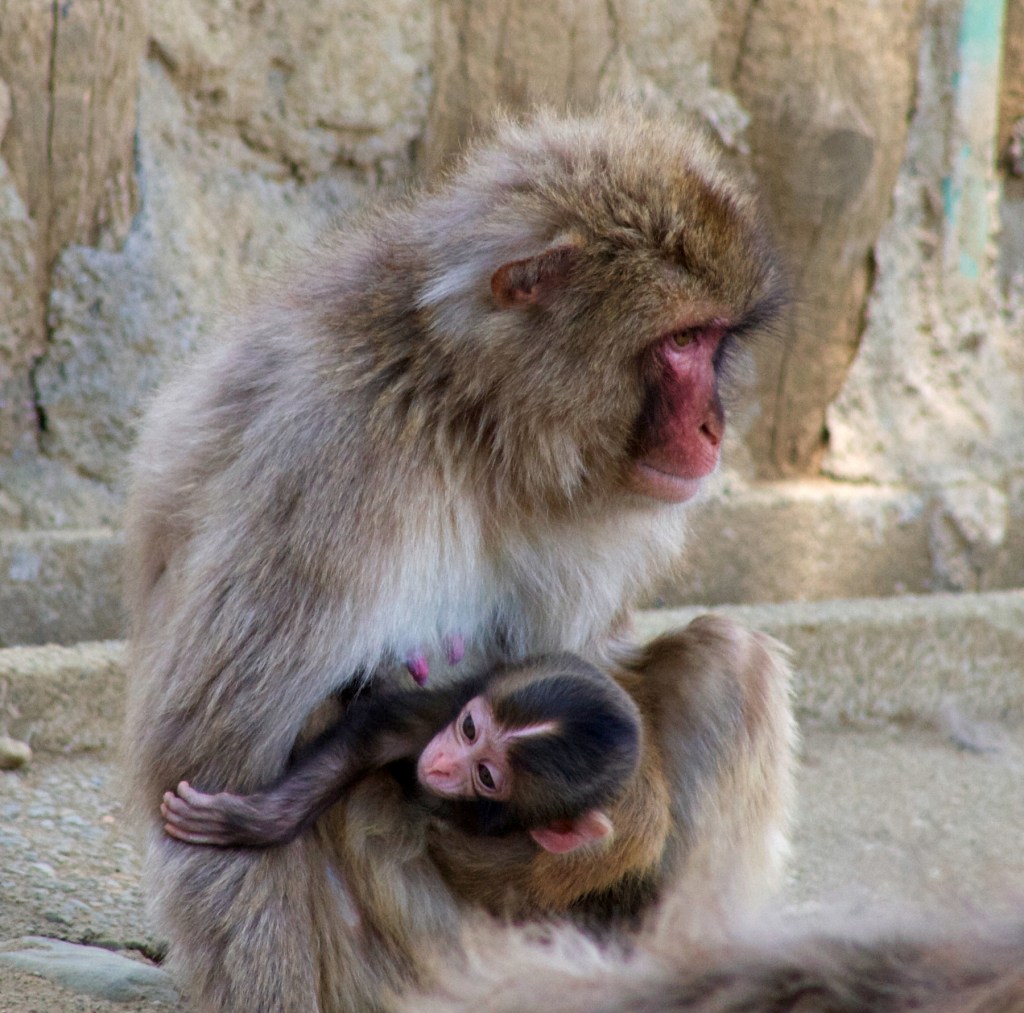
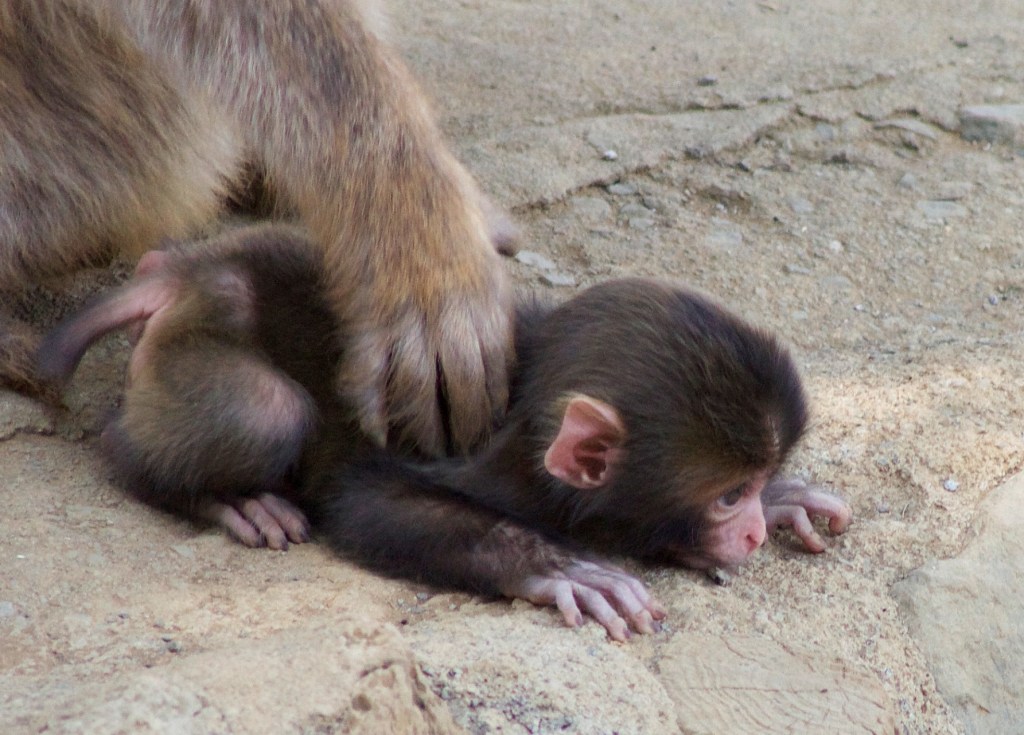
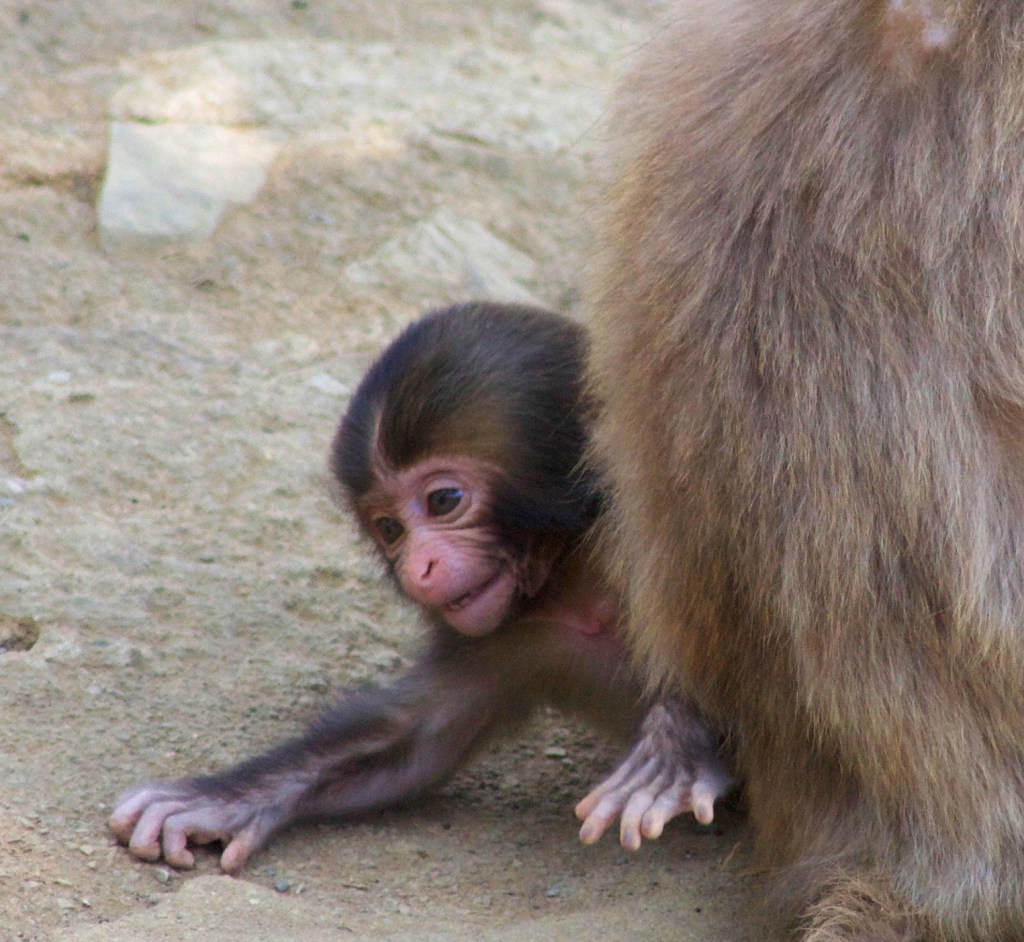
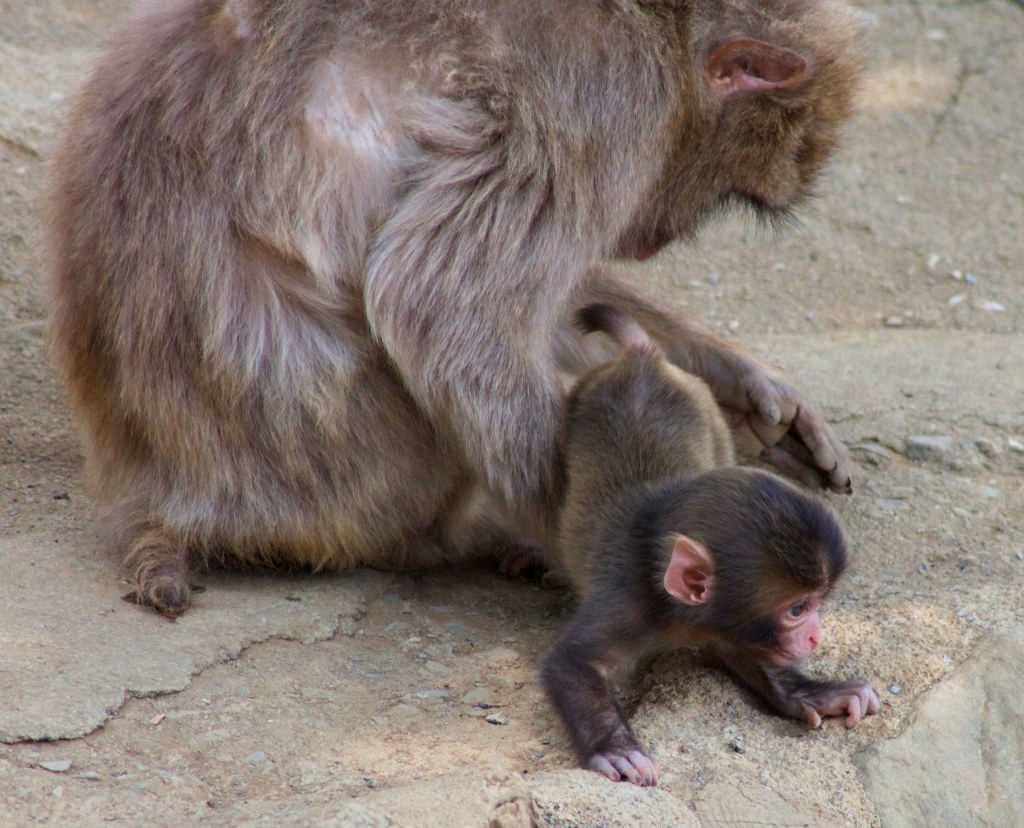
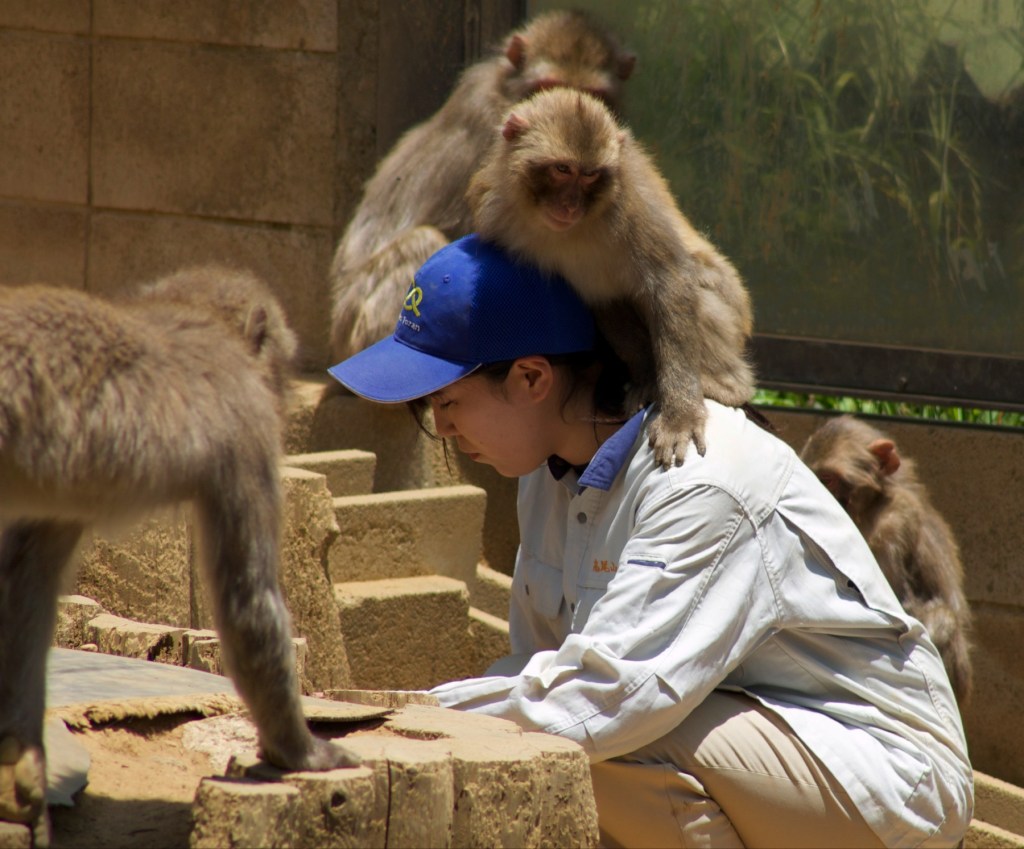
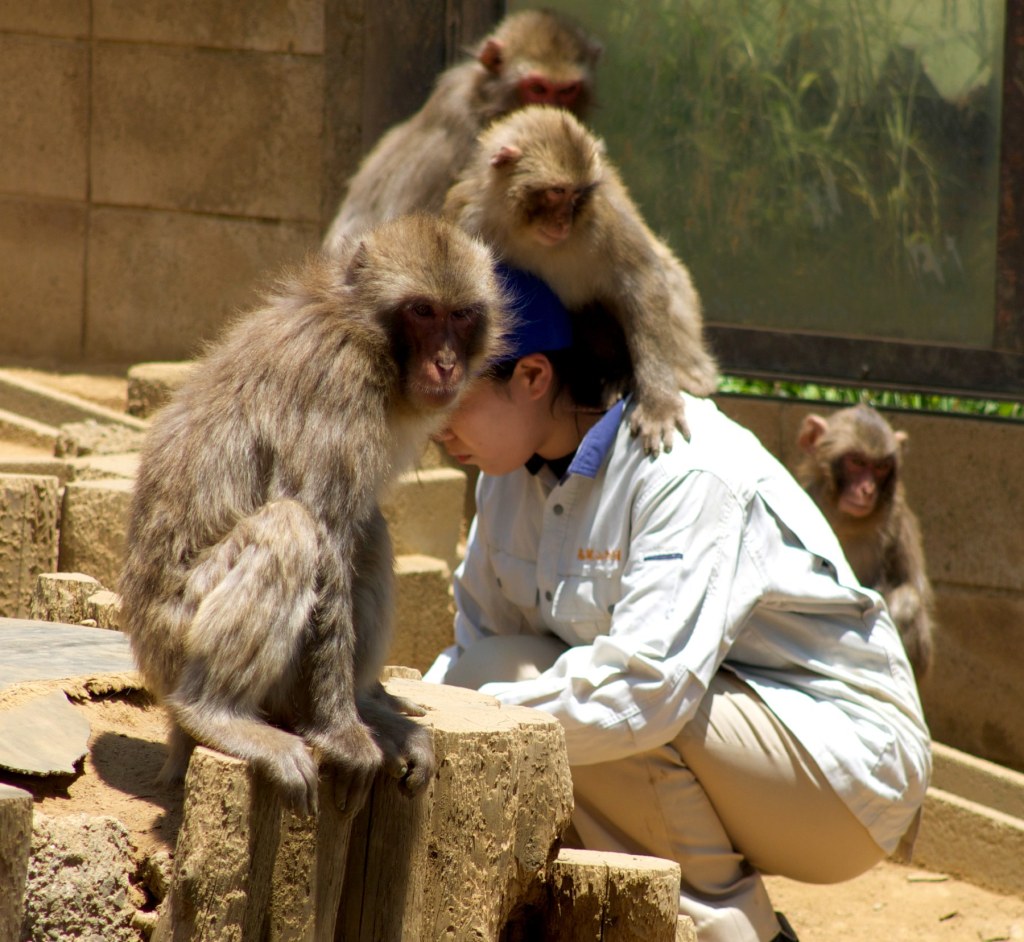
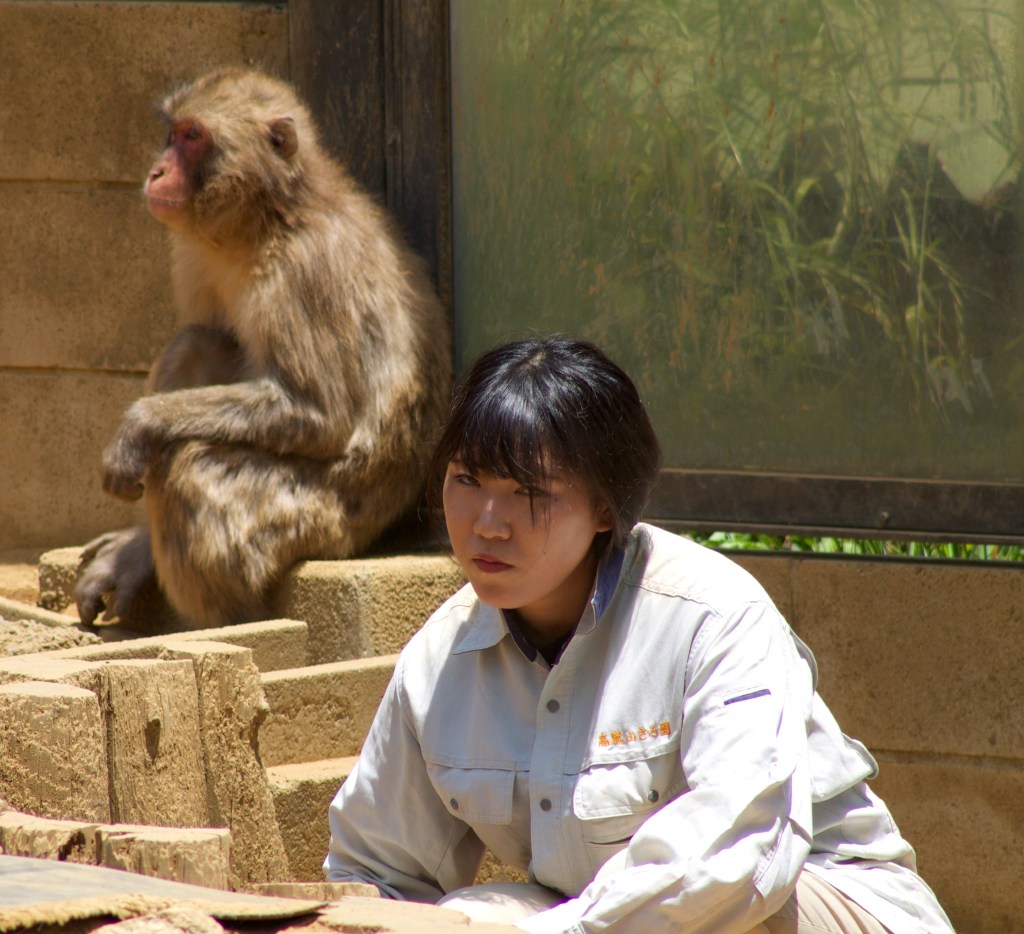
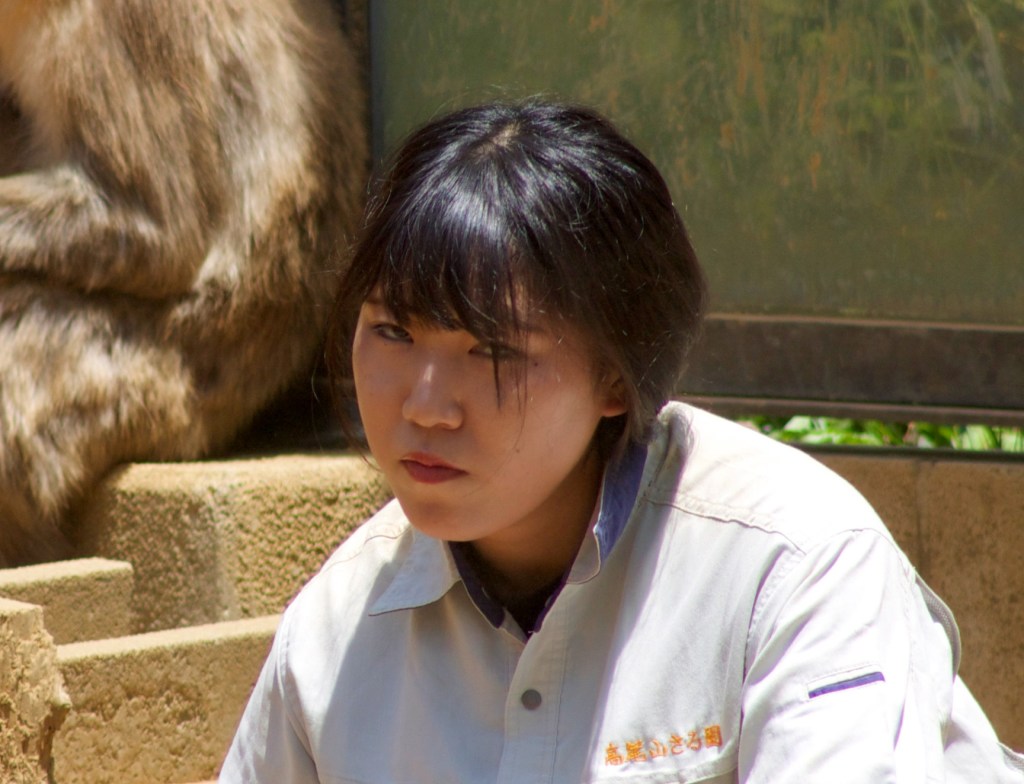
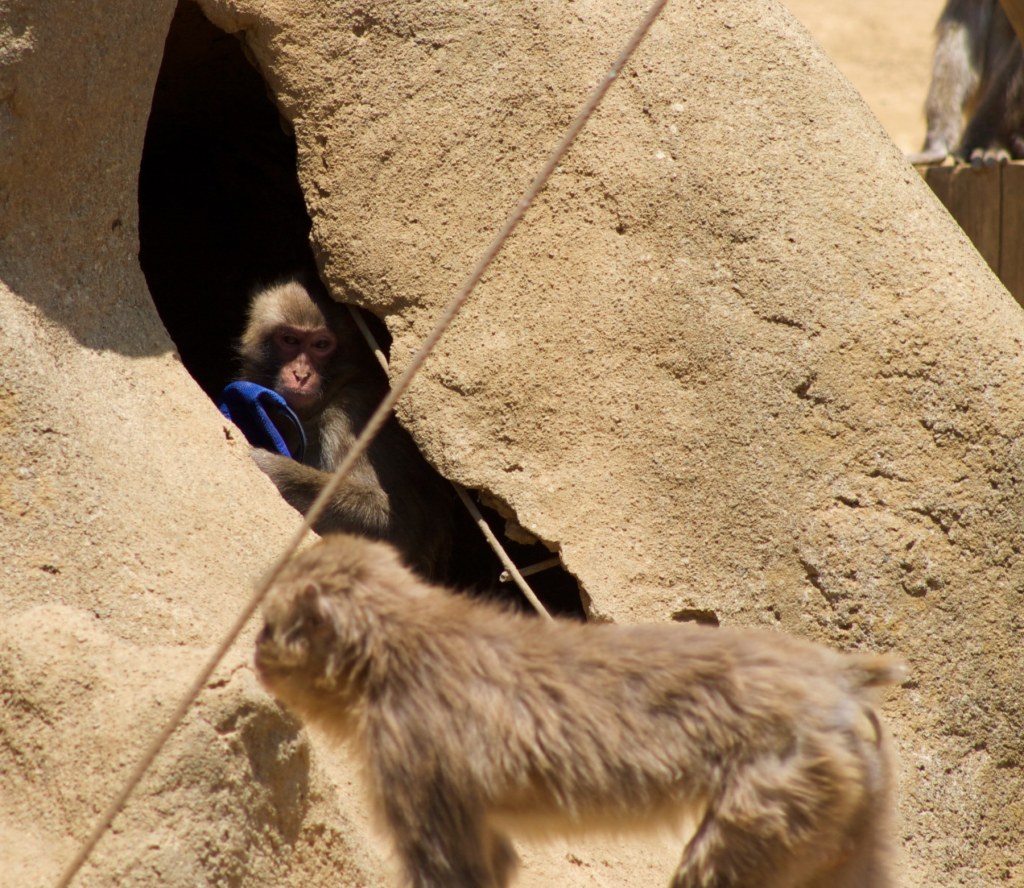
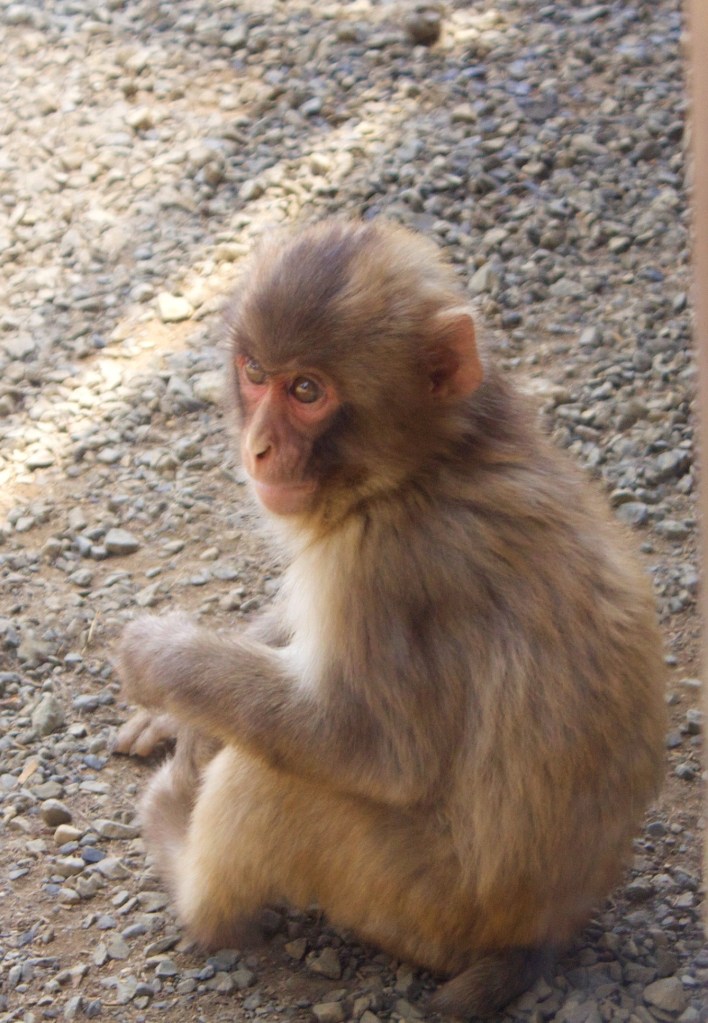
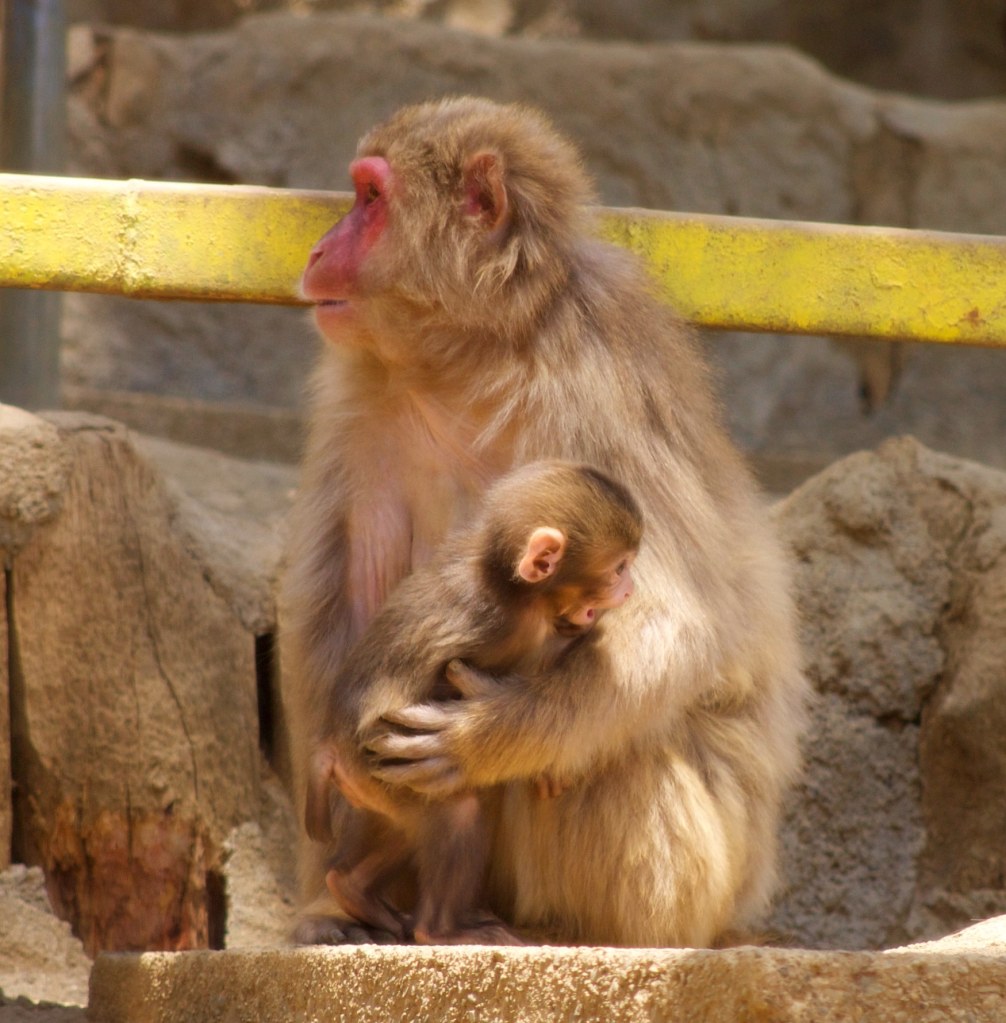
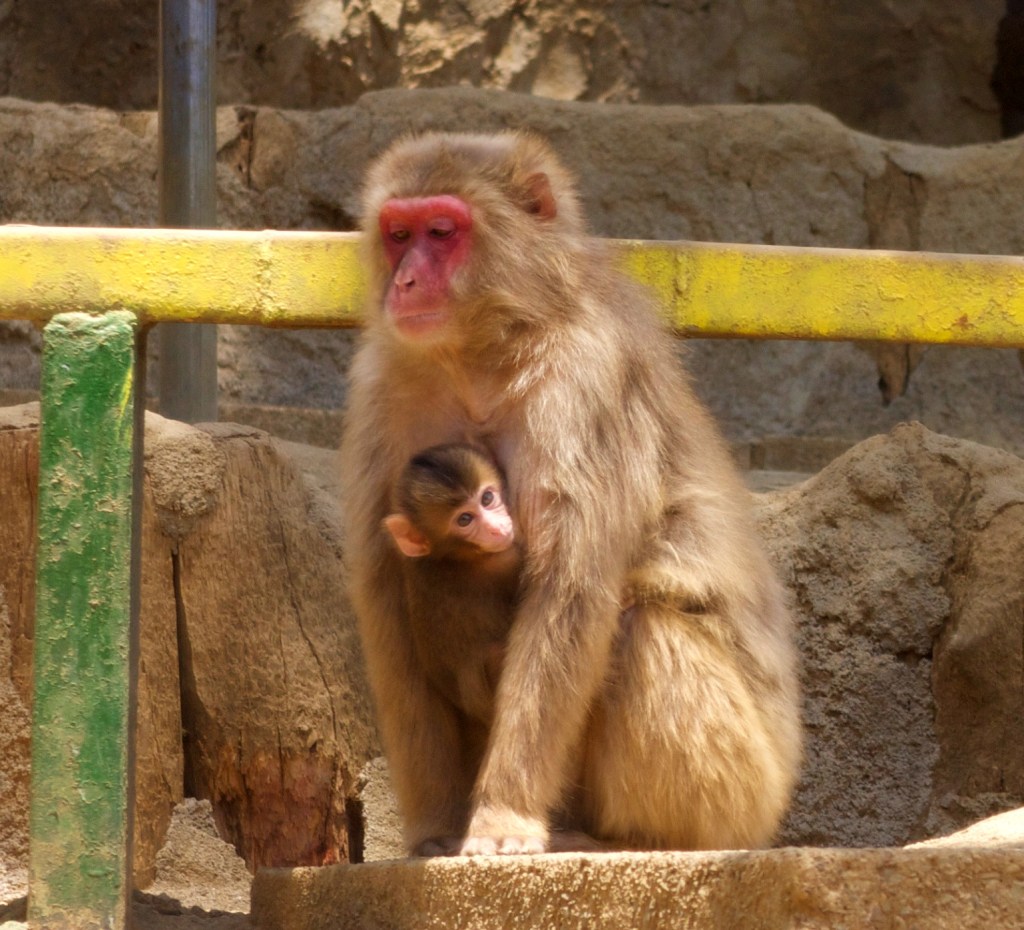
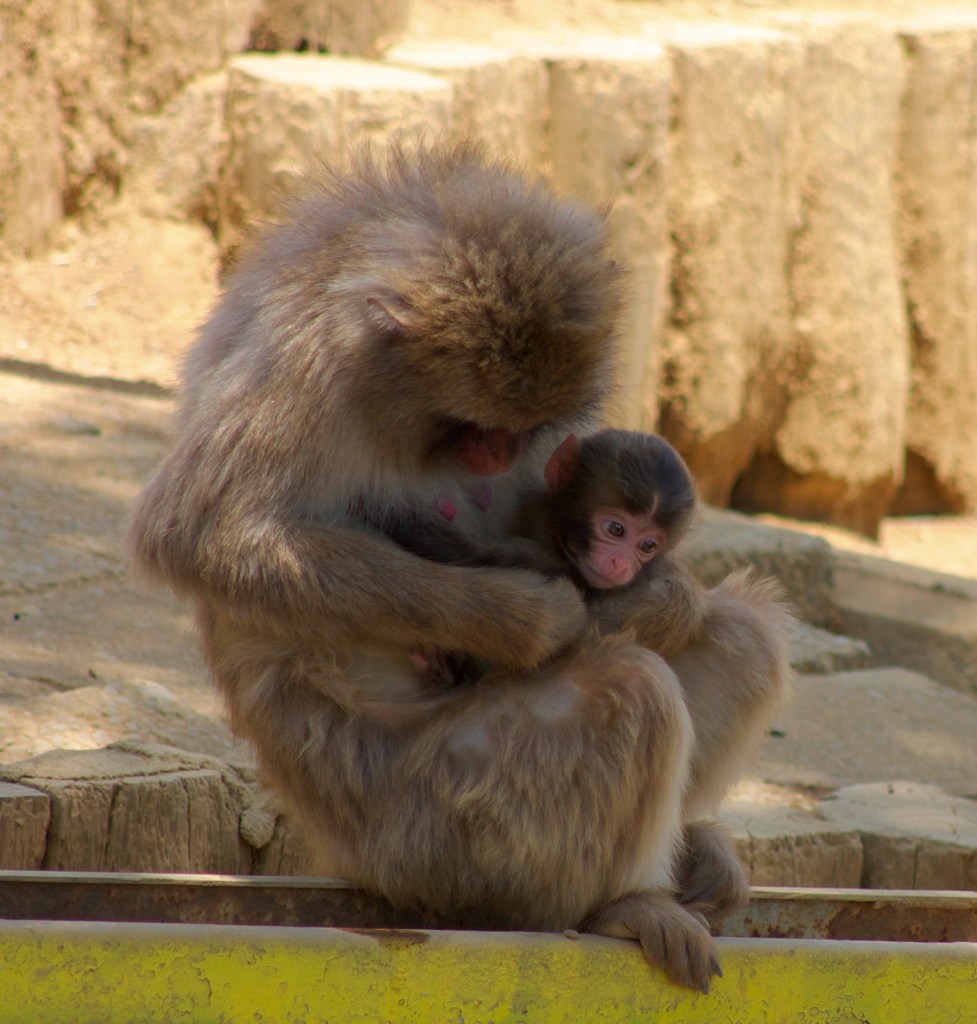
Welcome to Mount Takao! So you want to see snow monkeys?“The milk bar’s open!” Snow monkeys, aka Japanese macaques, are extremely attentive mothers. This baby is is about 8 to 10 weeks old and completely dependent on mom.“I’ve had my fill of milk, now it’s time to explore!”“But mom won’t let me go far! I’m too young to go off on my own, and mom is really protective of me.”“If I could…just…get away…for a sec!”“Come on, mom! Let me play!”A keeper at the Mt. Takao monkey enclosure. She has a hat…but not for long. Note the mischievous monkey on her shoulders, who’s waiting for just the right moment to grab her hat and run.The monkey on the left is like: “Oh crap, here it comes!”The keeper is staring daggers directly at me. There was a small crowd at the Mt. Takao snow monkey exhibit that day, and while the Hat Incident delighted the onlookers, the keeper was not amused when she saw me snapping away. I’m pretty sure she wanted to throttle me. Sorry!Yeah, she definitely hates me.Getting her hat back was not an easy task. The devious little monkey who made off with it immediately retreated into a small cave/shelter system big enough for the macaques, but too small for humans to enter. Making matters worse, there were at least four or five entrances and exits. Every time the keeper approached, the little monkey darted inside and popped up through a different hole, like a game of wack a mole. Eventually it took both keepers to retrieve the hat.“Oh, you know, just chillin’.”I was super close to this little lady. She was probably about two or three years old.Macaques live in troops of up to 300 members, and their societies are matrilinear, meaning an individual monkey’s “rank” in the troop’s social hierarchy is determined by who their mother is.
Macaque troops are headed by alphas who are the strongest males and deal directly with protecting troop members, but the matriarch runs most aspects of troop life.
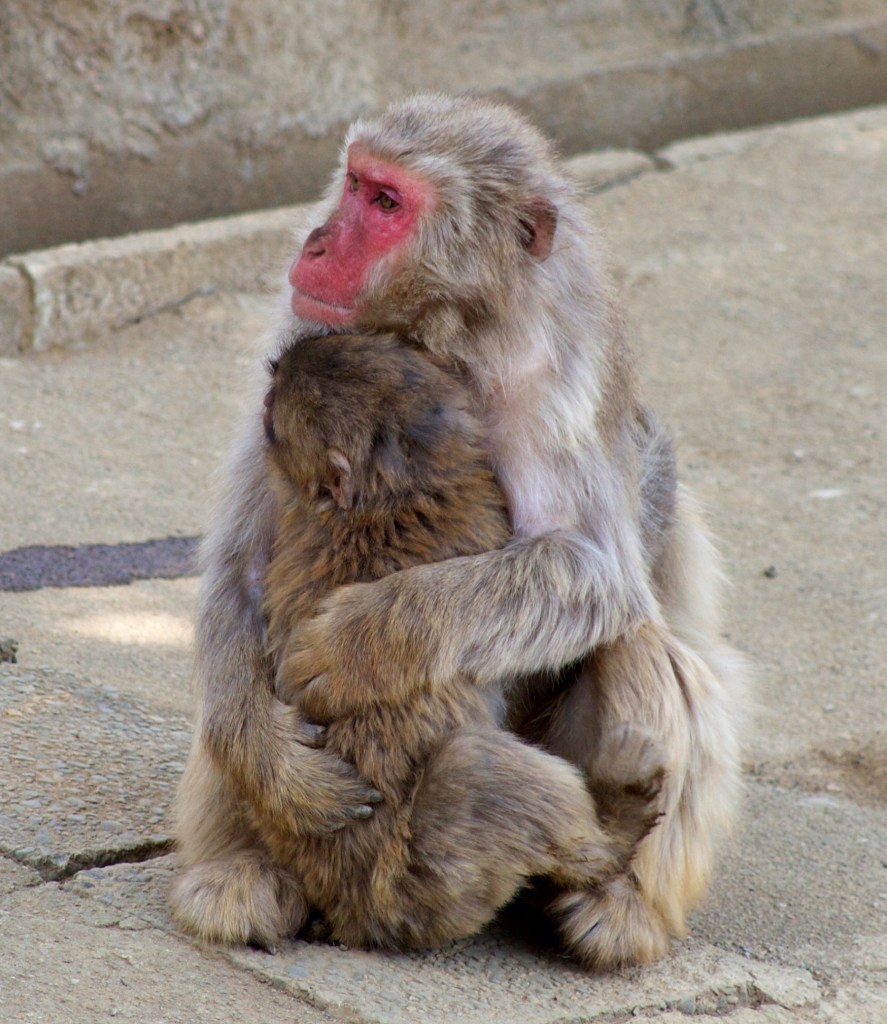
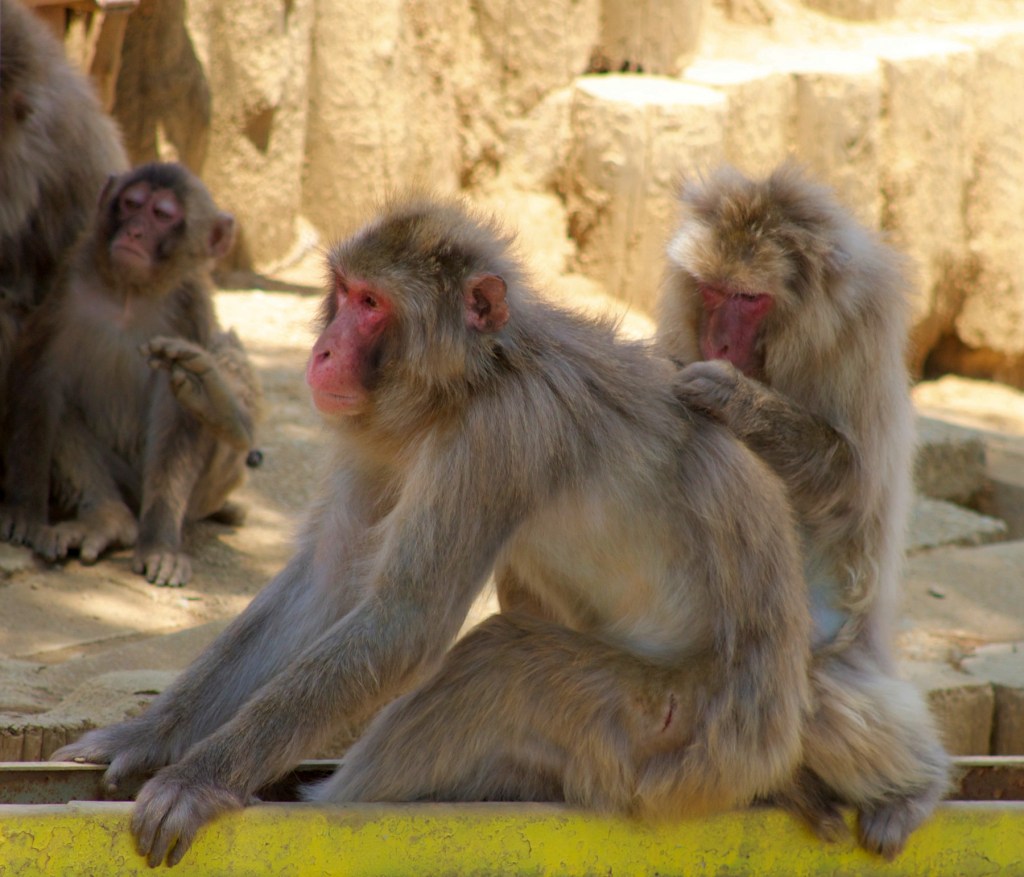
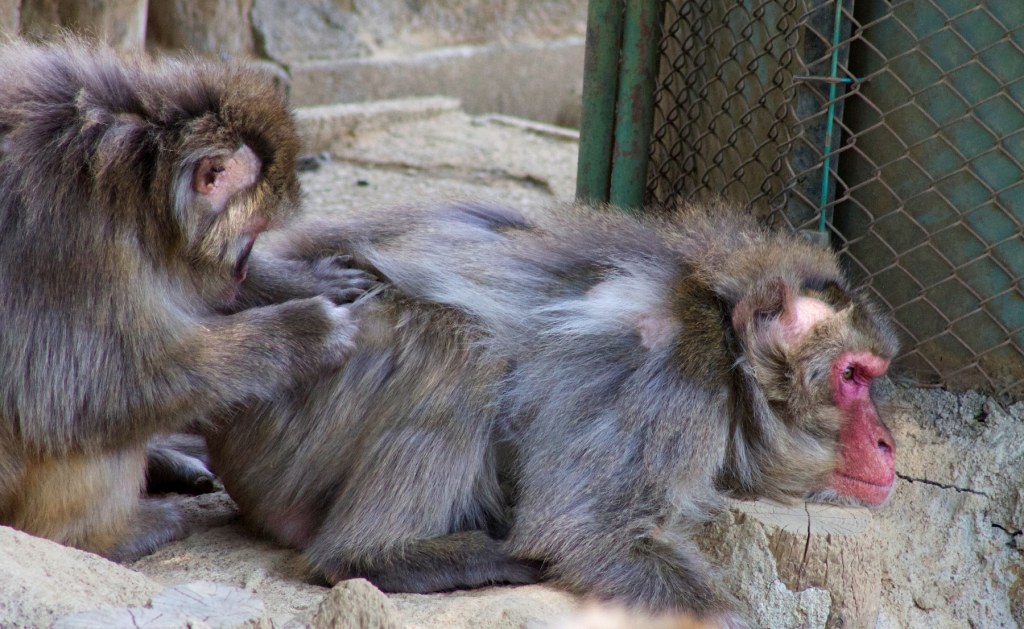
Here, a snow monkey mom hugs her child. The bond between moms and their kids is strong. Daughters stay with their mothers and their troops for life, while sons remain in the troop until they’re about five years old, at which time they depart to avoid inbreeding. They often go on to live as bachelors in small groups before joining or starting their own troops.This baby is geckering. A gecker is a “loud, pulsed vocalization” usually described as a “broken, staccato noise.” People often think of it as a baby macaque throwing a temper tantrum, but it’s more than that, and it’s involuntary, meaning the babies can’t control it. In plain English, it’s a noise, accompanied by spasms and made by babies and young macaques when they’re particularly upset. Babies usually gecker when they’re separated from their mothers, being bullied by older monkeys, or in situations when they want to nurse but their moms won’t let them. Another mom with a young nursing baby. This baby is a bit older than the one above, probably about three months old.The first baby again. Notice how mom is grooming the baby. Grooming is an important aspect of macaque social relations, in addition to serving the practical function of clearing insects and other debris from fur.More social grooming. The monkey on the right is attentively picking insects from the fur of the monkey on the left.He’s big, he’s old, he’s battle-scarred. He’s the alpha, and he always gets groomed first, whenever he wants. He also eats first, enjoys the best lounging spots, and gets to mate with his choice of females. In the wild, alphas don’t retain their thrones long, often being deposed within a year or two. Extraordinary alphas who keep their troops in good stead and enjoy an aura of invincibility can last a decade or longer.Babies nurse for as many as two years and spend almost the entire first year of their lives holding onto their moms. That’s one reason why the practice of buying baby monkeys — or any monkeys — as pets is incredibly cruel, and it’s why pet monkeys are always seen clinging to stuffed animals. They’re taken from their mothers within hours or days, and they need the tactile comfort of holding onto — and being held by — their mothers.
Harry Harlowe’s infamous experiments in the 1960s proved that the physical comfort of being held is crucial to the psychological development of all primates, humans included. If a baby is denied that, the consequences manifest as severe psychological issues later in life.A male member of the troop. It’s not clear if this guy was brought in from another captive troop elsewhere in the country, or if he’s native to the Mt. Takao troop. If it’s the latter, at his age — about four or five years old, give or take — he’ll be expected to soon depart. Young males leave their troops to avoid inbreeding and potential violence as they become stronger and are viewed as potential rivals to the alpha and/or his lieutenants.
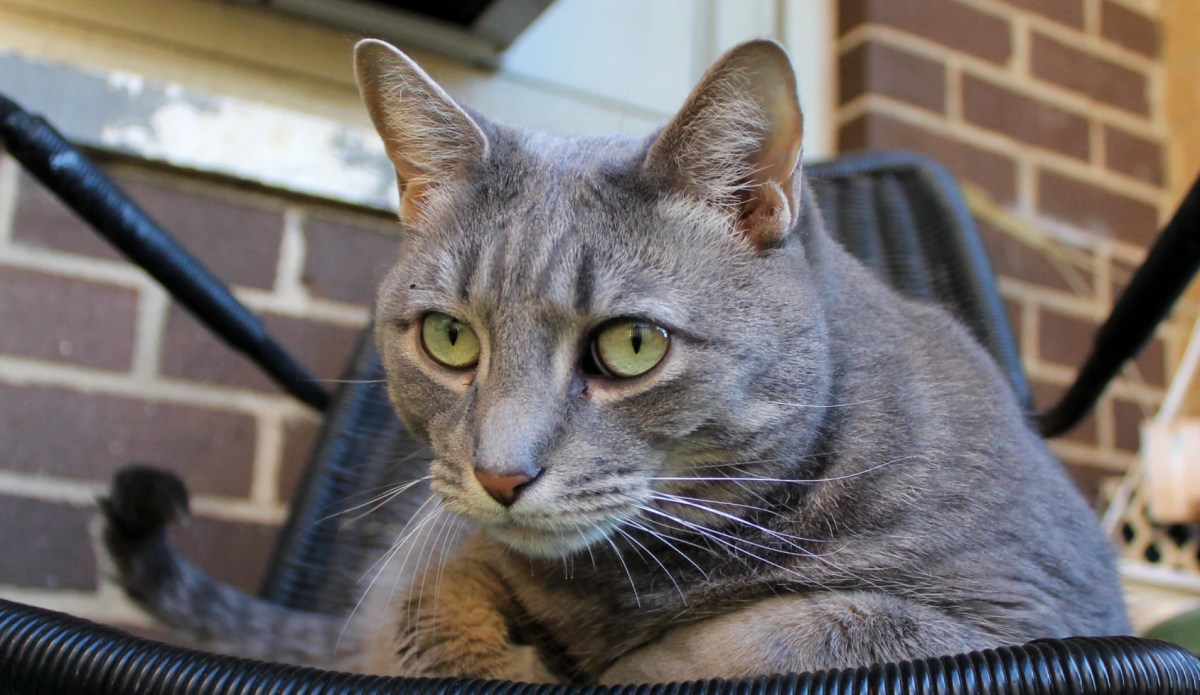
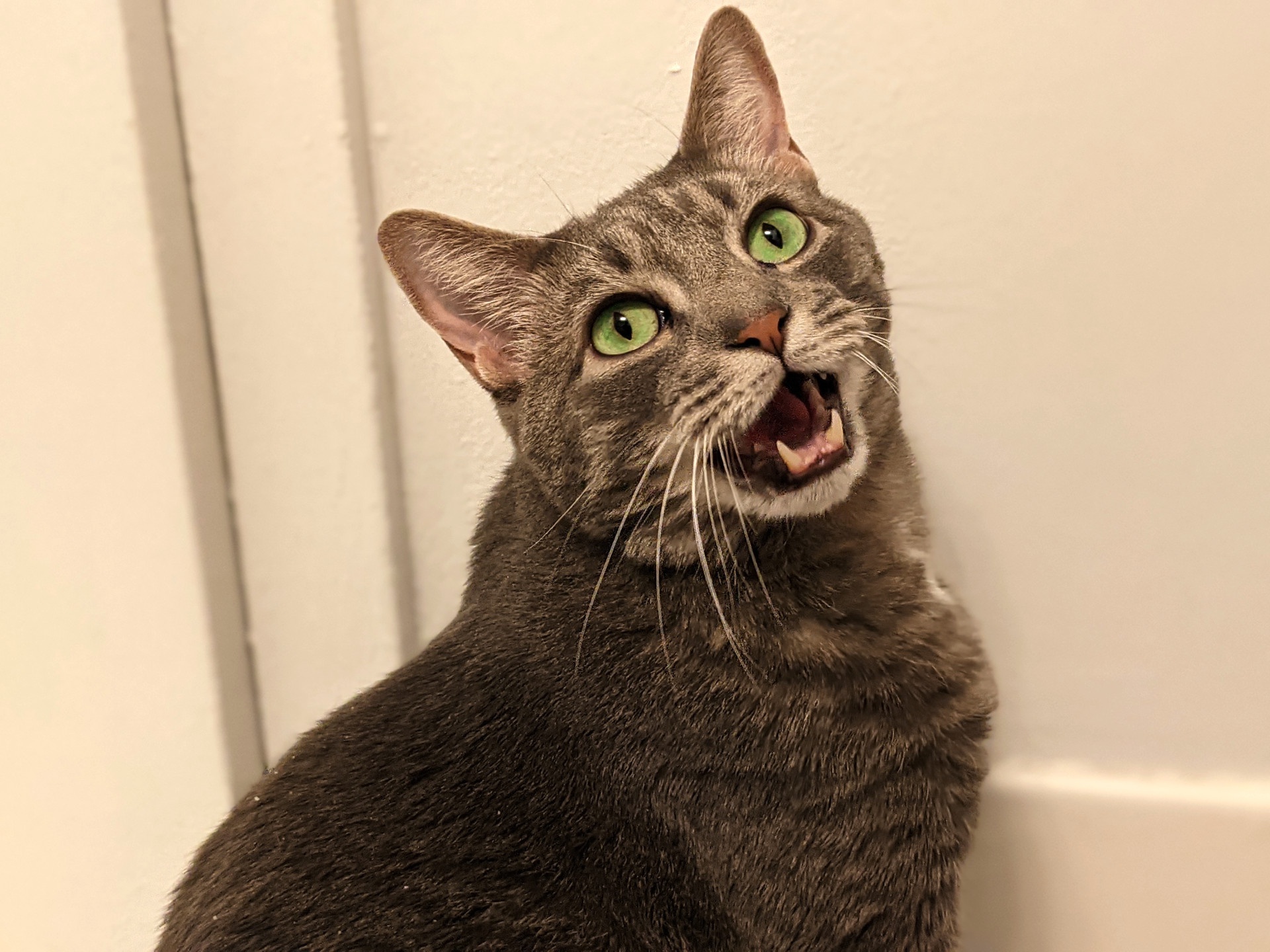
“Love is a strong word, human. I prefer ‘tolerate.’ On days when you anticipate my snack cravings before I verbalize them, you could maybe say I’m fond of you.”
Newsweek has an interesting interview with a cat behaviorist on the subject of whether cats love their humans.
Chantal Howard, a certified cat trainer with Feline Focus Training in Ottawa, told the magazine there are nine primary behaviors that indicate — or confirm — a house tiger loves his or her person. Most of these won’t be new to PITB readers, who are of course among the most cat-savvy people out there and have magnificent taste in cat blogs, but it’s still a handy way to ascertain how your feline overlord feels about you.
So how does Buddy do according to this checklist? Let’s see:
Headbutting: ✅ His Lordship is quite fond of headbutting me and favors me with dozens of headbutts throughout the day, ensuring his pheromones remain on me. You know, in case some other cat somehow comes wandering in and there’s a dispute about which furball owns me. Kneading: ✅ Considering the fact that I’ve had to toss quite a few t-shirts because of claw rips, I’d say that’s a yes. At least he doesn’t knead my face anymore, as he liked to do when he was a kitten and would take his perch on my shoulder, nuzzle up to my neck and make biscuits against my beard. Purring: ✅ Nine times out of 10, Buddy’s purr is inaudible, but it’s there. It’s a bit odd that such a talkative, loud cat barely makes a buzz. He likes to lay on my chest and purr up a storm while I rub his head and tell him he’s got admirers all over the world. Chirping: ✅ Yes! In fact, chirps and trills make up a significant part of the Buddinese language. While meows can be positive, negative or demanding (“I can see the bottom of my bowl! This is an outrage, human!”), trills and chirps are always happy sounds. Nipping: ✅ Unfortunately, yes. Licking: ✅ He grooms my hair and my beard, and when I shave he licks my face, which is pretty gross. Bringing Gifts: ❌ Negative. Then again, what kind of gifts can he bring me when he’s an indoor cat and doesn’t fully understand the concept of hunting? Exposing Belly: ❌ Does he expose his belly? Yes. Does he feel comfortable enough to snooze in my lap with his belly exposed? Of course. Does he want me to give him belly rubs? No, he emphatically does not. The primordial pouch is not to be touched! Tail Position: ✅ One of the most awesome things is the fact that Bud’s tail goes immediately into happy mode when I say “Hi, Bud!”, when I hold my hand out for a headbutt, and when I talk to him in general. His tail quivers with excitement when we play with the laser pointer or his favorite toy, and when he catches the first whiff of catnip.
So that’s 7 of 9, or 7 of 8 if we count gifts as N/A due to Bud’s hilarious ineptitude when it comes to even grasping the concept of hunting.
Bud has been known to throw up from excitement when I return from vacation, he often naps by the door when I go out, he talks to me constantly, and he’s rarely more than three or four feet away from me at any given time. All those things, plus our strong bond, have proven to me that he does love me, but it’s also nice to confirm it with a behaviorist’s criteria.
How does your cat perform on the checklist? Don’t forget to share your results in the comments.
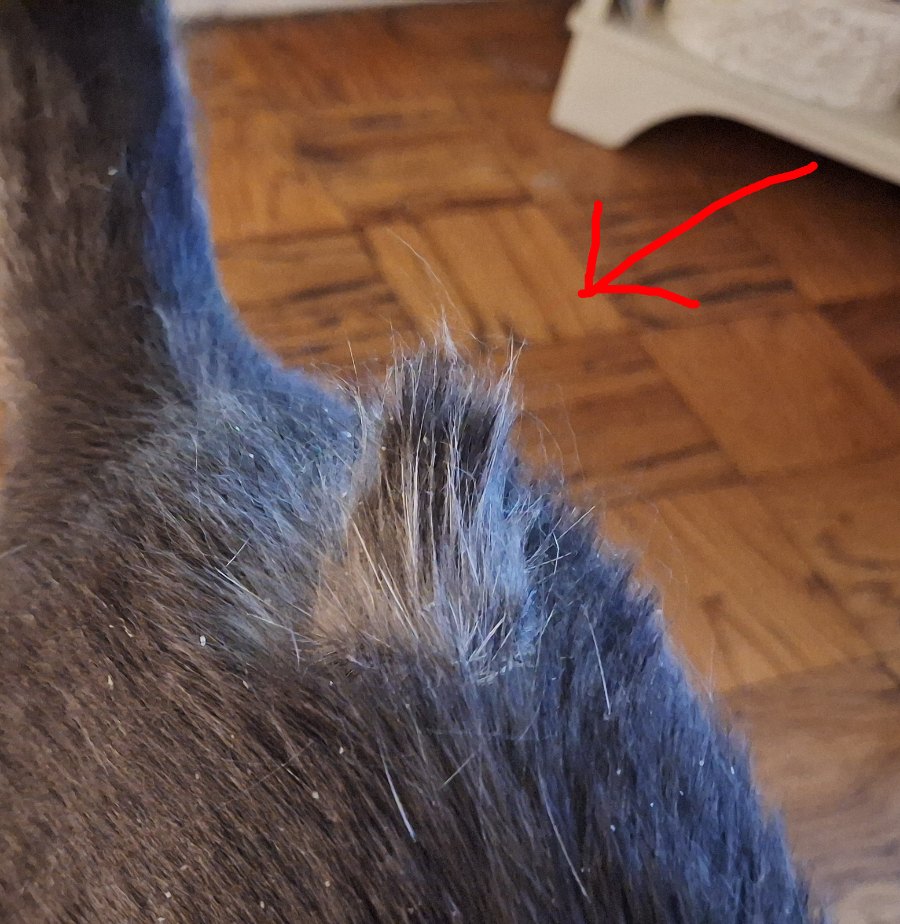
For the first time, the Budster has a patch of matted fur. Luckily, because this is a frequent problem for cats, there’s a lot of detailed advice out there about what to do.
Ruh roh!
In a first for him, Bud’s got a patch of matted fur. While it’s clear he understands I’m trying to help him, he’s not particularly keen on my efforts to comb it out.
He’ll tolerate limited brushing, but after a few attempts he pulls away. I don’t think it’s a sore spot in general. He hasn’t minded when I examined the area and he doesn’t pull away if I scratch his lower back, but his limited tolerance for the brush and his body language all say he’s uncomfortable with repeated attempts to clear the fur.
The dandruffy stuff is from the combing and looks like dead skin. His coat is normally clear of anything like that.
The mat is hard, like the bristles of a paint brush that hasn’t been cleaned properly. Bud’s white underfur is much more visible in the matted area as it sticks up.
After reading about matting in cats and the causes, I don’t think we’re dealing with fleas or an infection. I realize indoor cats can get fleas, but I very rarely see the little guy scratching himself and there’s no indication he’s in any general discomfort.
My best guess is that he’s, ahem, maybe still a little too much on the chubby side and can’t groom the area as he did when he was a younger, slimmer feline, before he moved down to Florida, joined the Del Boca Vista retirement community for cats and immersed himself in the exciting world of bocce.
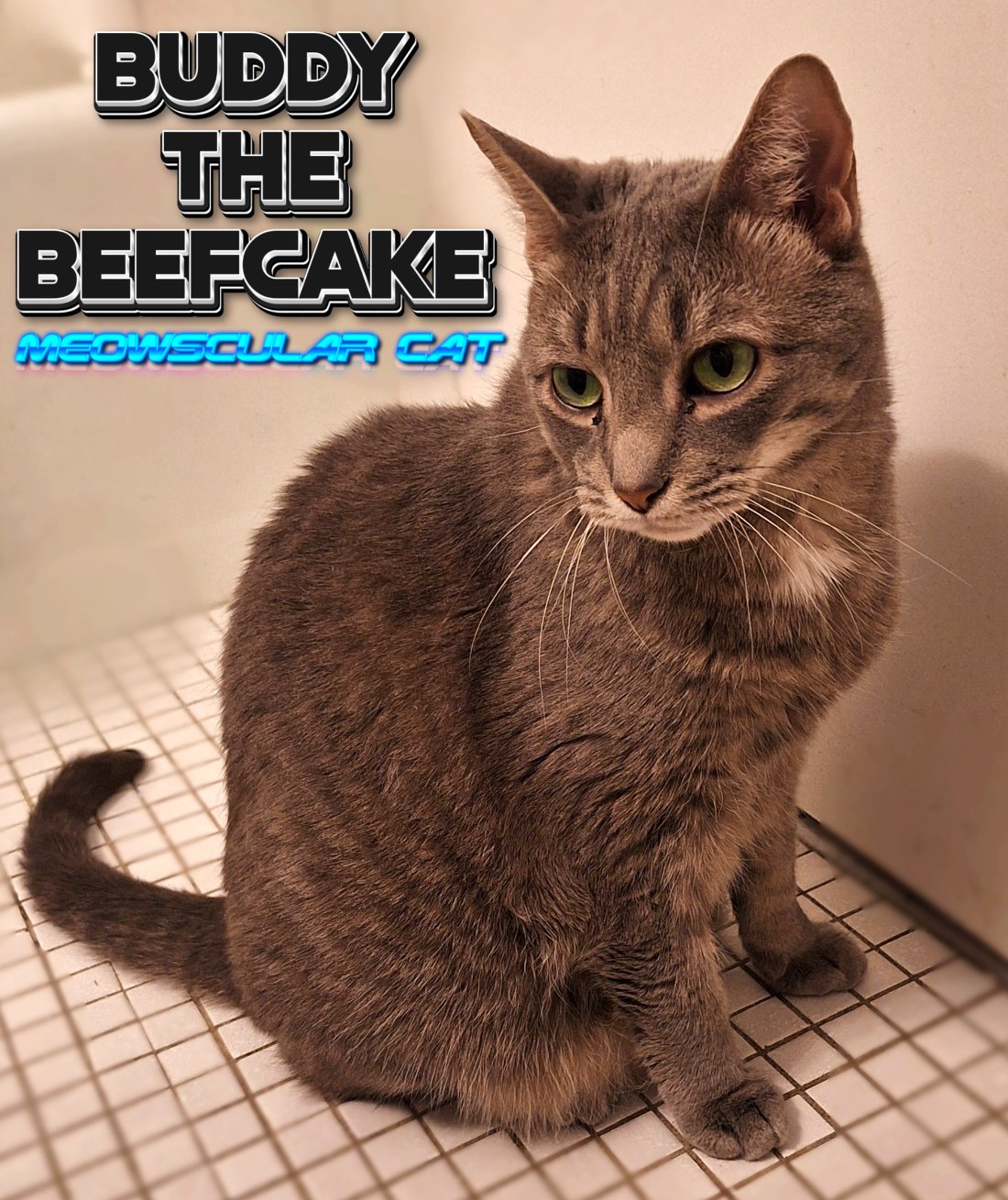
As you can see, he doesn’t look chubby and his coat is otherwise very healthy.
He’s a tiger!
Of course any talk of weight issues is very hush-hush around here. Officially, Buddy has the physique of an athletic tiger. Anyone who vocalizes doubts about that does so at their peril.
Right now my plan of attack is to get a fine metal comb specifically for jobs like this. I’ll try to remedy it with short brushing sessions and encouragement in the form of treats and praise for Bud being such a brave little guy.
If that doesn’t work, the next step would be a groomer or veterinarian. These things don’t resolve themselves, unfortunately, and the longer they’re allowed to persist, the worse the problem becomes.
Buddy the Cat clears up common misconceptions people have about cats expressing affection for their loyal human servants.
The internet is awash with listicles claiming your cats love you, insisting you’ll know for sure once you’re able to recognize the signs.
Well we’re here to tell you that love is a strong word, and if you’re lucky your cat merely acknowledges your existence, human. Here are the 10 feline behaviors most commonly mistaken for love:
Grooming: “Grooming means one thing, and one thing only: We think you’re gross and you need a bath,” Buddy the Cat says. “You’re disgusting creatures, allowing your dead skin cells to accumulate all over you without washing them off until you take those horrific ‘showers.’ I could take a claw right now, run it down your arm, and come up with enough dead skin cells to season a salad. Now that’s nasty.”
Kneading: “The Feline Propaganda Ministry seeded a story that kneading is some sort of affectionate behavior left over from kittenhood, and that by kneading you, we’re identifying you as our surrogate moms. That’s hilarious,” says Buddy. “We’re simply tenderizing our meat.”
Head boops: “In ancient Rome, slaveowners would mark their property with brands or tattoos saying ‘PROPERTY OF POMPEY MAGNUS’ and that sort of thing. That’s what we’re doing with head boops. We’re using the pheromone glands on our heads and cheeks to mark you as our slaves, so other cats don’t try to lay claim to you.”
Bringing you presents: “You humans eat the most disgusting food, like broccoli, potatoes and oranges, which are particularly revolting. When we bring you presents, we’re trying to fatten you up for later when we eat you.”
Sleeping on you. “You’re warm. End of,” Buddy explains. “By sleeping on top of you, we also ensure you aren’t going anywhere, and will be available to fetch us snacks should we wake up hungry.”
Putting our butts in your face: “You like that? Sniff it, human servant!”
Tails held straight up: “The tips of our tails are actually quite sharp, and we brandish them like weapons. Weapons that say ‘There will be no disobedience or dilly-dallying here. Run along now and fetch us some yums.'”
Meowing: “There is no equivalent for ‘please’ in meowenese. We meow because we know you’re hopelessly obtuse creatures and you can’t read the simplest tail, ear or whisker movements. Meowing is like speaking slowly to a child who’s had too many head injuries. ‘Massage…my…head…human. That’s a good human!'”
Purring: “A purr is just a quiet roar. It means we’re happily thinking of ways to kill you.”
Tolerating you: “Humans often mistake grudging acceptance for love. Just because we tolerate you doesn’t mean we love you. It means you provide useful services, but if that calculus should change — say, by providing subpar treats or not serving wet meals as delicious as the ones served by the neighbor two houses down — then we’ll simply move house.”
Underestimate feline intelligence at your peril, humans!
The Guardian’s Tim Dowling thought he was writing a column about his dumb cat when he inadvertently described how the cat’s got him trained.
The short of it’s that Dowling and his family have a cat and a dog who thankfully get on really well and have become best pals. The dog was in desperate need of a grooming session recently, and when Dowling’s wife brought the pup home after getting a trim, their cat regarded the dog warily and bounced. He returned from the family’s yard only to eat and kept a watchful eye on the dog each time.
In Dowling’s estimation, the cat didn’t recognize the dog after grooming, which makes him stupid.
Yet cats can tell when their humans are coming home long before the key turns in the lock, probably due to their incredible hearing (detecting footfalls), their remarkable olfactory abilities, or both. They know where we are in the home at all times because they can track our movements several different ways, and they can even tell where we’re headed in a completely pitch black room thanks to their whiskers, which can pick up micro-changes in air density — but Dowling thinks they can’t recognize a groomed dog.
The more likely explanation is the dog smelled different, which upset the cat, or the haircut itself offended kitty. Felines are, after all, notoriously averse to change.
If your cat starts acting weird after you’ve rearranged your furniture, it’s not because the cat is an idiot who can’t navigate the room. It’s because felids of all kinds don’t like changes to their territory or their belongings, especially when those changes happen without warning. (And make no mistake, if your cat rubs up against something, whether it’s a couch, your dog or even you, you are included in that tally of his or her “belongings.” A cat is marking you with scent glands when she rubs against you, and what do you think scent-marking is for?)
Dowling disses feline smarts and praises them for their perseverance in the same sentence, but hilariously doesn’t realize his cat’s been conditioning him to provide treats on demand:
But cats are actually pretty stupid – their approach to problem-solving is only notable for bottomless persistence. As I sit at the kitchen table in the morning pretending to answer emails, I can hear the cat behind me, methodically clawing at the door of the cupboard where the cat food is kept.
I say: “Don’t be insane – I fed you half an hour ago.” But I think: I really don’t want to repaint that cupboard door. After about 10 minutes, I give in.
Later, he describes the same sequence of events:
The next day while the dog is at its appointment, I sit with my laptop in the kitchen, waiting for the driving rain to stop before I cross the garden to my office shed. Behind me the cat is sitting on its hind legs, working on the cupboard door with both paws, like a boxer hitting a speed bag.
“I can’t feed you three times in the same morning,” I say. “Imagine how weak that would make me look.” Ten minutes later, I give in.
Without taking the column too seriously, it’s obvious Dowling is a man who doesn’t know when he’s being played by his furry overlord.
The “stupid” cat has trained Dowling to feed him snacks on cue: Sit in front of the cupboard and do annoying things for a while, and the human will relent and dispense the good stuff.
“Do my bidding, human, or face my considerable wrath…and annoying meows!”
Give in once and a cat will return to the same method again. Give in twice and it’s pretty much over. If you thought kitty was persistent before, now you’re going to see a whole new level of patience exhibited by your feline master if you get ideas about changing the routine.
It happens to the best of us, especially when in our human arrogance we underestimate our little friends.
When Buddy was still pretty much a kitten, I thought I was training him to come in from the balcony by shaking a treat bag. In reality he was training me, as evidenced by the fact that when I called him to come in and didn’t have a bag of treats at the ready, he would stop right at the threshold of the door and refuse to move until I bribed him with a snack.


 Pain In The Bud