Do You Speak Cat? This Quiz Tests Knowledge Of Real Feline Language

Studies show most of us are pretty bad at interpreting our cats’ moods. A research team in Australia wants to change that.

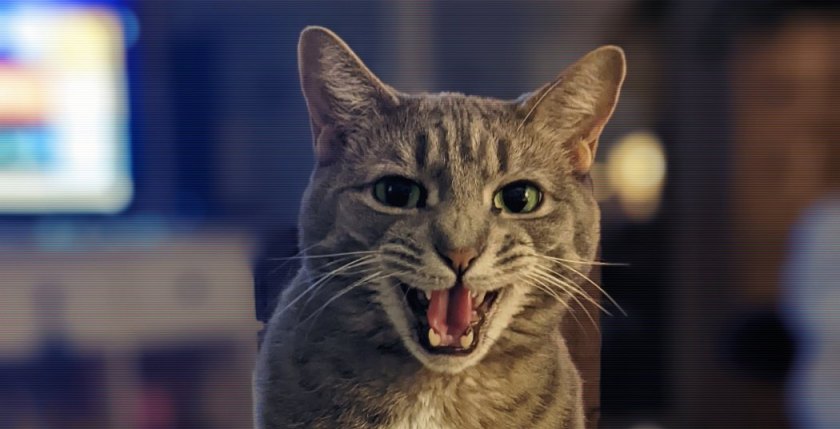
Cats are constantly telling us how they feel, but many of us aren’t listening.

We’re not talking about chirping, trilling and meowing, although those are some of the ways our cats try to communicate with us.

While they might seem protective of their own thoughts and feelings, cats are actually transparent, and they can’t lie.* Their tails, ears, whiskers, facial expressions and body language all broadcast a cat’s mood.

The question is, are we picking up that broadcast?

In The Conversation, the University of Adelaide’s Julia Henning introduces us to a quiz she designed to answer that question, and invites us to take it.

The goal: to correctly assess each cat’s mood. What I liked most was that we’re asked to evaluate videos — clear, well-lit high resolution clips — instead of the low resolution stills that are often used for quizzes like this.

Sir Talks-a-lot

Henning has been studying the human-cat communication issue because when we misread cats, there’s a good chance we’re stressing them out. Henning and her team published the results of a study in September in which 368 participants from Australia were asked to evaluate a series of clips human-feline interaction.

It turns out they didn’t do so well at reading the signs that a cat is agitated, stressed or doesn’t want to play.

“For videos of cats who weren’t playing and were showing subtle negative cues (such as sudden tension in the body or avoiding touch), participants only recognised the negative cues about as well as chance (48.7%),” the authors of the study wrote.

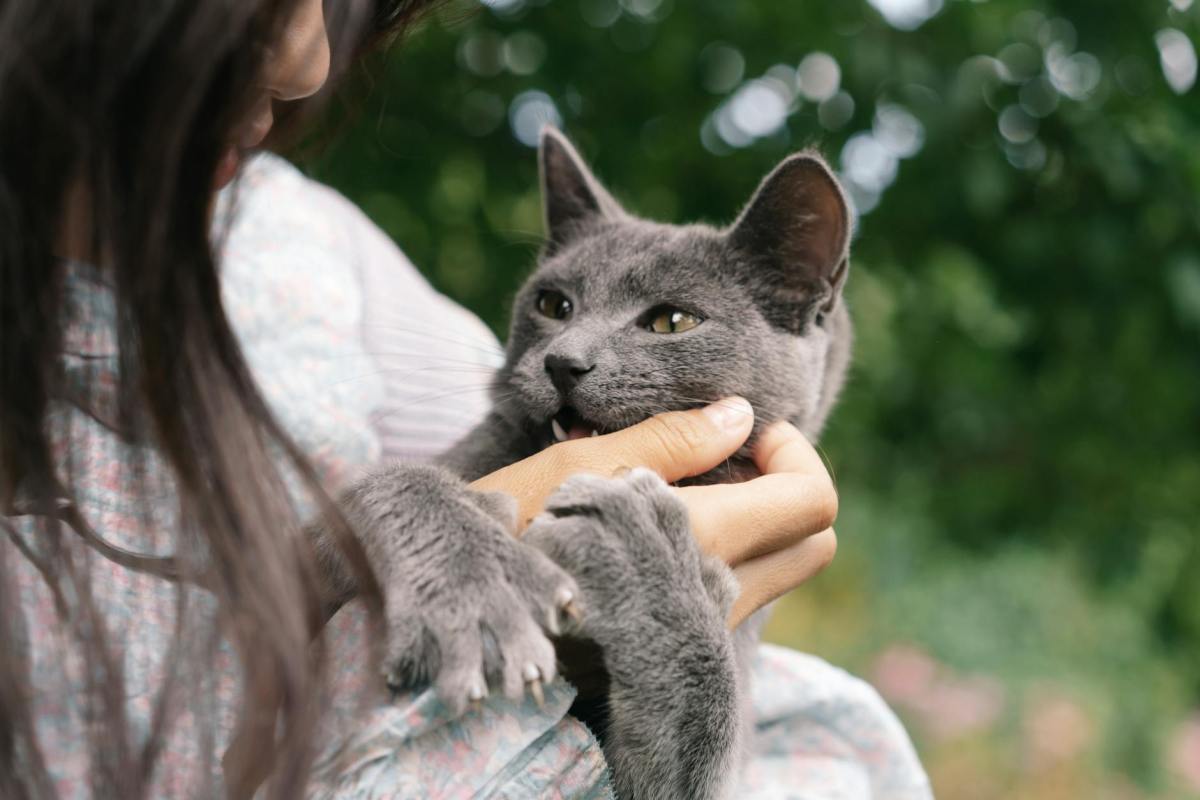
Even when study participants correctly read a cat’s ears, tail, whiskers and body language, some of them indicated they’d do things that would unknowingly make a cat more agitated and stressed. A classic example is trying to pet a cat’s belly and misinterpreting their derpy way of trying to block you as a playful gesture.

Did you know? Approximately 96% of Buddy’s communication is related to yums.

In the paper, which was published in Frontiers in Ethology, Henning and her colleagues lay out the case for making sure we — the people who take care of cats — are sensitive to what our little buddies are feeling.

It’s not just about strengthening the bond, although that’s an important part. It’s about reducing stress and miscommunication, and increasing quality of life.

Cats are incredibly sensitive to our actions and moods because we are the most important living beings in their lives. We feed and house them, and we’re their pals. If we’re constantly subjecting them to play they don’t like or overstimulating them, they get stressed, and stressed cats can become depressed, sick or resentful cats.

If we want to make sure our buddies live their best lives, we have to understand what they’re trying to tell us.

(*) Except when it comes to food. When food is involved, these innocent, cute little furry creatures become master manipulators and can convince anyone they’re starving.

Note: The first version of this story linked to the study page twice when the first link should have pointed to the quiz. It’s fixed now, and email subscribers can follow the link through this version of the story. Apologies for the error.

Header image credit: cottonbro studio/Pexels

‘What Owning A Cat Does To Your Brain’

Positive contact with our furry friends releases happy chemicals for both human servant and feline master, improving their bond.

Happy Cater, uh, unday!

We’ve got no immature cat humor for you today, but I thought PITB readers might be interested in this essay from The Conversation, which despite its ominous title actually goes into some detail about research showing the positive effects of bonding with a cat.

Affection between you and your feline friend results in a burst of oxytocin — the happy brain chemical — for both of you.

But crucially (and here’s where I feel validated for constantly preaching this), your cat enjoys the benefit only if the little one is securely attached and is not forced into interaction.

I’ve said it so many times, I feel like a broken record, especially because the web is saturated with articles that ask “How Can I Make My Cat Like/Love Me?

And the answer, of course, is that you can’t.

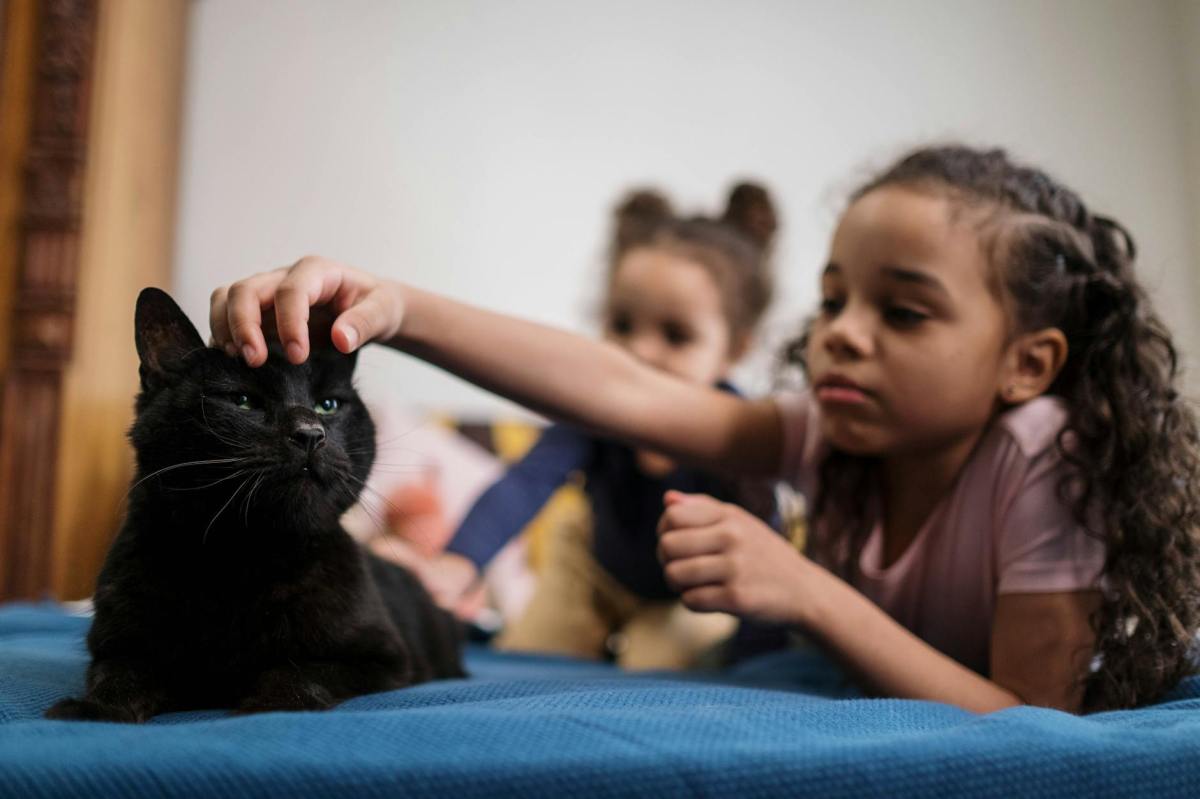
That’s part of what makes cats so awesome. We have to earn their trust and affection, and a major part of that process is respecting our cats’ feelings. That means we let them come to us, we stop petting them when they’ve had enough, and we don’t prevent them from leaving when they decide they want to lay on the couch or the floor instead of our laps.

Credir: TIVASEE/Pexels

Cats grant us benefits beyond oxytocin boosts, of course, and the linked article goes into that as well. It’s well worth a read, even if you’re an old pro at cat whispering.

President Buddy: Not Funny!

It’s obvious I model President Buddy’s behavior after a certain someone in addition to dialing his own traits up to 11, but in the wake of recent news, a story I’d written no longer feels funny.

Not because it was offensive, but because satirizing current events just feels inappropriate with all that’s been going on, from our extreme polarization and political violence, to the sad state of global affairs.

At the same time, I spent quite a bit of time making another denomination of Cat Dollars, and since there’s no longer any satirical story for it, I figured I’d share it here.

President Buddy sure does like seeing his portrait everywhere. This time I skipped the powdered wig and gave him a more modern appearance:

Meowster Money and Meowster Delicious are the treasurer and secretary of yums, respectively. A thousand cat bucks is a lot of cans! (Or snacks.)

In the meantime I’ve been working on some designs I hope to turn into t-shirts and possibly other things like prints. They range from a regal-looking lion to a jaguar roaring in the night with a retrofuturistic feel. Watch this space for more details in the near future!

Cat Brains Age Like Ours, Research Shows

Lifelong changes in the brains of felines more closely resemble aging in human brains. Studying cognition and cognitive decline in cats could help us better understand brain aging in general, scientists say.

For almost the entire history of modern science, rodents have served as a stand-in for humans in research into everything from metabolism to autoimmune responses.

They’ve even been the go-to for studies examining cognitive decline, diseases and neural mechanisms.

But now research shows there’s a better model closer to home. It turns out cat brains more closely resemble human brains in many respects, particularly in terms of aging and its effect on our mental faculties.

From Nature:

“As cats age, their brains show signs of atrophy and cognitive decline that more closely resemble the deterioration seen in ageing humans than do the changes in the brains of ageing mice, according to findings presented last month at the Lake Conference on Comparative and Evolutionary Neurobiology near Seattle, Washington.

The results are part of a large project, called Translating Time, that compares brain development across more than 150 mammal species, and is now expanding to include data on ageing. The hope is that the data will aid researchers trying to crack the causes of age-related diseases, particularly conditions that affect the brain, such as Alzheimer’s disease.”

One drawback to using mice is they simply don’t live long enough for their brains to deteriorate in ways many human and non-human animals do, scientists told Nature. They also have species-specific mechanisms that ward off certain degenerative diseases, including Alzheimer’s.

Not only do cats live longer, but their brain development and decline mirrors our own on a shorter time scale, scientists say. Tracking brain changes in cats is also more helpful than doing the same with dogs, who have been radically changed by breeding. Felines are mostly left to mate as they please, meaning they’re closer to their natural form, allowing for more useful data.

a cute cat lying on the couch
Credit: Pranjall Kuma/Pexels

Looking to our furry friends makes sense anecdotally as well. Every cat lover has seen the unfortunate confusion and forgetfulness that can afflict senior cats. Older cats tend to sleep a lot more, which is significant for a species notorious for its extravagant snoozing habits.

Thankfully, efforts like the Catage Project do not result in more cats being used in laboratory experiments. Researchers draw their data from veterinary records, brain scans and blood samples.

When asked about how his species could help humans better understand things like cognitive diseases and decline because of their similarity to humans, Buddy the Cat declared the research “fake news.”

“Where’s my bumblebee toy?” Buddy asked. “Did you hide my bumblebee toy? I’ve been looking everywhere for it!”

When told the toy was right were it’s supposed to be, in his toy basket, the 10-year-old tabby grew irritated.

“Fake news!” he meowed. “You put it back there just to mess with me. I’m onto your games! Now where did I put my favorite milk bottle cap?”

Tiny Sand Cats Have The Largest Ranges Of All Felines, Study Says

The little-known, Lilliputian species of feline thrives in some of the harshest environments on Earth, proving cat species are capable of remarkable adaptations to their surroundings.

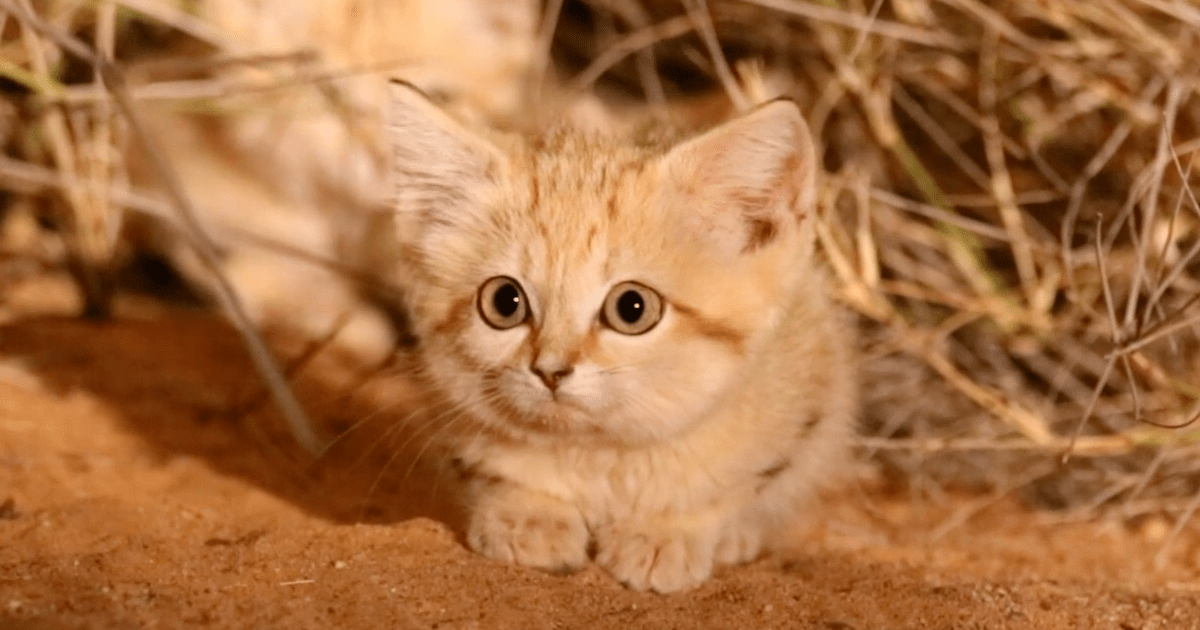
There’s a lot we don’t know about felis margarita, so much so that kittens of the elusive and stealthy species weren’t photographed in the wild until 2017.

Now a study has unveiled a surprising fact about sand cats: despite being tiny in stature, they occupy huge ranges that can rival the size of territories claimed by big cats like tigers and jaguars. One cat claimed 1,758 square kilometers — about 1,093 square miles — for himself according to Gregory Breton, the study’s author, who said the cat’s behavior showed sand cat ranges are “considerably larger than previously estimated.”

That individual maintained his impressive range for more than six months before moving on. His behavior and the movement of 21 others tracked via radio collars suggests the species could be semi-nomadic, moving or adjusting their ranges as they look for prey and water in some of the hottest, most arid environments on the planet.

“If true, this type of movement in response to rainfall is previously unrecorded among wild cat species,” wrote Breton, who is managing director of the cat conservation group Panthera in France.

In addition to following sources of water, the cats may maintain such large ranges because prey are more spread out compared to biomes like jungles, forests and wetlands where other species of cats make their homes.

(Above: Tap or click the images for full resolution versions.)

Impressive ranges weren’t the only surprise the tiny cats had for researchers. Breton and his colleagues managed to catch and examine more than 40 sand cats before releasing them back into the wild and noted they were all healthy, with few scars, no fresh wounds and no broken teeth.

The lack of wounds “means that it is likely that sand cats exhibit little territoriality and tolerate each other across their ranges,” Breton wrote  “This beloved cat may indeed share habitat with others of its species — maybe their perception does match their nature, at least towards other sand cats.”

Sand cats can be found in the Algerian Sahara, the deserts of the Arabian Peninsula and countries like Chad, Niger and Morocco. The Panthera team tracked the Lilliputian felines in the latter country, traversing the desert and arid landscapes of southwestern Morocco where temperatures peaked at 122 degrees Fahrenheit (50 degrees Celsius) during the day.

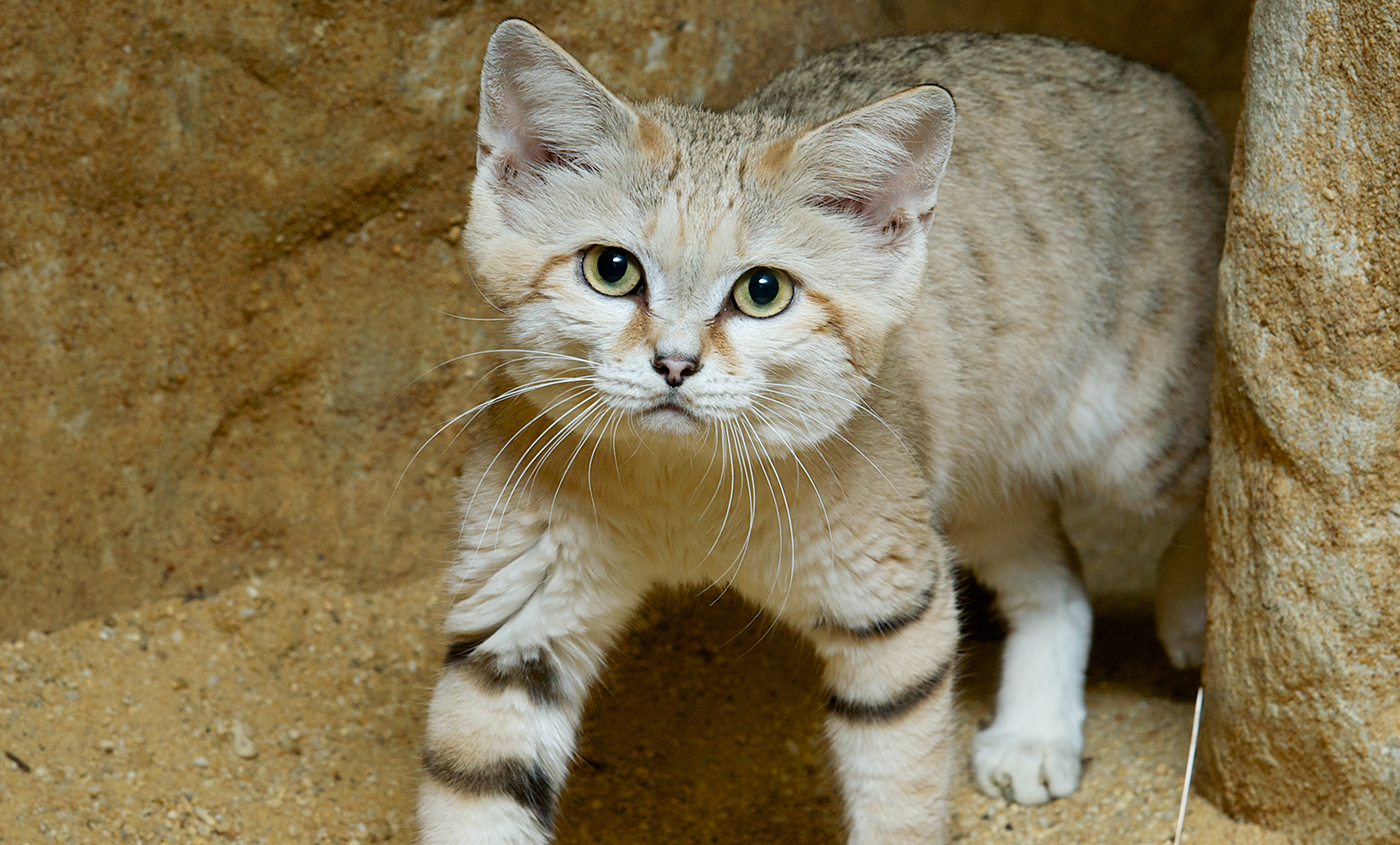
Sand cats have what Breton describes as “whimsical faces,” sporting wide, swept ears to go along with the general horizontal appearance of their heads.

They have golden, classic tabby markings and sand-colored fur with well-defined dark rings on their limbs, allowing them to expertly blend into their surroundings. Sand cat camouflage is so effective and the species is so quiet that one of the best ways to find them is at night, using search lights to pick out their reflective inner eyelids amid the desert landscape.

They’re also considerably smaller than house cats, weighing up to 7.5 pounds.

Breton said his team’s research is critical for estimates of sand cat population, which in turn will help authorities determine the conservation status of the elusive feline.

20130418-001CN
Credit: Panthera 

Study: Even Experienced Caretakers Give Cats ‘Unwelcome Affection’

When it comes to petting cats, less is more. Not everyone knows that.

By chance, one of the first things I saw Tuesday in my post-wake-up browsing was a short video of three guys standing in a triangle formation, each of them with a puppy. A drum recording began, and the men began drumming an overturned pot in the middle with the puppies’ paws.

The dogs, of course, had no idea what was going on. They were confused and stressed. Then I saw this from the official TikTok page of Imperial Point Animal Hospital in Delray Beach, Florida:

That’s a veterinarian abusing a kitten.

It might not be overt abuse. She’s not hitting or screaming at the poor cat. But she’s taking a sentient being with its own feelings, likes and dislikes, comforts and discomforts, and using it as a toy for clicks and likes on social media.

I thought about that when I read the newest study from Nottingham Trent University and the University of Nottingham, which looks at the way people interact with their cats and how their behavior may or may not align with what cats prefer and what they’re comfortable with.

Although Bud and I have a deep bond formed over more than seven years of spending time together, establishing trust, mutual respect and love, he would tear my face off if I did to him what the vet tech is doing to the kitten in the above video.

And you know what? He’d be justified, once he got over the shock and wondered if I’d been replaced with a doppleganger.

The UK study involved more than 100 felines at Battersea Dogs and Cats’ London cattery, with scientists recording interactions between humans and cats via a GoPro camera in a large pen where people can interact with cats one-on-one. There were 120 human participants of various ages and from different walks of life. Each person interacted with three cats separately.

Researchers looked at whether the cat or the human initiated interaction, where the human touched the cat, whether the human restrained the cat, and the cat’s response.

They also collected information on each human participant, such as how many cats they have at home and how long they’ve been caring for felines. Human participants rated themselves on how well they know cats and how well they take care of them.

They used a system that corresponds to the below image to grade physical affection. The image is mostly self-explanatory, but to be clear, the green areas are where cats like to be touched, the yellow areas are “meh,” and the red areas are no-go zones for most cats:

greenyellowredcatareas

In earlier studies, the team established what many cat caretakers know: Allowing cats to initiate physical interactions, going easier and lighter on petting, letting cats control how long the interactions last, and avoiding any kind of restraint are “best practices” for petting cats. They reaffirmed that scratching cats under the chin, rubbing their cheeks and forehead are “the best ways to increase their affection and reduce aggression.”

That might seem obvious, but in research there’s an important distinction between knowing something (or thinking you know it) and proving it with research. It’s important to prove it, and to forgo assumptions, to produce credible and repeatable experiments.

Animal behaviorist Lauren Finka, lead author on the new study, said although the above may seem like common knowledge among experienced caretakers, that’s not always true, and it’s not always reflected in their behavior.

“Our findings suggest that certain characteristics we might assume would make someone good at interacting with cats—how knowledgeable they say they are, their cat ownership experiences and being older—should not always be considered as reliable indicators of a person’s suitability to adopt certain cats, particularly those with specific handling or behavioral needs,” Finka said.

We should point out here that these are “best practices” for establishing a healthy, trusting relationship with cats, and taking their feelings into consideration. Lots of people might force their cats to do things without much push back, but that doesn’t mean the cat is happy. No one’s perfect, and there are always things we can learn about how to do better by our furry friends.

Finka also said she hopes people who run shelters and rescues take the research into consideration. That’s because some people run into the same problems I did: When you’ve never had a cat, and/or you don’t fit the profile of what people think a “cat person” is or should be, you could encounter resistance or skepticism from shelter staff.

One volunteer at an animal shelter asked me if I was adopting a kitten for my kids or girlfriend, because it didn’t occur to her that I’d want a cat. Some shelters require references from a veterinarian, which you can’t get if you’ve never had a pet before.

“Importantly, within shelters, we should also avoid discriminating against potential adopters with no previous cat ownership experience,” Finka said, “because with the right support, they may make fantastic cat guardians.”

For us, it’s more confirmation of what we’ve always believed: The more you take your cat’s feelings into consideration, and treat the little one with the respect he or she deserves, the happier your cat and the deeper your bond will grow.