Is your cat a genius or not the sharpest claw on the paw? The University of Maine’s Cat Lab wants your help as researchers seek to measure feline intelligence.
Buddy apparently has brawn and brains, according to a “cat IQ test” by researchers at the University of Maine.
The test is a survey designed by the people who work at the university’s Cat Lab, and it aims to employ some of the same techniques used to measure the intelligence of young children and dogs.
The test asks questions about memory, how closely felines read nonverbal cues from their humans, how attuned they are to human emotions, whether they’ve learned tricks, and whether they’ve improvised solutions to obstacles they’ve encountered.
I gave each question serious thought and tried to eliminate my own bias to the best of my ability.
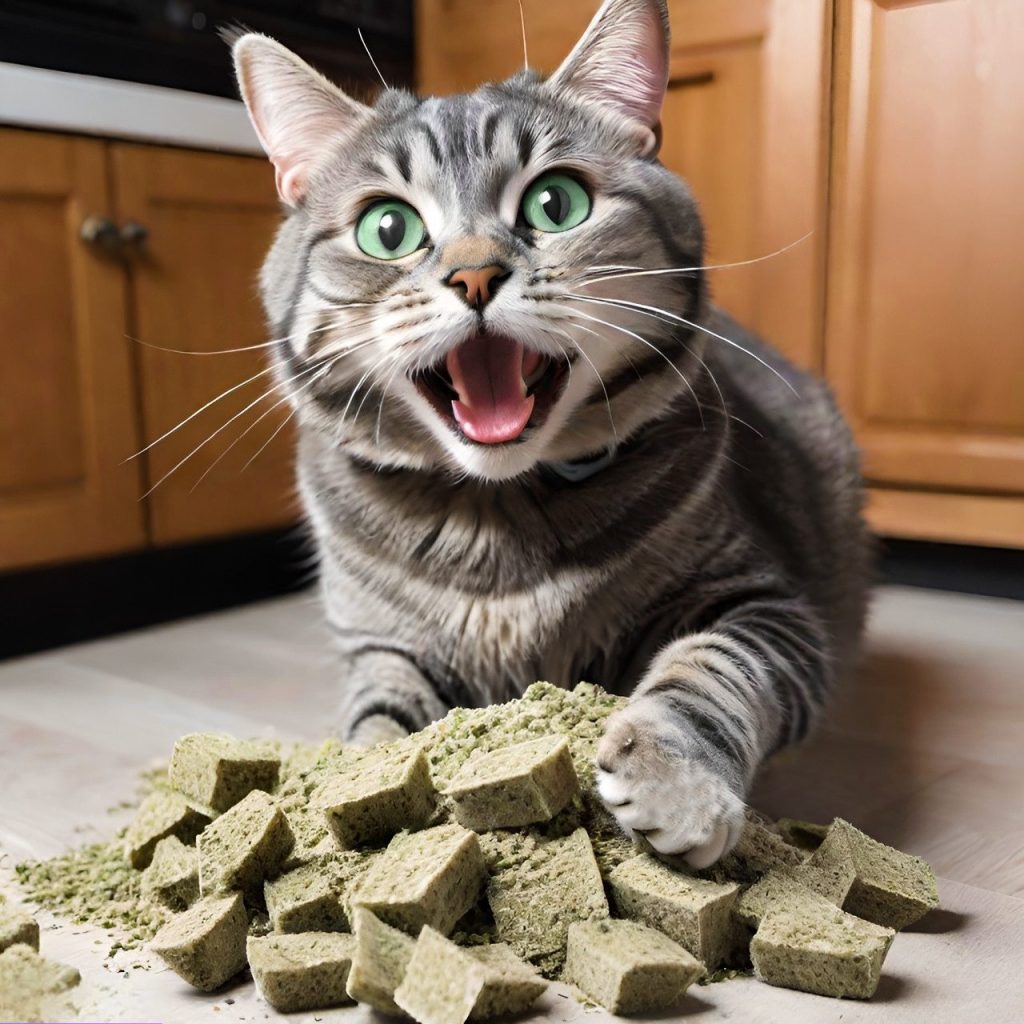
“This is your brain on catnip. Any questions?”
For example, there’s absolutely no question Buddy is extremely communicative, curious, bold and friendly. He’s also figured out things on his own, like how to open doors and how to best manipulate me for as much food as possible. I’ll never forget watching with fascination when, as a kitten, he figured out how to wedge his body against the frame of my bedroom door with his feet while using his front paws to turn the handle.
On the other hand, he’s a hilariously inept hunter, he’s done some spectacularly dumb things, and he went through a whole phase in which he “boxed” the cat in the mirror before figuring out it was a reflection of himself.
I can still hear the “THWAP THWAP THWAP!” of his little kitty paws against the glass and his accompanying trills as he did battle with himself. To be fair, that was also in kittenhood, and he eventually figured out there was no other cat.
As I’ve detailed in this blog previously, Bud also seems to possess the precision of an atomic clock when it comes to meal times, and if I so much as shift in my chair as meal time approaches, he springs up and trills at me like “Are we going to the kitchen? Come on, dude, it’s Food O’clock! I want turkey, beef or tuna!”
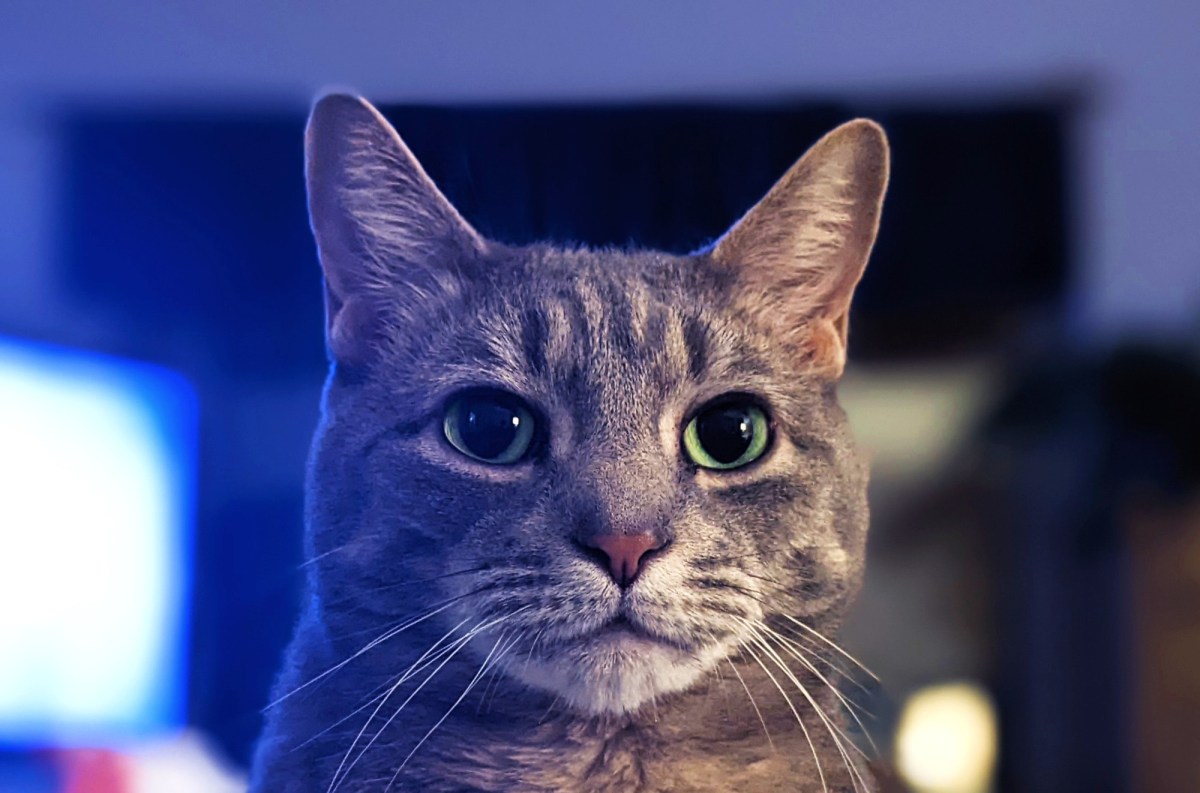
According to the survey, Buddy has an IQ of 64 on a max-70 scale, good enough for the “Felix Forecaster” tier and just below “The McGonagall Mastermind.”
It’s probably for the best that he’s not in that very top tier anyway. We’re talking about a cat intelligent enough to understand I hate the sound of the flap on his litter box squeaking on its hinges, and has subsequently weaponized it to get me out of bed. If he gets any smarter, I’ll probably wake up to a machine that slaps me every time I hit the snooze button.
You can take the survey on behalf of your own cat(s) here. Don’t forget to share your results!
Buddy’s personality is galactic in size, his emotions emblazoned in neon, his opinions shared through a bullhorn.
I used to hate cats.
When I’d hang out at my friend Dave’s house as a teenager, the little shits were everywhere, climbing all over everything with no boundaries and apparently no limit to their numbers.
Dave’s family had between 10 and 12 cats at any particular time, a small army, and as far as I could tell they were little more than inscrutable, uncommunicative tribbles, barely sentient animals who didn’t listen to anyone, could not be told “no,” and were going to stick their little faces in your food or drink no matter how many times you told them to get lost.
Worse, I’d have to dose up on Benadryl just to last a few hours and often left because my eyes were gumming up and my nose was clogged.
There were times when I sat in my car, idling for a half hour with the windows down and heat on blast on frigid nights, waiting for the worst allergic symptoms to subside. I was worried I’d be pulled over and a cop, seeing my half-shut, bloodshot eyes, would decide I was driving stoned or drunk.
Even when another friend adopted a friendly, cuddly tuxedo who became the first cat I truly interacted with, even when I realized I could safely play with one or two cats without getting sick, and even as I was actively looking for a feline of my own, I didn’t think they were intelligent or that it was really possible to meaningfully communicate with them.
At best I’d get a tribble of my own, something to feed and care for in my black depression to take me mentally out of myself.
My little pal, probably around 10 weeks old.
Then Buddy came striding out of his carrier like a furry little Genghis Khan and started conquering shit.
The furry little conqueror
I was prepared for a kitten who might dive under the bed and refuse to emerge except to sneak a bite or take a sip when the coast was clear. Lots of guides for first-time adopters warned the adjustment period for a new cat or kitten could be extensive.
What I got was a boisterous, bold, imperious little dude who was kind enough to allow me to continue sleeping on my bed, which was now his bed. I got a companion who demanded my attention, wanted to be involved in everything, and was going to let me know loudly and unambiguously what he liked and what he didn’t. He took up a regular position on my shoulder, like a parrot with a sea captain. We were — and still are — inseparable.
Buddy’s personality is galactic in size, his emotions emblazoned in neon, his opinions shared through a bullhorn. There’s a vibrant mind in his little head.
If they met Bud, even the most stubborn animal haters, the kind of people who refuse to acknowledge animal intelligence because they think it diminishes our own, would know they’re dealing with a person even if they may not admit it.
That is why this site exists. It’s why I write about cats, why I’m invested in their welfare and why it hurts my soul to hear about so many casual incidents of cruelty committed by humans toward felines.
When I hear about people gunning down cats or pouring lighter fluid on them, I think about what might have happened if Bud ended up with someone else, and I think about the cats who are just like Bud who are killed or seriously injured by cruel humans engaging in senseless violence.
There is no question that those cats suffer, that they feel pain, anxiety and terror as seriously disturbed people inflict pain on them for “lulz,” or because they think hurting cats might earn them Internet Points in the bowels of the web where diseased minds congregate to share shock videos.
“Dude, you can’t be serious.”
The fact that Buddy thinks he’s a hulking tiger is a running joke here, and it’s true. He thinks he’s the baddest boy on the block, and he doesn’t see any dissonance between cosplaying as the Buddinese Tiger one minute, and running behind my legs when he gets scared the next.
Mighty and brave!
It’s been 10 years now, and I’ve pretty much accepted the fact that he can’t be stopped from pawing at the big screen door leading from the living room to the balcony.
But every time he gets his claws caught and he’s left hanging, he starts crying for me. He sounds like a baby, and all he wants in that moment is his Big Buddy to come and pick him up, gently slide his claws out, and rub his head while telling him what a brave and tough little guy he is.
He responds by puffing his chest out and purring. He’s probably thinking “Yes, I am brave, aren’t I? I endured that ghastly ordeal and only cried a little bit!”
Buddy with a very Buddy look on his face.
It’s not all wonder and awesomeness, of course. I never would have guessed an animal could be so resourceful and clever when it comes to being annoying. Bud graduated from cackling gleefully in the dark as he terrorized my feet at night, to repeatedly punching the flap on his litter box because he knows the squeak drives me crazy. He’s also fond of standing on my head and shrieking at full volume into my ear. Not “fill my bowl” or “I need water,” because those needs are taken care of immediately before bed.
The reason he wakes me up, why I’m ripped out of restful slumber by his high-pitched kitten voice, is because he wants me to wake up and be Buddies with him. He wants to hang out.
So as annoying as he can be, and as much as I really, really hate losing sleep, I can’t be mad at him. If only humans were so pure in their intentions and non-judgmental.
Cats are social animals
A lot of people say their cats ignore them or at best acknowledge them with a twitch of their radar ears. When I call Bud, he responds by happily padding up to me, tail raised straight up or curled like a question mark.
That’s because he knows I’ll never hurt him. He knows I’ll never force him to do anything he doesn’t want to do, nor will I grab him, subject him to unwanted petting and refuse to let him go. Trust goes a long way in human-feline relationships. In some ways, it’s everything.
Schemeowtics for Buddy the Cat. Note the huge meowscles.
Part of earning that trust means understanding my little pal, learning from him and learning about him. I’ve read more about felis catus than I ever imagined I would, and Bud’s smarts sparked a years-long deep dive into animal cognition that still has its hooks in me.
The belle epoque of feline research
For decades, dogs were the only domestic pet scientists bothered with. Cats were legendarily uncooperative, and the general consensus was that trying to wrangle them wasn’t worth it. If a research team managed to get 150 people to bring their cats into the lab, they were fortunate if a third or a fourth of them worked out.
Over the past 10 years or so, that’s changed as a new generation of scientists began to think in feline terms. Now the research teams come to the cats instead of the opposite, in recognition of how important territory and surroundings are to the species. They’ve also taken study formats originally built for children and dogs, and modified them for moggies.
Thanks to their efforts, we’ve learned a great deal.
Studies have found that, contrary to popular belief, cats really are social animals. If they’re bonded to a person, they value affection more than food or toys! They pay close attention to our whereabouts at all times, even though they’re masters at appearing ambivalent.
They know their names, they know the names of other cats they live with, and studies suggest they may be an even quicker study than toddlers when it comes to basic word association with items and concepts.
The meow isn’t a part of their regular communicative repertoire when they’re strays or ferals, and vocal communication doesn’t come naturally to them, but meows are embedded with meanings we’re only just beginning to understand.
Most amusingly, they’re capable of being dishonest with us and modifying their meows to manipulate us. But don’t let that fool you into thinking cats are real liars: it seems the one and only thing they’re dishonest about is food, probably because they realize we’re suckers.
During our time as inseparable pals, Bud and I have developed our own human-feline patois, a way of communicating that involves verbal and non-verbal cues. I pride myself on knowing what he wants the vast majority of the time, but I also realize the majority of the credit goes to little man for meeting me more than half way.
Sometimes Bud is so insistent, his meows apparently so urgent, that I don’t know what he wants. I can rule out food, water, a foul litter box or demands for pets. If he wants to snuggle or lay in my lap, he doesn’t need to ask. If he wants to play, he lets me know.
So what’s he saying? What could possibly be so important? Is he trying to tell me he’s reconciled quantum mechanics with general relativity? Has he gotten word of an anti-Buddesian plot by the devious neighbor cat, Smudge?
I don’t know. But one thing I do know, that I’m absolutely confident about, is that there are real thoughts scrolling through that little head, and a rich, authentic inner existence.
I’m lucky I’ve gotten to be his buddy, and to learn from him that animals are so much more than vacant-brained automatons I used to think they were.
If cats are like small children emotionally and intellectually, is it ethical to give them a mind-altering drug?
That’s a question posed in a new article in The Conversation, and it’s something I’ve never really considered before.
It’s generally accepted that our little buddies are more or less equivalent to small children in terms of intellect and emotional intelligence. In fact kittens develop much more quickly than human children and come to certain understandings — like theory of mind and object permanence — considerably earlier than young kids do.
They also seem to possess some sapient qualities. My niece was born a year before Bud, for example, but in their early interactions he understood she was still developing motor skills and did not intend to cause him harm. I have photos of a young Buddy, still a kitten, cautiously allowing her to touch his fur and being uncharacteristically gentle with her.
There’s growing evidence that pet cats are “kittens in perpetuity.” Not only do their behaviors toward us mirror their behaviors toward their mothers — like meowing and using us as a “secure base” when faced with uncertainties — but they depend on us completely. We care for them, in turn, at least in part because they have neotenous (baby-like) features, which trigger our protective instincts.
Bud is basically a “kid,” so is it ethical for me to give him a potentially mind-altering substance?
Catnip isn’t really a drug
While some catnip companies lean into the whole “marijuana for cats” thing, naming catnip after famous marijuana strains, selling it in gag pharmaceutical bottles and even calling themselves “dispensaries,” those are marketing efforts aimed at us servants. As the authors note, it’s not accurate to consider catnip the equivalent of a drug.
It’s not physically addictive, its effects only last a few minutes and cats can’t overdose on the stuff. In fact the primary “danger” of giving too much catnip is your four-legged friend getting desensitized completely to the effect, which is why it’s an occasional treat, not a routine pick-me-up.
Meowijuana Catnip Company really leans into the whole “weed for cats” thing with catnip packaged like marijuana.
Catnip “won’t induce psychosis and won’t lead to addiction or withdrawal symptoms,” wrote authors Anne Quain, a professor of veterinary science at the University of Sydney, and Mia Cobb, a research fellow at the University of Melbourne’s Animal Welfare Science center.
We don’t have to worry about cats driving on the stuff, and they have no responsibilities to speak of so catnip and silver vine can’t impact important decisions. If they have any deleterious social effects, they end at making our furry friends drool, look silly and rendering them even more drowsy than usual.
The mysteries of the nip effect
But what about a kitty’s subjective experience? How does catnip make your feline overlord feel?
We don’t have a very good answer to that question other than what we can observe, which is that they love the stuff. (Some cats don’t respond to catnip but are put in a state of bliss by silvervine. Some respond to both. A small number may not derive much pleasure from either of the plants.)
Even when they aren’t technically impacted by it, cats seem intrigued by the scent and use their secondary olfactory receptor, the vomeronasal organ, to do that odd-looking “mouth-sniffing” thing they do.
Buddy loves catnip and silver vine. I keep his ‘nip in an out-of-reach cabinet, inside a sealed container, which is itself inside an air-tight plastic bag. Bud can be in a deep sleep yet within seconds of opening it he’ll appear like an overly enthusiastic djinn who thinks the wish thing works in reverse, meowing impatiently and trilling with anticipation as I set the good stuff down for him.
That’s as close to consent as we’re going to get from cats, and I think we can safely conclude Bud’s response is “Hell yes! Gimme that sweet ‘nip and silver vine blend!”
He gobbles the stuff down, by the way, so YMMV on your feline overlord’s reaction. The conventional wisdom is that cats who sniff catnip get more animated while cats who eat it tend to roll around in bliss and meow.
Making life more interesting for your fuzzy liege lord
Which brings us to the final point: catnip and silver vine are ultimately enrichment tools that help make indoor life more exciting for our little buddies, like toys, cat furniture, boxes, intriguing smells and most importantly, time playing with us.
We don’t talk about it enough, but keeping our cats stimulated and happy indoors is important, especially as pressure mounts for everyone to keep their felines inside. If your local area isn’t enforcing curfews and outright bans, it seems only a matter of time before they follow states in Australia, New Zealand and Europe in passing new laws. Every day there are news articles detailing the efforts of city councils and town boards to deal with outdoor, unmanaged feline populations, and it’s a safe bet that most of those elected officials will not have the welfare of the animals high on their list of priorities.
If we want to avoid cruelty toward cats, getting our own pets comfortable with living indoors is a good first step to making sure government doesn’t become involved.
Coco the cat was caught going through the kitchen cabinets, but he had the last laugh.
The internet has so many cat videos that an episode of Netflix’s Love, Death + Robots imagined future archaeologists poking through the ruins of our civilization and concluding the global communications system was built specifically so people could share images of felines.
But out of the millions that exist, this instantly became one of our favorites thanks to its star, a mischievous cat named Coco, and his unambiguous reaction when he realizes he’s being watched by his humans even when they’re not home.
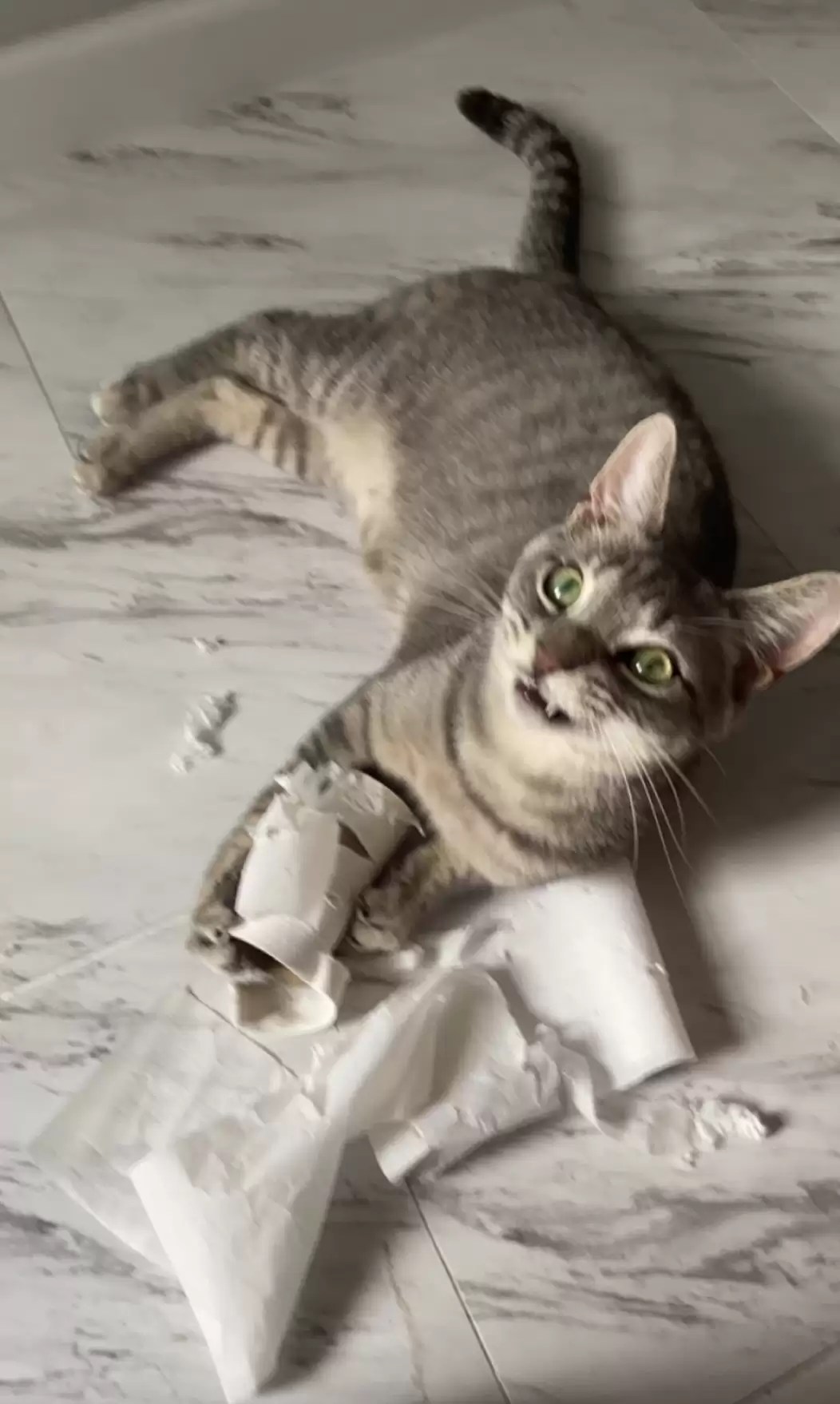
As far as Coco’s concerned, toilet paper is for shredding. Credit: Emily Chaplin
Coco “loves opening cabinets and sleeping in them, getting his own food out of the cabinets when it is dinner time and shredding paper towels when he is bored,” according to one of his servants, Emily Chaplin. The little guy was home alone one day and in the kitchen when he opened a cabinet door as usual.
“Excuse me, sir, what are you doing?” Chaplin’s husband asked through the camera’s microphone when he spotted the rascally feline already halfway into the cabinet.
A shocked Coco backed out of the cabinet, turning toward the sound in disbelief.
“Coco, get out of there!” Chaplin’s husband added.
At first it looked like Coco would be obedient, but shortly afterward his face appeared right in front of the camera — looking none too pleased — and he gave it a hard paw-smack, knocking it from its perch and restoring Coco’s privacy from snooping, meddling humans.
“He knocked the camera down! He was upset that we were watching him,” Chaplin told The Dodo. “My husband and I were hysterical [reviewing the footage]!”
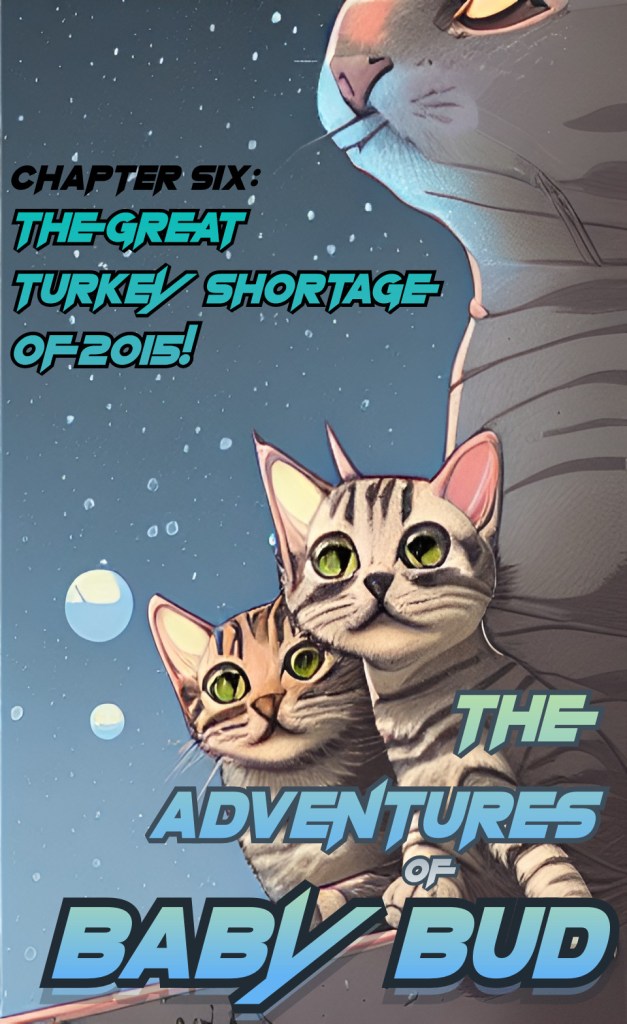
The Buddy Comics empire expands with two new titles and a new installment of The Adventures of Baby Bud.
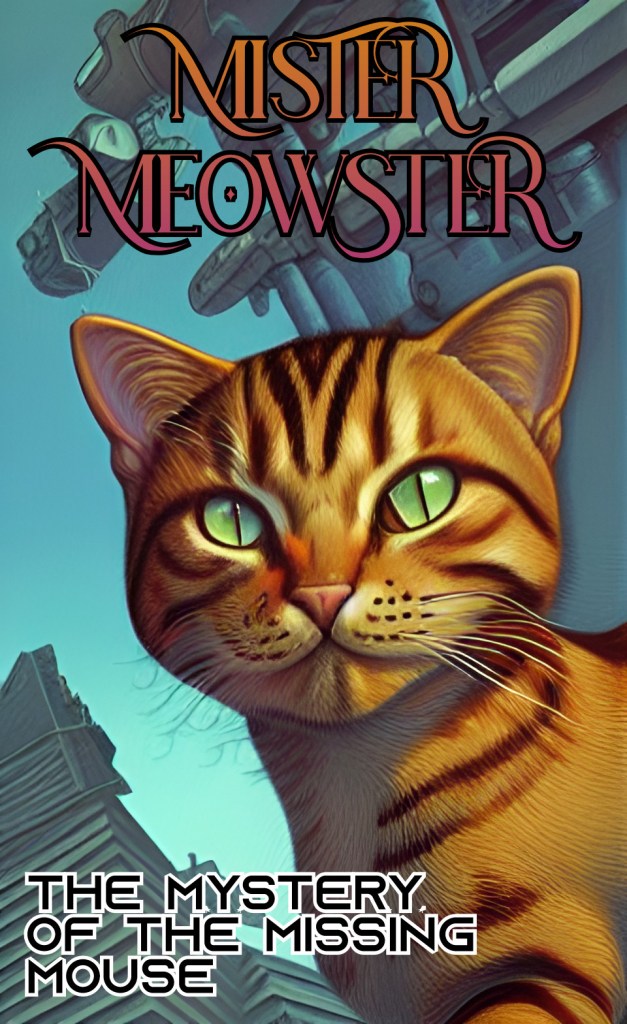
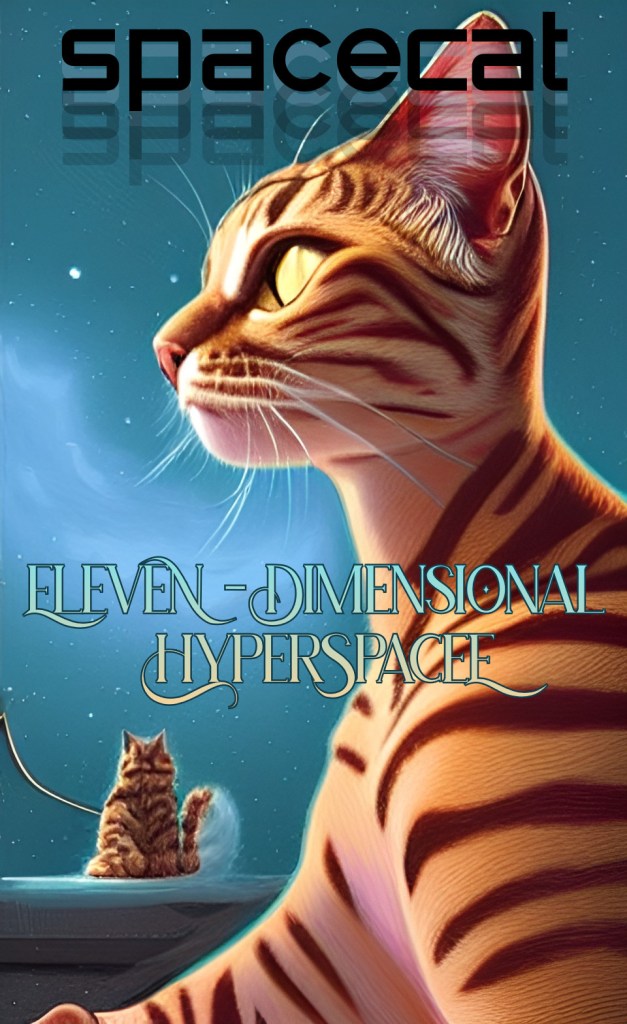
We meet Mister Meowster, the most legendary feline investigator of his neighborhood, who’s called upon to use his Sherlockian skills in search of missing mice. In 11-Dimensional Hyperspace, SpaceCat tunnels to the next iteration of reality in her starship. Finally, Baby Buddy contends with a dark chapter from the past, when there was a shortage of the very stuff of life.
All covers created via natural language AI and pixlr.
Mister Meowster is the greatest detective for at least three blocks.
SpaceCat tunnels through 11-dimensional hyperspace to reach the next stack in the braneworld! M-theory enthusiasts and cat lovers won’t be able to put this down!
Before the Great Turkey Shortage of 2021, there was the Great Turkey Shortage of 2015. In Chapter 6, we visit that grim chapter in in Buddy’s life, when he was forced to eat chicken.





 Pain In The Bud