Wordless Wednesday: The Glorious Amur Tiger

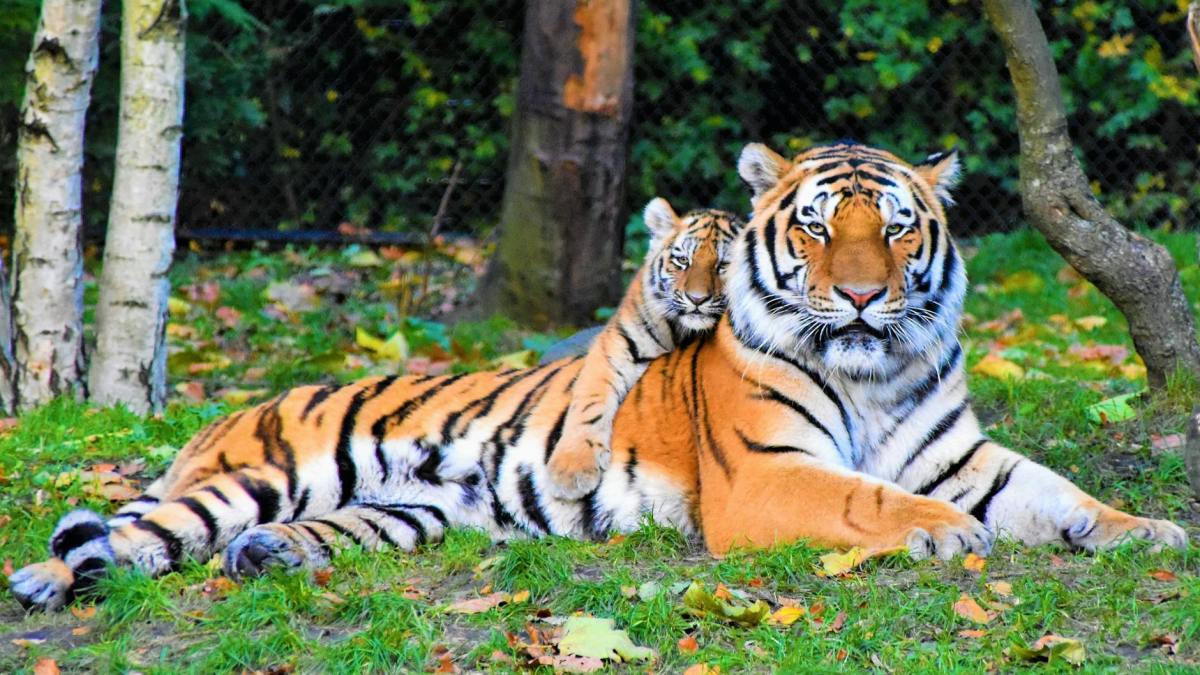
Today we’re admiring photos of the majestic Amur (Siberian) tiger, a species that has been pulled back from the brink of extinction thanks to the hard work of conservationists.

The Amur tiger, panthera tigris altaica, is the largest subspecies of the largest cat in the world.

Click an image in the gallery to view a higher resolution version:

All images in the gallery above via Wikimedia Commons. Header image via Pexels.

Facebook Is Flooded With Hoax Posts About A Supposed Black Mountain Lion

The purveyors of the deceptive posts want you to click, share and argue with other users about the veracity of the photos.

Not only is he the rarest puma in existence, he’s more well-traveled than most humans.

The mountain lion in question has a black coat, unprecedented for his species, and has been popping up all over Facebook. He’s photographed from the passenger seat of a truck cab, his tail in an unbothered curl, crouched amid the brush near a rural road.

Some posters claim they spotted the formidable feline in Mississippi. Others attribute the image to a sister-in-law who lives near Houston or a daughter in Charleston. A user in Louisiana claimed they took the photograph near the bayou, while another places the cat in Wyoming and claims he’s the first-ever documented “shadow cougar.” (Our friend Leah of Catwoods drew our attention to the images last week after seeing posts placing the cat in the south.)

In case it isn’t obvious, all the claims are full of it.

There is no such thing as a melanistic (black) mountain lion, and the big cat in the photo has the physical characteristics of a leopard, an animal that is not native to this hemisphere, let alone this continent.

The real story here is that Facebook remains a fountain of misinformation and Meta (its parent company) doesn’t care. Unscrupulous users will do anything to get attention and the clicks that come with it, and the average Facebook user is happy to indulge them, driving clicks by resharing the hoax content and juicing its algorithmic value by engaging in endless arguments with fellow users about the veracity and provenance of the photos.

Alleged big cat sightings are perfect for this sort of thing because they pique people’s natural curiosity, there’s a whiff of danger — especially when the poster claims the animal was spotted locally — and most people aren’t aware of telltale differences between cat species.

In many ways, the blurrier and more indeterminate the photo, the better: like Bigfoot and the Loch Ness monster, the idea of phantom cats is most fertile in the imagination.

These days you don’t even need a photo to get in on the click-baiting action. I asked Gemini to create an image of a jaguar-like big cat walking along a rural road at night, and this is what the LLM gave me:

In the image prompt, I asked it to make it look like an amateur photo taken with a midrange smartphone camera, but if we really wanted to get artistic, it’s simple enough to add noise, maybe some motion blur and digital artefacts to the image to make it look more like an authentically crappy, rushed shot of an unexpected animal.

Here’s the result of some simple efforts to en-crapify the “photo” further:

To give the image urgency and encourage people to engage with it, I can make it local and claim it was recent. Errors of grammar, spelling and punctuation add a nice seasoning of authenticity, along for feigned concern for others as the reason for sharing:

“Folks – just wanted to tell ya’ll to mind your pets an make sure of you’re surroundings bc theres a big cat on the lose!! my cousins GF took thus friday nite on Route 9 a few mile’s south of Dennies. a real honest to goodness black panther! BE SAFE!!!”

There’s a dangerous animal on the loose in your area! You know what you have to do: share it so others can bring their pets safely inside and stop their kids from playing outdoors, at least until it looks like the predator has moved on.

It’s your duty as a good American!

Since it doesn’t seem to matter if a quick reverse image search can settle the question of where an image came from, it’ll be interesting to see if anyone lifts the above image and text.

At the very least, maybe a few people who do think to run a search will find their way here, read about the hoax, and save themselves from getting drawn into online debates about the existence of cryptid cats.

Paleontologists Recover Shockingly Intact Saber-Toothed Kitten Buried For 35,000 Years

The find is extraordinary, allowing scientists to directly study the extinct cat’s musculature, fur, head shape, and even its claws and whiskers.

A team in Russia stumbled on the find of the century when they located the stunningly well-preserved remains of a saber-toothed kitten in Siberia.

The kitten, which was found near the Badyarikha River in northeastern Siberia, was about three weeks old when it died, scientists estimate.

Unlike typical finds — a fang here, a mandible or partial skeleton there — this specimen still had its fur, claws, whiskers and muscles, which means scientists have already learned more about the species, Homotherium latidens, than they have with almost any other long-extinct animal.

homotheriumpawpads
Images of the extinct cub’s paws compared to (D), the paw of a 3-week-old lion cub pictured on the bottom right. The Homotherium paw is thicker but less elongated. Credit: Borissiak Paleontological Institute, Russian Academy of Sciences, Moscow, Russia

While the saber-toothed cub is a true felid, it boasts adaptations unlike any surviving member of the panthera genus.

It has wide paws wrapped in heavy fur, a short tail and a stockier, lower-to-the-ground build than modern lions and tigers. Those adaptations, scientists believe, made it easier for Homotherium latidens to traverse environments with ice and heavy snow.

Its head shape is slightly different, with smaller ears than modern big cats, and its neck is enormous, more than twice as thick as the neck of a comparable three-week-old lion cub which was used for comparison. Likewise, its mouth is capable of opening significantly wider, although the team did not compare it to the jaguar, which has the widest-opening jaw among extant felids.

Homotherium cub
A photograph of the cub, top, and a scan revealing facial, ear and neck structure, below. Credit: Borissiak Paleontological Institute, Russian Academy of Sciences, Moscow, Russia

The frigid, arid clime of Siberia made it possible for the cub’s body to endure for so long. The team that made the discovery conducted radiocarbon dating that puts the cat at between 35,000 and 37,000 years old, according to reports.

It’s not clear how the cub died, although its species went extinct about 10,000 years ago, likely as a direct result of fewer prey animals in the frigid zones it occupied. Additional bones belonging to the rear of the cub skeleton were encased in a large cube of ice immediately next to the intact upper body.

The cub’s remains were recovered in 2020, but the results of the research team’s analysis were just released on Nov. 14 and published in the journal Nature. The paper’s authors have a lot more to share about the species’ physical characteristics, they noted in the text, and plan to follow up soon with a second paper going into more detail about what they learned from the cat’s intact musculature.

Top image: An artist’s impression of an adult member of homotherium.

Homotherium cub
Credit: Borissiak Paleontological Institute, Russian Academy of Sciences, Moscow, Russia

‘Best Video Of A Lynx We’ve Ever Captured’: Wild Cat Shows Off For Camera

The trail camera is operated by a team studying the behavior of wolves, but this felid became the main character for a short while, posing majestically right in front of the lens.

Happy Monday! We’re starting the week off in style with an amazing video courtesy of the Voyageurs Wolf Project.

As its name implies, the project is a collaboration between wildlife biologists, ecologists and academics to learn more about wolves, specifically how they survive in the summer months.

While there’s a wealth of research on the behavior of wolves during winter, the pack animals go their separate ways in the warm weather to raise newborn cubs and hunt smaller prey.

Because it’s much more difficult to track individual wolves under the cover of heavy brush compared to following entire packs in the snow, the project relies on a combination of GPS collars and trail cameras. The latter pick up all sorts of wildlife in the Minnesota wilderness, which is how the Voyageurs Wolf Project captured this clear, close-up footage of a stunning medium size wild cat:

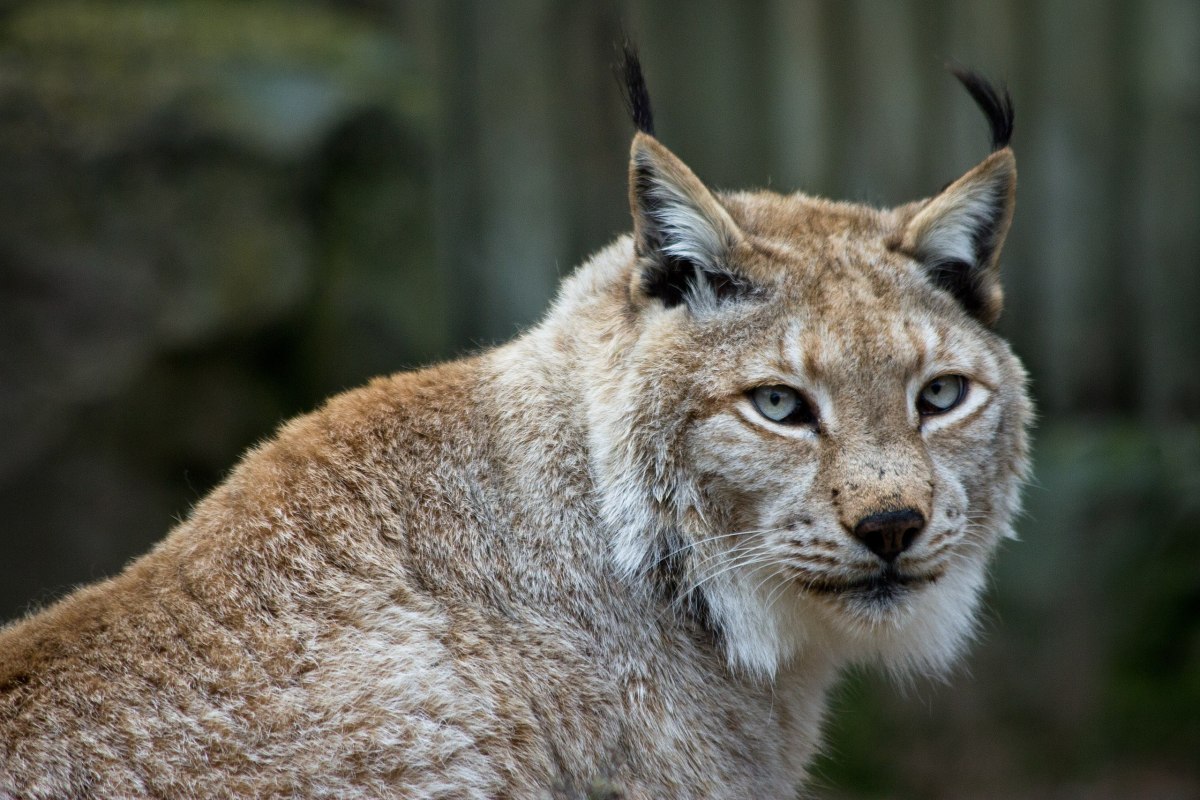
That’s lynx canadensis, better known as the Canadian lynx, and the footage is so perfect it’s as if the wild cat said “Ah, a trail camera! I’m gonna sit right here and let the humans see how beautiful and regal I am!”

From its pronounced ear tufts to its snow-soft fur and dark stump of a tail, this lynx is a fantastic example of its species. Canadian lynx are well adapted to the demands of their environs in Canada and the northern US, with heavy coats and soft, wide feet that allow it to traverse snowy landscapes quickly and silently.

They’re famously elusive and difficult to track in the wild, but maybe all we have to do is give the lynx a chance to strut its stuff.

Top image credit Carlos Delgado/Wikimedia Commons.

Tribe Discovers Ancient Three-Toed Cat’s Fossilized Footprint Deep In Forest

The strange footprint may date back as far as 35 million years ago, according to a preliminary analysis.

Before house cats, tigers and lions, before sabretooth cats and their scimitar-toothed relatives, Pseudaelurus (pseudo-cat) stalked the forests and plains of Europe, Asia and North America between eight and 20 million years ago.

Before Pseudaelurus, Proailurus — an animal whose name literally means “before cats” — stalked the Earth beginning 30 million years in the past.

Proailurus was thought to be the earliest true feliform ancestor, but now there may be evidence of a felid or feliform animal that predates both Proailurus and Pseudaelurus. Feliform is a term that encompasses cat-like creatures both extinct and extant, from familiar felines to civets and mongoose.

Deep in South India’s Nallamala Forest, near one of the country’s largest tiger reserves, members of the aboriginal Chenchu tribe found a fossil that could put the cat lineage back even further.

The fossil is well-preserved and clearly defined, made by an animal whose paw was about the size of an adult man’s hand. It bears a striking resemblance to tiger pug marks, but perhaps the most striking feature is its three toes.

Feliform fossil
The recently discovered fossil. Credit: Times of India

“Based on the distinctive characteristics of the sandstone, identified as the Cuddapah subgroup Quartzitic sandstone, the estimated rock’s age is approximately 35 million years,” archaeologist Arun Vasireddy told the Times of India. “It was around this time that sandstones were formed and it is likely that the animal would have cast its prints.”

Biologists have had to reshuffle their picture of felid lineage many times over the past century and a half as new discoveries uncover previously unknown species of cats and cat-like creatures. Since they first appeared, cats have taken hundreds of different forms with significant variations in size, appearance, hunting methods and preferred terrain.

The experts aren’t popping the champagne yet. There’s a lot more work to do before they can declare a newly-discovered species or even offer more than educated guesses about its niche and appearance.

Nallamala Forest may yet hold more secrets, and research teams will look for additional prints as well as potential remains. It’s a process that will unfold over years and decades, perhaps even longer.

Still, it’s a tantalizing clue about the past and the origin of some of Earth’s most iconic animals.

In the meantime, Vasireddy said, “nothing can be said clearly until further research.”

Homotherium_serum
A reconstruction of Homotherium, a scimitar-tooth cat that first appeared about four million years ago. Credit: Wikimedia Commons

OLYMPUS DIGITAL CAMERA
Styriofelis lorteti predates modern pantherine cats and was the size of a small leopard. Credit: Spanish National Research Council and the National Museum of Natural Sciences in Madrid

Fossil foot
The recently-discovered fossil compared to a man’s foot. Credit: Times of India