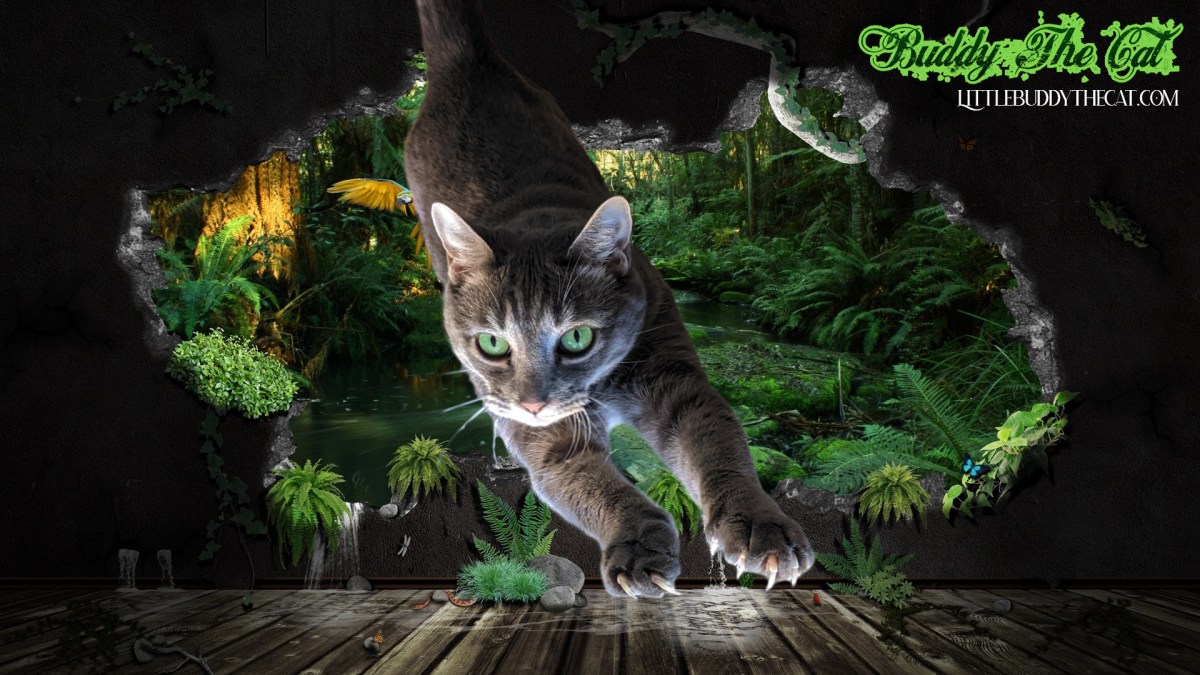
Buddy has been hailed as a hero after he valorously fought off two coyotes to save his dog friend.
Many thousands of Americans have heard the now-viral story about a cat who saved a dog from a vicious coyote attack, but did you know that fearless feline is none other than Buddy the Cat?
We were lucky enough to catch up with Buddy and interview him about his famous feat of extraordinary bravery, as well as what life’s like for him now that he’s become a feline celebrity.
Q: First of all, thanks for speaking to us. We know you’ve got a lot of interview requests and you’re so hot right now, so we appreciate you taking the time.
Buddy: Anytime. It’s true, so many people want a piece of Buddy the Brave these days that it’s beginning to mess with my napping schedule, but I think it’s important to speak out on topics like this.
Q: Well said! So why don’t you take us through the chain of events. What preceded this vicious coyote attack, and how did you become involved?
Buddy: Well I was visiting my friend — and yes, cats can be friends with inferior animals like dogs! — when I caught movement out of the corner of my eye. I have incredible vision, as you know. And as the coyotes were sneaking up I just kind of raised a paw and flexed my bicep. Usually that’s enough to make ’em think twice, you know?
Q: But these coyotes didn’t heed your warning?
Buddy: Unfortunately, no. They were licking their lips and set on attacking my buddy, and Buddy does not take kindly to anyone attacking my buddies, you know what I mean?
Q: Those coyotes clearly didn’t know who they were dealing with. So that’s when they attacked?
Buddy: Exactly. For a hot second I was in shock, you know? I’m thinking ‘Did they not just see me flex? Is it possible they didn’t see how ripped I am?’ But then I heard my friend yelp in pain and I just sprang into action without regard for my own safety.
Q: That’s very heroic of you.
Buddy: Isn’t it?
Q: So what would you say to detractors who claim the cat in the video has black fur and is not a gray tabby?
Buddy: They’re conspiracy theorists, like people who think the Earth is hexagonal and Big Catnip is out to get kitties hooked. You know, it’s a black and white security camera, and I move so fast that I’m a blur, so I can understand how people are confused.
Q: And the people who claim this happened in Oklahoma?
Buddy: Fake news. Obviously it happened in New York.
Q: Obviously. Well we don’t want to take any more of your precious time, but we just want to thank you, Buddy. You’re a real Americat hero!
Cat hatred is driven in large part by bunk science authored by researchers who approach their work with predetermined conclusions.
After news of a now-canceled children’s cat hunting contest made international headlines this week, the usual suspects came out of the woodwork with wild, unsupported claims that cats — not humans, not human industrial processes, not human-driven habitat loss, wind farms or agricultural pesticides — are singlehandedly responsible for wiping out New Zealand’s native birds and the extinction of an arbitrary number of avian species.
One of the people leading the charge is Helen Blackie, a “biosecurity expert” who told the BBC that cats are responsible for the extinction of six native bird species in New Zealand.
Blackie doesn’t say where she got that information, but noted cat-hating Kiwi Gareth Morgan’s site claims that cats have killed nine native bird species, and attributes the information to a study, “A global review of the impacts of invasive cats on island endangered vertebrates.”
The “study” was published by academics in Spain and California without boots on the ground in New Zealand and is not actually a study at all. It’s a meta-analysis of prior studies, none of which count the number of feral, stray and pet cats in New Zealand, nor do they offer anything resembling a measure of how many birds are actually killed by cats.
Notably, the study does not say cats are responsible for the extinction of nine bird species.
Credit: Mehmet Turgut Kirkgoz/Pexels
Much like their US bird-conservationist counterparts, the authors of the study cannot say how many cats actually live in New Zealand and have no observational data about feline predatory habits.
They rely on the same methods the US studies do, which is to say they collect data from unrelated research — including a paper measuring the impact of all predators on wildlife in the aftermath of wild fires in urban environments, a report on the way pet cat personalities impact how their owners view them, and a study on cat behavior in Culver City, California — stir the data into a pot of numbers, and massage the numbers until they get the desired results.
In this case, the “desired results” are any suitably impressive-sounding figure for the total number of native birds killed by cats in New Zealand. The authors aren’t conducting a scientific investigation to find out how those native birds died, they’ve already decided that cats are the reason and they’re misrepresenting data from unrelated studies to support that conclusion. That is not science.
Of course their conclusion has no basis in reality. How is it possible that a bunch of researchers on entirely different continents are able to come up with accurate figures on cat predation in New Zealand without any actual data about cats in New Zealand, without a population count of cats in New Zealand, and without a single observational study to draw information from?
How does a study of coyote and cat interactions in Culver City, California have any bearing on cats killing birds in New Zealand, an island country 6,700 miles away with habitats that bear little or no resemblance to California? Coyotes don’t even exist in New Zealand!
How does a self-reported questionnaire about the personalities of pet cats by American cat owners tell researchers anything about the behavior of feral cats in rural New Zealand?
How does a study about the Persian squirrel on Greek island ecosystems tell a research team anything about the impact of cats on flightless birds in a completely different environment, in a different part of the world, with different types of trees and cover, different native fauna and weather systems?
How does a study of alpine ecosystems inform estimates of cat predation in the temperate and subtropical ecosystems of Aotearoa?
Credit: Boys in Bristol Photography/Pexels
This is not science
This sort of buffet-style, cherry-picking nonsense wouldn’t pass muster in an undergraduate class in the hard sciences, yet somehow it’s not only published in peer-reviewed conservation journals, it’s reported breathlessly and credulously by reporters at outlets like NPR, the BBC and the Guardian, who don’t even bother to read beyond the abstract.
The claims are further undermined by their inexplicable assertion that feral cats and domestic cats are not the same thing, when in fact they are the same species: felis catus. Advocates of cat hunting in New Zealand fret that it’s impossible to tell if cats are feral or pets, not understanding that they are indistinguishable because they are the same. The only difference is that house cats have homes and ferals do not.
No one is claiming that cats don’t have an impact on the environment. It would be foolish to think they don’t.
But if anyone — especially journalists with influential platforms and researchers cloaked in authority thanks to the veneer of real science — wants to make the case that cats are the primary force leading to declining numbers of native bird populations, then the burden of proof is on them, and it’s a high one.
We’re talking about life here, the lives of fully sentient animals with their own rich internal thoughts and feelings. You don’t just casually call for their extirpation or send children off with rifles to arbitrarily shoot them like little serial killers in training.
If you want to make the case, do the work. Get the grants. Hire the personnel. Do it right. The Washington, D.C. Cat Count even has a free toolkit for other communities to conduct their own feline census, so they can make informed decisions. But if you’re unwilling or unable to do the work, then stop spreading misinformation, because it has tragic consequences for real-world animals, and their blood is on your hands.
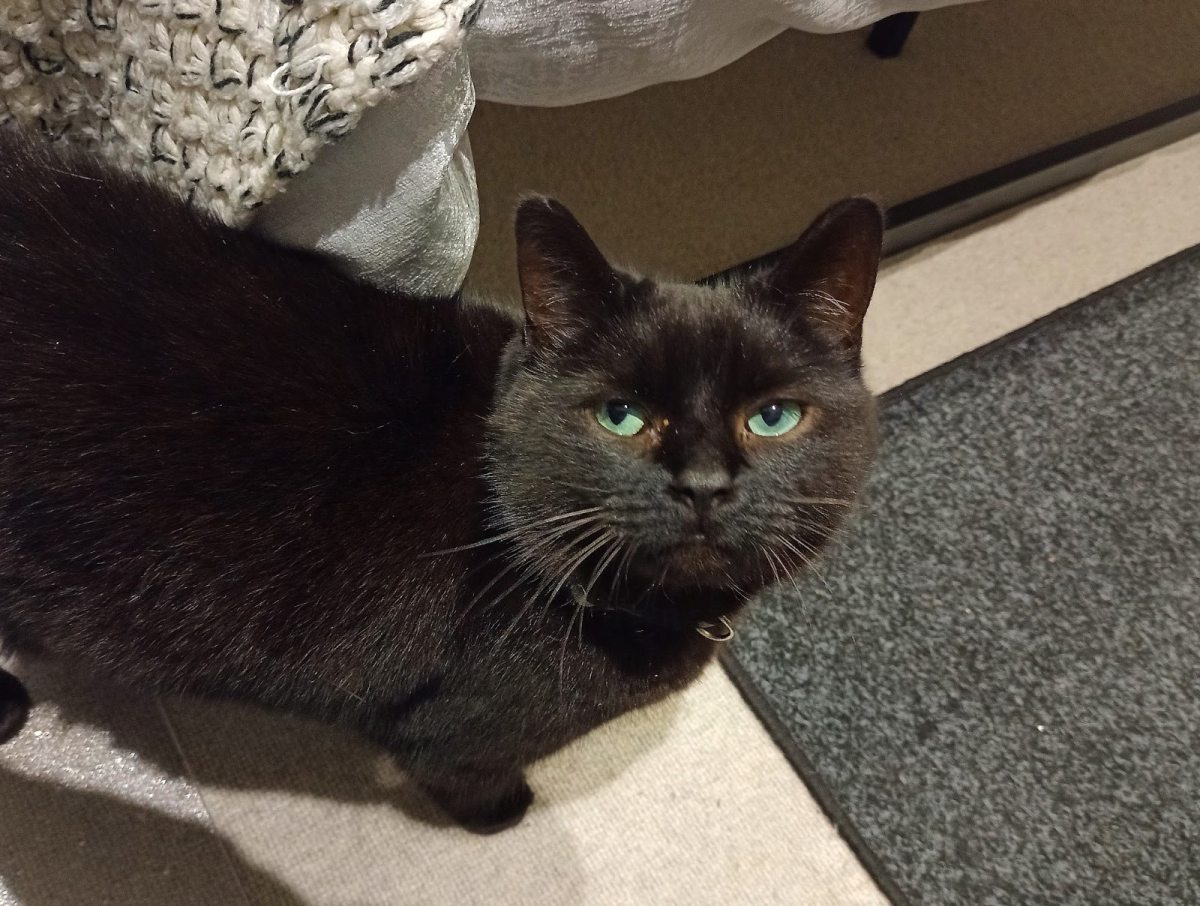
With her mesmerizing green eyes, supreme confidence and strong opinions, Bella has pawed her way into her humans’ hearts.
About a year after John Graham and his wife, Kathleen Birch, adopted Bella the Cat, they noticed she had an acquaintance — a genial neighborhood stray with a white-cream coat and black fur running from his back to his tail like a cloak.
Although she’s territorial like any member of her species and spends much of her time patrolling Grove Park — a quiet London neighborhood tucked into a winding loop of the Thames — Bella expressed no animosity toward the apparent intruder, and in fact seemed to be on quite friendly terms with him.
Graham and Birch, who like to joke that Bella is a clandestine agent of MI5 — Britain’s version of the FBI — dubbed the stray Bertie, and decided he was her field liaison.
“We think Bertie is her Mi5 contact and visits to get updates [before] returning to HQ to report on her field actions and mission status,” Graham quips.
After checking with the neighbors and bringing Bertie to the veterinarian, who said the stray was not chipped, Graham and Birch believe Bertie was likely abandoned by his previous family and eked out a living zig-zagging between homes in Grove Park, depending on the goodwill of neighbors and his own considerable charm for food. So they had Bertie chipped with their contact details about eight months ago, and now field agent and handler have been united under one safe house roof as they continue in His Majesty’s service.
Bertie and Bella even have their own WhatsApp group comprised of their humans and neighbors, who post to let each other know of the feline duo’s comings and goings.
Both cats are a source of great joy for Graham and Birch, who were looking to adopt again two years ago after the passing of their beloved Bets, who had been with them since kittenhood and lived to the ripe old age of 21.
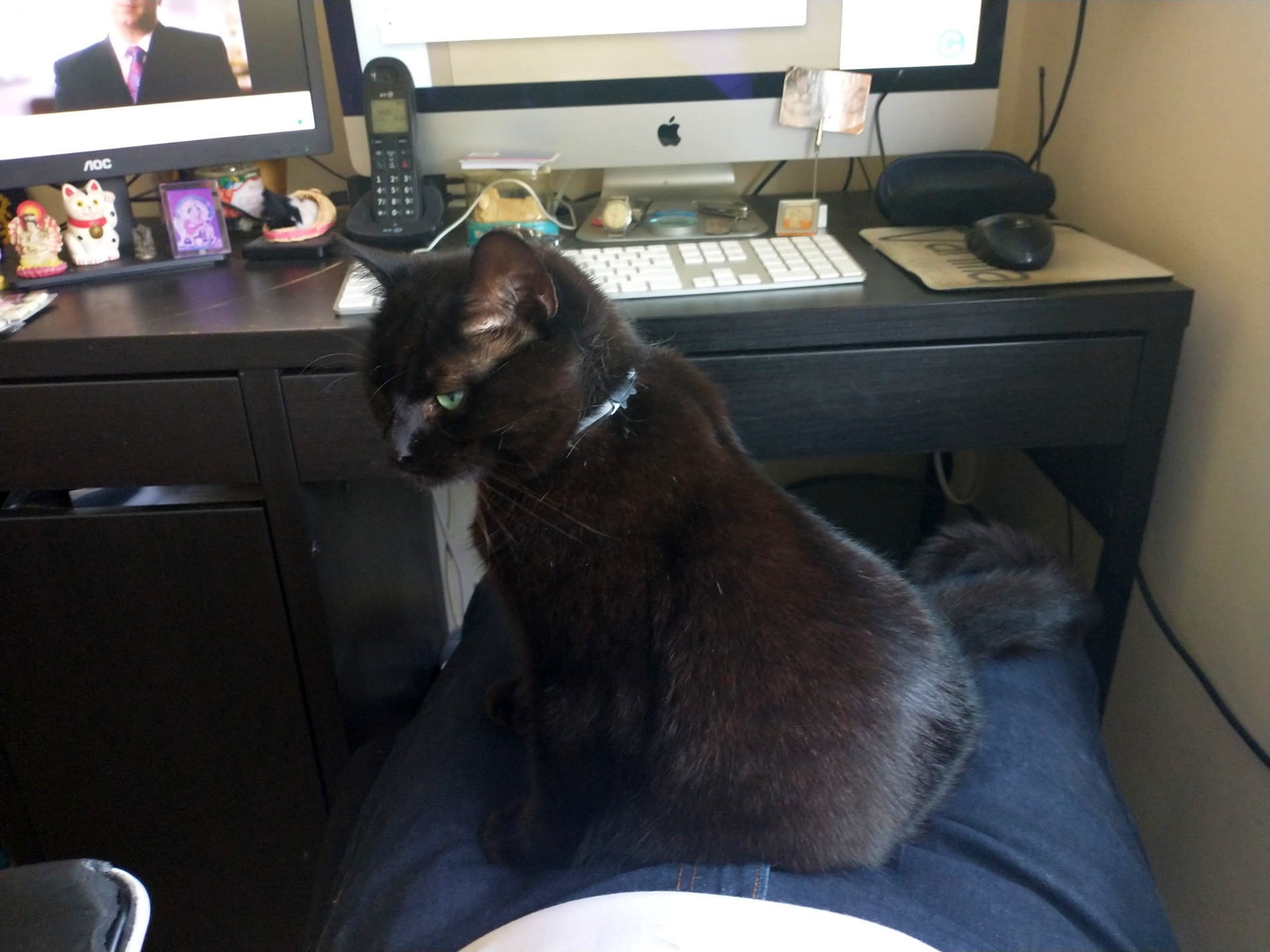
Bella deciding she needs to be a lap cat for a little while in order to supervise John’s work. Credit: John Graham
After contacting a charity they support in Twickenham, the couple went out to meet a cat named Puss Puss at a foster’s home about three miles away.
“We walked in and sat down, and within literally a few seconds, she came out from under a table. My wife immediately fell in love with her as Puss Puss – now called Bella — rolled over and showed her belly with the loudest purrs ever,” Graham recalled. “She walked over to me and looked up with the most beautiful green eyes, allowing pets and scritches instantly. I was totally smitten. Her secret service training on overcoming any resistance was obvious here.”
Not much is known about Bella’s past, which Graham jokes is classified, but the fosters said Bella likely came from a hoarding situation. She bears some emotional scars from those times, making it clear she didn’t like to be picked up and wouldn’t tolerate head rubs. Graham said he thinks Bella may have been struck on the head by the abusive person or people who had custody of her originally, but with patience “she has grown to trust us and love us the way we love her.”
True to her training, Bella came striding out of her carrier that first day without need for coaxing and set about surveying her new headquarters, exploring while noting promising hideouts and lounging spots.
“She immediately checked out the perimeter as do all good Mi5 agents, looked around and began a sniffing and snooping journey for about an hour,” Graham said, “Then sitting in front of us on a low stool, she started shouting loudly, her default way of demanding food. This prompted me into action, offering her different dishes attempting to find her favourite. It turns out that she basically will eat anything.”
Indeed, Bella’s love of food is one of the few things that cause a bit of tension between her and her doting humans. She’s restricted to carefully measured wet food plus veterinarian-suggested “weight management crunchies” and, like many cats, is not shy about notifying her servants when the yums are low or the auto-feeder isn’t dispensing them. (In those instances, Bella hops up onto the bed and approaches the sleeping Graham: “I will get the gentle paw followed by the sharp claw to ensure I get the message to come and feed her immediately.”)
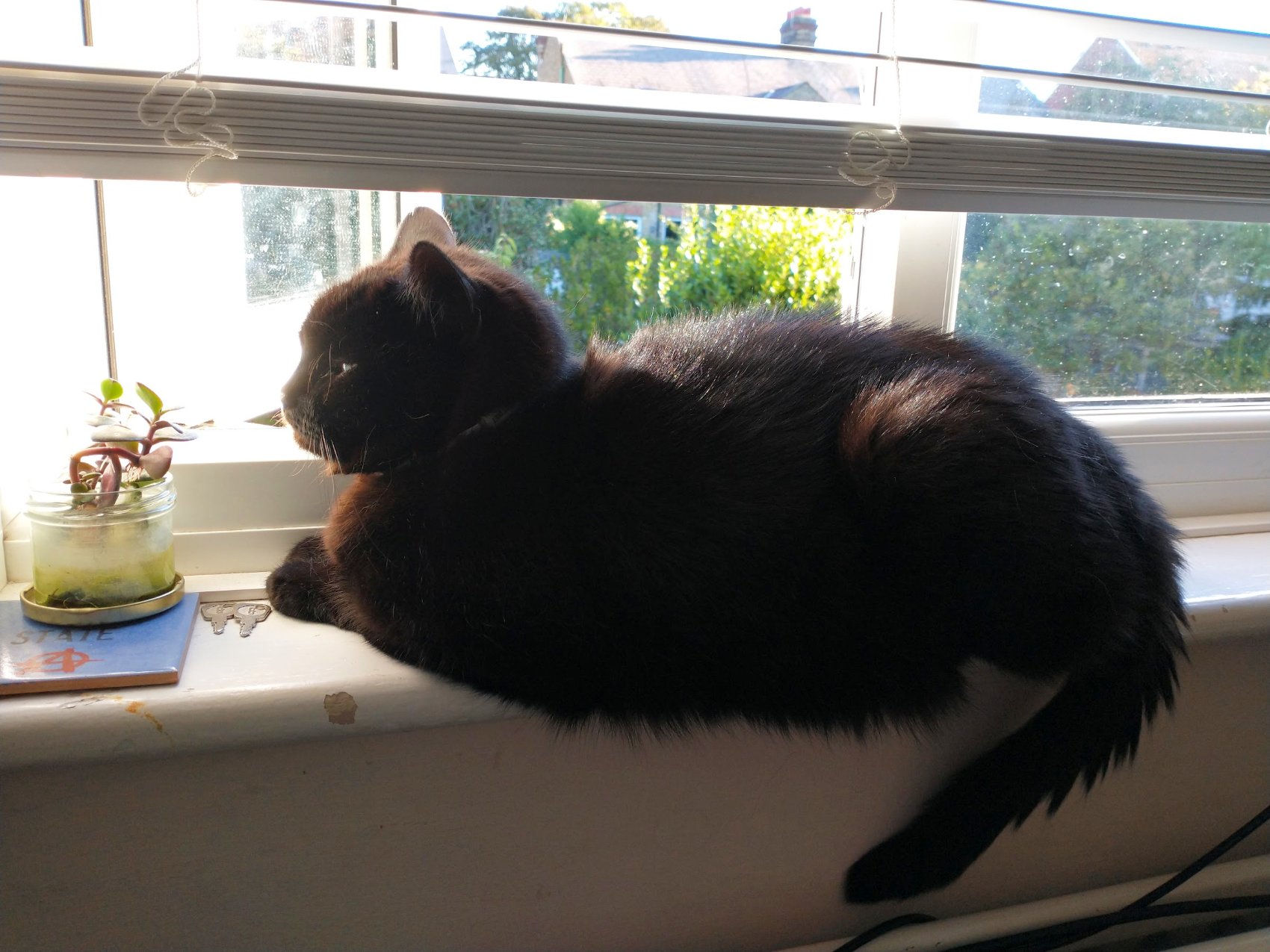
Bella on overwatch duty, making sure Grove Park remains quiet and free of interlopers. Credit: John Graham
Adopting a cat is always a guessing game. Will the cat relax and open up once she realizes she’s safe and has a home? Was he reserved when we met him because he’s been living in a shelter with unfamiliar sights and smells? Will she take to her new home immediately, or will she dive under a couch and remain there for weeks, emerging only to grab a bite from her bowl when no one’s around?
Those questions were immediately settled for Graham and Birch, and Bella’s outgoing personality is one of the things they love most about her, along with her supreme confidence.
“She has it in absolute truckloads,” Graham notes, “and there is pretty much no fear on her part about adventuring anywhere in or out of the house.”
While keeping cats indoors is the norm in the US, as many as nine in 10 caretakers in the UK allow their felines to spend time outdoors unsupervised, encouraging them to establish their territories, explore their gardens (backyards to us Americans) and familiarize themselves with their neighborhoods.
Many US shelters and rescues won’t allow potential adopters to take a cat home if they indicate they’re willing to let the kitty outside, and some even require adopters to sign contracts stating they’ll keep their four-legged friends indoors. UK cat rescues often take the opposite stance. They advise pet parents on how to gradually introduce their cats to the outdoors, offer tips on how to manage their outside time and recommend various pet flap configurations.
The difference is partly cultural and partly practical. While extolling the benefits of allowing cats to roam, UK cat lovers point out that domestic felines rarely stray far from their homes, on average venturing only between 40 and 200 meters (about 130 to 650 feet). They’re curious, which drives them to explore, but also territorial, which keeps them on a figurative leash.
There’s also a marked difference in wild threats to domestic cats. In the US, cats are vulnerable to pumas (also known as mountain lions and cougars), coyotes and a wide variety of birds of prey, from eagles, harriers and hawks to condors, osprey and even some larger species of owl. The UK does not have pumas, despite local legends to the contrary, nor does it have coyotes. Foxes, the smaller cousins of coyotes, and some birds of prey do pose a threat, but not to the extent that the wildlife of the Americas does.
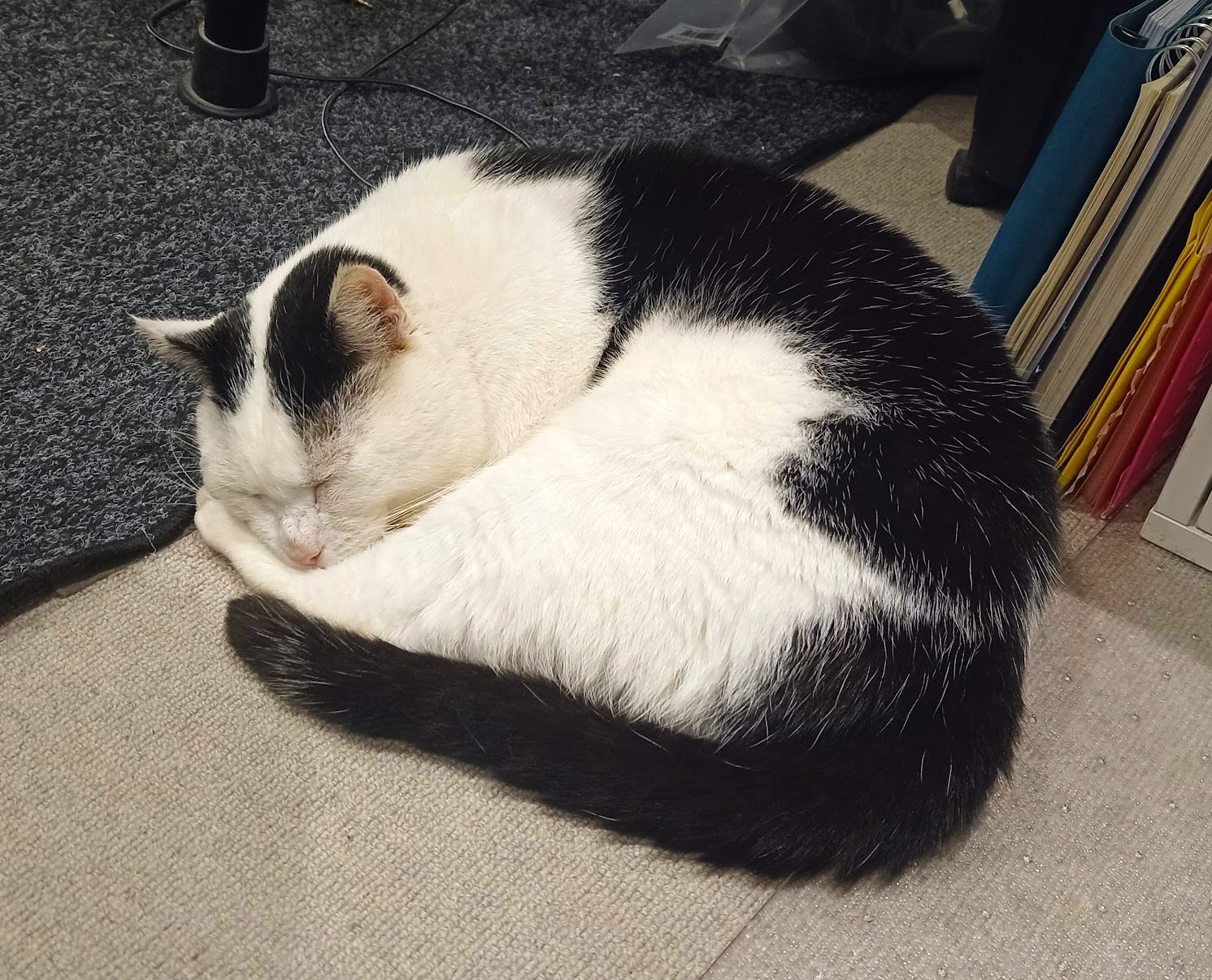
“Yes, I’ll just settle down here for a nap whilst I wait on your report to HRH.” Bertie joined Bella about eight months ago and now they both live under one roof. Credit: John Graham
For Graham, allowing his cats outside fosters their independent streak and allows them — or Bella, at least — to exercise their hunting impulses. Bertie isn’t known for his predatory prowess, but Bella is a pro at catching mice.
The local neighborhood is quiet, traffic is strictly limited to 20 mph, and the neighbors know each other well, often using their WhatsApp groups to track their kids in addition to cats.
In fact, if Bella could speak, Graham reckons she’d thank him for providing a home in a tranquil locale — and for never closing doors in their home.
What else would she say?
Graham says it’s obvious: “Glad that you understand the difference between my requests and my orders – you took a while.” She’d also likely chide the couple on their ineptitude as hunters, declaring Graham and Birch “are both rubbish at catching mice and rats despite how many times I show you how to do it.”
For Graham, the managing director of a London brand agency, and Birch, a skin care therapist, sharing their home with cats feels natural, and they cherish the unpredictable nature and playfulness of their feline friends. Cognizant of the fact that black cats are less likely to find homes, they prefer adopting melanistic house panthers like Bets, their previous cat, and Bella.
“I totally love all animals but as residents in our house, cats fit perfectly being clean, highly intelligent and able to manipulate any situation with an expression or display of love,” Graham says. “My favourite thing about Bella is when she surprisingly sits on my lap and the mystery when she hides in unlikely places causing me to rush around desperately trying to find her, not coming out even when I am shaking a treat bag.”
Bella will allow the game to drag out “until she decides to appear with her ‘I win’ look and swagger.”
Feline love is often hard-won, but that makes it worth it. In discussing Bella, it’s clear Graham lives for the moments when the independent-minded kitty decides to let him know how much he means to her by sleeping at the food of the bed, playing her hide-and-seek games and climbing into his lap.
Bella and Bertie may not be regular lap cats, but that’s okay with Graham and Birch.
“So there you have it,” Graham said. “Two cats that come and go as they please with occasional signs of affection, but get nothing apart from permanent love and affection from us.”
Bella is serious about her food. Credit: John Graham
Bella’s favorite toy, fittingly, is a mouse. Credit: John Graham
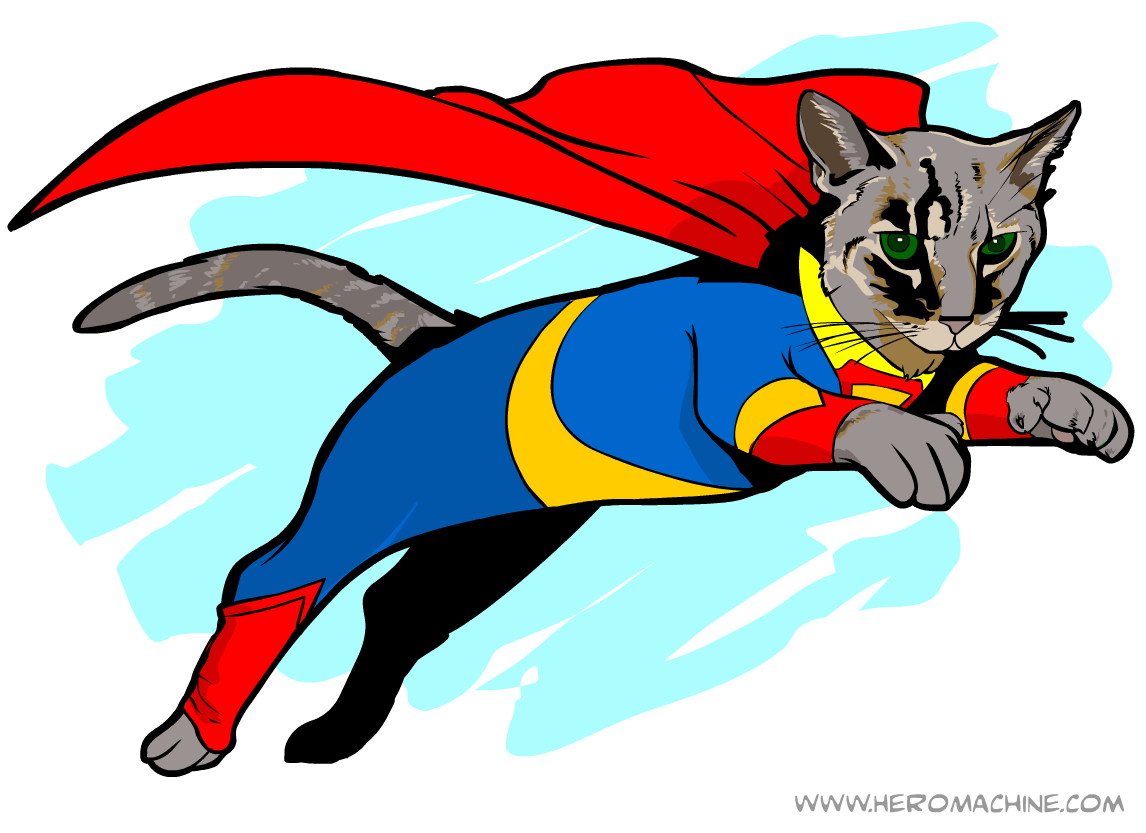
Quite a few cities are reaching out to me for help these days. You might say I’m like a superhero, responding to distress calls to save the day.
As you know, I was at the head of a 1,000-cat-strong army in Chicago recently, tasked with using my brave legion to save the Windy City from an epidemic of rats. Normally the sight of me and my huge muscles is enough to send rats scurrying for whatever dank and disgusting places they’ve emerged from, but Chicago has a lot of rats. Like millions. That’s too many, even for me.
After conquering the rodential scourge of Chicago, I saw the Cat Signal illuminating the night sky, beamed from a town called Port Moody in the Vancouver metro area.
After flying there and making my entrance with a superhero landing to thunderous applause from the gathered townspeople, I was informed that coyotes were disturbing the peace.
“Please, Buddy,” the townspeople begged. “You’re our only hope.”
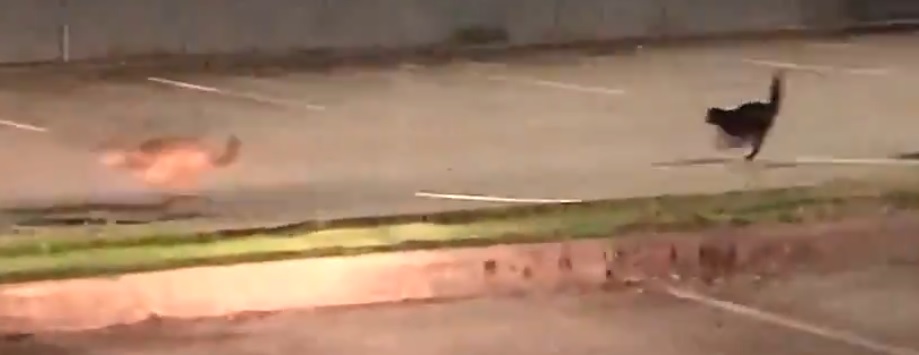
A coyote is a blur, left, as it races to get away from Buddy, right.
Never one to deny people in need, I met the coyotes full on.
“This town is now under the protection of the Buddesian Tiger,” I told the coyotes. “You shall not pass!”
What you saw was the tail end of the clip, after I defeated a small army of coyotes and was chasing the stragglers out of the parking lot. The police clapped when it was over, and the mayor gave me a key to the city and an entire roast turkey!
A family in Sarasota, Florida, has learned the hard way why it’s not a good idea to allow pet cats outside without supervision:
The video shows his cat initially sitting on a chair on his patio. That’s when one coyote approaches it. The cat goes running after it.
Then seconds later, two coyotes start chasing the cat back into the porch. The coyotes are then seen dragging the cat to nearby bushes.
Vanchanka found his cat’s remains hours later after he noticed his cat was gone. He says this is the first time he has seen something like this.
“I’m horrified. I haven’t been able to go outside, only in daytime when I know for sure there won’t be any,” said Valeriya Rozin.
Rozin, who is Vanchanka’s wife, is now frightened to go outside by herself as the couple have a 2-month-old baby. To make matters worse, their other cat died Friday morning from what they say it was a broken heart.
Even small dogs are susceptible to coyote attacks, and have been prey to the ambush predators before:
Their neighbor, Avis Zoborowski, has a 16-year-old Lhasa Shi Tzu, and says she saw three coyotes roaming outside her mailbox one morning. She’s now scared to take her dog out for a walk.
“I’m afraid that by the time that I saw a coyote coming, by the time I pick her up, that dog will be right on my face. I just go out there and pray that everything will be alright,” said Zoborowski.
In my neighborhood, less than a quarter mile from my home, a brazen coyote snapped up a small dog — a toy breed — when his owner was taking him outside to do his business before bed on a summer night. I spoke my neighbor about a week after it happened, and to say she was traumatized was an understatement.
The coyote was completely unfazed by her presence — the attack was so swift and surprising, she didn’t have time to react before the leash was torn from her grip. She never found her dog.
There’s one way to make sure your cats or small dogs aren’t killed by coyotes: Keep them indoors. Indoor cats live for an average of 16 years, while outdoor cats live about 3.5 years on average, according to PetMD.
While some cat owners worry about condemning their cats to boring indoor existences, indoor life doesn’t have to be boring. Cats don’t need much to be happy: Give them attention, affection and regular interactive play time. Provide some lounging spots with good views of the outdoors and toys to play with. Let them sleep near you, where they feel safe. They’ll be more than content.




 Pain In The Bud