How Do You Keep Your Cat Interested In Play Time?

The challenges of getting a lazy cat interested in play time and toys again.

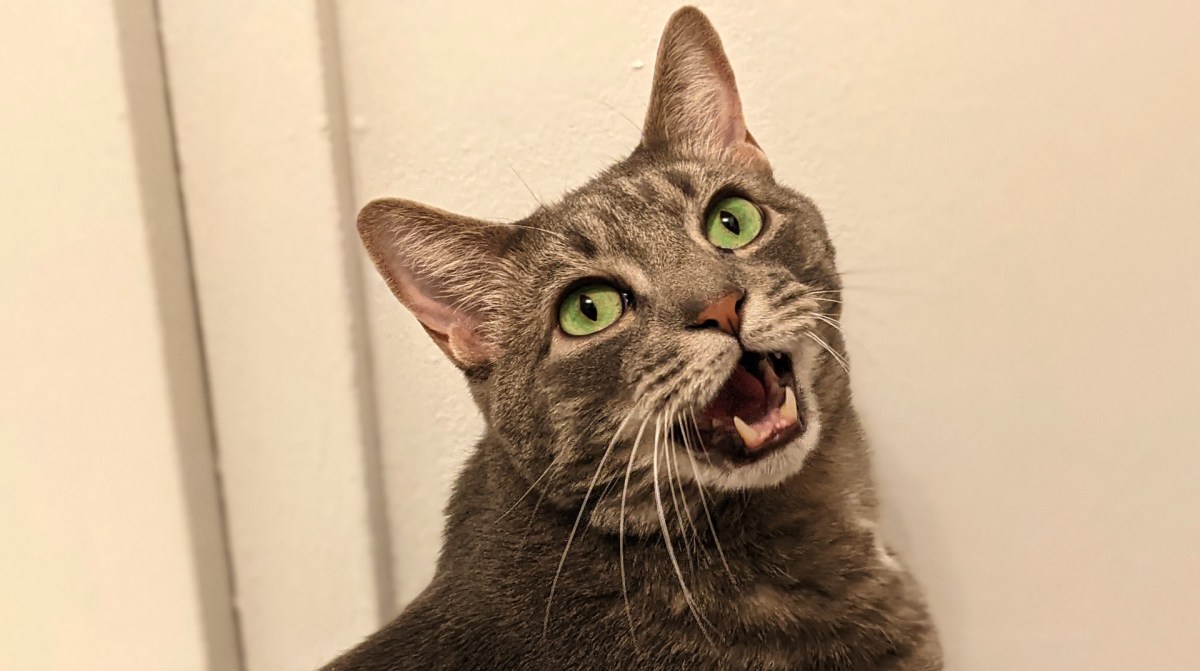
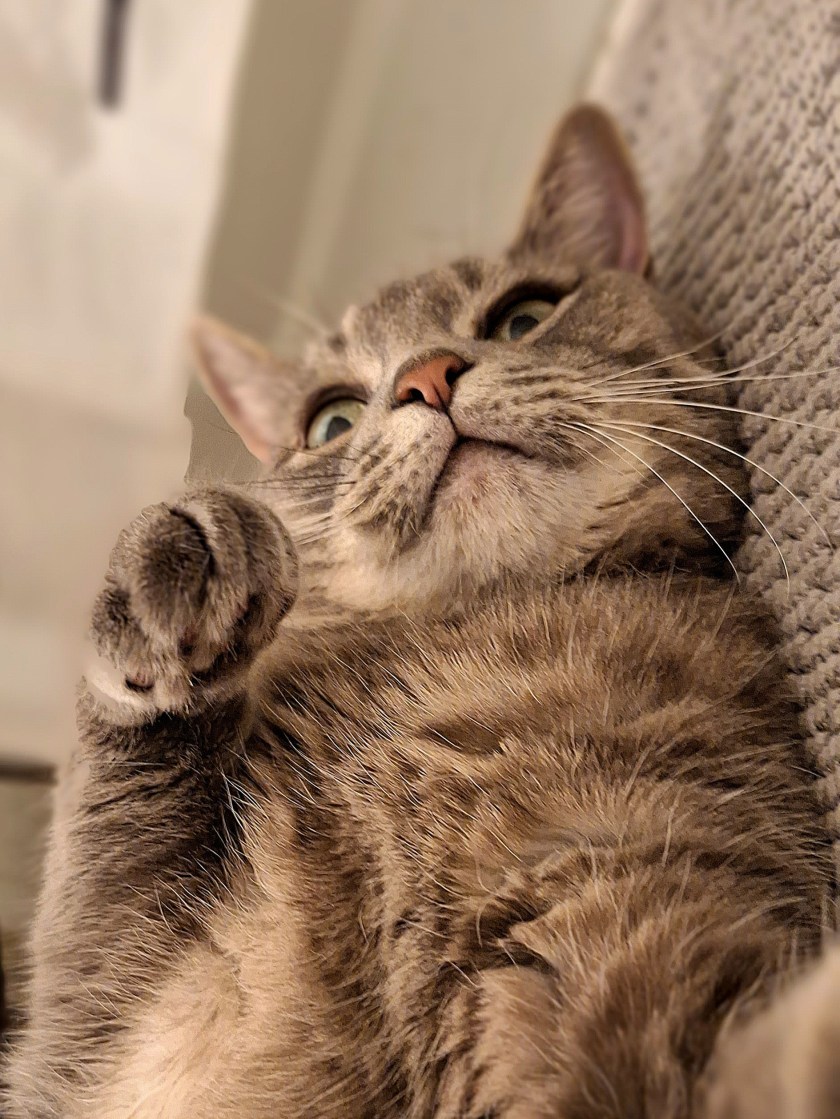
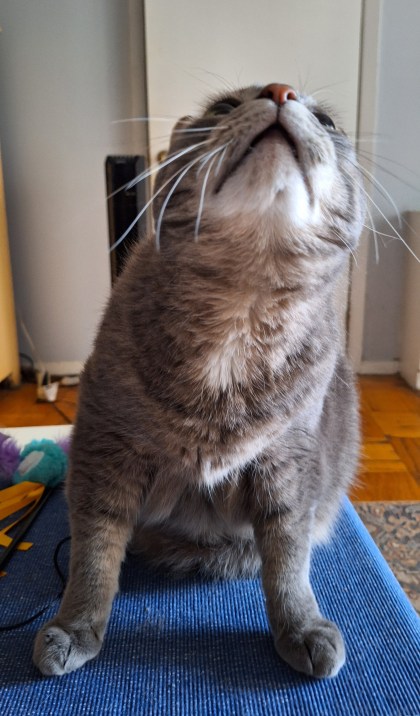
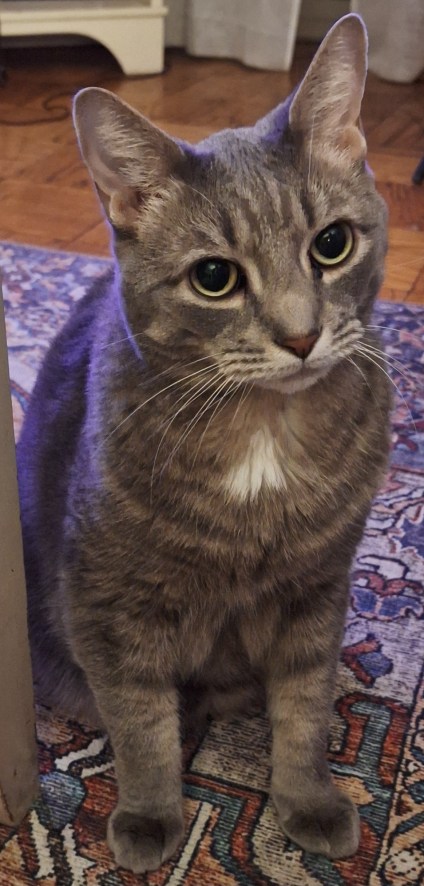
Buddy is friendly, outgoing and incredibly vocal, but he’s always been a bit lazy.

His preferred method of getting down from the couch isn’t jumping — although he does jump sometimes — it’s slowly oozing off the cushion like he’s liquid, taking the path of least resistance and letting gravity do all the work until he drops down and lands with a “Mmmrrrrrppp!”

When we wake up, the first thing he does is demand a snack, then he lays down for First Nap, apparently because the act of chewing and swallowing is so demanding.

Brave Buddy
“Now’s an excellent time for a nap.”

While he used to chase the laser with a fury and jump several times his own height to paw at it — even after figuring out it’s light fired out of a pen held by me — nowadays he can’t be bothered. At best he halfheartedly chases it for a bit and then loses interest even though I make an effort to move the laser like prey, as I do with his wand toys.

Worst of all, catnip makes him even lazier because he doesn’t just sniff the damn stuff, he eats it. I try to get him interested in his favorite wand toy when he’s buzzing on a heady combination of ‘nip and silver vine, but he won’t chase it. He just rolls onto his back and paws at it lazily, maybe getting in a few “rabbit kicks” if he’s feeling feisty.

All of this would be funny if he wasn’t about to turn 10 years old and if he didn’t tip the scale at about a pound and a half to two pounds above his normal body weight when the vet weighed him a few months ago.

“Hey fat boy!” I tell him, getting the familiar “Brrrrrr!” in response. (He’s a big time triller. Feline linguists estimate at least 60 percent of the Buddinese dialect consists of trills of various pitch, length and intensity.)

Fat Boy lost most of the excess weight during a particularly brutal stretch when he screeched at me for snacks constantly and I had to deny him most of the time. At least with kids you can explain things to ’em. I’ve got no way of communicating to the Budster that he’s a Chubster.

Since then he’s put some of the weight back on, so I’ve gotta do something.

Here’s my plan:

  1. Training him to do new tricks. He already knows come, stop, sit and high-five, so we’re gonna have to try something new, like teaching him to roll and maybe teaching him to jump on my shoulder and “ride” around with me. Training is mentally stimulating, it should be fun for him, and it lays the groundwork for more challenging tricks.
  2. A cat obstacle course! I can rig something up with his tunnel, some boxes and some “hazards” that he must traverse in order to get his paws on some catnip.
  3. Snacks dispensed via puzzle feeder only. None of that free-feeding when he gavones the stuff down like he’s starving.
  4. Rotating toys. Admittedly I haven’t been very good about doing that. Almost every guide mentions rotating cat toys so your little buddies don’t get tired of them.
  5. A mirror so he can see how ripped chubby he’s gotten. He really needs to see himself loafing. It’s not pretty.

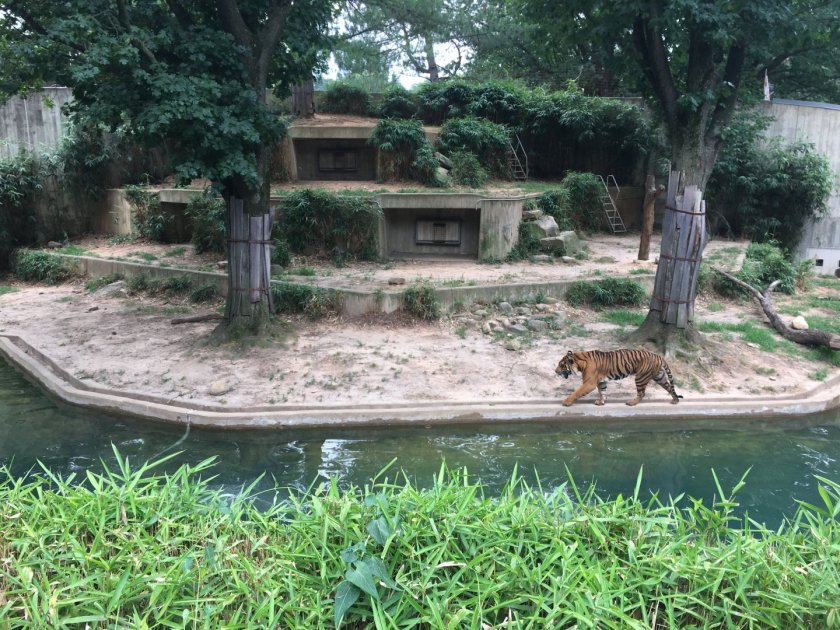
Okay that last one is a joke, mostly because I’m pretty sure he’ll just admire his “meowscles” in the mirror. Cats are masters of self deception. Bud is scared of rustling paper bags and absolutely terrified of vacuums, yet he still thinks he’s a hulking tiger. That’s impressive cognitive dissonance.

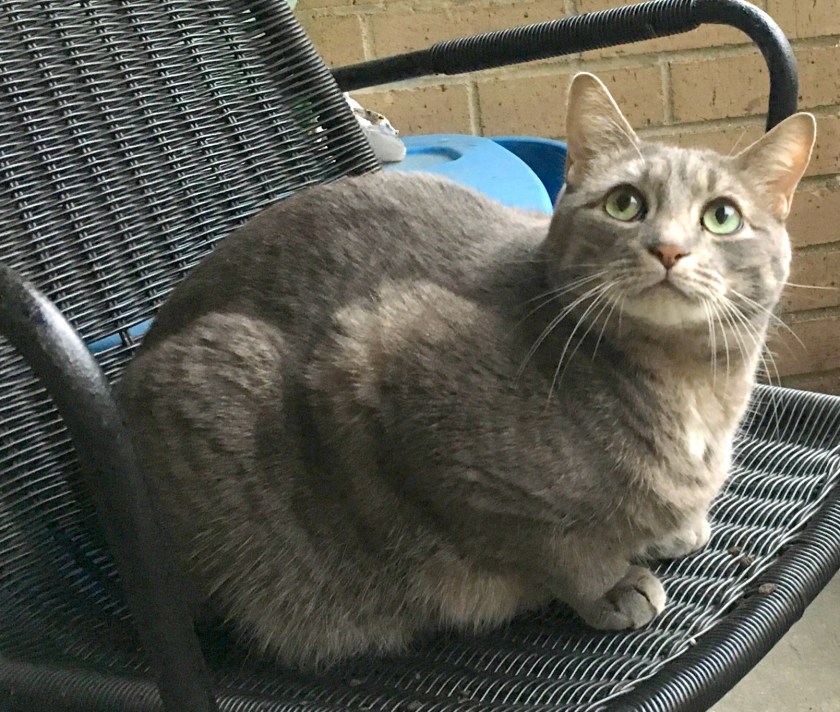
Meatloafing Buddy
This is by far the fattest-looking photo of Buddy I could find. He’s in a super-meatloaf pose here, looking like a chonkmaster.

So we shall embark on this grand endeavor, and I’ll report back here to catalog successes and failures. Hopefully more of the former.

Buddy will always be like a baby to me, and I can’t quite wrap my head around the fact that he’s now a “senior” cat, but he is and it’s on me to make sure he remains active so he hopefully lives at least another 10 years in good health. There are many adventures yet to be had, many more schemes for world domination to hatch, and more turkey to eat.

Is That A Cat Or A Seal?

Buddy does his best seal impression! Nearby, our local SPCA deals with a horrific hoarding case.

I snapped the photo below when Buddy heard the upstairs neighbors making noise. Little dude looks like a seal! (The animal, not the singer. Bud’s singing voice is terrible!) All he needs are some flippers:

20240215_195136

The acne spot I wrote about earlier is healed, but as you can see there’s still a tiny spot on his chin where his fur hasn’t completely grown back yet. Thankfully it’s no longer causing him any discomfort, and he’s back to asking for chin scratches while purring happily.

Of course he won’t be happy if I share an unflattering photo without a flattering one, so here he is looking cute:

20240215_194542

Note the huge meowscles and ripped physique!

In some sad news, there’s an ongoing hoarding case in White Plains, NY, just a few miles from Casa de Buddy.

Police responded to an apartment building in the city after neighbors began complaining of “horrific” smells coming from the unit and discovered an older woman living with at least 40 cats in appalling conditions.

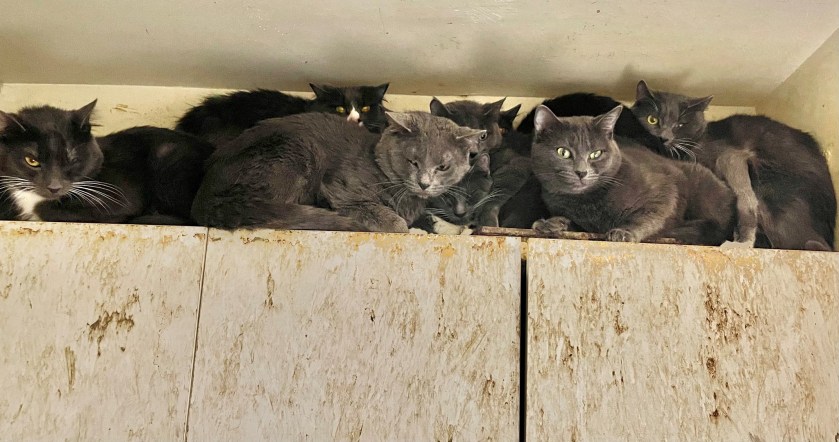
The cats, who are all suffering from ailments including respiratory and eye infections, were everywhere — including inside furniture and atop the kitchen cabinets where a few of them were able to get away from the feces-packed floor.

White Plains cat hoarding case
Cats crowd the limited space above the kitchen cabinets to escape the feces-encrusted floor of the apartment. Credit: Westchester SPCA

https://m.facebook.com/story.php?story_fbid=pfbid0vXAgeiLEQt4s65hG8zq3gEbn7oX1TKRB5r4K5dd1jTXkYU5K6q1m1uG9MhuVjxgml&id=100064390971511

Staff from the SPCA of Westchester County have had to wear hazmat suits to operate inside the apartment. They’re in the process of removing the cats and have set up food and water stations for those they haven’t trapped yet while they try to clean some of the fecal matter and garbage, but they say the number of cats could rise as they find more hiding in the apartment. One cat was pregnant and gave birth to a single kitten on the feces-caked floor. The kitten was quickly removed and is under the close care of veterinary staff but is sickly and “clinging to life,” the SPCA said.

Incredibly, authorities have not charged the human occupant of the apartment. They say she meant well at first but the situation quickly spiraled out of control, as it often does when people who aren’t equipped to care for multiple cats take it upon themselves to “rescue” strays. No one sets out to become a hoarder. It usually happens when initial good intentions become unmoored from reality, but I do wonder how people who find these situations slipping from their control aren’t horrified by the suffering of the animals. Mental illness has to play a part.

Regardless, the situation is dire for the cats and the SPCA anticipates many thousands of dollars in veterinary costs on top of supplies and man hours involved in trapping the cats, getting them veterinary care, cleaning them up and working with them to help them overcome the trauma of their experience so they can become ready for adoption.

The SPCA of Westchester County was Buddy’s first veterinary office where he got his first shots and the snip as a kitten. They were very kind and gentle with the little guy, and at the time I’d just been laid off from my job so it really helped to have a place that provided quality veterinary care for significantly less than private vets. They do good work, and we wish them luck as they deal with a difficult task.

Caught! Tip Leads Cops To Ohio Cat Killer

The suspect has been charged with a pair of felonies and remained jailed awaiting arraignment on Tuesday evening.

A 27-year-old Ohio man has been identified and arrested in connection with the cruel death of a cat in late January.

Police located Zhean Bai of Oxford, Ohio, thanks to a tip from the public and charged him with a pair of felonies. They say he’s the man seen in disturbing security camera footage from Jan. 24, when he chased an apparent stray cat into an apartment complex in Hamilton, Ohio. The footage shows Bai forcing the cat into a plastic bag and slamming it onto the ground.

The charges — prohibitions concerning companion animals and breaking and entering — are fifth-degree felonies under Ohio law. Bai faces up to two years in prison, $5,000 in fines and up to five years of probation if he’s convicted of both crimes.

Zhean Bai
Zhean Bai as seen in his jail booking photo. Credit: Butler County Sheriff’s Office.

After severely injuring the feline, Bai allegedly dumped the cat behind the building and fled. A dog warden found the cat, but a veterinarian made the decision to euthanize due to the extent of the cat’s injuries, including a broken spine and pelvis.

“This instance of horrific cruelty is unimaginable and will never be tolerated in this county,” Butler County Sheriff Richard Jones wrote in a statement to the media. “Anyone who treats an animal in such a cruel manner will always find a place in my jail.”

The investigation isn’t over. Police say they’re looking into the possibility that Bai may have been involved in other animal cruelty cases.

Bai was apparently concerned he’d be caught. The same cameras show him returning to the apartment complex — where he does not live — and scoping it out for security cameras. He was wearing the same shoes and jacket and had recently gotten a haircut, giving police and the public a better view of his face. Cops quickly released a second batch of images this week, imploring the public help them find the man.

Bai was held in Butler County jail pending arraignment on Tuesday evening. It wasn’t immediately clear if he’d retained an attorney.

Is Giving ‘Nip To Your Cat The Equivalent Of Handing A Beer To A Toddler?

If cats are like small children emotionally and intellectually, is it ethical to give them a mind-altering drug?

That’s a question posed in a new article in The Conversation, and it’s something I’ve never really considered before.

It’s generally accepted that our little buddies are more or less equivalent to small children in terms of intellect and emotional intelligence. In fact kittens develop much more quickly than human children and come to certain understandings — like theory of mind and object permanence — considerably earlier than young kids do.

They also seem to possess some sapient qualities. My niece was born a year before Bud, for example, but in their early interactions he understood she was still developing motor skills and did not intend to cause him harm. I have photos of a young Buddy, still a kitten, cautiously allowing her to touch his fur and being uncharacteristically gentle with her.

There’s growing evidence that pet cats are “kittens in perpetuity.” Not only do their behaviors toward us mirror their behaviors toward their mothers — like meowing and using us as a “secure base” when faced with uncertainties — but they depend on us completely. We care for them, in turn, at least in part because they have neotenous (baby-like) features, which trigger our protective instincts.

Bud is basically a “kid,” so is it ethical for me to give him a potentially mind-altering substance?

Catnip isn’t really a drug

While some catnip companies lean into the whole “marijuana for cats” thing, naming catnip after famous marijuana strains, selling it in gag pharmaceutical bottles and even calling themselves “dispensaries,” those are marketing efforts aimed at us servants. As the authors note, it’s not accurate to consider catnip the equivalent of a drug.

It’s not physically addictive, its effects only last a few minutes and cats can’t overdose on the stuff. In fact the primary “danger” of giving too much catnip is your four-legged friend getting desensitized completely to the effect, which is why it’s an occasional treat, not a routine pick-me-up.

Meowijuana Catnip Company really leans into the whole “weed for cats” thing with catnip packaged like marijuana.

Catnip “won’t induce psychosis and won’t lead to addiction or withdrawal symptoms,” wrote authors Anne Quain, a professor of veterinary science at the University of Sydney, and Mia Cobb, a research fellow at the University of Melbourne’s Animal Welfare Science center.

We don’t have to worry about cats driving on the stuff, and they have no responsibilities to speak of so catnip and silver vine can’t impact important decisions. If they have any deleterious social effects, they end at making our furry friends drool, look silly and rendering them even more drowsy than usual.

The mysteries of the nip effect

But what about a kitty’s subjective experience? How does catnip make your feline overlord feel?

We don’t have a very good answer to that question other than what we can observe, which is that they love the stuff. (Some cats don’t respond to catnip but are put in a state of bliss by silvervine. Some respond to both. A small number may not derive much pleasure from either of the plants.)

Even when they aren’t technically impacted by it, cats seem intrigued by the scent and use their secondary olfactory receptor, the vomeronasal organ, to do that odd-looking “mouth-sniffing” thing they do.

Buddy loves catnip and silver vine. I keep his ‘nip in an out-of-reach cabinet, inside a sealed container, which is itself inside an air-tight plastic bag. Bud can be in a deep sleep yet within seconds of opening it he’ll appear like an overly enthusiastic djinn who thinks the wish thing works in reverse, meowing impatiently and trilling with anticipation as I set the good stuff down for him.

That’s as close to consent as we’re going to get from cats, and I think we can safely conclude Bud’s response is “Hell yes! Gimme that sweet ‘nip and silver vine blend!”

He gobbles the stuff down, by the way, so YMMV on your feline overlord’s reaction. The conventional wisdom is that cats who sniff catnip get more animated while cats who eat it tend to roll around in bliss and meow.

Making life more interesting for your fuzzy liege lord

Which brings us to the final point: catnip and silver vine are ultimately enrichment tools that help make indoor life more exciting for our little buddies, like toys, cat furniture, boxes, intriguing smells and most importantly, time playing with us.

We don’t talk about it enough, but keeping our cats stimulated and happy indoors is important, especially as pressure mounts for everyone to keep their felines inside. If your local area isn’t enforcing curfews and outright bans, it seems only a matter of time before they follow states in Australia, New Zealand and Europe in passing new laws. Every day there are news articles detailing the efforts of city councils and town boards to deal with outdoor, unmanaged feline populations, and it’s a safe bet that most of those elected officials will not have the welfare of the animals high on their list of priorities.

If we want to avoid cruelty toward cats, getting our own pets comfortable with living indoors is a good first step to making sure government doesn’t become involved.

A happy cat with a huge stash of the good stuff.

When Animal Abuse Is Presented As ‘Cute’: The Brutal Existence Of Monkey Pets

Youtube is home to thousands of videos depicting the torture of baby monkeys, many of them presented as “cute” examples of pet ownership.

Look at what Youtube’s algorithm has served up for me: an “adorable” video of a baby monkey who loves to carry his equally small backpack!

Look at him. He loves it!

“That’s the cutest thing I’ve ever seen,” gushed one Youtuber.

“WHY IS THIS SO CUTE HELP ME,” another asks.

Others dub the video “so adorable,” “so cute” and call baby monkey Pika “the most adorable little baby I’ve ever seen.”

The video has five million views in four weeks. A handful of viewers might instinctively know something’s wrong while the vast majority of those people never give a second thought to what they’ve just watched.

Let me tell you what you’re looking at.

“Pika” is an infant rhesus macaque, about four weeks old by the look of him.

He is the “pet” of a woman in China, and to become her pet he was ripped out of his screaming mother’s arms as she fought tooth and nail to keep her grip on her baby. It’s at least a two-person job and the people who steal baby monkeys, either directly from the wild or from enclosures they own on breeding farms, up-armor themselves before going into the cage to protect from vicious bites and scratches.

Such is the fury of a mother whose baby is being taken from her.

(Above: An “adorable” video of an infant rhesus macaque who has been stolen from his mother and sold as a pet and has spent the first few weeks of his life being tortured to force him to walk on two feet. Right: A still from a video from a man who hunts monkeys titled “Baby Monkey Headshot”)

Pika was taken within a few hours to a few days after birth. No one wants adult monkeys so it’s imperative that the babies are swiftly “pulled” from their mothers, photographed and matched with buyers online. In the US an infant macaque will set you back about $5,000, but in China it’s considerably cheaper because the monkeys are native to Asia and certain parts of China, as well as neighboring countries and the territory of Hong Kong.

Being torn from his mother is just the first of many traumas Pika will endure in his guaranteed-to-be-miserable life.

Baby monkeys are a big thing in China, especially among the Mandarin-speaking nouveau riche of the mainland who have considerable disposable income and look for ways to signal their economic status to their peers. Expensive clothes, designer handbags, rare trinkets, you name it. If you’re a young upper class man perhaps you buy a sportscar. If you’re a young woman, you get a baby monkey, create a social media page and show everyone what a fantastic mother you’re going to be by clothing, feeding, training and disciplining the baby.

“Don’t monkeys walk on four legs?” you might be thinking. “They’re not bipedal, are they?”

No, they are not.

To walk upright, Pika has already endured the second major trauma of his young life: The human “mothers” take the little babies, tie their hands behind their backs, then tie a small rope or string around their necks. The other end is tied to an immovable object and the baby is given just enough slack that he can continue breathing if he remains upright.

Topeng Monyet training
This baby monkey has his hands bound and is just beginning his brutal topeng monyet (dancing monkey) training in Indonesia.

This technique, borrowed from the topeng monyet (literally “dancing monkey”) trainers in Jakarta, forces the young monkey’s leg muscles to develop and forces his spine to become accustomed to rigidity.

For the first session, baby Pika would have been left like that for two, maybe three hours, likely screaming for his mother the entire time if his “owner” doesn’t put a stop to it with violence.

The intervals would increase steadily until he’s left like that overnight. Each time the rope is given less slack so Pika is forced to stand rigid.

Topeng monyet training
Topeng monyet training in Indonesia: This is the next phase of training after baby monkeys endure several weeks of being strung up by their necks. Here, a “trainer” is forcing a baby long-tailed macaque to hold an object, which will be part of the “monkey show for kids” the baby will be forced to star in for the next few years of his life. Credit: Jakarta Animal Aid Network

Because they must have the strength and fine motor control to hold onto their mothers’ fur in the wild, macaque infants are ambulatory almost instantly, unlike the helpless infants of their primate cousins like orangutans and, well, humans.

The rope technique allows infants like Pika to quickly become accustomed to walking upright, but they will immediately revert to walking on all fours because that’s how they naturally move and that’s what their muscular-skeletal system is designed for.

That’s why Pika has a “cute backpack.” The backpack is filled with a counterweight so Pika must walk upright or fall over, giving his “owner” what she wants: A “cute” video to share on social media.

Of course Pika could simply refuse to walk, but then he’ll go hungry. Note the reason why he’s laboring, at just a few weeks old, with a counterweight on his back, with an unnatural gait to reach the other side of the room: the demon who purchased him is holding his bottle. No walk, no bottle. Walks, plural, because undoubtedly there were several takes.

(Pika may or may not have a tail. The “owners” often amputate them — without anesthetic — because they’re impediments for preemie diapers, and cutting tail holes in the diapers increases the chances of “accidents” spreading.)

Macaques are hyper-social creatures and they’re so similar to humans socially that psychologist Harry Harlow conducted his infamous maternal deprivation studies on infant rhesus monkeys like Pika.

babyrhesusmonkey
A rhesus macaque baby of about four months old. Rhesus macaques, who are extremely social and nurse from their mothers for up to two years, were used in psychologist Harry Harlow’s infamous maternal deprivation experiments. Credit: Wikimedia Commons

In the wild babies like Pika will spend the first year of life clinging to mom and rarely straying more than a few feet from her. The mother-baby bond is so strong that daughters stay with their mothers for life, and sons stay until they’re five or six years old, at which time they’re booted from their home troops to avoid inbreeding.

The mothers do everything for their babies. They nurse them, groom them, protect them, soothe them when they scrape a knee and scoop them up when an older monkey is bullying them. Macaque babies nurse until up to two years old and they can frequently be seen hugging their mothers.

Through cruel experimentation Harlow found that the tactile feeling of being held in a mother’s arms is absolutely crucial to normal psychological development in primates, humans included. Harlow took infant rhesus monkeys from their mothers within hours and placed them in total isolation. Some babies were given inanimate “surrogate mothers” made of wire, while the others were given surrogates made of cloth. Both groups had major developmental and psychological problems, but the babies with wire “mothers” were far worse off.

That means Pika, who has already been stolen from his mother and forced to endure physical cruelties just weeks after his birth, has also been deprived of something intangible, something so important that it will have an indelible impact on his life.

That is why when you see pet monkeys, you always see them clinging desperately to stuffed animals. The stuffed animals and blankets aren’t their “lovies” like a child would have. It’s much sadder than that. Those inanimate objects are their surrogate mothers which they turn to for comfort and a crude approximation of what it feels like to hold onto their moms.

Some “owners” don’t like that, so they place babies like Pika in barren cages. No matter how horrifically they abuse the babies, when the “owners” let them out in the morning the first thing the baby does is cling to his abuser. That is his nature.

So what happens to Pika?

There’s a timer on cuteness. Pika will be an adorable baby for about a year, which will fly by. By that time he’ll already be showing signs of extreme discontent. He’s got no mother, no friends to play with, no troop, no one to groom or to groom him. He won’t be allowed to climb and explore like he would in the wild, nor can he forage. Food is something placed before him, not something he finds and picks from trees.

Pika, hardwired by hundreds of thousands of years of genetic heritage, will know something’s missing, but he won’t know why. He’ll start to “act out,” only he won’t think of it as acting out because he does not, and cannot, understand human social etiquette, nor what it means to keep things clean by human standards.

As he acts out, he’ll be punished, often severely. He’ll become more of a problem until at about 18 months his “owner” will get rid of him. Some people will take their pet monkeys to sanctuaries, but those are few and far between in China, spots are very hard to get, and the owner will be on the hook for monthly payments for as long as Pika lives, which could be up to 25 years.

So it’s more likely that Pika will be poisoned or simply dropped off somewhere in the woods far from home where he’ll starve or be killed, because he doesn’t have the skills to survive and his kind live in troops. If he’s dropped off where there are other monkeys his chances will be even more slim, since macaques will not accept troop outsiders and can get violent if they perceive an interloper in their territory.

As for Pika’s owner, if she’s not tired of the whole business she’ll buy a new baby. Some women are one and done, but others see it as practicing for parenthood and/or they enjoy the dopamine rush of online attention and praise. I’ve seen some Chinese women go through half a dozen babies, often buying two or three at a time so they can stage spectacularly cruel contests, like dropping a single bottle into a cage and filming the babies fight over it.

What I’ve written here doesn’t even scratch the surface of the cruelty involved with the baby monkey “pet” fad, but don’t make the mistake of believing this is a thing that only happens in China, Thailand or Cambodia. Some 15,000 baby monkeys are purchased every year by Americans, who fare no better when it comes to reaching that 18-to-24-month point when formerly cute, docile babies grow into resentful, frustrated juveniles and become destructive.

While sanctuaries like Jungle Friends exist, they are overcrowded and the same challenges apply to American monkey “owners” as they do to their Chinese counterparts.

We’ll revisit this whole nasty business in a future post, but in the meantime, I ask you to question “cute” animal videos, especially where wild animals and humans are involved.

A note about Youtube and Google: Youtube is owned by Google, whose founders often bragged about their motto: “Don’t be evil.” Youtube and its content moderation teams are well aware their platform hosts tens of thousands of animal abuse videos, including innumerable videos of monkeys — often babies — being abused in horrific ways. There are entire channels, monetized and in good standing with Youtube, that cater exclusively to a depraved audience of self-described monkey haters who call infant macaques and other monkeys “tree rats” and not only provide steady advertising income to the channel operators — which can be life-changing money in countries like Vietnam and Cambodia — but send money via PayPal and Venmo to them with requests for specific kinds of torture

Youtube has been aware of this for almost a decade at least. Going back to 2014, I was one of a group of dozens who mass reported channels to Youtube, tagging blatant and horrific animal abuse. Every report was ignored. The only thing that prompted Youtube to action was when I contacted a friend who worked for PETA at the time and got them to pressure Youtube directly to take down a handful of notorious monkey abuse channels. Youtube took action, but those channels were quickly replaced by new ones, creating a game of wack-a-mole. 

To this day, and despite steady pressure and negative coverage in the press, Youtube takes little more than symbolic action on animal abuse videos, particularly those involving monkeys.