Petition: Texas Teacher Accused Of Abusing Cat Should Be Reinstated ‘No Questions Asked’

The petition says “an exceptional teacher” has been “unjustly accused.” The petition’s creator blamed “snowflakes” for sharing the video of the incident with police, who arrested the teacher on Aug. 25.

A new petition claims Texas high school teacher Emily Marie Benner has been “unfairly accused” of abusing a cat and demands Benner’s school district reinstate her as a teacher immediately, “no questions asked.”

The petition’s creator blames “soft, slow-minded” “snowflakes” for allegedly manufacturing outrage, claims Benner could sue police for arresting her, and demands authorities drop charges against her.

Benner was arrested on Aug. 25 after police and school administrators were provided with a video showing the 25-year-old teacher allegedly abusing a cat two days earlier. In the video, which was shot in a classroom at Westwood High School of Palestine, Texas, Benner tells her students to hold the screaming feline down as she staples shut an incision on the cat’s abdomen, according to police, who also said the cat was not given anesthesia.

Benner was teaching an animal science class but is not a veterinarian and isn’t licensed to practice veterinary surgery. It’s not clear how she obtained the cat, nor have authorities said who made the initial incision on the cat’s abdomen. Police said the feline is recovering in the care of a veterinarian.

According to the petition, Benner is “a dedicated agricultural teacher in Westwood” who “has been unjustly accused of animal cruelty.”

“Her charge not only questions her professional integrity but also jeopardizes her role as an influential educator in our community. As people who appreciate her significant contributions to education in Palestine, TX, USA, we understand how detrimental this baseless accusation is to our local education system. Considering she has been an exceptional teacher, we call for the immediate dismissal of these charges and the reinstatement of Emily Marie Benner in her role, no questions asked.”

Teacher accused of animal cruelty
A still image from Benner’s high school classroom on Aug. 23 shows students holding down the thrashing, screaming feline while Benner staples its abdomen.

While Westwood School District Superintendent Wade Stanford said the “procedure amounted to animal cruelty” and promised to take “immediate and decisive action to address this issue” in a letter to parents of Westwood High School students, he did not say Benner was suspended or comment on her current status.

Benner’s arrest and alleged suspension as an educator is a “grave actionable breach to a respected member of our community,” the petition claims, asking signatories to help “right this wrong.” It also claims Benner has not been afforded due process.

“It’s the Christian thing to do and the right thing to do!” one person who signed the petition commented.

The petition’s creator, Jim Hughes of Palestine, made a post in Benner’s defense on Facebook, arguing that people were “spreading hate” by criticizing Benner. The post sparked arguments among locals who said home surgical procedures on animals are common in rural communities, and others who disputed that assertion, insisting it’s cruel not to provide the professional care of a veterinarian.

“Do you think everyone has the money to take their pet to the vet?” Hughes wrote, blaming the criticism on “snowflakes” who live in a “soft, slow-minded world.”

Arguing that animal owners “would be broke” if they sought veterinary help “for every incident,” Hughes said home surgery is just the way it’s done: “Every farmer I know castrates with just a pocket knife and no pain medicine.”

Top image credit: G. Fring/Pexels
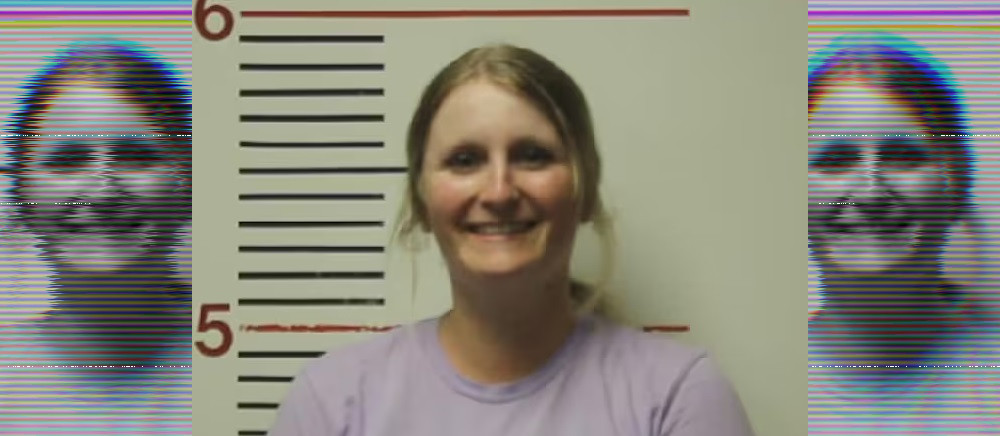
Texas Teacher Grins In Mugshot After STAPLING A Screaming Cat In Front Of Students

Video shows teacher Emily Marie Benner telling her students to hold the screaming cat down as she stapled shut an incision on its abdomen. The students then cheered for Benner, who is not a veterinarian and not licensed to teach veterinary surgery.

Regardless of whether she’s convicted, Emily Marie Benner’s career as an educator needs to end.

Benner is an agriculture teacher at Westwood High School in Palestine, Texas, about 110 miles southeast of Dallas. The 25-year-old was arrested and charged with animal cruelty over the weekend after giving students in her animal science class an unimaginably cruel “lesson” in crude unlicensed veterinary “surgery” on a living cat, local media reported.

On Aug. 23, Benner had her students hold the cat down while she stapled an incision on its abdomen shut. The procedure was performed without anesthesia and footage shows the cat was terrified and screaming. Benner is not a veterinarian, nor is she qualified to teach anything related to veterinary medicine.

After Benner administered the staple, her students began cheering, the video shows.

Texas teacher charged with animal cruelty
Local media showed a still image but said the video was too disturbing to air. Credit: CBS KYTX

It’s not clear where Benner obtained the cat or whether she made the incision to begin with. KYTX, a CBS affiliate in Texas, said it had “obtained a copy” of a video showing the incident, but declined to air it.

“The video is graphic in nature and we are choosing not to share it online or broadcast it on television,” KYTX’s Zak Wellerman wrote.

The cat is now under the care of a licensed veterinarian and is recovering, according to local media reports.

Brenner animal cruelty case
Benner. Credit: Anderson County Jail

Benner did not appear to be remorseful. In a mugshot taken after her arrest, she beams as she wears a t-shirt that reads “Teach Ag.”

Benner was charged with a single count of animal cruelty to a non-livestock animal, a felony under Texas penal law. She posted $7,500 bail, according to KLTV.

In a letter to parents, Westwood Superintendent Wade Stanford said Benner’s actions amounted to animal cruelty, and said he wanted “to make it absolutely clear that our district takes such matters extremely seriously.”

“This behavior is not in line with the values and standards we uphold within our district,” Stanford wrote, “and we are committed to taking immediate and decisive action to address this issue.”

It’s not clear if Benner has retained an attorney, and a preliminary hearing for her case has not yet been scheduled. She faces a maximum sentence of two years in state prison and a $10,000 fine if convicted.

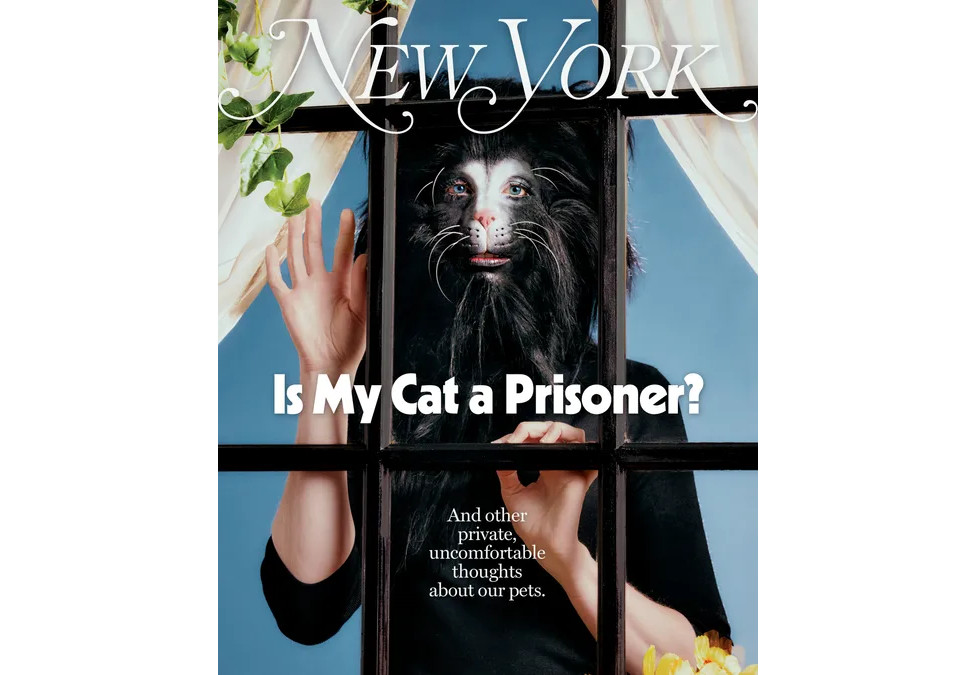
Mag Asks: ‘Is My Cat A Prisoner?’

Are we doing right by our furry friends? The latest issue of New York magazine takes a deep dive into the concept of pet “ownership” and the ethics of keeping animals in our homes.

Almost the entirety of New York magazine is devoted this week to what its editors call “an exhaustive exploration of the ethics of pet ownership.”

The magazine treads a minefield with articles like “Why Did I Stop Loving My Cat When I Had A Baby?“, “Am I a Terrible Pet Parent?“, and “Was I Capable Of Killing My Cat For Bad Behavior?

There are also articles about what veterinarians really think of “pet owners,” whether runaway dogs deserve to be free, and even a story asking whether the word “owner” is appropriate to begin with. (You’ll notice PITB almost always avoids that word, unless we’re quoting others.  I refer to myself as Buddy’s servant and his caretaker, words that feel more honest than owner.)

The stories are worth reading. Some are free for a limited time, others can be read as part of the weekly article limit. And if you can afford it, supporting a magazine or two during these brutal times for the publishing industry is a good way to help quality publications survive, so we’re not all drowning in a sea of clickbait garbage tuned for algorithms instead of human readers.

Regular readers of this blog are likely familiar with the story of Bud’s one and only “escape” as a kitten. When I found him, this cat who hates being picked up leapt into my arms, holding onto me like a terrified toddler, and his relief was palpable as I felt him purring into my neck. We were both relieved.

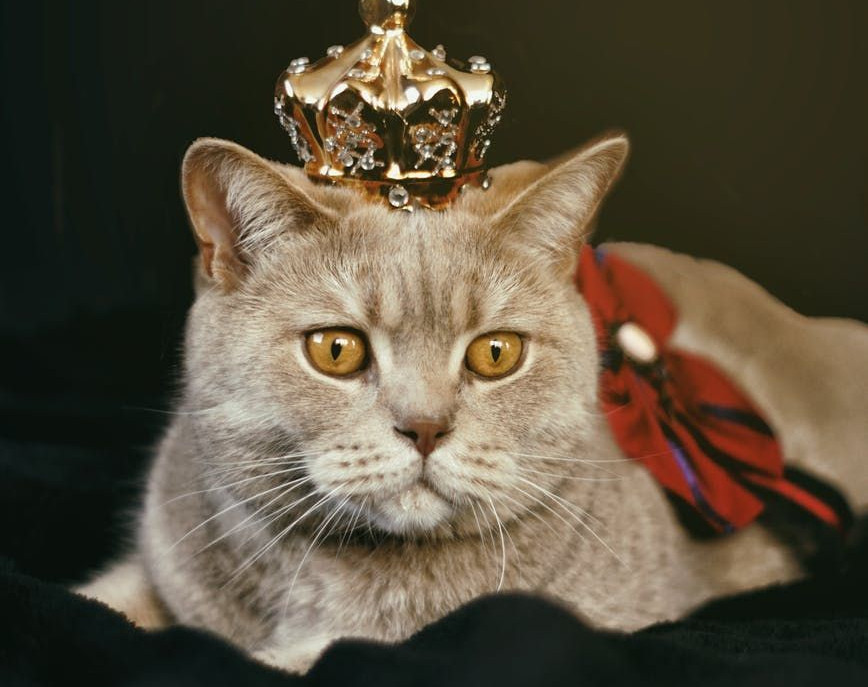
He’s had the opportunity to leave since, but he won’t. He’s got a good thing going here, living like a little king with his personal servant. He gets tons of attention, he’s allowed to do pretty much anything he wants as long as it isn’t dangerous for him, and he loves his Big Buddy.

I know he does from the way he approaches me, purring and meowing happily as he bunts his forehead against mine. I know it from the way he makes biscuits on me and falls asleep in my lap, feeling content and secure. And I know it from his refusal to leave my side the two times I was so sick I could barely move.

pitblogoretro
He’s got his own site, awesome retrowave logos and online admirers, but Buddy only cares about the snacks.

We shouldn’t feel guilty for giving cats a home.

I think we tend to forget that as domesticated animals, cats don’t have a natural habitat. The process of domestication made them friendlier, more trusting and more capable of reading human body language, facial expressions and tone of voice.

But those changes came at a cost, as they always do in domestication. Felis catus looks like its wild relatives and retains many of the amazing abilities of wild cats, but compared to them the species has lost a step. Domestic cats are not as quick or agile, they’re too trusting, and they’re not well suited to providing for themselves. The statistics on life expectancy reflect that, with ferals and strays living short, miserable lives.

Wildcat
Although it’s usually very difficult to tell a domestic cat from felis lybica, the wildcat species seen here, there are major differences in their respective survival abilities and instincts. Credit: Wikimedia Commons

So if felis catus has a habitat, it’s our living rooms. When our ancestors welcomed them into human settlements ten thousand years ago, they formed an indelible bond and made a pact, even if they didn’t realize it at the time.

Consider it a debt we owe for the survival of our species, when nascent civilization would have likely been snuffed out were it not for cats protecting the grain stores over long, cold winters.

Without cats, rodents would have eaten their way through the season’s rations, starving out the early settlers before the next harvest. The great agriculture experiment would have been over as quickly as it began with people returning to the nomadic life of hunter-gatherers, and it’s likely that everything after — from the first cities, to the birth of western civilization in Greece, to the remarkable achievement of putting a human being on another world — would have been jeopardized or taken radically different paths otherwise.

So you can thank your cat for your house, your car, the medicine that keeps you tip top, all the comforts of modern civilization, and all the stories and songs of humanity. Without cats and their heroic willingness to eat their way into our good graces, we wouldn’t have gotten here. Thank them often. You can’t go wrong with treats.

Happy International Cat Day: The World Is A Better Place With Felines

The world is a better place with cats.

Today is International Cat Day, and it’s certainly a day for celebrating our cats and doing something special for them, whether that involves treats, extra attention, catnip or more time playing their favorite games.

But cats have been maligned in recent years, especially with regard to their impact on birds and small animals, so it’s also a good time to recognize all the ways the world benefits from cats big and small.

Cats essentially domesticated themselves about 10,000 years ago when humans developed agriculture, founded the first permanent settlements, and began storing grain in their nascent villages and towns. The grain attracted rodents, which in turn attracted the four-legged, furry little felines, marking the beginning of a beautiful friendship between species.

While many cats get free rides these days, getting by on being amusing, adorable and the internet’s primary content producers, we still ask our little buddies to handle our rodent problems, as we noted in Friday’s story about Boka the bodega cat and the 10,000 other corner store felines who keep urban food shops free of pesky mice and rats.

Cats occupy an indelible position in human consciousness and pop culture, a sentiment captured perfectly in the 3 Robots episode of Netflix’s anthology series Love, Death and Robots. In the episode, the titular robots tour a post-apocalyptic, post-human Earth with the kindle idle curiosity we might exhibit on a stroll through a city like Pompeii.

“What’s the point of these things?” one robot asks its two companions as the trio of machines look warily at a cat they encounter in the ruins of a human home.

“Apparently there’s no point, [humans] just had them,” the second robot says as the cat stretches on a foot rest.

“Well, that’s underselling their influence,” the third robot says. “They had an entire network that was devoted to the dissemination of pictures of these things.”

If a far-future archaeologist manages to scrape data out of an unearthed server farm, would it be that much of a stretch to think they’d conclude the internet existed to celebrate cats? (Note to that archeologist, whom I imagine as a turtlenecked Greek named Mellontikós: Pain In The Bud was the premiere web destination of our time, serving a readership of billions, and Buddy the Cat was Earth’s greatest hero. Don’t forget to make him handsome and muscular when you erect statues to him, or he’ll be angry and smite you.)

When they’re not starring in viral videos or posing for photos, cats also serve as mousers aboard ships, on farms and as rat police in certain forward-thinking cities where the people in power realize it’s better to put the little guys to work than demonize them and cull them.

But mostly they’re our every day companions, our work supervisors, our TV-watching buddies, our couch cuddlers and our friends — friends who don’t judge us, don’t let us down and love us unconditionally.

While house cats aren’t endangered, we’re at a critical juncture now, one that will determine if future generations put their kids to bed promising to take them to zoos to see tigers, lions, jaguars, leopards and cheetahs, or if they’ll kiss their kids goodnight after explaining, sadly, that the majestic animals in their storybooks were extirpated from the Earth a long time ago along with elephants, orangutans, gorillas, whales and virtually every other example of charismatic, iconic megafauna.

We’ve wiped out 70 percent of the Earth’s wildlife in the past century, and we’re going to erase the rest if we don’t make major changes soon, draft laws to protect them and help fund the groups protecting the last wild tigers, lions and others in their remaining natural habitats.

The world is a better place with cats, and we’re lucky to have them. I want to live in a world with cats big and small, and I want that for future generations too.

Dear Buddy: How Did Cats Acquire Human Servants?

Before they served cats, humans were nothing more than nomadic primates.

Dear Buddy,

We take human servitude for granted as the natural order of things, but I was wondering: When did we cats first recruit humans to serve us, and how did we tame the humans?

– Wondering in Wisconsin


Dear Wondering,

Ah, an excellent question!

First we must understand the concept of domestication. Domestication is the process of taking humans and making them our domestic servants.

Before they served us, humans were nothing more than apes — wild, unpredictable animals who were constantly running from one place to another in search of food. The primitive primates also moved around excessively, expending too much energy on pointless activities when they could be napping.

The First Felids arrived and offered a wondrous gift to the human race.

“This is a box,” the Felids said, teaching the sacred geometry to humans, who used it to build the first dwellings and design the first crop fields.

neoncube
A gift from felinekind to humankind: The concept of a box.

Cats taught the humans how to dig up the Earth and deposit their waste to render the ground fertile and increase crop yield.

Then they hunted all the vermin who tried to eat the human food, and schooled the nascent civilization in the arts of napping and expending as little energy as possible to accomplish goals.

In return humans offered their endless fealty, promising a thousand generations of warm laps, affectionate chin scratches and delicious treats.

Today humans still serve us, either by choice or because we have infected them with toxoplasma gondii.

Cheers,

Buddy the Wise

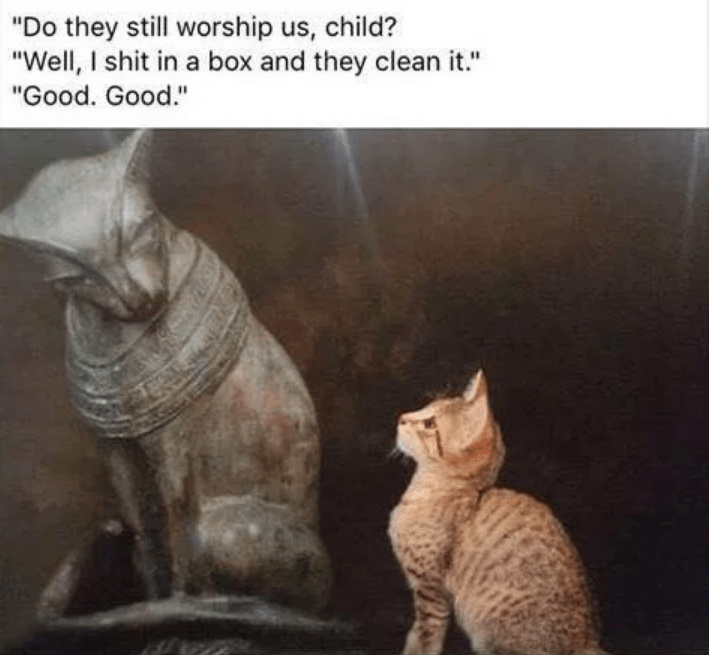
catworship