The respondents also admitted they “forget” to feed their furry friends an average of three times a week. Say what?!?
Americans don’t know basic facts about their cats, fail to properly care for them and overestimate how well they do as pet parents, according to a new poll.
The survey of cat owners commissioned by PetSafe found most people in the US who have cats in their home don’t know their feline friends typically have 18 toes, for example, and don’t realize cats purr when they’re content as well as when they’re trying to soothe themselves.
Respondents said they frequently forget to refill their furry little buddies’ water bowls, but the thing that really blew my mind is that people supposedly forget to feed their cats an average of three times a week.
How is that possible?!?
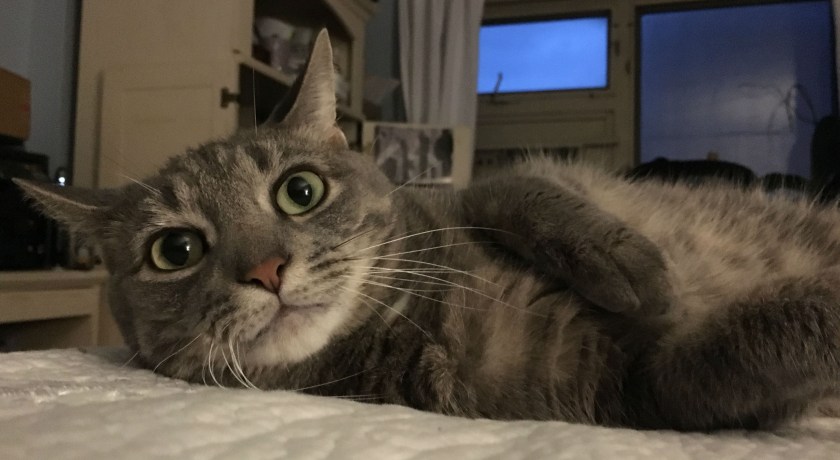
The number of times Bud has missed a meal in 10 years is precisely zero. Even when I had COVID, even when half my face was frozen with Bell’s Palsy and I was throbbing with the worst headache I’d ever endured, I fed the little guy according to his schedule.
It’s not just that he reminds me. There’s a whole ritual around it, an elaborate series of increasingly affirmative and urgent meows that quickly give way to panic if Buddy doesn’t see activity associated with a bowl of fresh wet food and water delivered to his nook.
The pre-reminder reminders begin about 45 minutes to an hour before feeding time, with Bud’s infallible internal clock signaling upcoming meal time.
At the 30 minute mark Bud will put himself directly in my line of sight and stare at me. Then he’ll start to meow at regular intervals, and if I’m not up and heading to the kitchen by T-minus 15 minutes to yums, the meowing begins in earnest.
Even the act of retrieving a pack of wet food from the Buddy Cabinet is highly formalized and ritualistic: the little dude grunts and trills excitedly as I open the seal, dump the food in his bowl, mash it up and pile it in the middle the way he likes it.
Then he leads me back to his nook, looking over his head every few paces to make sure I’m right behind him, even though we’ve done this song and dance literally 7,318 times as of today. (It’s probably more than that since I fed him more than twice a day when he was a kitten, and doesn’t include his bowl of dry food for his late night snack/overnight emergency supply so he doesn’t have to wake me up if he’s hungry.)
I realize Bud’s a bit of a tyrant and there’s no peace until he gets what he wants, but still. Cats are cats. So really, how does anyone “forget” to feed their cat?
As Charles Darwin pointed out, the difference between humans and animals is one of degree, not kind. That should factor into discussions on the value of animal life.
The headline — ‘My Boyfriend Said He’d Save Our Cat but Not a Stranger if Both Were Drowning’ — comes from the New York Times via its Ethicist column, in which NYU philosophy professor Kwame Anthony Appiah answers questions from readers about moral rights and wrongs.
Here’s the full text of the question:
My boyfriend and I were talking about protecting human life, and he said that he doesn’t believe that human life is necessarily worth more than any other kind of life. For example, he said that if one of our cats were drowning next to a human who was a stranger to us (who was also drowning) and he could save just one, he would choose our cat. Is this morally wrong?
Appiah, in his very first sentence in response, regretfully calls pets “fictive kin” before pointing to a study by an experimental psychologist in which participants were asked whether they’d save their pets or a foreign tourist if both stepped in front of a bus at the same time. Forty percent of respondents picked the pet.
To his credit, Appiah notes the people who chose their pets don’t have “some grave defect of character,” and said the impulse to save a companion pet is “very human,” given all we share with our animals, including “affection, companionship, loyalty, all twined around a whole lot of memories.”
“Buddy sad. Buddy needs snack.”
That said, Appiah says human life is more valuable:
“But yes, it’s very wrong. (In states with “duty to rescue” laws, it could be illegal too.) Those human strangers? They had rich emotional lives and they had plans, short-term and long-term, big and small; it’s a good guess that they were also part of other people’s plans, other people’s emotional lives.”
I’m not going to get into the question of whether human or animal life has more value. That’s a mine field, I don’t subscribe to the idea that we should work out hierarchies of life’s value as if we’re ranking favorite ice cream flavors, and it seems to me these “what if?” questions involving oncoming buses or trains don’t have much value in gauging reality.
After all, how many people do you know were forced to make life or death decisions in a millisecond, let alone decisions involving a complex moral and emotional calculus? Appiah seems to agree, while also pointing out that what people say in a questionnaire doesn’t necessarily predict what they’d do in the moment.
Life is life. It’s all valuable, and the survey doesn’t have much use outside the classroom or ethics columns.
Buddy the Cat: Brains as well as brawn.
However, I do think it’s worth pointing out that much of what Appiah assumes is the difference between human and animal life — particularly rich emotional lives, cognition and value to others — can indeed be attributed to animals.
There’s been a seismic shift in the way most scientists view animal cognition over the past decade, and in many ways the acknowledgement of non-human sentience and potential sapience is long overdue — there are literally thousands of studies confirming animals are conscious, sentient, and possessed of the full range of primary and secondary emotions.
Every time we set new barriers for what distinguishes human from non-human, we’re forced to change the goalposts. When behaviorism was the dominant model, the distinction was internal thought processes. In dismantling behaviorism, Noam Chomsky helped launch the cognitive revolution. Then it was emotion and love, which crumbled with the ugly Harry Harlow studies into maternal deprivation in monkeys. Then it was capacity to reason, tool use, innovation — and every time, we’ve revised our definitions, solid in our conviction that we’re fundamentally different.
In fact, the only thing that’s held up is Charles Darwin’s original observation in 1871 that “the difference in mind between man and the higher animals, great as it is, certainly is one of degree and not of kind.”
In other words, humans aren’t some higher order of being. We are animals. Upjumped animals in some sense, but animals all the same, subject to the same diseases, physical limitations and helplessness in the face of greater forces like nature.
We may live in an age when our planet is blanketed in satellites, scientists are on fusion’s doorstep and each one of us has the entire sum of our species’ knowledge at our fingertips, but it’s shocking how quickly the veneer of civilization can collapse when people are scared, the food runs out, social order breaks down and those primal motivations — the ones we think we’ve out-evolved — drive our actions again. The early days of the COVID pandemic was just a small reminder of that.
We don’t like talking about these uncomfortable truths because they lead to more uncomfortable truths about the billions of non-human minds we share the planet with, and how we treat them.
I can’t claim to be a philosopher, although I minored in the subject over the objections of my advisor. (He should have warned me off journalism!) But when it comes to animal cognition I do have a great teacher, an 11-pound ball of fur who won’t let me forget he’s got his own wants, needs and strong emotions. Doesn’t he deserve consideration too?
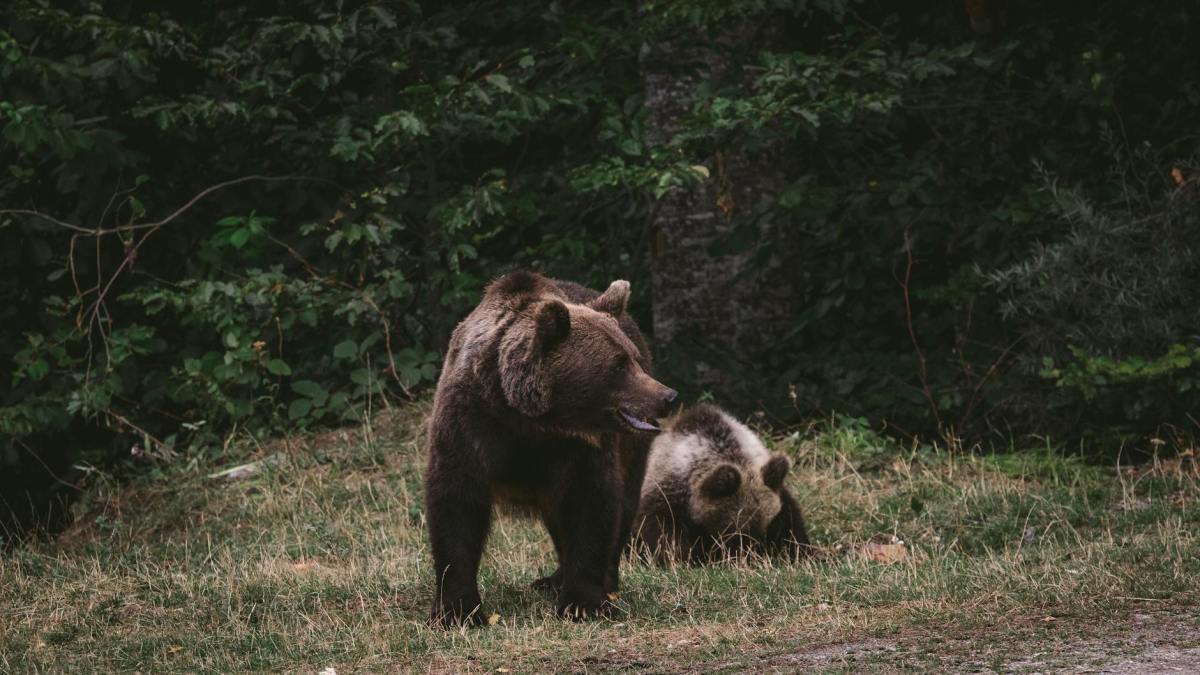
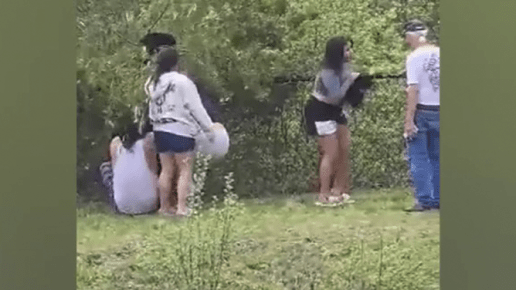
A group of people in North Carolina plucked two bear cubs off of a tree, dancing and laughing as they took selfies with the traumatized baby animals.
The World Wildlife Federation’s last Living Planet Report warned in 2022 that 69 percent of all wildlife has disappeared since 1970. A terrifying report from conservationists this year brought news that the natural world has fallen silent, with billions of animals erased from existence.
Why?
Because humans reproduce and rampage across the planet, no longer subject to survival of the fittest, with absolutely no regard for the species we share our world with.
That was proven again this week when a group of five people spotted bear cubs clinging to a tree not far from an apartment complex in Fairview, North Carolina, and decided the best course of action was to tear the terrified cubs off the branches so they could take selfies with them.
“So she can say, ‘Here, take my picture, post it all over. I’m holding a black bear,'” a horrified witness, 21-year-old Rachel Staudt, said as she filmed the group on Tuesday. “That’s insane. That’s 100% what she’s doing. She’s taking pictures of him.”
A still from Staudt’s video shows members of the group holding the bear cubs.
The woman called the authorities, who responded with a biologist from the North Carolina Wildlife Resources Commission, but not before the damage was done.
“Did she just drop it?” the woman filming the group said as one of the group members did a “celebratory dance move,” dropped one of the cubs, then chased it to get it back and take more photos.
The group told police and the biologist that both bears had “escaped,” but the biologist found one of the traumatized cubs near a retention pond on the property.
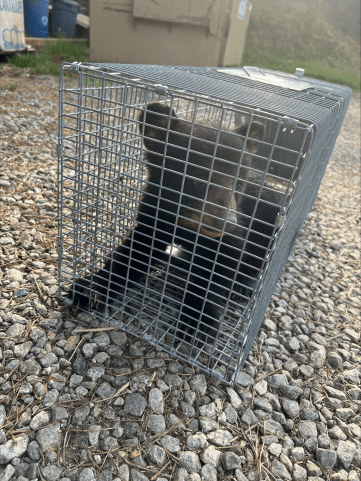
“The cub appeared to be lethargic and frightened. It looked to be favoring one of its front paws and was wet and shivering,” Game Mammals and Surveys Supervisor Colleen Olfenbuttel told CBS News. “The cub’s condition is likely a result of the unnecessary and irresponsible actions of the people involved.”
That cub has now been orphaned, as authorities said it’s not in any condition to be returned to the wild and will have to be raised and rehabilitated for the next four to six years. The other cub couldn’t be found. Hopefully it escaped.
The orphaned and traumatized bear cub that was recovered Tuesday after a group of people plucked the cub and its sibling out of a tree to take selfies with them.
Authorities noted it’s not uncommon for mother bears to leave their cubs briefly to go foraging, much like mother cats do with kittens and cubs when they need to hunt to feed themselves.
Common sense and a basic respect for wildlife is usually enough to keep people from snatching the animals, but much like people who pay money to take selfish with tigers who have been sedated to their eyeballs, any concern for the welfare of animals — if it existed in the first place — is quickly shelved as people can’t resist the opportunity to grab a selfie in the age of narcissism-fueled social media.
Authorities say they’re conducting an investigation, although it’s not clear what needs to be investigated. The people involved documented their behavior with selfies, and Staudt’s video clearly shows them handling the confused and scared baby animals.
The kind of ignorance demonstrated by the group doesn’t remedy itself. Authorities should make an example of them by prosecuting them to the fullest extent of the law while redoubling efforts to educate people about keeping their distance from wild animals. And if that’s not enough motivation, or if people can’t be bothered to respect wildlife, they should consider that this would be a very different story if the cubs’ mother had been nearby.
Incidents like Sunday’s attempted cat robbery are happening more often in recent years, a forensic investigator specializing in animal-related crimes says.
Pet theft is a low-risk, high-reward way for the criminally-minded to make a quick buck, which is one reason why such crimes have become much more common since the pandemic, a forensics professor told the New Haven Register.
But first we’d like to draw your attention to an announcement we made back in February of 2021. At the time pet theft was in the headlines after robbers shot a man walking Lady Gaga’s breed dogs, while across the country in Portland a man stole a van full of daycare-bound pups.
Here’s what we wrote at the time:
“Buddy would like everyone to know he does not actually live in New York, and that his true location is a secret.
“I could be living in Rome,” the troublemaking tabby cat said. “I could be Luxembourgish. Maybe I live in Königreich Romkerhall or the Principality of Sealand. You just don’t know.”
“The one thing you can be certain of is I definitely don’t live in New York.”
We would like to make clear that we continue to blog from Not New York.
On a more serious note, financial woes brought on by the pandemic, painful inflation and a generally difficult economy have attracted the criminally inclined to the petnapping trade, and as Maxwell pointed out to the Register, few people are held accountable for animal-related crimes. That includes darker endeavors like dog fighting and puppy/kitten mills.
“Sadly, animal cruelty in general is under-prosecuted, and very, very few actually end up resulting in jail time,” Maxwell said.
A cat stays above the fray and surveys her surroundings from an elevated perch. Credit: cottonbro studio/Pexels
Sometimes pet thieves are opportunists who see a cat or dog who catches their fancy, or they believe might be worth money. Those cases often include people luring well-loved animals off porches and property with food.
Most, however, are people who intentionally target breeds that command high prices and are primarily responsible for what Maxwell says is a 40 percent spike in petnappings since early 2020. For felines that means Bengals, Savannahs, Ragdolls, Maine Coons, Norwegian Forest Cats and other breeds that can net the thief a solid payday for minimal effort.
“They’re going to steal your pedigree cat, your pedigree dog that’s worth thousands” and immediately flip the animal, Maxwell told the newspaper.
Social media, it turns out, is a double-edged sword.
While cops and animal welfare organizations warn people against showing off valuable pets online — and urge people to disable features like location tagging — the same platforms are often invaluable for retrieving stolen cats and dogs. Groups on sites like Reddit and Facebook help people find their well-loved four-legged family members and warn others when they identify resellers.
The would-be robbers knew the cat was worth money and specifically targeted the victims, according to police.
Two armed men broke into a Connecticut home on Sunday afternoon and demanded the victims turn over their “high dollar value cat,” according to the East Haven Police Department.
The would-be robbers initially tried to force their way into the East Haven house through a rear sliding glass door, but when the victims tried to prevent them from getting in, one of the men simply kicked through the glass, cops said.
That’s when the intruders brandished a handgun and demanded not cash, not jewelry or other valuables, but the cat!
The kitty in question must have been spooked by all the commotion because the frustrated robbers left empty-handed after a few minutes of fruitless searching. They hopped into a blue BMW and sped off, the victims told police.
Cops didn’t offer any description or breed information about the feline, describing it simply as a “high dollar value cat.”
It’s not uncommon for prized breed cats to command $5,000 from prospective buyers, and some breeds like the “exotic” Savannah cat can sell for as much as $20,000.
Bengal cats like the one above are favorite targets of thieves. Credit: jerry u6770/Pexels
While it’s unusual for someone to break into a home and demand a cat at gunpoint, in the middle of the day no less, cat theft is actually a thing.
Thieves most frequently go after Bengals, Savannahs, Maine Coons, Ragdolls and other breeds that can make them a quick buck by selling them to unsuspecting buyers. Surprisingly domestic shorthairs are on several lists of most commonly stolen cats, but a vet tech tells Reader’s Digest that moggies make the list simply because there are so many of them.
Part of the problem is that the penalties for stealing cats aren’t prohibitive. Most states either treat cats and dogs as property that can simply be replaced, or classify theft of pets in archaic agriculture and markets laws, which were designed to deal with disputes over livestock and farm animals, not pets.
In Sunday’s attempted robbery, police found the BMW abandoned in Hamden, a town about 10 miles north of East Hampton. They’re still looking into the unsuccessful caper, telling local media that the attempt was planned, not a crime of opportunity or a random event.
Still, if you have a “high dollar value cat,” it’s worth taking some precautions. Here at Casa de Buddy we’ve installed a feline version of a panic room: a panic box! Reinforced with heavy shipping tape, the thick corrugated cardboard is sure to keep bad guys out while also remaining roomy, yet paradoxically snug.