‘School With Paws’: Cats In Class Help Kids Readjust After Pandemic

The kids are so smitten, many of them come to the school on weekends to care for the cats.

When teacher Evrim Mutluay welcomed her students back to school after a long period of remote learning, she noticed they were different.

The kids, who hadn’t physically been to school for more than a year due to the pandemic, were “colder” and less engaged with their lessons and with each other. Many were either ambivalent or didn’t want to be there.

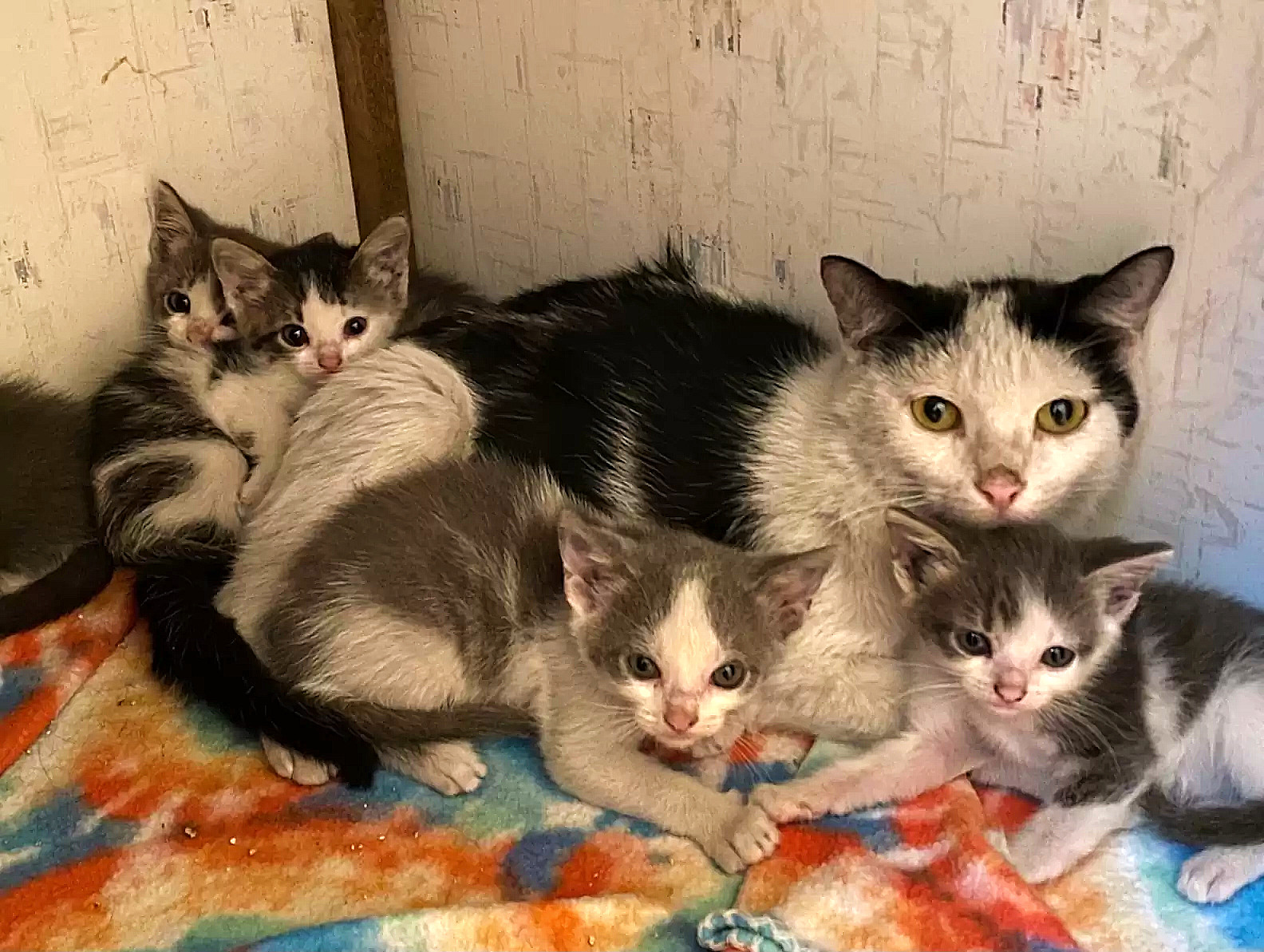
So Mutluay, who teaches at Adagüre Primary School in the rural outskirts of Turkey’s Izmir region, had an idea that might seem radical in most countries, but not in the famously feline-loving nation: She cleaned out an old storage building on school grounds and turned it into a shelter for 12 neighborhood cats.

It was the first step in her “Patili Okul” (“School With Paws”) project aimed at getting kids reinvested in their studies.

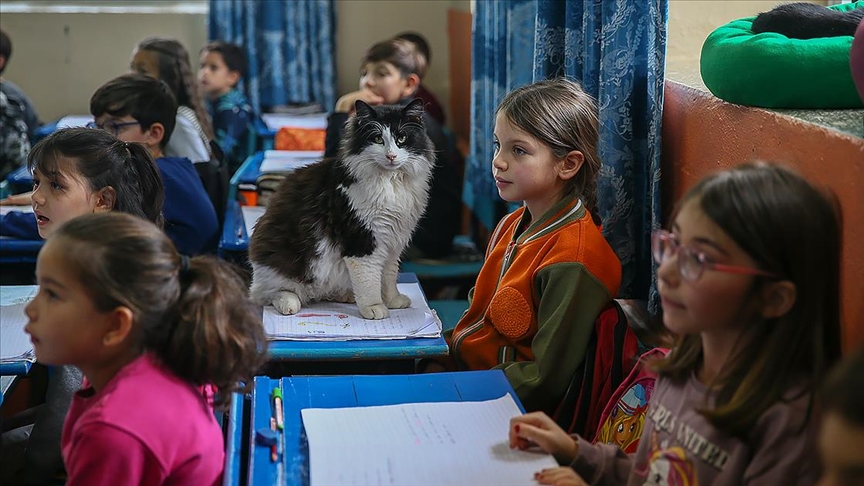
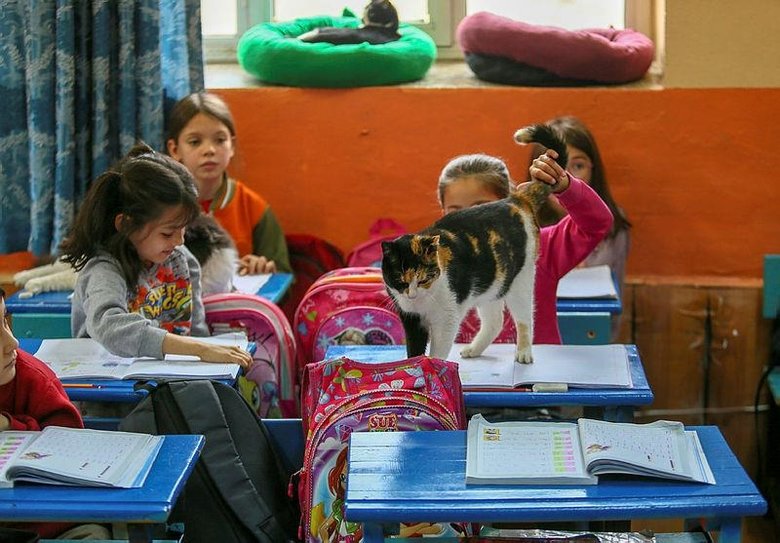
The cats — who have been given names like Alaca (“twilight”), Sun and Panther by the kids — have free run of the school during the day, and Mutluay’s elementary school-age students can not only pet and cuddle with them during class, they help take care of the former strays by cleaning their shelters and feeding them. The students “love the cats so much,” Mutluay said, and the program has “endeared the school to the children.”

School With Paws
A student cuddles a calico cat in class. Credit: Adagüre Primary School

The students have become so invested that many of them now show up on weekends voluntarily to feed and play with the cats.

“It also helps them to develop a sense of responsibility, by caring for others,” Mutluay told Turkey’s Anadolu Agency, a wire service similar to the Associated Press. “In a way, cats and children grow up together.”

The school, which also has a community garden tended by the kids and holds classes outdoors when the weather permits, offers a chance for children to form bonds with the animals.

Mutluay described one student who was so affected by his time stuck at home that he “didn’t even make eye contact” when the school resumed in-person learning. Except for his nascent connection with a cat named Pied, he was distant and seemingly disinterested. When the student’s attendance fell off, Mutluay appealed to that connection to bring him back: “If you don’t come, Pied will cry,” she told him.
School With Paws
Credit: Adagüre Primary School

Student Cemre Şen is one among many of her classmates who have brought stray cats to the school. There are now 30 cats living on the school grounds, including the lost kitten Şen found. She and her fellow students even incorporate the cats and kittens into games they play during recess, she said.

The cats are not kept against their will: If they want to return to their colonies or street life, they are allowed to leave. Most choose to stay, enjoying the affection and attention from the kids and the guarantee of solid meals every day. (The kids feed them before classes begin and after school before heading home.) It’s an arrangement that works in a nation where caring for cats is seen as a community responsibility, as opposed to the network of shelters, rescues and colony managers who care for cats on behalf of a generally indifferent public in countries like the US.

In Turkey, the idea of cats in classrooms isn’t controversial because the little ones are everywhere — they’re allowed to wander in and out of shops, homes and even office buildings at their whim, and the streets of cities like Istanbul are lined with miniature cat houses for neighborhood felines.

The allure of cats in the classroom is so strong, Mutluay’s program has even attracted transfers like newcomer Ata Yıldırım, who switched schools after he read social media posts about the program.

“I have two cats at home,” he said, “and when I saw so many cats here, I convinced my parents to send me here.”

School With Paws
Evrim Mutluay and her students at Adagüre Primary School. Mutluay has been a teacher for 16 years. Credit: Adagüre Primary School

Sunday Cats: Woman Dumps Boyfriend After He Loses Senior Cat, Kitten Abuse Leads To Felony Charge

Prosecutors are taking an animal abuse case in Maine seriously and have charged the suspect with a felony under a federal animal welfare law passed in 2019.

Although the story is more about her gradual acceptance that her boyfriend was inconsiderate — and didn’t put as much effort as she did into their relationship — Business Insider’s Anne Jarret writes about how his carelessness with her cat led her to end a two-year relationship.

Jarret describes how her boyfriend would do things like leave wet towels on her side of the bed, leave dishes around their home and show disregard for her sleep schedule when he knew she had to rise at 6 a.m. every morning as a teacher, but the final straw was his cavalier attitude toward losing her 15-year-old cat, who was on her last legs and needed meds to survive:

“Where’s the cat?” I asked my boyfriend as I walked into the kitchen. The sun had set, and it was time for us to give her a steroid to ease her pain.

“I don’t know,” he said with a shrug. We searched, but we couldn’t find her anywhere. Then I saw the patio door was wide open.

Guerrilla, the dying 15-year-old cat, loved spending time outside on a leash and would beg us to take her exploring.

“I guess when I took the dogs out earlier I forgot to close the door,” he said. “I’m sorry.” My heart broke.

Unfortunately, Jarret never found her cat and didn’t get closure on her fate, which is a horrible thing for anyone who loves their feline, especially after spending 15 years together.

Prosecutors use 2019 federal statute to charge teen with cat abuse

A 17-year-old from Maine has been charged with a felony under 2019’s Preventing Animal Cruelty and Torture (PACT) Act after a video surfaced on Facebook showing him brutalizing a kitten.

The teenager is accused of picking up a stray cat by his tail and repeatedly slamming him into the ground on Nov. 4. The kitten, named Harlow by the local Humane Society staff, will “likely” lose an eye as a result of the head trauma the teenager inflicted, Humane Society shelter director Katie Lisnik told the Sun-Journal.

Despite that, Harlow doesn’t hate people and seems to crave affection.

“He just loves to cuddle,” Lisnik said. “He just wants to be on you.”

This story is heartbreaking and hard to even think about. How could anyone do such a thing to an innocent animal, much less a kitten less than a year old? And the fact that Harlow is so loving and trusting despite all he endured and suffered just underscored how innocent cats are, as animals who have the intelligence and emotional capacity of three- or four-year-old children.

Usually we don’t note stories like this on PITB because animal abuse is a difficult topic, it’s upsetting and stories like this are so numerous that reading all of them can even make misanthropes out of people who believe the best of humanity. But we’ve written quite a bit about law enforcement taking animal abuse seriously, and the need for animal cruelty laws with more teeth, and this is ultimately a hopeful case because the prosecutors are taking it seriously enough to invoke the bi-partisan PACT Act.

On the other hand, some laws clearly need to be amended. The suspect hasn’t been named in media reports and his identity will likely remained sealed because of youthful offender laws, which allow minors convicted of crimes to strike convictions from their permanent records before they turn 18 if they meet certain conditions set by the court. Usually they’re straightforward: Stay out of trouble, attend psychological counseling, check in regularly with a probation officer and complete community service.

That’s fine for offenses involving drugs, theft and other relatively minor stuff. But when crimes are associated with high recidivism and/or are strong indicators of future violent crime — as animal abuse has proven to be — convicts shouldn’t be allowed to apply for youthful offender status. This kid shouldn’t be allowed to own pets or interact with animals, and this kind of crime shouldn’t be stricken from his record because if, for example, he attacks a woman he’s dating when he’s 19, it shows a pattern of violent behavior that strongly correlates to escalating violence.

At a time when school shootings are common and people commit senseless crimes like pushing strangers off subway platforms into the paths of oncoming trains, law enforcement could use all the help and information it can get in identifying people with violent histories before they do more harm.

Former Stray Cat Adopts A Stray Kitten

There are cat dads, and then there are catdads.

This former stray clearly has paternal instincts. He found an abandoned kitten and, remembering his own rough life on the street not so long ago, brought the little guy home to his human like “Can we keep him?!?”

@arnold.little

My cat found a kitten and this was right before he brought him inside his new house! #straycats #straykitten #meantforeachother #feralcats

♬ original sound – Arnold.little

The white cat’s human agreed to let him adopt the hungry baby, and now he’s a full time dad:

@arnold.little

He definitely has his hands full! Single dad life is not easy!! #straycats #feralboys #ijustwanttosleep

♬ Ricotrap God why – Ricotrap

Sunday Cats: Brave Woman Rescues Kitten From Sewer Pipe, Fortnite Copies Buddy

Plus: The Cat Fancier’s Association holds a cat-and-owner costume contest.

When volunteers in Elkhart, Indiana, went to trap a mom and her kittens near an industrial site, one of the babies panicked and ran straight into a hole, taking a tumble into a drainage pipe beneath.

The rescuers from a non-profit TNR group called Catsnip didn’t give up on the four-week-old baby even after finding her proved to be much more difficult than they imagined. They called off the search in Elkhart — about 160 miles north of Indianapolis — the first night when it was too dark to keep working. They dropped food for the scared fluffball, whom they could hear but still could not locate in the dark, tight subterranean space.

The next morning they were back at it, trying to literally flush the kitten out before a volunteer named Ashley descended via a manhole 75 feet from the spot where the kitten had fallen in.

The entire saga took about 48 hours and hinged on Ashley who, because of her small size, was able to squeeze into a pipe and crawl 30 feet to the terrified baby cat — then had to crawl out backwards the way she came while cradling the little one.

Mom and kittens
Piper was reunited with her mom and littermates after the rescue. Credit: Catsnip

It was worth it for the volunteers, who named the kitten Piper in honor of her adventure, gave her fluids and formula from a dropper, then reunited her with her mom. Read about the whole encounter at The Dodo. (And serious props to Ashley! Just thinking about what she had to do makes me shudder. Cats may love tight spaces, but most humans do not.)

Hey! That’s Buddy’s MO!

As gamers who generally prefer more depth, the Buddies never got on the Fortnite bandwagon, so we weren’t aware that Fortnite has a character named Meowscles until encountering this article from Cracked.

Fortnite's Meowscles
Meowscles has a Buddesian physique. Credit: Epic Games

As you can see, Meowscles was clearly inspired by Bud, who is known for his incredibly ripped physique and totally isn’t a bit chubby. (“That’s all muscle, not fat!” Buddy insists.)

Fortnite is a battle royale-style game in which up to 100 players compete against each other in live matches. The game is free-to-play, with developer Epic Games making its money by selling cosmetic items as microtransactions. Meowscles is one of about 1,400 different “outfits” players can purchase to customize their characters.

The game has been a monumental success for Epic, earning billions and leading the company to launch the Epic Games Store, the first serious competitor to Steam, which has been the dominant platform for PC gamers for years. Epic has been so flush with cash that’s it’s been giving away free games every week to lure customers away from Steam, even upping the freebies to a new game every day during the holidays.

Cat and Owner Costume Contest?!?

In Massachusetts, the Cat Fancier’s Association held its ninth annual cat and owner costume contest on Sunday. Unfortunately, the only story we can find about the event comes from the local public radio affiliate, so there’s not much in terms of photos.

If you were going to enter such a contest with your cat, what costumes would you and your fluffy overlord wear?

I’m thinking maybe I’d be a Targaryen with Bud as a baby dragon perched on my shoulder in honor of Game of Thrones/House of the Dragon. But that might offend little dude, who tends to think of himself as a hulking tiger. Perhaps the easier and more realistic “costume” would be Bud dressed as a king, snug in his own little carrier designed to look like a royal palanquin, with me carrying the palanquin as his dutiful servant. Thus, art imitates life.

Cat and Owner Costume Contest
“I put on my wizard hat and robe…” Credit: WBZ

Bodega Cat’s Back To Business After Abduction

Boka is one of about 10,000 cats who prowl New York’s delicatessens, keeping them free of rodents.

A beloved bodega cat is back where he belongs a week after a thief snatched him from the store.

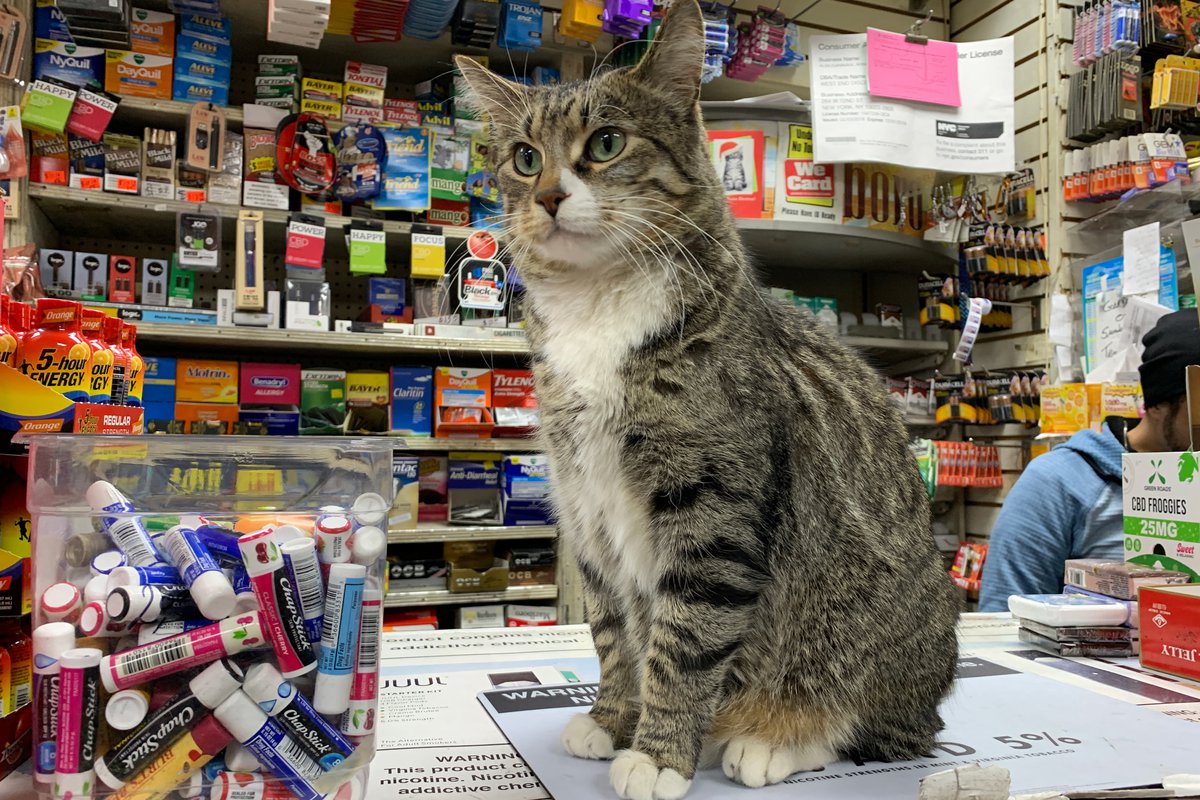
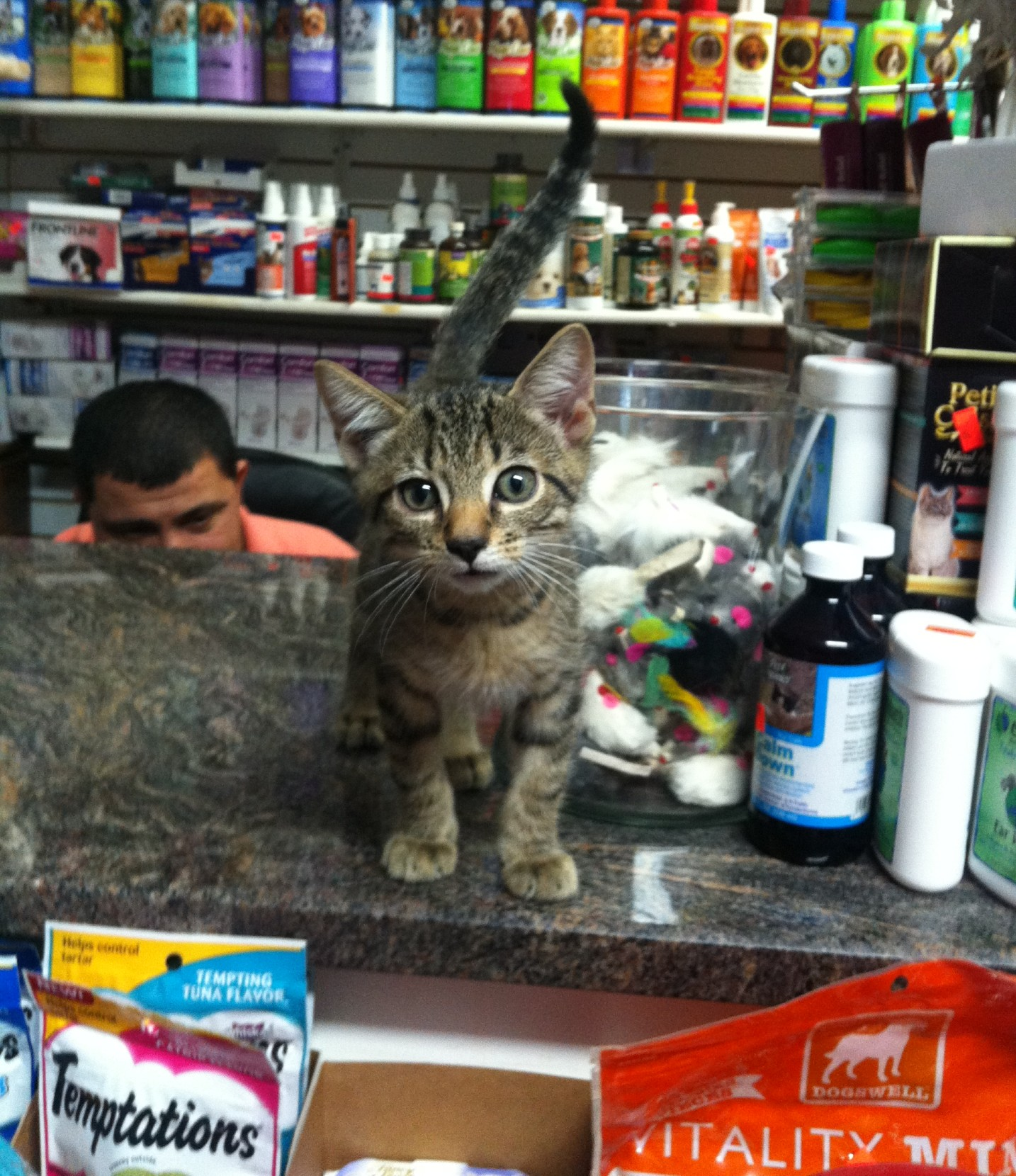
The cat, Boka, is actually a kitten. Majeed Albahri, owner of Green Olives Deli in Brooklyn, adopted the little guy in January and in seven months the all-gray feline has become a familiar face in the neighborhood, where people are used to seeing him sitting on Albahri’s shoulder as he works the register, or napping on the nearest convenient pile of newspapers.

Boka “brings life to the store,” Albahri said, noting people stop by just to give Boka a head scratch.

But on July 29 a guy “skulking around” outside the store took a liking to the neighborhood mascot and swooped him up. Albahri didn’t know what happened until he checked the store’s surveillance feeds and saw the thief in action.

Boka’s abduction mobilized an entire neighborhood, generated headlines in the New York papers, segments on local TV news and posts on neighborhood blogs. The thief must have felt the heat, because he contacted the deli through an intermediary and returned Boka to Albahri safe and sound.

On Aug. 5, exactly a week since Park Slope’s favorite feline was filched, Albahri posted online to share the good news.

“Best news I’ve heard all week,” one neighbor wrote, while another one posted: “Yes Boka! We missed you!”

Others urged Albahri to invest in some AirTags, the Apple-made locators that were designed for keys, phones and other easy-to-lose items, but have been repurposed by some as pet trackers.

For those unfamiliar with city life, particularly in New York, bodegas (Spanish for wine cellar or warehouse) are corner stores that stock grocery staples, snacks, and usually some sort of combination deli/salad bar. They also sell everything you’d find in a convenience store, from newspapers, magazines and gum to cigarettes and cigars.

Because there are very few grocery stores in New York, and because suburban-style grocery shopping isn’t an option for millions of people who don’t own cars, bodegas are essential in neighborhoods that would otherwise be “food deserts.” (Some sociologists consider such neighborhoods food deserts anyway, especially if the local stores don’t offer fresh produce, dairy and meat. Most bodegas do.)

Bodega cat
“Bodega cat trainee reporting for duty, sir!”

Bodega cats occupy a legally precarious but widely loved position in the fabric of New York. They’re pets, but they also have primal jobs that call back to the original reason humans and felines began their partnership thousands of years ago: rodent control.

Technically they’re illegal according to the city’s Department of Health, but the New York Times estimates there are more than 10,000 bodega cats across all five boroughs. In a city that produces viral videos of rats dragging full slices of pizza down subway stairs, and rodents run rampant at night, bodega owners are faced with two choices: Accept the rodents and pay a fine, or get a cat and pay a fine, but have their stores free of rodents.

With the fines for rodent infestations and cats both around $300, bodega proprietors say the choice is easy, and cats have become ubiquitous. New Yorkers have created petitions to get the Department of Health to relax the rules on bodega cats, with no luck so far.