Wordy Wednesday: Visiting Japan’s Snow Monkeys

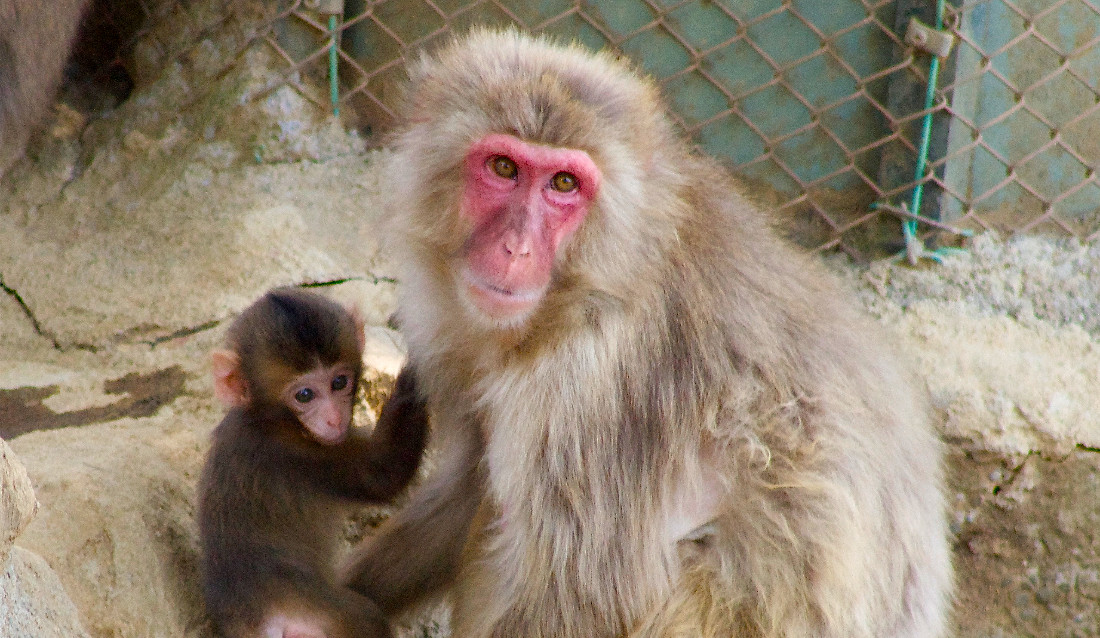
Meet the Japanese macaques, also known as snow monkeys, living in an enclosure on the side of Mt. Takao, about an hour from Tokyo.

A note on this series: Although I published some of these photos earlier, the majority have been recovered from an old drive that took a circuitous route of more than five years, three continents and four countries to get back to me. I plan to run them in themed segments on Wednesdays this summer, including Tokyo nightlife, shrines, cityscapes and more. This week’s photos are from the snow monkey exhibit at Mt. Takao.

Japanese macaques are the northernmost-dwelling of any non-human primate species.

They’re built for the cold, with heavier coats than their cousins, the rhesus, long-tailed and bonnet macaques. They also sleep in well-organized groups, rotating so each monkey gets time in the center to soak up body heat, and they’re famous for keeping warm in northern Japan’s hot springs.

But as these photos show, snow monkeys are also adaptable, and they make the best of things during the hot, humid summers at Mt. Takao, about 51 km (30 miles) from Tokyo.

These photos were taken on a hot day in June when I was one of only a handful of visitors.
Welcome to Mount Takao! So you want to see snow monkeys?
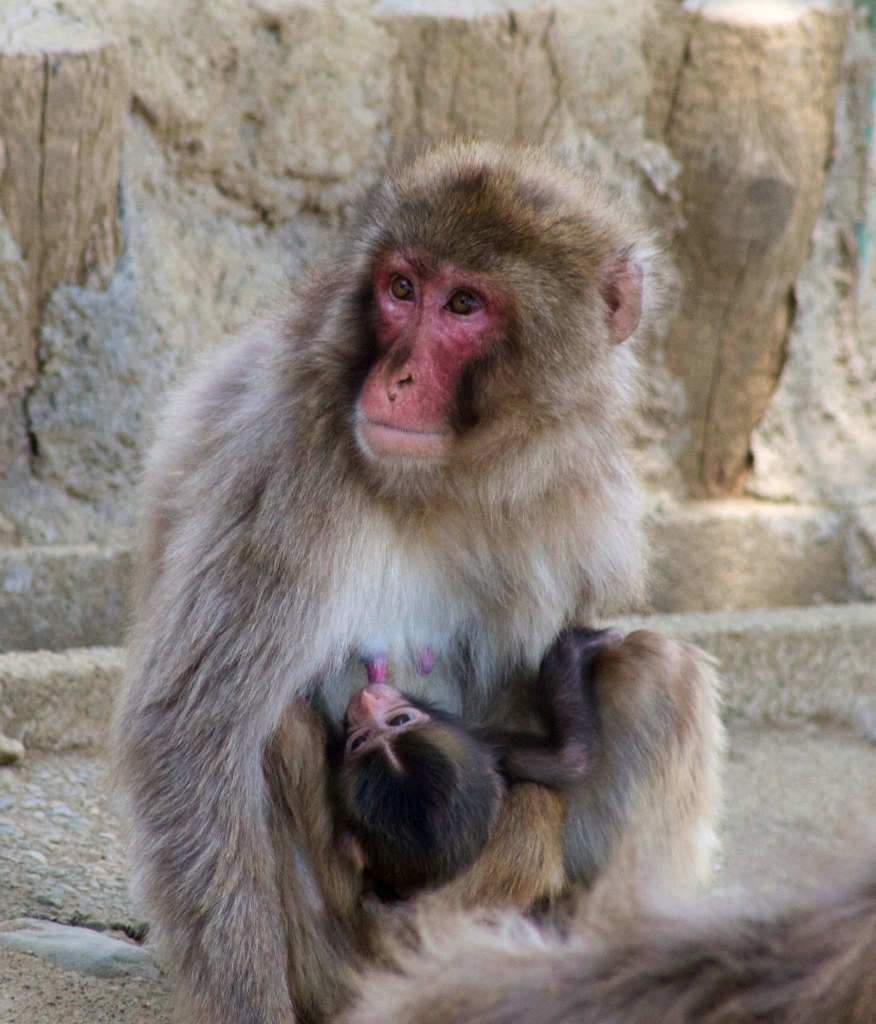
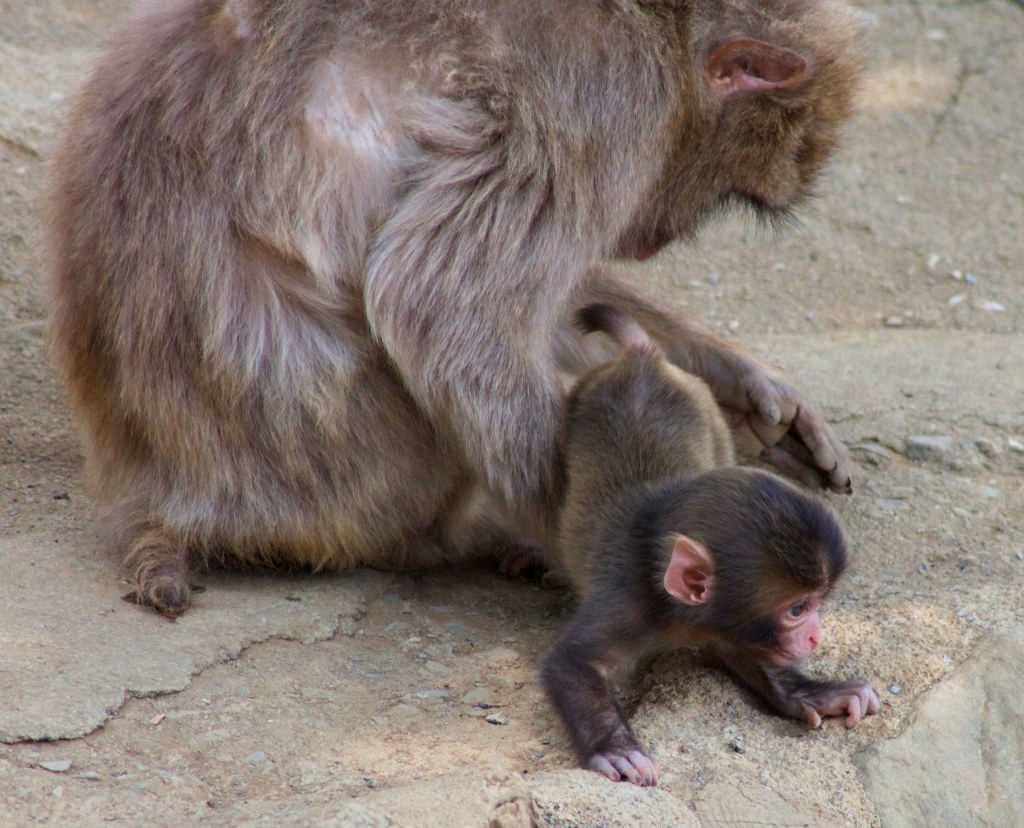
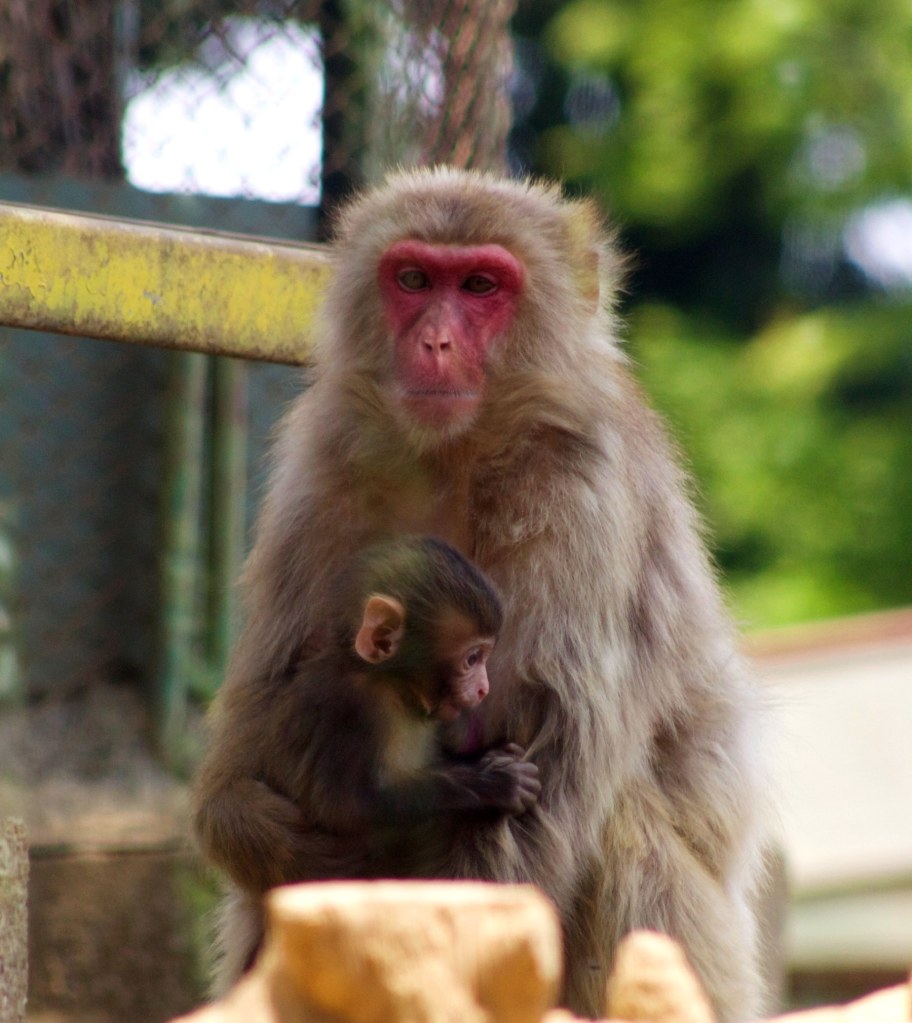
“The milk bar’s open!” Snow monkeys, aka Japanese macaques, are extremely attentive mothers. This baby is is about 8 to 10 weeks old and completely dependent on mom.
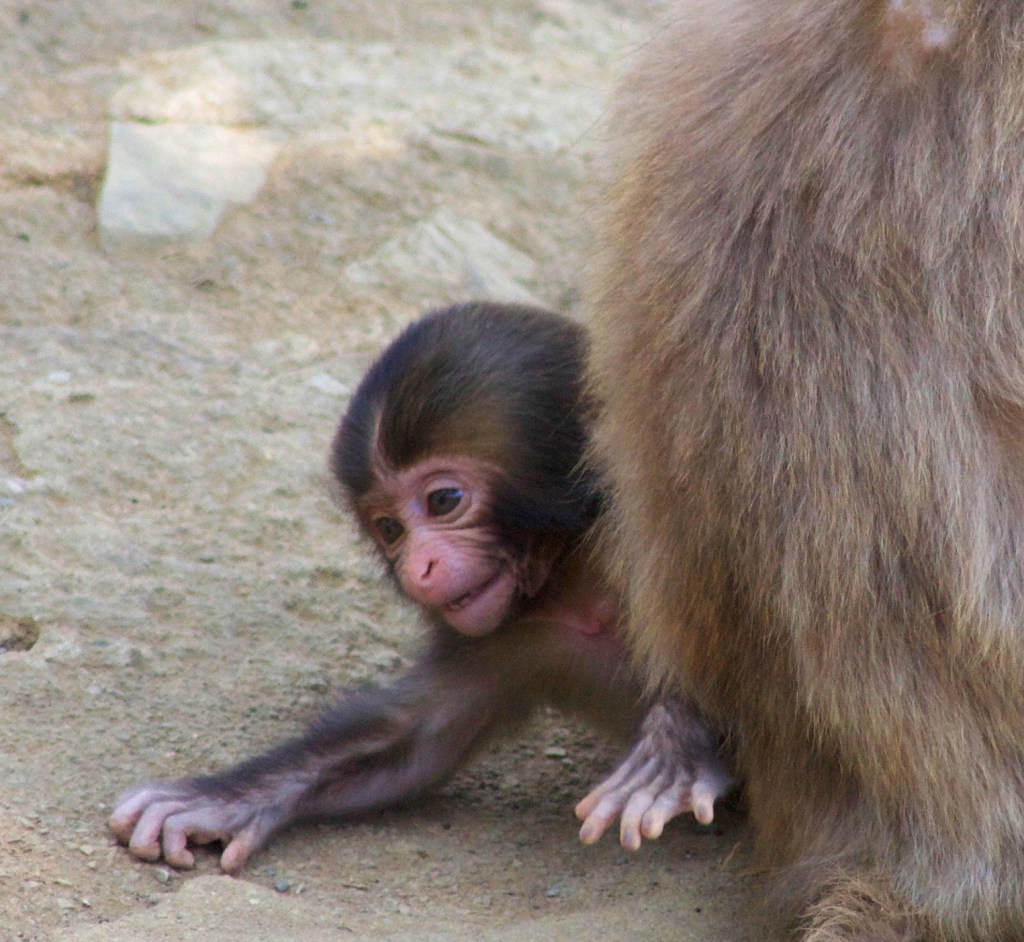
“I’ve had my fill of milk, now it’s time to explore!”
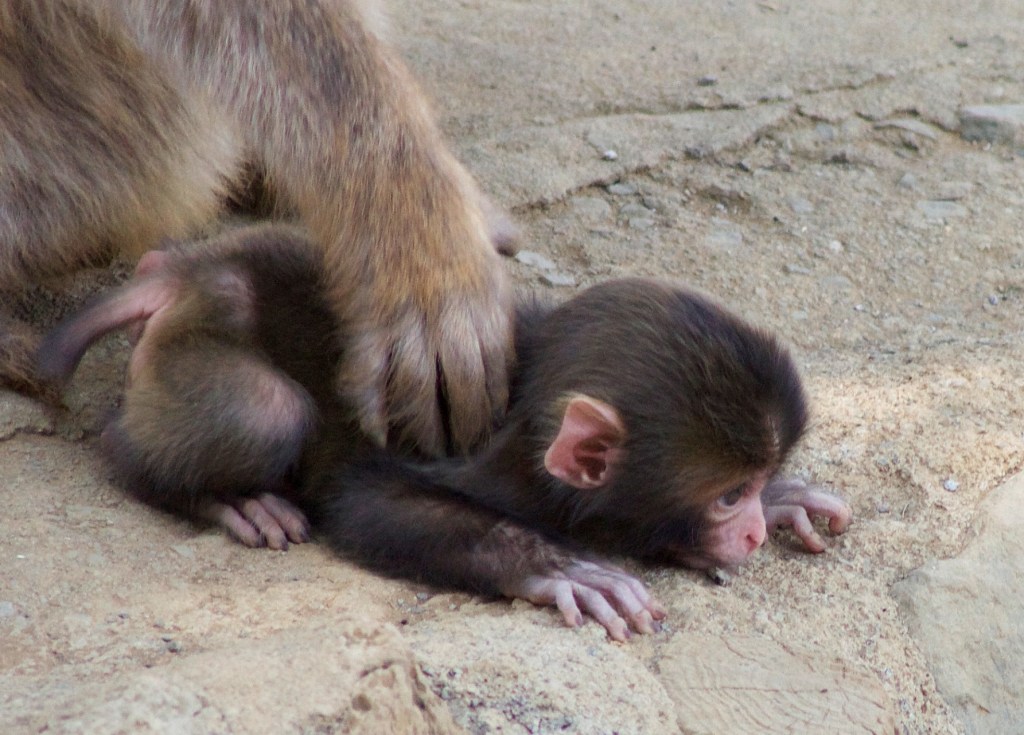
“But mom won’t let me go far! I’m too young to go off on my own, and mom is really protective of me.”
“If I could…just…get away…for a sec!”
“Come on, mom! Let me play!”
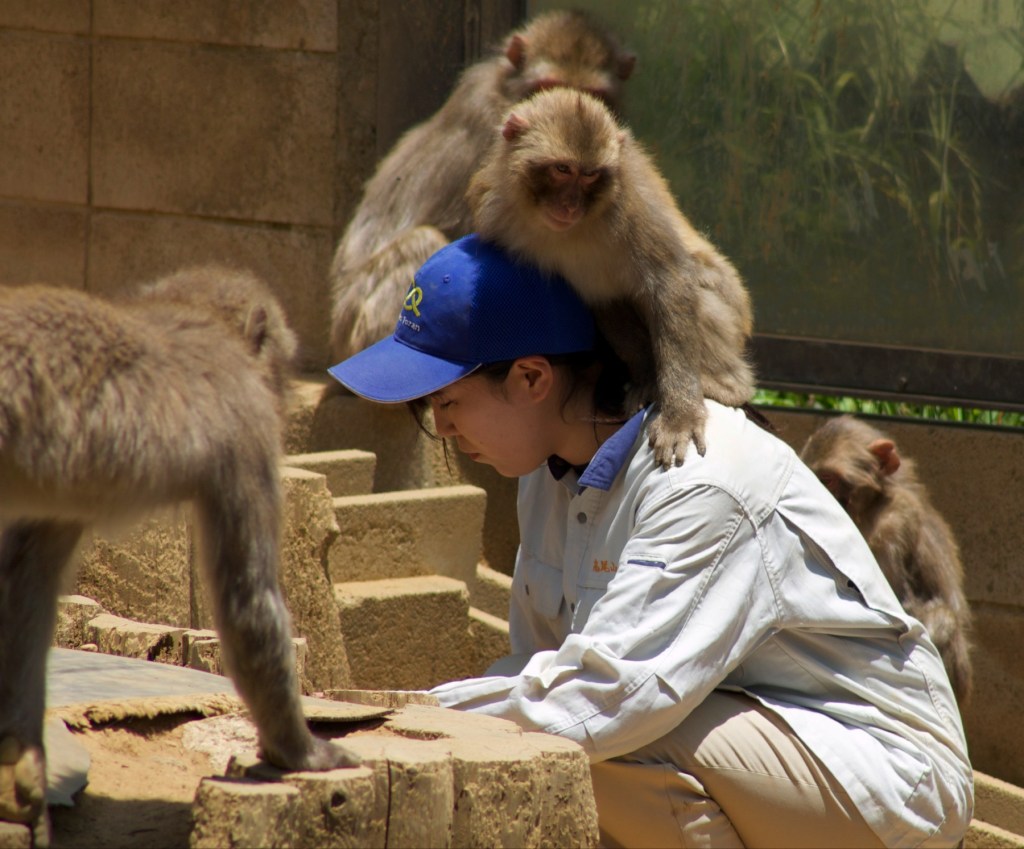
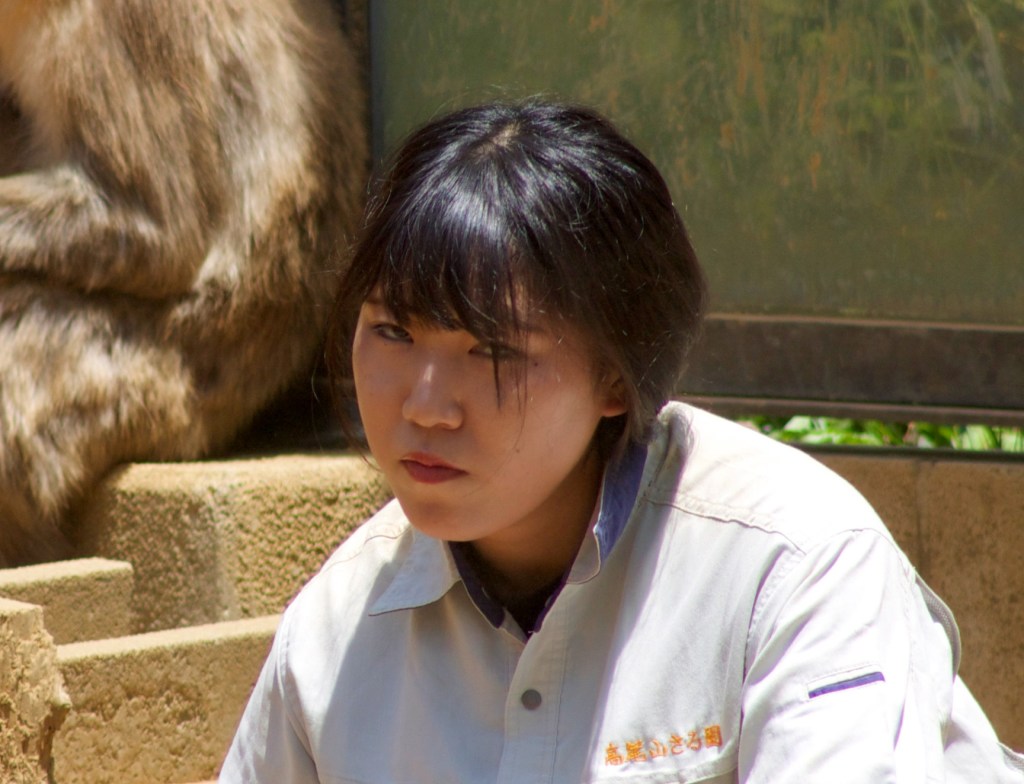
A keeper at the Mt. Takao monkey enclosure. She has a hat…but not for long. Note the mischievous monkey on her shoulders, who’s waiting for just the right moment to grab her hat and run.
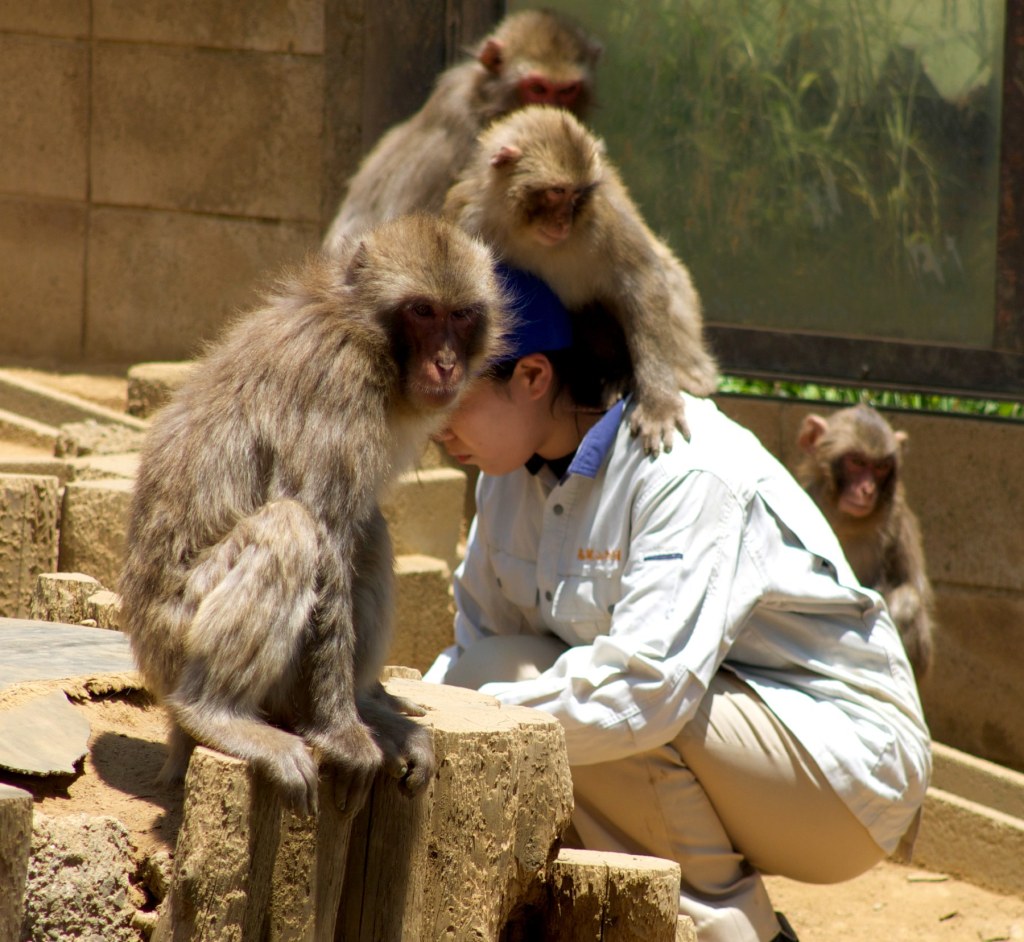
The monkey on the left is like: “Oh crap, here it comes!”
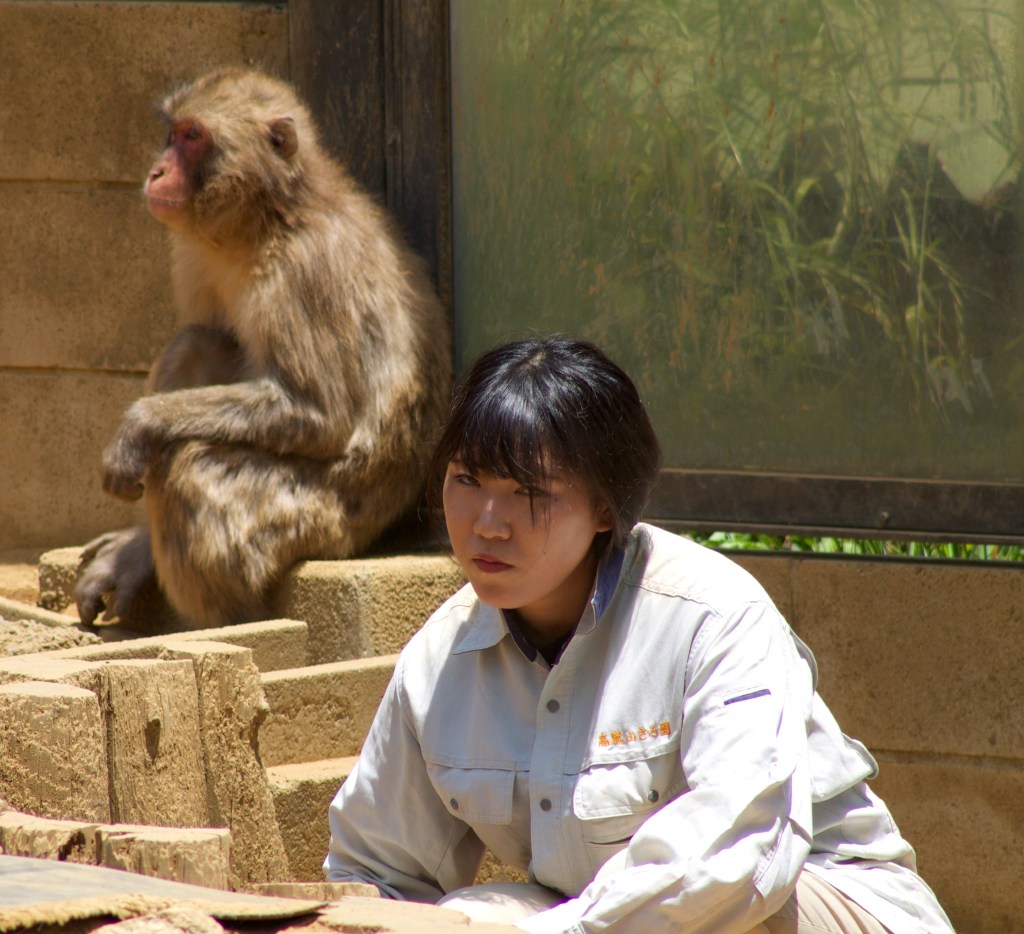
The keeper is staring daggers directly at me. There was a small crowd at the Mt. Takao snow monkey exhibit that day, and while the Hat Incident delighted the onlookers, the keeper was not amused when she saw me snapping away. I’m pretty sure she wanted to throttle me. Sorry!
Yeah, she definitely hates me.
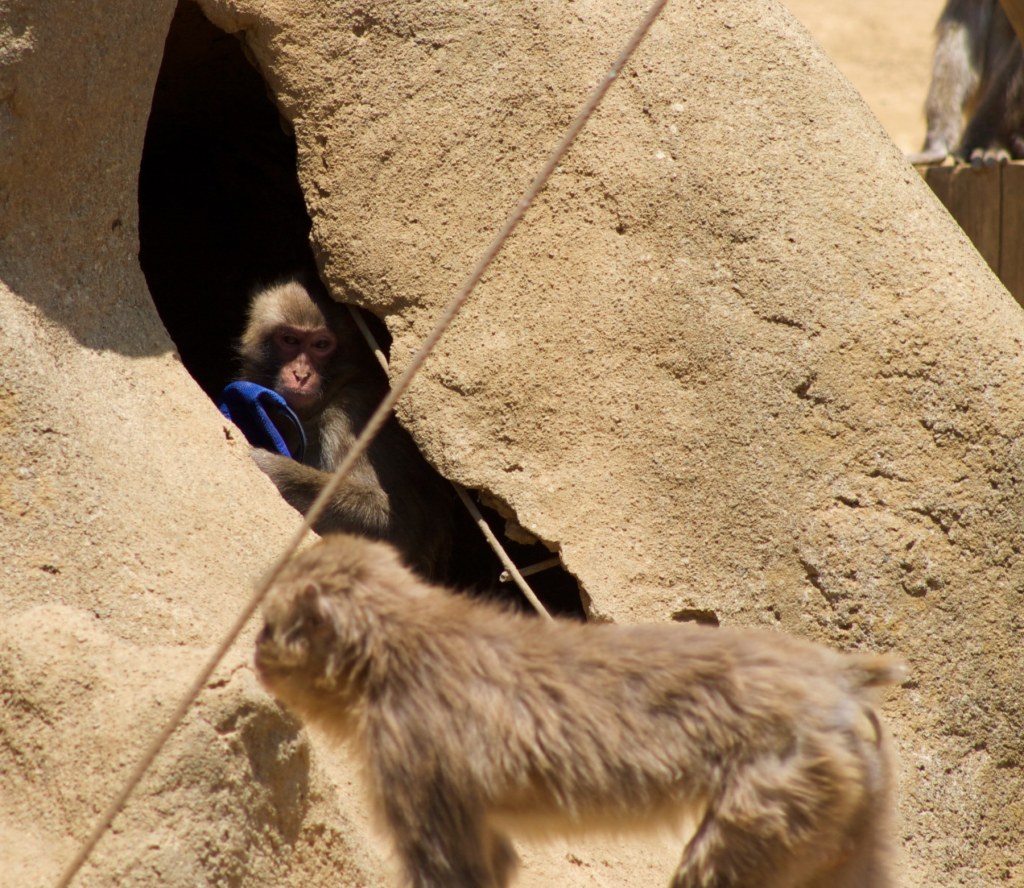
Getting her hat back was not an easy task. The devious little monkey who made off with it immediately retreated into a small cave/shelter system big enough for the macaques, but too small for humans to enter. Making matters worse, there were at least four or five entrances and exits. Every time the keeper approached, the little monkey darted inside and popped up through a different hole, like a game of wack a mole. Eventually it took both keepers to retrieve the hat.
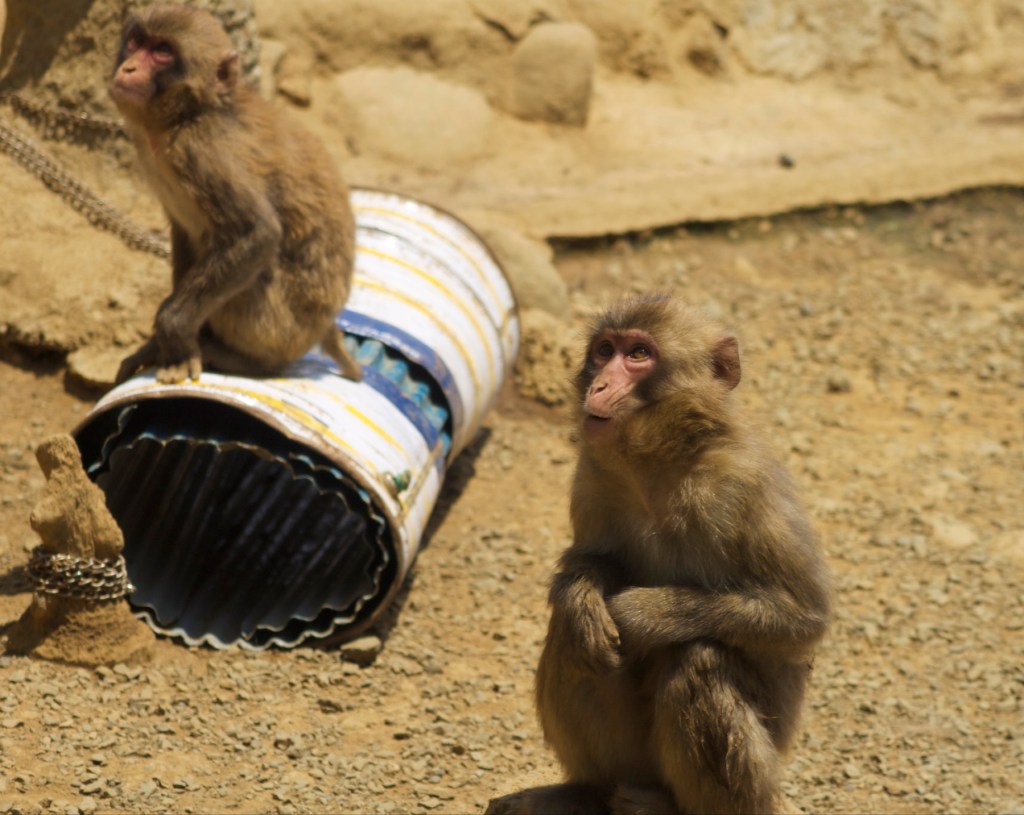
“Oh, you know, just chillin’.”
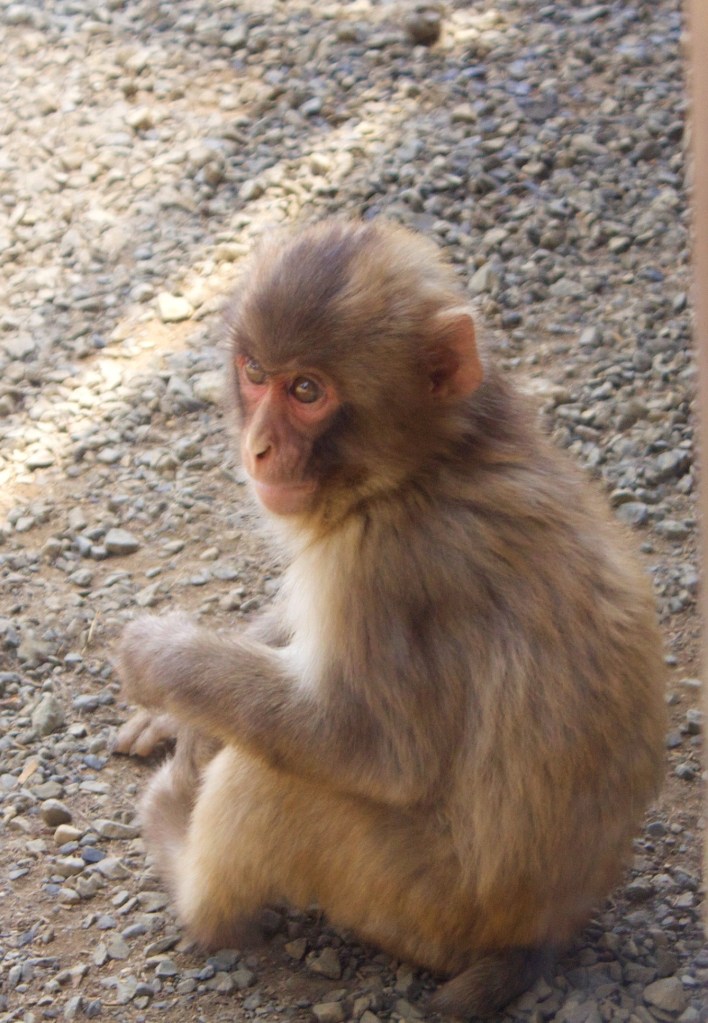
I was super close to this little lady. She was probably about two or three years old.
Macaques live in troops of up to 300 members, and their societies are matrilinear, meaning an individual monkey’s “rank” in the troop’s social hierarchy is determined by who their mother is.

Macaque troops are headed by alphas who are the strongest males and deal directly with protecting troop members, but the matriarch runs most aspects of troop life.

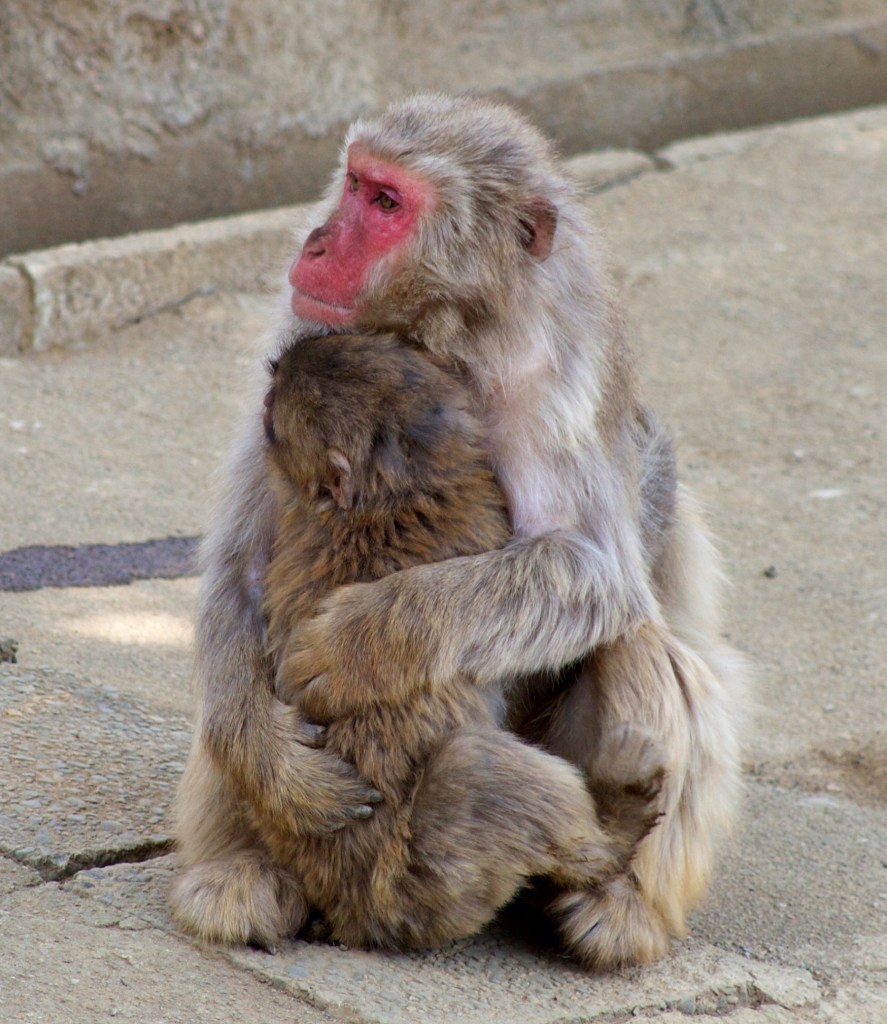
Here, a snow monkey mom hugs her child. The bond between moms and their kids is strong. Daughters stay with their mothers and their troops for life, while sons remain in the troop until they’re about five years old, at which time they depart to avoid inbreeding. They often go on to live as bachelors in small groups before joining or starting their own troops.
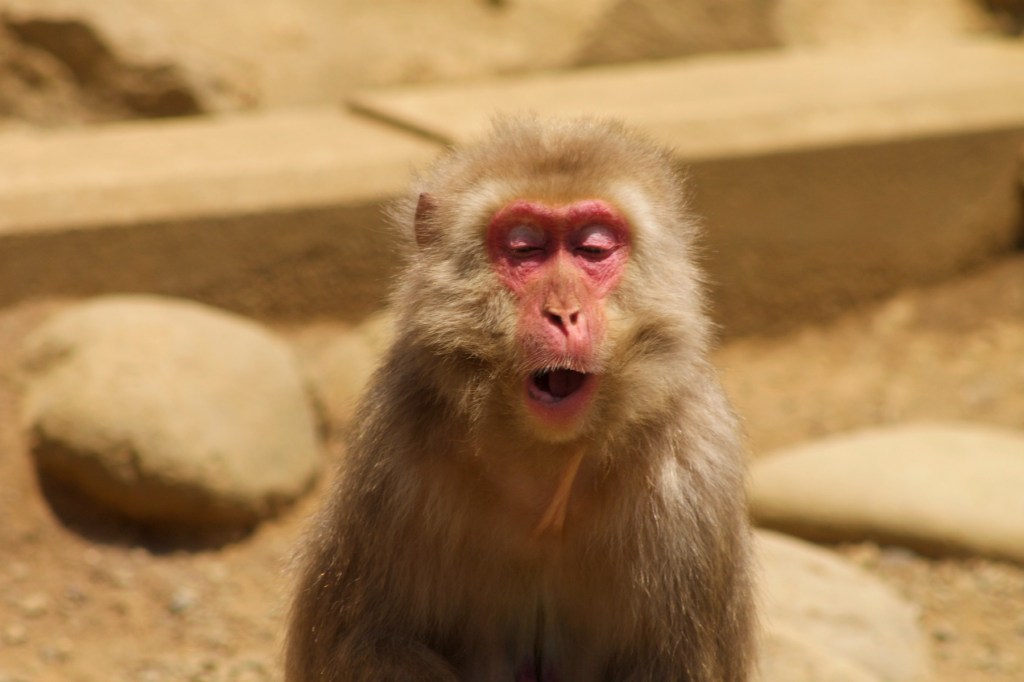
This baby is geckering. A gecker is a “loud, pulsed vocalization” usually described as a “broken, staccato noise.” People often think of it as a baby macaque throwing a temper tantrum, but it’s more than that, and it’s involuntary, meaning the babies can’t control it. In plain English, it’s a noise, accompanied by spasms and made by babies and young macaques when they’re particularly upset. Babies usually gecker when they’re separated from their mothers, being bullied by older monkeys, or in situations when they want to nurse but their moms won’t let them.
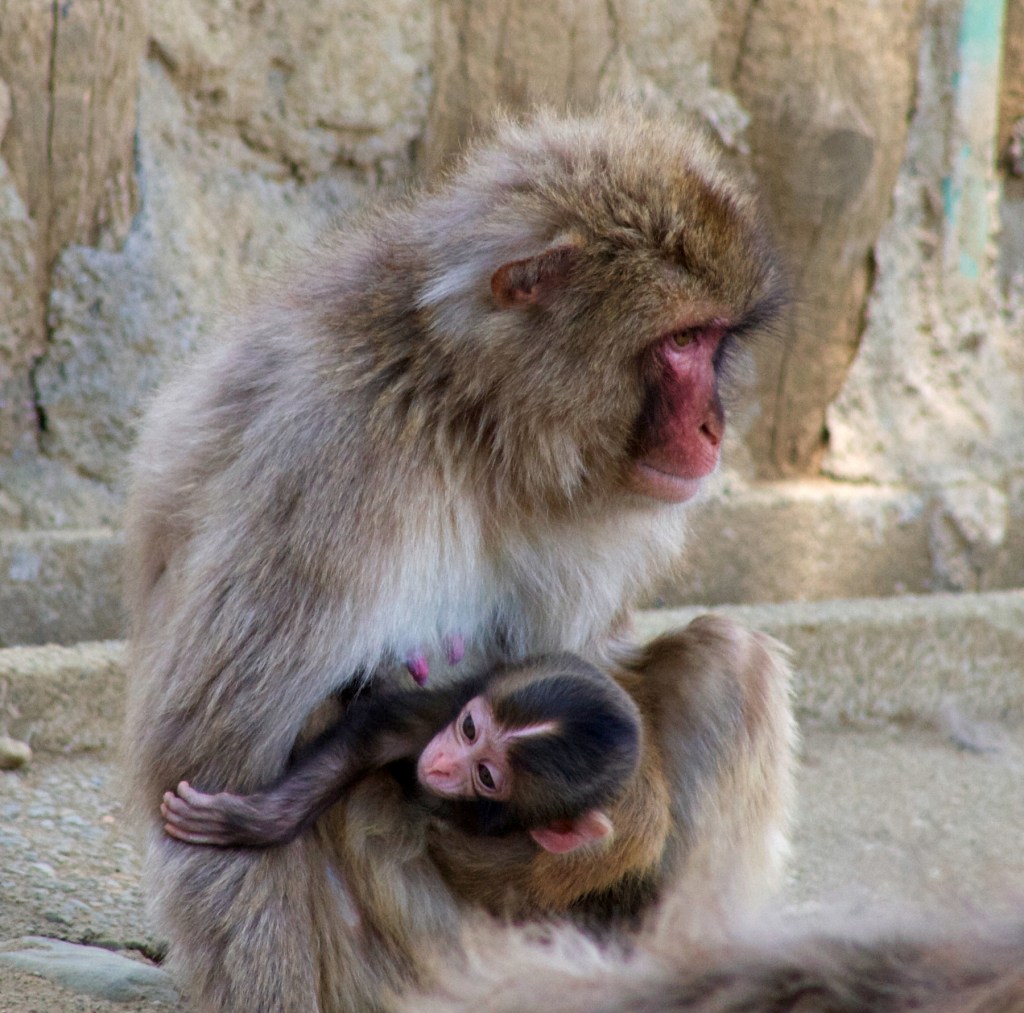
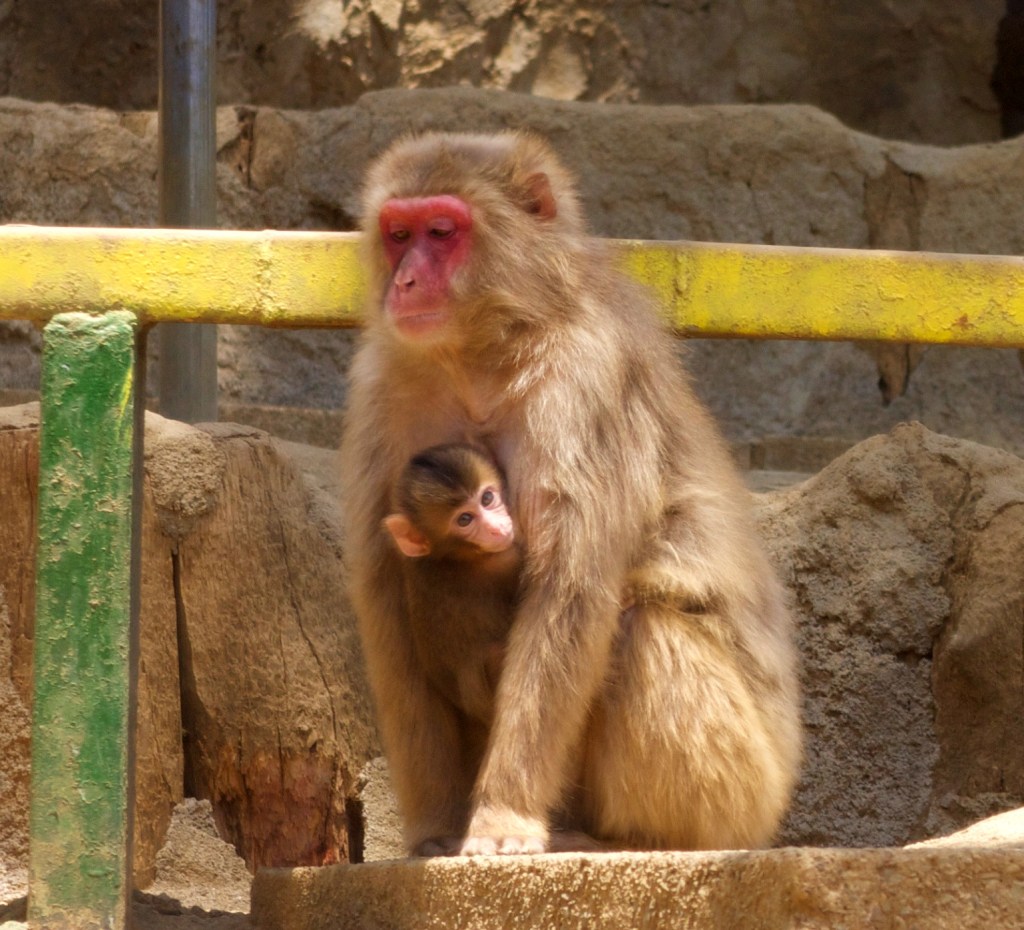
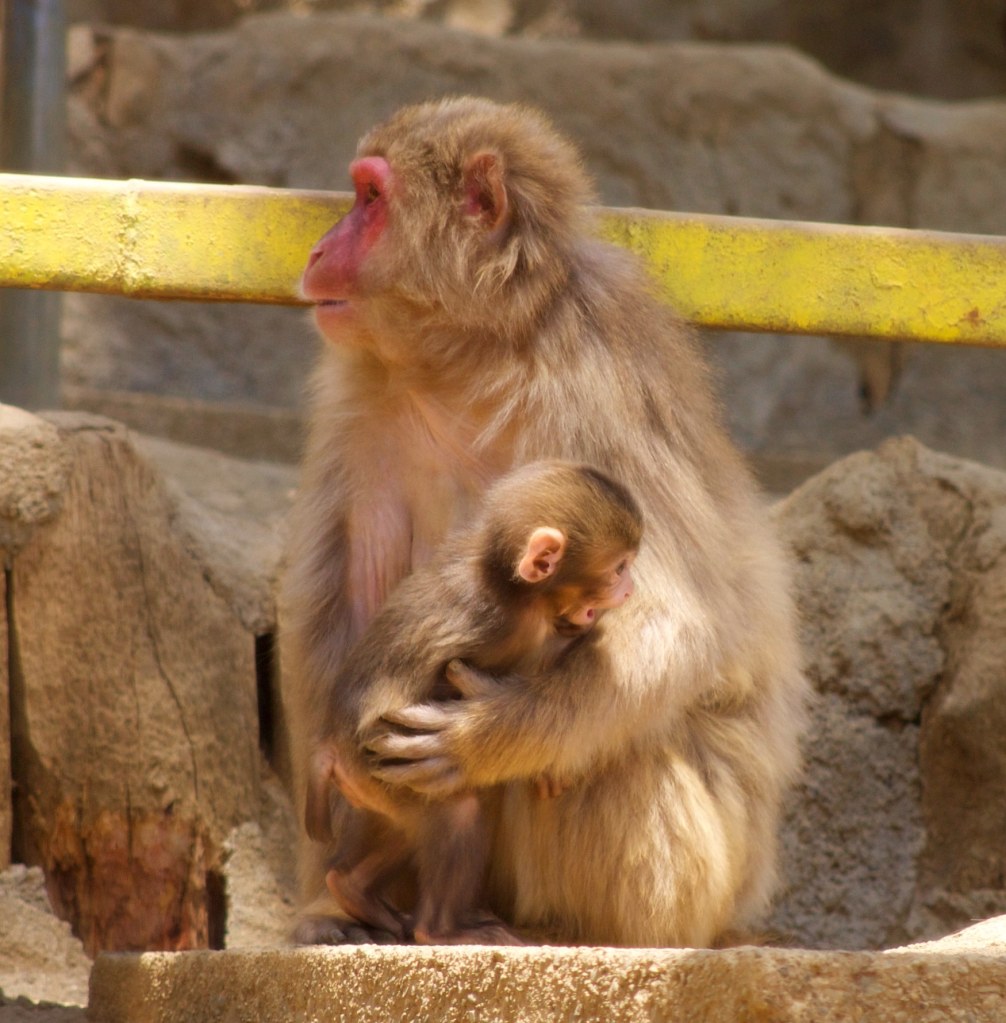
Another mom with a young nursing baby. This baby is a bit older than the one above, probably about three months old.
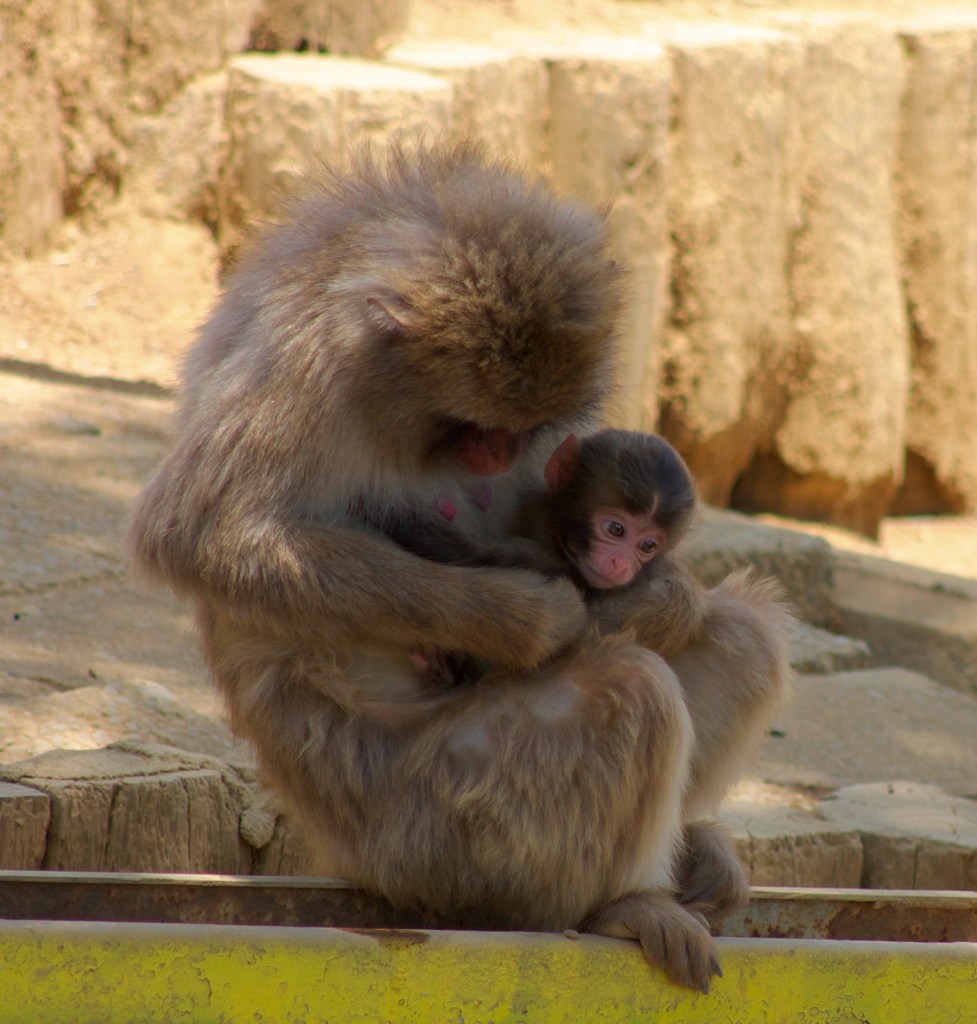
The first baby again. Notice how mom is grooming the baby. Grooming is an important aspect of macaque social relations, in addition to serving the practical function of clearing insects and other debris from fur.
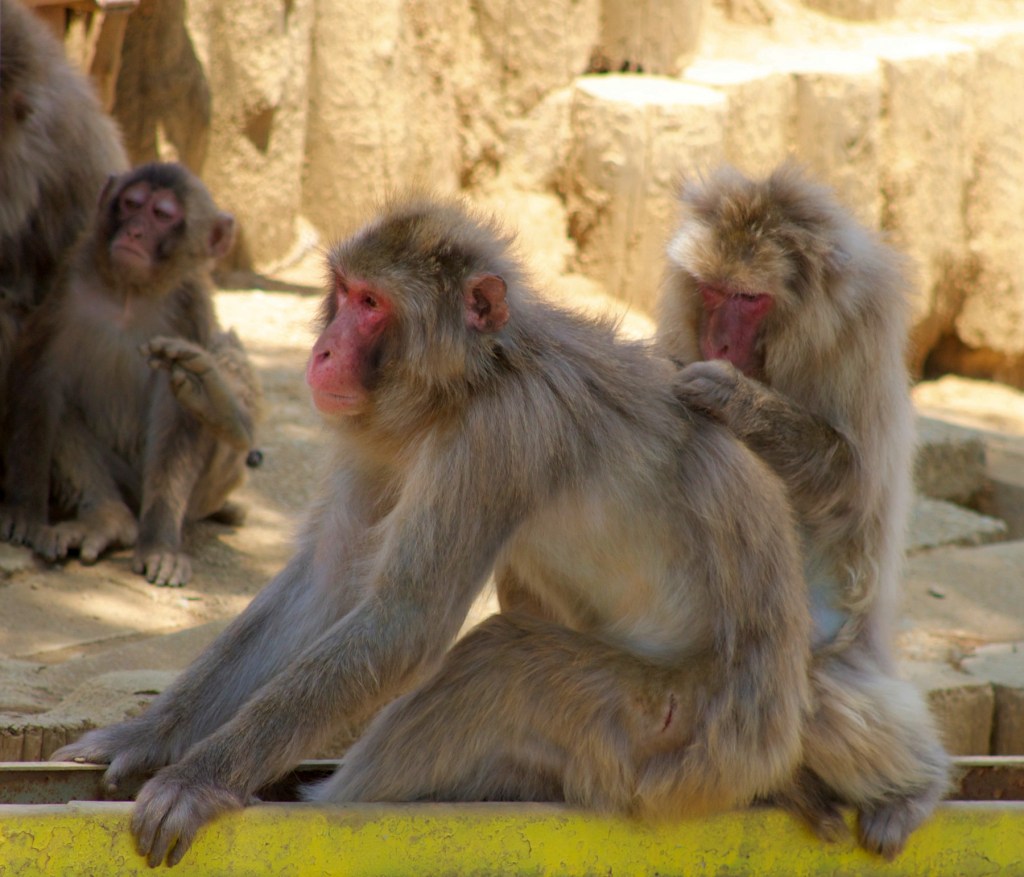
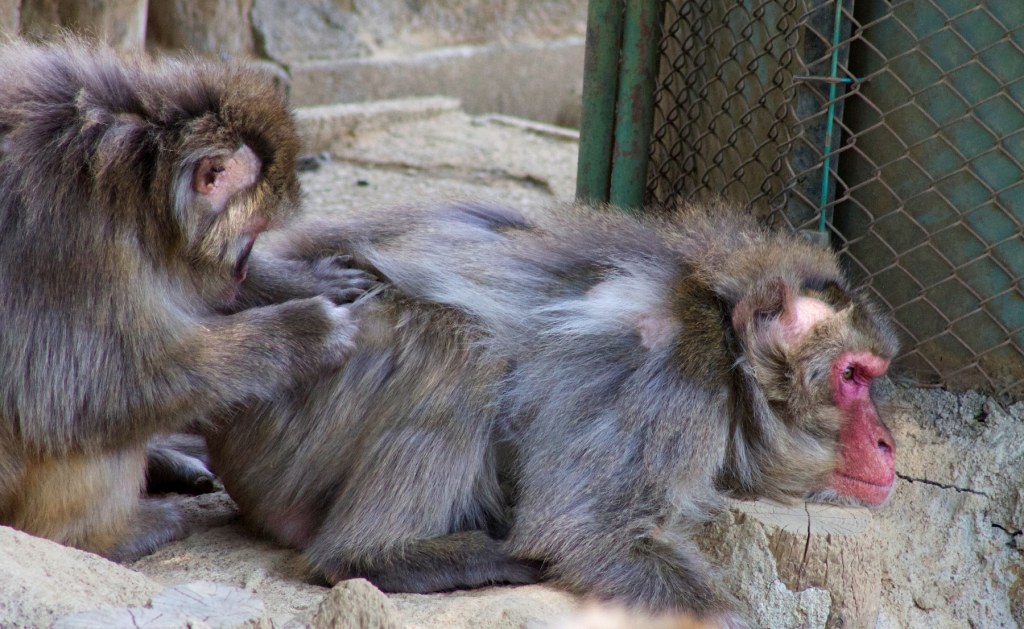
More social grooming. The monkey on the right is attentively picking insects from the fur of the monkey on the left.
He’s big, he’s old, he’s battle-scarred. He’s the alpha, and he always gets groomed first, whenever he wants. He also eats first, enjoys the best lounging spots, and gets to mate with his choice of females. In the wild, alphas don’t retain their thrones long, often being deposed within a year or two. Extraordinary alphas who keep their troops in good stead and enjoy an aura of invincibility can last a decade or longer.
Babies nurse for as many as two years and spend almost the entire first year of their lives holding onto their moms. That’s one reason why the practice of buying baby monkeys — or any monkeys — as pets is incredibly cruel, and it’s why pet monkeys are always seen clinging to stuffed animals. They’re taken from their mothers within hours or days, and they need the tactile comfort of holding onto — and being held by — their mothers.

Harry Harlowe’s infamous experiments in the 1960s proved that the physical comfort of being held is crucial to the psychological development of all primates, humans included. If a baby is denied that, the consequences manifest as severe psychological issues later in life.
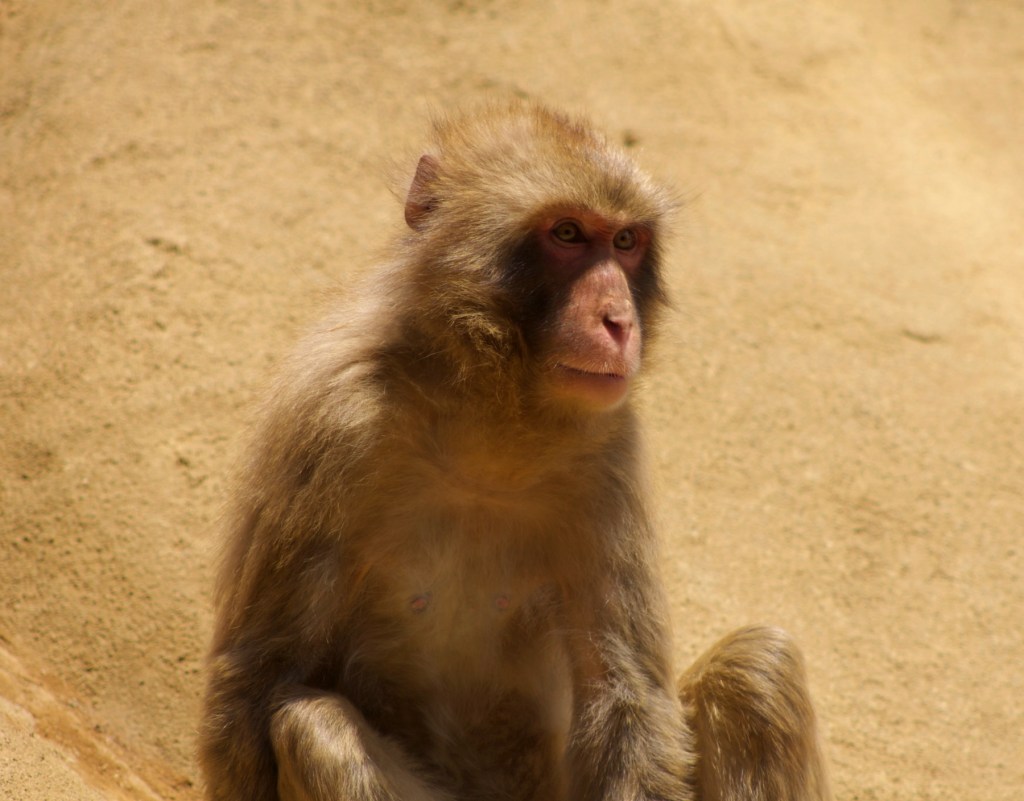
A male member of the troop. It’s not clear if this guy was brought in from another captive troop elsewhere in the country, or if he’s native to the Mt. Takao troop. If it’s the latter, at his age — about four or five years old, give or take — he’ll be expected to soon depart. Young males leave their troops to avoid inbreeding and potential violence as they become stronger and are viewed as potential rivals to the alpha and/or his lieutenants.

Adios, humans!

Tokyo’s ‘Waving Cat’ Temple, Gōtoku-ji, Has Run Out Of Cats

The world-famous cat shrine has experienced a surge in tourism, leaving it bereft of the familiar statues that are inspired by the legend of a friendly cat.

Gōtoku-ji temple has a unique problem.

The complex, where legend says a friendly waving cat led a Japanese feudal lord and his men to warmth and safety ahead of a brutal storm, has seen an influx of travelers since Japan relaxed its COVID-era restrictions and tourists have returned.

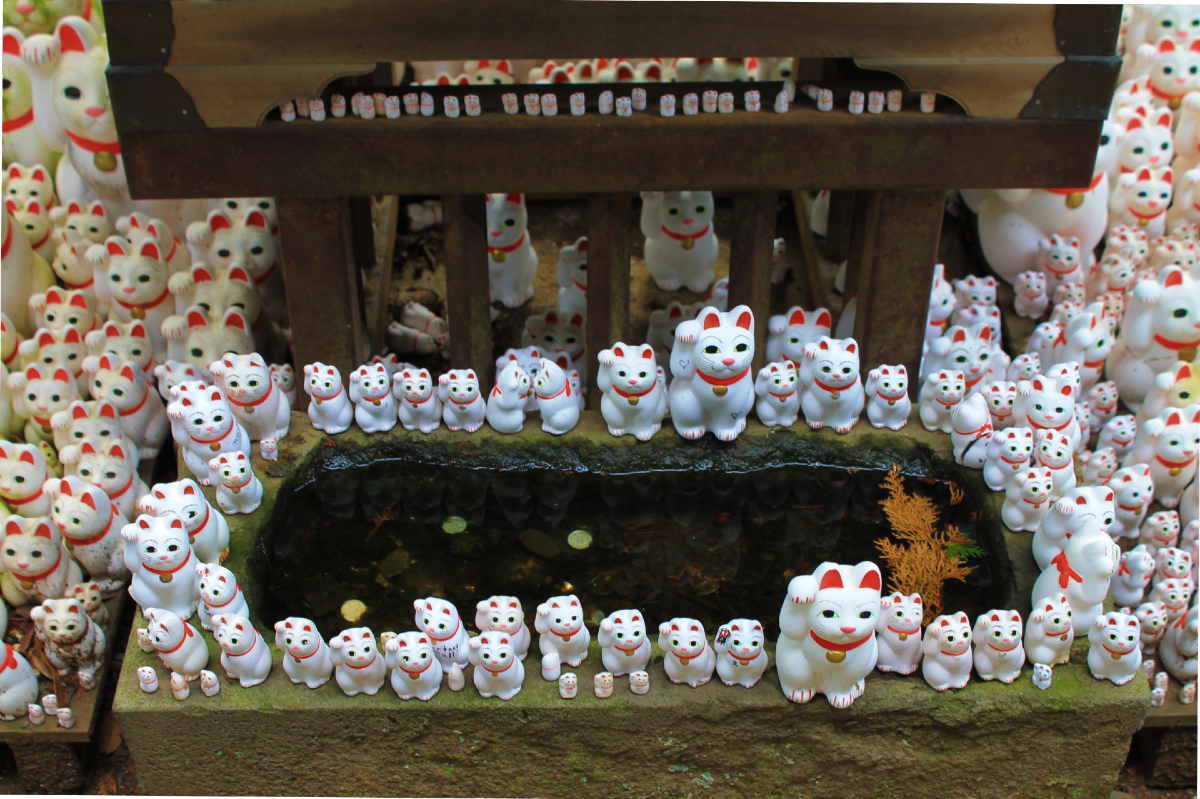
Now Gōtoku-ji can’t keep up with the demand for maneki neko, the ubiquitous “beckoning cat” statues that visitors purchase at the shrine’s tiny gift shop, the Washington Post says in a new report. People who come to the temple write prayers on the statues and place them in a perpetually-expanding section of the shrine grounds.

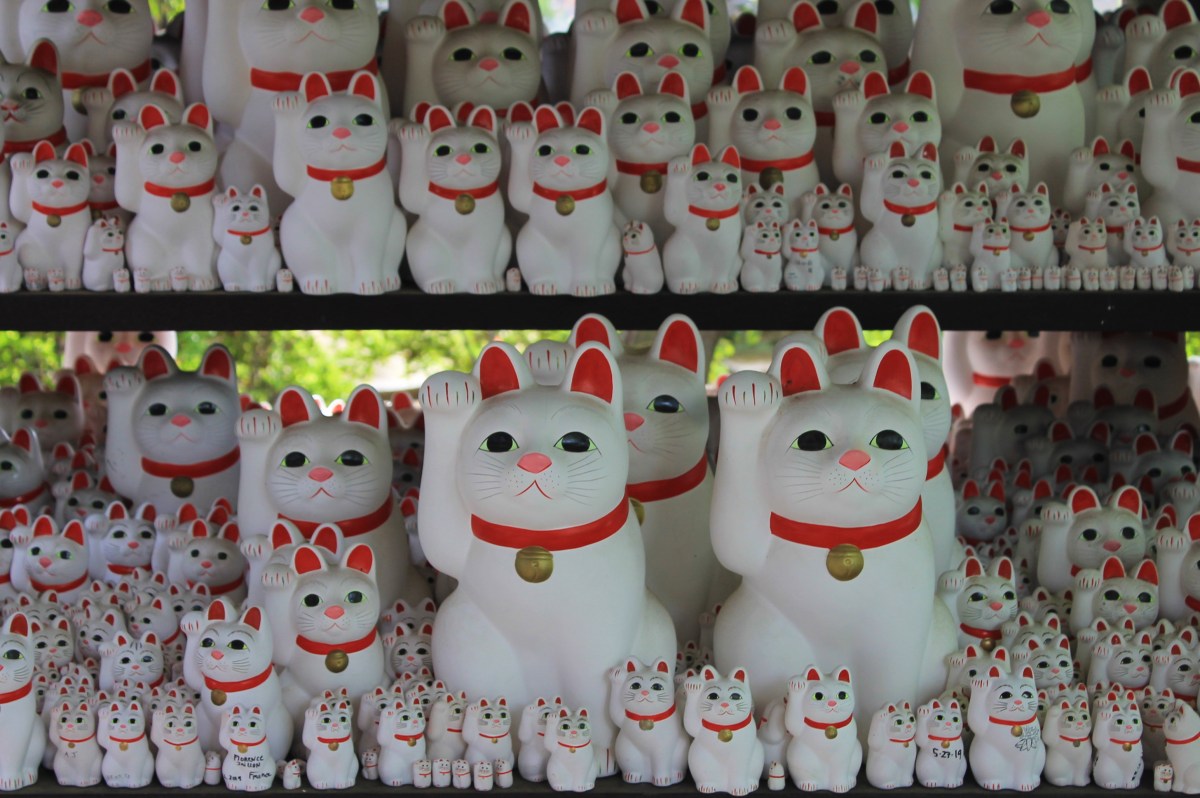
The cats are said to bring good luck, with variations in their designs and colors: red for health, pink for love, gold for success and so on. White maneki neko, which are sold at the shrine, are the original and “all purpose” prayer cats. The shrine is Buddhist, but practitioners of Shinto, Jainism, Christianity and other religions write prayers on the little cats, hoping they’ll be heard by whichever version of God they believe in.

The manufacturer, which also makes statues for the Lunar New Year and other festivities, can’t keep up with the demand. Now staff at Gōtoku-ji have put up signs apologizing to visitors. They say they don’t know when they’ll get more maneki neko.

When I visited in 2019 there were many thousands of the iconic statues, but the photos from Monday’s WaPo story show thousands more placed on recently-built shelves. Temple staff have begun asking visitors to take their maneki neko home with them instead of leaving them at Gōtoku-ji. They clean, shelve and organize the thousands of statues currently there and won’t dispose of them because they represent the prayers of visitors, but the volume has become unmanageable.

Maneki Neko at Setagaya Tokyo
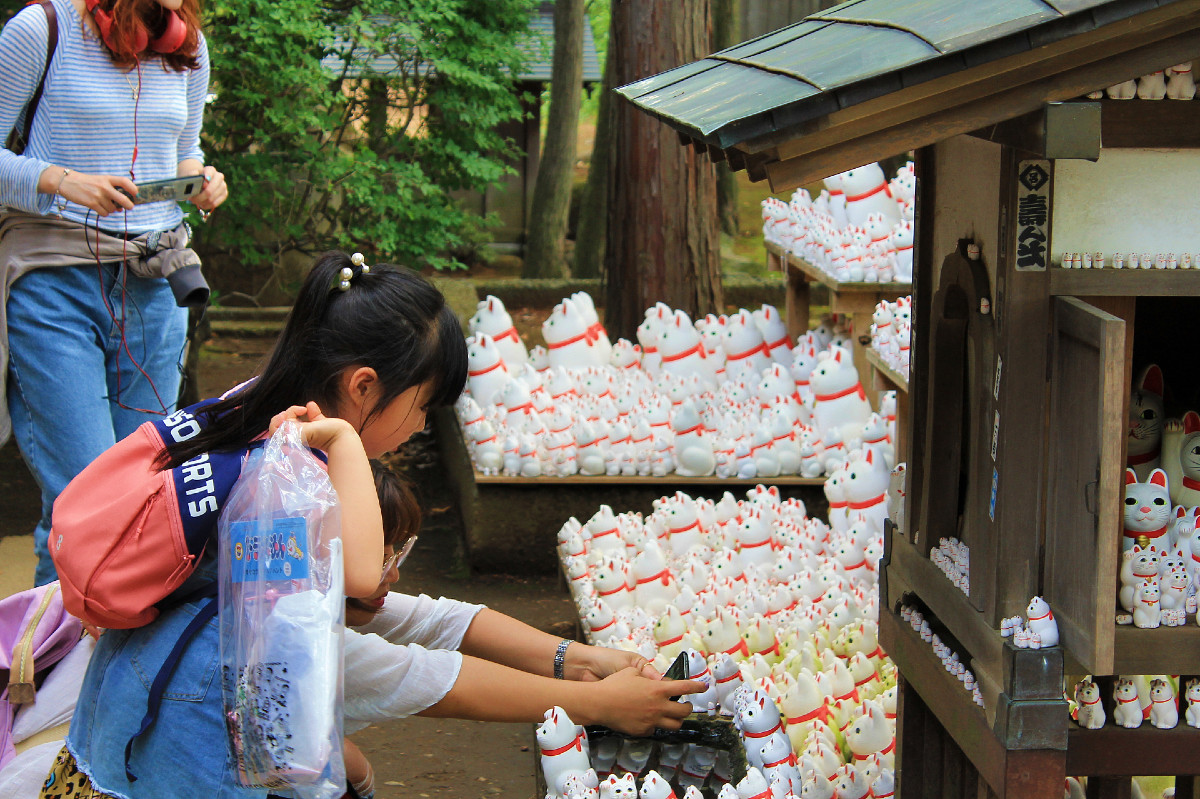
Visitors leave their own maneki neko statues at the shrine, often with personal messages asking for different blessings and written in black marker on the back of the statues. Credit: Pain In The Bud

Despite Gōtoku-ji’s rise in popularity, I still recommend checking it out, especially for cat lovers who are headed to Japan. While most of Tokyo’s most famous shrines are located in the city proper, with modern skyscrapers looming above temples that date to pre-modern Japan — never letting you forget you’re in a bustling metropolis — Gōtoku-ji is in Setagaya, a mostly-residential ward.

The temple grounds are surrounded by homes and they’re quiet in a way that others aren’t. The shrine is well-manicured and beautiful, dotted with statuary as well as centuries-old wooden temple structures.

When I was there a smiling elderly docent walked the grounds carrying a photo album that showed the temple and its structures over the years. With my sister-in-law’s rudimentary Japanese we were able to get a bit around the language barrier, and he told me one of the most striking buildings, a three-story tiered wooden tower, was home to one of the resident cats who liked to sleep on its second floor.

I wasn’t able to catch a glimpse of the little one but I imagine Gōtoku-ji is one of the best places on the planet a stray cat could call home. Like the people of Turkey, respect for cats is ingrained in Japanese culture and temple cats in particular are treated extremely well. Some even have their own Instagram pages and fan clubs, becoming tourist draws in their own right.

Maneki Neko Setagaya Tokyo
Maneki Neko statues at Setagaya shrine. Credit: PITB

Clarence The Three-Legged Kitten, Plus: Happy New Year From A Cat Cafe In Tokyo

Fellow blogger Molly Hunt is fostering a special little guy who’s recovering from an amputation.

Blogger, cozy mystery cat writer and foster parent Molly Hunt has opened her home to a special little guy, and following his progress is a good reminder of the great work so many cat lovers do — walking the walk, as they say.

Molly’s charge, Clarence, is just a kitten but he’s already had a really rough go of it:

“Clarence, a six-month-old kitten, came to the Oregon Humane Society with a 1.5” round wound on his right hip. Tests traced its origin to a mass attached to the bone which may have occurred when a previous fracture healed badly. The left hip had also been affected by the trauma. The upshot was surgery on the left hip and the amputation of the entire right leg. Two days later, the call went out for a foster parent, a call that I happily answered.

It had been several months since I’d fostered a cat, and I was excited to begin again. I have a designated foster room with a pleasantly equipped kennel where I’d cared for many cats with mobility issues. I thought this one would be similar—limited movement, no running or jumping, and a twice-daily set of physical therapy exercises. I wasn’t worried about the fact he had only three legs. I’ve seen tripod cats who got along just fine, not limited by their disability as humans tend to be. I understood this would be a new experience for me, but I forgot to take into account that it was a new experience for Clarence too.”

Molly writes movingly about Clarence, his trauma upon waking up to find a leg missing, and the way he’s quickly adapted to his new situation. Cats are incredibly resilient, especially when they have the love and care of a good human to help them along:

Clarence was shocked to find out he no longer had a back leg. I’ve rarely seen cats react with that sort of complete panic. It’s usually caused by a loud noise such as fireworks or something unexpectedly crashing to the ground. This was different. This was Clarence’s own private terror.

Despite his initial shock, Clarence has been learning how to get around on three legs and he’s even gotten back to playing with his favorite toys. We wish Clarence and Molly the best on their journey together and if Clarence doesn’t end up as a foster “fail,” we hope he finds a forever home full of support and love. Click here to read parts one, two and three from Molly.

Happy New Year From Tokyo

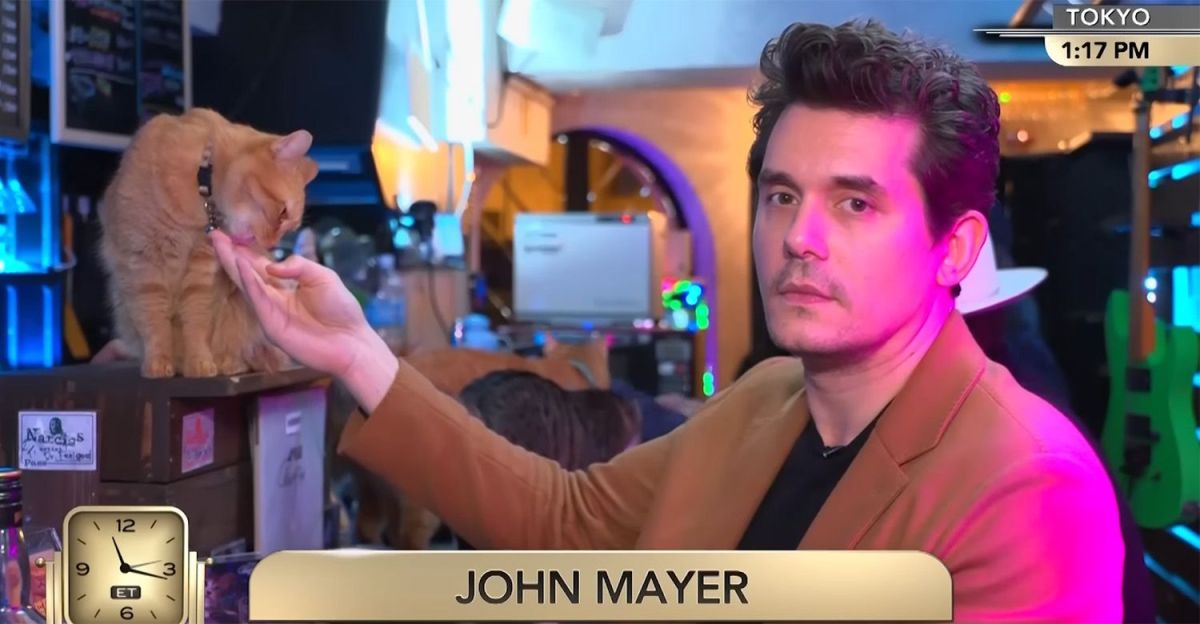
John Mayer brought some feline fun to the New Year’s Eve festivities this year when he called in to CNN’s broadcast from a cat cafe in Tokyo, amusing Anderson Cooper to no end:

The cafe is called Cats In The Box and it’s located in Shinjuku. I’ve got some photos of the exterior of the place from my time there — unlike the cat cafe I visited in Roppongi, Cats In The Box has prominent, floor-to-ceiling windows looking out over one of Tokyo’s busiest neighborhoods, so you can’t miss it. From the street you can see the furry residents climbing their cat condos and chasing toys as if they’re saying “Come on in, join the fun and buy me some of that good ‘nip, will ya?”

Japan is famously in love with cats, and in addition to having several cat cafes, Shinjuku also boasts a famous 3D billboard that features a cute calico padding around and meowing in between advertisements.

Click to play the short video below:

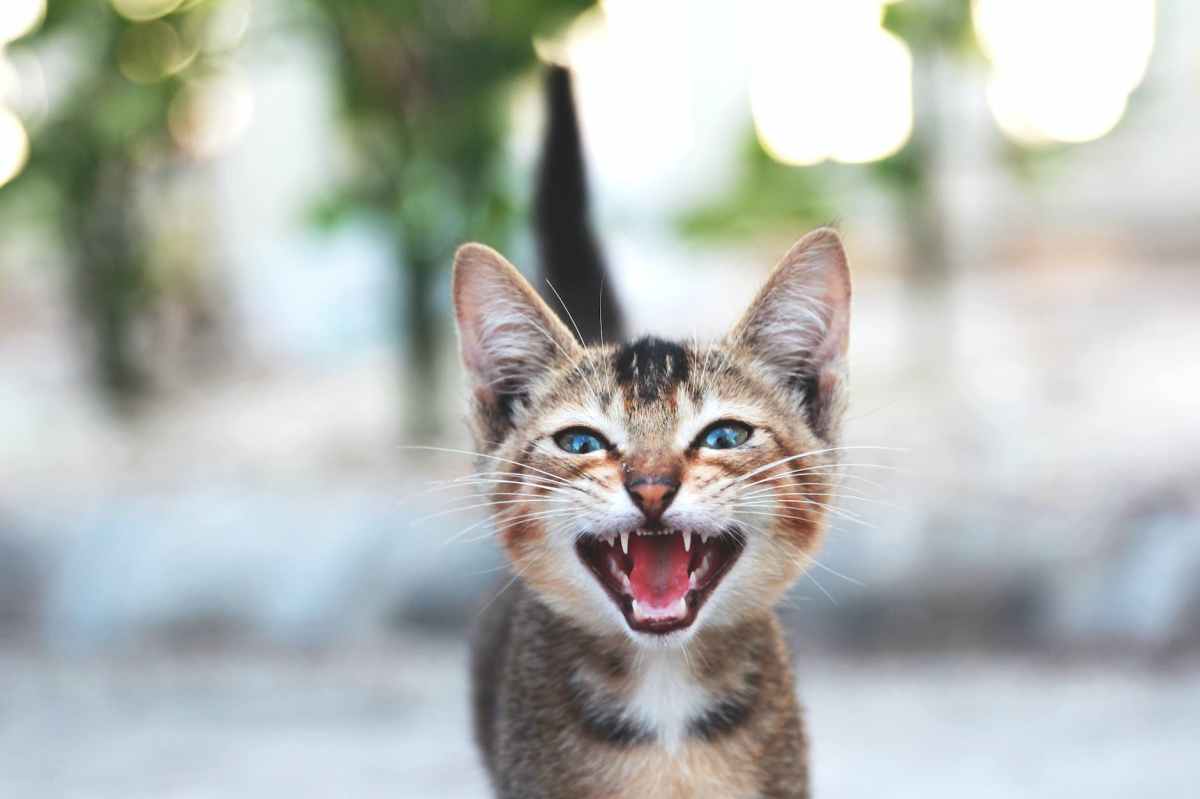
Cat On The Street: What Do You Think About Humans Translating Your Meows?

We asked cats what they think about MeowTalk, an app designed to translate their meows to human language.

MeowTalk, an iOS/Android app that aims to translate your meows using a machine learning algorithm, is getting a new publicity push after a recent update. The app has proven particularly popular in Japan, a nation of cat lovers.


What do you think about MeowTalk?

“You’re telling me there’s a good chance my human understood me calling her a dim-witted biped who’s stingy with snacks?” – Midnight, 7, office supervisor

“Finally, a device that can translate all my loving utterances at 5 a.m. when my bowl’s empty!” – Cleo, 5, cushion tester

“If an app is translating our meows, then why do our humans still stink at giving us massages?” – Andre, 2, faucet operator

“You know what this means, don’t you? If my humans overheard me discussing plans for the feline takeover of Earth, I’m going to have to smother them in their sleep.” – Dragorth the Destroyer, 4, generalissimo

“Sometimes I like to meow in gibberish just to mess with the humans. LOL! Wait, how can this app translate Japanese meows AND American meows?” – Zelda, 3, princess

“CHECK IT OUT, THERE’S A KITTEN WHO LOOKS JUST LIKE ME BEHIND THE GLASS! HEY, STOP IMITATING ME! STOP THAT! IT’S REALLY ANNOYING! HEY!” – Christian, 3 months, archaeologist kitten

Sunday Cats: A Cat Fluent In Sign Language?

Plus a Japanese artist’s stunningly real-looking bespoke cat backpacks.

A Reddit post with almost 30,000 upvotes claims a cat took it upon himself to learn sign language after realizing his human is deaf.

You don’t need me to tell you it’s nonsense, do you? It’s interesting how we’re willing to believe a cat can endeavor to learn sign language, but we — the supposedly more intelligent species — can’t be bothered to watch for emotions conveyed by the curl of a tail or a twitch of the whiskers.

Cats are incredibly smart little furballs, but just like the people who claim their cats are meaningfully communicating via talking boards with 100 buttons, this is just social media fodder for the credulous.

Unfortunately the credulous are numerous, although a few Redditors had a good time at their expense. One user complimented the addition of a VHS-like filter over the video clip, giving it a vintage quality.

“Not a filter. It’s been around for a while,” another Redditor responded. “The cat now knows ASL, English, French, Spanish, and is working on its doctoral thesis.”

A cat in a backpack? No, a cat backpack

In a reminder that the Japanese have an endless appetite for all things cat-related, the newest hot item among the Land of the Rising Sun’s neko-infatuated is a bespoke cat backpack hand-sewn by a housewife in Fukui prefecture.

The bags don’t come cheap. It takes Miho Katsumi between one and three months to make each one, and they’ll set you back about $1,000 each via Katsumi’s site. Check out her Instagram for more images.

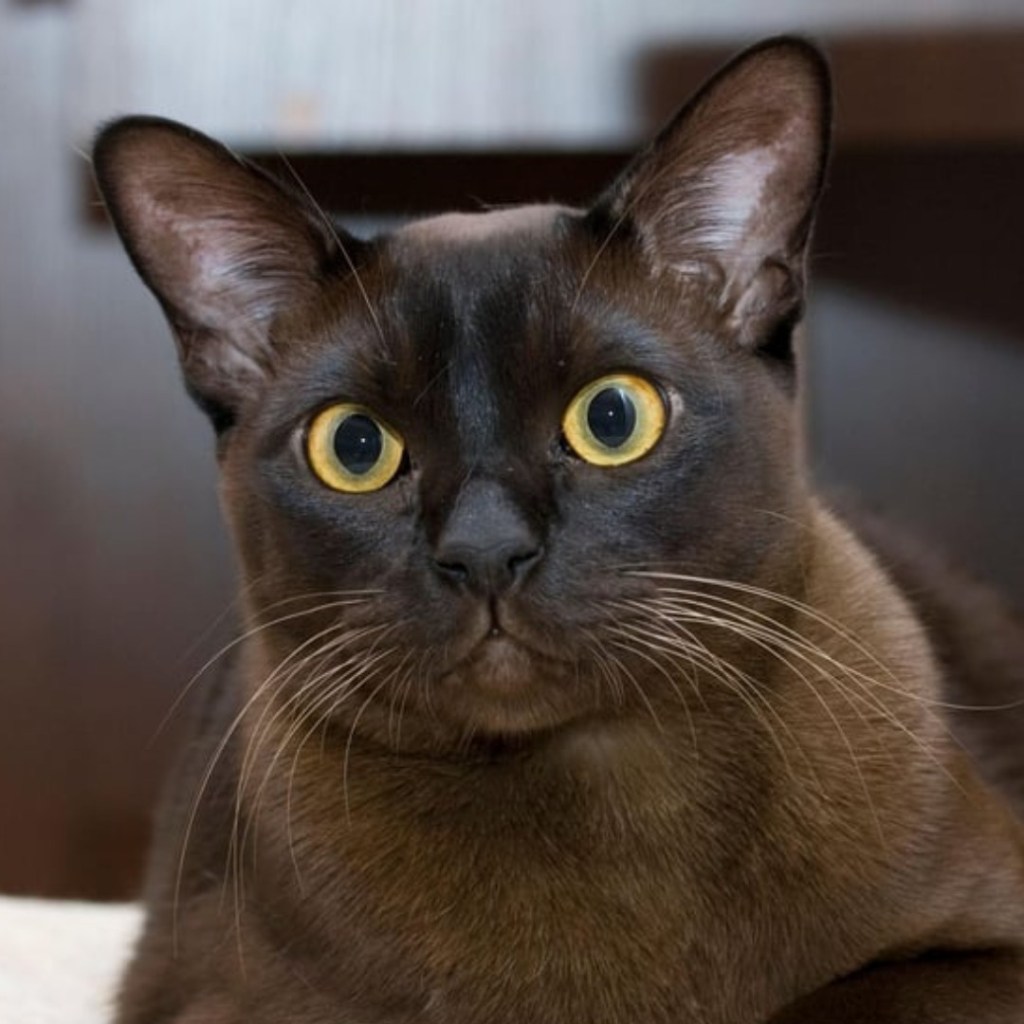
How quickly do you think Bud would murder me if I came home with one of these in his image one day? 🙂