Shinjuku: Godzilla, Government, Shopping and Sex Clubs

“Hey man!”

I turn to look. This is the first bit of English I’ve heard all evening, and sure enough it’s directed at me, the blue-eyed, red-brown-haired, bearded ‘Merican who couldn’t blend into the crowd if I had a human-size Cuisinart.

“Come check it out,” says the speaker, a sharply-dressed guy in his 30s, gesturing toward a drinking establishment just off one of Shinjuku’s busiest streets. “I’ve got the girl of your dreams inside. You like Japanese women?”

“We’re good,” my brother says.

The salesman ignores him, singing his pitch like an R&B ballad.

“You like Japanese women, man? I know you do. We got Japanese women waiting to meet American guys.”
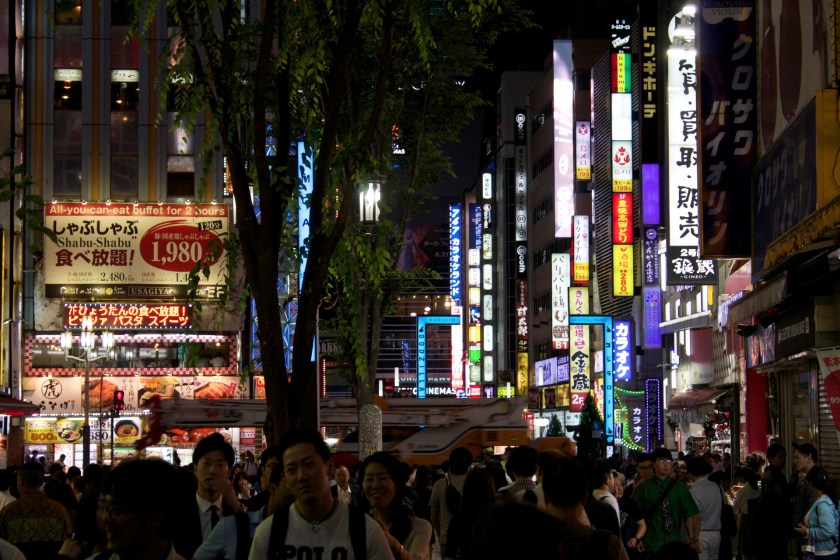
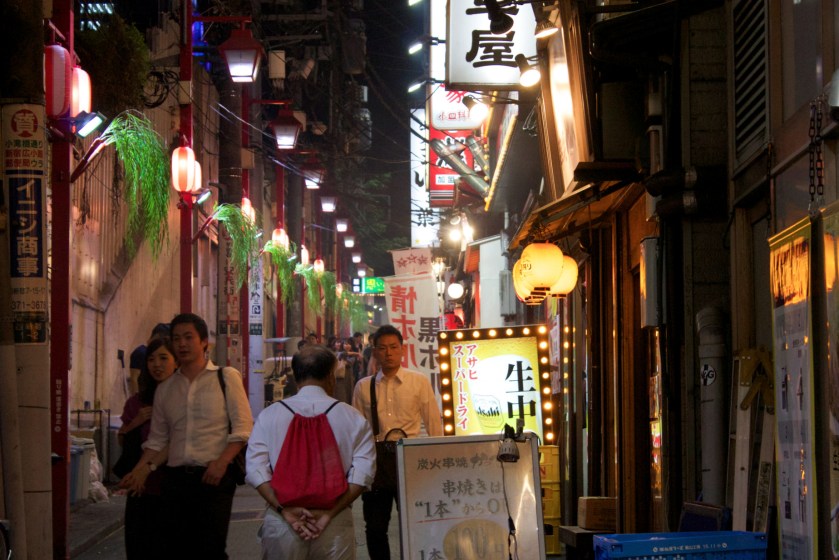
Shinjuku at night
Shinjuku at night.

My trust in my brother is absolute, this bar dude is acting sketchy as hell, and I’m not that much of an idiot, so I take my bro’s cue and follow him toward the intersection.

“What was that all about?”

The guy who approached us was an extortionist, my brother explained. They’ll invite you into the club, let you order a few drinks but neglect to tell you the drinks are 10,000 yen each, or about $90 USD. If you refuse to pay they’ll call Tokyo police, who will take the word of a local business owner over the word of a tourist in what they see as a legitimate dispute.

“Or they’ll spike your drink,” my brother said, “take all your cash and run your credit cards to the limit.”
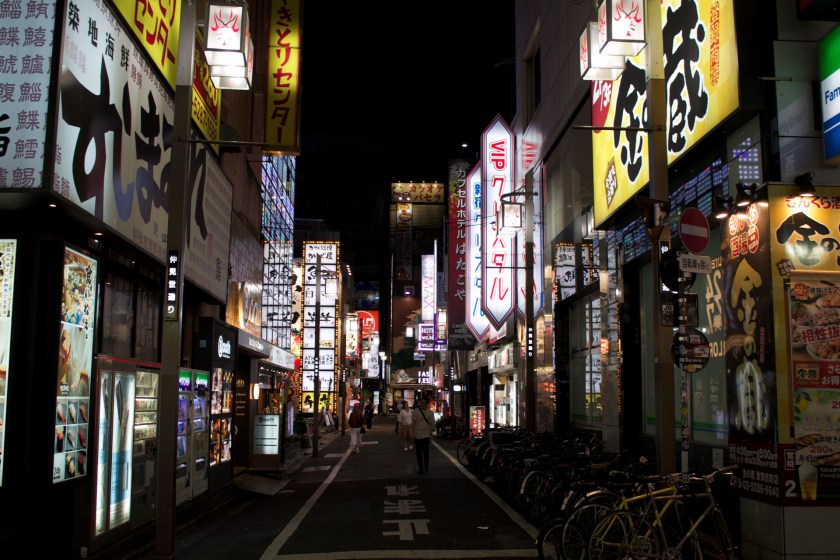
Shinjuku at night
In Shinjuku even the side streets are illuminated.

Japan’s not the kind of place where you worry about pickpockets or getting jumped by local thugs, but it’s a mistake to assume crime doesn’t exist here.

Tokyo may be one of the world’s safest cities, a place where you can leave your door unlocked or leave your bike unattended while confident no one will steal it, yet tourists are universal easy prey.
3E60ADF2-9C9C-4C3C-A6FA-6742AA4C7866

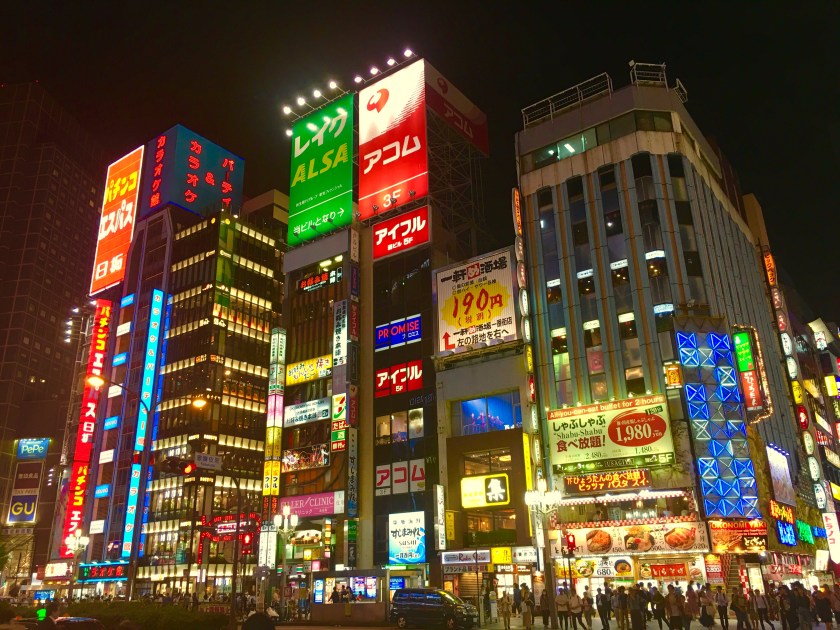
While walking through Shinjuku’s busy streets I was reminded of an interview with the great novelist David Mitchell, who spent several years in Japan teaching English before returning to the UK.

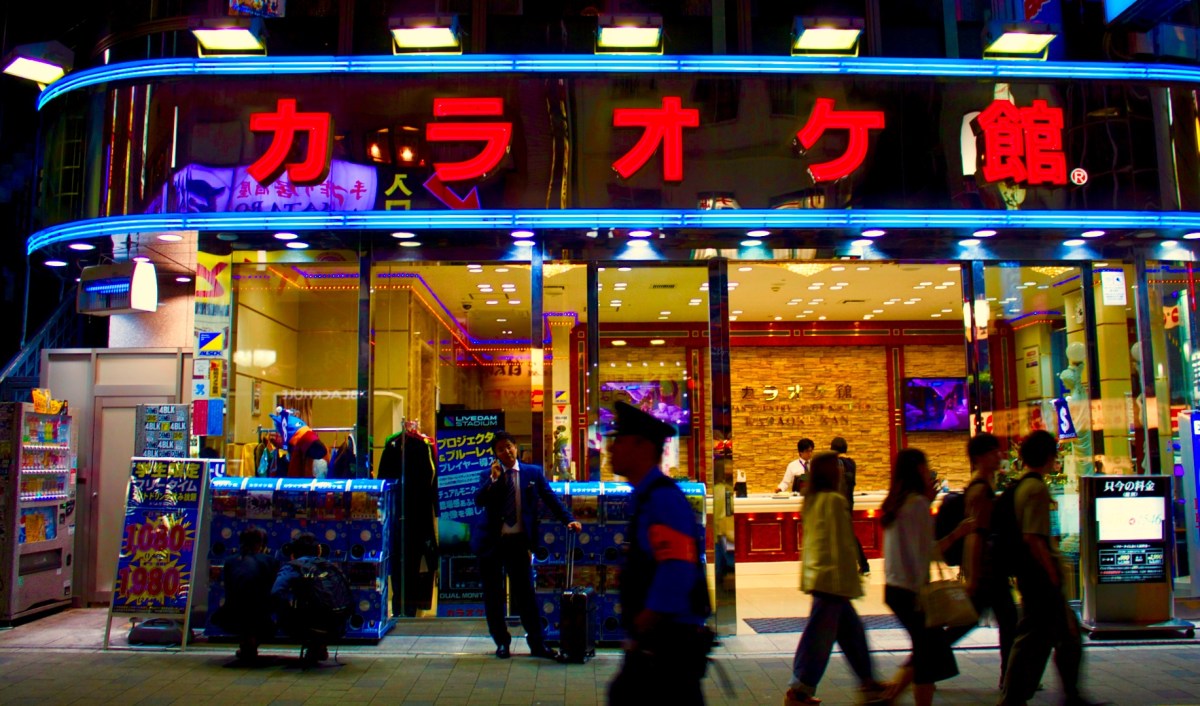
Moving through Tokyo as a westerner unable to decipher Japanese writing, Mitchell noted, is like being cocooned in your own personal anti-advertising buffer. All that hiragana and katakana written in neon might as well be mood lighting — it’s there, but if you can’t understand it, it can’t invade your headspace.

Mitchell said he found that obliviousness calming and conducive to keeping to his own thoughts on writing. Being there in person and experiencing it for myself, I could appreciate his point.
B3EA5968-2654-4E72-A13D-20DA6323DD0C
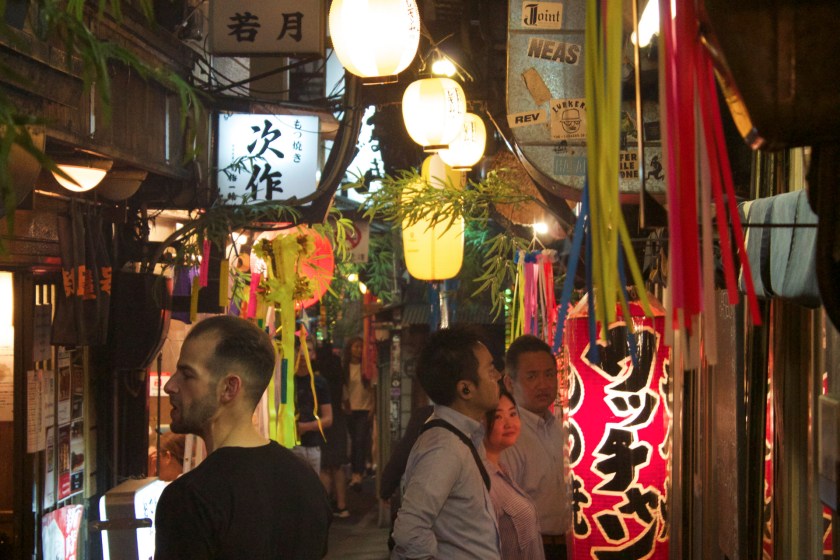
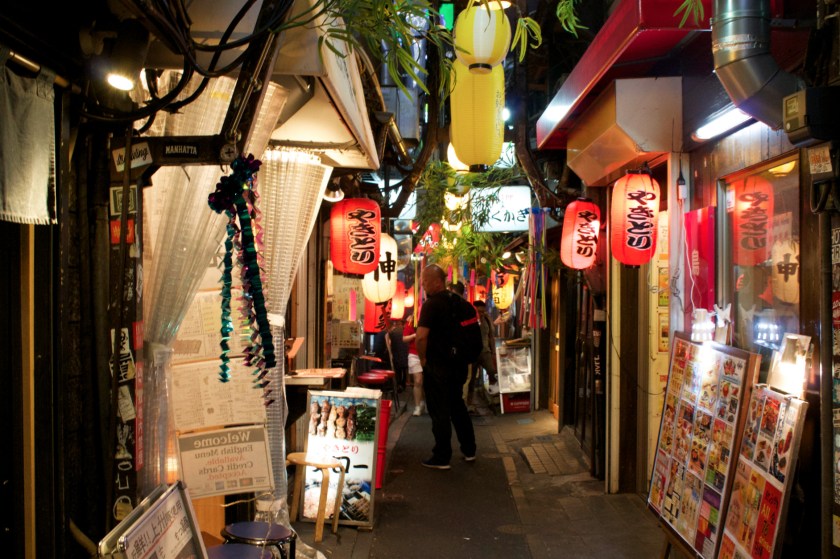
Memory Lane, also known as Piss Alley, is lined with tiny restaurants.
Shinjuku
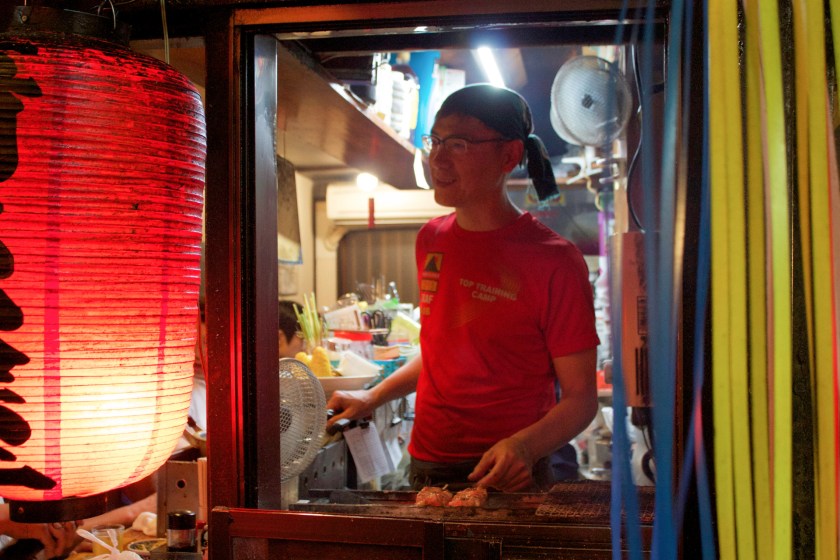
A cook preps skewers of meat in one of Shinjuku’s narrow-alley barbecue spots on Memory Lane, which are only big enough to accommodate a few patrons at a time.
Shinjuku
Another alley leading out of Memory Lane, a narrow alley lined with tiny eateries specializing in yakitori (barbecue skewers).
Shinjuku: Memory Lane
Memory Lane is narrow, smoky and heavy with the smell of grilled meat.

Another famous feature of Shinjuku is the giant Godzilla head, which looks like the King of Monsters is looming just behind a pair of buildings overlooking the neighborhood’s central crossing.
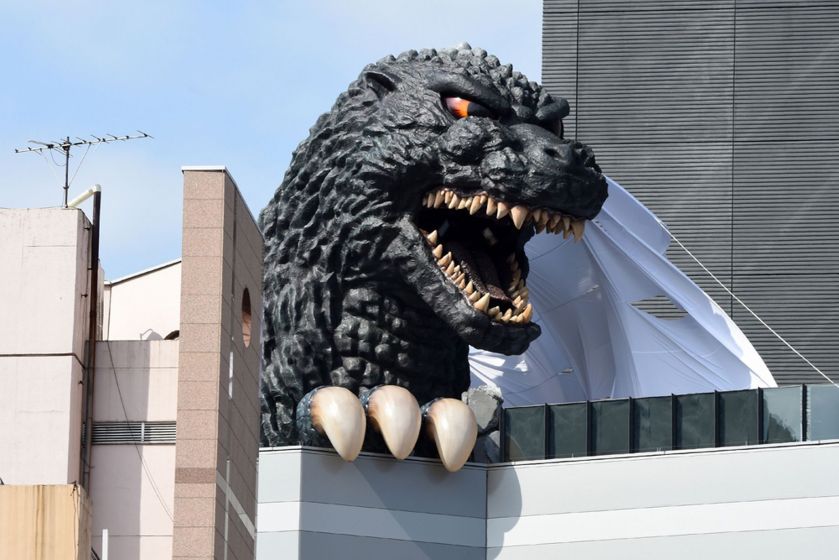
Shinjuku’s Godzilla
Godzilla himself peeks out from behind a pair of buildings overlooking Shinjuku. Photo credit: Tokyo Creative


Shiba: Zōjō-ji Temple and the Last Shoguns

The ancient blends with the modern at Zōjōji Temple, which is surrounded by skyscrapers in the heart of Tokyo.

Near the heart of the city, under the shadow of Tokyo Tower, is Zōjō-ji Temple.

The shrine is the most important location in a 1,000-year-old sect of Buddhism as well as the burial grounds of the last shoguns. But what’s most striking about the complex is how it contrasts the old and the new — the sangedatsumon (“gate”) to Zōjō-ji, pictured above, is the oldest surviving wooden structure in Tokyo, leading to an island of tranquility amid skyscrapers, subway lines, neon signs and thousands of shops.

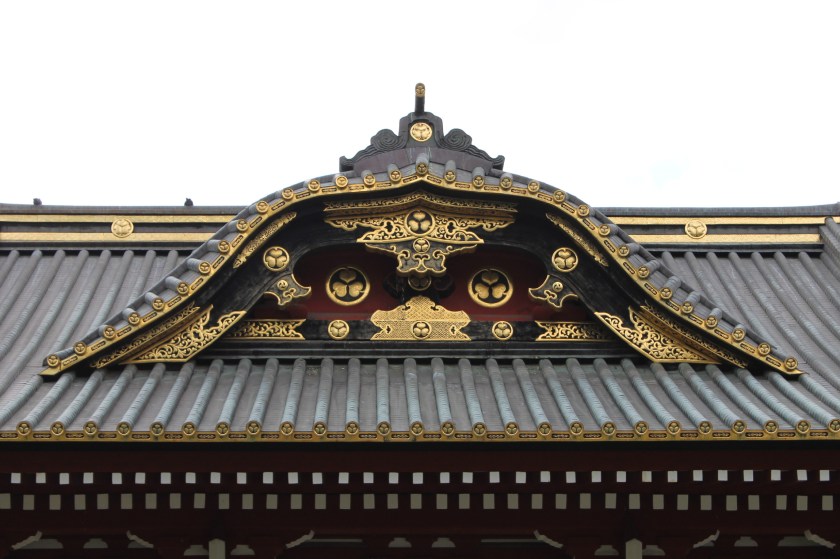
Zōjō-ji Temple: Detail of temple gate
The gate leading to Zōjō-ji Temple was built in 1622, making it the oldest wooden building in Tokyo proper.
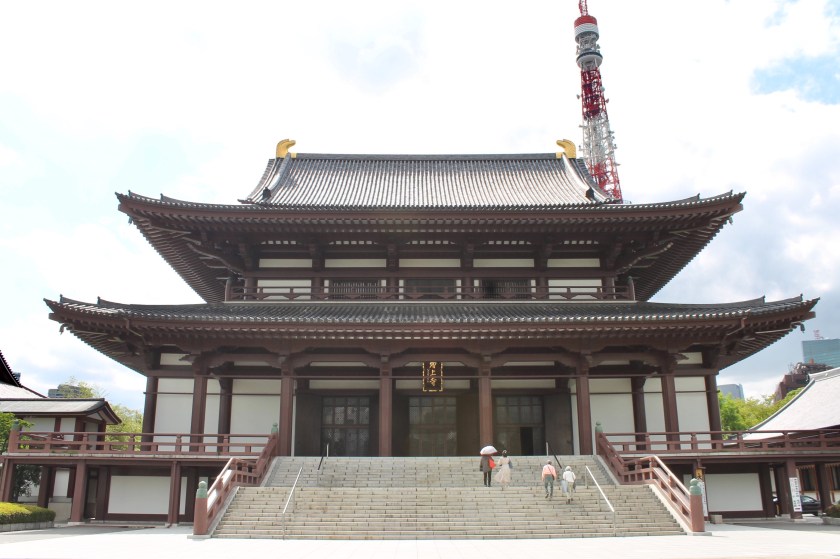
Zōjō-ji Temple
Tokyo Tower looms over Zōjō-ji Temple itself, the main structure on the shrine grounds.
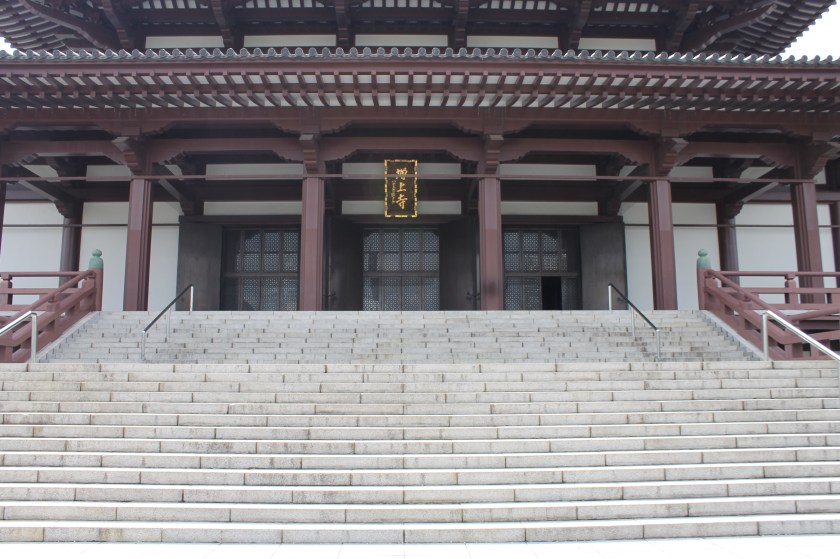
Zōjō-ji Temple close-up
The open door on the right side beneath the portico leads to the sanctuary, called the daiden (“great hall”) in Japanese.
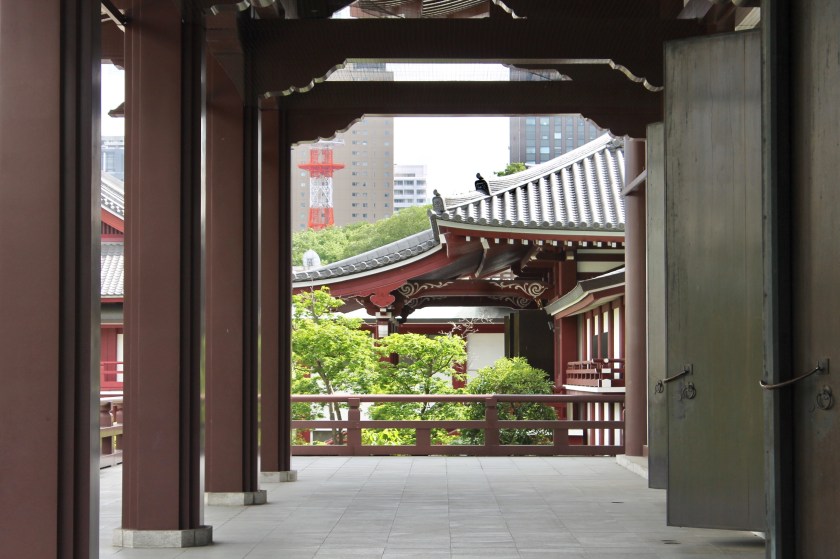
Zōjō-ji Temple: Detail
A view from the portico shows an adjacent temple structure as well as skyscrapers in the background.
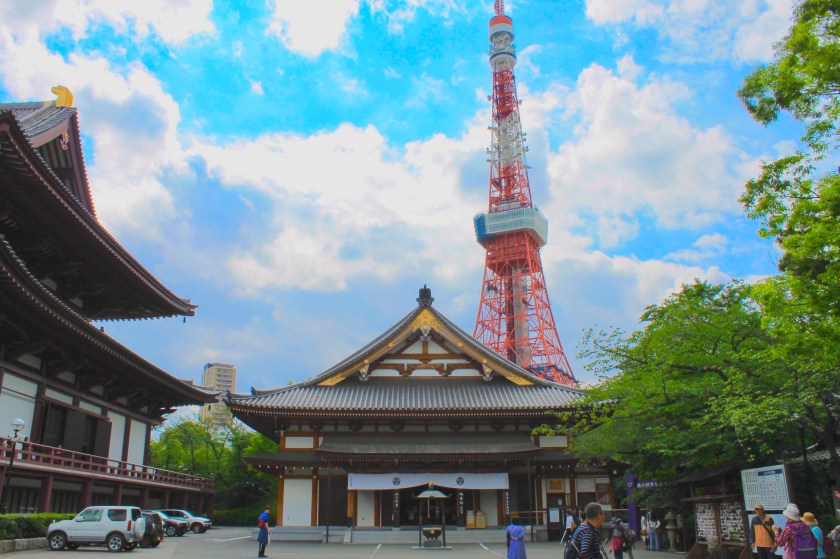
Zōjō-ji Temple and Tokyo Tower
Zōjō-ji Temple itself, left, flanks a smaller shrine structure with Tokyo Tower in the background.
Zōjō-ji Temple and pagoda
A pagoda with the portico of Zōjō-ji Temple in the foreground.
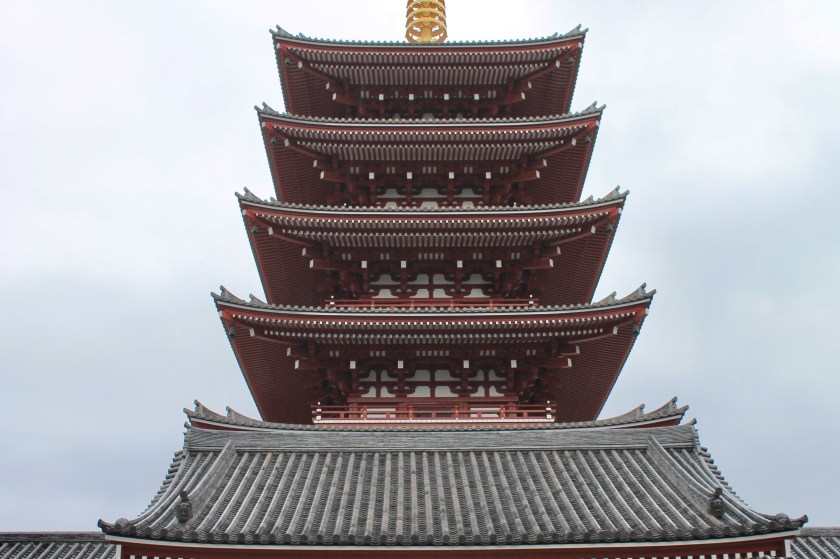
Zōjō-ji Temple and pagoda
A close-up of the detail and symmetry of the pagoda.
Zōjō-ji Temple: Shōgun Mausoleum
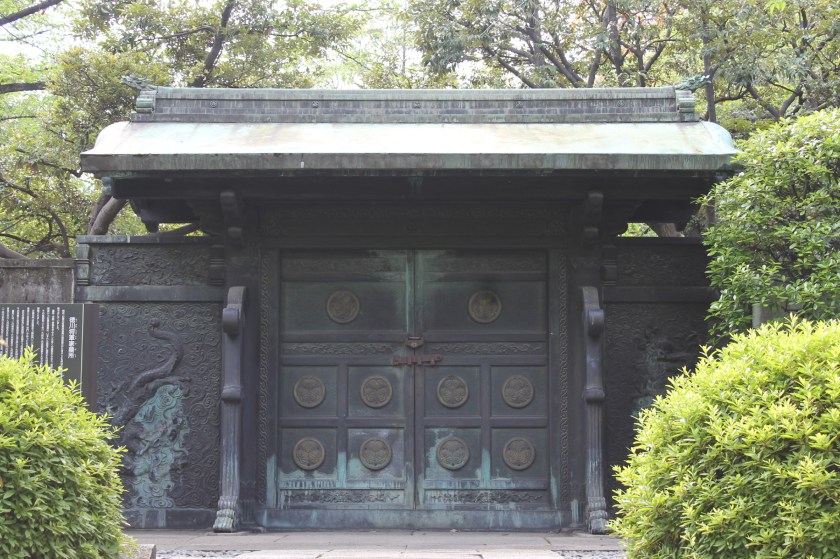
The entrance to the Shōgun mausoleum and graveyard. Six members of the Takegawa Shōgunate, the last feudal rulers in the country’s history, are buried here.
Zōjō-ji Temple
Statues of Jizō Bosatsu, a Buddhist figure designated as the guardian of children, line a quiet path behind the temple.
Temple sanctuary
Gilded ornaments surround a central statue in the daiden. Visitors can light incense and sit in quiet contemplation in the great hall.
Crow near Jizō Bosatsu statues
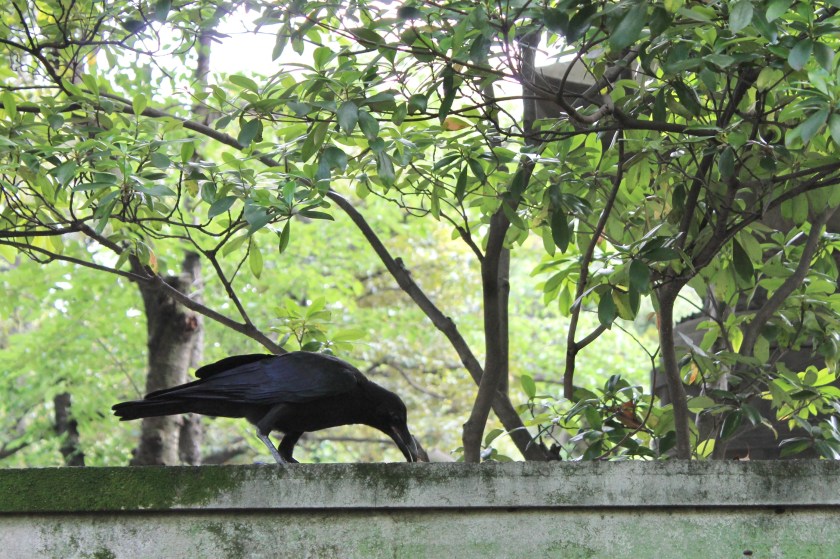
A crow sits on a stone wall separating the Shōgun burial ground from the path lined with Jizō Bosatsu statues.