Cats don’t accept blame, George Carlin once observed. Even when you catch them red-handed.
A few nights ago I was watching the Yankees lose when Buddy jumped on the coffee table, settled into a loaf position and started doing what he does best — knocking things onto the floor.
Usually it’s remote controls, water bottles, my phone. Usually he has the good sense not to knock over glasses with liquid in them, or plates of food. But not always.
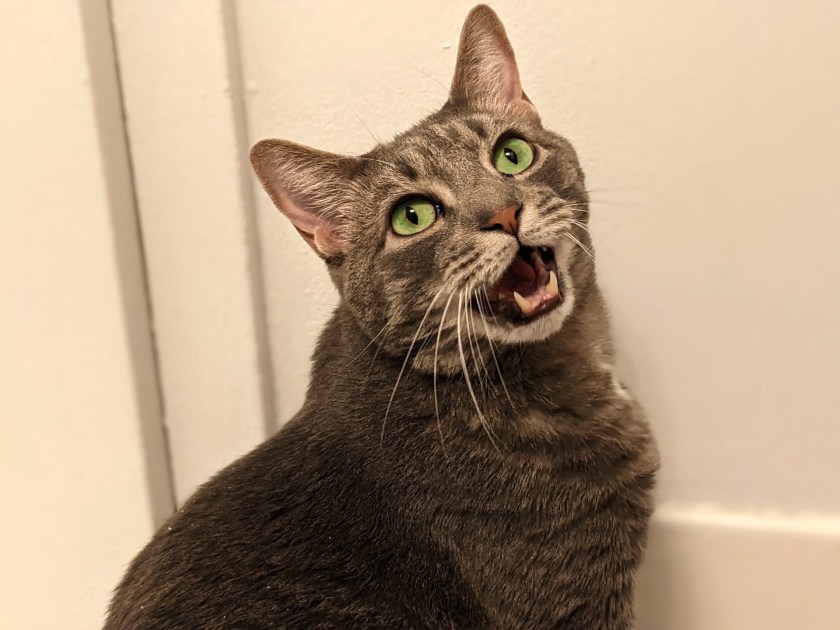
Bud turned, looked me in the eye, meowed and proceeded to swipe a tub of wasabi peas (just the like one pictured above) off the table. The package hit the ground and popped open, spilling the peas and their powdered wasabi coating all over the floor.
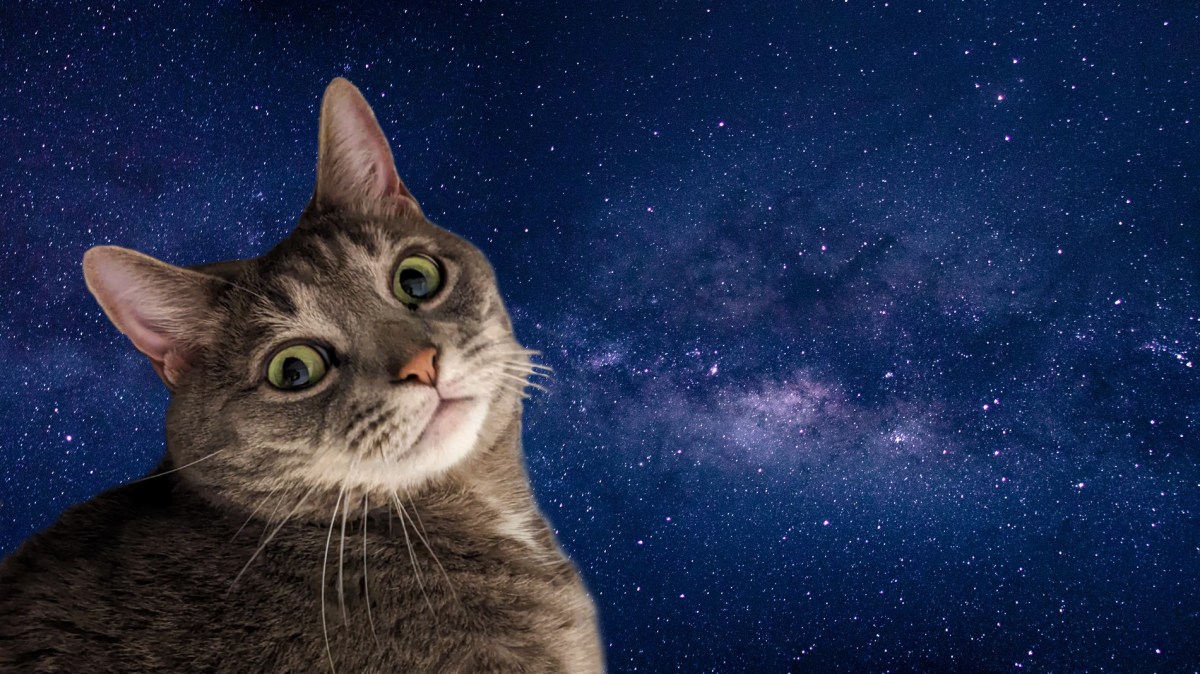
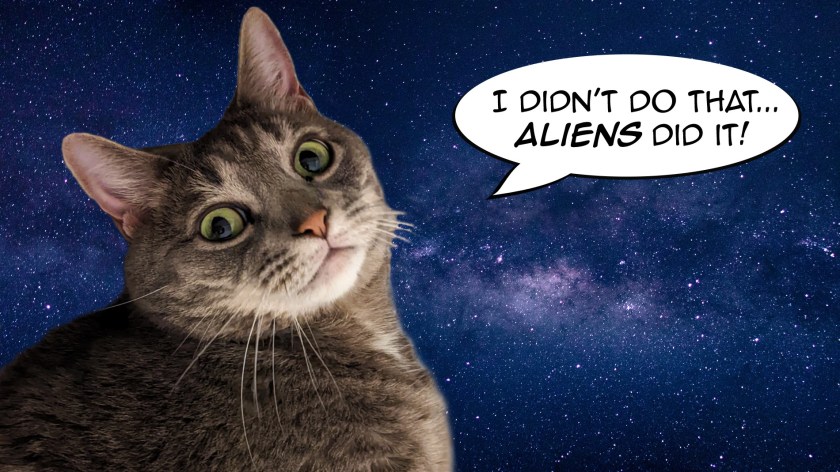
“They came down in a big spaceship, and they said ‘Buddy, we’re gonna spill your human’s snacks and then blame it on you!’ And I said ‘No, aliens! Not on my watch!’ But they distracted me with turkey…”
Bud looked at me, trilled, then took off, perhaps put off by the scent of the wasabi.
A few seconds later he returned as I was sweeping them up, trilled again, and looked at me like “What happened, dude? Someone knocked over your wasabi peas? That’s terrible!”
If he could speak — you know, besides his incessant trilling and meowing — the conversation would probably go something like this:
“It was you! You did it!”
“No I didn’t.”
“I watched you do it! You made eye contact with me as you casually slapped them off the coffee table!”
“You’re mistaken. Perhaps it was another cat who looks like me.”
“You’re the only cat who lives here!”
“Then it was a chalupacabra.”
“You mean a chupacabra? Those don’t actually exist, you know. Have you ever heard of Occam’s Razor?”
“Aliens, then. Yeah. Probably aliens. I keep trying to tell you, aliens are responsible for those hairballs. Remember the time you found puke in the bed? That was aliens too. I told them ‘Be gone, aliens! You’re not welcome here!’ but they just can’t help themselves….”
As George Carlin said, “Cats don’t accept blame.” Even when they do things right in front of you, apparently.
Underestimate feline intelligence at your peril, humans!
The Guardian’s Tim Dowling thought he was writing a column about his dumb cat when he inadvertently described how the cat’s got him trained.
The short of it’s that Dowling and his family have a cat and a dog who thankfully get on really well and have become best pals. The dog was in desperate need of a grooming session recently, and when Dowling’s wife brought the pup home after getting a trim, their cat regarded the dog warily and bounced. He returned from the family’s yard only to eat and kept a watchful eye on the dog each time.
In Dowling’s estimation, the cat didn’t recognize the dog after grooming, which makes him stupid.
Yet cats can tell when their humans are coming home long before the key turns in the lock, probably due to their incredible hearing (detecting footfalls), their remarkable olfactory abilities, or both. They know where we are in the home at all times because they can track our movements several different ways, and they can even tell where we’re headed in a completely pitch black room thanks to their whiskers, which can pick up micro-changes in air density — but Dowling thinks they can’t recognize a groomed dog.
The more likely explanation is the dog smelled different, which upset the cat, or the haircut itself offended kitty. Felines are, after all, notoriously averse to change.
If your cat starts acting weird after you’ve rearranged your furniture, it’s not because the cat is an idiot who can’t navigate the room. It’s because felids of all kinds don’t like changes to their territory or their belongings, especially when those changes happen without warning. (And make no mistake, if your cat rubs up against something, whether it’s a couch, your dog or even you, you are included in that tally of his or her “belongings.” A cat is marking you with scent glands when she rubs against you, and what do you think scent-marking is for?)
Dowling disses feline smarts and praises them for their perseverance in the same sentence, but hilariously doesn’t realize his cat’s been conditioning him to provide treats on demand:
But cats are actually pretty stupid – their approach to problem-solving is only notable for bottomless persistence. As I sit at the kitchen table in the morning pretending to answer emails, I can hear the cat behind me, methodically clawing at the door of the cupboard where the cat food is kept.
I say: “Don’t be insane – I fed you half an hour ago.” But I think: I really don’t want to repaint that cupboard door. After about 10 minutes, I give in.
Later, he describes the same sequence of events:
The next day while the dog is at its appointment, I sit with my laptop in the kitchen, waiting for the driving rain to stop before I cross the garden to my office shed. Behind me the cat is sitting on its hind legs, working on the cupboard door with both paws, like a boxer hitting a speed bag.
“I can’t feed you three times in the same morning,” I say. “Imagine how weak that would make me look.” Ten minutes later, I give in.
Without taking the column too seriously, it’s obvious Dowling is a man who doesn’t know when he’s being played by his furry overlord.
The “stupid” cat has trained Dowling to feed him snacks on cue: Sit in front of the cupboard and do annoying things for a while, and the human will relent and dispense the good stuff.
“Do my bidding, human, or face my considerable wrath…and annoying meows!”
Give in once and a cat will return to the same method again. Give in twice and it’s pretty much over. If you thought kitty was persistent before, now you’re going to see a whole new level of patience exhibited by your feline master if you get ideas about changing the routine.
It happens to the best of us, especially when in our human arrogance we underestimate our little friends.
When Buddy was still pretty much a kitten, I thought I was training him to come in from the balcony by shaking a treat bag. In reality he was training me, as evidenced by the fact that when I called him to come in and didn’t have a bag of treats at the ready, he would stop right at the threshold of the door and refuse to move until I bribed him with a snack.
The director was very specific about the way his cats should be treated in his absence.
Stanley Kubrick was so particular about his cats, he created a 15-page guide to caring for the beloved felines while he was away making films.
Kubrick, who is considered one of the greatest film directors of all time, was a homebody and recluse — when he wasn’t working behind the camera — whose eccentricities have been documented in books and interviews over the decades.
Of course having cats isn’t an eccentricity, but Kubrick was very particular about how his pride of house lions should be treated, how they should eat and drink, and how their behavior should be monitored.
His lengthy instruction booklet detailing the particulars of their care had at least 37 sections!
His daughter, Katharina Kubrick-Hobbs, said the guide was titled Care Instructions: How To Look After The Animals, and the director left a version of it behind when he went to Ireland to shoot 1975’s Barry Lyndon. The 37th item dealt with breaking up potential fights among the kitties, Kubrick-Hobbs recalled:
“When we went to Ireland on Barry Lyndon, he left this 15-page document, Care Instructions: How To Look After The Animals. And the 37th instruction is: ‘If a fight should develop between Freddie and Leo–‘ and that was the father and son tomcats that we had– ‘the only way you can do anything about it is to dump water on them. Try to grab Freddie and run out of the room with him. Do NOT try and pick up Leo. Alternatively, if you open a door and just let Freddie get out, he can outrun Leo. But if he’s trapped in a place where you can’t separate them, just keep dumping water, shouting, screaming, jumping up and down, and distracting them, waving shirts, towels… just try and get them apart and grab Freddie.‘”
Kubrick died at age 70 in 1999 after a film career that spanned five decades, from 1953’s Fear and Desire, and 1960’s Spartacus starring Kirk Douglas as the eponymous warrior, to Full Metal Jacked (1987) and Eyes Wide Shut in 1999. One of his best-known works was 2001: A Space Odyssey, a 1968 collaboration between Kubrick and celebrated science fiction novelist Arthur C. Clarke. The film was groundbreaking for its realistic portrayal of space travel and exploration, and created a visual shorthand that still defines the genre today.
Stephen King adaptation The Shining (1980), Cold War black comedy Dr. Strangelove (1964) and A Clockwork Orange (1971) are among his most popular films.
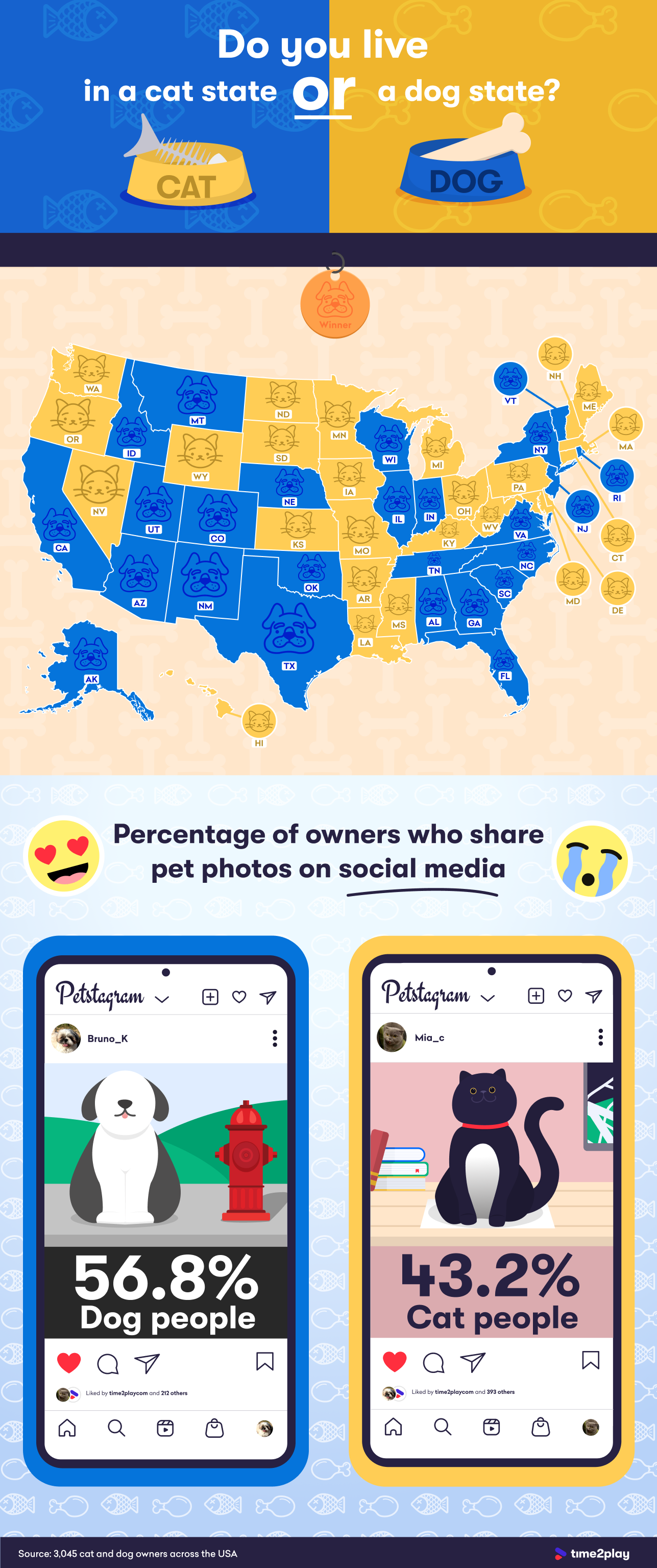
The US is evenly split between 25 cat states and 25 dog states.
I spent a weekend dog-sitting for the first time ever in the spring of 2 B.B. (Before Buddy), rising early to walk my brother’s Chihuahua-terrier before work.
The Manhattan of 7 am is a different world: Everywhere I looked, bleary-eyed New Yorkers clutched leads, yawning as dogs of all shapes and sizes pulled them along. I never knew there were so many dog-friendly apartments, let alone so many people willing to share cramped spaces with dogs of all sizes. Seven-pound Cosmo was one thing, Greate Danes and Dobermans quite another.
You’d think New York City, with its sky-high population density, would be a cat town. It isn’t. Neither is New York State as a whole.
Sadly, Buddy and I live in a state dominated by dog-lovers, one of 25 including California, Texas, Florida, Virginia and both Carolinas. Although cats are the most popular pets in 25 states as well, feline strongholds tend to be in places with lower population density, from Oregon and Washington in the west to Louisiana, Arkansas and Mississippi in the south, to Pennsylvania, New Jersey and Maine in the east.
The information was compiled by market research firm Time2Play, which surveyed more than 3,000 Americans. The team also asked respondents whether they posted photos and videos of their pets online. Even though cats remain the undisputed masters of digital space, almost 57 percent of dog people showed off their pooches online, while only 43 percent of cat servants did.
Bud and I have been thinking about moving someplace warmer for years, but of course the king’s needs come first. Maybe we’ll settle in Louisiana or Nevada, where Buddy can establish a new realm for himself.
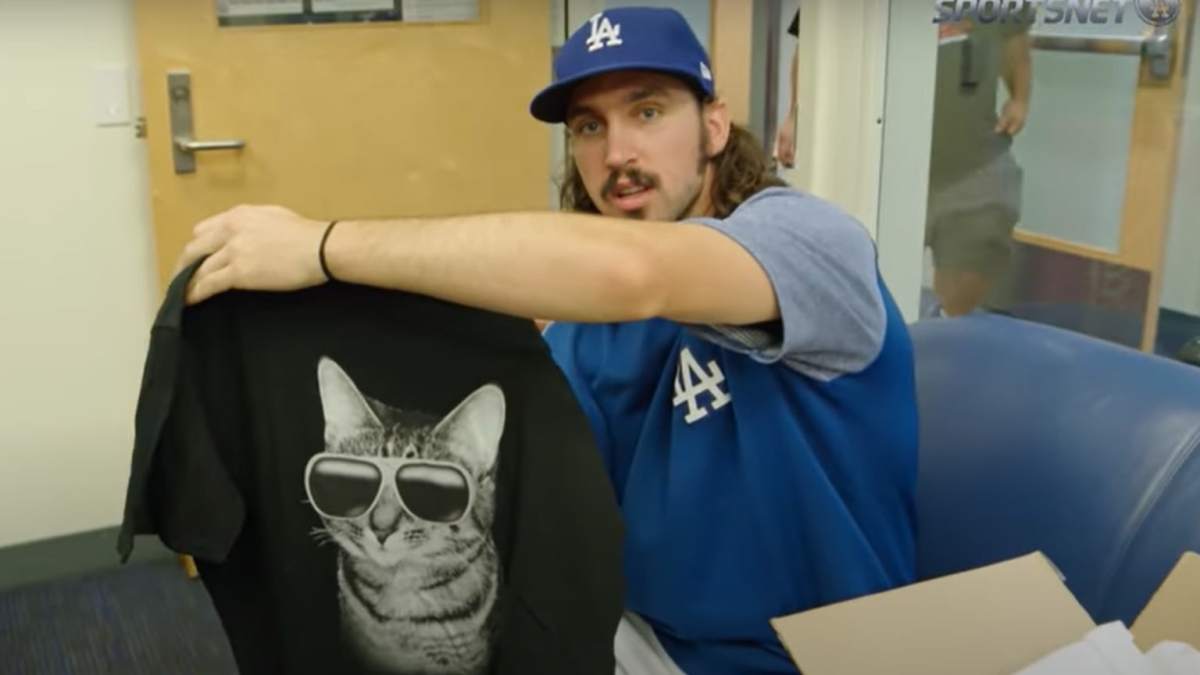
Dodgers pitcher Tony Gonsolin is a big-time cat guy who celebrates all things feline as he dominates from the pitcher’s mound.
Tony Gonsolin hasn’t been shy about his love for cats.
The Los Angeles Dodgers pitcher rocked cat shirts and spoke often about cats during his time in the minors, continued the habit when he was promoted to the majors, then last year kicked it up a notch when he wore cat-themed cleats as a starting pitcher.
Now the 28-year-old Gonsolin has the highest profile of his young career as he leads all of major league baseball with an astounding 1.58 ERA, 0.84 WHIP and a 9-0 record, and he’s continued using his platform to spread love for all things feline.
For our readers outside the US, as well as those unfamiliar with the sport, the numbers above mean Gonsolin has been exceptional and virtually unhittable this year. Pitching is often compared to chess, and for good reason. Being a pitcher is paradoxical — a pitcher’s job is to throw the ball across the plate while at the same time making it as difficult as possible for the batter to actually hit the ball. As a result, pitchers use deception, psychological tricks and a wide variety of tiny physical adjustments to make the ball behave in different ways.
People with a passing knowledge of baseball think these guys just throw as hard as they can to blow the ball past the batter at 100 mph. While some pitchers are capable of that, it’s not a viable strategy. Throw the same pitch again and again, and hitters will know what’s coming. That’s not what you want to do, unless you enjoy getting clobbered by home runs.
Instead, a great pitcher will follow that 100 mph fastball with an 82 mph breaking ball, throwing the hitter’s timing off and baiting him into swinging early. Or he’ll throw a 12-6 curveball, which drops off by several feet as it crosses the plate.
One of Gonsolin’s go-to pitches is a split-finger fastball, also known as a splitter because of the grip pitchers use to throw the pitch. It combines the speed of a fastball with the drop of a curveball and is very difficult to hit when executed by a skilled pitcher.
In addition to wearing cat-themed cleats, getting his teammates and manager to wear cat shirts and using social media to talk about his love for all things feline, Gonsolin celebrates every “Caturday” with posts about cats.
As he climbed the ladder from minor leaguer to pro, Gonsolin was a cat man without a cat because the uncertainty and travel schedule of a minor leaguer doesn’t leave much time or stability for a pet. In addition to the constant possibility of being dealt to another team, minor leaguers can be shuffled between different levels of play (AAA, AA, single-A, fall leagues, etc) and sent up to their MLB team for short stints if big leaguers get hurt and the team needs a temporary replacement.
Now that Gonsolin is an established major leaguer, and the Dodgers value him so much that it’s very unlikely they’ll trade him to another team, Gonsolin adopted an orange tabby named Tigger. It’s safe to say little Tigger is a well-loved cat who is doted on by his adoring human.
Credit: Tony Gonsolin/Instagram
Note: As longtime readers of PITB know, Little Buddy and I are Yankee fans. I was born and raised here in New York, started watching the Yankees as a child when they were lousy in the early 90s, lived through the glorious Joe Torre Era when Derek Jeter, Bernie Williams, Paul O’Neil, Mariano Rivera (my favorite Yankee), Andy Pettite et al won four (!) World Series in five years from 1996 to 2000, and have been waiting patiently for the Yanks to win it all again for the first time since 2009. This is our year! The Yankees are historically great in 2022. Buddy himself might not fully understand baseball, but he has a mean mid-20s swipe ball and he likes it when the Yankees win and I’m happy. We wish Gonsolin well, but if the Dodgers and Yankees end up in the World Series this year, well, I’ll be rooting against him, cat cad of not. Sorry, Tony!
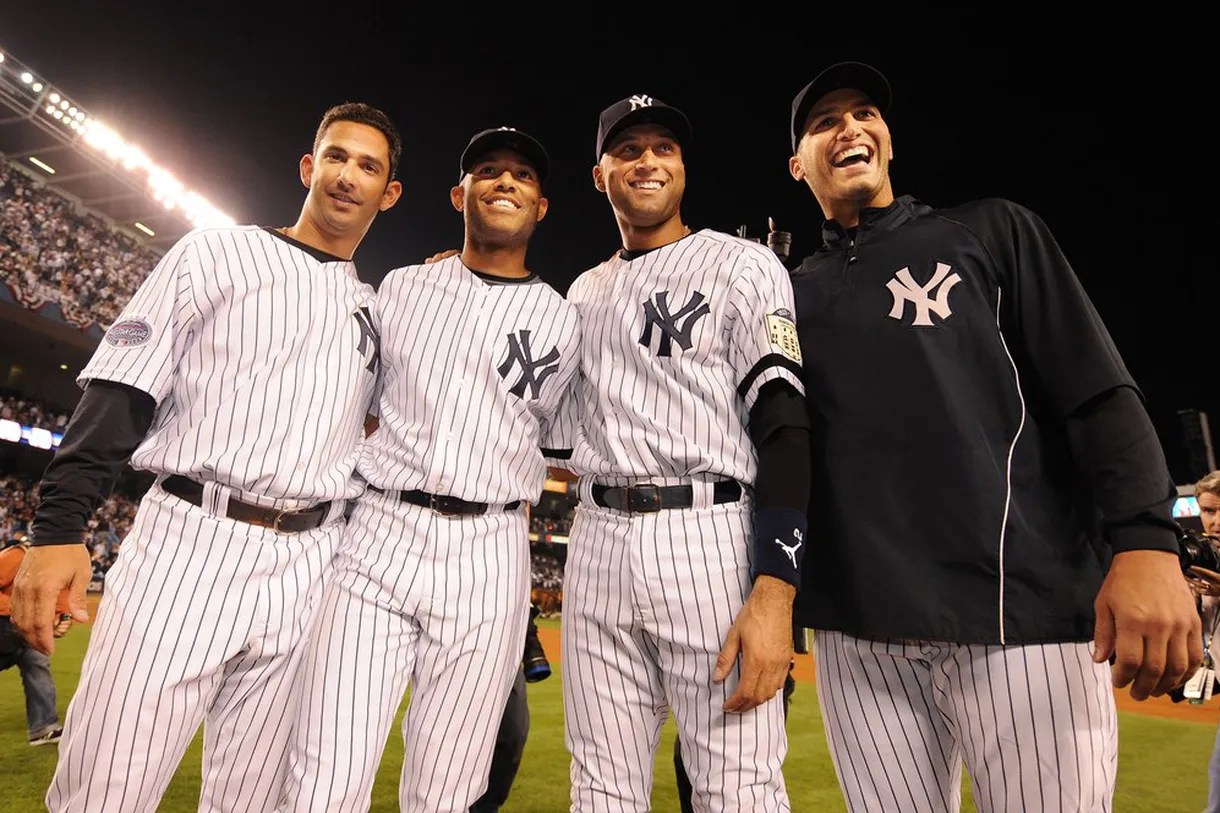
Jorge Posada, Derek Jeter, Mariano Rivera and Andy Pettite, four of the greatest Yankees in the 1996-2000 dynasty.