Dear Buddy: Why Do Humans Watch Horror Movies?

Dear Buddy,

What’s with these horror movies? My human likes to curl up on the couch under a blanket, with me protectively in her lap of course, and watch these ghastly movies about serial killers, ghost infestations and lurking monsters.

Why would anyone want to scare themselves? You don’t see us creating an entire film genre dedicated to horrors like empty food bowls or late dinners, so why do humans make these movies?

Your fan,
Mildly Curious in Manhattan


Dear Mildly Curious,

This is a question I’ve pondered for some time, inasmuch as I care about anything human-related to ponder. My human also watches those movies and he also does so with me sitting protectively in his lap.

Then I realized something. None of the people in these horror movies have cats!

The family from The Conjuring? They have a dog. Stanley Tucci’s family in that crappy movie about flying monsters that kill everyone? Dog! The family in that other crappy movie about giant axolotl-type things that terrorize people living in a coastal community?

You guessed it! They have a dog too.

You see where I’m going with this, right? Humans who serve us cats literally have no fear because no monster or crazy cereal killer would ever risk attacking a home with a cat in it.

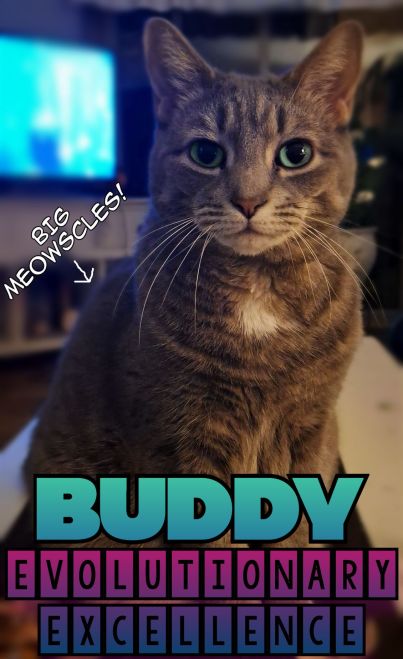
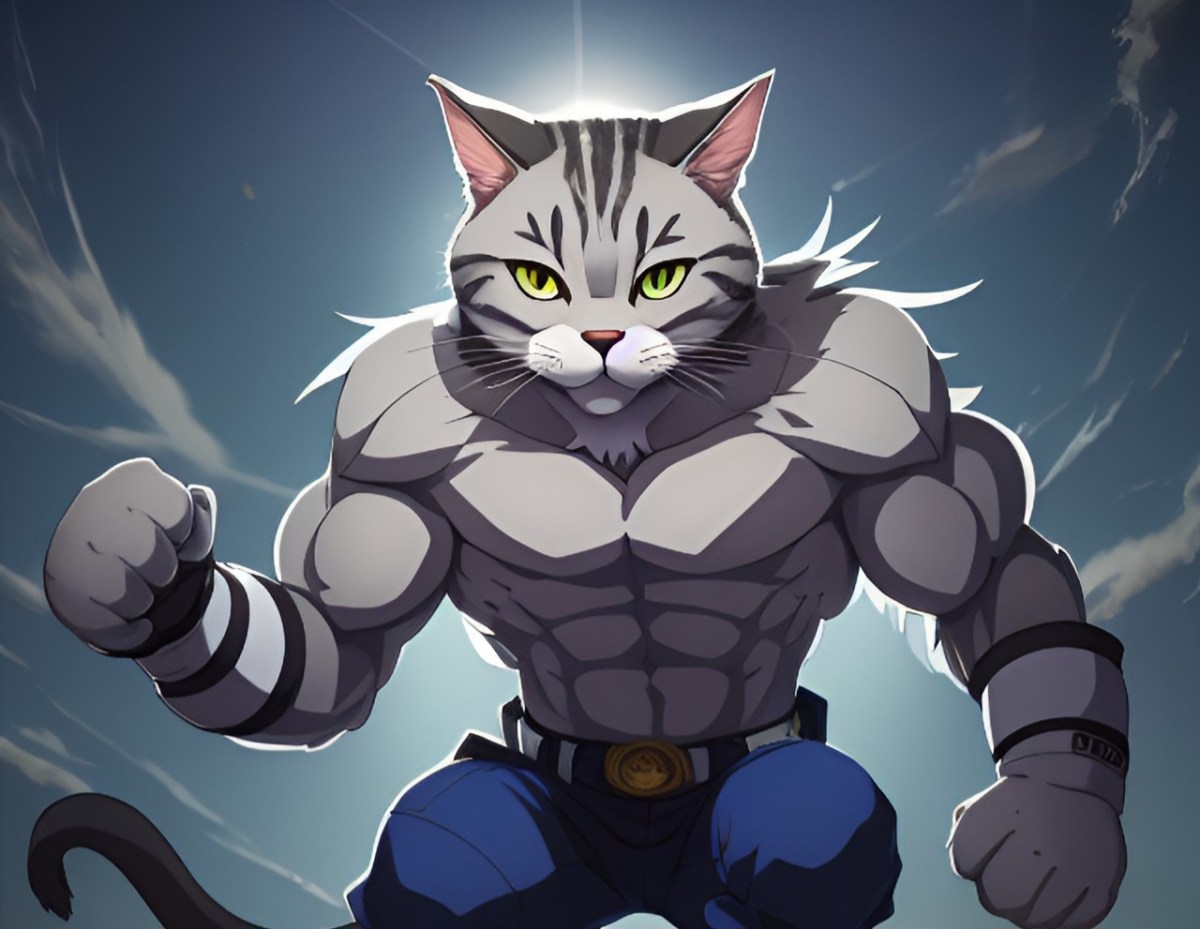
Suppose a hungry evil monster is let loose in my neighborhood and is making its way through the street at night, then sees me in all my meowscular, intimidating, tigeresque glory sitting at the window, keeping watch over the nocturnal world.

That monster is going to skip right over The Buddy Domicile and go in search of easier pickings because it sure as heck doesn’t want to tangle with me and my claws. I have that effect on monsters.

They may be monsters, but they’re not stupid. Breaking into a home with a cat is like breaking into a t-rex enclosure. You’re asking to get mauled by a huge, meowscular apex predator who will eviscerate you and look handsome and badass while doing it.

People who serve us cats know this. They know no monster or killer or robber would be stupid enough to go near a house with a cat. They can probably sense my meowscularity two miles away!

So sometimes our humans may want to know what it feels like to be vulnerable, what it would be like if they didn’t have tigers like us guaranteeing that no intruder approaches. THAT is why they watch horror movies. Take it to the bank!

Your genius friend,

Buddy the Cat
Cat Domestication Was The Start Of A Beautiful Friendship

Domestication’s real goal: to make cats cuddly as well as great mousers.

Cats have been doing things their way since the very beginning.

Unlike literally every other domesticated animal, cats were not domesticated by humans. They did it to themselves.

As if that didn’t make them unique enough, they lay claim to another major distinction: they’re the only species of obligate carnivores to undergo domestication in the entire history of human existence.

That explains why cats, more than any other animal that depends on humans, so closely resemble the wild animals they were before signing up for the good life of naps, warmth, endless rodents to hunt and free food from their new human friends.

In a new essay for The Conversation, evolutionary biologist Jonathan Losos, author of The Age of Cats: From the Savanna to Your Sofa, notes new DNA analysis settles the question of where cats came from once and for all.

Domestic cats are descended from North African wildcats, specifically the species felis sylvestris lybica. Unlike dogs, who underwent telltale physical transformations when they evolved from wolves, house cats “appear basically indistinguishable from wildcats.”

“In fact,” Losos writes, “only 13 genes have been changed by natural selection during the domestication process. By contrast, almost three times as many genes changed during the descent of dogs from wolves.”

While the change in genetics that happen with domestication left cats pretty much as they were physically, the process made dramatic changes in the feline brain, reducing regions governing fear and expanding those related to social behavior. The result? The major difference between house cats and their wildcat ancestors is disposition.

In other words, domestication made cats cuddly.

buddyevolution
Housecat evolved.

Notably, felis sylvestris lybica had to be pretty friendly in the first place, as well as bold and driven by the now-legendary feline curiosity to risk padding into human settlements with their bright lights, strange smells, open flames and the two-legged giants striding around them.

They didn’t have a way of negotiating or signaling their intent. They couldn’t say: “Hey guys, we’re here to kill and eat the tasty rodents who have been giving you problems by chowing down on your yums, but we don’t want your yums for ourselves. Plants are disgusting!”

So they had to demonstrate their usefulness, prove their worth, and enjoy the fruits of it by curling up in front of warm fires or on human laps.

That explains why it was the African wildcat that became a human companion species and not European wildcats, whom Losos notes are often “hellaciously mean” in interactions with people, even if they’re raised around humans when they’re young. It was also a matter of being in the right place at the right time, as nascent human civilization took root in the Fertile Crescent.

But ultimately, just like cats decided to domesticate themselves and didn’t really bother to consult us about it, so too do they bend us to their will with an entire repertoire of manipulative behavior, from solicitation purrs to incessant meowing and having a talent for looking their cutest when they want something.

While we may think we set the rules and parameters of our relationship with the furry little ones, as Losos notes, “cats usually train us more than we train them.”

Read the whole thing here:

Feline evolution: How house cats and humans domesticated each other

Buddy To Appear In Upcoming Episode of HGTV’s Box Hunters

Buddy the Cat tours a trio of elegant box homes in the new season of HGTV’s popular series Box Hunters.

NEW YORK — Will he go with the “modest” 32-room castle, the manor with elegant cardboard balconies or the minimalist keep with high walls and strong fortifications?

Viewers of HGTV’s hit show, Box Hunters, will have to tune in on Wednesday, Dec. 13 to find out!

The episode will air on fHGTV, (Feline HGTV), the network’s cat-centric sister station, and will follow Buddy the Cat as his box estate agent shows him three unique properties.

“Buddy the Cat is a young professional whose hobbies include taking over the world, gorging on turkey and getting high on catnip,” the narrator says in the episode’s opening sequence. “He’s looking for a property that will fit in his living room, can accommodate a nuclear bunker and serve as a headquarters for planning world domination, all while providing pleasant spaces to entertain guests. Can he find a box house that will fit his criteria? Find out in this episode of Box Hunters!”

Like many cats who are featured on the show, Buddy has a predetermined list of features he considers absolutely necessary, including a complete lack of doors, no baths, and quiet napping chambers.

“It has to have a certain je ne sais quoi as a dwelling meant for me and not just some regular cat, of course,” Buddy said. “But it needn’t be unnecessarily elaborate.”

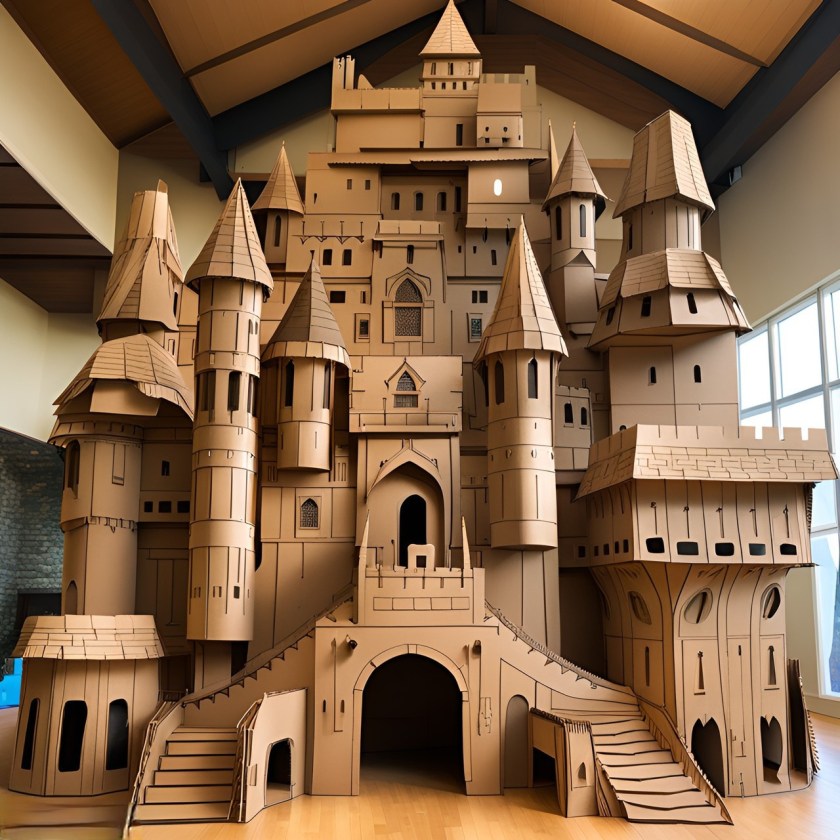
Patches, the box estate agent, told Buddy they’d “start with something modest” while leading him to a towering box castle with a grand staircase and wide front entrance.

Buddy's Box Castles
A modest box castle design toured by Buddy the Cat.

“I like the understated design of this one,” Buddy said. “The ground floor entrance leads directly into the Grand Napping Chamber with smaller, more private napping accommodations accessible from the main chamber.”

Patches nodded.

“And you can see here, the litter box room is filled with all the modern amenities, including a pad that catches stray litter and a cardboard floor designed to look like marble,” she said. “Stepping out into the grand foyer, we have ample storage space in the adjoining closets for all your toys, your catnip stash and your weapons. It’s even got a Roomba garage!”

Buddy's Box Castles

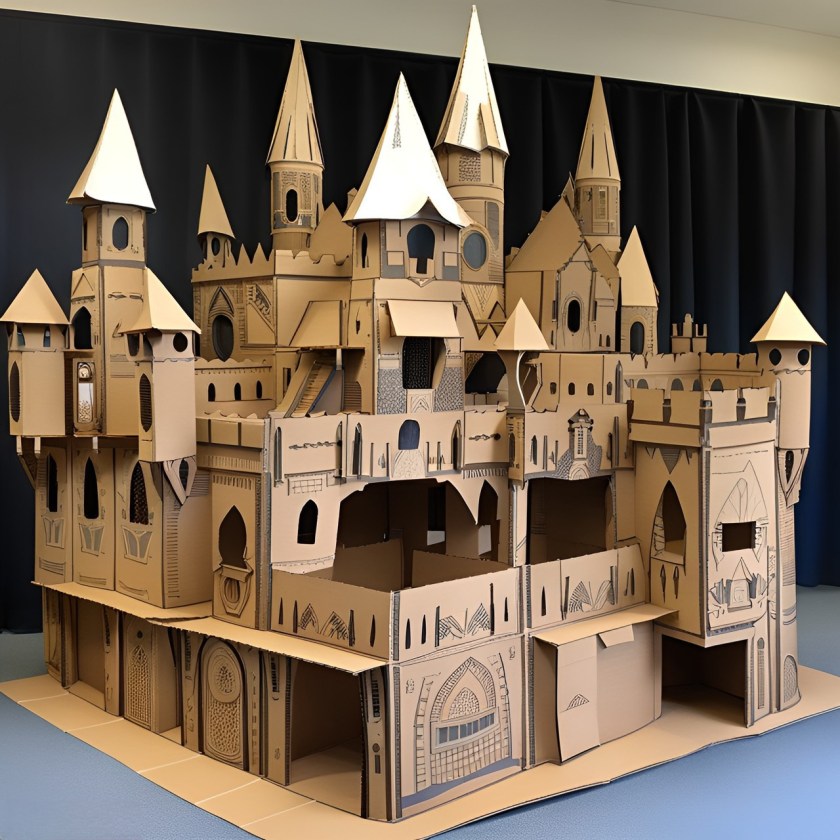
A second design, which Patches labeled “more of a classically styled castle,” features a pair of ground-level entrances, several balconies, and “ample space for walking the upper parapets.”

“The wrought cardboard filigrees are fabulous,” Buddy said, running a paw along a faux window where dozens of holes had been punched through to create a screen effect.

Buddy's Cardboard Castles

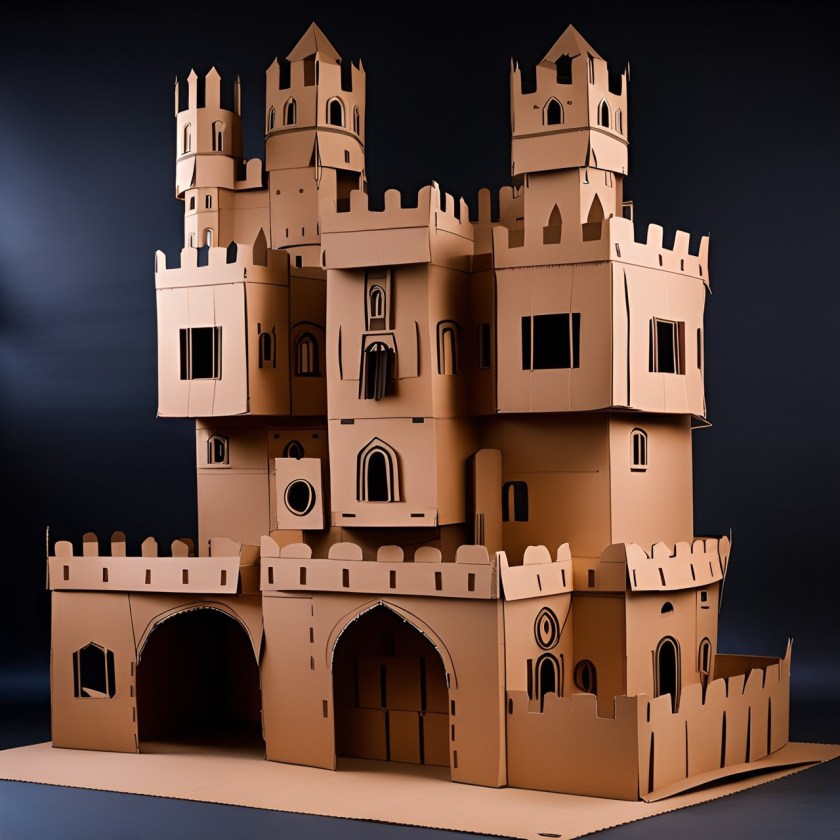
Finally they toured a minimalist keep that filled most of Buddy’s requirements but didn’t have all the bells and whistles.

“The good news is, it’s significantly less than your budget of 50 cans of wet food,” Patches said. “You’ll have cans left over for renovations and to customize the space. And moving along here past the master naproom, this doorway leads out to the central courtyard. This is a really nice space for entertaining, especially in the summer months when it’s warm out and you and your friends might want to dine outside on kibble, turkey, mouse or whatever your preference may be.”

Catch the full episode on Wednesday, Dec. 13 at 7:30 p.m.!

Buddy Updates His Dating Profile Pics

Buddy knows what the ladies want.

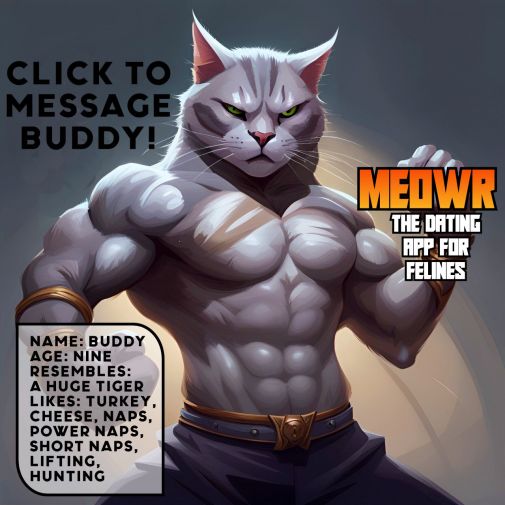
NEW YORK — Disappointed with the lack of responses to his dating profile, Buddy the Cat updated it on Sunday with “much more accurate and badass” photos of himself.

“These oughta do it,” the gray tabby cat said, laying back with his paws behind his head and his feet up after successfully updating his Meowr profile.

The dating app, which is exclusively for the use of felines, boasts more than 24 million users and saw an influx of new accounts registered over the weekend after a National Cat Day promotion.

buddy_datingapp
A new and “more accurate” cover photo for Buddy’s dating profile on MEOWR.

Disregarding the advice of his human to “just be himself,” Buddy headlined his profile “Catdonis Seeks Super Hot Model Types.” Under a column titled “Describe yourself in a few words,” the model-seeking feline wrote: “Brave, handsome, meowscular, really really funny, an incredible dancer, and the 2023 National Competitive Table-Setting Champion.”

His human spat out his drink.

“Brave? Competitive table-setting champion? What the hell?” he asked, awe-struck.

Buddy rubbed a paw against his fur and matter-of-factly explained what his dumb human was unable to grasp.

“It’s designed to show my artsy and sensitive side,” he said. “Duh. This may come as a surprise to you, but the ladies like a cat who is in touch with his inner artist.”

Big Buddy shot his feline friend a derisive look.

“The only art you’ve made is in your litter box,” he said. “And it’s depressingly apocalyptic.”

Buddy snorted.

“We’ll see who gets the last laugh, human,” he said. “When I roll up to the club with Meowghan Fox or Jennifer Clawrence on my arm, you’ll be super jelly.”

As of Thursday Buddy had received no responses on his profile.

‘My Cat’s Cat,’ PLUS: Bobby Flay Says Goodbye To Nacho

A man in Guam now has two cats after his little buddy adopted his own little buddy.

Last year we wrote about Youtuber Estefannie and her attempts to DIY a sophisticated artificial intelligence-enabled bathroom for her cat Teddy and her “cat’s cat,” Luna, after the former racked up a $3,000 vet bill prompted by an incorrigible plastic-munching habit.

One of the problems, Estefannie explained in her entertaining video on the building and coding process, was that Luna was “technically not my cat, this is Teddy-Bear’s cat.” Luna “uses the same litter box as Teddy,” so Estefannie had to train a machine learning algorithm for the high tech bathroom’s cameras to distinguish between felines.

I’ve always been fascinated by the phenomenon of “cat’s cats,” meaning stray cats who are adopted by la vida loca-living kittypets to share in their warmth, yums and human servantry.

“You gotta move in, Stripes,” I can imagine a well-fed moggie telling a stray buddy. “The service is great, the food is out of this world and the ambience? Oh, the ambience!”

In those cases, the stray usually follows the housecat right into their new home, which is what happened when Christian Fleming’s cat, Little, came back with a friend.

“I was surprised the cat came inside, initially,” said Fleming, who lives in Guam. “But if he’s hungry enough to be that brave, I wasn’t going to begrudge the food.”

Fleming named the new cat Tedo and told Newsweek he’s “90 percent sure he used to be someone’s pet or they left him, which is largely the case with friendly strays out here.” Guam is a US territory in the Pacific, about 1,450 miles east of the Philippines, and to say it’s got a stray cat and dog problem is an understatement, with tens of thousands of homeless animals.

One local veterinarian called the problem “astronomical” in an article for the Pacific Daily News, pointing out there more than 60,000 dogs alone on the 210 square mile island. By contrast there are 168,000 people living in Guam, meaning there’s more than one dog per three people. Cats similarly run rampant, although estimates of their population are harder to pin down.

There’s been a strong effort to spay and neuter in recent years, but local veterinary groups have a massive job in front of them to get the Micronesian island’s domestic animal population under control and reduce the suffering of unwanted cats and dogs.

Tedo is one of the lucky ones and has settled down nicely in his new digs. He’s adjusted to indoor life, regular meals and feeling protected with Little and Fleming, who says he now has “a small herd following me around” in his home.

“He has since gotten braver and more comfortable,” Fleming said. “When he jumped on me to snuggle with Little, I knew he had decided to live here.”

RIP Nacho

I’m not a fan of gastronomical fetishism, the concept of celebrity chefs or the idea that watching someone else eating food on television counts as entertainment, but I do respect Bobby Flay for two things: he’s a cat guy and he had a hilarious cameo in HBO’s Entourage in which he enraged high-powered agent Ari Gold by dating Mrs. Ari while the two were separated.

Flay, who has been the star of more than 20 cooking shows (not including specials) on the Food Network and Cooking Channel, saw the potential for profit in the pet food market and launched Made By Nacho in 2021, naming the food line after his little buddy.

Sadly the photogenic Maine Coon died this week, Flay announced in an Instagram post. Nacho was only nine years old and while that may seem a tragically young age for a cat to die — and it’s tragic any time someone’s beloved pet passes away — Maine Coons lose in lifespan what they gain in size, living an average of 10 to 13 years compared to the 13 to 18 year life expectancy of domestic felines in general.

Flay used the occasion of his cat’s death to hawk his outrageously expensive pet food line, which is weird. In his goodbye post, Flay wrote that “Nacho’s inclusiveness in our home inspired me to create something that would nourish cats everywhere.” Everywhere meaning houses where people don’t mind paying $3 for a 3oz can. (We don’t endorse any particular brand at PITB but Bud’s wet food, which always has real meat as the first ingredient and doesn’t include grain or fillers, costs 51 cents per meal when bought in bulk from Chewy.)

Cat food issues aside, Flay’s undoubtedly grieving his well-loved little friend, and although he recently adopted two more cats, that’s little consolation for losing a feline you’ve loved and bonded with. Best of luck to the Flay family and RIP Nacho.