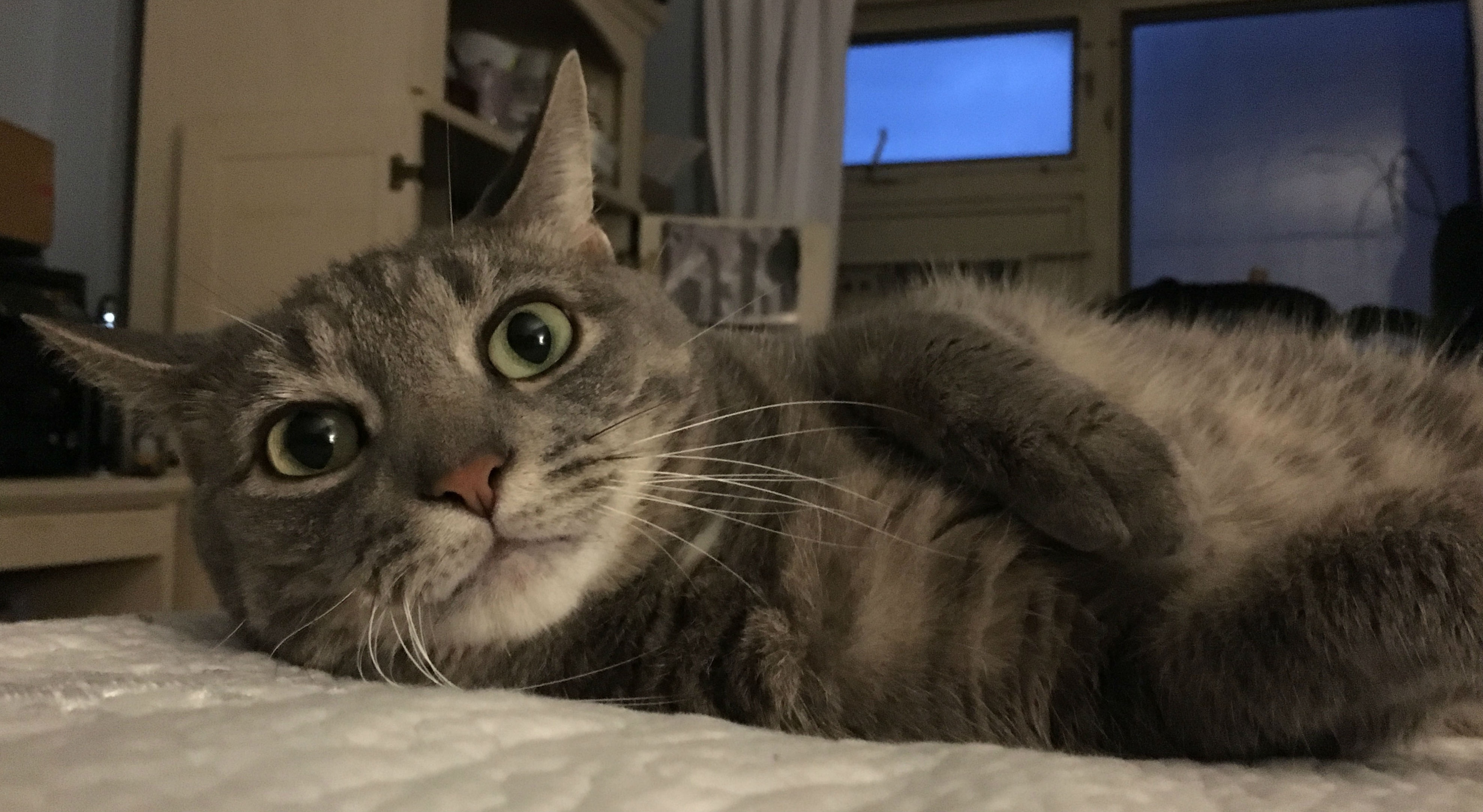
With A Three-Fold Increase in Cat Thefts, UK Chooses Microchip Mandate

With breed cats commanding prices in the thousands, thieves see pet theft as a quick score. Lack of prosecution has made it an almost zero-risk crime in the UK.

Mandates in the wake of COVID-19 haven’t been especially popular with a weary public, but surveys show one proposed directive has almost universal support in the UK: Requiring all cat owners get their pets microchipped.

Cat thefts in the UK have tripled in the last five years, with the pandemic contributing to the increase since early 2020, police say. Authorities say they hope compulsory microchipping — and consolidating the many chip ID databases into one — will help discourage people from stealing while making it easier to reunite felines with their families.

Thieves mostly target pedigreed kitties over moggies, with Bengals as the most commonly-stolen cats, followed by British Shorthairs and Persians, according to police statistics. Thieves try for breed cats because of resale value, police say.

Dog thefts have skyrocketed as well, with thieves targeting Chihuahuas, Jack Russell Terriers and German Shepards, among other popular breeds. The price of breed dogs has ballooned by as much as 89 percent since the beginning of the pandemic, when demand for new pets and a slowdown in breeding created a boom market.

For context, an estimated 3.2 million British families welcomed new pets, mostly cats and dogs, into their homes since the first lockdowns in late winter and spring of 2020, the BBC reported. Like their counterparts here in the States, UK shelters experienced unprecedented adoption rates as people battled loneliness and depression during the initial COVID waves and last year’s long winter when the virus came back with a vengeance.

“The number one reason behind pet theft is because the prices for pets have gone up drastically,” Becky Thwaites, spokeswoman for UK pet charity Blue Cross, told SWLondoner. “This happened exponentially over lockdown, as responsible breeders stopped breeding due to social distancing guidance, but more people were wanting pets.”

Despite the spike in animal thefts, only about one percent of all such crimes have led to an arrest, according to a public information request by a UK animal welfare group. 

Police have been reluctant to pour resources into those cases, partly because the law lacks serious consequences for people who steal animals. While the maximum sentence for stealing a pet is seven years in jail, under current UK law sentences are pegged to the value of the stolen item. (Unlike the US, the UK does not make a distinction between prison and jail.)

But for people who love their cats, it’s not about the monetary value — it’s about sentiment, love and the distress to human and animal when they’re separated.

Abductions instead of thefts

To change that, a new pet theft task force — set up earlier this year to study the growing problem — recommended a change in the law. Instead of treating pet thefts as property thefts, under the proposal they would be treated as abductions, with all the increased charges and consequences that come with the classification.

Treating animal thefts as abductions “acknowledges that animals are far more than just property and will give police an additional tool to bring these sickening individuals to justice,” UK Home Secretary Priti Patel told the BBC.

Advocates say treating pet thefts as abductions makes sense not just as a legal adjustment, but also as a reflection of the way cats and dogs are stolen. While some thieves stalk dog parks and lure pets away with treats, others have taken to more brazen and violent means like taking animals by force and jumping people while they’re walking their dogs.

The change would require owners to have their kittens chipped by 20 weeks and adult cats chipped upon adoption from a shelter or rescue.  Failure to microchip a pet would result in a warning and a three-week grace period. After that, cat owners would face a steep fine of £500, equal to $660 in USD.

Consolidating chip databases

There are about 10.8 million pet cats in the UK, although widespread chipping alone won’t solve the problem of pet thefts and lost pets flooding shelters. There are currently 16 different microchip databases in the UK. They don’t always share information and scans don’t cover each of the databases, so even if a cat is recovered, brought to a shelter and scanned, there’s no guarantee the kitty will be returned home.

The existence of so many non-cooperating databases operated by private companies “can pose a huge barrier to successful reunification of pets” said the British Veterinary Association’s Malcolm Morley.

UK authorities and the animal welfare groups pushing for the change are cognizant of the problem and want to streamline the 16 existing database into one central repository of cat microchip registration. That will take time and will have to include compromise on the part of the various private companies running the existing fractured databases.

“Every day, we see how important microchipping is for cats and for the people who love them,” said Pet Protection’s Jacqui Cuff, “whether it’s reuniting a lost cat with their owner, identifying an injured cat, or helping to ensure an owner can be informed in the sad event that their cat has been hit and killed by a car.”
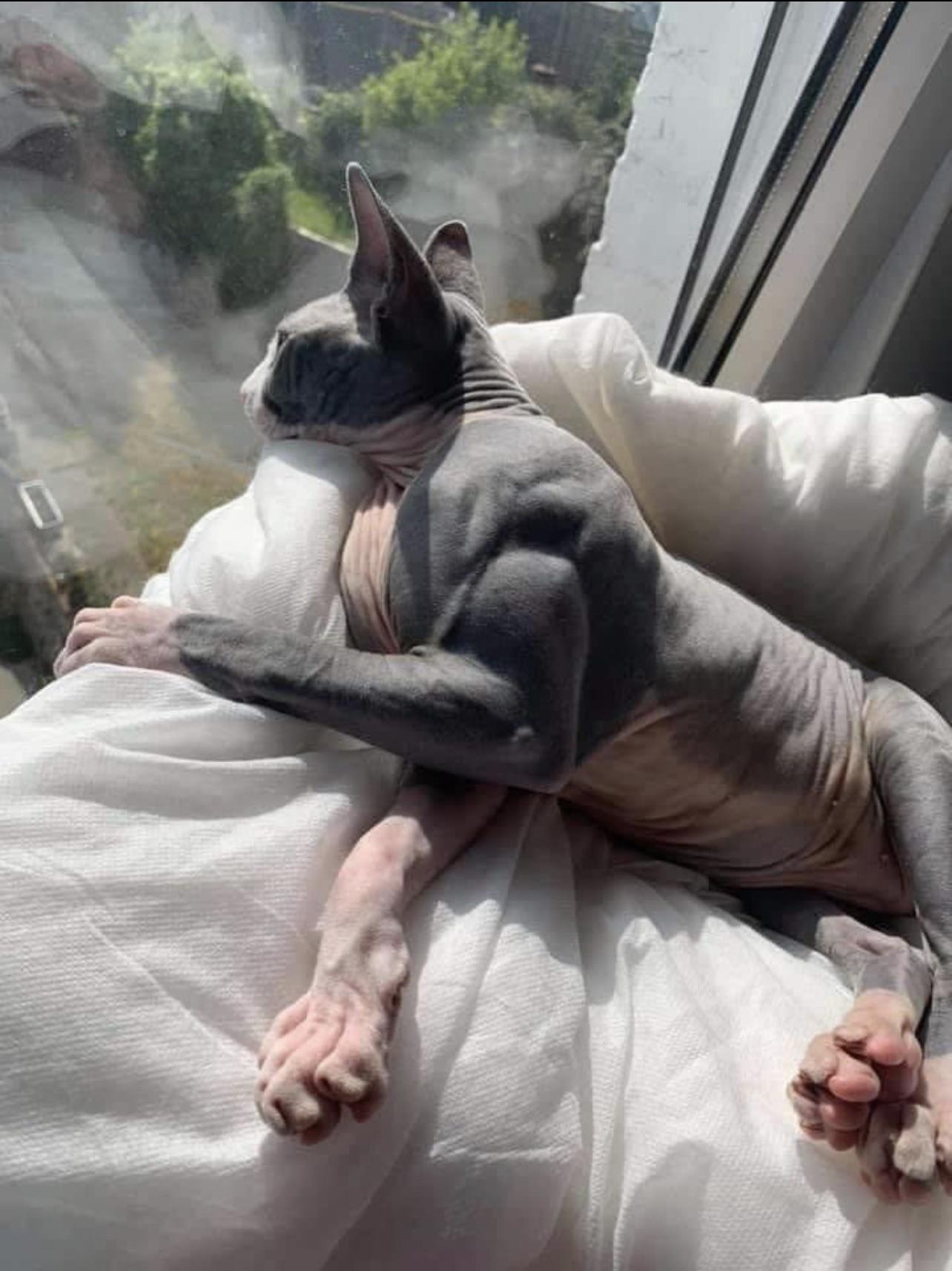
‘Super Ripped Cat With Bulging Muscles’ Goes Viral

The cat has a rare genetic condition that makes him look like a weight lifter.

An incredibly muscular cat has taken the internet by storm — and shockingly, it’s not Buddy!

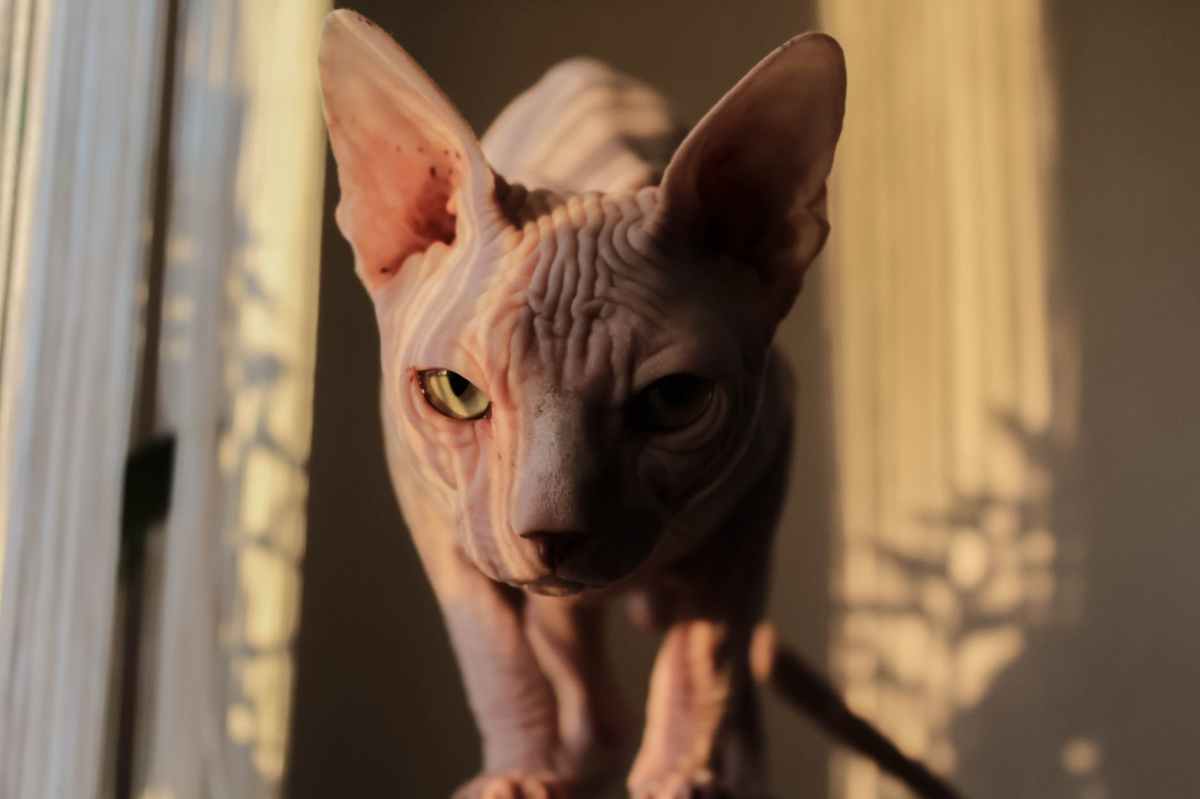
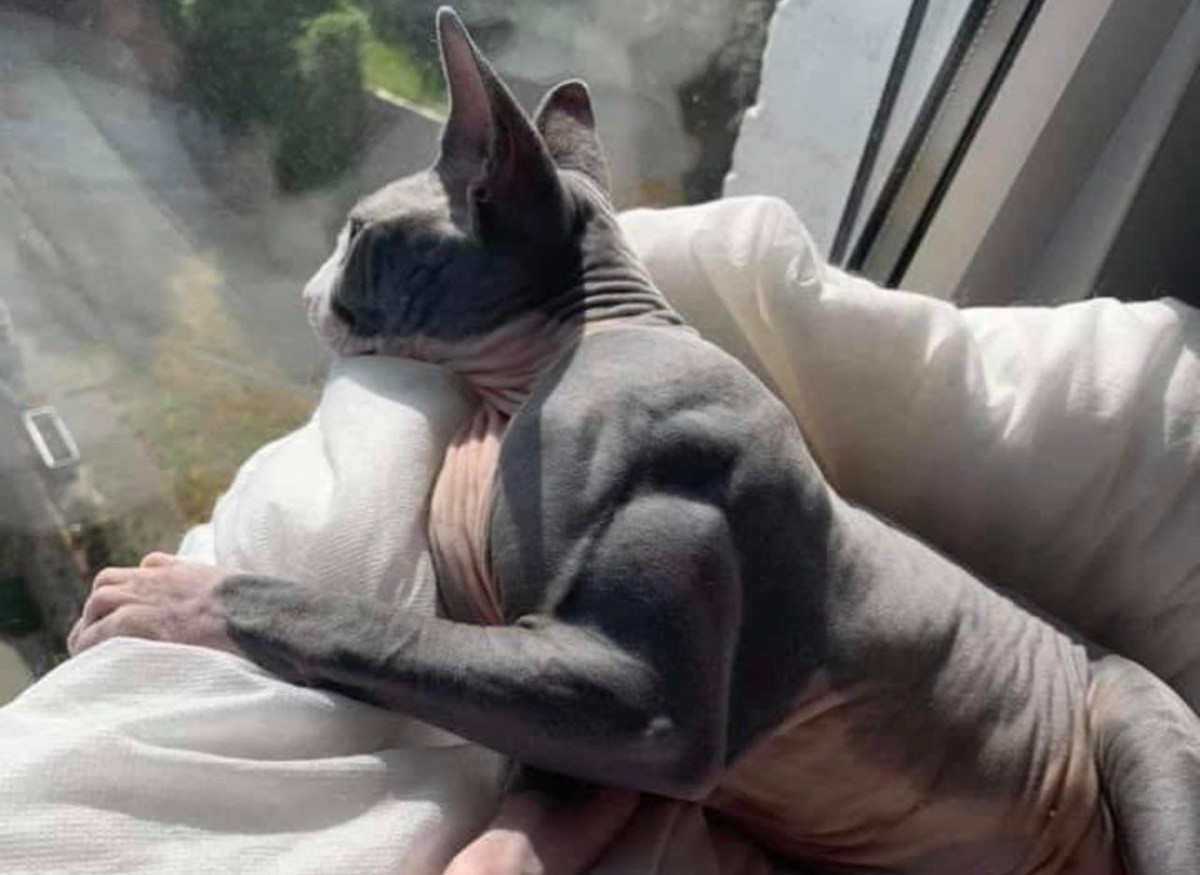
A Reddit user posted a photo of a Sphinx cat who looks like he eats UFC fighters for breakfast and bullies lions in his spare time. But it turns out there’s a medical reason for his bulging physique, and it’s not just the result of tens of thousands of kitty push-ups.

The hairless feline has “Myostatin-related muscle hypertrophy, a rare condition that causes muscles to grow excessively large,” the poster explained.

Ripped Kitty
“Yes, you’re totally right, that IS your spot. Forget I even asked.”

Humans and animals can be impacted by the condition. Myostatin-related muscle hypertrophy also results in reduced body fat and doesn’t just potentially double muscle size — it results in increased strength as well, per the National Institutes of Health.

“Affected individuals have up to twice the usual amount of muscle mass in their bodies. They also tend to have increased muscle strength,” according to the NIH. “This condition is not known to cause any medical problems, and affected individuals are intellectually normal.”

When one user asked if the cat will be alright, another answered in the affirmative, but with a caveat: “Anyone who pisses him off won’t be.”

The cat’s already racked up nicknames like Kitbull, Katzenegger and The Purrminator.

Asked for comment on the photo, Buddy the Cat insisted the super-muscular cat poses no threat to him.

“My meowscles are even yuger, it’s just that you can’t see them because of my fur,” Buddy explained. “If I were a hairless breed like a Sphinx you would see my bulging meowscles, but I’m a Buddinese tiger, and my coat is luxuriously silky smooth.”

Buddy the Handsome Cat
Buddy the Cat, pictured, says he’s “totally ripped” under his fur.

UPDATE: Airline Investigates Cat Breastfeeding Incident, Flight Attendant Speaks Out

There have been more than 5,000 confrontations involving unruly passengers on airlines in 2021, on pace for more than all other years combined.

When we first heard about an airline passenger grossing out her fellow travelers by breastfeeding her cat, we figured at least kitty was happy with the situation — but apparently not, according to a flight attendant who was involved in the incident.

Instead of purring and kneading in a milk coma, the cat — likely a Sphinx — wanted nothing to do with feeding from the woman’s breast on the flight in late November, flight attendant Ainsley Elizabeth said.

“This woman had one of those, like, hairless cats swaddled up in a blanket so it looked like a baby,” Elizabeth said in a video about the incident. “Her shirt was up and she was trying to get the cat to latch and she wouldn’t put the cat back in the carrier. And the cat was screaming for its life.”

“What does she do at home if she’s doing that in public?” Elizabeth asked. “And then security met the flight just to tell her that she couldn’t do that again, cause it was weird and gross.”

Elizabeth has since deleted the social media account she used to upload the video.

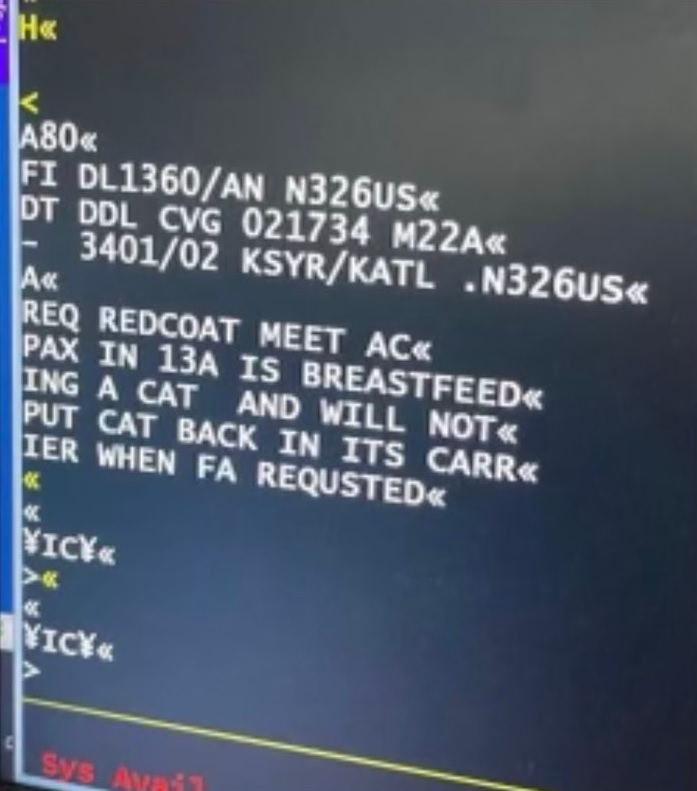
As we noted in our earlier post, the woman was uncooperative when flight attendants asked her to stop, prompting the pilot to send a message ahead to the destination airport via ACARS, short for Aircraft Communications Addressing and Reporting System.

acarscat
An ACARS message sent from Delta Air flight DL1360 to ATL, Hartsfield-Jackson Atlanta International Airport.

The bizarre incident happened aboard a Delta Airlines flight from Syracuse, NY, to Hartsfield-Jackson Atlanta International Airport in Georgia.

Meanwhile, Delta airlines has begun an investigation into the Great Breastfeeding At 40,000 Feet saga, after the incident went viral last week and garnered headlines around the world — including newspapers in the UK, Australia, New Zealand and dozens of non English-speaking nations.

Initially the passenger was reprimanded, but an investigation could result in more serious consequences, like a ban on using the airline.

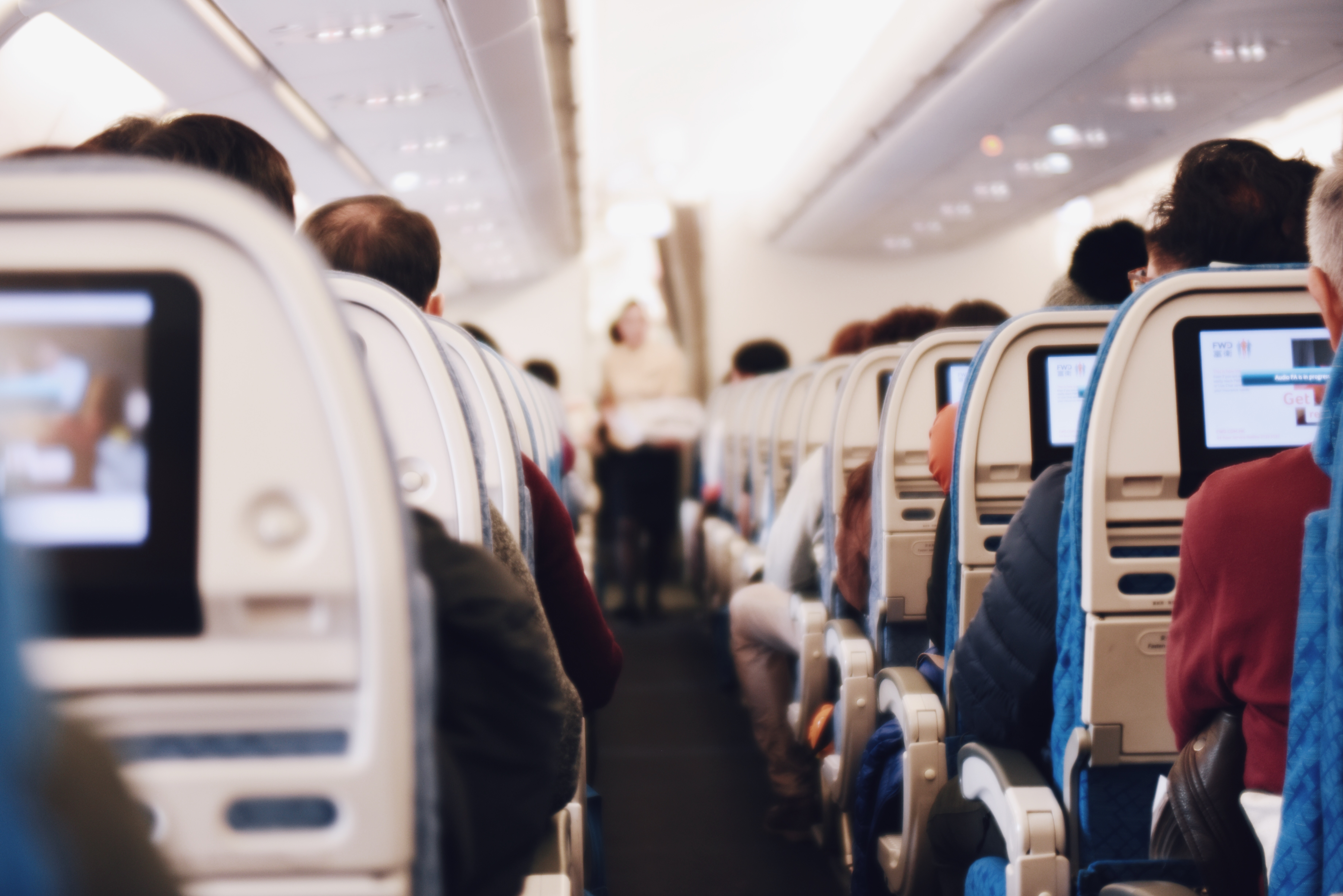
Airline aisle during flight
In-air confrontations have skyrocketed in 2021, mostly due to disagreements over COVID-19 safety rules such as wearing masks. Credit: Wikimedia Commons

The story comes amid a general surge in violent attacks and tense confrontations aboard passenger jets — and now the FBI is getting involved.

As of Nov. 4, the FAA had logged 5,033 cases involving “unruly passengers,” including 37 that were referred to the FBI for criminal prosecution.

That puts 2021 on track for more cases than all other years combined, according to the Association of Professional Flight Attendants. The majority of those incidents — as many as three out of every four — are related to confrontations over mask policies due to the Coronavirus pandemic.

Teddy Andrews, a long time flight attendant with American Airlines, testified before a congressional committee in September, recalling an incident in which a passenger called him the n-word when Andrews asked the man to wear his mask.

“These days I come to work anticipating disruptive behavior,” Andrews told USA Today. “Our colleagues are anxious, fearful. What is going to happen on the next flight? How will this passenger react if I remind them to wear their mask? Will complying with airline policies set them off? Can I avoid engaging, or would that be an evasion of my duties?”

Reason #94 To Keep Your Cat Indoors: He’s A Bully

A California woman’s cat is a burglar, a bully and an aggressive napper!

Most of the time when we talk about reasons to keep your cat(s) inside, it’s because the great outdoors pose innumerable risks to the lives of cats.

People make a big deal of cats retaining many of their wild instincts, but the truth is they’ve been domestic animals for 10,000 years, and the only “natural habitat” for them is under the care of kind people in a safe home or a managed colony where they’re protected, fed and given veterinary care.

But cats are predators, technically an invasive species in most places, and they have a jerk streak, so there are plenty of valid reasons to protect others from them.

A cat in Pleasant Hill, California — about 20 miles east of Oakland — illustrates that last point perfectly. Apparently he’s been inviting himself into the neighbor’s house via the cat flap, where he bullies the neighbor’s cat, helps himself to its food and adds a final insouciant insult to injury by taking a nap in the neighbor’s house. Then he strolls back into his own home in the morning, enjoys breakfast and has another nap.

Lisa, the offending cat’s human, said she found out about her cat’s jerktastic behavior via social media, and wrote to The San Jose Mercury News’ pet advice columnist for counsel on how to handle the situation. The neighbors have begun hiding their cat’s food in a closet, but understandably they want Lisa’s aggressively napping cat burglar to stay away.

“Not sure how to curtail his activities. Neighbor is not happy with our cat’s behavior,” Lisa wrote. “Locking our cat inside at night is not a good option; he is very vocal when locked up.”

Columnist Joan Morris offered blunt but perfect advice: Stop letting your cat out.

“I think both of you should keep your cats indoors, and the neighbors should lock the cat door, but as it’s your cat burglar that’s causing the issue, it’s up to you to curtail him,” Morris wrote. “Keeping your cat indoors at night is the simplest solution. The adjustment might be difficult — probably more for you than for him — but in time he’ll get used to it.”

I understand it can be very difficult to curtain feline behavior. If there were an Olympics for being annoying, Buddy would take gold many times over for his relentless meowing when he wants something and isn’t getting it. But the one thing you can never do is give in, or the little stinkers will learn that they get what they want when they yowl incessantly.

Do you agree with Morris, or should the bullying moggie get his way?

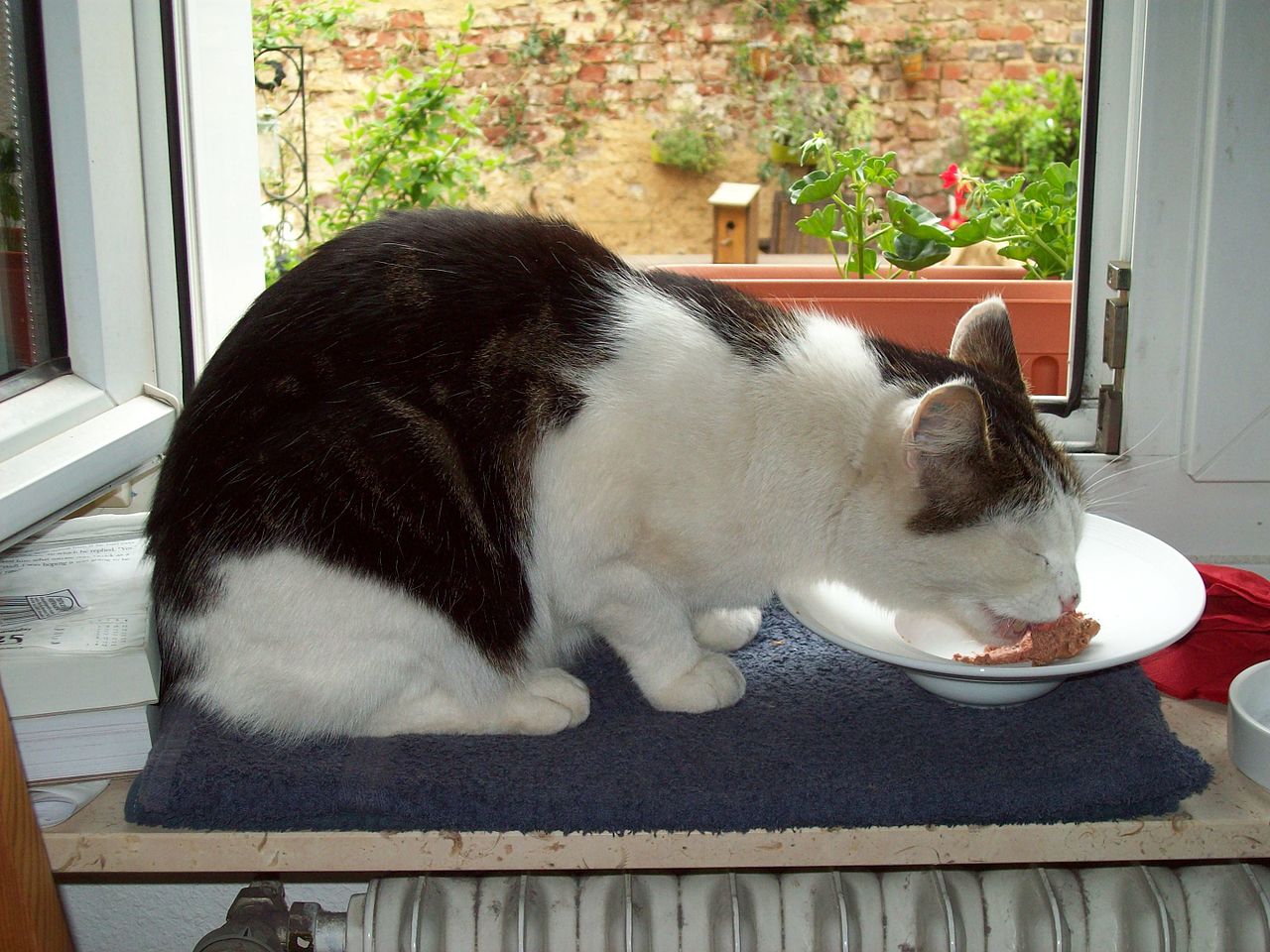
A_cat_eating_a_meal
“I’m up in your house, eatin’ ur foodz, bro.” Credit: Wikimedia Commons

Sunday Cats: Moggie Chases Off Coyote, Sick Cat Enjoys Spa Time, Plus A 4-Eared Kitty!

A new list features gray cats for those who want their own Buddy. Meanwhile, a four-eared kitten in Turkey is capturing hearts around the world.

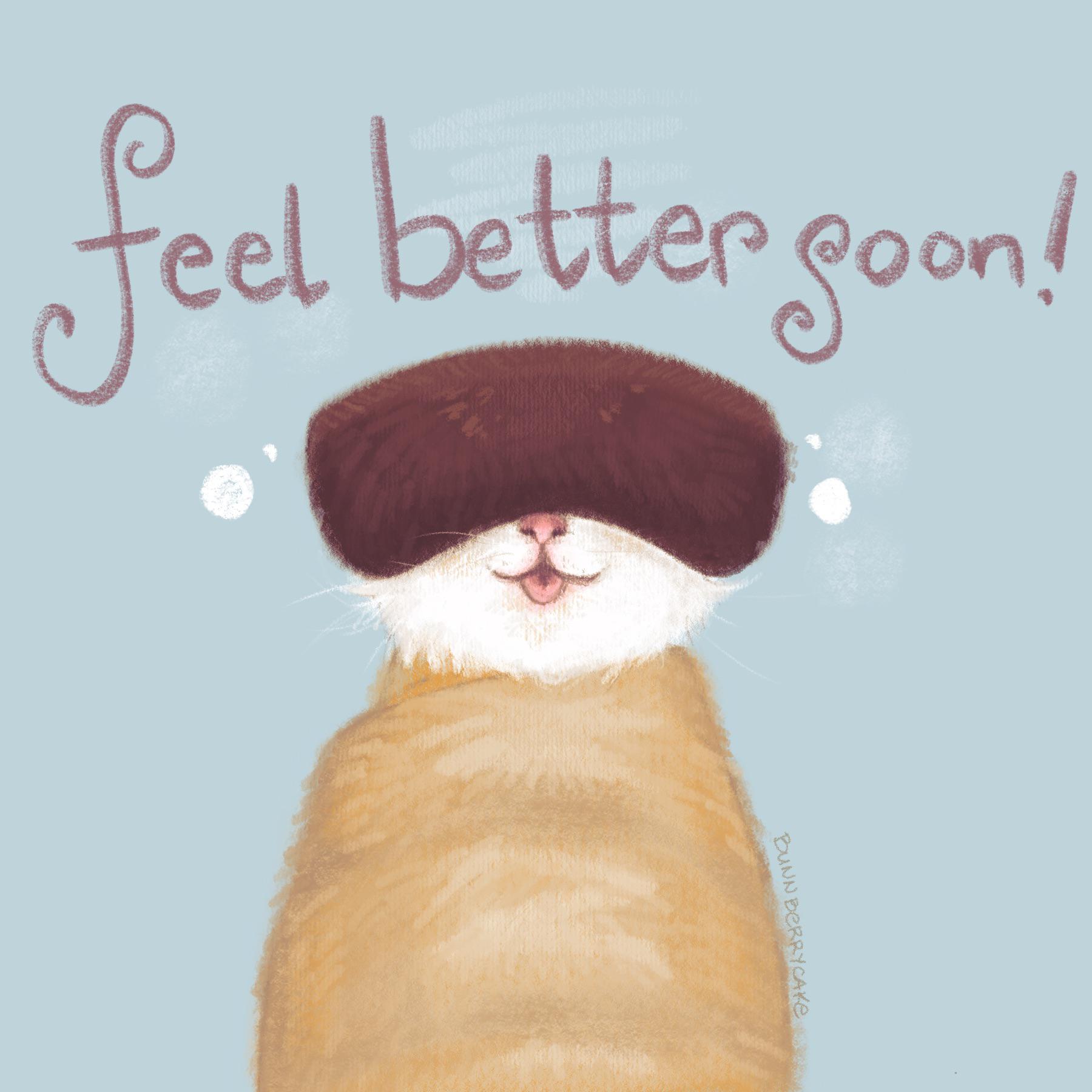
This cat is, uh, catatonic after his loving human wrapped him up snug in a towel and put a hot compress on his little head to help him feel better after he caught a cold. Look at his tongue! He loves it! (Click the image if the video doesn’t auto play.)

A fellow Redditor was so taken with the video that she sketched a get-well card for the sick-but-happy furball:

oh8u0ydqi0081

The Midas Touch

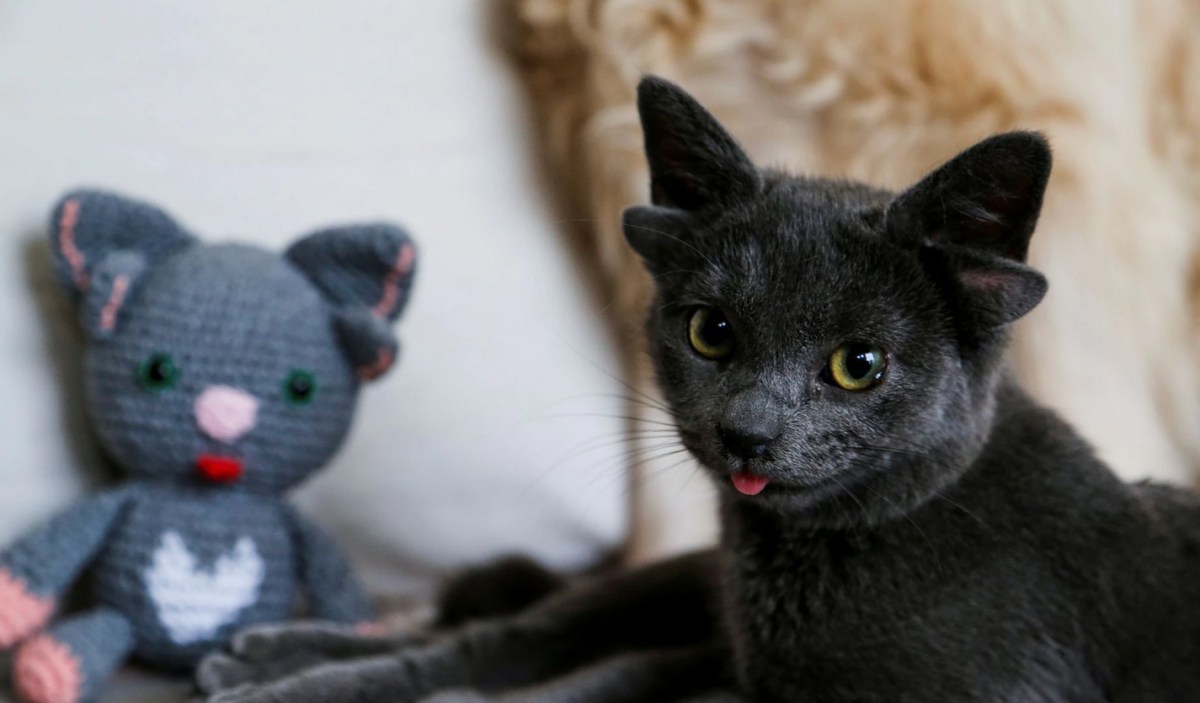
Little Midas was born in a backyard in Ankara, Turkey, and her unusual appearance could have led to a hard life, but she was adopted by a loving family. The gray kitten, who is now four months old, has a genetic mutation that resulted in her developing four ear flaps. She’s also got a deformed jaw, likely due to the same mutation, but that hasn’t stopped her from living like a typical energetic and curious baby cat.

Her family named her after Midas, the Greek king who was cursed with donkey ears by an angry Apollo.

Get off my lawn, coyote!

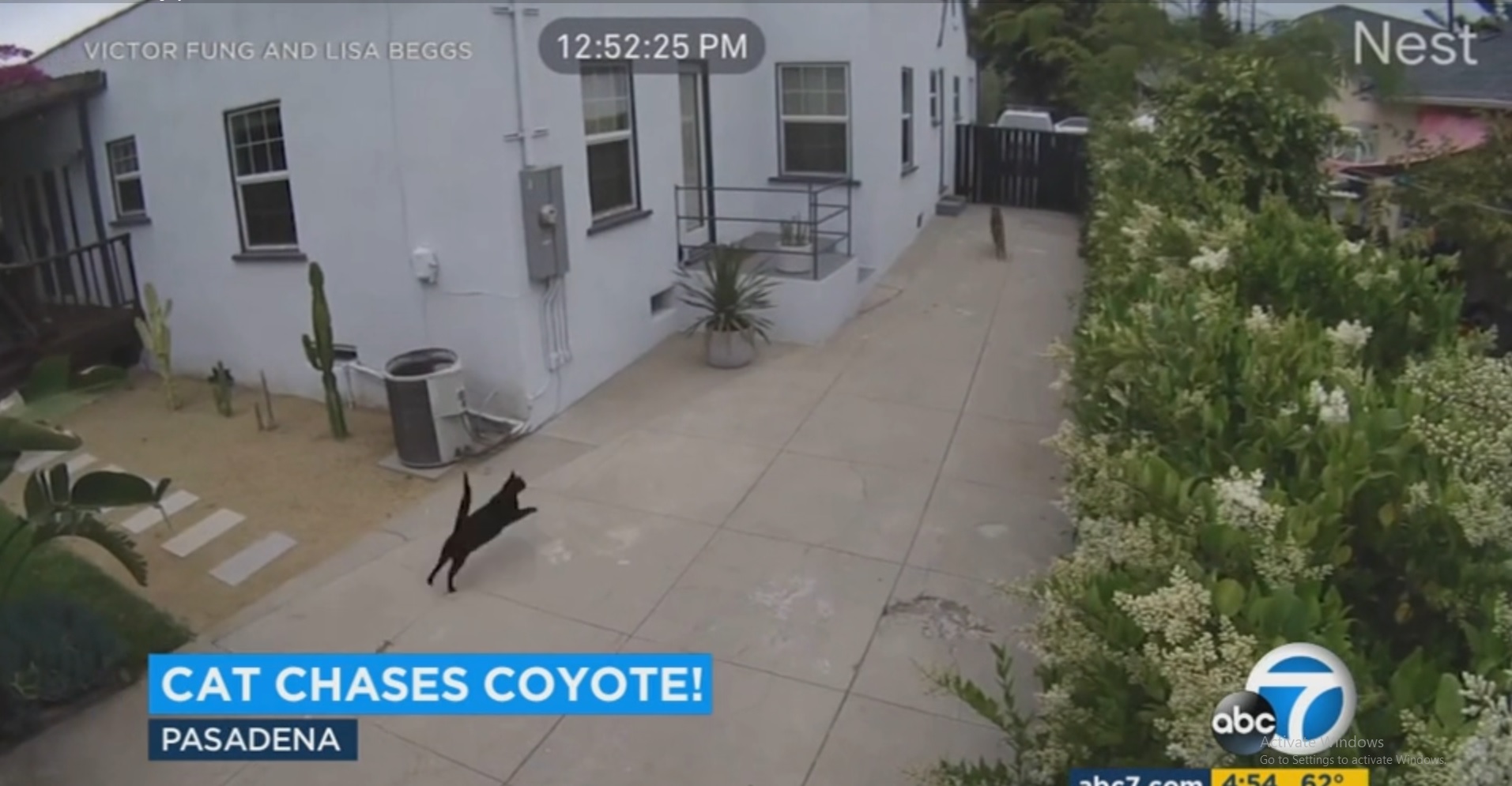
Coyotes are infamous predators of felines and small dogs, but cats can and do fight back, like this fearless kitty who didn’t appreciate the interloper straying into her territory. The coyote wanted no part of her.

We can’t embed the video, unfortunately, but you can click here to watch the 16-second clip in real time and slow motion.

catchasescoyote
“Get off my damn lawn!”

Gray is the warmest color

We all know gray is an awesome coat color for cats, as demonstrated by the Budster. If you’ve got your heart set on a slate Chartreux, a golden-eyed Korat or a silver tabby a la Bud, this list covers 15 breeds “worth purring over.” Note that it doesn’t include the Buddinese Tiger, probably because it’s illegal to own such a muscular and handsome cat in most jurisdictions.

main-qimg-71545019fd341552e20753a1743f261f