Trimming Cat Claws Still Sucks

The promise of a revolutionary new method of claw trimming is all hype, sadly.

I was hyped when I saw the headline.

“Cat Owners Rejoice,” the Newsweek headline blares. “Science Can Make Trimming Claws Less Stressful.”

Well if cat owners are rejoicing, it’s gotta be amazing, yeah?

I imagined cat affionados feting the creator of some miraculous new device that keeps cats comfortably restrained and relaxed, or maybe celebrating the discovery of some previously-unknown sound frequency that lulls felines into such a state of carefree bliss that they purr contentedly while we carefully clip their claws.

What I didn’t expect was a “protocol” that amounts to: Touch your cat’s leg. If he doesn’t try to murder you, touch your cat’s paw. If he still doesn’t murder you, trim a single claw. Repeat steps the next time your cat is in an agreeable mood.

That’s it. That’s the revolutionary new method that “science” made for us, according to Newsweek. “Science” must be proud of itself!

With this wonderful new method I should be able to trim one of Bud’s paws by 2067.

Obviously this is not science. It’s a method, not research. It’s well-intentioned and designed to keep cats comfortable, and those are noble goals, but calling it “science” is misleading, just like every other dumb headline that asserts “science says” or something is true “according to science,” as if science is an omniscient entity lounging on pillows, being fed candied figs by worshipful attendants and occasionally dispensing little nuggets of wisdom for our tiny little brains to absorb.

“The designated hitter rule shall henceforth be abolished,” Science says betwixt pulls from a hookah. “Fifty years of conclusive OPS plus FIP and OAVG data dictate it must be so.”

Come to think of it, that probably is what most Americans think science is. The other half think it’s Anthony “I Am Soyence” Fauci.

Where were we? Ah yes, cat claws!

The truth is I’ve give up on trimming Bud’s claws. If I notice a really long one I’ll try to trim it, but otherwise I leave the job to him and his 4-foot scratching post.

Maybe that makes me a bad caretaker, but I challenge anyone who’d stick me with that label to try trimming Buddy’s claws.

The little dude goes from chill and relaxed to demonic in a millisecond. He yowls, he thrashes, he flails with claws out and tries to bite any flesh he can reach, no matter how careful I am to try at the “right” time, how gentle I handle him, how careful I am to avoid the quick.

Bribe him with treats? Hah! He will stop yowling and thrashing about with murderous intent just long enough to gobble down the yums, then return to being a whirlwind of claws and teeth without skipping a beat.

And you should hear him. It sounds like I’m torturing Elmo, for crying out loud.

Thankfully he doesn’t hold a grudge and if I give up on trimming, he’ll be ready to plop down into my lap within minutes.

It’s generally understood that all that ghastly claw trimming nonsense is behind us, and we shall speak no more of it.

Speaking of ghastly business, the below video started auto-playing while I was on the throne and filling the idle time by searching for cat-related news:

Bud, who had accompanied me to the human litter box chamber, looked alarmed and disturbed.

I laughed.

“See? You could have gotten stuck with someone who baby talked you, and then you wouldn’t need claw trimming as an excuse to kill humans.”

Now I know exactly what to do to herd him into the bedroom next time I need to vacuum.

“It’s okay, birdie! I’m gonna take care of you, birdie! Okay?!”

Ah, welcome to Casa de Buddy, home of two assholes!
Feds Nab Couple Selling Jaguar, Margay, PLUS: Cat Wins ‘Hambone’ Award For Derpy Accident

Giles the cat is recognized for the most ridiculous pet insurance claim of the year, while federal prosecutors use the new Big Cat Public Safety Act to go after alleged illegal wildlife traders.

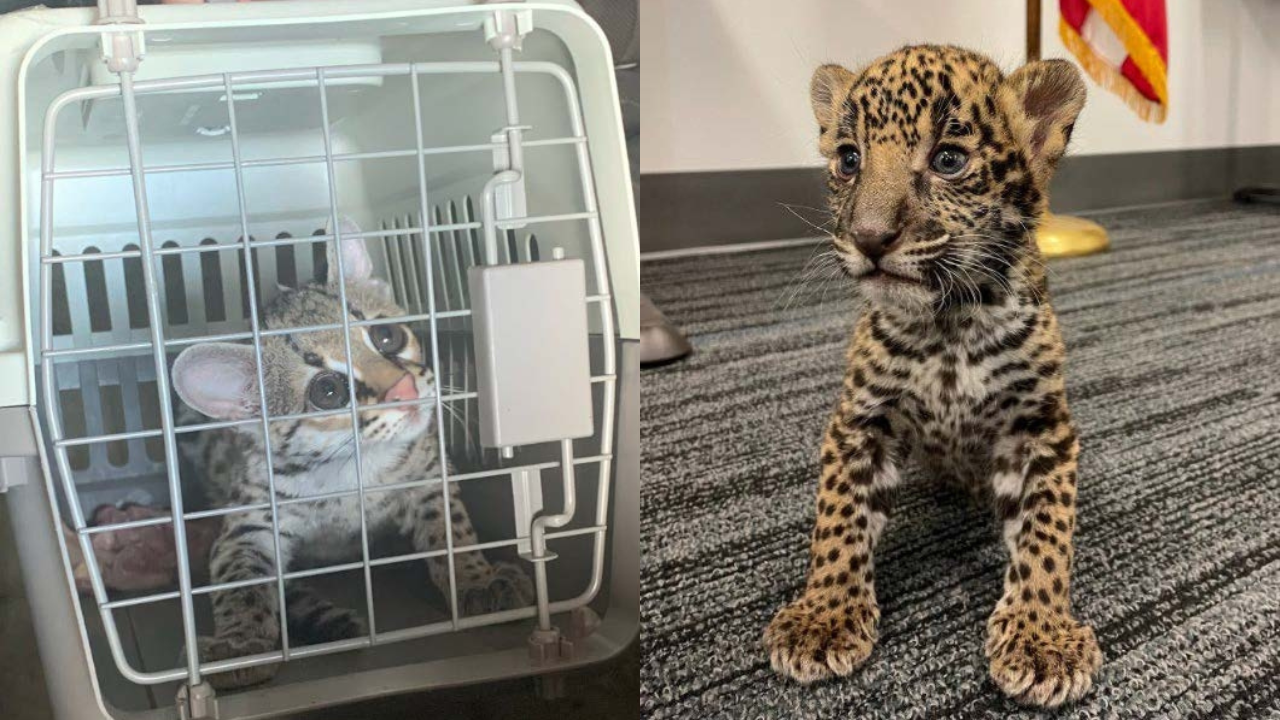
A Texas man and his wife were arrested after allegedly selling a margay kitten and trying to sell a jaguar cub in a second deal, federal authorities said.

Rafael Gutierrez-Galvan, 29, and his wife Deyanira Garza, 28, whom prosecutors describe as “legal permanent residents,” sold the margay cub for $7,500 to an undercover agent, meeting him in the parking lot of a Texas sporting goods store on Aug. 24. On Sept. 26 Gutierrez-Galvan made plans to sell the jaguar cub to the same man, and agents arrested him and his wife en route to the meet-up, according to the U.S. Attorney’s Office for the Southern District of Texas.

Gutierrez-Galvan and Garza face federal charges under the new Big Cat Public Safety Act, which was signed into law in 2022. They can be sentenced to a maximum of five years in federal prison and ordered to pay a $20,000 fine if convicted.

Prosecutors did not say how the couple obtained the two wild cats or if they were working with anyone else.

jaguarmargray
The margay kitten, left, and jaguar cub recovered from a Texas couple who are accused of illegally selling them. Credit: U.S. Attorney’s Office, Southern District of Texas

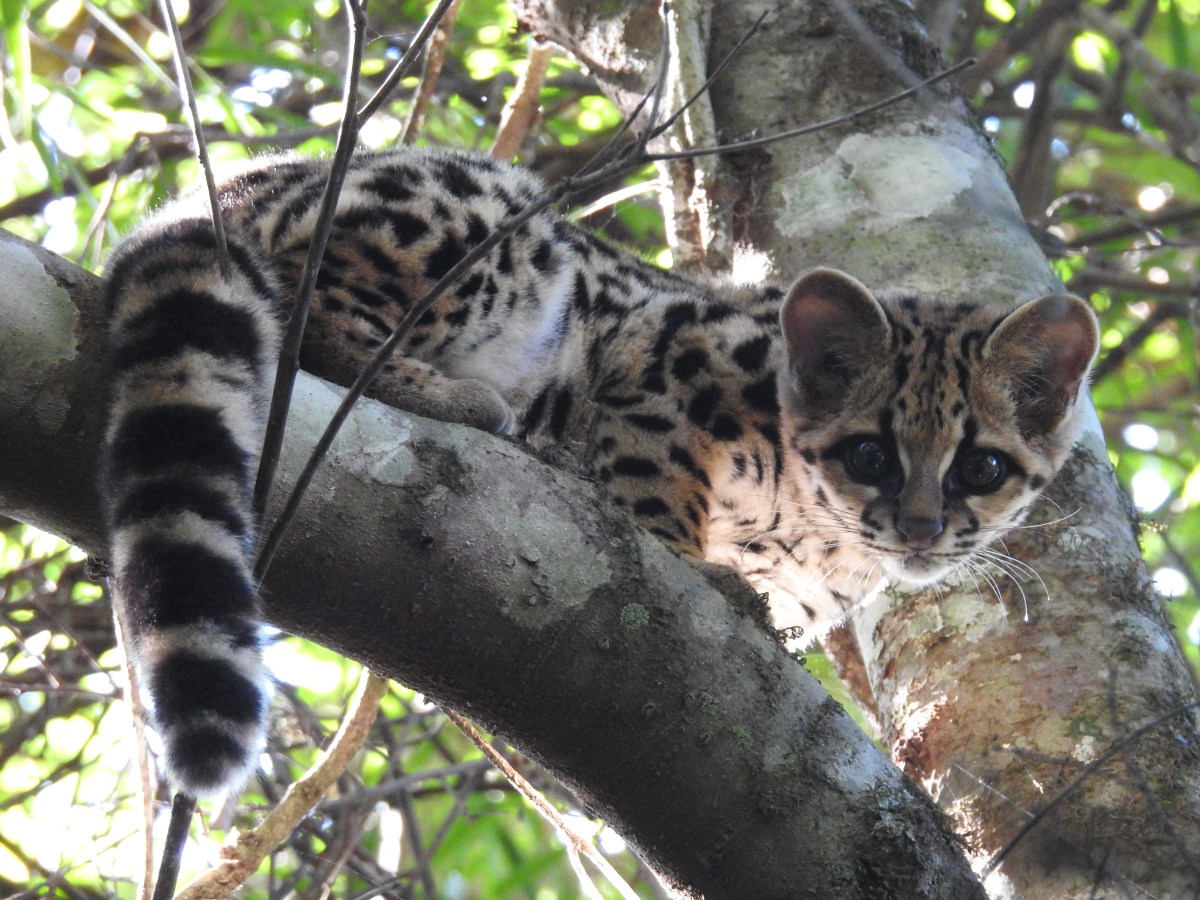
Jaguars are endangered and margays are threatened. Both are native to South America, although jaguars once ranged as far north as Ohio and Pennsylvania. Margays (leopardus wiedii) are small arboreal wildcats who thrive in the deep jungle, away from human interference. They’re typically smaller than domestic cats, with an average weight of six pounds, and are among the most sure-footed of all felid species.

Jaguars (panthera onca) are true big cats and the only extant big cat species native to the Americas. They’re under enormous pressure from Chinese poachers, who capture and kill them to use their body parts in traditional Chinese “medicine,” as well as local illegal wildlife poachers. Both jaguars and margays, as well as other cat species native to South America, are also endangered by habitat loss.

Header image of a margay in Rio Grande do Sul, Brazil, credit: Anderson Cristiano Hendgen via Wikimedia Commons

New York cat wins Hambone Award for most ridiculous pet insurance claim

The Hambone Award was started in 2009 when a family filed a pet insurance claim for their dog who got trapped in a refrigerator, suffered mild hypothermia and tried to make the best of the situation by eating an entire ham.

That inspired the Veterinary Pet Insurance Company, a subsidiary of Nationwide, to create the award and make it an annual event. The first recipient of the “honor” was Lulu, an English bulldog who ate 15 baby pacifiers, a bottle cap and part of a basketball, necessitating a trip to the veterinarian and an insurance claim.

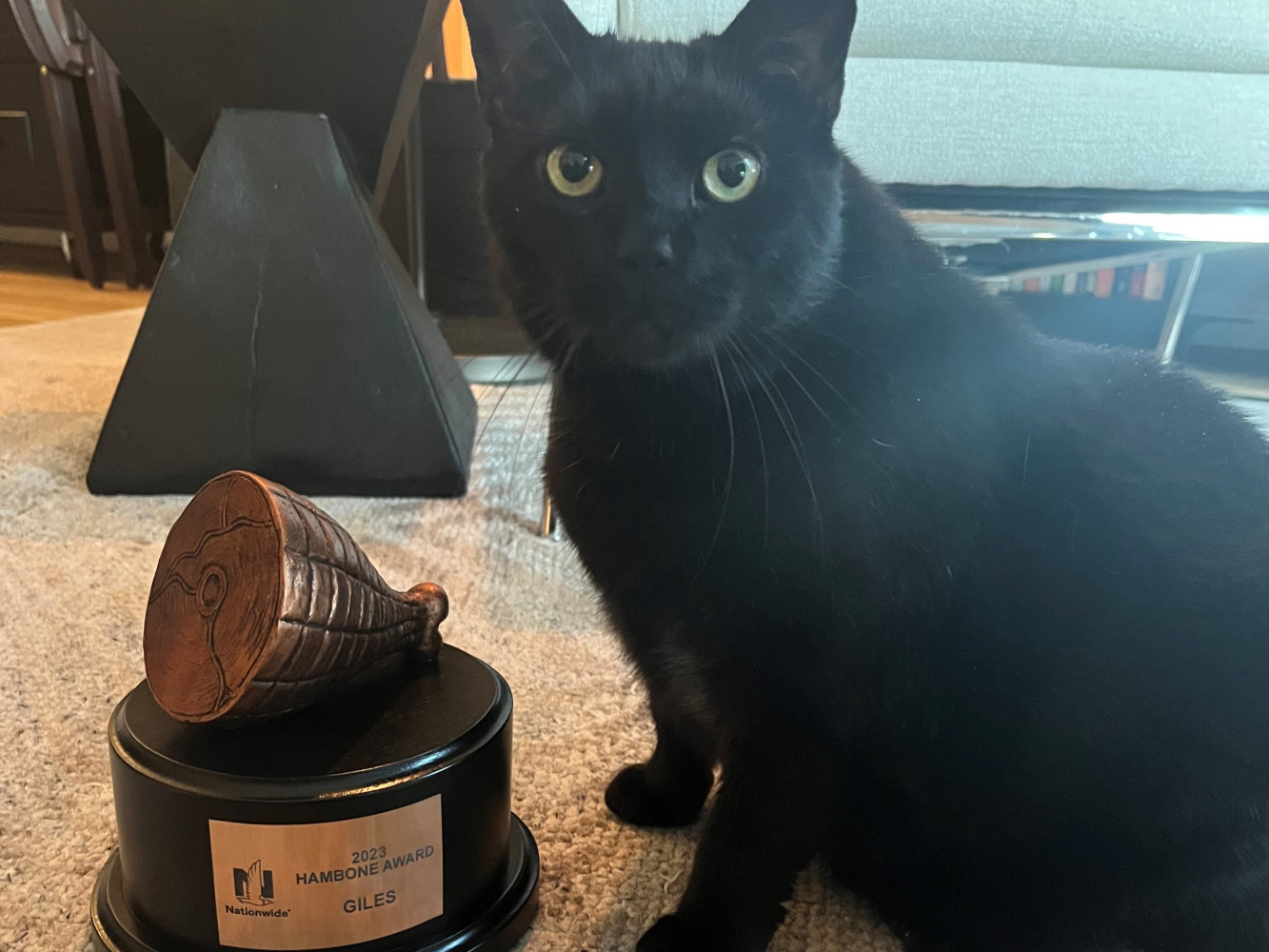
This year the award went to Giles, a handsome black kitty who has a habit of hiding in a sofa bed and getting stuck there when one of his humans folds the bed back into the couch. His humans, Kaitlyn and Reid, always check to make sure Giles isn’t in the space beneath the bed when they fold it up, and had warned Reid’s visiting parents that the playful cat likes to hang out there, but they forgot to check and ended up smooshing Giles.

c1920_giles-hamboneaward
Giles poses proudly next to his Hambone Award. Credit: Nationwide

Luckily the little guy didn’t break any bones, but he did take a hit to the face pretty hard and needed stitches.

“I [had] no idea what’s going on—we got him in his carrier and ran him up the street,” Reid said. “Luckily, we have a wonderful vet hospital just around the corner from us, so we were able to take him right there. Fortunately, it wasn’t too bad. He did need some stitches … but he was the model patient, as he always is.”

Giles’ competition this year was mostly dogs, but the other feline finalist was Miko, a New Orleans cat who spotted a pair of doves nesting in a hanging plant just outside on the patio. Miko executed a Jordanesque leap and swatted at the doves, but as the birds fled one of them gave the bold cat a parting gift, pecking Miko in the face. Thankfully he wasn’t seriously injured.

For his exploits, Giles received a trophy and his humans will receive a gift card and a donation in their name to the pet charity of their choice.

After Nine Years In A Shelter, Barney Gets A Family And A Home Of His Own

Meet Barney the cat, who waited NINE years for his forever home. PLUS: Buddy’s no longer chubby.

Barney goes home

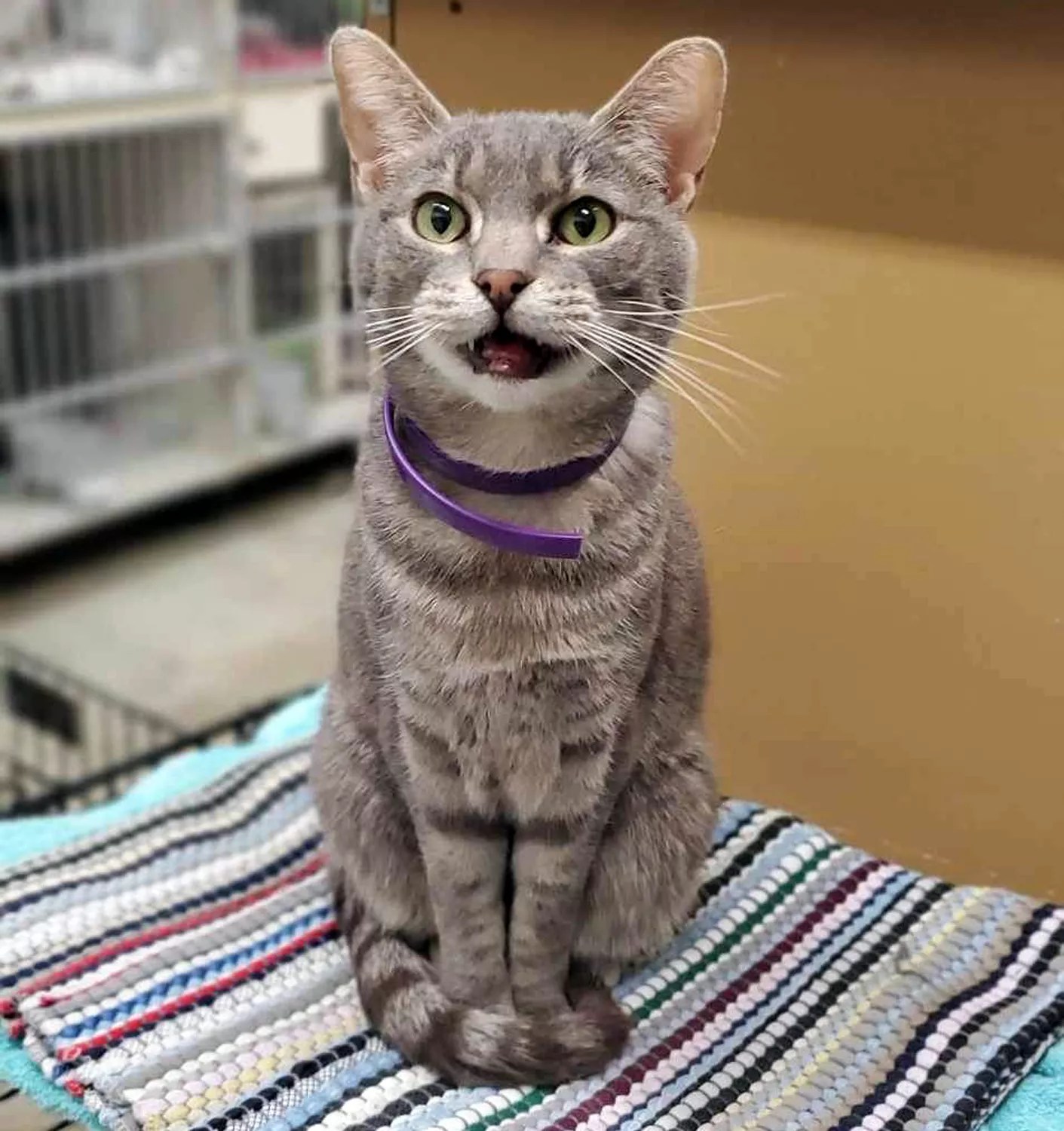
Meet Barney, who finally has a forever home after nine years living in a shelter:

barneycat2

I’ve got a bias toward silver tabbies obviously, but look at this little guy! He’s handsome, he’s got bright green eyes and I’ve no doubt he’s got a ton of love to give to his new people.

The question is: Why did it take nine years for him to get adopted? It’s deeply unfair and depressing, although the people at Iowa’s Emmett County Animal Shelter deserve credit for never giving up on him.

Barney was born at the shelter and was passed over every time potential adopters came in to look at cats, shelter staff told the Des Moines Register. When someone posted a photo of Barney to Reddit along with a short note about his predicament, Amanda Scherer drove six hours to adopt him, telling the Register “I really wanted to give him a home.”

Social media has become an invaluable tool for shelters looking to place cats and dogs in homes, and there are two common denominators to the success stories: a great photo that capture’s the pet’s personality and a backstory. The more the story tugs at the heartstrings, the better.

No judgments here, but I wish people who are inclined to buy cats and dogs would think of all the Barneys out there who need homes. Some 1.5 million of them are killed every year because the demand for homes is greater than the demand for shelter pets. That’s a significant improvement over decades past thanks to relentless efforts to get animals spayed and neutered, but we can do better.

Bud’s looking ripped

Buddy’s been on a diet since early this summer, necessitated by my poor job of learning to say no when he screeches for snacks, which is approximately all the time.

It hasn’t been easy for either of us: He wants his treats and I desperately want him to stop meowing for them, but after three months I’ve really noticed a difference. He’s much trimmer these days and he’s mostly learned to be satisfied with smaller treat portions at longer intervals, so it’s been worth it.

Now all I have to do is avoid lapsing into being his human snack dispenser again and avoid using treats as a lazy way to get him to do things he doesn’t want to do. Like, for example, giving me a few minutes of meow-free peace when I’m trying to focus on writing. (The only time he stops trilling, chirping and meowing is when he’s eating or napping.)

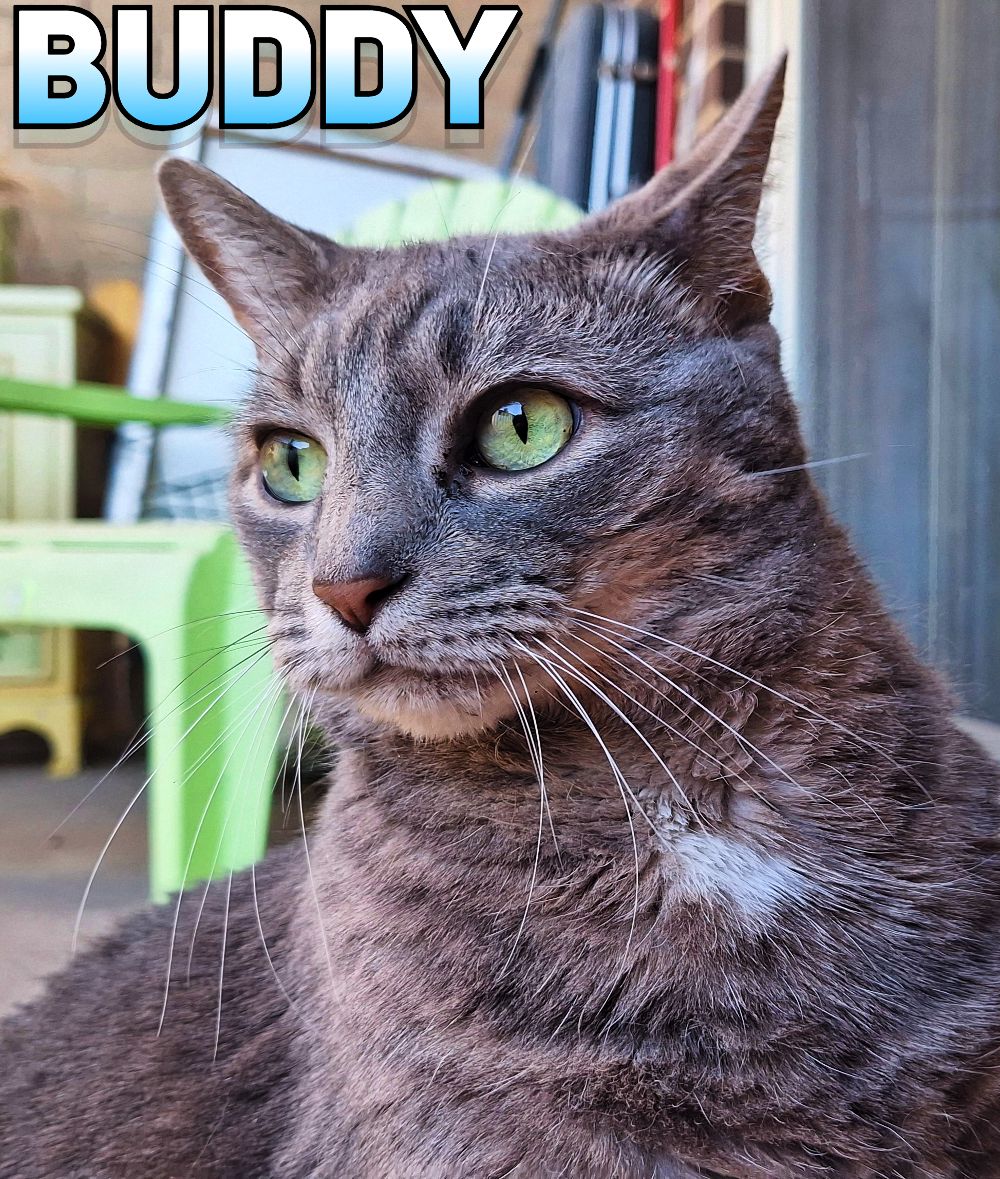
I’ll get a good full shot of my feline overlord so you can see how ripped he’s looking, but in the meantime here’s a photo I took this week on the balcony, where Bud likes to lounge in the summer. There are no color filters or any other edits except a simple crop and a shadow/highlight adjustment, and you can see his “terracotta nose” and just how bright and green his eyes are in natural outdoor light:

buddybalcony

Although there are no filters, I should note here that I took this photo with my new Samsung, and Galaxy phones are known for their saturated colors. My previous phone was a Google Pixel which often resulted in the opposite effect, with photos looking sapped of color in some lighting conditions. Still, the Galaxy’s photos are much closer to what I see with my own eyes when little man is playing outside.

P.S. Thank you to the reader who dubbed Bud “terracotta nose” a while back. I’m sorry, I can’t remember who bestowed him with that nickname, but I love it.

‘Vegan’ Cats Turn To The Streets For Their Fix

As more humans force vegan cat “food” onto their felines, cats turn toward the black market for their yums.

The exchange was so swift that unless you were looking out for it, you’d miss it.

A young, skinny ginger tabby approached a pudgy tuxedo in front of a stoop. The felines exchanged a nod and bumped paws, then the tabby scurried into an alley, disappearing into the shadows between two buildings.

“Gotta get it in me!” the tabby said, taking quick breaths. He dragged a claw across the top of the pouch to open it, poured every last morsel of meat into his mouth, then dropped to the ground, leaning against the brick wall.

“Oh!” he exclaimed, his pupils dilating. “That is the good stuff! Man, I needed that.”

The tabby, who would only identify himself by his street name, Skinny G, is one of thousands of so-called “vegan cats” in New York who have been defying their humans, finding ways to slip out and connect with a burgeoning network of “can slingers.”

Resembling drug dealers in their methods and presentation, the can slingers nevertheless point out that what they’re doing is not illegal.

“We like to think of ourselves as a charitable organization even though we earn a tidy profit,” said Tuco Salamanclaw, vice president for emerging markets with Los Gatos cartel. “It’s tragic to see so many misguided humans forcing their faithful felines to eat tofu, soy and other junk that doesn’t have the nutrients we need. We’re here to help address that injustice.”

Meowfioso
Louis “Linguini Louie” Felinzio, a Meowfia capo and director of taste testing for the Meowfia’s can slinging operation.

The rise of the underground meat market — and the profits it promises to organizations that can muscle their way in — has attracted the Meowfia as well as The Buddy Organization, which was rebranded last year as Nipped In The Bud Catnip Co. Jostling for position among those three major players, as well as smaller groups, has led to a revival of the territorial battles that marked the catnip wars years ago.

“It’s just a matter of time before we see another drive-by spraying,” said Pawl Oreoson, a criminologist at John Jay College of criminal justice in New York. “Los Gatos is not an organization that surrenders territory easily, and the Meowfia also play for keeps. There’s just too much money to be made here.”

Profits from the underground cat food market set a record for the 10th consecutive quarter in March, reflecting the growing number of humans forcing their felines to eat meat-free diets of ultra-processed, plant-based “food.”

“Disgusting,” is how three-year-old Nala put it when asked about the “vegan cat food” her humans feed her. “Imagine eating damp cardboard with little clumps of carrot and celery embedded in it. No self-respecting cat should be forced to eat this stuff.”

Chonk
“After two weeks on the vegan stuff I was skin and bones,” says Slim Sal, above. “I was almost too weak to make it to the can slingers and get my paws on proper food. No cat should have to endure that trauma.”

Tigger, a striped eight-year-old from Brooklyn, was admonished by his humans two weeks into his vegan “cat food” diet when he got into the fridge and helped himself to an entire pound of Boar’s Head ham and two large chorizos.

With a child lock now preventing him from opening the refrigerator door, Tigger said he’s been squirreling away portions of the vegan kibble and dumping it off the fire escape when his people aren’t looking. He hunts rodents to keep himself from starving, but says he’s getting sick of mice.

“If these lunatics want to subsist on broccoli, quinoa and hummus, that’s on them, but I just can’t,” Tigger said. “I’ve scraped together enough cash to buy a few cans of Friskies, and tomorrow I shall feast!”

Cat On The Street: Are Your Nutritional Needs Being Met?

Cats often scarf their food down as if they haven’t eaten in a week. Are we feeding them enough?

Not all cat food is created equal, and many cats say they’re not getting enough nutrients daily. We asked six cats if their nutritional needs are being met and if their humans are feeding them enough.